The Cattywampus Episcopacy: A Friendly Question About GMC Bishops

There is a word we used back in Jackson Parish when something wasn’t exactly crooked, wasn’t exactly backwards, but somehow didn’t seem put together quite right: cattywampus. I’m not sure that’s how one spells it, but I know it’s how one says it.

I’ve been looking at the new episcopal areas of the Global Methodist Church, approved earlier this year and now being used to elect bishops at its General Conference in South Africa, and I’m having trouble finding a better word.

I should probably establish my credentials—or lack thereof—before going any further. I am not a member of the Global Methodist Church. I am an ordained elder in the Evangelical Methodist Church. However, I spent more than twenty-eight years as a United Methodist pastor, served for a time as a district superintendent, and currently pastor a GMC congregation. I’d call myself an inside-outsider.

I understand the Methodist system. I understand some of the problems the GMC was attempting to correct when it designed its polity. I have friends and former colleagues throughout the denomination. One of the newly elected bishops, Carolyn Moore, and I were seminary classmates. So, please understand, this isn’t an attack on the GMC, nor is it criticism of the eight people elected to serve as bishops.

It is simply a question about structure. And the question is this: Does this seem cattywampus to you?

Trying Not to Rebuild What You Left

I understand at least part of the philosophy behind the GMC’s episcopacy. The Global Methodist Church did not want simply to recreate the United Methodist episcopal system with a new name on the door. That’s understandable.

GMC bishops are intended to function as general superintendents of the whole connection rather than becoming little ecclesiastical rulers over permanent territories. The denomination emphasizes a traveling episcopacy. Its Discipline even provides that episcopal areas do not have to be geographically contiguous and may be international in composition. I get the theological argument. In fact, the international character is intentional: no episcopal area was designed with more than four annual conferences from the same continent.

A bishop is a bishop of the whole church, not merely the bishop of Louisiana, Texas, Georgia, or wherever that bishop happens to be assigned. But here’s where I begin scratching my head. Why does being a bishop of the whole church require having a geographically scattered supervisory assignment? Those are two entirely different things.

A bishop could be a general superintendent of the whole Global Methodist Church while being assigned for a particular term to annual conferences located within a reasonably coherent geographic area. Those ideas aren’t contradictory. In fact, Methodists have been figuring out how to combine connectionalism and geography for a very long time.

This Map Ain’t Mapping

The problem is that theology doesn’t make geography disappear. If a bishop is responsible for annual conferences spread across large portions of the United States and other parts of the world, somebody has to travel between them. That means airline tickets, hotels, meals and ground transportation. It means days spent traveling—sometimes over multiple time zones. It means jet lag. And perhaps most importantly, hours and days in which a bishop is sitting in an airport or airplane rather than actually exercising episcopal ministry.

That raises a stewardship question for me. Local congregations provide the financial support that ultimately makes denominational ministry possible. Every dollar spent moving a bishop from one side of the country—or the world—to another is a dollar that originated somewhere in the offering plates and bank accounts of local churches. If geographically coherent episcopal areas could substantially reduce those costs without compromising the denomination’s theology of episcopacy, why wouldn’t we do that?

Maybe there’s a good answer. I just haven’t heard it yet.

There’s Also the Stewardship of the Bishop

Money isn’t the only thing being entrusted to our stewardship. People are, too. The GMC elected eight bishops in 2026 to six-year terms. Again, that isn’t a criticism of them. I’m 62 years old myself.

Carolyn Moore and I were seminary classmates, so we’re essentially the same age. I have great respect for Carolyn and wish her well in her ministry.

Rev. Dr. Moore has been assigned to Episcopal Area 8, which consists of these annual conferences: 

  • Allegheny West — U.S.
  • North Carolina — U.S.
  • Heartland — U.S.
  • Uganda
  • Kenya
  • Malawi
  • Zimbabwe

That’s three U.S. conferences and four conferences spread from East Africa down into Southern Africa.

I cannot imagine spending the next six years repeatedly flying across multiple time zones, arriving somewhere and immediately being expected to preach, preside, meet with clergy, address problems, make decisions and provide spiritual leadership—then fly home, recover and eventually do it again.

Could I do it? Probably. Would I want a denomination to design my job around doing it repeatedly until I was nearly seventy? That’s a different question.

A six-year episcopal term isn’t necessarily unreasonable. A traveling episcopacy isn’t necessarily unreasonable. International connectionalism certainly isn’t unreasonable. But when you combine six-year terms, extensive travel and intentionally noncontiguous episcopal areas, I wonder whether the pieces fit together as well as the designers intended. In Jackson Parish terminology, things start getting a little cattywampus.

Preserve the Principle Without Creating the Problem

What puzzles me most is that the solution doesn’t seem terribly complicated. Create geographically sensible episcopal areas. Assign bishops to those areas for six-year terms. Maintain strong presiding elders and annual conference leadership. Rotate bishops among episcopal areas when appropriate. And continue teaching clearly that every bishop is a general superintendent of the entire Global Methodist Church rather than the ecclesiastical owner of a particular territory.

What theological principle would that sacrifice? I don’t see one.

A bishop assigned to Louisiana, Arkansas and East Texas would not somehow cease being a bishop of the whole church simply because the conferences under that bishop’s immediate supervision were located near one another. Geographic efficiency doesn’t require theological provincialism. It just requires a map.

Sometimes the Old Guys Did Something for a Reason

This may point toward a larger danger for every new denomination. The GMC was born partly out of dissatisfaction with structures and practices in the United Methodist Church. Consequently, there is an understandable desire to avoid recreating the institution it left behind. But reaction can sometimes become its own form of institutional blindness.

Not everything the UMC did was wrong simply because the UMC did it. Some practices developed because generations of Methodists discovered that they worked. Geographically coherent episcopal areas may be one of them. 

You can reject an unhealthy understanding of episcopal authority without rejecting sensible geography. You can make bishops accountable without making them accumulate frequent-flier miles. You can insist that bishops serve the whole connection without requiring them to spend an unnecessary portion of their ministry getting from one part of the connection to another. And you can build something new without assuming that everything old needs replacing.

A Question From an Inside-Outsider

I don’t have a vote in the Global Methodist Church. I shouldn’t have one, nor do I want one. The GMC will determine its own polity, elect its own leaders and decide how best to deploy them.

But I do have an interest in the question. I pastor a GMC congregation while remaining an elder in another Methodist denomination. Many people I have served alongside for decades now call the GMC home. I genuinely want them to flourish. So, consider this a friendly question from an inside-outsider.

The Global Methodist Church says it wants a leaner, more accountable and more missionally focused denomination. Good. Then every structure ought to be evaluated according to those goals. Does this structure make the best use of the church’s money? Does it make the best use of its bishops’ time? Does it make the best use of their physical and emotional energy? Does it strengthen relationships between bishops, clergy and congregations? And most importantly, does it advance the GMC’s stated mission “to make disciples of Jesus Christ and spread scriptural holiness across the globe”?

If the answer is yes, then perhaps this old Methodist needs someone to explain the map to him.

But if essentially the same theological goals could be accomplished with less money, less travel and less wear and tear on the people we’ve asked to provide episcopal leadership, then perhaps the structure deserves another look. Because sometimes something can be perfectly permissible under the Discipline, carefully thought through by committees, overwhelmingly approved by a General Conference, and still be a little…

cattywampus.

Until next time, keep looking up…

Accept One Another: Baptism, Denominations and the Grace of Jesus

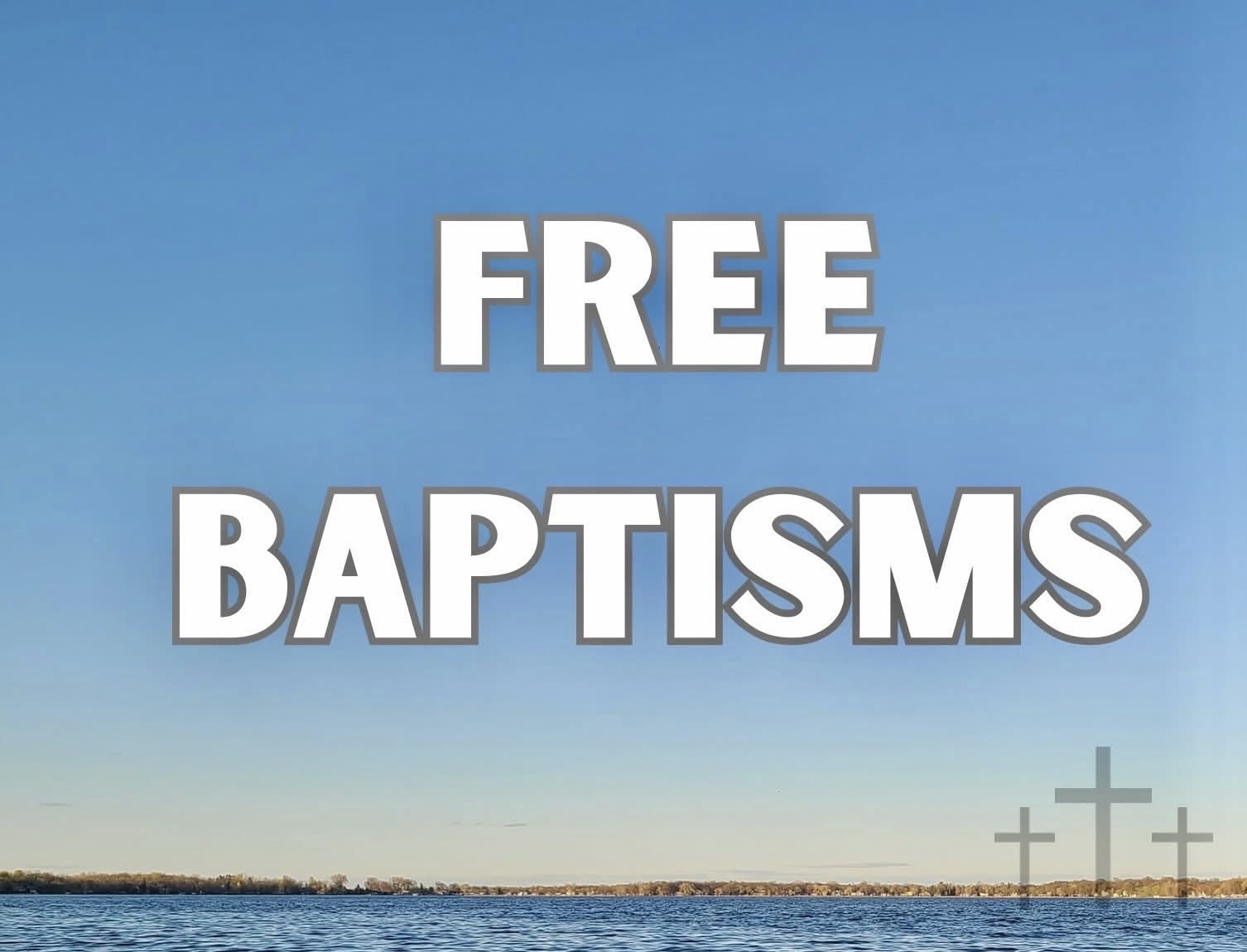
I saw a sign on Facebook this week that made me laugh. It depicted a public creek with a cross, and in large letters it said, “FREE BAPTISMS.”

My first thought was, “I didn’t know we had started charging for baptisms.” I thought all baptisms were free. The water is free—and so is the grace.

But after I laughed, I started thinking about it. That is usually where I get into trouble. What began as a funny photograph sent me down a theological rabbit hole.

The baptism was being offered by a parachurch ministry. By “parachurch,” I mean a Christian organization that works alongside the Church but is not itself a congregation or denomination. And I started asking questions.

Who prepares the person for baptism? Who hears the promises? Who receives that person into the Church? Who teaches and disciples the person afterward? Who will be there next month when the emotion of that Sunday afternoon has passed?

Those are not insignificant questions. Baptism is personal, but it is never merely private. We are baptized into Christ, and therefore also into his body. The question is not only whether there is water and someone willing to get into it. The question is whether there is a community prepared to be the Church to that person when he or she comes out.

I have seen this before. Through the years, I’ve been involved in two different Christian retreat ministries. They were described as ecumenical, though “cross-denominational” may be the better word. Christians came together from different traditions for a weekend of worship, teaching, prayer and renewal.

Here’s one irony: one of the ministries began as an offshoot of the other. Why? Because someone attended the first and thought, “I can do it better.”

Eventually, both ministries began conducting baptisms during their retreat weekends. Sometimes clergy performed them. Sometimes laity performed them. Sometimes people who had already been baptized were baptized again. That troubled me then, and it still troubles me now.

I believe baptism belongs to the Church. I believe it is more than my public declaration that I have decided to follow Jesus. Baptism is a means of grace. It is an act of God in and through the Church. I believe there is one baptism because the faithfulness being declared in baptism is ultimately God’s faithfulness, not mine.

So, I had several theological objections ready. Then I remembered Philip and the Ethiopian eunuch.

When Scripture Interrupts a Good Argument

In Acts 8, Philip meets a man traveling home from Jerusalem. The man is reading from Isaiah. Philip explains the Scripture and tells him the good news about Jesus. As they travel along, the man sees some water and asks, “Why can’t I be baptized?” They stop the carriage, go down into the water, and Philip baptizes him.

There is no church building. No congregation is visibly present. There is no six-week membership class. Philip does not tell the man to wait until he gets home and finds a local church.

Now, the situations are not identical. The Holy Spirit clearly directs Philip. The eunuch is already seeking God and reading Scripture. Philip proclaims Jesus to him before baptizing him. Philip is a recognized evangelist carrying the Church’s mission into a place where no established congregation appears to be available.

The story does not answer all my questions. But it does keep me from acting as though the people on the creek bank have no biblical argument at all. They may sincerely believe they are doing exactly what Philip did: proclaiming Jesus and refusing to place unnecessary barriers in front of someone who asks to be baptized.

And while I was thinking about all this, I happened to be preparing a sermon called “Accept One Another.” Isn’t God’s timing wonderful? I first thought the sign might give me something to say to them. Then I read Romans 14 and discovered that Paul might have something to say to me.

The church in Rome was divided over food and the observance of particular days. Some Christians believed they could eat anything. Others ate only vegetables because of concerns about foods that were religiously unclean or associated with pagan worship. Some regarded certain days as holy. Others regarded every day alike.

Paul calls one group “strong” and the other “weak.” He includes himself among the strong. But he doesn’t tell the strong to flaunt their freedom until the weak finally get over it. And he doesn’t allow the weak to condemn the strong for their lack of restraint.

Instead, he identifies a temptation on both sides. The weak are tempted to judge the strong: “If they were serious about following Jesus, they would never do that.” The strong are tempted to look down upon the weak: “If they understood the gospel as well as we do, this would not bother them.”

Judgment on one side. Contempt on the other.

Then Paul asks, “Who are you to condemn someone else’s servants?”

That question caught me. I had assumed I was the mature Christian in the baptism conversation. I had the developed sacramental theology. I had the denominational doctrine. I had the experience and the ecclesiological vocabulary.

They had a creek.

But perhaps, in this particular conversation, I am the one whose conscience is troubled. Perhaps I am the “weaker” brother. Paul doesn’t tell me to abandon my convictions. He doesn’t tell me that baptism does not matter. He does tell me to stop judging the servant of another Master.

Sometimes accepting one another begins when we stop assuming that we are the mature Christian in the conversation.

Good Theology and Poor Discipleship

That doesn’t mean theology is unimportant. Theology matters because what we believe about God shapes how we understand the Church, salvation, grace and the Christian life.

But here’s an uncomfortable truth: A person can have good theology and still be a poor disciple.

I don’t mean that good theology causes bad character. I mean that knowing the right words and reaching the right conclusions don’t automatically make me like Jesus. Good theology held without humility can make me proud. Good theology without love can make me harsh. Good theology used as a measuring stick for everyone else can make me judgmental.

The purpose of theology isn’t merely to help us win arguments. Its purpose is to help form the life of Christ within us. It’s possible to be right about the issue and wrong in the way we treat the person.

Paul’s instruction is not that differences are imaginary or convictions are unimportant. He tells Christians how to treat one another while they disagree.

Acceptance is not approval. Christian acceptance doesn’t mean that every belief is true or every practice is faithful. There are beliefs and practices the Church must challenge. There are times when love requires truth, correction, boundaries and even discipline. Christian acceptance doesn’t ask us to surrender discernment. It asks us to surrender the pride with which we so often exercise it.

I can receive the person seeking baptism with joy and trust that God may genuinely be drawing that person. I can receive the Christians conducting the baptism as brothers and sisters whose desire to reach people may be sincere. And I can still ask whether their practice reflects a sufficiently rich understanding of baptism and the Church.

I can accept the people without endorsing everything they do. That is harder than either approval or rejection. Approval asks us to ignore the difference. Rejection allows us to dismiss the person. Acceptance requires us to hold conviction and love at the same time.

Guests Who Have Already Been Received

Paul takes us directly to Jesus: “For even Christ didn’t live to please himself.”

Christ didn’t accept us because our theology was correct. He didn’t wait until our motives were pure, our behavior was consistent and our understanding was complete. He received us by grace.

That does not mean he approved everything in us. Christ accepts us in order to transform us. Grace does not leave us as it finds us. But transformation begins with his gracious welcome, not with our successful completion of an entrance exam.

Alistair Begg tells an imaginary story about the thief on the cross arriving at heaven. The angels begin asking him questions. Does he understand justification by faith? What does he believe about the authority of Scripture? The man cannot answer any of them. Finally, they ask why he should be admitted. His answer is wonderfully simple: the man on the middle cross said he could come.

That’s the only answer any of us has. We aren’t here because we passed the theological exam. We are here because Jesus said we could come. And if my place in his kingdom rests upon his gracious welcome, I must be very careful about requiring someone else to pass my exam before I receive them.

We sometimes act as though we are the hosts of the Church and have been assigned the responsibility of deciding who deserves admission. But we’re not the hosts. We’re guests who have already been received.

Acceptance After Separation

This conversation carries particular weight for Methodists right now. Over the past several years, thousands of congregations have left The United Methodist Church. Many have become part of the Global Methodist Church. (Disclosure: I am an Evangelical Methodist elder serving a Global Methodist congregation). The disagreements that produced that separation weren’t superficial. They involved biblical authority, human sexuality, ordination, discipline, accountability, church property and institutional trust. People on both sides believed they were acting faithfully.

We should not take Romans 14 and declare that all those questions were merely matters of personal preference. They were not the equivalent of choosing whether to eat meat or observe a particular day. Convictions mattered. Decisions had consequences. Separation brought grief. Congregations divided. Friendships were strained. Clergy who had served together for years found themselves in different denominations.

But Romans 15 puts a question before us now that the separation has happened: Can United Methodists and Global Methodists still accept one another as brothers and sisters in Christ?

Can we remain convinced that we made the faithful decision without declaring that everyone who made the other decision was faithless? Can we name the differences honestly without making those differences the whole truth about one another? Can we recognize that the person across the denominational divide has also been received by Christ?

This is where baptism returns to the conversation. Both United Methodists and Global Methodists confess one baptism. Both baptize in the name of the Father, the Son and the Holy Spirit. Both understand baptism as our entrance into Christ’s Church.

Disaffiliation changed our denominational affiliation. It did not erase our baptismal identity. We may no longer belong to the same denomination, but we still belong to the same Christ. The name on some of our church signs changed. The name placed upon us in baptism did not.

That doesn’t require reunion. It doesn’t mean we must cooperate in every ministry or remain silent about the convictions that divided us. It doesn’t mean the separation didn’t matter. It means Christ matters more.

Acceptance after separation means we refuse to excommunicate one another in our hearts. We refuse to speak as though the Church of Jesus Christ begins and ends with our denomination. We refuse to presume that our faithfulness gives us the authority to judge another Master’s servant.

Perhaps Global Methodists need to hear that about United Methodists. Perhaps United Methodists need to hear it about Global Methodists. Perhaps Baptists need to hear it about Methodists, and Methodists need to hear it about Baptists. Perhaps every denomination needs to remember that Jesus never agreed to fit entirely inside the boundaries we draw.

The Church is bigger than our part of it.

The Water and the Grace

Paul gathers his argument into one sentence: “Accept each other just as Christ has accepted you so that God will be given glory.”

Not “Accept one another when you agree.” Not “Accept one another after the weaker Christian matures.” Not “Accept one another after the stronger Christian becomes more sensitive.” Accept one another as Christ has accepted you.

So, I go back to that creek bank. There stands the parachurch evangelist, ready to baptize anyone who sincerely asks. Somewhere nearby stands the Methodist preacher with several ecclesiological objections. Christ has received them both.

Neither one is received because he has baptism completely figured out. Neither one is received because his motives are completely pure or his practices completely consistent. Both are received because the grace of Christ is greater than the incompleteness of their understanding.

That does not settle every baptismal question. It does not erase denominational differences. It does not make discernment unnecessary. But it does tell me how I must regard the person standing on the other side of the disagreement.

He isn’t mine to condemn. She isn’t mine to dismiss. They belong to Christ.

And if Christ had waited until I understood baptism, the Church and grace perfectly before accepting me, I would still be standing on the creek bank.

The water is free. The grace is free. And because Christ has received us by that grace, he commands us to receive one another. So that God—not our denomination, not our position, not our correct theology—may be given glory.

Until next time, keep looking up…

If any of my reflections encouraged or challenged you, follow Not the Perfect Pastor on Facebook for more conversations about faith, ministry, and becoming faithful disciples of Jesus.
Preaching in the Storefront, Part 2: Five Drawbacks to Storefront Church…

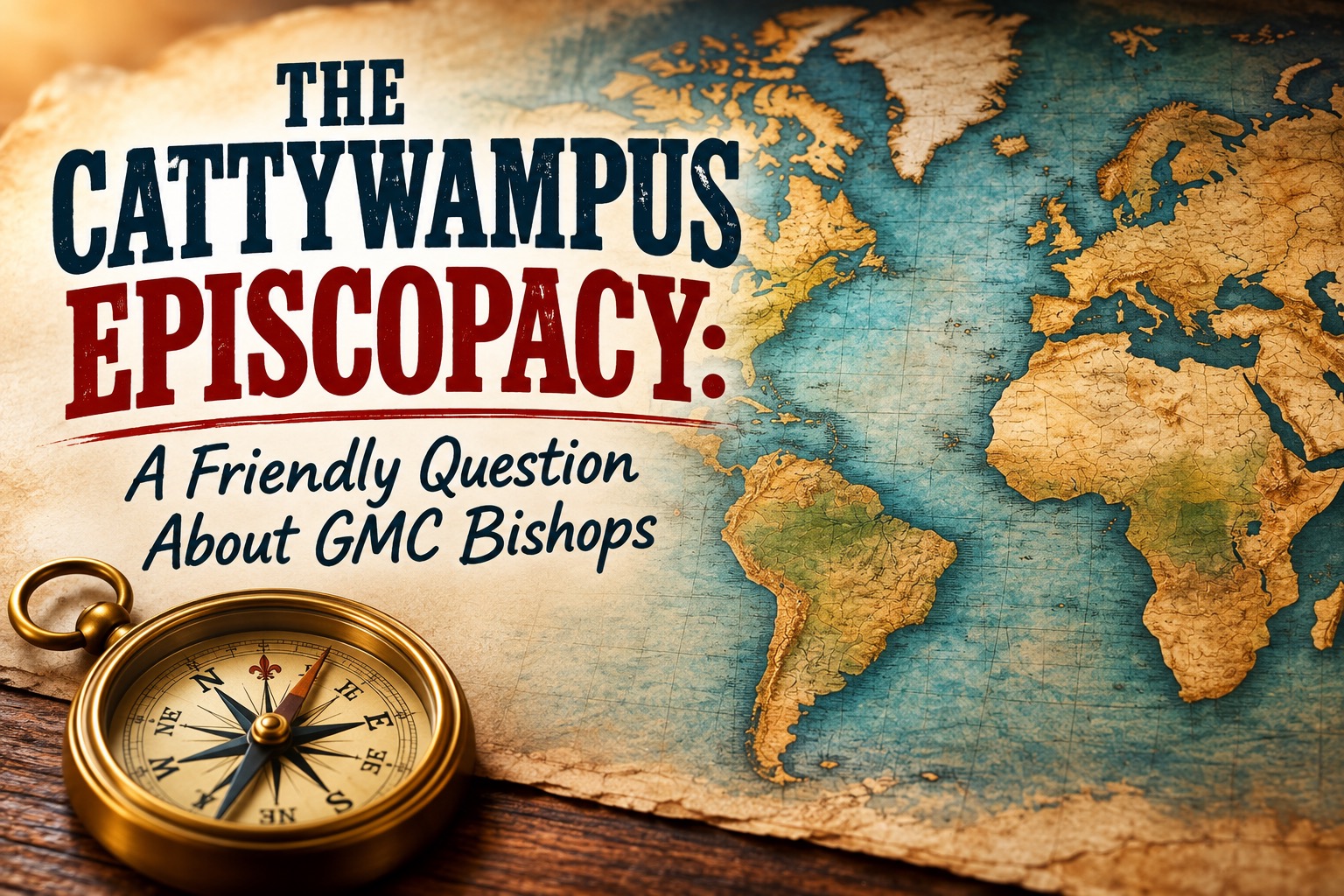
I wrote last week concerning the advantages of preaching in a storefront church (read it here). I figured I should also share some of the limitations that come with having a storefront church. These limitations affect both our congregation and the community.

Space Limitations

Our storefront church faces significant constraints due to limited physical space. Unlike traditional church buildings, which are purpose-built to accommodate a large congregation, classrooms, offices, and multipurpose spaces, our space (though originally a church) was fitted for commercial use.

Our space lacks the architectural features needed for worship, such as high ceilings, sanctuaries, and designated areas for fellowship. We’re going to struggle to figure out how to hold events in our space, or to expand to Sunday school or small group ministry. And, potluck…well, we’ll just have to see about that.

Additionally, our storefront has a relatively small seating capacity. Yes, there is a wall we can take out, but even then, limited space can lead to overcrowding, discomfort, and an inability to host special events, such as weddings, funerals, or community outreach programs.

One other thing to note, the lack of auxiliary spaces like nurseries, kitchens, and meeting rooms may hinder the church’s ability to offer vital services, such as childcare, Bible studies, and community meals.

Perception and Identity

The perception of a church operating in a storefront can also pose challenges. Traditional church buildings convey a sense of permanence, sanctity, and history, which can attract members and foster community respect.

In contrast, a storefront church can struggle to establish the same sense of legitimacy and stability. Passersby may view it as a temporary or informal operation rather than a dedicated place of worship.

This perception issue can extend to potential members, who might associate the storefront location with financial instability or a lack of resources. For some, the absence of traditional symbols such as steeples, stained glass windows, and pews may detract from the spiritual atmosphere they expect in a church setting. Over time, these perceptions can impact the church’s ability to grow and sustain itself.

Acoustics and Ambiance

Storefronts are not designed with worship services in mind, and this often leads to challenges with acoustics and ambiance. Traditional church buildings are constructed to enhance sound quality, ensuring that sermons, music, and prayers resonate effectively within the space. Storefronts, on the other hand, often have flat ceilings, hard floors, and minimal soundproofing, which can result in poor acoustics and echoing.

Luckily, the acoustics are not very bad in our storefront. I preach without a microphone every Sunday (not a hard thing to do when our average attendance is 30, but if we grow, I’ll probably have to rethink it). More people absorb more sound. Without a microphone, I might become muffled. Heck, they might think I’m muffled now, but they haven’t said so if that’s the case.

The lack of ambiance in a storefront can also hinder the spiritual experience. Traditional church buildings often feature architectural elements like vaulted ceilings, intricate woodwork, and natural lighting, all of which contribute to a sense of reverence and awe. I’ll confess that our team has done a fantastic job of creating a worshipful ambiance in our space, but many storefronts can feel sterile or utilitarian, which can make it difficult for congregants to feel spiritually connected or inspired.

Zoning Issues

Operating a church in a storefront can also lead to zoning and legal challenges. Many municipalities have specific zoning regulations that restrict or limit the use of commercial spaces for religious purposes. I haven’t found that to be the case with Bossier Parish, but if you’re thinking about a storefront church in another community, it’s best to check zoning early in the planning process.

Churches may be required to apply for special permits or variances, which can be time-consuming and costly. Additionally, these regulations often limit the types of activities that can take place within the space, further constraining the church’s ability to serve its congregation and community.

Parking is another common issue associated with storefront churches, and it certainly it with ours. We’ve got four spaces in front of the church and have to utilize a parking lot for a strip center next door. Spots fill up fast when we have a large (40 people) crowd for church. Any growth we experience will ultimately be impacted by limited parking.

Financial Limitations

Storefront churches are a cost-effective alternative to traditional buildings, as I mentioned in my previous blog. That notwithstanding, they can also present significant financial challenges in the long term.

Leasing or purchasing a storefront space is initially more affordable, but the costs associated with retrofitting the space for worship can be substantial. Churches may need to invest in sound systems, seating, lighting, and signage to make the space functional and welcoming.

Additionally, rent will go up at some point, which can strain the church’s budget. Unless your landlord is a member of the congregation and has mercy on it, rent will increase. If rents become unaffordable or the property owner decides not to renew the lease, the congregation may be forced to relocate, disrupting their operations and sense of community.

Deep Roots

Traditional church buildings often serve as landmarks and gathering places, hosting events, providing shelter, and offering a range of social services. Storefronts, by contrast, may not have the space or facilities needed to support such activities. This can restrict the church’s ability to act as a hub for community life and outreach.

Moreover, the transient nature of storefront operations can make it difficult for a church to establish deep roots in the community. If the congregation frequently moves or struggles to maintain a visible presence, it may struggle to build trust and foster long-term relationships with local residents and organizations.

Conclusion

This much I know: For every advantage a storefront may offer a congregation, there is an equal disadvantage. The task of the pastor and the congregation is to weigh the advantages and disadvantages appropriately, pray and then follow the leading of the Holy Spirit.

I’m uncertain how the storefront will impact our congregation yet. We haven’t been in the space long enough to know. I know God has put us here for now, so we’ll seek to be faithful to the call we hear going forward.

But still, if you’re in the Bossier Parish, Caddo Parish or Webster Parish area, please come join us. Perhaps you’ll help us figure it out.

Until next time, keep looking up…

New Places, New Spaces…

The Church of Jesus Christ is always on the move, and today the Haughton Global Methodist Church begins worship in its new home. It is a new place and a new space and I know the congregation is excited about worshipping for the first time in this new place.

The space is located at 966 Highway 80 in Haughton, LA. It was a church in one of its former lives, but it has been a physical therapy office in its most recent life. We will re-consecrate the space this morning at 10:30 a.m. for use as a place of worship, and I’d love to invite you to join us if you’re in the Haughton/Bossier City area.

I need to commend the congregation on its hard work over the past month in getting the space ready to occupy. Countless hours of service have gone into the process of converting the space back to its original purpose. Let me say, “Thank you” to all those servants who have been so diligent (and so generous) in doing what was necessary to accomplish the task. Great work!

Today will be my first opportunity to see the space after all the work is completed (will it ever really be completed?). I’m excited to see it and to lead worship for the first time in this new place. I’m excited to see all that the Lord has planned for the space and for the congregation.

I’m looking forward to getting to know the Haughton community in a deeper way. It’s going to be a challenge for me as a bi-vocational pastor, but I pray the Lord opens doors and provides opportunities for the congregation to grow and flourish in the community. I covet your prayers for the congregation, too.

Perhaps this new space in this new place will be an encouragement for new people to explore the Kingdom of God. Maybe there are those in the Haughton/East Bossier area who have been waiting for a new place and I pray the Holy Spirit will open their hearts to take a step of faith in hearing His call to salvation in their lives. Would you pray that prayer with me, too?

This new space and new place is located right next door to an oil change place. I find that only a little humorous and ironic. I spend six days a week at an oil change place and now I’ll be leading worship next door to an oil change place. Providential? Who know? I’m just trying to figure out ways we can be a good neighbor. I must confess that I’m also trying to figure out ways to use it evangelistically. We’ll pray the Lord opens doors for both to occur. Will you pray that prayer with us?

Anyway, my blogs may become less frequent now. Most of my Sunday morning time will be spent preparing for worship. They may even be spent finishing the message for that day. Of course, that’s happened before. Either way, the Lord’s got this. The Lord guided us into this, and I know that where the Lord guides, the Lord provides. I’m anxious to see how He does so in this case.

So, that’s all for this week’s blog. I don’t know when the next one might be written, but I’m anxious to see the story He is writing in the life of the Haughton Methodist Church.

Until next time, keep looking up…

Embracing Opportunities: A Bright Side to the United Methodist Church Situation

What? Another blog post on the situation in the United Methodist Church? From someone who left the United Methodist Church? Can’t you please just move on?

Yes, I probably should move on, but honestly, it’s hard to simply walk away from an institution that was an integral part of my life for over 50 years…an institution that shaped me spiritually and theologically…an institution in which I still have many friends and acquaintances…an institution that I loved for so, so long. That, and when I write a blog about the United Methodist Church, my readership generally explodes, so there’s that!

Everyone (well, almost everyone) who reads my blog is reasonably familiar with the recent decisions of the General Conference of the United Methodist Church that has many UM traditionalists reassessing their prospects of remaining United Methodist, so I’m not going to rehash those General Conference decisions here. You can find all the information you want here and here if you need to revisit those decisions.

What I am going to suggest to my traditionalist friends who adopted the “wait and see” approach (and now find themselves considering what’s next) is that you may be in a season of wonderful opportunity, and to encourage you to embrace the opportunity that lies before you. I’m suggesting there really is a bright side to the situation in which you find yourself.

Opportunity #1

If you are a traditionalist in the United Methodist Church, the recent decision of General Conference has forced you to the margins of both the institution and the culture. Being on the margins is a good thing. The Church has always flourished best on the margins.

You are now in conflict with “the system.” Well, that’s exactly where Jesus was when he established His ministry on earth. The “power” dynamic has flipped. That’s a scary (and terribly uncomfortable) place to be. Traditionalists have been accustomed to palace living. What do I mean?

Ever since the Edict of Milan in 313 A. D. (when Emperor Constantine “legalized” Christianity), the institution of the Church has enjoyed relatively “favored” status in the culture. The palace (the power structure) looked favorably on the Church. Likewise, traditionalists were part of the structures that maintained the institution. It is relatively safe to say with GC’s recent decisions, that is no longer the case. You are on the margins.

Should you and your congregation choose to remain in the United Methodist Church, you and your congregation can be like “a voice crying in the wilderness” (John 1:23, et. al), or as a remnant left behind in Jerusalem (Jeremiah 52) to tend the vineyards and till the soil.

Opportunity #2

If you are a traditionalist congregation in the UMC, you may now be forced to deal with your “edifice complex.” You now have to assess just how much your property is worth to you. That is a good thing.

The Church has never been about a building or property. The Church has always been about people.

Yes, I know it is sad that you, your forefathers and foremothers poured your life and soul into a building and property. You made the investments. You raised the money. You made the commitment to pay the debts.

Your parents and grandparents were buried there. Your children were baptized there. You were married there. There are too many memories to count. That property carries a ton of emotional weight and the prospect of walking away from it generates an equal amount of grief.

Considering the emotional worth of your property forces a reflection on the purpose and mission of the Church, and that is a very good thing.

It can take the focus off the parking lot and put the focus on people. It can take the focus off the color of the carpet and place it on the process of discipleship. It can provide the opportunity to create new spaces that will be attractive to new people.

Can you imagine what a church budget would look like if 50% of it was dedicated to evangelism rather than light bills and maintenance?

Yes, leaving your property will require sacrifice (and it will seem totally unjust), but what is the Christian life apart from sacrificial living? The greater the sacrifice, the greater the blessing. What is the price of faithfulness?

And, who knows? Walk away from your property for a season and you might be able to purchase it back in the future for pennies on the dollar. I recall a time in the not too distant past when a particular Annual Conference was begging cemetery associations to form legal entities so it could unload abandoned properties and get them off the AC’s books.

Tons of abandoned properties will soon be an albatross around the necks of many Annual Conferences. Some have even explored the possibility of hiring additional Conference staff just to manage the properties. That will get old (and expensive) really quickly.

Seriously, beyond a few properties (mostly in downtown areas valued by real estate developers), there is little value in church property, especially if there is a cemetery attached to it.

You are being given that opportunity to revisit the purpose and mission of your congregation. Embrace the opportunity.

Opportunity #3

I believe that traditionalist congregations in the UMC are now being given the opportunity to rely on God in a new way. In the past, congregations had a power structure (the Annual Conference) that it depended upon for direction and connection. A departure from the power structure brings a new freedom to listen to the Lord for direction.

In the past, top down decisions dictated the direction and the leadership of a congregation. I am intimately familiar with one former UMC congregation who is living this reality even now. In the “good old days,” if they needed a pastoral change they conferred with the District Superintendent and the issue was resolved.

Now, in their search for a new pastor, the prayer life of the congregation has increased dramatically. Everyone is praying for the congregation’s leadership as they navigate the new waters of pastoral selection. They are living in an era of reliance on God in ways they never had to before. That is an amazingly good thing!

The congregation is out of its comfort zone, and that is the place where great things can happen.

One Consideration

One thing that I’ve been reflecting on has me concerned. It may surprise you. It is the name “Methodist.” Yes, what an amazing heritage and history! I have always been honored to be called Methodist, even if (or especially because) it was originally a derogatory reference.

I am concerned for all in the Wesleyan family who carry the name Methodist because the observing world doesn’t distinguish between those in the Methodist family. The world doesn’t know the difference in a United Methodist, an Evangelical Methodist, a Free Methodist, a Wesleyan Methodist or a Global Methodist. The world only sees “Methodist.”

The challenge is for all of us to be intentional in communicating who we are to a watching world. Of course, that should have been the challenge all along.

A Final Word

There are probably more opportunities for congregations. These are just the ones I’ve thought about as I’ve reflected on the situation. If you know more, please include them in the comments for others who might read the blog.

Traditionalists, you wanted to “wait and see.” Well, you waited and now you’ve seen. It is time to make a decision about where God is calling you in the future. Embrace the season. Embrace the challenge. Embrace the opportunity. But always, keep looking on the bright side!

Until next time, keep looking up…