The Dream Nobody Knew

Back in the mid-to-late 1980s, I worked in my grandfather’s hardware store in Chatham, Louisiana.

Like most small-town hardware stores, it wasn’t exactly a center of corporate innovation. We sold nuts and bolts, plumbing fittings, paint, and whatever else folks needed to keep life moving. Most days, I sat on an old stool behind the counter waiting on customers and trying to decide what I wanted to do with my life.

Somewhere during those years I started reading Entrepreneur magazine. I don’t know why it captured my imagination, but it did.

Every month I would read stories about entrepreneurs building businesses from nothing. I wasn’t a businessman. I was just a young husband working in a hardware store. But those articles stirred something inside me. They made me dream.

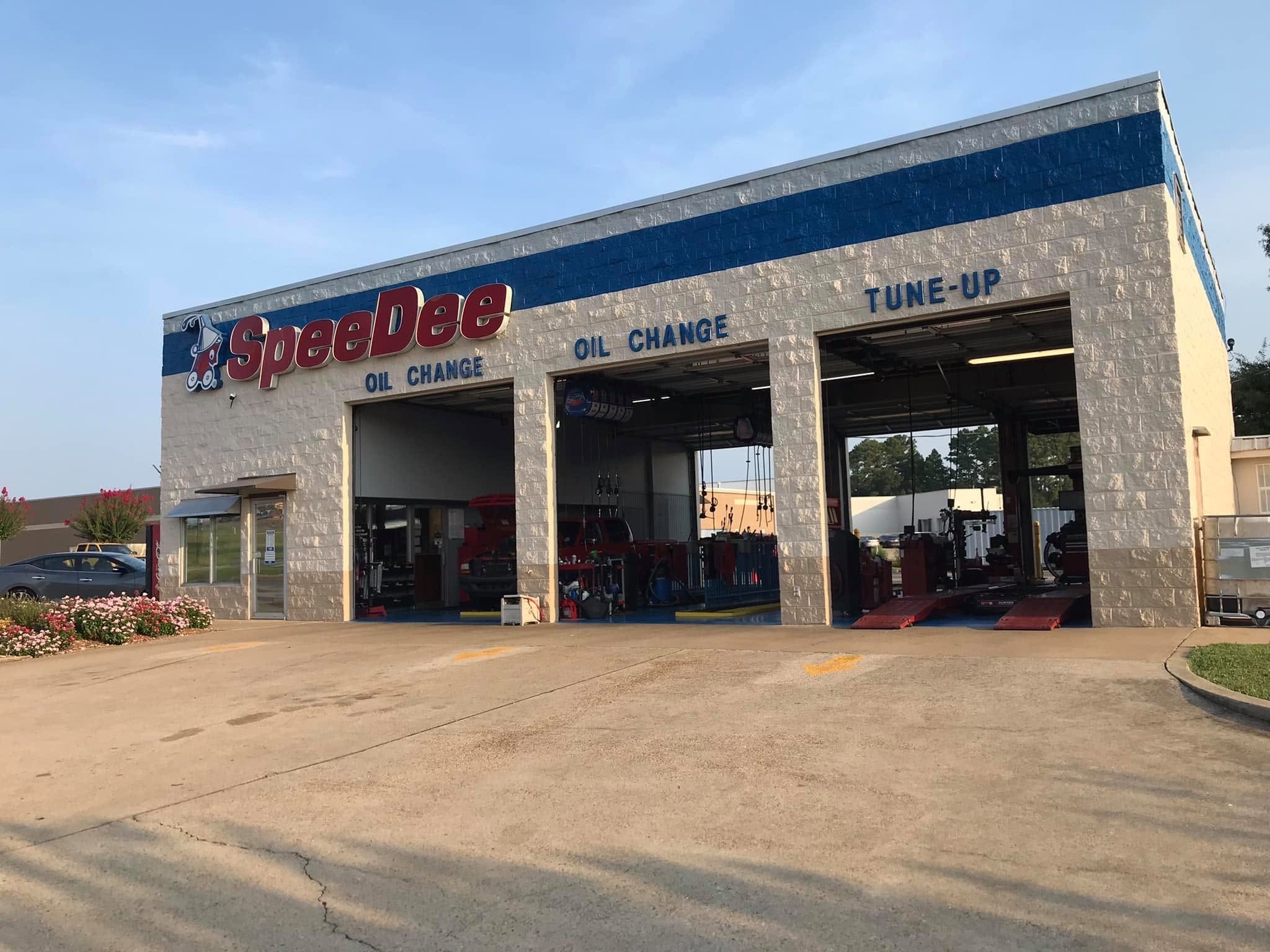
In the back of the magazine there was an advertisement for a little oil change company out of Metairie, Louisiana called SpeeDee Oil Change.

Most people had never heard of it.

They were beginning to franchise locations, and every time I saw that advertisement I found myself imagining what it would be like to own one.

Not just anywhere. In Ruston. And not just somewhere in Ruston. On the North Service Road.

I can still see myself sitting on that stool, flipping through those pages, imagining a future that seemed completely out of reach. Life, however, had other plans.

I never opened a SpeeDee franchise. Instead, I became a deputy sheriff. Then God called me into ministry. The years passed. I pastored churches. Raised children. Attended committee meetings. Preached sermons. Buried saints. Married young couples. Watched grandchildren arrive.

Like most people, I eventually assumed some dreams belonged to younger versions of ourselves.

Every now and then I would see a lube shop and remember those old thoughts from the hardware store, but life had moved on. Or so I thought.

Then in 2019, something unexpected happened. After nearly three decades in pastoral ministry, I sensed God might be leading me into a different season. An opportunity opened with a local bank, and I accepted a position as Business Development Officer.

In some ways, it felt like a return to those old entrepreneurial dreams. I wasn’t leaving ministry because I was angry or burned out. I simply believed God might be redirecting my path. For the first time in years, I found myself working in the business world again, helping build relationships and explore opportunities for growth.

Then 2020 arrived.

Like everyone else, we watched as COVID changed everything. The bank adapted to new realities, reevaluated priorities, and eventually chose a different direction. The role for which I had been hired was disappearing. Leadership offered me another opportunity within the organization, but it involved becoming a consumer loan officer.

I tried to imagine myself sitting behind a desk every day approving loans and financing purchases. The more I thought about it, the more I realized it wasn’t who I was. Nothing against the people who do that work. It simply wasn’t where my heart was. I couldn’t shake the feeling that God wasn’t calling me to spend the rest of my working years helping people borrow money to buy things they probably didn’t need and often couldn’t afford.

Once again, I found myself standing at a crossroads.

The door that had seemed so promising in 2019 was quietly closing. I didn’t know what came next. I only knew it was time for another change.

Looking back now, I don’t see the banking years as a detour at all. I see them as a placeholder.

When I left vocational ministry in 2019, I needed somewhere to land. SpeeDee wasn’t for sale. The opportunity didn’t exist. But the bank did. For two years, God provided exactly what I needed for that season. Not forever. Just for then.

At the time, I couldn’t understand why that door was opening only to close again so quickly. It felt confusing. Disappointing, even. But hindsight has a way of revealing what faith often cannot see in the moment.

The bank was never the destination. It was the bridge.

Had SpeeDee been available in 2019, I likely would have stepped directly into it. But it wasn’t. The timing wasn’t right. God wasn’t withholding anything from me. He was simply preparing the next chapter while providing a place for me to stand in the meantime.

Then, when the season at the bank had run its course and the role I had been hired to fill was disappearing, the opportunity I had imagined as a young man sitting in my grandfather’s hardware store suddenly appeared.

Nearly forty years after I first sat on that stool in Chatham dreaming about SpeeDee Oil Change, the business in Ruston was for sale. The very business. On the very road. In the very town.

The location was right. The timing was right. And for the first time, I could see that what felt like uncertainty had actually been providence all along.

There was one more detail I couldn’t appreciate at the time. The same bank that had provided a place for me to land after leaving ministry became the bank that financed the purchase of SpeeDee Oil Change.

Sometimes God’s provision is only visible in the rearview mirror.

I didn’t start it. I didn’t build it from scratch. Another entrepreneur did all of that. But I bought it. And in doing so, I realized something I had never fully understood. Sometimes God says yes to our dreams. Just not according to our timetable.

Looking back, I spent years paying attention to doors that didn’t open. There were positions I sought and didn’t receive. Leadership opportunities that passed me by. Places where I thought God might be leading, only to find the answer was no. Those disappointments felt significant at the time. Some of them still sting if I’m honest. But while I was keeping score of the doors that closed, I failed to notice the dream God quietly fulfilled.

The young man sitting on that stool in Chatham could never have imagined the route God would take to get there. He certainly couldn’t have imagined owning an oil change business while also serving as a pastor. He couldn’t have imagined the detours, disappointments, failures, successes, and surprises that would fill the next four decades. He only knew he had a dream.

What he didn’t know was that God had not forgotten it. The older I get, the more I suspect that faith is often learning to trust God’s timing when it bears little resemblance to our own.

Sometimes God closes doors we desperately want opened. Sometimes He opens doors we never expected. And sometimes He takes a dream that has been sitting quietly in the back of our hearts for forty years and says, “Not yet.”

Then one day, when we’ve almost forgotten about it, He says, “Now.”

Funny thing is, no one knew that story. Not even Vanessa.

No one knew that a young man sitting on a stool in a hardware store, flipping through Entrepreneur magazine, had quietly dreamed about owning a SpeeDee Oil Change in Ruston one day.

I almost forgot about that dream myself. But God didn’t. 

Until next time, keep looking up…

The Lifelong Fire…

Fire fell.

Wind blew.

Tongues of fire appeared over the disciples’ heads.

If you’ve spent much time around the church, you’ve probably heard the story of Pentecost in Acts 2. It’s one of the most dramatic moments in the entire Bible.

But here’s something I’ve been thinking about lately:

Eventually the fire disappeared.

The wind stopped blowing.

The extraordinary manifestations faded.

Yet the power remained.

Why?

Because the Holy Spirit remained.

When most people think about Pentecost, they focus on the moment. The signs. The wonders. The supernatural experience. But the real miracle wasn’t what happened for a few moments that day.

The real miracle was what happened afterward.

Acts 2 tells us that the believers devoted themselves to the apostles’ teaching, fellowship, prayer, worship, generosity, and shared life together. They became a community unlike anything the world had ever seen.

The visible evidence of the Holy Spirit’s work wasn’t ultimately the wind or the fire.

It was transformed people.

And that raises an important question for all of us.

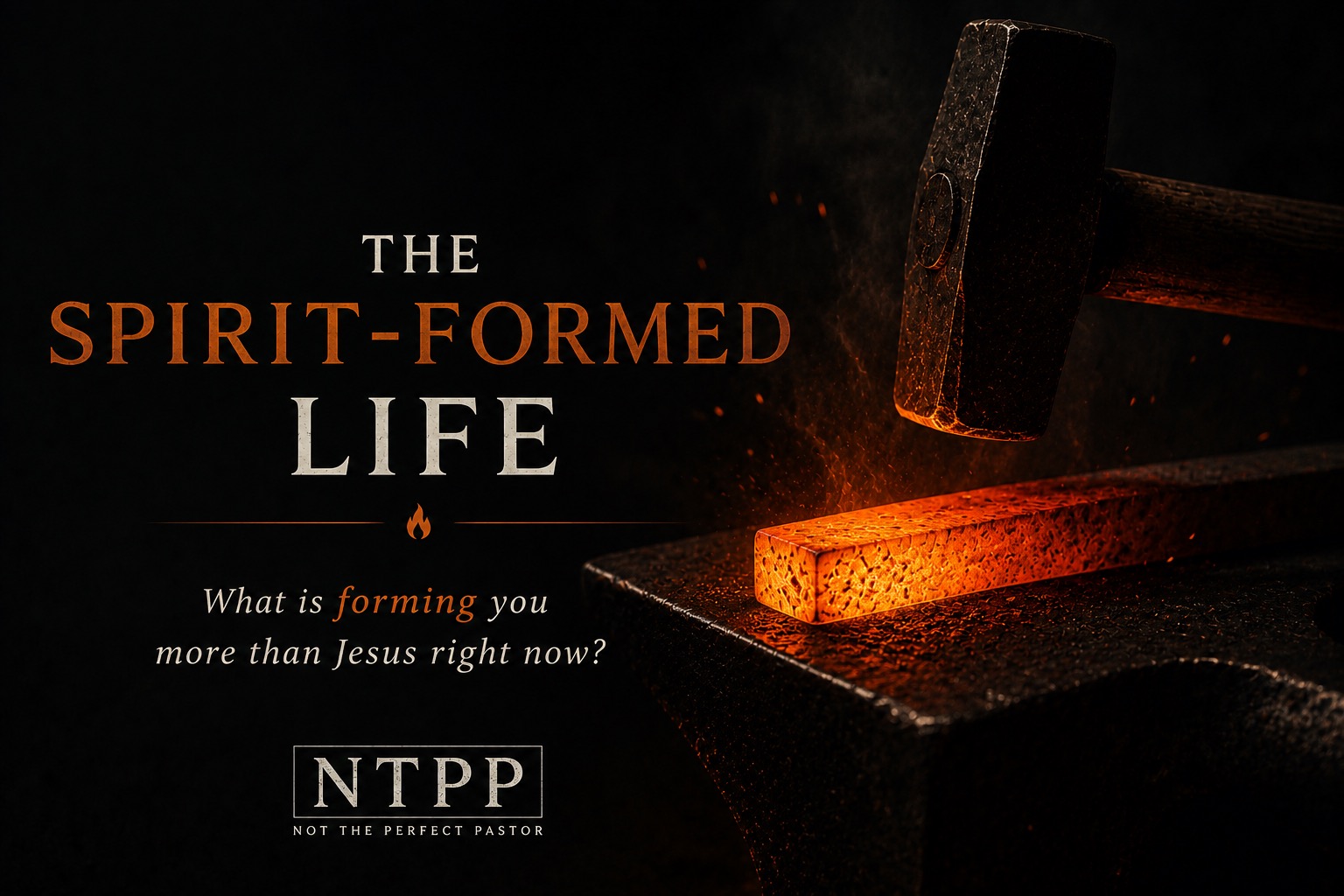
What is forming us?

Because the truth is, every one of us is being formed by something.

Have you ever noticed how quickly your mood can change after spending a few minutes scrolling social media?

You can begin the day grateful and at peace, then suddenly find yourself irritated, fearful, cynical, or angry.

Nobody announces, “Today we’re going to shape your heart.”

Yet little by little, post by post, headline by headline, our hearts are being shaped.

I’ve noticed it in my own life.

Most mornings I leave home feeling pretty good. Grateful, even. But I’ve developed a habit of listening to political podcasts during my forty-minute drive to work. By the time I pull into the parking lot, I’m often frustrated with the world.

Angry.

Cynical.

Ready to argue with people I haven’t even met yet.

That realization forced me to confront something uncomfortable:

What we repeatedly consume eventually shapes who we become.

Something is always discipling us.

The question isn’t whether we’re being formed.

The question is who—or what—is forming us.

The Apostle Paul describes this struggle in Galatians 5. He speaks of a conflict between the flesh and the Spirit. The flesh isn’t simply sinful behavior. At its core, the flesh is our tendency toward self-rule. It is the instinct to remain in control of our own lives.

The flesh says, “I will decide what’s best for me.”

The Spirit says, “Trust God enough to surrender.”

That tension exists within every one of us.

Paul says the result of living according to the flesh is division, jealousy, selfish ambition, anger, and a host of other destructive attitudes and behaviors.

But when the Holy Spirit is shaping our lives, a different kind of fruit begins to emerge:

Love.

Joy.

Peace.

Patience.

Kindness.

Goodness.

Faithfulness.

Gentleness.

Self-control.

Notice something important.

Fruit doesn’t appear overnight.

Fruit grows.

That’s why spiritual formation is rarely instantaneous.

We often wish God would simply “zap” us into maturity. We want one prayer, one sermon, one worship experience, or one spiritual breakthrough to fix everything.

But God usually works differently.

There are moments of awakening.

Moments of conviction.

Moments of surrender.

Moments that change our direction.

Yet transformation itself is usually a journey.

The Holy Spirit may ignite the fire in a moment, but He forms the character of Christ in us over a lifetime.

That’s exactly what happened after Pentecost.

The same Spirit who fell in power stayed with those believers long after the excitement faded. Through worship, prayer, community, obedience, hardship, failure, and restoration, He continued shaping them into the likeness of Jesus.

Pentecost was the ignition.

Spiritual formation was the lifelong fire.

One of the things that stands out to me in Acts 2 is how deeply communal that transformation was.

Did you notice that almost every verb in Acts 2:42-47 is plural?

They devoted themselves.

They prayed.

They shared.

They worshiped.

They ate together.

They served together.

The Spirit who fell at Pentecost didn’t merely create individual Christians.

The Spirit created a community of disciples.

That’s a challenge for many of us because we live in a culture that prizes independence and self-sufficiency. We often think of faith as something private and personal.

The New Testament paints a different picture.

The Holy Spirit forms people together.

We need encouragement.

We need accountability.

We need people who know us well enough to celebrate our victories, challenge our blind spots, and walk with us through difficult seasons.

We need more than rows.

We need circles.

The Christian life was never intended to be lived alone.

As I reflected on all of this, I found myself asking a question that has become our congregation’s Question of the Month:

What is forming me more than Jesus right now?

That’s not a question designed to produce guilt.

It’s a question designed to produce awareness.

Because once we become aware of what’s shaping us, we can begin making intentional choices about what we allow to influence our hearts.

The good news is that God has not stopped forming people.

The same Holy Spirit who moved at Pentecost is still at work today.

Still transforming hearts.

Still calling people out of fear.

Still teaching us surrender.

Still shaping ordinary people into the likeness of Jesus Christ.

The question is not whether God desires to form you.

The question is whether you’re willing to surrender to the process.

So let me leave you with the same question I’ve been wrestling with myself:

What is forming you?

I’d love to hear your thoughts. Leave a comment below, or send me a message. I’d especially love to know your answer to this question:

What is forming you more than Jesus right now?

Until next time, keep looking up…

God Outside the Box

We live in a world where almost everything feels explainable.

Need directions? Pull out your phone.
Need medical advice? Pull out your phone.
Need to fix a washing machine or learn how to smoke a brisket? Pull out your phone.

We have more information available to us than any generation in history. And because so much of life now feels manageable, we’ve slowly begun assuming God should be manageable too.

We want answers. Certainty. Explanations. Systems we can organize and control.

Then we come to Trinity Sunday.

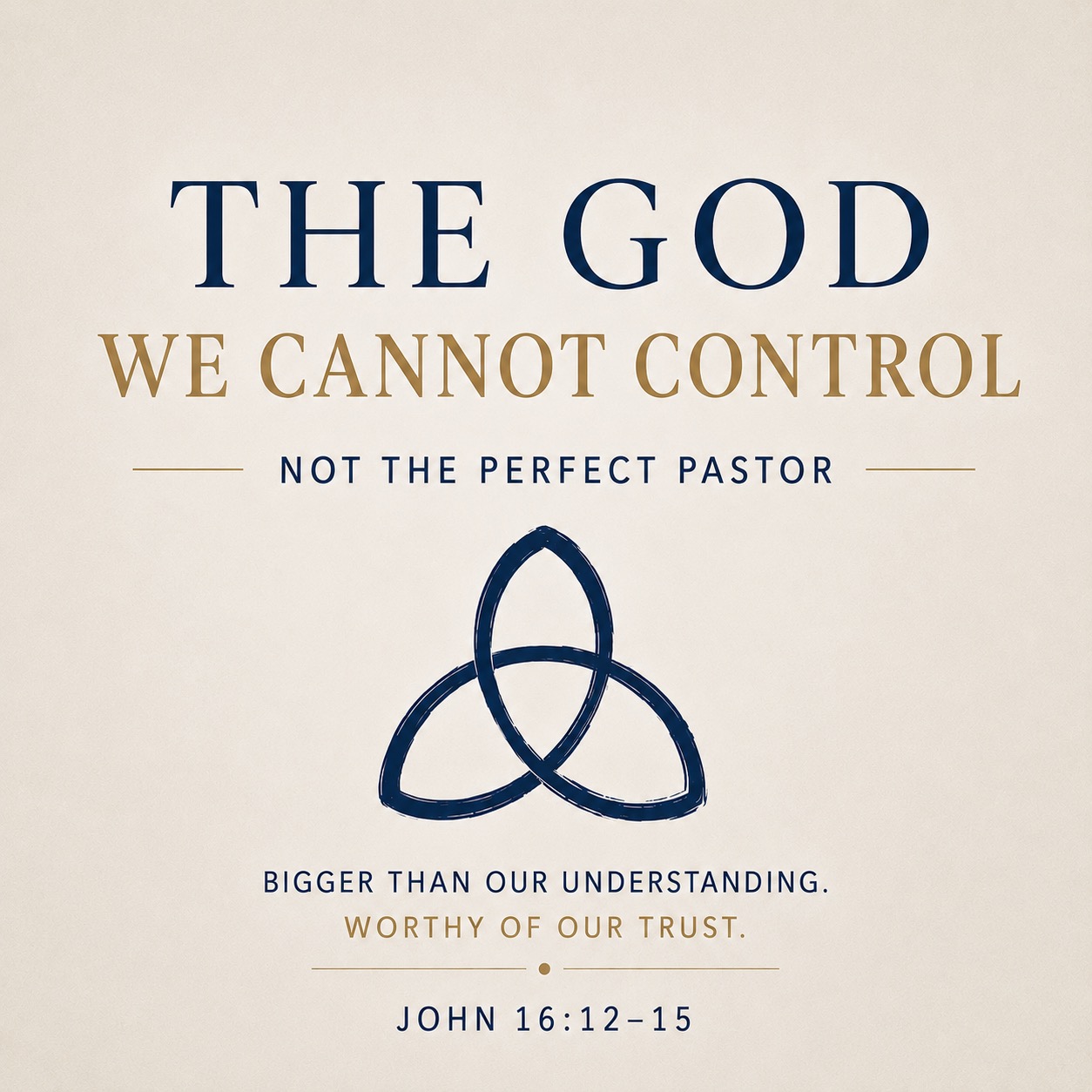
And Trinity Sunday reminds us that God is bigger than our understanding.

The doctrine of the Trinity has always stretched the human mind. One God. Father, Son, and Holy Spirit. Distinct, yet One. Christians have tried for centuries to explain it through illustrations and analogies, but eventually every illustration breaks down.

Why?

Because God is bigger than every comparison we create.

And maybe that’s the point.

Maybe the Trinity is not given so we can fully explain God. Maybe it’s given to remind us that God exists outside the boxes we keep trying to build for Him.

Jesus hinted at this in John 16 when He told His disciples:

“There is so much more I want to tell you, but you cannot bear it now.”

Think about that statement for a moment.

Jesus essentially says, “You’re not ready for the full picture yet.”

Honestly, neither are we.

One of humanity’s oldest temptations is the desire to control what we cannot fully understand. That struggle goes all the way back to Genesis. The serpent tempted Adam and Eve with the desire to “be like God.” Ever since then, humanity has been trying to reduce God into something manageable.

We want a God we can explain.
A God we can predict.
A God we can fit neatly into our political tribe, our preferences, and our comfort zones.

But God refuses to stay inside the boxes we create.

We’ve become incredibly tribal in our culture. It becomes easy to claim God for our side while assuming He fully opposes the other side. But anytime God fully agrees with everything my tribe already believes, I may not be worshipping God anymore.

I may be worshipping a mirror.

The Trinity reminds us that God is always bigger:

  • Bigger than our politics.
  • Bigger than our ideologies.
  • Bigger than our theological pride.
  • Bigger than our understanding.

Now don’t misunderstand me. The pursuit of knowledge is not bad. God gave us minds to think, learn, discover, and explore. Science itself grows out of humanity studying the order of God’s creation.

The mistake comes when we assume that because we can study creation, we can fully comprehend the Creator.

God is not a math equation to solve.

God is mystery.

And mystery makes us uncomfortable because mystery requires trust. We would often rather have explanations than dependence.

That’s why Christianity has never primarily been about mastering information. It has always been about learning trust.

Jesus said the Spirit would guide us into truth. Notice He didn’t say the Spirit would instantly explain everything. The Spirit guides. Slowly. Patiently. Over time.

That process is called sanctification.

Discipleship is formation, not just information.

That may be one of the greatest struggles facing the modern church today. We’ve convinced ourselves that if people know more, they will automatically become more spiritually mature. But information alone does not transform people.

You can know Bible verses and still not trust God.
You can understand doctrine and still live in fear.
You can win theological arguments and still refuse to surrender your heart.

The Spirit forms us gradually:

  • One act of obedience at a time.
  • One surrender at a time.
  • One step of trust at a time.

That’s why the question we’ve been asking at our church matters so much:

“What is one thing Jesus is asking you to obey right now that you’ve been avoiding?”

Because spiritual maturity is not about having God fully figured out.

It’s about trusting Him enough to obey what He has already revealed.

There are some things we may never fully understand this side of heaven:

  • Why suffering comes.
  • Why some prayers seem unanswered.
  • Why some doors close.
  • Why healing sometimes comes and sometimes doesn’t.

The apostle Paul once wrote:

“Now we see things imperfectly, like puzzling reflections in a mirror, but then we will see everything with perfect clarity.” (1 Corinthians 13:12)

Right now, we only see partially.

And honestly, that frustrates us. We want certainty. We want clarity. We want all the answers.

But perhaps part of God’s mercy is that He has not revealed everything yet.

Corrie Ten Boom once shared that as a little girl she feared she would not have enough faith to endure future suffering. Her father asked her, “When I buy your train ticket, when do I give it to you?”

She answered, “Right before we board the train.”

“That’s right,” he said. “And so it is with God. He gives you what you need when you need it.”

That’s how grace works.

Not usually early.
Not usually all at once.
But enough for the moment you’re standing in.

The good news of Christianity is not that we have God all figured out.

The good news is that God has us figured out — and loves us anyway.

He knows every contradiction in us. Every fear. Every failure. Every hidden struggle. Every doubt.

And still:

  • The Father creates us.
  • The Son redeems us.
  • The Spirit pursues and transforms us.

The Trinity reminds us that God is beyond us, but never absent from us.

Maybe faith is not about solving every mystery.

Maybe faith is learning to trust the One who already holds every mystery in His hands.

Because honestly, a god small enough to be fully explained would never be big enough to save us.

So perhaps the real question is not whether we fully understand God.

Perhaps the real question is this:

What area of your life are you still trying to control instead of surrendering to Him?

I’d love it if you’d share your answer to that question with me. Leave a comment below, or message me privately.

Until next time, keep looking up…