Justice by Whose Definition? When Worship Becomes the Issue

In my last post, I asked what constitutes justice when a denomination and departing congregations find themselves fighting over church property. Who defines justice? And does protecting an institution’s interests necessarily mean justice has been served?

But the question doesn’t end at the church’s property line. It follows people through the sanctuary doors. What constitutes justice when a retired pastor’s choice of where to worship becomes a question of denominational loyalty?

I raise the question because the present situation in South Carolina called back to mind an action taken by my former annual conference, the Louisiana Conference of The United Methodist Church, three years ago.

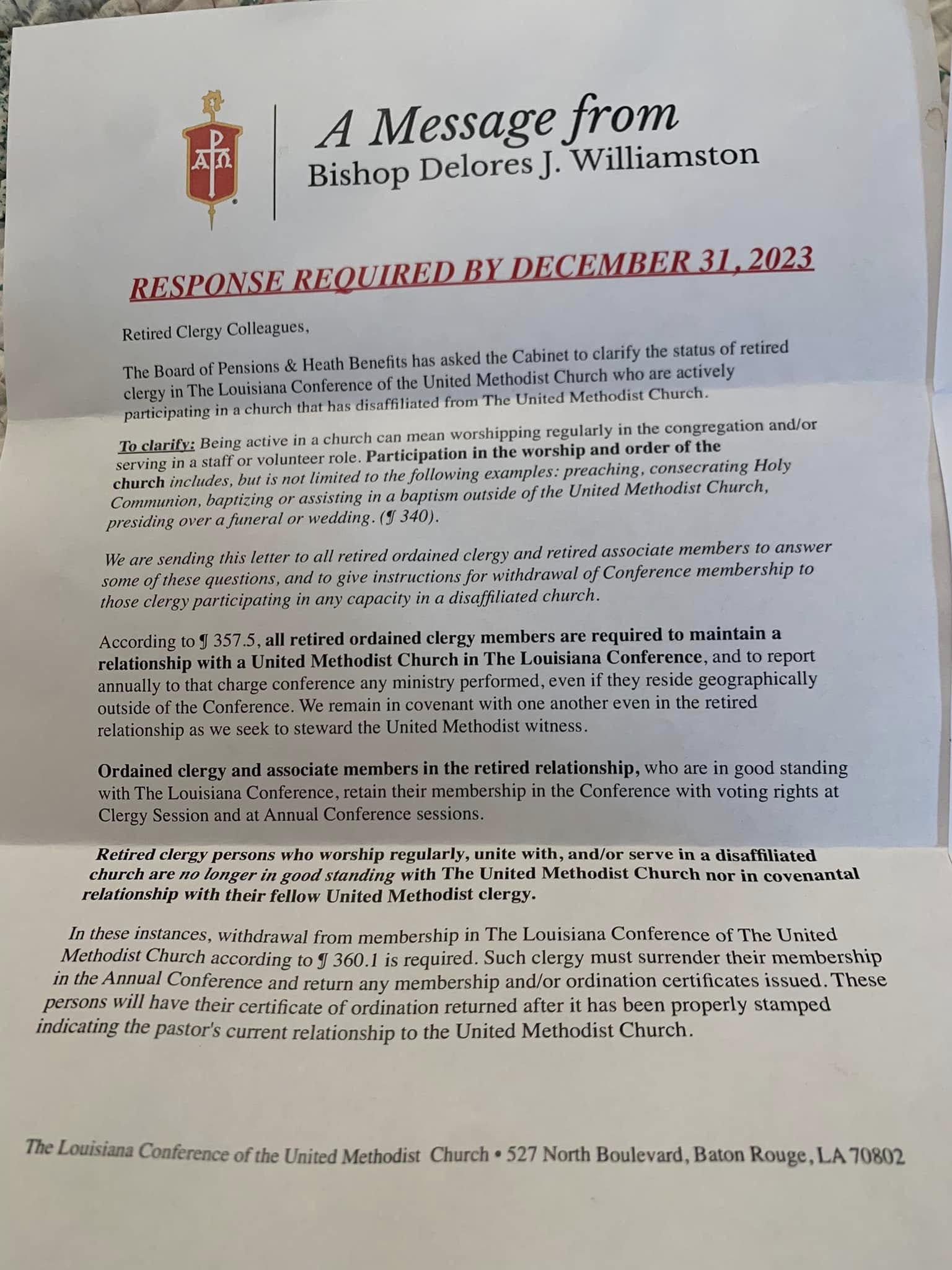
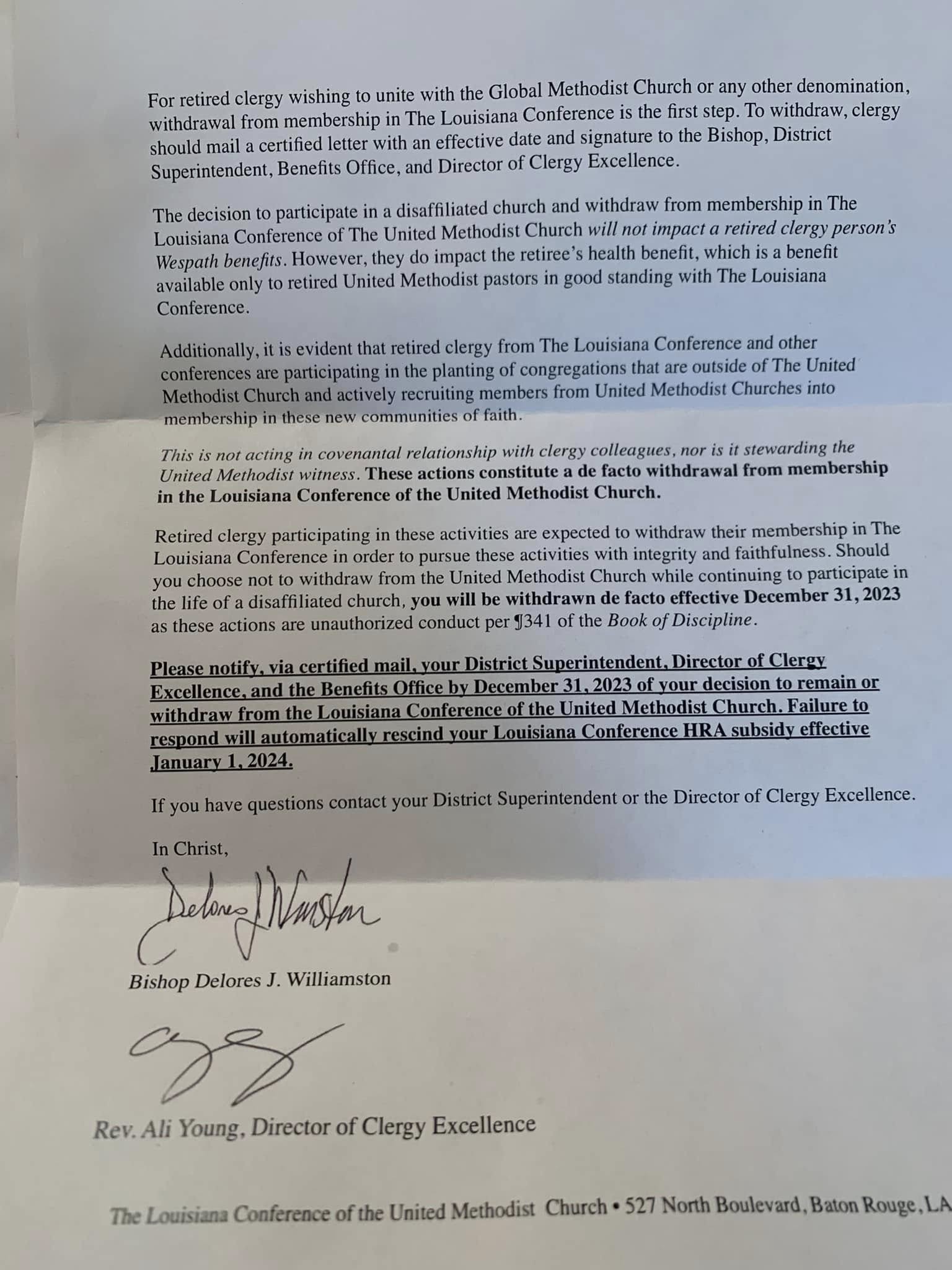
I hear you saying, “Malone, you’re a little late to the party.” I know, but I still wrestle with whether the position outlined in Bishop Delores J. Williamston’s letter to retired clergy was just. The letter addresses their participation in congregations that disaffiliated from the denomination.

I’m including both pages here because the wording matters. Readers deserve to see the bishop’s explanation, including the concerns about clergy covenant and accountability, before considering my questions.
When worship becomes the issue

One sentence in the letter deserves particular attention:

“Being active in a church can mean worshipping regularly in the congregation and/or serving in a staff or volunteer role.”

The letter goes on to identify preaching, presiding at sacraments, and officiating at weddings and funerals as examples of participation. It states that retired clergy who worship regularly, unite with, or serve in a disaffiliated congregation are no longer in good standing or in covenantal relationship with their fellow United Methodist clergy. Withdrawal from conference membership is required.

That is a broad boundary. It encompasses the pastor standing behind the pulpit. It also encompasses the retired pastor sitting in the pew. Should those activities be treated the same way?

There is another question of consistency. If a retired United Methodist pastor may lead a funeral in a Presbyterian, Episcopal, or Baptist church, why should leading one in a disaffiliated congregation carry different consequences? In each instance, the pastor is ministering outside the denomination. What makes one acceptable and the other a violation of covenant?

Is the distinction theological? Does the restriction imply that a disaffiliated congregation is no longer a Christian church, or that it has become apostate? The letter does not make that argument. If the distinction rests instead on the congregation’s decision to leave, then why should that history determine whether a retired pastor may minister to grieving people there?

I recognize that holding a funeral in another church’s building is not necessarily the same as joining its denomination or accepting an ongoing pastoral role. That is precisely why these distinctions matter. Occasional pastoral care, regular worship attendance, and formal ministerial affiliation deserve to be considered on their own terms.

If the concern is ministry outside United Methodism, why single out disaffiliated congregations? If the concern is specifically their departure, what makes this restriction a just response? A different history may explain the different treatment. It does not, by itself, establish that the treatment is just.

Covenant deserves a serious conversation

I spent more than twenty-eight years as a United Methodist pastor. I understand that clergy covenant involves responsibilities. Retirement does not erase those commitments.

The letter explains the continuing relationship retired clergy are expected to maintain with a United Methodist congregation and the reporting required of them. I received many of those reports in my time as a District Superintendent. I know it matters.

The letter also raises concerns about retired clergy planting congregations outside the denomination and recruiting members from United Methodist churches. Yup! I agree that doing so while retaining United Methodist credentials raises legitimate questions about covenant. But putting those activities in the same category as occasionally helping with a funeral, assisting in a baptism, or participating in a worship service seems, well, a bit unjust.

A denomination has a legitimate interest in how people holding its credentials represent it and exercise ministry. Clergy colleagues have legitimate reasons to expect honesty and care in their relationships with one another. But acknowledging those responsibilities does not settle every question about how they should be enforced.

Regularly attending worship, joining another denomination, and recruiting people away from a congregation are different actions. What justifies placing them within the same boundary? What harm does each cause? And should each carry the same consequence? Those are questions about justice.

A policy can be clear and still deserve examination. An institution can have authority and still need to explain why a particular exercise of that authority is proportionate and faithful to its mission.

There are people behind the policy

I know former colleagues who have responded in different ways. Some willingly surrendered their credentials so they could participate with integrity in the congregations where they wanted to worship and serve. Others continued openly, essentially daring the conference to take their credentials. Still others continued quietly, careful about drawing attention to where they worshiped or how they participated.

I will not identify them or describe circumstances that might identify them. Their lives are not illustrations for me to use without regard for the consequences. Nor do I assume that every response resolves the question of covenant equally well. But these different responses reveal the strain this boundary places on people.

Surrendering credentials after a lifetime of ministry is no small thing. Neither is feeling that worshiping with a Christian congregation must be done discreetly.

What kind of pastoral conversation might help people navigate those choices? Is there room to listen to the relationships, convictions, and spiritual needs involved before concluding that participation constitutes a broken covenant?

The consequences matter

The letter also addresses benefits. It explicitly states that withdrawal will not affect a retired clergy person’s Wespath benefits. It distinguishes those benefits from the conference’s retiree health benefit, which it describes as available only to retired United Methodist pastors in good standing with the Louisiana Conference.

That distinction matters. The letter isn’t a threat to take away a pastor’s pension. Still, attaching consequences for retiree health benefits to a determination of good standing makes the definition of good standing especially consequential. I am addressing the letter and the reasoning it presents, rather than making a claim about how every case was handled or what policy is in effect today.

Perhaps the policy has changed. Perhaps it was never enforced. Those possibilities would matter in assessing its present impact, but they would not erase the questions raised by the letter itself. What does it mean for the church to tell retired pastors that where they worship could affect their standing—and, with it, their eligibility for a retiree health benefit?

Is regular worship attendance sufficient grounds for consequences of this magnitude? What pastoral purpose does that serve? And could a more carefully drawn boundary protect legitimate denominational interests while respecting a retired pastor’s conscience?

Justice must reach beyond our own interests

These questions should not depend on which denomination’s name appears over the church house door. If my own denomination established a comparable boundary, it would deserve the same scrutiny. Otherwise, “justice” becomes a word we use when we dislike someone else’s decisions and put away when the decisions benefit us.

I am not asking the church to abandon accountability. I am asking what faithful accountability should look like when conscience, Christian fellowship, and institutional commitments come into tension.

We should be able to distinguish worship attendance from the exercise of denominational authority. We should be able to address concerns about recruitment without assuming that every act of participation poses the same problem. And we should be able to ask whether a consequence is proportionate without being accused of dismissing covenant altogether.

In the previous post, the question concerned property. Here, it concerns people—their worship, their relationships, their years of service, and their consciences. The institution’s interests deserve consideration. So do those of the retired clergy.

Just because we can justify something doesn’t make it just. Justice by whose definition? Surely our answer must make room for the person sitting in the pew.

Until next time, keep looking up…

If any of my reflections encouraged or challenged you, follow Not the Perfect Pastor on Facebook for more conversations about faith, ministry, and becoming faithful disciples of Jesus.

Justice by Whose Definition?

And so the fight for “justice” continues.

In an October 13 statement, the South Carolina Conference of The United Methodist Church announced that a circuit court judge intends to dismiss cases brought by the Conference and local United Methodist churches involving 70 churches seeking to separate from the denomination. According to the statement, the written orders have not yet been entered. The Conference nevertheless announced its intention to appeal.

For years, congregations seeking to leave The United Methodist Church over theological differences could do so with their property under a temporary provision in the Book of Discipline (Paragraph 2553). That window closed at the end of 2023. In the years since, some churches have continued to separate—often outside the processes allowed by church law—while annual conferences have sought to retain the properties under the denomination’s longstanding trust clause. The South Carolina cases are one result of that unresolved conflict.

Near the conclusion, Bishop Leonard Fairley said, “So, we will continue to seek justice faithfully, pursue the appropriate legal avenues available to us, and trust God with what lies ahead.”

It was the word justice that caught my attention. Just what constitutes justice in a situation like this? And who gets to define it?

Let me acknowledge my own perspective. I spent more than 28 years as a United Methodist pastor, including two years as a district superintendent. I now pastor Haughton Methodist Church, a congregation that chose to walk away from its former church property. I have a history here. I have convictions. I won’t pretend otherwise. 

But those experiences are precisely why I think the question deserves more than an assumption that justice means our side wins. Read alongside the announced intention to appeal, that language raises a question for me: Does seeking justice necessarily mean overturning the dismissal?

Who Has a Just Claim?

An Annual Conference can argue that church property belongs to a connection larger than any single congregation. Local churches have benefited from appointed pastors, denominational relationships and the contributions of those who came before the present membership. Some have also received financial assistance. Those things matter.

But generations of local people putting money in offering plates, paying mortgages, repairing roofs, mowing grass and keeping the lights on matter just as much. So do the sacrifices of people who believed they were providing a place where their children and grandchildren could worship and come to know Jesus. How does one weigh those contributions?

Where a Conference’s financial investment has been limited or nonexistent, what makes retaining the property morally just? Is the legal claim sufficient to settle the Christian question? And from the other direction, does the present congregation’s desire to leave erase every obligation to the connection or every intention of previous generations?

Those questions require actual answers. Calling our preferred outcome “justice” does not provide them. A court can determine legal rights. Christians still have to ask how we ought to exercise those rights.

What Does the Fight Cost?

The bishop’s statement also speaks of people hungry for the Gospel, communities needing healing and children needing to discover the love of Jesus. Amen. I couldn’t agree more. There is much ministry before us. That is part of what makes this so troubling.

What does it cost to continue these disputes? And I don’t mean only the attorney fees. What does it cost in pastoral attention? In congregational energy? In relationships? In the credibility of our witness to people watching from outside the church? What could the money accomplish if it were used to feed the hungry, clothe the naked or support ministries of care for the sick?

I get it: property has value, and protecting it can preserve resources for future ministry. Stewardship sometimes requires difficult decisions. But stewardship also requires asking whether the expense of securing an asset is consuming the very ministry that asset was supposed to serve.

That question applies to departing congregations, too. A congregation can become so determined to keep a building that keeping it becomes the organizing purpose of its life. At some point, both sides ought to ask: How much are we willing to spend to avoid losing? And what might we lose while insisting on winning?

The Scripture We Have to Face

Then there is Paul. 1 Corinthians 6 makes uncomfortable reading when Christians are taking one another to court. Paul confronts believers over their lawsuits and asks why they would not rather suffer wrong or accept being cheated.

I don’t believe a blog paragraph can settle every question about how that passage applies to every legal circumstance. But surely it requires more from us than a quick explanation of why our particular dispute deserves an exception.

Paul asks us to consider the possibility that accepting a loss might be more faithful than securing a victory. What are we supposed to do with that? Does it have any practical authority over our decisions? Can it change our course of action? Or do we affirm the authority of Scripture until Scripture threatens something we are determined to keep?

I ask that as someone who has preached plenty of difficult passages and then discovered how difficult they are to live. What sounds right when we read it in worship on Sunday can be harder to accept when we meet with an attorney on Monday.

Sometimes You Walk Away

At Haughton, our congregation walked away. I cannot mention that as though leaving church property behind were a small thing. A church building holds memories. People remember weddings, funerals, baptisms and the places where they sat beside someone they loved. You can’t pack any of that into a moving van.

We now worship in a storefront. There are limitations and inconveniences. The decision to walk away had consequences beyond the day we left. But there is still a congregation. There is still worship. There is still a Gospel to proclaim and a community to serve.

Our experience does not give me the right to prescribe the same decision for every other church. It does give me a reason to take Paul’s question seriously. Accepting loss is an actual possibility, with actual costs.

It also raises a question for the institution receiving what a congregation relinquishes. A congregation’s willingness to walk away does not automatically establish the justice of the Conference keeping the property, or the justice of the Conference continuing to fight for it. Accepting an outcome and declaring that outcome just are different things.

If we appeal to Scripture when asking a congregation to accept loss, we must also ask what Scripture might require the Conference to surrender. Otherwise, accepting loss becomes something we recommend exclusively to the other side.

Justice, Mercy and Humility

Micah 6:8 holds together doing justice, loving mercy and walking humbly with God. I need all three. So does the church.

Humility requires admitting that my interests can influence my definition of justice. Mercy requires taking seriously what my insistence on those interests will cost someone else. Neither makes justice unimportant, but both should shape how we pursue it.

I don’t know how the South Carolina appeals will unfold. The statement itself says the trial court’s written orders are still pending. I am not claiming to know how the legal questions should be resolved. I am asking whether we have given the Christian questions the attention they deserve.

What do we owe one another? What does our witness require? What are we willing to surrender for the sake of the Gospel? And, perhaps most importantly, can we recognize justice when it requires something of us?

The fight for “justice” continues. Meanwhile, the hungry still need food, the sick still need care, the poor still need help, and the orphan and widow still need someone to stand beside them. A world still needs Jesus. Those needs don’t settle the property question. But they ought to weigh heavily in how long we fight, how much we spend and what we are willing to surrender.

Justice. We all want justice. The problem is in knowing whose definition to use.

Until next time, keep looking up…

If any of my reflections encouraged or challenged you, follow Not the Perfect Pastor on Facebook for more conversations about faith, ministry, and becoming faithful disciples of Jesus.

Forty-Five Years Together, Six Restaurants, and a Complaint About the Grits

Some people go on vacation for the scenery. Some go for the shopping. Apparently, I go for the food.

Actually, last week was our 45th anniversary. We had planned to celebrate it at Dauphin Island, AL with most of our family around, but a little thing called Hurricane Isias said, “Not so fast.”

We left home last Wednesday headed to Dauphin Island with Vanessa’s eye on the weather and me on my phone with the rental company. About an hour and a half into our trip we discovered that there was going to be an evacuation of the Island on Friday, and that the west end was already flooding.

You’ve heard the saying, “Come h**l or high water.” Well, it came high water! No beach for us. Isias messed up our plans and the plans for most of our children and grandchildren. Vanessa said, “Let’s go to Hot Springs.” 

I said, “Okay!” She took over driving and I got busy finding a place to stay. After driving 90 miles in the opposite direction, we turned around and headed north. We were packed for the beach but we were heading for the mountains. Talk about an interesting turn of events.

Vanessa and I just decided to eat our way through Hot Springs while celebrating our 45th anniversary. I thought I’d offer my completely unofficial restaurant reviews. Nobody paid me for these opinions. In fact, I paid pretty well for a few of them.

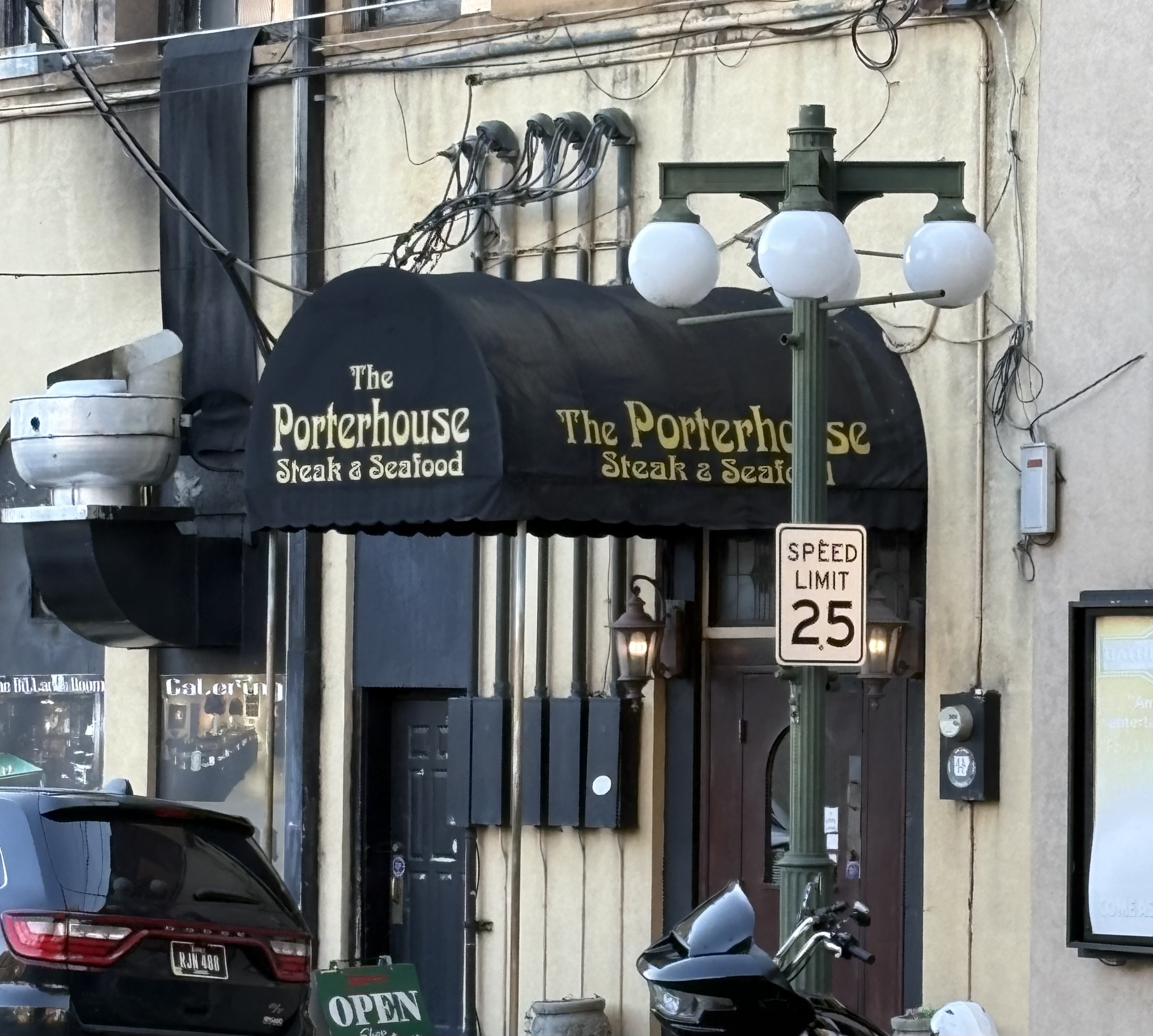
The Porterhouse — 5 out of 5

We started our trip at this nice steakhouse on Central Avenue, and it was an excellent way to begin. Great food, pleasant atmosphere, and a server who understood the difference between being attentive and constantly hovering over your shoulder.

Vanessa had the filet mignon, which will become relevant in a minute. Stay with me. There’s a steak comparison coming.

Superior Bathhouse Brewery — 3.5 out of 5

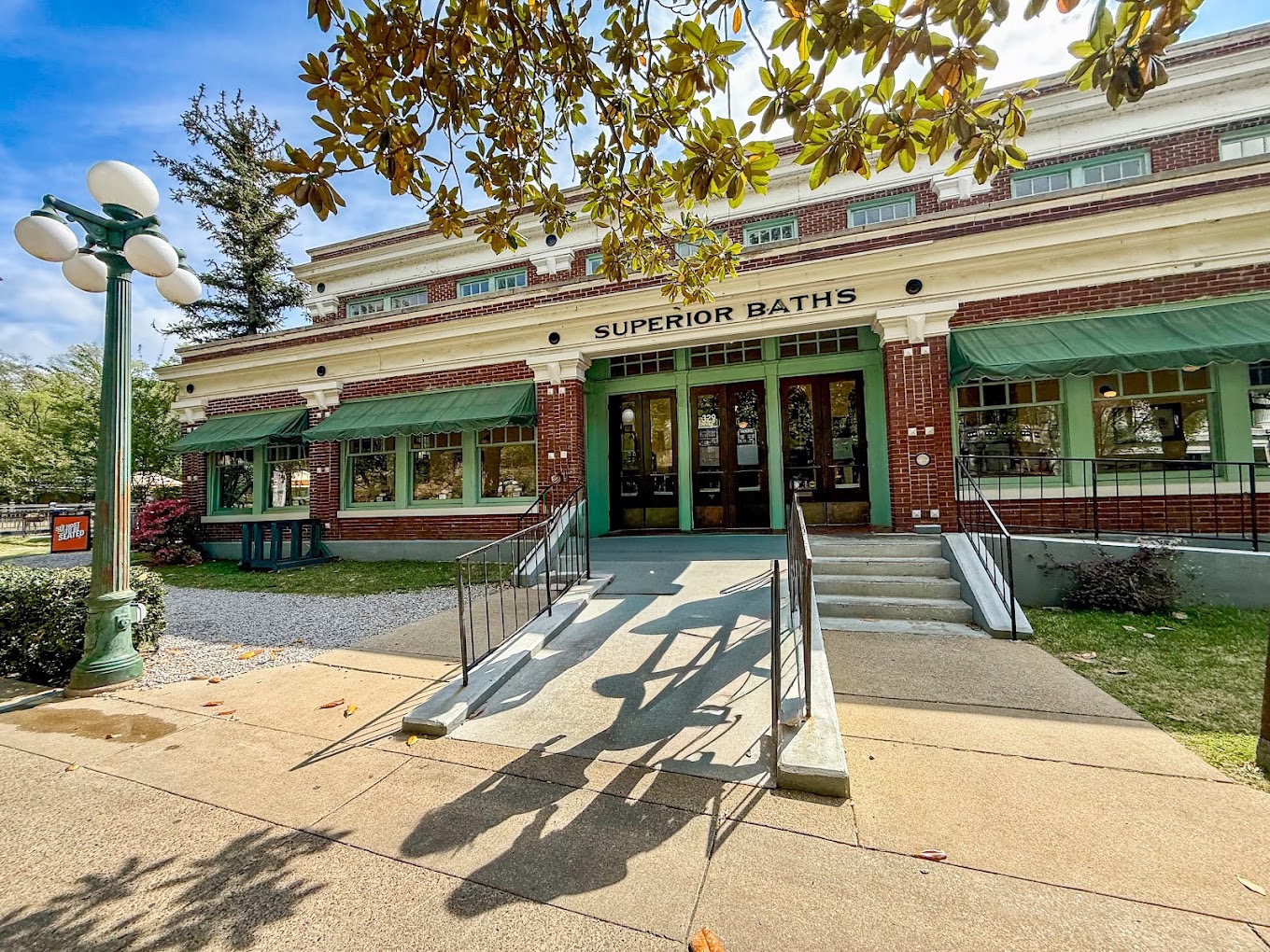
A brewery in a converted bathhouse is a pretty interesting idea. The food was typical bar fare. I had a bacon smash burger, and Vanessa had a sweet potato salad with fried chicken and a strawberry vinaigrette.

The food was good. Just not “Ooooo! Let’s go back there!” good.

Three things account for my rating. First, we were seated at a bar overlooking the city sidewalk, with our backs to everybody in the restaurant. Some folks might enjoy watching people walk by. I would have preferred a different seat.

Second, once the food arrived, our server wasn’t particularly attentive. We needed refills and ketchup. I finally got up and found the server to get more ketchup.

I know. It’s just ketchup. But when you need ketchup, you need ketchup.

Third, the food simply wasn’t memorable enough to make up for the other two things. Had we waited very long for a seat, I probably would have landed at a 3.

Luna Bella — 5 out of 5

ChatGPT told me this upscale Italian restaurant was the best in Hot Springs. I haven’t eaten at every restaurant in town, though I certainly made an effort, but Luna Bella made a strong case for itself.

The food was excellent. The service was excellent. They even brought us a complimentary chocolate mousse for our anniversary.

Vanessa had the fettuccine Alfredo. I’m not an Alfredo fan, but her dish was amazing. I had the eight-ounce filet mignon, ordered medium and cooked to perfection. It had the slightest char on the outside that formed the perfect crust.

Remember Vanessa’s filet at The Porterhouse? She tasted mine at Luna Bella and said it was better. That’s saying something, because The Porterhouse had already earned its five stars.

Be prepared to get off your pocketbook, though. Luna Bella is pricey. But for our anniversary dinner, we certainly enjoyed what we paid for.

Diablos Tacos and Mezcal – 4.5 out of 5

We couldn’t leave Hot Springs without planning a stop at The Grateful Head Pizza and Beer Garden.

I would have easily given it five stars because, well, the name alone ought to be worth something. LOL!

Unfortunately, they were closed for renovations. Seems as though the mountain shifted and ended up in their kitchen.

So, we ended up at a place on Central Avenue called Diablos. This was a first-time for us, but Mexican seems to be our default and we hadn’t had any for the week.

I ordered fajitas. It’s not often that fajitas melt in your mouth, but they use rib-eye instead of skirt steak. You pay a premium but they were probably the best fajitas I ever had.

Vanessa had something called Quesabirrias which is, according to their menu, a rib-eye prepared beef brisket style wrapped in corn tortillas that have been dipped in salsa and fried. Yes, I tasted. Slap yo’ Momma good!

So, why only 4.5 stars? I had to pay $4 for chips and salsa. Yeah, I know, but I’m a cheapskate, so sue me.

Put this one on your list. You won’t be sorry.

Now, lest you think we neglected the most important meal of the day…

The Pancake Shop — 4.5 out of 5

This Hot Springs landmark has been in business since 1940. We arrived at 8:10 a.m. and waited about 40 minutes for a table.

Was it worth the wait? Eh. Let me explain.

Nobody will ever accuse these folks of skimping on portions. I ordered three pancakes, a side of sausage, and a bowl of grits. Apparently, I thought I was feeding a small committee.

One pancake is the size of the plate. Stack two more on top, and you have to carve out the middle just to create a place to pour your syrup.

The sausage patties were huge, too. One pancake and one sausage patty would have been more than sufficient. I could not eat everything I ordered, though I gave it an honest effort.

The service was excellent, the price was incredible for the amount of food, and the fresh-squeezed orange juice was hard to beat.

So why the half-star deduction?

No matter how much salt I put on the grits, I couldn’t get them salty enough. And the syrup had a “wang” to it that I didn’t particularly care for.

That’s my highly technical culinary assessment. A wang.

If you skip the grits and like the syrup, you’ll probably give it five stars.

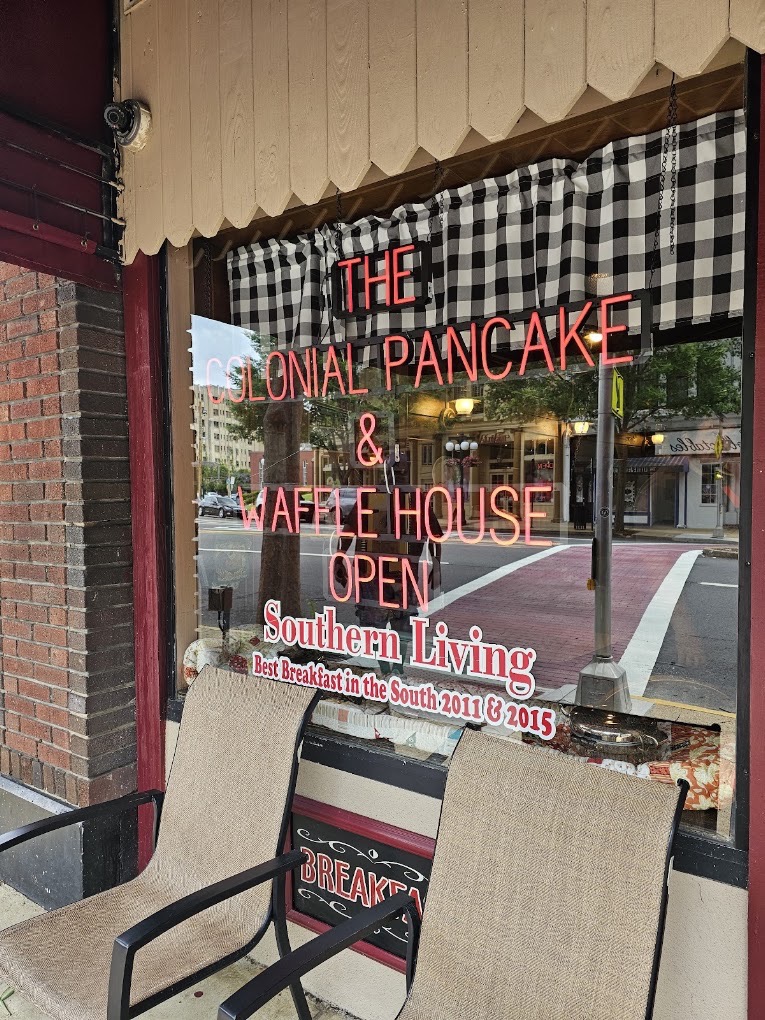
Colonial Pancake and Waffle House — 5 out of 5

Another Hot Springs staple, and this one checked all the boxes. Great food, great service, abundant portions, and a great price.

Sometimes there’s just not much else that needs to be said. Except, “Pass the syrup.”

There you have it. Six restaurants, two happy travelers, and a pretty good explanation for why my clothes fit differently after vacation.

Forty-five years together, and Vanessa is still willing to sit across the table from me while I explain what’s wrong with the grits. That woman deserves more than chocolate mousse. 

What’s your favorite place to eat in Hot Springs? We will definitely go back. Apparently, there are still a few restaurants we missed.

Until next time, keep looking up…

If any of my reflections encouraged or challenged you, follow Not the Perfect Pastor on Facebook for more conversations about faith, ministry, and becoming faithful disciples of Jesus.
When Everything Becomes a Bet

I don’t know why (I’ve never used a betting app in my life), but an advertisement popped up on my phone recently offering me the opportunity to bet on whether the price of silver would go up or down over the next twenty-four hours. Silver. Over the next twenty-four hours. Who knew?

The ad was for Kalshi, a prediction-market platform. Its products are called event contracts, and its exchange model differs from a traditional sportsbook—or so I’m told. I’m not versed enough in online betting to know the difference. What I do know is online wagering has proliferated recently, and I can’t think that’s a good thing. Apparently, we can now bet on anything in life. Increasingly, the opportunity comes looking for us.

WHEN TRUST BECOMES A SALES PITCH

That bothers me—more than a little. One of the reasons it bothers me is that a few of my favorite podcasts are now being sponsored by these “betting” markets. Though not specifically faith-based, they are led by folks who claim a deep faith. That gives me a little heartburn. When we come to trust someone’s voice, that trust can extend to what they’re selling. I wonder whether these hosts have thought enough about what they’re inviting their listeners to do.

I’m also concerned that these betting markets are being used as a gauge for future elections. What are the chances so-and-so will win? What are the odds the Republicans hold onto the House? I wonder how those “predictions” might shape our judgment. A candidate’s chances of winning tell us very little about whether that person ought to win. Are we allowing the way people bet to influence the way we think about whom to vote for?

A SAINTS FAN’S CONFESSION

Sports betting raises another concern: the integrity of the games themselves.

Now, I need to confess something. I love the New Orleans Saints. And I have occasionally been accused of wearing a tin-foil hat when discussing the way officials treat my team. I rather prefer to think of it as protective headgear for a long-suffering fan.

After watching Jared Goff’s apparent fumble become an incomplete pass, then watching a similar-looking play involving Tyler Shough remain a fumble against the Raiders, I suspect my tin-foil hat club has picked up a few members. Welcome. Bring your own aluminum foil. We’re a modest operation.

Yes, I’ve heard the rules explanations. No, I have no evidence that either call had anything to do with gambling. Being a Saints fan does not qualify me to conduct a federal investigation, though it has given me considerable experience demanding one.

Beneath my humor, though, is a serious concern. Players, coaches, and officials make decisions that affect what happens on the field. Those decisions can also affect the outcome of wagers. That creates opportunities for conflicts of interest, misuse of inside information, and deliberate manipulation.

A disputed call does not establish any of those things. But it can illustrate how fragile trust becomes when fans know money is riding on the decision. A bad call has always been part of sports. Betting can add another question to the familiar argument about whether the official got it right: did somebody have a reason to get it wrong?

I need to be careful about asking that question of any particular person without evidence, but I’ll also remind us that betting-related misconduct has occurred. The NBA banned Jontay Porter after finding he shared confidential information, limited participation for betting purposes, and wagered on NBA games.

That example matters because an entire team does not have to agree to lose for a wager to be compromised. A market tied to one individual’s performance can create an opportunity for that individual to influence the result. The temptation deserves attention before another scandal gives us a reason to pay it.

THE NEXT BET IS ALWAYS WITHIN REACH

There was a time when going somewhere to gamble required at least the decision to go. That offered no guarantee of restraint, but it created a boundary. A phone puts the opportunity in our pocket. The same device we use to talk to our children, check the weather, and read the news can invite us to put money on the next uncertain outcome—the next election, the next game, even the next solitary play.

Convenience is usually presented as a good thing. I don’t think we can say the same thing when it comes to gambling. What happens when the next wager is always within reach? What happens when a loss can immediately be followed by another opportunity to win it back? And what responsibility belongs to businesses that earn money by encouraging us to keep participating?

WHOSE MONEY?

As disciples of Jesus, we ought to ask what this constant invitation to wager is doing to our families, our communities, and our understanding of a good life.

I find those questions inseparable from stewardship and contentment. The money entrusted to us carries responsibilities—to our households, to our neighbors, and to the work God calls us to do. The promise of a quick gain can make the ordinary work of earning, saving, giving, and waiting seem painfully inadequate.

Are we stewards? If so, then just whose money are we gambling with? I could rattle off a list of biblical passages that leave little doubt whose money it is. The one I’ll mention here is Matthew 25:14–30, the Parable of the Talents. The servants are entrusted with their master’s property, and they are accountable for what they do with it. That ought to make us ask whether the way we use what God has entrusted to us reflects His purposes.

What does faithful stewardship look like when I open my wallet—or an app on my phone? Am I considering what God would have me do with what He has given me? His generous grace ought to move me to gratitude and faithfulness. That deserves more thought than the odds on my next wager.

ARE WE CONTENT?

It’s not just a matter of faithful stewardship, either. It’s also an issue of contentment. I’m reminded of Hebrews 13:5 here: “Keep your lives free from the love of money and be content with what you have, because God has said, ‘Never will I leave you; never will I forsake you.’”

Are we trusting God for His provision, or are we trusting in blind luck?

We also need to consider how gambling can feed greed and envy. Do we gamble because we want something we don’t have? Do we gamble because we want something that belongs to someone else? Even if we start out simply wanting a little entertainment, we ought to pay attention to what keeps us coming back.

In Philippians 4, Paul describes contentment as something he learned. That suggests practice. It suggests that our desires need formation. A steady invitation to imagine how much better life could be after the next winning wager offers a competing lesson.

MORE THAN PERSONAL CHOICE

Certainly, some people place an occasional bet and stop. But a biblical assessment cannot end with the person who can afford a loss and walk away. It must also consider the person who keeps going, the spouse who discovers the missing money, and the child whose needs go unmet. When money needed at home is lost, the consequences reach people who never agreed to the wager.

Personal freedom matters. So do the responsibilities that come with it. Calling an activity a personal choice does not make all its consequences personal.

Friends, we can be biblical about this subject without humiliating people who are struggling–that’s what grace is for. Someone whose betting has become destructive needs the church. They need a place to tell the truth, find practical help, and discover people who are willing to walk with them. Their family needs care as well.

Even when gambling is legal, legality is an insufficient measure of whether an industry serves the common good. We can recognize personal freedom while questioning businesses that continually encourage people to risk money. We can enjoy sports while insisting that their integrity matters more than the number of markets someone can build around them.

That little advertisement about silver left me with a question much larger than tomorrow’s price. Just because we can make a bet out of something, should we?

I would like us to recover the freedom to enjoy a game, follow the news, or pick up our phones without being invited to put money on what happens next.

Until next time, keep looking up…