The United Methodist Church is the gift that just keeps giving. Especially if you’re a Methodist pastor who writes a blog. I would much prefer the subject were something other than another church dispute, but here we are.
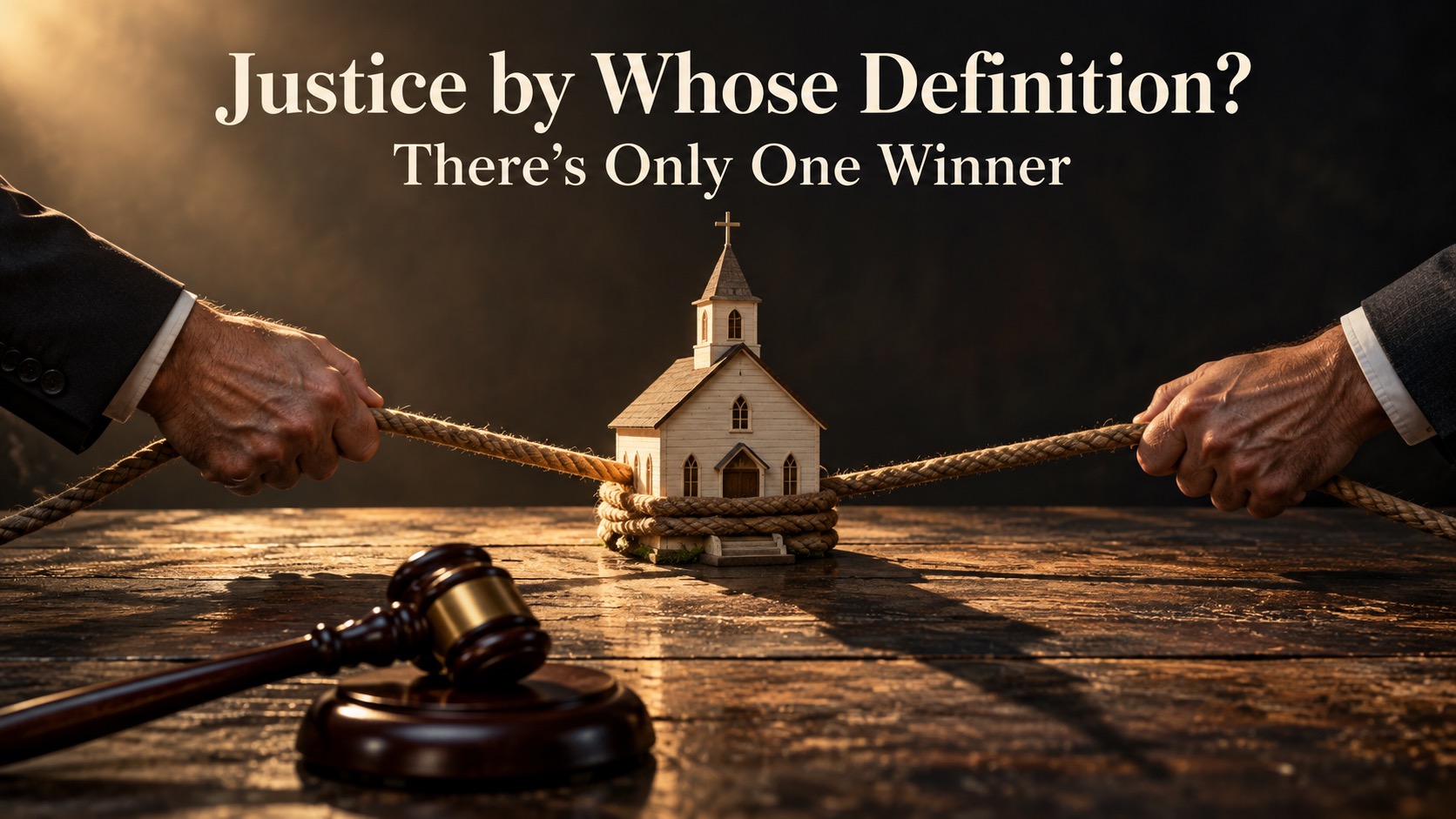
In recent posts, I’ve asked, “Justice by whose definition?” I’ve asked it about church property and about the treatment of pastors. Now, the conflict between Highland Park United Methodist Church and the Horizon Texas Conference brings me back to the question again.
Highland Park United Methodist Church in Dallas and the Horizon Texas Conference are embroiled in a dispute over church governance, denominational authority, and property. The conference sued after Highland Park changed governing documents in ways the conference says improperly removed denominational oversight; church leaders dispute those allegations.
In a recent called congregational vote, an overwhelming majority of those voting supported leaving the denomination, but the conference maintains that a congregational vote alone cannot end that relationship. The conflict now involves both a pending lawsuit and competing claims about who has authority to lead the church.
Hearing Both Sides
Let me begin by granting both sides something: I believe they think they are acting justly. Conference leaders understand themselves to be protecting a trust they have a responsibility to preserve. Highland Park’s leaders understand themselves to be acting faithfully on behalf of their congregation and its future. We can give both sides the benefit of the doubt about their intentions without concluding that either side has gotten everything right.
That is part of what makes this so difficult. People can sincerely believe they are doing the right thing and still need to examine what they are doing—and what it is costing everyone around them.
I bring my own history to this discussion. As many reading this know, I spent more than twenty-eight years as a United Methodist elder, including time as a district superintendent. I understand something of the responsibilities conference leaders carry. I also understand something of the frustration that leads people to conclude they can no longer remain in the denomination they once expected to serve for the rest of their lives.
So, I’m interested in the arguments about trust clauses, church authority, and property. But I keep coming back to a question that won’t be settled simply by determining whose legal argument is stronger. The question I’m wrestling with is this: What does justice require of people who claim to follow Jesus?
My Dog in the Hunt
Some may ask, “Do you even have a dog in this hunt?” It’s a fair question. I left the United Methodist Church in August 2019. I don’t have a claim on Highland Park’s property or a vote in the Horizon Texas Conference. Whatever happens in court, nobody will be sending me a check. I do, however, still have friends who serve it faithfully, and leaving did not erase my affection for the people or the institution that helped shape my ministry.
More than that, I’m still a Christian pastor. When Christians fight publicly, the damage to our witness doesn’t stop at the denominational boundary. People watching from the outside may not understand the difference between a United Methodist and an Evangelical Methodist, and most would not care to know. All they hear is Methodist. They hear us Methodists talk about Jesus, and then they watch how we treat one another.
That gives me a reason to care. It also gives all of us a question to consider: What are they learning about Jesus from watching us?
Already Defeated?
As I contemplate this situation, I can’t help but return to 1 Corinthians 6. Paul addresses a church in which believers are taking one another to court, and he has some uncomfortable things to say about it.
What troubles me most is that Paul doesn’t wait for a verdict before declaring that something has already gone terribly wrong. In verse 7, he tells them that having lawsuits against one another is already a defeat. Then he asks whether they would be willing to suffer wrong rather than continue the fight.
That is a difficult word to hear when we’re convinced we’re right. It is even more difficult when we believe we have a responsibility to protect something entrusted to us.
I can almost hear the objections because I’ve raised some of them myself. There are obligations to honor. There are gifts from generations of faithful people to protect. There are ministries to sustain and people whose future must be considered. Those responsibilities are real, and they deserve more than a dismissive wave of the hand. But Paul’s words deserve more than that, too.
If we can explain all the reasons we have to fight without seriously considering Paul’s challenge, have we allowed Scripture to examine our actions? Or have we simply decided that our circumstances are too complicated for it to apply?
I don’t read this passage as a blanket prohibition against every use of the courts. It should never become a way to silence victims or shield wrongdoing from accountability. Paul himself goes on to confront those who wrong and cheat their fellow believers. His concern includes both the injury being done and the way Christians are handling it.
Still, I can’t read this passage and come away comfortable with the prospect of Christians spending years and substantial ministry resources fighting one another over who gets to control the church.
At the very least, Paul calls us to examine what we are willing to surrender for the sake of faithfulness. That question belongs to everyone involved. It belongs to conference leaders charged with protecting the connection, and it belongs to congregational leaders seeking a different future.
Are we willing to accept an outcome that gives us less than everything we believe we deserve? Can we make room for the needs of the people across the table, including those who want to remain United Methodist? Can we pursue a settlement that allows ministry to continue without requiring one side to humiliate the other?
I don’t know everything that has been said behind closed doors or every effort that has been made toward an agreement. I do know that Paul gives us reason to keep pursuing one.
More Important Than Winning
Surely our responsibility to protect the church includes a responsibility to consider what our fighting is doing to it. That is why I keep wondering what a different outcome might look like. Whatever efforts have already been made, could both sides find a way to stay at the table long enough to reach an agreement without prolonging the litigation? And could both sides leave the negotiating table with something less than everything they want, yet preserve something more important than a victory?
A “just” agreement would have to take seriously the congregation’s future, the conference’s responsibilities, and the people who wish to remain United Methodist. Those people cannot become an afterthought. Neither can the ministry that might continue if the parties find a way forward.
I am not suggesting that any of this would be easy. I am asking whether the difficulty of reaching an agreement is greater than the damage of continuing the fight.
I bring that question out of my own experience. I was a delegate at the February 2019 special General Conference that adopted Paragraph 2553. When that conference ended, I knew my time in the UMC was coming to an end. I left that August, not for lack of conviction, but because I saw the fight that was on the horizon and I simply didn’t want to be a part of that fight.
Sometimes having the right to fight does not make fighting right.
And that brings me back to the question: Justice by whose definition? If our definition accounts for property, authority, and obligations but leaves no room for sacrifice, reconciliation, or love for the people across the table, we need to examine it again. We may be able to explain our position perfectly and still have trouble explaining how our conduct reflects Jesus.
Someone may eventually win in court. A judge-or judges-may settle questions of ownership and authority. But a favorable ruling won’t restore every broken relationship, recover every ministry dollar spent, or persuade our watching neighbors that we meant what we said about loving one another.
What do we lose while we wait to find out who wins? If we secure the property but damage our witness, if we defend the institution but deepen the division, what exactly have we protected?
The only winner in all this is the Devil. The Devil has been quite successful in sowing division among the people called Methodist.
Surely we don’t have to keep helping him.
Until next time, keep looking up…
If any of my reflections encouraged or challenged you, follow Not the Perfect Pastor on Facebook for more conversations about faith, ministry, and becoming faithful disciples of Jesus.

