Living a Life Worthy of the Gospel: Does Our Life Match Our Faith?

Philippians 1:27–30

At SpeeDee Oil Change, our technicians receive a shirt that says “Performance Certified” after they complete their training. The shirt tells the customer something: this person has been trained to do the work you are trusting us to do.

But the customer has a right to expect something beyond the shirt. He expects the right oil in the engine. He expects us to check what we say we will check and take care of the vehicle he has entrusted to us. The shirt makes a statement. The work ought to support it. If the shirt says one thing while the service says something else, which one do you think the customer will believe?

That raises a question for those of us who wear the name Christian: Does our conduct match the name we wear?

We can attend worship, carry a Bible, and know the words to the songs. But people encounter our faith in the way we speak to them, treat our families, conduct our business, and respond when things don’t go our way. What are they learning about Jesus from their experience with us?

We Belong to Christ

In Philippians 1, Paul writes from prison. His future is uncertain, but his reason for living is clear: to live is Christ. Then, in verse 27, he turns from his circumstances to the congregation’s responsibility. Whatever happens to him, they are to live in a manner worthy of the Gospel of Christ.

In his letter, Paul uses the language of citizenship, and that language helps us understand that calling. We have earthly responsibilities, with work to do and neighbors to love. But we belong to Jesus Christ, and our highest allegiance belongs to Him. When those allegiances come into conflict, Christ has the final word.

Now listen, we don’t earn that belonging by passing a performance test. The SpeeDee illustration can only take us so far. We belong to Christ because of His grace. He receives us, forgives us, and makes us His own. Then His grace begins to shape the way we live. Living worthy of the Gospel means living in a way that fits the grace we have received.

But, if we belong to heaven, how do we live here? Paul’s answer reaches beyond private behavior to the life we share.

Stand Together

We tend to make faith a very private matter. My relationship with Jesus. My spiritual growth. My preferences in worship. Each of us does need to respond personally to Christ. Nobody else can make that response for us. But responding to Jesus brings us into a people. We become brothers and sisters with responsibilities toward one another and a mission to share.

Paul wants these believers standing firm together and striving together for the faith of the Gospel. Their unity has a purpose beyond making church a pleasant place to spend Sunday morning.

Imagine a congregation encircling the sanctuary, holding hands in prayer. It is a beautiful image. People who have carried burdens all week stand with people who care. Someone who has felt alone discovers that somebody else knows their name and is praying for them. We need that. There are Sundays when just getting to church is an act of faith.

But what happens if we always face inward? The only people we see are the people already inside the circle. Our needs. Our concerns. Our preferences. Our traditions. Before long, our life together can become organized around keeping everyone inside comfortable.

Now imagine that same circle turning outward. We still stand together. We still pray for one another and carry one another’s burdens. But now we see the lonely neighbor, the family under pressure, the person who has given up on church, and the coworker who has never heard us say anything about Jesus. Our hands remain joined in mission and ministry, but our eyes are open to the people God loves.

Jesus withdrew to pray, then returned to the people. Our fellowship should strengthen our witness. Sometimes we’ve become so concerned about the world getting into the church that we’ve forgotten to get the church into the world.

When we think about our congregation’s future, do we picture only what would make life easier for those already here? Or do we picture the people we have yet to meet and the lives God might touch through us? We don’t have to wait until every question about the future is settled to love the neighbor God has already put in front of us.

Stand Courageously

Following Jesus will sometimes put us at odds with the expectations of people around us. That is a sobering thought because most of us want to be faithful and well liked at the same time. We would like to obey Jesus without creating an uncomfortable moment at the dinner table, in the break room, or among our friends. Sometimes that is possible. Sometimes it isn’t.

Acceptance must never be the condition of our obedience. If it is, eventually we will find something Jesus asks of us that we are unwilling to do.

Fear doesn’t always introduce itself as fear. Sometimes it comes dressed in reasonable language:

“I’m just trying to keep the peace.”

“I’m waiting for the right moment.”

“I don’t want anybody to think I’m being judgmental.”

There are times when waiting is wise. Sometimes we need to listen longer, pray more, or choose a different setting. But here is a question worth bringing before the Holy Spirit: Where have we renamed our fear?

Am I keeping the peace, or avoiding something I know I need to address? Am I waiting for the right moment, or have I decided no moment will ever be right? Am I being gracious, or going along with something that dishonors Christ because I want to fit in?

Courage may mean refusing a dishonest practice, even when it costs us a sale. It may mean speaking up when a conversation turns cruel, even when the people laughing are our friends. It may mean telling someone why our faith matters. And sometimes courage means admitting we were wrong.

“What I did was sinful. I hurt you. I need to ask your forgiveness.”

We can become very bold about everybody else’s failures while remaining strangely quiet about our own.

Courage does not excuse carelessness in the way we treat people. Sometimes truth will offend, even when spoken with love. But somebody’s offense does not automatically prove our faithfulness. We may need to examine our words, our attitude, or our motives. Our aim is faithfulness to Jesus. We speak truthfully, act lovingly, and accept that obedience may still meet resistance. God holds the outcome. We don’t have to win every argument or secure everybody’s approval. Courage is remaining faithful when faithfulness becomes costly.

Stand Faithfully

Paul tells the Philippians they have been granted the privilege of believing in Christ and also of suffering for Him. We understand why forgiveness and eternal life would be described as gifts. But suffering? Most of us would prefer to leave that part of the package unopened.

Paul is speaking specifically about suffering for Christ. Not every hardship is persecution. Some difficulties belong to ordinary life. Some are consequences of our choices. Sometimes people react badly because we have treated them badly. But obedience can carry a cost. An honest decision may cost money. A faithful conviction may cost acceptance. Open allegiance to Christ may strain a relationship.

Difficulty does not mean we have stepped outside God’s care. Faithful discipleship doesn’t mean an easy journey. Jesus called us to take up our cross and follow Him. That does not make pain pleasant or injustice acceptable. We can seek protection, ask for help, and work to correct what is wrong. But when we suffer for His sake, we share in His witness to the world. The One we follow knows rejection and suffering. He will not abandon us. Neither should His people abandon one another.

We need somebody who will pray when our courage wears thin. We need somebody who will remind us of what is true when discouragement starts doing the talking. We need a congregation that will help carry the cost of obedience.

If someone loses income because they refused to be dishonest, our encouragement may need to include practical help. If someone is rejected because of their faith, our fellowship needs to make room for their grief. If someone is exhausted from doing what is right, we need to come alongside them. Standing faithfully is something we help one another do.

Living Like We Belong

Perhaps you already know what faithfulness requires. The uncertainty is about what it will cost. I can’t promise obedience will make the problem disappear. But the cost of faithfulness does not put you beyond the reach of Christ’s grace.

This week, think of one person outside your usual circle whom you could notice, listen to, or serve. Think of one place where fear has been choosing your response. Think of one step of obedience you have delayed because it may be costly.

Bring that person, that fear, or that decision before the Lord. And if you are worn down from trying to remain faithful, let somebody stand with you.

The SpeeDee Performance Certified shirt makes a statement. The service ought to match the shirt.

We belong to Jesus Christ. Our service ought to match the Name we wear. We should live like we belong.

Where is God inviting you to take one faithful step this week?

Until next time, keep looking up…
Accept One Another: Baptism, Denominations and the Grace of Jesus

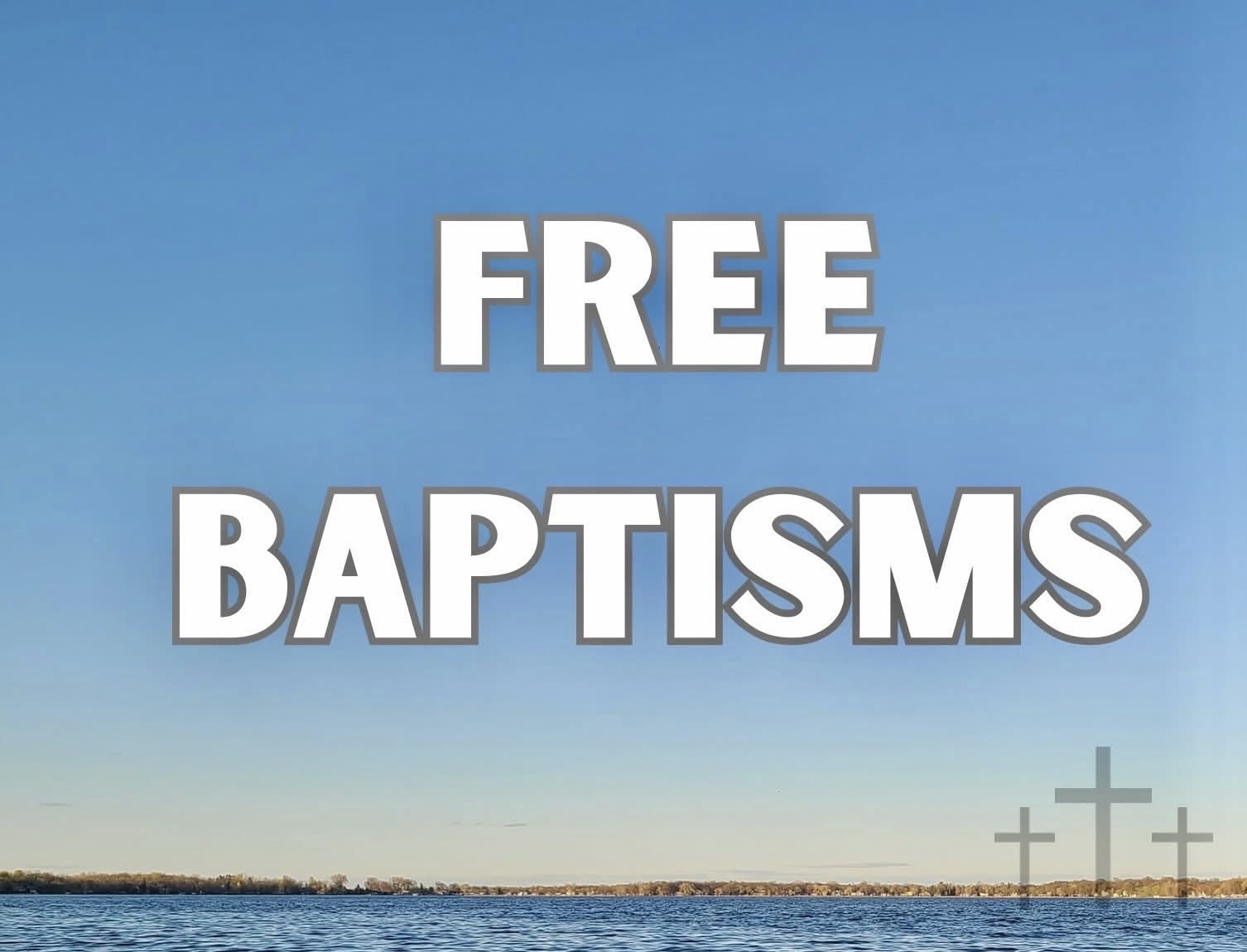
I saw a sign on Facebook this week that made me laugh. It depicted a public creek with a cross, and in large letters it said, “FREE BAPTISMS.”

My first thought was, “I didn’t know we had started charging for baptisms.” I thought all baptisms were free. The water is free—and so is the grace.

But after I laughed, I started thinking about it. That is usually where I get into trouble. What began as a funny photograph sent me down a theological rabbit hole.

The baptism was being offered by a parachurch ministry. By “parachurch,” I mean a Christian organization that works alongside the Church but is not itself a congregation or denomination. And I started asking questions.

Who prepares the person for baptism? Who hears the promises? Who receives that person into the Church? Who teaches and disciples the person afterward? Who will be there next month when the emotion of that Sunday afternoon has passed?

Those are not insignificant questions. Baptism is personal, but it is never merely private. We are baptized into Christ, and therefore also into his body. The question is not only whether there is water and someone willing to get into it. The question is whether there is a community prepared to be the Church to that person when he or she comes out.

I have seen this before. Through the years, I’ve been involved in two different Christian retreat ministries. They were described as ecumenical, though “cross-denominational” may be the better word. Christians came together from different traditions for a weekend of worship, teaching, prayer and renewal.

Here’s one irony: one of the ministries began as an offshoot of the other. Why? Because someone attended the first and thought, “I can do it better.”

Eventually, both ministries began conducting baptisms during their retreat weekends. Sometimes clergy performed them. Sometimes laity performed them. Sometimes people who had already been baptized were baptized again. That troubled me then, and it still troubles me now.

I believe baptism belongs to the Church. I believe it is more than my public declaration that I have decided to follow Jesus. Baptism is a means of grace. It is an act of God in and through the Church. I believe there is one baptism because the faithfulness being declared in baptism is ultimately God’s faithfulness, not mine.

So, I had several theological objections ready. Then I remembered Philip and the Ethiopian eunuch.

When Scripture Interrupts a Good Argument

In Acts 8, Philip meets a man traveling home from Jerusalem. The man is reading from Isaiah. Philip explains the Scripture and tells him the good news about Jesus. As they travel along, the man sees some water and asks, “Why can’t I be baptized?” They stop the carriage, go down into the water, and Philip baptizes him.

There is no church building. No congregation is visibly present. There is no six-week membership class. Philip does not tell the man to wait until he gets home and finds a local church.

Now, the situations are not identical. The Holy Spirit clearly directs Philip. The eunuch is already seeking God and reading Scripture. Philip proclaims Jesus to him before baptizing him. Philip is a recognized evangelist carrying the Church’s mission into a place where no established congregation appears to be available.

The story does not answer all my questions. But it does keep me from acting as though the people on the creek bank have no biblical argument at all. They may sincerely believe they are doing exactly what Philip did: proclaiming Jesus and refusing to place unnecessary barriers in front of someone who asks to be baptized.

And while I was thinking about all this, I happened to be preparing a sermon called “Accept One Another.” Isn’t God’s timing wonderful? I first thought the sign might give me something to say to them. Then I read Romans 14 and discovered that Paul might have something to say to me.

The church in Rome was divided over food and the observance of particular days. Some Christians believed they could eat anything. Others ate only vegetables because of concerns about foods that were religiously unclean or associated with pagan worship. Some regarded certain days as holy. Others regarded every day alike.

Paul calls one group “strong” and the other “weak.” He includes himself among the strong. But he doesn’t tell the strong to flaunt their freedom until the weak finally get over it. And he doesn’t allow the weak to condemn the strong for their lack of restraint.

Instead, he identifies a temptation on both sides. The weak are tempted to judge the strong: “If they were serious about following Jesus, they would never do that.” The strong are tempted to look down upon the weak: “If they understood the gospel as well as we do, this would not bother them.”

Judgment on one side. Contempt on the other.

Then Paul asks, “Who are you to condemn someone else’s servants?”

That question caught me. I had assumed I was the mature Christian in the baptism conversation. I had the developed sacramental theology. I had the denominational doctrine. I had the experience and the ecclesiological vocabulary.

They had a creek.

But perhaps, in this particular conversation, I am the one whose conscience is troubled. Perhaps I am the “weaker” brother. Paul doesn’t tell me to abandon my convictions. He doesn’t tell me that baptism does not matter. He does tell me to stop judging the servant of another Master.

Sometimes accepting one another begins when we stop assuming that we are the mature Christian in the conversation.

Good Theology and Poor Discipleship

That doesn’t mean theology is unimportant. Theology matters because what we believe about God shapes how we understand the Church, salvation, grace and the Christian life.

But here’s an uncomfortable truth: A person can have good theology and still be a poor disciple.

I don’t mean that good theology causes bad character. I mean that knowing the right words and reaching the right conclusions don’t automatically make me like Jesus. Good theology held without humility can make me proud. Good theology without love can make me harsh. Good theology used as a measuring stick for everyone else can make me judgmental.

The purpose of theology isn’t merely to help us win arguments. Its purpose is to help form the life of Christ within us. It’s possible to be right about the issue and wrong in the way we treat the person.

Paul’s instruction is not that differences are imaginary or convictions are unimportant. He tells Christians how to treat one another while they disagree.

Acceptance is not approval. Christian acceptance doesn’t mean that every belief is true or every practice is faithful. There are beliefs and practices the Church must challenge. There are times when love requires truth, correction, boundaries and even discipline. Christian acceptance doesn’t ask us to surrender discernment. It asks us to surrender the pride with which we so often exercise it.

I can receive the person seeking baptism with joy and trust that God may genuinely be drawing that person. I can receive the Christians conducting the baptism as brothers and sisters whose desire to reach people may be sincere. And I can still ask whether their practice reflects a sufficiently rich understanding of baptism and the Church.

I can accept the people without endorsing everything they do. That is harder than either approval or rejection. Approval asks us to ignore the difference. Rejection allows us to dismiss the person. Acceptance requires us to hold conviction and love at the same time.

Guests Who Have Already Been Received

Paul takes us directly to Jesus: “For even Christ didn’t live to please himself.”

Christ didn’t accept us because our theology was correct. He didn’t wait until our motives were pure, our behavior was consistent and our understanding was complete. He received us by grace.

That does not mean he approved everything in us. Christ accepts us in order to transform us. Grace does not leave us as it finds us. But transformation begins with his gracious welcome, not with our successful completion of an entrance exam.

Alistair Begg tells an imaginary story about the thief on the cross arriving at heaven. The angels begin asking him questions. Does he understand justification by faith? What does he believe about the authority of Scripture? The man cannot answer any of them. Finally, they ask why he should be admitted. His answer is wonderfully simple: the man on the middle cross said he could come.

That’s the only answer any of us has. We aren’t here because we passed the theological exam. We are here because Jesus said we could come. And if my place in his kingdom rests upon his gracious welcome, I must be very careful about requiring someone else to pass my exam before I receive them.

We sometimes act as though we are the hosts of the Church and have been assigned the responsibility of deciding who deserves admission. But we’re not the hosts. We’re guests who have already been received.

Acceptance After Separation

This conversation carries particular weight for Methodists right now. Over the past several years, thousands of congregations have left The United Methodist Church. Many have become part of the Global Methodist Church. (Disclosure: I am an Evangelical Methodist elder serving a Global Methodist congregation). The disagreements that produced that separation weren’t superficial. They involved biblical authority, human sexuality, ordination, discipline, accountability, church property and institutional trust. People on both sides believed they were acting faithfully.

We should not take Romans 14 and declare that all those questions were merely matters of personal preference. They were not the equivalent of choosing whether to eat meat or observe a particular day. Convictions mattered. Decisions had consequences. Separation brought grief. Congregations divided. Friendships were strained. Clergy who had served together for years found themselves in different denominations.

But Romans 15 puts a question before us now that the separation has happened: Can United Methodists and Global Methodists still accept one another as brothers and sisters in Christ?

Can we remain convinced that we made the faithful decision without declaring that everyone who made the other decision was faithless? Can we name the differences honestly without making those differences the whole truth about one another? Can we recognize that the person across the denominational divide has also been received by Christ?

This is where baptism returns to the conversation. Both United Methodists and Global Methodists confess one baptism. Both baptize in the name of the Father, the Son and the Holy Spirit. Both understand baptism as our entrance into Christ’s Church.

Disaffiliation changed our denominational affiliation. It did not erase our baptismal identity. We may no longer belong to the same denomination, but we still belong to the same Christ. The name on some of our church signs changed. The name placed upon us in baptism did not.

That doesn’t require reunion. It doesn’t mean we must cooperate in every ministry or remain silent about the convictions that divided us. It doesn’t mean the separation didn’t matter. It means Christ matters more.

Acceptance after separation means we refuse to excommunicate one another in our hearts. We refuse to speak as though the Church of Jesus Christ begins and ends with our denomination. We refuse to presume that our faithfulness gives us the authority to judge another Master’s servant.

Perhaps Global Methodists need to hear that about United Methodists. Perhaps United Methodists need to hear it about Global Methodists. Perhaps Baptists need to hear it about Methodists, and Methodists need to hear it about Baptists. Perhaps every denomination needs to remember that Jesus never agreed to fit entirely inside the boundaries we draw.

The Church is bigger than our part of it.

The Water and the Grace

Paul gathers his argument into one sentence: “Accept each other just as Christ has accepted you so that God will be given glory.”

Not “Accept one another when you agree.” Not “Accept one another after the weaker Christian matures.” Not “Accept one another after the stronger Christian becomes more sensitive.” Accept one another as Christ has accepted you.

So, I go back to that creek bank. There stands the parachurch evangelist, ready to baptize anyone who sincerely asks. Somewhere nearby stands the Methodist preacher with several ecclesiological objections. Christ has received them both.

Neither one is received because he has baptism completely figured out. Neither one is received because his motives are completely pure or his practices completely consistent. Both are received because the grace of Christ is greater than the incompleteness of their understanding.

That does not settle every baptismal question. It does not erase denominational differences. It does not make discernment unnecessary. But it does tell me how I must regard the person standing on the other side of the disagreement.

He isn’t mine to condemn. She isn’t mine to dismiss. They belong to Christ.

And if Christ had waited until I understood baptism, the Church and grace perfectly before accepting me, I would still be standing on the creek bank.

The water is free. The grace is free. And because Christ has received us by that grace, he commands us to receive one another. So that God—not our denomination, not our position, not our correct theology—may be given glory.

Until next time, keep looking up…

If any of my reflections encouraged or challenged you, follow Not the Perfect Pastor on Facebook for more conversations about faith, ministry, and becoming faithful disciples of Jesus.