Forgiveness and Healing: Grace Is Greater Than the Wound

When someone wounds us, something inside us begins keeping an account.

They owe me an apology. They owe me an explanation. They owe me the years I lost. They owe me the innocence they took. They owe me the trust they destroyed. They owe me for the humiliation, grief, or pain they caused.
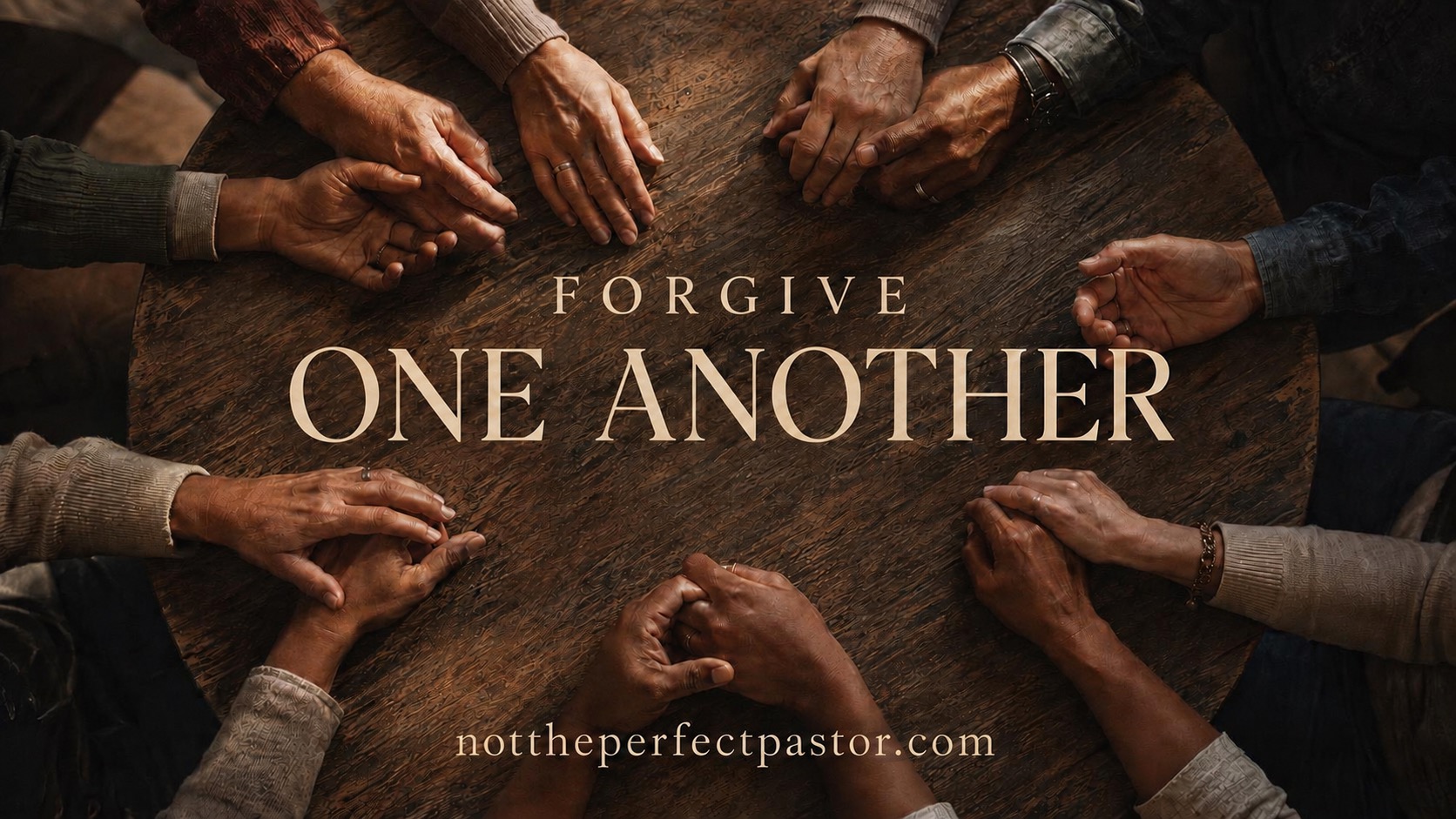
Some of those debts are real. Forgiveness does not say otherwise.

But forgiveness does determine what we will do with the debt.

Paul writes in Ephesians 4:32, “Instead, be kind to each other, tenderhearted, forgiving one another, just as God through Christ has forgiven you.”

The word Paul uses for “forgiving” is charizomai. It comes from the same root as charis, the word we translate as grace. It can mean to give freely, to grant graciously, or to forgive.

Forgiveness, in Paul’s language, is grace in relational form.

It is not primarily a feeling. If we wait until we feel like forgiving, we may wait for the rest of our lives. Forgiveness is a grace-shaped decision concerning what we will do with the debt created by another person’s sin against us.

We decide that we will not spend the rest of our lives trying to collect that debt through bitterness, retaliation, humiliation, or revenge. We release our personal claim to make the other person suffer as payment for what they did, and we place justice into the hands of God.

That does not mean all earthly consequences disappear. It does not mean a crime should go unreported, restitution should never be made, or accountability should be abandoned. Grace and accountability are not enemies. Forgiveness simply means that I refuse to make revenge the organizing purpose of my life.

Forgiveness Tells the Truth

We need to speak carefully about forgiveness because, in our hurry to tell hurting people they need to forgive, Christians have sometimes failed to acknowledge how deeply they were wounded.

Forgiveness is not denying that the wound happened. It is not minimizing the seriousness of the offense. It is not calling evil good. It is not excusing the offender by saying, “They couldn’t help it,” or “It really wasn’t that bad.”

Forgiveness is not forgetting. We sometimes say, “Forgive and forget,” as though faithful Christians should be able to erase painful memories. Human minds do not work that way, and Scripture does not command spiritual amnesia. Some experiences leave marks that remain for a lifetime.

Forgiveness does not automatically restore trust. Forgiveness can be given; trust must be rebuilt through truth, repentance, consistency, and time. Reconciliation may not always be possible, and forgiveness never requires someone to remain in an abusive or unsafe relationship.

Forgiveness does not eliminate consequences. A forgiven person may still lose a position, face legal consequences, or live with a permanently changed relationship. Grace does not erase wisdom, boundaries, accountability, or justice.

These distinctions matter because some people carry not only the pain of what was done to them but also the shame of believing their continued pain proves they have failed to forgive.

Healing is not always immediate. Forgiveness may begin with a decisive act, but with a deep wound it may also require repeated surrender. We may have to place the same hurt into God’s hands more than once.

The capacity of grace to forgive never diminishes the depth of the wound.

Grace is able to tell the whole truth. It can say, “What happened was wrong. It hurt me. It changed something. There were consequences. I did not deserve it.” Grace can say all of that without allowing hatred to have the final word.

Look at the cross. God’s grace never treated sin as insignificant. At the cross, God named the horror of sin and revealed the depth of divine love at the same time. Grace tells the truth about sin—and then demonstrates that sin will not have the last word.

Grace Is Greater

When we say grace is greater than the wound, we are not comparing levels of pain. We are not telling someone, “Your wound should not matter because grace matters more.” We are saying that the sin committed against us does not possess greater power than the grace of Jesus Christ at work within us.

Grace does not make the wound smaller. Grace keeps the wound from becoming greater than Jesus Christ.

Paul does not begin with the person who hurt us, the size of the offense, or the strength of our willpower. He begins with what God has already done for us: “just as God through Christ has forgiven you.”

We do not forgive to earn grace. We forgive because we have received grace. Forgiveness is not the price we pay to be forgiven by God. It is the fruit produced in people who know how much they have already been forgiven.

Grace received becomes grace extended.

We love grace when it moves in our direction. We sing about the grace that forgives our sins and reconciles us to God. We are less enthusiastic when that same grace moves toward those who have wounded us. We want mercy to explain what we did and justice to define what they did. We want the Lord to remember our weakness but remember their wickedness.

Paul does not allow us to separate the grace we receive from the grace we extend. The grace that comes to us through Jesus Christ takes shape in the way we respond to one another.

That is why forgiveness reveals so much about our spiritual formation. It is possible to know the language of grace without being gracious. It is possible to explain forgiveness while refusing to forgive. It is possible to celebrate what Christ has done for us while resisting what Christ wants to do through us.

My capacity to forgive is directly related to the depth of my spiritual formation.

That statement is not intended to shame anyone struggling to forgive. Some wounds are extraordinarily deep, and the path of healing may be long. The struggle itself may become the place where we learn to depend upon grace more deeply than ever before.

If grace is greater than my sin, then grace is greater than the sin of the person who wounded me. And if grace is greater than the sin that wounded me, then grace is greater than the wound that sin left behind.

If grace is greater than my sin, then grace is greater than my wound.

What Is Discipling Us?

The pain of a wound is not an idol, and feeling that pain is not a spiritual failure. But a wound begins to occupy the place that belongs to Christ when it defines who we are, determines how we see others, dictates our decisions, and claims authority over our future.

Before long, we are no longer simply remembering the wound. We are allowing the wound to disciple us.

The wound may be part of my story, but grace refuses to let it become the author of my story. Forgiveness does not rewrite the past. It places the future back into the hands of Jesus.

Nearly thirty years ago, I pastored a church where two men lived in the same community, worked for the same company, and worshiped in the same congregation. Somewhere along the way, a work-related offense created a division between them. I do not remember all the details, and after all these years the details are not really the point.

What I remember is that they never found their way through it.

They continued attending the same church, but they sat on opposite sides of the sanctuary. Week after week, they worshiped the same Lord, heard the same Scriptures, and received the same grace—but the division remained between them.

Both men have now died. I do not tell their story to judge their hearts. Only God knows everything that passed between them. I tell it because their story has stayed with me.

They had moved on with their lives, but it appeared that something between them had never been surrendered to the transforming grace of Jesus Christ.

That is the danger of an unforgiven wound. Life continues. We go to work. We come to church. We sing the hymns and listen to the sermon. From the outside, it may appear that we have moved on. Yet the wound may still be deciding where we sit, whom we avoid, and how far the grace we have received will be allowed to travel through us.

Is there someone I need to forgive? Is there a wound I need to surrender again? Is there a division I have learned to live with that Jesus is calling me to address?

Forgiveness may not restore every relationship. It may not remove every consequence or erase every painful memory. But it refuses to let what happened to us become more powerful in shaping our lives than what Christ has done for us.

The wound may be part of your story, but don’t let it write the ending.

Give Jesus back the pen.

Until next time, keep looking up…

If any of my reflections encouraged or challenged you, follow Not the Perfect Pastor on Facebook for more conversations about faith, ministry, and becoming faithful disciples of Jesus.

What About Us, Jesus?

Of all the names/titles given to Jesus, i.e., Lord, Savior etc., this name “Healer” is perhaps the most challenging for us in the 21st century. What do we mean when we say “Jesus is Healer?”jesus-is-2

We survey the ministry of Jesus and depending on how one classifies the event, there are between 30 and 40 healing events in the four Gospels alone. We read a passage like Luke 4:40 that says, “As the sun went down that evening, people throughout the village brought sick family members to Jesus. No matter what their diseases were, the touch of his hand healed every one.

So, what gives? After all, we pray for healing all the time, but far too often, the healing we seek never comes. If Jesus is Healer, where do we see this healing happening in our world today?

Who needs Obamacare? There certainly wasn’t much of a problem with healthcare with Jesus around. The folks in 1st century Israel called their health care plan Jesuscare! Got a backache? Go see Jesus! Got the flu? Go see Jesus. Surgery? Who needs surgery? Just go see Jesus! One touch is all you need. Must have been nice, and no increase in premiums. It sure would have been nice to get in on some of those healings. Makes us want to ask: When did Jesus go out of the healing business? Don’t we rate as much as the folks back then? What about my friend with cancer? What about us, Jesus?

FAITH HEALING

I’m going to challenge us for one moment to take all the pre-conceived ideas of “faith-healing” out of our minds. Don’t think about Benny Hinn, and let your memories of Kathryn Kuhlman and Oral Roberts fade. But still it leaves us to wonder why we don’t just go down to the local hospitals and clear the places out in Jesus name.

Boy, I wish I had the power to heal! There are folks in the world who say that I simply don’t have enough faith, or that those who are sick don’t have enough faith to be healed. Just believe a little more—faith of a mustard seed and all that, right? Hey? That’s the kind of faith four friends had one day when they brought their friend to Jesus (see Luke 5: 17 – 26).

Luke tells us when Jesus saw “their faith,” his healing power went into action. Notice, Luke doesn’t tell us anything about the paralyzed man’s faith. Perhaps he had no faith at all, certainly none that was expressed in this episode. Yes, faith is often present when it comes to healing, but whose faith is most important?

Or more, the same people who would say today that I don’t have enough faith would also say the problem must be un-confessed sin. That’s part of the issue on the day Jesus was healing this paralyzed man. Jesus knew the Pharisees and scribes, who were a sect in Judaism who had a strong belief in the idea that if someone was sick or blind, there must be some sin in their life that caused it, were watching. Paralyzed? What did you do to deserve that? Confess your sin and perhaps you can get well. That was their attitude.

I wonder if that’s why Jesus said to the paralyzed man, “Young man, your sins are forgiven.” Jesus didn’t address the physical ailment first. He first addressed the spiritual reality, and man, that set the Pharisees off. “Who but God can forgive sins?” The Pharisees question and Jesus’ response might help us understand what was happening then, and what is happening now.

Jesus looked at the Pharisees and said, “Just so you know, I’ve got authority to forgive sins on earth, I’ll say, ‘Take up your bed and walk’.” At Jesus’ word, the young man jumped up, took his bed and ran out of the house. Jesus’ healing power was a sign.

Here’s an important point to understand those 30 – 40 healing accounts in the Gospels—the healings were signs designed to point to the eternal blessings Jesus was bringing, the kingdom of heaven that Jesus was bringing to earth. These healings pointed ahead to the ultimate healing that Jesus was in the process of accomplishing, and that ultimate healing was not limited to the folks back then. No, it is for all of us, too. Yes, every one of us here today–Jesus loves you and me as much as he loved those folks back then. We are at no disadvantage to the people who were healed in his ministry.

So, here’s the deal, as I see it—Jesus is still in the healing business, just not necessarily in the same manner now as then. What do I mean?

MIRACLES AND MORE

First, let me acknowledge that sometimes, for unexplained reasons, God chooses to miraculously heal someone. A tumor is present on one visit to the doctor, and the next scan shows no trace of a tumor. Poof! Just like that, and there’s no other explanation for it but that God did it. All we can say is God surprises us with His mercy, and in those times all we can say is, “Praise the Lord!”

Second, let’s also acknowledge the healing power of medicine. Advances in health care are astounding compared to the first century. There were physicians in the first century. Luke, the Gospel writer, was one. People who were sick sought out physicians for their maladies. Recall the woman with the flow of blood. Luke tells her story, too (chapter 8). She’d spend twelve years going to doctors, but none of them could heal her. The health care advances of just the last 25 years would likely have led to her healing. The Lord uses doctors and medicines to promote healing today in ways never known before. Medical care is a great gift that promotes healing, and we are right to view it that way.

John Wesley, the founder of the Methodist movement, knew the importance of health care. He even penned a volume that was required reading for his assistants. Wesley’s Primitive Physick was the equivalent of a New York Times bestseller. It went through twenty-three printings and was used well into the 1880’s, decades after Wesley’s death. In that volume, Wesley encouraged the use of doctors, and even promoted the idea that his preachers should offer health care to those in their charge, thus his volume of remedies and advice on health and healing.

For all that healthcare does for our healing, we still face the question, “Why not everyone?” I remind us that Jesus did heal this paralyzed man, and he would heal many others, too, but I also remind us that every one of these persons he healed would later die. Their physical healing was only temporary. Was Jesus’ faith not strong enough? There must be an expiration date on miracles!

ULTIMATE HEALING

We come to Jesus seeking a cure for what ails us, and there is no cure for death…there is only healing. When we proclaim Jesus is Healer, it is a statement that reaches beyond the physical. We go beyond the temporal to acknowledge, even as Jesus did, that healing is first a spiritual process before it is a physical one. Curing the body is a physical process. Healing the soul is a spiritual one. Curing the body is temporal, but healing the soul is eternal. We come to Jesus as healer seeking a cure for something physical. What Jesus as healer offers is something eternal.

Jesus gains the ultimate healing for us, the eternal healing, by dealing with the root problem of sin. Sin. Don’t get me wrong. I’m not saying that a particular disease or illness can be traced to a particular sin. That would be simplistic and wrong. There are a lot of unrepentant sinners who are perfectly healthy, and there are a lot of good, faithful Christians who are afflicted with chronic illness and pain.

I’m speaking, rather, of the general sinful condition that pervades this fallen world, ever since the time of Adam, and the sinful nature that we all inherit from Adam and pass down to our children is the root problem that results in all the damage and disease and misery that afflicts the human family. And to fix this, Jesus had to get to the bottom of it.

And, Jesus did so by carrying our sins in his body to the cross. When Jesus sheds his blood for the sins of the world, that my friends, is big medicine! As Isaiah 53:4-5 says,

“Yet it was our weaknesses he carried;
it was our sorrows that weighed him down.
And we thought his troubles were a punishment from God,
a punishment for his own sins!
 But he was pierced for our rebellion,
crushed for our sins.
He was beaten so we could be whole.
He was whipped so we could be healed.”

Do we know that? Do we know that it was our sins for which Jesus died? Yes, our sins–of not loving God, of not hearing and heeding his Word. Our sins of wanting to be our own god, to make our own decisions about what is right and wrong. Our sins of lack of love for our neighbor. Of being jealous of our neighbor’s success. Of grumbling about those the Lord has placed in our life. Of gossip and greed. Of selfishness and un-forgiveness. Yes, those are our sins that Jesus is bearing, bleeding on the cross.

The fact that Jesus is bearing our sins, that Jesus is shedding his blood for them–Jesus on the cross is purchasing our healing. Sins forgiven means curse lifted. Resurrection ahead. Healing ahead. For you. For me. Forever. It’s as good as Christ’s own resurrection from the dead. It’s ours, through faith in him. He shares his gifts with us.

Don’t misunderstand–death is not the ultimate healing as some have proclaimed. Resurrection is! Resurrection is the gift of healing that Christ offers us all.

How does this gift get delivered to our door, with our name on it? Two words—Word and Sacrament. The ongoing ministry of the church is God’s means of delivering the gift Christ won for you and me on the cross. Word and Sacrament are not clichés. They are God’s delivery system for life and salvation, for healing of the soul, and, yes, healing of the body, too.

God is not just interested in saving our soul. He has also promised to redeem our body. God is committed to restoring creation, and that includes our bodies. God is going to raise up our bodies on the last day. We believe in exactly what God has promised: the forgiveness of sins, the resurrection of the body, and the life everlasting.

In the Word preached, the Gospel is heard with our ears and taken into the heart with gladness. In baptism, water is applied to these physical bodies, and in communion, the bread and wine represent the body and blood, and we receive the elements—we eat, we drink—and in so doing we receive Christ. Physical elements for physical people, yet working out an eternal healing that redeems both body and soul because Jesus is Healer. And, because Jesus is Healer, we pray—we pray for healing in the body and in the soul.

Until next time, keep looking up…