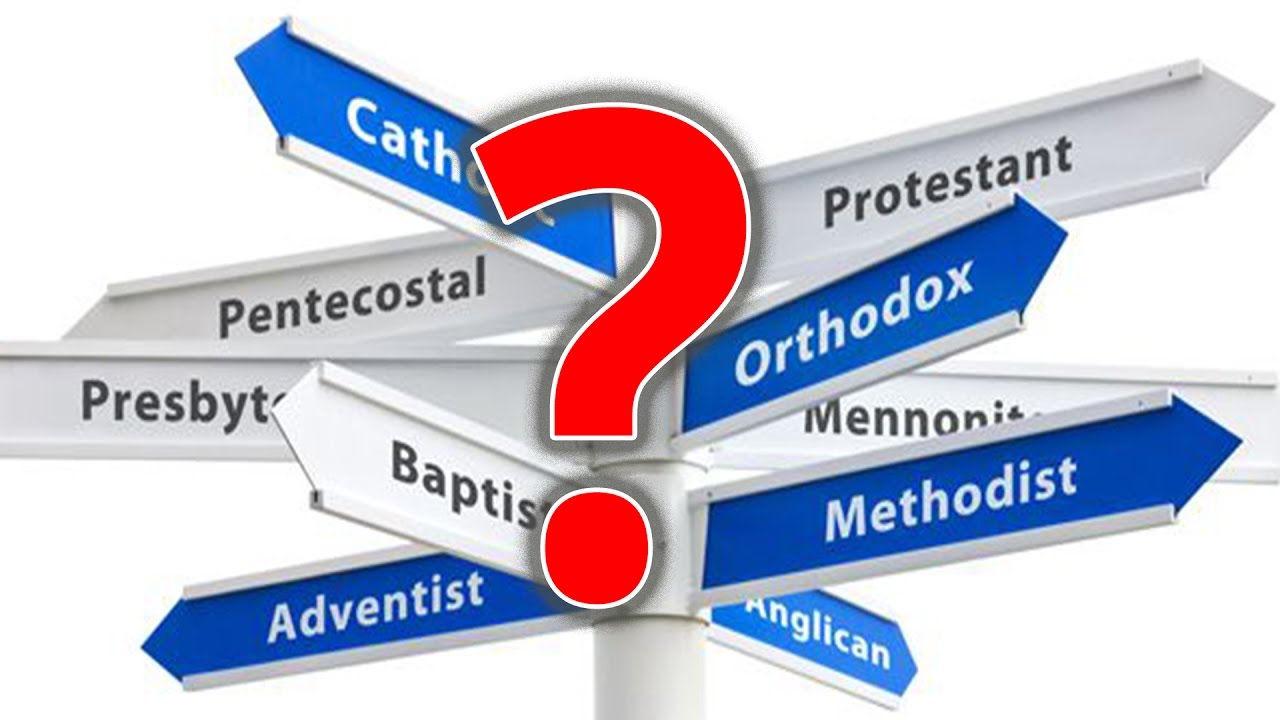
11 Questions I’m Asking Myself About the Contemporary Church

Examining the Church We Have and the Church Jesus Intended

I have spent most of my adult life serving the institutional church and I’ve spent much of the past week sitting in institutional meetings. The week was encouraging and uplifting, but it also prompted me to reflect on the “institutional” church as it exists today.

Here is what I’ve been thinking about all week…
For more than thirty-five years, I have preached sermons, led worship services, administered programs, attended meetings, developed budgets, supervised staff, and participated in denominational structures. I have served as a senior pastor. I have served as a district superintendent. I have not only participated in the denominational system; for a season, I worked for the denomination. Even now, I remain an ordained elder serving as the pastor of a local church.

I say all that because I don’t want anyone to misunderstand what follows. I am not standing outside the institutional church throwing rocks at it. I am standing firmly inside it. I have given most of my life to it. I love the church, and I continue to believe the local church can be one of the most beautiful expressions of the body of Christ in the world. But I also know that I have been complicit in fostering some of the very issues I am beginning to question.

I have helped create worship services in which most people watched while a few people participated. I have stood behind the pulpit as the central personality in the room. I have encouraged people to invite their friends to “come hear the preacher.” I have supported budgets that devoted significant resources to staff, buildings, programs, and institutional maintenance. I have participated in denominational systems that sometimes appeared more concerned with preserving the institution than advancing the mission.

I have measured attendance, counted giving, promoted programs, celebrated growth, and worried when the numbers went in the wrong direction. I have sometimes treated a full room as evidence of spiritual success without asking whether the people in that room were actually being formed into the image of Christ.

I am not confessing that everything I have done was wrong. Much of it was done prayerfully, faithfully, and with good intentions. Some of those practices have borne genuine fruit. But good intentions do not place our practices beyond examination.

Neither does the fact that a particular practice is not found explicitly in the Bible make it inherently wrong. The New Testament does not give us a complete operations manual for the twenty-first-century church. It does not tell us what time to gather, how many songs to sing, whether to use a pulpit, how to organize the church office, or what kind of building to occupy. We have freedom to develop structures and practices suited to our time and place.

The question is whether those structures still serve the purposes of the church—or whether the church has gradually begun serving the structures.

A practice does not become biblical simply because churches have done it for a long time. Neither is it necessarily faithful because it attracts a crowd, produces measurable results, or appears successful. Every practice must be examined in light of the character of Jesus Christ, the teaching of Scripture, and the mission Jesus entrusted to His church. That examination has led me to begin asking some uncomfortable questions.

1. Is the senior pastor a truly biblical role?

The New Testament speaks of apostles, prophets, evangelists, pastors, teachers, elders, overseers, and deacons. It certainly recognizes spiritual leadership and entrusts some people with particular responsibilities. But do we find anything resembling the modern senior pastor—the primary preacher, chief executive, public face, institutional leader, and often central personality of the congregation?

The role may not be inherently wrong, but what happens when so much authority, visibility, and responsibility become concentrated in one person?

2. Is the church supposed to be a gathering of non-participants?

Paul describes the church as a body in which every member has a function. He also pictures gatherings in which different members contribute to the life of the community.

How, then, did church become a gathering in which a relatively small number of people perform while everyone else watches? Have we unintentionally taught people that attending church is the same as participating in the body of Christ?

3. Are multisite campuses about growing God’s Kingdom—or the senior pastor’s kingdom?

I know this question sounds pointed, and I do not presume to judge the motives of every pastor or congregation using a multisite model. Heck, I even tried it myself once (to no avail). Multisite churches may reach people who would otherwise remain disconnected from Christian community.

Still, we should be willing to ask why one pastor’s preaching must be broadcast into multiple locations. Are we multiplying churches and leaders, or extending the reach of a particular personality and brand?

4. How biblical is it for more than half of a church’s giving to support buildings, maintenance, upkeep, and staff?

Buildings and staff can serve the mission of the church. Pastors who devote themselves to ministry may rightly receive financial support, and congregations need places in which to gather.

But when much of the church’s financial life is devoted to sustaining its own operations, we should at least ask what remains for mission, mercy, generosity, and ministry beyond ourselves. At what point does maintaining the institution become the institution’s primary mission?

5. When did church gatherings become sermon-centered?

I am a preacher, and I believe preaching matters. The proclamation and teaching of God’s Word have always been central to the church’s life. I’ve often told my congregations that they pay me to be their pastor. I preach for free!

But is a thirty-minute sermon delivered by one person supposed to become the defining feature of Christian worship? How did the sermon come to dominate the gathering while prayer, testimony, conversation, shared discernment, and the Lord’s Supper moved toward the margins?

6. When did the church lose its weekly commitment to the Lord’s Supper?

The earliest Christians appear to have gathered regularly around the table. The breaking of bread was not an occasional addition to worship. It was central to their life together.

How did many Protestant churches move from the Table every week to once a month, once a quarter, or even less frequently? What did we lose when the sermon became weekly but the Meal became optional?

7. Is denominational hierarchy a biblical concept?

Denominations can provide accountability, connection, shared resources, theological identity, and a means of accomplishing ministry that no single congregation could undertake alone. I have benefited from those structures and have worked within them.

But how closely do our layers of boards, agencies, executives, superintendents, bishops, conferences, and administrative offices resemble the leadership structures of the New Testament? When does connection become control? When does accountability become bureaucracy? When does the institution begin protecting itself?

8. Is professionalized ministry the biblical model?

Scripture recognizes that those who preach the gospel may receive their living from the gospel. There is nothing inherently unbiblical about paying pastors or other ministry leaders.

But have we created a system in which the work of ministry is largely outsourced to professionals? Have pastors become religious service providers while church members become their clients? Has professional ministry equipped the saints for ministry—or relieved the saints of ministry?

9. How did we develop such a consumer mentality concerning church?

People shop for churches based on music, preaching, children’s ministries, facilities, style, convenience, and personal preference. Churches respond by marketing programs and attempting to provide increasingly attractive religious experiences.

How did following Jesus become another consumer choice? And how much has the church itself contributed to that mentality by treating people as customers whose preferences must be satisfied?

10. Were early church gatherings limited to one hour?

There is nothing inherently spiritual about a longer gathering. A three-hour service can be every bit as lifeless as a one-hour service.

Still, why has an hour become the accepted limit for worship in so many churches? Why do we become anxious when the service runs long? What does that reveal about the place worship occupies in our lives—and about the kind of experience our gatherings have become?

11. Why is the modern church so afraid of church discipline?

Jesus and the New Testament writers took sin, accountability, restoration, and the holiness of the Christian community seriously. Church discipline was not intended to be cruel, controlling, or punitive. Its goal was truth, repentance, reconciliation, and restoration.

Yet many churches avoid it almost entirely. Are we afraid people will leave? Are we afraid of conflict? Have abuses of authority made us unwilling to exercise any authority? Or have we become so consumer-oriented that we no longer believe the church has the right—or responsibility—to call its members to a life of holiness?

I’m Asking, Not Accusing

I do not have settled answers to all these questions. If I had the answers, I probably would not be writing this series. Or, more likely, I would have already written a book and gone on the speaking circuit.

I am also aware that it is much easier to identify problems than to propose faithful alternatives. Institutional structures developed for reasons. Many of them solved real problems, supported valuable ministries, and helped the church carry the gospel across generations and cultures. Tearing down structures without understanding what they hold together is neither wise nor faithful.

Nor do I believe the solution is simply to reproduce the first-century church. The early church existed in a particular historical and cultural setting. It had problems of its own—many of which are preserved for us in the New Testament. My goal is not to romanticize the past. My goal is to examine the present.

I want to consider what Scripture establishes, what freedom Scripture allows, what benefits our contemporary practices provide, and what unintended distortions they may have produced. I want to distinguish between what is biblically commanded, what is biblically permissible, and what we have simply come to assume.

Most of all, I want to ask whether the church we have built is forming people into the image of Jesus for the sake of others.

I love the church too much not to ask. And because I am part of the church I am questioning, these are not questions I am asking about “them.”

They are questions I am asking about us.

They are questions I am asking about me.

So, I invite you, over the next two weeks, to reflect on these eleven questions with me. In addition to my regular Tuesday posts, I will add two Friday posts to unpack these questions a little more deeply.

I would love your feedback, too. Comment below with any questions these questions raise for you, or feel free to dispute my assumptions. I certainly could be wrong and I invite your correction. Let me hear from you.

Please join me on the journey.

Until next time, keep looking up…

If any of my reflections encouraged or challenged you, follow Not the Perfect Pastor on Facebook for more conversations about faith, ministry, and becoming faithful disciples of Jesus.
The Empty Pulpit…

I had another conversation this week with a member whose church was going through conflict. The member spoke of conflict the congregation was having with the pastor and about conflict the congregation is having within itself on the future direction of the congregation.

The conflict centered around a looming vote by the congregation on remaining independent or aligning with a denomination. The member stated, “If we stay independent, we’ll lose 3/4 of the congregation and if we align with the denomination, we’ll lose 1/4 of the congregation and the pastor.”

Where the church member I had the conversation with came down in the conflict is immaterial. Either way, the congregation is headed toward a split and that’s rarely a good thing, especially in a small church.

First, it sounds like the decision is already made. I mean, if that member thinks 3/4 of the congregation will leave if it chooses to remain independent, the likelihood of a vote to remain independent is between slim and none (if everyone shows up to vote, anyway). That only means there will be another small church whose pulpit will be empty.

Of course, the congregation is counting on affiliating with a new denomination to help with the pastoral search. Yes, it will help, but methinks the congregation is not being very realistic. The denomination cannot send what it does not have.

An Empty Pipeline

The ministerial pipeline is not full enough to provide pastoral leadership to all the congregations that are searching. There are not enough people entering vocational ministry to fill the gaps.

Seminary attendance is declining. Yes, people are still attending seminary, but fewer and fewer are doing so to fill a pulpit. Seriously? Why would they? An entry level salary for a full-time clergy is between $35,000 – 45,000 a year. That’s at a good church! It doesn’t make financial sense for a person to invest $70,000 in a seminary education for that entry level salary.

I graduated from seminary with $28,000 in debt (from undergrad and grad school). It took us ten years to pay off that debt on what were basically entry level wages. School tuitions have skyrocketed since I was in seminary. If I were a young(er) person contemplating a ministry calling, I’d be hard pressed to consider seminary.

One interesting thing that is happening is that of those who are attending seminary, 40% of them are not doing so to fill the pulpit. They’re looking at other ways of serving in ministry through non-profits or other specialized ministries.

I heard the story of one seminary graduate who applied for an open youth pastor position at a church who was offered $42,000/year with no benefits. When she asked for more money so she could afford to pay her student loans and still manage living expenses, the board got offended. The candidate eventually took a position as a school counselor making $55,000/year with full benefits.

More money and she still gets to engage with youth on a daily basis. She also has most weekends off, and the school doesn’t expect her to work 60 hours a week.

I know of another congregation that wanted its pastor to lead Sunday worship, mid-week Bible study, teach a Sunday school class, visit the shut-ins and attend monthly business meetings (where they would have no vote), and all for the hefty sum of $18,000/year. By my estimation, that’s about 40 hours/week between preparation and presentation. That doesn’t calculate drive time if the pastor doesn’t actually live in the community he/she serves.

Yes, I’m saying congregations (generally) expect too much for what they’re willing to pay. And, don’t come at me with the “Ministry shouldn’t be about money” retort. You’re right. It shouldn’t be, and for most clergy it isn’t. But, it is about being able to feed a family and meet basic living expenses.

I know the examples I offered are only anecdotal but they do reflect the reality of vocational ministry in the contemporary church. Local congregations who pay living wages are far more likely to attract viable candidates for their empty pulpits. Unfortunately, most congregations can’t (or won’t) afford full-time clergy going forward.

Like the congregation in the conversation I had this week, either way their congregation is going to be diminished. They will lose members. That means less money. Good luck finding that pastor willing to move across the state (or the country) to pastor a small congregation that has suffered deep conflict. That’s a special calling indeed.

Signs of Hope

Lest you think I’m being overly grim, I do want to offer what I see as two opportunities on the horizon (obstacles are only opportunities, right?).

First, is the shift to bivocational ministry. Yes, it’s what I’m doing. Honestly, I’m finding much more fulfillment as a bivocational pastor than I ever did in full-time ministry. That’s not a knock on full-time ministry. If you’re called to full-time ministry, go for it! I’m just saying there is a freedom in ministry when one’s livelihood isn’t dependent on the congregation.

Bivocational ministry will open doors to congregations to fill their empty pulpits. Of course, it means those congregations will have to adjust their expectations of what pastoral leadership looks like. Congregations can’t expect full-time ministry on part-time pay. It’s selfish and immoral. There, I said it. Deal with it.

Bivocational ministry also means denominations will have to adjust its “qualifications” for ministry credentials, seeing bivocational pastors as equals to “Elders in full-connection” (to use my current denomination’s terminology–my former one, too). Denominations will be seeing more bivocational clergy and fewer full-time clergy if current trends continue. Denominations must level that playing field going forward.

Bivocational clergy are not any less called than vocational clergy. The only difference is the way in which we are living out God’s call. And, I’m not thoroughly convinced that bivocational ministry isn’t closer to the biblical model. I’m thinking about Paul here who supported his ministry by making tents and Peter who went back to fishing after the resurrection.

The future looks much brighter for congregations who are willing to embrace the opportunities bivocational ministry affords them.

Second, is the opportunity for congregations to raise up their own pastoral leadership. Now this…this…is biblical in the strictest sense. For small congregations, the reality is that their next pastoral leader is sitting in the pew right now. I’m reminded of what the Apostle Paul wrote to the Ephesian church:

11 So Christ himself gave the apostles, the prophets, the evangelists, the pastors and teachers, 12 to equip his people for works of service, so that the body of Christ may be built up 13 until we all reach unity in the faith and in the knowledge of the Son of God and become mature, attaining to the whole measure of the fullness of Christ. (Ephesians 4:11-13 NIV)

Also, read Romans 12 and 1 Corinthians 12 where Paul reminds the local churches of the gifts of the Spirit and Peter, who reminds the local congregation of the priesthood of all believers in 1 Peter 2, and Jesus, Himself in Revelation calls the church a kingdom of priests. We are all ministers of the Gospel meant to live out our spiritual gifts in the body of Christ in the local congregation.

Small congregations must embrace the blessing of the ones sitting in their own pews. The church model of the past with paid ministry staff lulled most congregations to sleep, and made them willing to “pay” the professional to do ministry. That model is no longer sustainable. Here’s your chance to fill your empty pulpit internally and thus fulfill the first century image for the local congregation.

I know I’ve chewed this same dirt in blogs before, but the conversations I keep having keep me coming back to these realities.

I’m absolutely convinced the future for the Church/church is bright and secure. It’s just that the future I see isn’t going to look very much like the recent past. I think that’s a good thing. I also believe the Holy Spirit is in it.

Until next time, keep looking up…

Making a New Connection…

It’s official now. 95 congregations disaffiliated from the Louisiana Annual Conference on May 27, 2023. That number is in addition to 67 congregations that disaffiliated at previous sessions of the Annual Conference. If my math is correct, that’s 162 congregations now separated from the UMC in Louisiana. According to the denominational website UMData.org, the Louisiana Annual Conference had 438 congregations is 2020. Again, if my math is correct, that means 36.98% of the congregations chose to disaffiliate. Honestly, that’s a whole lot more congregations than I ever anticipated would depart, but then again, what do I know? I left before the divorce, so…

Why am I writing about it if I left before it all started? I’m writing because there are now 162 congregations that have to chart a new future and I have something I want to say to them–JOIN ANOTHER DENOMINATION! That advice can’t be emphasized enough. I’ve already offered that advice in a previous blog, but I want to expand on the thought more broadly here.

Reasons for Joining a Denomination

It’s Biblical

I am thoroughly convinced the early leaders of the Christian Church foresaw the congregations connected to one another. Yes, the “house” churches and other groups that met were independent of one another with their own deacons and elders, but they were clearly overseen by bishops. Deacons, elders and bishops are the three offices mentioned in scripture as necessary for the functioning of the local church. The Apostle Paul, writing to his young protege Timothy, stipulates the requirements of two of the offices in 1 Timothy 3: 1 – 13, and the Apostle Peter writes concerning elders in the church in 1 Peter 5: 1 – 4. Overseers (or bishops) oversaw more than one local congregation as the church grew.

The Apostle Peter demonstrated this type of leadership very early in the church’s life. In Acts 15, we find the account of the Jerusalem Council where Peter addresses the church on the issue of Gentiles being allowed to join the church and what they must do before being allowed to join. The precedent is clear that the early church fathers and mothers demonstrated the connectional nature of the church. It is incumbent upon us, as we seek to be faithful, to join our local congregations to the larger body of Christ through a denomination.

It Promotes Accountability

Joining ourselves to a denomination promotes accountability in two primary ways. First, there is accountability to doctrine that is outside ourselves. Independent congregations are free to formulate their own doctrine and can sometimes go off the rail in its teachings unless there is considered doctrine developed over time and with the debate and input of centuries of theological reflection. Imagine for a moment, an independent local congregation whose theological foundations could change on the whims of a new pastor who was not sufficiently vetted (more on this later).

Secondly, joining a congregation lends accountability to clergy through credentialing, training, relationships and more. Almost all denomination have a vetting process for its ministerial candidates, and required continuing education for ordained and licensed clergy. Have those processes always worked out as desired? Of course not! People lie. People change. Systems break down. Loopholes develop. Leaders don’t do their work. There are many reasons bad clergy “slip through the crack,” but that doesn’t mean that a system in place is better than not having a means to hold clergy accountable and help them grow in the knowledge and wisdom of Jesus.

Sure, an independent congregation can hold their pastor accountable by firing them, but it can too easily happen a second time or a third time without the broader process of clergy training and credentialing that most denominations offer. That system is firmly rooted in the doctrines and beliefs expressed in the denomination’s published catechism. It is the most beneficial way to insure that a local congregation is led by competent, trained clergy.

It’s Wesleyan

Every one of the disaffiliating congregations has a rich history in the Wesleyan tradition. John Wesley could never have imagined a time when his churches were not connected in some way. Don’t think for one moment that the United Methodist Church has the market cornered on Wesleyan connectionalism, though. There are a large number of denominations that find their roots in the Wesleyan movement. The Wesleyan Church, The Free Methodist Church, The Church of the Nazarene, The Salvation Army, the newly formed Global Methodist Church and my chosen home, The Evangelical Methodist Church, are among them. Each of these denominations are firmly rooted in Wesleyan-Arminian theology and operate with a “connectional” polity, much as the United Methodist Church does.

Additionally, there is the Congregational Methodist Church and the Association of Independent Methodists, although I find it a bit of an oxymoron to say “independent” Methodist or “congregational” Methodist. That just seems to be outside the vision John Wesley had for the movement from its infancy. That fact notwithstanding, it is important for a congregation to consider its rich history as it charts its path forward. How will that history be preserved in the best possible manner? By joining itself to another Wesleyan denomination.

For broader research on denominations rooted in the Wesleyan tradition, please take the time to check out the Global Wesleyan Alliance and also the World Methodist Council. Their lists of member denominations and associations will give any congregation a starting point in choosing a new place to connect like a true Wesleyan.

Pastoral Succession

As I’ve previously written, it’s not a matter of if a congregation will need a new pastor, but when will a congregation need a new pastor. Every congregation will go through a pastoral transition (some former UM congregations will do so sooner rather than later). When that transition occurs, being part of a denomination will provide a process and a network for new pastoral selection. A process and a network are what is important. Having a formal process in place will not guarantee a congregation a new pastor, but it certainly gives a congregation a tremendous advantage in identifying and calling competent and trained clergy.

Don’t Be a Loner

So, there are my four reasons for former UM congregations to join themselves to another denomination. There are others, for sure, but these are sufficient for consideration as a congregation moves forward into its new reality, and here’s the reality: Who you are is not who you were. The question is: Who will you be?

As each of the 162 disaffiliated congregations from the Louisiana Annual Conference went through an established discernment process to reach that point, a subsequent discernment process is necessary to determine how they will live in the future. I know some have already chosen their new home. Wonderful! For others, they are choosing to remain independent for now. Let me encourage those congregations to only let it be so for a season. It is not unwise to do so, but to do so for more than a year is to run the risk of losing the rich Wesleyan heritage of the local congregation. That would be a tragic result, indeed!

Questions or concerns? Don’t hesitate to reach out to me. I’ll be happy to share about my experience with the Evangelical Methodist Church, and to help you discern if this might be where God is calling your congregation to connect. In a future post, I’ll be sharing the reasons I chose the Evangelical Methodist Church as my new home. Hope you’ll come back and read again.

Until next time, keep looking up…