Thanks, Bob…

As a child I basically had three heroes. First was my Papaw (Willie Roberts). He was my mother’s dad. As long as I can remember he struggled with rheumatoid arthritis and was bed-ridden at the end of his life. He had an indomitable spirit, though. He never gave up. He persevered. He never complained about the pain. He just kept going, no matter what. 

My Papaw also showed me what grace is like. I think that’s because he had such a deep and abiding faith in Jesus Christ. It was his faith in Jesus Christ that made his a generous soul. He didn’t have much when he died. That’s because he had pretty much given it all away–either to his children, to the church or to Jimmy Swaggart! I like to believe I inherited any generosity I may have from my Papaw. He was one of my heroes growing up.

The second of my heroes as a child was my Paw (Bill Malone). He was my father’s dad. He was a merchant all his life. He first owned a general store back in the days when a general store was a thing. His was a Walmart long before there was a Walmart, and when he died he still owned a hardware store in my hometown. 

Many of my days not spent in school were spent at either Malone’s Grocery and later Malone’s Hardware. He gave me my first “paying” job sweeping floors, stocking shelves and toting feed bags for customers. 

Any business sense I have (ain’t saying I have a lot) I learned from him. Working for him I learned about inventory and inventory control. I learned about accounts receivable and accounts payable. I learned how to negotiate with vendors.

Customer service? He had it down to an art form. He bent over backwards to take care of his customers. You better believe there wasn’t a customer who asked for an item he didn’t have more than once. If he didn’t have it when they asked for it, he made sure it was ordered and he would have it on their next visit. It was easy to walk around Malone’s Hardware and see unique items on the shelves and you’d think “Why would he ever have that in here?” Well, it was because some customer sometime had inquired about the item. He’d never be out of it again! He might not ever sell it, but by God, it was now in stock!

I like to think I inherited my work ethic from him, too. He was operating that old hardware store the very day he had the heart attack that would eventually take his life. He worked hard…every day…seven days a week. Yes, even Sunday found him at the grocery store (gotta’ check the coolers) or the hardware store (getting the order ready for Monday morning) working. Retirement wasn’t in his vocabulary. I’m not sure it is in mine either, but after all, retirement isn’t a biblical concept, so…

My third childhood hero? Bob Barker! Saturday, which was an otherwise good day I spent working turned bittersweet when I arrived home, sat down (to cool off!), checked Facebook and discovered that Bob Barker died. I’m not gonna’ lie. My childhood mornings, if not spent in school or at the store, would be spent watching The Price is Right.

I wanted to be Bob Barker when I grew up. Bob just seemed so friendly. He acted like he loved everybody. He was happy to celebrate when a contestant won a prize. And, the contestants absolutely loved him. Oh, and he was a snappy dresser, too. I was mesmerized by Bob Barker. I wanted to be the host giving away all those prizes. I wanted to be that snappy dresser. I wanted the adoration of those contestants. I wanted to be on that stage, under those lights, telling contestants to spin that wheel. Weird, I know, but it’s true, so…

It was so bad that I even asked for The Price is Right board game for a birthday present. I got it, too! I would get my cousins (Kevin and Angie) and I would force them to play so I could pretend I was Bob Barker, and I usually put on my “radio” voice when we would play the game. I’m sure they thought I was crazy, but I didn’t care. I wanted to be like my hero.

Bob (I call him Bob because I felt as though I knew him) started his career in radio, so I thought that’s what I should do, too. At age 15, as soon as I could drive, I boldly drove to Jonesboro, LA, went into the local radio station (KTOC-AM & FM) and asked Ted Colvin for a job. He gave it to me! I started working nights and weekends as a DJ spinning country vinyl on the AM side, and at sundown (when the AM “went dark”), I would spin Southern Gospel vinyl on the FM until 10:00 p.m., when the station signed off. Spinning all those Southern Gospel records is probably where I got my love for quartet music.

I eventually graduated to the “big city” station in Ruston, LA (KXKZ-FM), where I worked weekends on-air. The pay sucked, but I loved every minute of it. In those days, we teenagers worked 8-hour shifts on both Saturday and Sunday. Surely, if I stuck it out, I’d be on my way to filling Bob’s shoes.

As a companion part of the plan, I convinced my high school principal (Mr. Black) to allow me to enroll in vo-tech in Ouachita Parish because they had a curriculum entitled Television Studio Technology. My junior and senior years of high school, I’d leave Chatham High School at 11:30 a.m., make the half-hour drive to West Monroe so I could be in class by 12:30 p.m., when the afternoon session of TV Studio Technology commenced. Surely, I was on my way to becoming the next Bob Barker.

Did you ever hear this old saying? “Want to make God laugh? Tell Him your plans!” The Lord must have been laughing at me all the time because He sure had other plans. I met a girl! A girl I really liked, I liked her so much that I quit my job at the radio station because I didn’t have time to date her. I decided I would much rather be with her than spinning all those records on Saturday and Sunday. Oh, yes! She was worth it…and she still is! Yes, the girl I met was Vanessa. She’s the girl I married and am still married to, and I wouldn’t trade the life we’ve made together for any other plan I ever made.

God’s plan was for me to spend my life in ministry. I’ll have to tell you the story I’ve come to call “The Case of Divine Evaporation” sometime, but as I look back upon my life during this morning of reflection, I see God’s hand guiding all the way, and I know the Lord used those childhood heroes to grow me into the pastor and person I am.

Without my Papaw, I wouldn’t know grace, faith and perseverance. Without my Paw, I wouldn’t have known budgets, entrepreneurism and customer service (which all served me well as a pastor and now as a business owner). And, I have no doubt that my desire to emulate Bob Barker made me a better preacher, not in terms of theology or preparation, but in terms of presentation.

So, there! God gave me three great childhood heroes. He used them all to put me into His plan. I’m grateful for and love all of them. Now, I have to get ready for church. Bill Malone taught me to work seven days a week.

Until next time, keep looking up…

Power in a Song…

I write a bit hesitantly this morning and with a warning before writing further. You will discover in this blog a song and song lyrics that might be offensive to some. I am neither offended by the song, singer or lyrics, though I think the singer/songwriter could have chosen a few different words to express his angst. It is, however, his song so who am I to say how he should write it? Just be warned if you haven’t heard the song already, there is coarse language included.

The coarse language of the songwriter notwithstanding, I was captivated when I first heard the song. I was captivated by the singer’s soulful and passionate performance, by the quaint and unpolished setting and by the sheer honesty of the lyrics.

I came across the song quite by accident while scrolling YouTube. I often spend some of my early morning hours scrolling YouTube as a means of catching up on the news of the previous day (isn’t it wonderful to be able to watch TV on your own schedule?). When it popped up in my feed, the song had over 3 million views in only three days or so (for those who don’t do YouTube, that’s called “viral”), so I thought “Let me see what this is.” After hearing it, I understood why it was going viral (at this writing, it has over six million views in four+ days).

The song is entitled “Rich Men North of Richmond,” and it is written and performed by a young man from Farmville, VA named Oliver Anthony (for more of his music click here). It is probably hyperbole on my part to say this song has the possibility to be a generational anti-establishment anthem in the vein of John Lennon‘s “Imagine” or Bruce Springsteen‘s “Born in the USA.” At the very least, it has the capacity to make Oliver Anthony a wealthy young man, and to earn him a big recording contract with a major record label (it’ll probably ruin his music if it does, but that’s another conversation).

For all the lyrics, you can click here, but I’ll share the ones that hit me hardest or caused me to think the most.

Livin’ in the new world with an old soul…

Rich Men North of Richmond, Oliver Anthony

Does that line ever describe me! I don’t recognize the world I’m living in. No more commentary is needed. The challenge I face is to live faithfully as a disciple of Jesus in this new world, and to share the Gospel of Jesus Christ with all of us living in this new world.

These rich men north of Richmond, Lord knows they all
Just wanna have total control

Rich Men North of Richmond, Oliver Anthony

Yup! We know he’s talking about the folks in Washington, and no it’s not targeting one side of the aisle or the other. It’s an indictment of all that is wrong with Washington, D.C., and there is really no difference in the political parties. Well, there is one difference: the rapidity with which they desire the change to take place. That’s all I’m going to say about that! Yet, still…I pray daily for all our leaders, especially those with whom I disagree.

I wish politicians would look out for miners
And not just minors on an island somewhere

Rich Men North of Richmond, Oliver Anthony

Quite an indictment on powerful people whose attention was not directed in the right places (click here for more on that story–I’m on thin ice posting this video, I’m certainly not touching this subject).

Lord, we got folks in the street, ain’t got nothin’ to eat
And the obese milkin’ welfare

Well, God, if you’re 5-foot-3 and you’re 300 pounds
Taxes ought not to pay for your bags of fudge rounds

Rich Men North of Richmond, Oliver Anthony

Okay, so that’s funny! Of course, it’s funny because it’s true (says I as I take another bite of my fifth Golden Oreo)! The words resonate with me not only because I struggle with my weight, but also because they reflect the nature of the failed welfare state we’ve created. Some have sought to make the statement racial, but obesity knows no race or gender (have you been to the local War-Mart lately?). That we have an obesity epidemic in our nation has been well documented.

Young men are puttin’ themselves six feet in the ground
‘Cause all this damn country does is keep on kickin’ them down

Rich Men North of Richmond, Oliver Anthony

Not only is obesity a crisis, but so is suicide, particularly among young men (see here). Yes, the problem is multi-faceted, but I have to believe that the loss of purpose among young men in our culture, and the fact that our culture tells them again and again that their masculinity is toxic must have something to do with the problem.

I believe it is past time for men of God to stand up, join together and teach a new generation of young men how to be Godly men. I have certainly failed in this regard, and I pray for strength and direction to chart a new course in being faithful to the succeeding generations of men. No offense to the women, but don’t you want Godly men sharing the journey of life with you?

My only issue with the song is that there was no hint of hopefulness in the message. As soulful as it is, it lacks any message that might uplift one to make a change and to know that life doesn’t have to always be that way. After all, followers of Jesus always have hope and we must always live as hope-filled people in a land where there seems to be no hope.

That’s enough commentary for one day and for one song. You can make your own judgment. You’ll like the song or you won’t. It will resonate with your or it won’t. I was moved by it. It proved to me again that there is power in a song.

Until next time, keep looking up…

Missing the Obvious…

A friend shared a Wall Street Journal article with me this week that shared some alarming statistics if you’re concerned about the church at all. The point of the article is summed up in this paragraph (since it’s behind a pay wall–though you can set up a free account to read the article):

The percentage of people ages 39 to 57 who attended a worship service during the week, either in person or online, fell to 28% in 2023, down from 41% in 2020, according to a survey this year. This was the largest percentage-point drop of all age groups examined in the survey of 2,000 adults conducted by the Cultural Research Center at Arizona Christian University. 

Wall Street Journal, August 1, 2023

Yeah, I know. Just another study demonstrating what we already know–people are attending church less often. Yes, Covid-19 played a part, but it only accelerated what was already taking place. I wrestled with the phenomenon when I was serving as a full-time pastor, and I’ve followed the phenomenon since leaving vocational ministry.

The article points out some of the reasons that this particular age group is attending less often:

  • Raising kids
  • Caring for aging parents
  • Demanding jobs
  • Disillusionment

Those are the same reasons that existed pre-pandemic, so really nothing new is revealed in the article in that regard. I would add to the list more social opportunities and more expendable income make it easier to make other choices come Sunday morning. That, and the fact that it is no longer socially “advantageous” to belong to a church or faith community.

Yes, I know. Ultimately, it comes down to a matter of priorities. We make time for that which is important to us, but I think there is something deeper at work, and the responsibility lies at the doorstep of the church, not necessarily at the doorstep of the individuals who are making other choices. Let me see if I can explain.

I need to clarify what I mean by “the church.” I mean the institution and its leaders. I also mean denominations and non-denominational churches. I mean the organized body of Christ, and yes, I mean on the global and local level. The organized body of Christ, on every level, bears some responsibility in the overall decline in church attendance. How so?

A Matter of Trust

First, it is a trust issue. Let’s acknowledge that people in general have major trust issues with institutions these days. From government, to schools, to churches, people don’t have trust in the leaders of those institutions. Let’s not blame the people who aren’t coming to church for that loss of trust. Let’s blame the leadership of the institution (of which I’m one!). We failed the people. We failed our communities. We failed to live the values we’ve proclaimed. We’ve failed to live holy lives before the Lord and before others.

Now, settle down! I’m not calling out any one person or institution in particular. There have been (and currently are) many faithful leaders who show the love of Christ in meaningful ways, and who exhibit a depth of spiritual maturity we should all seek to emulate. I praise the Lord for those saints! All it takes is for one leader to fail, and that failure gets amplified and it erodes the trust of the people in the pews.

Here are some examples of what I mean: Jimmy Swaggart, Jim Bakker, and more recently, Mark Driscoll and Bill Hybels. Though these are high-profile examples, the same scenes are played out on an almost daily basis in congregations around the nation.

Perhaps it is good that I’m preaching from Romans 3 today. It reminds me (and encourages me) that “…all have sinned and fall short of the glory of God…” (Romans 3:21 NIV). I need to be reminded of this fact. I am, after all, Not the Perfect Pastor! Still, our failures erode the trust of the people we lead. I have to remind myself of this often. The cure? Trust Christ and pursue holiness of heart and life.

Additionally, when the leadership in entire denominations begin living out values that do not reflect the values of the collective larger body, trust is eroded. Lack of integrity to the values the institution has codified erodes trust. When we erode trust, people figure, “What’s the point?” As examples, I point to the cover-up in the Roman Catholic Church during its sexual abuse scandal, and the United Methodist Church in failing to deal with gay bishops according to its own Discipline.

Individually and institutionally, trust is eroded. I’m not saying it’s all the fault of leadership, but it is our fault as much as it is the fault of those who are no longer showing up. Let’s just say there’s enough repentance to go around for everyone. Thank the Lord, there is enough forgiveness, too!

I also believe the sin of congregational and institutional leadership is exacerbated by our own unwillingness to hold each other accountable and to speak prophetically to the sin in our midst. I’m as guilty as the next. My guilt (or its acknowledgement) does not relieve me of my responsibility to lead with integrity in the body of Christ, and to “live a life worthy of the calling” (Ephesians 4:1) I have received. There is a cure, though. Trust Christ and pursue holiness of heart and life.

Sorry! I spent more time on that topic than I meant to as I began to write. Moving on, then…

A Matter of Belief

There is another point of failure among church leadership that I think needs noting here. A community is formed when a group of people hold values in common. It is the values and beliefs that hold the community together. May I posit this point? More and more as the culture changes and exerts more influence on the congregation rather than the congregation exerting influence on the culture, we have failed to state definitively what we believe. When we don’t state openly and definitively what we believe, we’re subject to believing any old thing.

Let me be a clear as I can be (since we don’t get subtle): Too many churches don’t say the creeds anymore. When I say creeds, I mean the Apostle’s Creed and the Nicene Creed. These two creeds connect us most closely to the early church and to the beliefs that formed the common community.

Recitation of the creeds on a weekly basis provides both a visual and auditory confirmation of the beliefs and values that form us and hold us together as a faith community. The church moved toward “seeker-sensitive” worship and contemporary worship that, in many cases, have forgone the creeds altogether. We, the leaders of congregations, led our people to embrace “buffet Christianity” to the detriment of the community of faith. That, my friends, is on us!

The community of faith needs a weekly reminder as it is gathered in a single place for a single purpose of the values and beliefs that define it. What it does not need is a weekly “make me feel good about myself” message so I can get through another week. The community of faith needs a message from God’s Word that confirms and affirms the values and beliefs that have defined it for centuries. Those beliefs are contained in the Apostle’s Creed and the Nicene Creed.

Yes, it is Jesus Christ that defines the Christian community of faith, but it is what we believe about Jesus that will hold us together as a community of faith. Otherwise, I can believe anything, and if I can believe anything, why do I need the church/Church? As church leaders, are we missing the obvious?

Until next time, keep looking up…

The Pastor’s Heart or Prophet’s Voice…

I’m approaching a milestone birthday, and no, I’m not going to say which one, but as it approaches I must confess that I’ve struggled greatly over the past few years with finding a balance between a pastor’s heart and the prophetic voice that is part of a preacher’s calling. The older I’ve gotten, the more I hear the prophetic voice dominating my reactions to things I see and hear around me. I find myself often wanting to stand up and shout, “Repent, for the Kingdom of God is at hand!”

I often justify my reactions by the fact that one of my seminary professors many years ago said to me, “Lynn, you have the gift of prophetic utterance.” Then, he added, “That won’t often sit well with congregations you will serve. Find balance.” In recent years, I think I’ve lost that balance (if I ever had it).

I’ve actually probably never had balance. I’m going to admit that I’ve always tried to err on the side of the pastor’s heart. Nothing wrong with that, I suppose, until I acknowledge the reason I did: approval addiction. I wanted to be liked more than I wanted to be obedient. I wanted to be a “successful” pastor more than I wanted to be an obedient disciple. The older I get, the more I realize that I need to call my own self to repentance. The older I get, the more I realize how much grace I need…and how much grace I’ve been shown. Helps to strengthen the pastor’s heart, but if I’m not careful it can quench the prophet’s voice. Lord, I need balance.

I think the prophetic voice is more predominate these days because I’ve been separated from the body of Christ. No, I haven’t left the church. I’ve preached plenty of times in plenty of places, but Vanessa and I haven’t called a single congregation home for a long time. I don’t count the two and a half years we served a small congregation (wonderful congregation, wonderful folks, good friends). It was where we attended worship, but time and distance prevented us (me) from investing ourselves in the life of the congregation in ways that form deep connections that nurture the pastor’s heart. That’s totally on me, not the congregation.

I admit. I was running a new business and I was investing way more time and effort in that enterprise than I was in nurturing the congregation. For that, I owe them a sincere apology. They deserved better. It was during that time that I sensed my preaching moving toward the prophetic voice, and I lost a sense of the pastor’s heart. See, if you try real hard, you can justify anything, but just because something is justifiable doesn’t mean it is justified. Then again, maybe I’m just getting older. Maybe it’s just that I’m suffering from GOMS (grumpy old man syndrome), and I don’t feel the need to be liked as much.

Of course, it could be that I look around me and see our culture and the church coming off the rails. I mean really, who would have thought…even 10 minutes ago…that we’d be having a cultural conversation concerning sex change operations for children? FOR CHILDREN! (<<<<<that’s me shouting in my most prophetic sounding voice). Or, that Congress would be holding hearings on the matter and having trouble deciding if it is “gender-affirming care,” or “genital mutilation.”

The prophetic voice in me wants desperately to shout that the practice of sex change operations for CHILDREN is getting awfully close to the Old Testament practice of child sacrifice. The prophetic voice in me wants to shout Genesis–

So God created mankind in his own image,
    in the image of God he created them;
    male and female he created them.

Genesis 1: 27 (NIV)

Let’s start the debate there and see where it leads us. There are just some things in this world that are immutable. Maybe we need the prophet’s voice to remind us.

Then, I remember when the pastor’s heart was more real to me, and I consider the circumstances and issues that bring a child and his or her parents to such a decision and I want desperately to show compassion and empathy and grace. I want desperately to understand what brought them to this place so that I might in some way be in ministry to them, to lead them to the Truth in Jesus Christ. And, I realize that can never happen until there is a deep relationship that is formed between us. That relationship can only be formed in the context of community…the community that is found in the church.

I need a church home. We all do, really. Without a church home, I know the prophetic voice will increasingly dominate my calling and I’ll continue to see the pastor’s heart diminished…for the worse, I think. For those who aren’t pastors/preachers, without a church home you’ll likely grow more cynical and self-centered (but maybe not) as you get older. Just another sign that we all need grace…and balance.

So, Lord, I’m looking for balance…balance between the prophet’s voice and the pastor’s heart. If it’s true that I have both, I don’t want to lose either. May the Holy Spirit guide us all to the place of full obedience so that we might be perfectly balanced in the center of His will.

Until next time, keep looking up…

God in the Dead Spots…

The boy Samuel ministered before the Lord under Eli. In those days the word of the Lord was rare; there were not many visions.

1 Samuel 3:1 (NIV)

You know what a dead spot is, right? It’s like cell phone companies spend millions if not billions of dollars erecting towers all over the country, but when you really need your cell phone, you can’t get coverage. A dead spot is that place where the signal doesn’t reach. 

Life can sure make us believe we’re living in a dead spot when it comes to hearing God’s voice. We face one of the four D’s (death, divorce, disease, disaster) and God can seem so distant. Fortunately, we have the promise of Jesus Himself–“and surely I am with you always, to the very end of the age” (Matthew 28:20 NIV).

Apparently, the nation of Israel was living in a “dead spot” during a very transitional period in its history. Verse one of 1 Samuel says, “the word of the Lord was rare in those days.” The transitional time the nation was living in was the period between the judges and the monarchy. Yes, the nation had been ruled by Judges. You may remember some of their names: Gideon, Samson and Deborah (yes! a woman!). Others you probably only know if you’ve recently studied the book of Judges in the Bible. There are twelve chronicled in the book of Judges, and the end of the book of Judges best sums up the state of the nation of Israel “in those days”: “In those days Israel had no king; everyone did as they saw fit” (Judges 21:25 NIV).

Hope in the Dead Spots

Reading 1 Samuel 3 gives me encouragement and hope to know that though we may be in a “dead spot” God is still there and He is still calling. God is always present in the dead spots of life. The problem is not with God’s presence, but with our reception.

Let me shorten the story of Samuel for you. We read in 1 Samuel 1 & 2 that Samuel was born to his mother, Hannah, in answer to a prayer. Hannah was barren, so on one of her family’s annual pilgrimages to the Tabernacle, she offered a prayer for a child. The high priest, Eli, saw Hannah weeping at the door of the Tabernacle. She was crying because she had no child.

Eli joined Hannah in praying and God answered her prayer. In response to God’s faithfulness, Hannah dedicated Samuel to life-long service to God, and when he was old enough, she took him to the Tabernacle at Shiloh to serve with Eli, just as she promised she would do. Chapter 3 of 1 Samuel begins somewhere in the neighborhood of 12 years later.

One night Eli, whose eyes were becoming so weak that he could barely see, was lying down in his usual place. The lamp of God had not yet gone out, and Samuel was lying down in the house of the Lord, where the ark of God was. Then the Lord called Samuel.

Samuel answered, “Here I am.” And he ran to Eli and said, “Here I am; you called me.”

But Eli said, “I did not call; go back and lie down.” So he went and lay down.

Again the Lord called, “Samuel!” And Samuel got up and went to Eli and said, “Here I am; you called me.”

“My son,” Eli said, “I did not call; go back and lie down.”

Now Samuel did not yet know the Lord: The word of the Lord had not yet been revealed to him.

A third time the Lord called, “Samuel!” And Samuel got up and went to Eli and said, “Here I am; you called me.”

Then Eli realized that the Lord was calling the boy. So Eli told Samuel, “Go and lie down, and if he calls you, say, ‘Speak, Lord, for your servant is listening.’” So Samuel went and lay down in his place.

10 The Lord came and stood there, calling as at the other times, “Samuel! Samuel!”

Then Samuel said, “Speak, for your servant is listening.”

1 Samuel 3: 2 – 10 (NIV)

Reception Inhibitors

Samuel was having a hard time figuring out what this call was all about. He knew someone was calling him, but he couldn’t quite figure it out because they were in a dead spot. What might have been causing that dead spot?

The first thing may have been sin. Eli, the priest, was a devout and compassionate man, but he had problems at home. Actually, what he had was a couple of problem sons. His sons were in the family business—they were priests just like their father. Now, that’s not the problem.

Actually, Eli was of the priestly line of Aaron. Aaron was the first to wear the priestly mantle in the nation of Israel. That mantle had been handed down from generation to generation, so it was a natural progression for Hophni and Phineas to go into the family business. The problem was they soon discovered they could get rich off the offerings the people were making for sacrifices. They also enjoyed the companionship of the women who served in the Tabernacle. They were in the family business, but it was for all the wrong reasons.

Day in and day out, Samuel witnessed this leadership in the Tabernacle, and maybe Samuel didn’t expect God to speak in the middle of all that. Sin may have been creating a dead spot for Samuel as God came calling.

Another issue may have been weariness. Verses 2 & 3 say that the Lord spoke to Samuel before the Lamp of God had gone out. That simply means it was probably the wee hours of the morning when the Lord came calling.

You know how it is when you get suddenly awakened in the middle of the night. It takes a moment or two to get your wits about you. Perhaps Samuel couldn’t hear the Lord because he was just tired.

Perhaps anger or abandonment were creating a dead spot for Samuel. Think about this: Samuel had been left as a little boy by his mother…literally, right after he was weaned. She would only visit him once a year when it was time for the yearly sacrifices. How do you explain to a little boy year after year that he can’t go home with you after your yearly visit? It must have been confusing to Samuel, and confusion, as it often does can lead to anger. Maybe Samuel was just angry, and that anger was causing his inability to distinguish God’s voice.

Another issue we could explore is simple ignorance. Verse 7 seems to indicate there was a little ignorance involved. Samuel is young and he’s been around the Tabernacle for a long time, but he had never experienced God. He knew he could serve God, but he didn’t realize God wanted a personal relationship with him. He didn’t quite understand that God was a personal God who desired to use him in a special way.

Fortunately for Samuel, he was able to eventually discern God’s voice in the dead spot–and it changed the nation forever. Samuel would rise to become Israel’s last judge/prophet and would anoint its first two kings, including its most famous one, King David.

God is still calling out in the dead spots. God is calling people to the Kingdom…to salvation. He is calling people to healing and wholeness. He is calling people to reconciliation. How is our reception? A better question might be: What is blocking our reception?

Maybe it’s our own ignorance. Many of us have been around the church for a lot of years and have come to equate service to God with a relationship with God. We’ve heard lots of sermons, sung lots of hymns and even served in official capacities, but we never understood that God wants a personal relationship with us.

How do I know? Because that’s exactly how I was. I grew up in church…had a drug problem…drug from one church to another, but not until I was 27 years old did I realize that God wanted a personal relationship with me. I was ignorant!

Is anger keeping us from hearing the voice of God in our lives? Sickness or tragedy strikes us or those we love. We go through a bitter divorce. We lose our job and financial security. We’re left with questions and confusion. We get mad at others, and we get mad at God because, after all, God should have done something. Our anger may keep us from hearing and understanding the only thing that can bring healing and wholeness to our lives.

Perhaps we’re just too tired to hear God calling. We live in such a fast-paced world with families, jobs and social activities that we’re just worn out. Hey? We even get tired working for God. Why does God want me to do something else? It is possible to weary in well-doing, you know? In our weariness, we may miss the voice of God. Every day Jesus calls to us saying, “Come to me all you who are weary and burdened and I will give you rest” (Matthew 11:28 NIV).

Then, again, it might be a matter of sin that keeps us from discerning God’s voice. Sin surrounds us, friends. It might be our own sin, or it may be someone else’s, but sin casts a dark shadow obscuring the light of God’s love. Whatever sin you or I may be struggling with, we can know God has built a tower in our dead spot. That tower is Jesus!

The Greatest Cell Tower Ever

I love what the writer to the Hebrews says: “Long ago God spoke many times and in many ways to our ancestors through the prophets. And now in these final days, he has spoken to us through his Son. God promised everything to the Son as an inheritance, and through the Son he created the universe (Hebrews 1:1-2).

Jesus shed his blood to forgive our sins so that we might be reconciled to him and to each other. Friend, God is calling to us…calling us to salvation, calling us to wholeness, calling us to service.

Sometimes we need help hearing that call, though. Samuel would never have understood God’s call without Eli. That’s the reason the church is so important. The sacraments of baptism and holy communion make us aware of God’s presence, and the community (fellowship with other believers) is imperative to understanding and clarifying God’s call or His voice. God will use others to help us, and he will use us to help others so that we might all find our way out of the dead spots.

God is calling you, too. He is calling each of us to salvation and to service. But, He is not calling us for ourselves. He’s calling us for others, to help them hear His call in their lives. Are you living in a dead spot? It’s time to simply say, “Speak Lord, for your servant is listening.” Hear God’s call in a new way.

Until next time, keep looking up…

Confirmation of My Imperfection…

Yup! It’s been that kind of week. The kind of week you’d rather get a do-over. I won’t bore you with all the details (your week may have been worse than mine), but suffice it to say this week confirmed for my that the name of my personal website (nottheperfectpastor.com) is the correct one.

Here’s the first evidence that my imperfections reared their ugly head. People! The world would be a great place if it weren’t for the people. That’s a terrible thing for a pastor (well, soon to be pastor) to say. Not only for a pastor, but for a business owner, too. Without people there are no customers. No customers mean no money. No money means no business. Yup! We NEED people, but sometimes…

I try desperately to show respect to others. I also try to exercise common courtesy when engaging with others. I must be terribly old school, though, because I’m seeing very little in the way of respect for or courtesy toward others. Or, perhaps I’m just not looking for it (could be another of my imperfections).

Three separate events keep playing over and over in my mind, and every time I re-live one of them, my blood pressure goes up and I get a little red in the face. Every time, I have to say a little prayer of repentance and patience, and also remind myself that my consternation with the situations (and persistently reliving them) are both signs that I need as much grace as the people who have raised my ire. So, there’s that…

Uh, huh! I know I’ve got you wondering what happened. I said I wouldn’t bore you with details, so I won’t go into too deeply (sorry! I’m trying to think of something to write since it is Sunday and I want to keep the discipline of writing on Sunday lest not doing so becomes another sign of my imperfection) on the details, and doing so might compromise other people and I really don’t want to do that (oh! the imperfections). So, here goes nothing…

This literally happened! We replaced a couple of parts on a customer’s vehicle this week. Got the job done. Took care of the problem. Two days later the customer calls and asks to speak to me. “Sir, those parts you put on my car, one of them is chrome and the other is black. Why is that?” My answer is, “Because those were the only two parts the parts house had to fit your vehicle” (the parts are not visible unless you get under the vehicle). Long story short, the customer wanted us to replace one of the parts so they would match. Really!

I can’t tell you what I really thought, or what I really wanted to say (and might have under my breath). Just know that the end of that conversation prompted a moment of repentance, a prayer for patience and deep gratitude for grace.

So, let me ask you? If you were to quit a job, would you have the courtesy and consideration to say to your boss, “This isn’t working out for me. I’m leaving”? Or, “Hey, you’re a terrible boss. I’m outta’ here!”? Perhaps even, “I have a better opportunity, so I’m done”? Wouldn’t you at least say something on your way out the door?

No! Just don’t show up. Don’t call. No, “Kiss my foot” (yeah, I thought of the other word) or anything. No respect. No consideration. No courtesy. That happened not once this week, but twice. It is the nature of the quick lube industry (or so I’ve been told), but seriously, I’m beginning to develop a complex. I’m beginning to think not only am I not the perfect pastor, I’m not the perfect boss either, but still, how hard is it to show a little respect to others.

The Holy Spirit (as the Holy Spirit so often does) used those encounters to put me in my place. He heard my prayer for patience and soon turned my thoughts toward those who departed. What events in their lives might be happening to prompt such actions? Perhaps I had not earned their trust as a boss? Maybe I need to hone my hiring practices and skills? Maybe, just maybe, Lynn Malone, YOU are the problem. At the end of the day, there was a moment of repentance, a prayer for more patience and deep gratitude for grace.

And yesterday, let me tell you! It’s bad enough when you have a flat tire, but having a flat tire on your wife’s birthday when you’re taking her to dinner and movie, well I hope you can imagine. So, we’re stuck in a hot parking garage. I intentionally parked in a far away parking spot knowing that when we came out of the movie that I was going to be changing a flat tire.

This event really caused what one old preacher friend labeled “the unregenerate portion” of me to show itself. First, roadside assistance with State Farm is well, let’s just say that Jake is not my friend. Seriously! You mean to tell me in all of Shreveport/Bossier City on a Saturday afternoon at 4:00 p.m., you can’t find anyone to offer roadside assistance? I can’t believe you tried very hard. I should move on from this one since I have a daughter who works for a State Farm agent.

Now, get this when you think about being considerate of others. Here we are, really off to ourselves near the entrance of the parking garage and there a literally 600 other parking spaces nearby…and I mean literally 600 spaces. I’m in my spot with the tailgate raised and tires and spare tires lying around and my wife’s van on a jack. A car pulls into the garage and which spot does the driver choose? You guessed it! The one right next to mine…on the same side as the flat tire…that I’m attempting to change! 600 (literally 600) other spots and you pick this one? Can you see the redness of my face as my blood pressure rises?

Honestly, I thought some things a disciple of Jesus should never think. At least I didn’t say them, though when I’m reminded of the Apostle Paul’s words to the Philippian Church, “whatever is true, whatever is honorable, whatever is just, whatever is pure, whatever is lovely, whatever is commendable, if there is any excellence, if there is anything worthy of praise, think about these things” (Phil. 4:8) I realize how woefully short I’ve fallen, whether I actually said anything or not. Let’s just say that there was another moment of repentance, a prayer for patience and deep gratitude for grace.

The before…

It really was all my fault anyway. Had I put the portable air pump back in my wife’s van the last time I used it, the flat tire would have been about a ten minute fix. But, I didn’t put the air pump back in her van. Imagine the irony of a guy who sells tires for a living not having the equipment to fix his own flat tire. Yeah! I was a bit mad at myself, too! Grace was found however in having a daughter who lives in Bossier City dutifully jump to the rescue by going to Auto Zone, buying a new portable air pump and delivering it to her stranded mom and dad (she even brought Nothing Bundt Cakes, too!).

The after…

The entire week has been an experiment in patience and a lesson on grace. I’m even going to confess that I considered not attending worship this morning, too, but I need another lesson in grace. I am grateful to have the opportunity to worship this morning with the body of Christ to be reminded that we have a Lord who loves us, gave Himself for us and pours Himself out continually for sinners like me (sinning is the only thing I seem to do rather perfectly). I need to be reminded that we are all in need of grace and that grace is exactly what He extends to every one of us. And, I will go to a Methodist church where hopefully I’ll be reminded that it is His grace that will draw us closer to Him and deeper into discipleship as He grows us toward holiness. Want you join me?

Until next time, keep looking up…

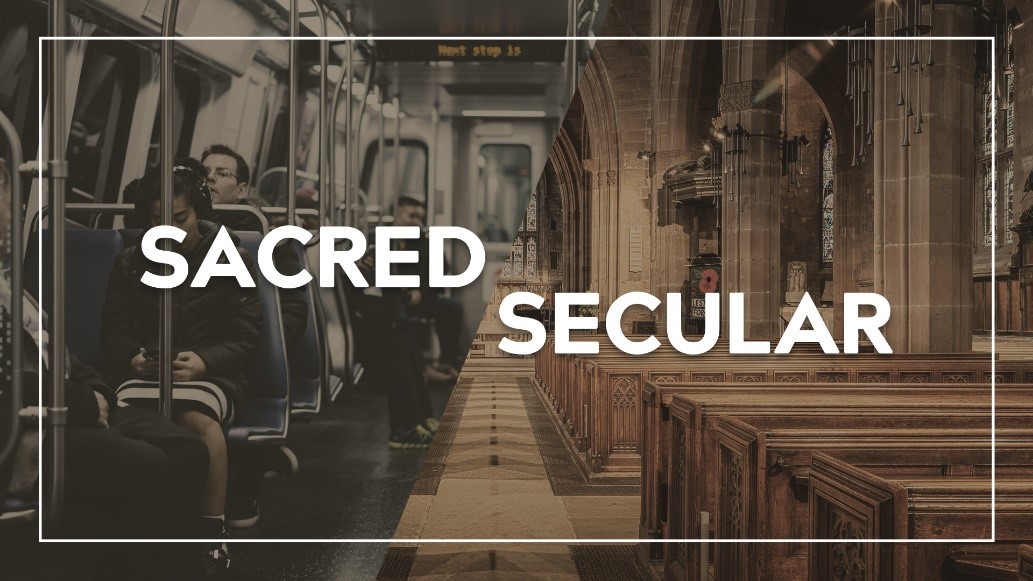
Is Nothing Sacred Anymore?

Is nothing sacred anymore? That’s the question I’ve been asking myself a lot lately as a result of a few items I’ve seen in the news recently. When I say “sacred,” I’m not speaking from the purely religious perspective, but in broader terms of the values and mores that define us (or once did) as a nation and culture.

I must confess that I am writing with a bit of trepidation simply because the news accounts touch on hot-button issues in our culture, and I run the risk of furthering the “partisan” divide that dominates our discourse and prevents us from having civil conversations and debates surrounding such issues. But, writing helps me process, so write I shall. You don’t have to agree with it. Heck, you don’t even have to read it. Just keep right on scrolling. You won’t hurt my feelings at all.

Defining the Sacred

When I speak of sacred, I speak specifically to mean that which is regarded with awe and reverence, and yes, there are things in our culture which should be (or used to be) regarded with reverence. I know that for something to be sacred means that it is set apart, holy or consecrated. Those terms certainly carry religious connotations, but the idea goes beyond the purely religious.

In the News

So, what has been in the news that prompted my thinking? The first news item was the reporting of the “Pride” month gathering at the White House back in June and the subsequent kerfuffles surrounding the prominent display of the “pride” flag at the White House (read about it here) and the trans-activist who exposed him(her?)self on the White House lawn (cautiously read about it here) during said event.

A second news item (click here for the story) that captured my attention was the Center for Disease Control and Prevention’s release of guidance for “chestfeeding” of infants (read the guidance here). Okay, so it’s not really guidance on chestfeeding, but more an acknowledgment that men can produce milk and feed babies from their breasts–to which I say, “What?”

I thought surely I can dig deep to find the nuance of these events so as to arrive at a point that included everyone’s perspective, but the more I reflected, the more I prayed, the more I studied, the reality settled on me that no matter where I landed in my thoughts, someone was going to be excluded. The fact that anyone might be excluded is the very reason that nothing can be sacred anymore.

A Christian American

Let me preface this section with this statement: I am a Christian American, with the emphasis on Christian. I can acknowledge the danger in making that claim of slipping into a christian nationalism mindset. That fact notwithstanding, I believe it is possible to be both a faithful disciple and a strong patriot and I try desperately to be both.

As an American, I’ve always seen the White House as a sacred (set apart, consecrated) place to be held in awe and reverence. It is one of the places in our nation that symbolizes the values that define our nation. It is the people’s house, and as the people’s house, I no more want to see a “pride” flag waving there than I would want to see a Christian flag waving there (although a Christian flag would be more appropriate given the Judeo-Christian principles upon which the nation was built). The White House isn’t a place for any flag except the flag of the United States of America. To display ANY flag other than the American flag is to diminish the sacredness of the space.

And, the man boobs? Well, I never! So, I really don’t care if the President and the White House wanted to host an event for LGBTQI++++++ folks. He’s the President. Go for it, big boy. Do your thing. This is America. I don’t have to attend. I don’t have to like it. I can even speak out against it (this is America, right?), but for an invited guest to expose himself on the White House lawn is a bridge too far for me. It was an expression of utter contempt (udder contempt?) and disrespect for the sacredness of the space. No, there is nothing sacred anymore.

Then, there’s the whole chestfeeding thing. I’m sorry. Men are not women and women are not men. A man can look like a women, can dress like a women, can act like a woman, can live as a woman, but he is still a man. Follow THAT science. A woman can look like a man, can dress like a man, can act like a man, can live as a man, but she is still a woman. It is basic biology. Women cannot be men and men cannot be women, surgery and drugs notwithstanding.

I can remember a time when motherhood was sacred. Heck, even womanhood was somewhat sacred, given the woman’s ability to give birth, to be the source of life. That certainly doesn’t seem to be the case anymore. The sacred nature of motherhood (and womanhood) is lost to the selfish whims and unnatural desires of an individual whose mental wellness can certainly be questioned. But, heavens, let by no means exclude them!

The Problem Before Us

And, therein lies the problem. The sacred is always a bit exclusionary. The sacred evokes a sense of awe, a sense of mystery, that points to something above and beyond itself, or above the person seeking to understand the sacred. In this post-modern, post-Christian world, we just can’t have that.

By rejecting the sacred, we can remove all restraints that hinder us. If nothing is sacred, then any behavior can be justified. If nothing is sacred, legitimacy to any lifestyle can be granted. I’m telling you, folks, losing the sanctity of motherhood (womanhood) puts us on a short path to ultimate evil. Write it down that on this day Lynn Malone wrote that men “chestfeeding” infants is the gateway to legalizing pedophilia. Hyperbole? I hope so, but I think not.

When a sense of the sacred is lost no one stands out, everyone wins a trophy and every passion is ripe for the fulfilling. Everyone must be equal whatever the cost. Every whim, every passion, every desire must be not only legitimized, but also affirmed. To do otherwise is to make someone less than, and we just can’t have that under any condition.

As a sense of the sacred is lost, we begin to replace the truly sacred with the ordinary. We see the elevation of the ordinary to places of sacredness–things like sports, entertainment and materialism. It’s not a huge step until “sin” becomes sacred and to call it out is to commit blasphemy.

I think it points to a larger issue that gets lost in our secular culture. We lose a sense of the sacred in society because we have lost a sense of the sacredness of that which is holiest. We fail to recognize that there should be things set apart for the worship and service of God. When we lose sight of the holiness of Jesus Christ it leads directly to the suppression of the sacred in daily life. We shouldn’t be too surprised to see it happen in culture. It has happened in the church, too. Perhaps it happened in the church before it happened in culture (see an example here).

Jesus is the Answer

Until Jesus Christ is exalted, until Jesus Christ is loved completely and adored genuinely, there can be no surprise that anything else will be viewed as sacred. Until Jesus Christ be high and lifted up, nothing is stable. Until Jesus Christ be worshipped and adored, nothing is safe. Until Jesus Christ be praised forevermore, nothing will be sacred anymore.

Even so, come Lord Jesus.

Until next time, keep looking up…

Deja Vu?

In the words of the great Yogi Berra, “It’s like deja vu all over again!”

That’s the feeling I’ve experienced over the past couple of days as I scrolled my Facebook feed and saw posts from friends and former colleagues who are making transitions once again in ministry.

Yes, it’s that time of year when United Methodists, and now former United Methodists, are making changes in ministry appointments. This year has been decidedly different in that respect, however.

Many friends and former colleagues are making the transition away from the United Methodist Church as the disaffiliation process continues to play itself out. Some have chosen to transfer to other denominations and others have chosen to retire. Still others have chosen to remain United Methodist and are also on the move. I wish them all blessings and continued fruitfulness in ministry wherever the Lord leads them.

It’s deja vu for me, though, not only because I remember those days, but because I’m on the move, too. I really thought my moving days were over when I voluntarily disaffiliated from the UMC almost four years ago. I thought I’d enter secular employment, plant a house church, fill a few pulpits now and again, and life would be grand. That’s what I get for thinking! (Life is still grand, though).

As for the literal moving part, Vanessa and I have made two moves–from West Monroe to Ruston and from Ruston to Minden–in the nearly four years since leaving full-time vocational ministry. That really is more than the average Methodist minister! I’ve informed Vanessa and my children that I only plan to make one more move–either to the nursing home or the funeral home. I’m too old for this moving foolishness!

I’m on the move in ministry, as well. I began an interim ministry assignment with First Methodist Church in Minden on June 1st. Boy, that didn’t last long! That ministry assignment lasted an entire 30 days. That congregation chose to join the Global Methodist Church, and the congregation was quick to identify a pastor who was also joining that denomination who was available immediately, so my services were no longer needed. If I had a poor self-image, I would be tempted to think the congregation listened to me for a couple of weeks and said, “We gotta’ find a pastor, and quick!”

I know that’s not the reality, though. Plans were already in the works when I accepted the assignment and the timing worked out perfectly for the congregation and the new pastor. Besides, the congregation needed a full-time pastor and that is a role I’m unable to fill right now. The congregation also needs the stability of a full-time pastor.

The circumstances over the past four years for the congregation were such (partly precipitated by my own departure from full-time ministry) that I became the sixth pastor of the congregation in four years. That’s not healthy by any metric. I am praying earnestly for them and their new pastor that they will move forward in faith and confidence and will find the stability necessary to be effective in ministry to the Minden community.

Though that assignment has ended, I suppose the Lord isn’t done with me in ministry yet. I met with the leadership of Lakeview Methodist in Minden last Wednesday evening to explore the possibility of serving as their interim pastor. They, too, went through the disaffiliation process and their pastor chose to take a leave of absence so they have been without a pastor since May 31st of this year.

We met, and after an engaging conversation, agreed to a period of six months as interim pastor. It is a “going back” in ministry for us. We served this congregation from 2001 – 2003, so there are relationships already established in the congregation. That learning curve will not be quite as steep. There does remain the issue of whether one can “go back” in ministry after seasons away. Time will tell, but for me, there is a sense of going home. The reason for that is probably because my son and his family call this congregation home, but it may be deeper than that.

Lakeview Church-Minden, LA

Honestly, Vanessa and I have felt a little like a rudderless ship over the past several years. Don’t misunderstand, we’ve found a great home with the Evangelical Methodist Church as a denomination, but more locally, we’ve just sort of blown with the winds of the Spirit.

We thought the House Church Movement was going to be “our” place of ministry, but when you change houses in different communities, people don’t always follow…so, there’s that! I’m still rather convinced that house churches are the future of faithful discipleship, but the Lord hasn’t opened that door again. So, we wait…and blow.

Then, the Spirit blew us over to Beulah Church in Calhoun. What was supposed to be a three-week commitment turned into two and half years of ministry leading the congregation out of the UMC that was both laborious and stressful, not to mention oh, so revealing. We accomplished much in those two and a half years and served with faithful and committed disciples whom we learned to deeply love, but distance simply made continuing ministry untenable for us and for them.

We continued to receive calls from numerous congregations soliciting our services as pastor. They are all faithful and fruitful congregations but we never felt the nudge to say, “Yes” to any of them. That is not meant to be an offense to any of those congregations. I pray I was able to offer each of them a little guidance as they contemplate their future direction, but I personally never sensed the Spirit calling us in those directions.

Then, First Minden came calling. Vanessa and I had somewhat connected in worship with the congregation simply due to the fact that their interim pastor was Rev. David Dietzel. I have long told people that if I could choose my pastor, I’d choose David. When First Minden entered the discernment process toward disaffiliation, Vanessa and I felt comfortable sitting under David’s leadership as much as possible.

The congregation subsequently voted to disaffiliate, but Rev. Dietzel chose to retain his credentials in the UMC (a decision I both honor and respect), so the congregation was without a pastor once again. The leadership called and asked if I could help. After receiving the assurance that they could live with my availability to serve on a limited schedule, I felt the Spirit saying, “Go.” Little did I know the “go” would be so short-lived.

So, here we blow again! Over to Lakeview Church. I’ve agreed to be their Sunday preacher, handle emergencies and help lead the discussion on where their future affiliation will be. Those will be my primary tasks in the next six months. We’ll see where it leads, but it feels right. We pray the Spirit is in it. Will you pray with us?

So, it really does feel like deja vu all over again…in a lot of different ways.

Until next time, keep looking up…

Obstacle or Opportunity?

Here are a couple of questions to ponder:

What obstacles are in your path today? What is keeping you from making the changes you know need to be made in your life?

I don’t believe there are any of us who doesn’t need to change something in our lives. At the very least, we should want to be a better example of a disciple of Jesus Christ, and that invariably necessitates change.

Others who are reading this may be exploring faith, investigating whether you’ll accept the claims of Christ, and place your trust in Him. You know something needs to change in your life, but you’re uncertain what it may be. Some others are thinking about priorities in your life, knowing there are changes that need to be made. Still others are struggling with job issues, or relationship issues that call for something to change.

The Difficulty of Change

Change is difficult, even under the best circumstances. I won’t belabor that point here. I’ve written about that the previous two weeks (click here or here), but change is made more difficult after, having prayed, made the decisions and taken the first steps of faith, we encounter obstacles that seem too big to overcome.

It happens to us individually. After we’ve come to faith in Christ, having been assured our lives will be better, we soon discover that life didn’t get much better at all. We actually discover there are more challenges after coming to faith than there were before we came to faith. 

Change is difficult for organizations, too. Having in recent years purchased an existing business and inheriting a staff, I’ve discovered how hard it is for organizations to adapt to new leaders (and new leaders to adapt to existing staff).

It’s also true of churches that make decisions to change directions, or to make transitions in worship or facilities or leadership. Weeks, months, or even years of planning go into getting ready for the changes, and as soon as that “cross-over” is made, the obstacles spring up, seemingly out of nowhere.

Life is filled with obstacles that keep us from being all God called us to be, either individually or corporately. How do we face the challenge of overcoming the obstacles life puts in our way? That’s the question I’m pondering this morning.

Israel’s First Obstacle

The Old Testament book of Joshua tells the story of the nation of Israel “crossing over” to possess the Promised Land. They have encountered changes both in leadership and in their culture. Their leadership changed from Moses to Joshua, from a shepherd/manager to a military general, and the change brought its own degree of uncertainty as the nation crossed over into the Promised Land.

Soon after crossing over, the people faced their first obstacle. I first learned the story in Sunday school from the African-American spiritual Joshua Fit the Battle of Jericho. If we know the song we know the Israelites won the victory. What were the keys to victory, and what might we discover for overcoming the obstacles that keep us from making the changes we need to make in our lives?

Now the gates of Jericho were securely barred because of the Israelites. No one went out and no one came in.
Then the Lord said to Joshua, “See, I have delivered Jericho into your hands, along with its king and its fighting men. March around the city once with all the armed men. Do this for six days.Have seven priests carry trumpets of rams’ horns in front of the ark. On the seventh day, march around the city seven times, with the priests blowing the trumpets. When you hear them sound a long blast on the trumpets, have the whole army give a loud shout; then the wall of the city will collapse and the army will go up, everyone straight in.”
So Joshua son of Nun called the priests and said to them, “Take up the ark of the covenant of the Lord and have seven priests carry trumpets in front of it.”

Joshua 6: 1 – 6 (NIV)

The Intimidation Factor

One reason we struggle so greatly in overcoming the obstacles in our own lives is because we are intimidated by them. We feel like we can’t overcome them, we don’t have the strength or the courage. Obstacles take many forms, and for the nation of Israel the obstacle is a city called Jericho. Jericho is believed to be one of the oldest cities on earth. Jericho has actually existed on three different sites through the centuries, all in relative proximity, and all 15 – 17 miles northeast of Jerusalem.

I’m certain the nation of Israel felt intimidated facing Jericho. The walls of the city were anywhere from 30 to 60 feet high and from 12 to 45 feet thick, depending on which archaeologist is consulted. The city wall was wide enough that a chariot could be driven along the top, and we know Rahab had her house there. The city gates were reinforced with iron and were impenetrable. Jericho was an imposing obstacle. The people had followed Joshua, crossed over the Jordan, and once in the Promised Land encounter this overwhelming obstacle. Obstacles can loom as an imposing wall in all our lives that prevent us from moving forward. They can seem too big to overcome.

Not only were Jericho’s walls intimidating, but remember, this was a nation of men who had not known what it was to fight a battle. If we read Chapter 5, we’d discover that all the men old enough to bear arms when they left Egypt were dead. Israel’s army was untrained and unproven, with only Joshua and Caleb who had any experience at all.

The nation of Israel had to overcome the obstacle of Jericho for several reasons.

First, it was strategic from a military perspective. Why couldn’t the nation just go around the city and be done? Because the city was allied with the other cities and kings around Canaan. If the nation bypassed Jericho, they would literally leave their rear flank open to attack in the future.

Second, it was important spiritually. Jericho represented everything that was foreign to the culture of Israel. Jericho’s primary god was the “moon god,” and without overcoming this obstacle, the nation took a chance on adopting the spiritual culture of Canaan.

Finally, it was important from a morale perspective. This was Israel’s first challenge and if they lost, it would be disastrous.

We can’t be overwhelmed or intimidated by our obstacles. Perhaps one of the greatest obstacles any of us have to face is our attitude. We face an obstacle and think, “I can’t do this.” Or, “I don’t want to do this,” or, “Why would God ask me to do this.” We think we can “cross-over” to faith and life will be great.

Don’t think life in the Promised Land will be without challenges. There will always be challenges in life. Don’t necessarily believe the center of God’s will is the safest place to be. It’s the best place to be, even if it’s not the safest or most comfortable. Just ask Jesus. No one was ever more in the center of God’s will, and it carried him all the way to the cross.

Attitude is everything. Zig Ziglar said, “It’s your attitude, not your aptitude that determines your altitude.” Unfortunately, too many of us have negative attitudes, but I remind us that bad attitudes are like flat tires. If we don’t change them, we’ll never get anywhere. When we face obstacles, what do we see? Rather than obstacles, why not see opportunities? A positive attitude says there are no obstacles, only opportunities. Every obstacle is an opportunity to grow in faith and obedience.

The Opportunity of Faith

Every obstacle is an opportunity to grow in faith. Hebrews 11:30 says, “By faith the walls of Jericho fell down…” Joshua and the Israelites didn’t have anything but faith on their side. We have to trust God to guide us through the obstacles of life. This is a bit cliché, but what God has brought us to, God will bring us through.

Recall this poem:

Doubt sees the obstacles; faith sees the way. 
Doubt sees the darkest night; faith sees the day. 
Doubt dreads to take a step; faith soars on high; 
Doubt questions, “Who believes?” Faith answers, “I.”

Anonymous

We’ve got a God who says all things are possible, and if we’ve got a God who says all things are possible, then all things are possible. That’s faith. Obstacles present us opportunities to grow in faith.

The Opportunity of Obedience

Every obstacle is also an opportunity to obey. God can ask us to do some of the silliest things. March around the city every day for six days, and then seven times on the seventh day, and then we’re supposed to shout? That’s silly. But, that was God’s plan.

Rarely do God’s plans make sense to us. What happens is we make our plans, ask God to bless them, and then scratch our head when He doesn’t. It doesn’t make sense to conquer a city just by walking around it. It doesn’t make sense to turn the other cheek when somebody is bullying us. It doesn’t make sense to humble ourselves so God can lift us up. It doesn’t make sense that if we try to save our life we’ll lose it, but if we give up our life for His sake we’ll find it. It doesn’t make sense that God would undergo torture and death, and it doesn’t make sense that God would turn around and trust frail, weak, half-hearted humans to share the message that brings redemption to God’s creation.

I had the opportunity to hear a colleague speak about the folly of the Gospel. That’s what he meant–God’s plan doesn’t always make sense. It’s folly to think God would use us. I guess that’s why Paul wrote in 1 Corinthians 1, “For the message of the cross is foolishness to those who are perishing, but to us who are being saved it is the power of God.” If we wait for God to make sense when we’re facing obstacles, we could be waiting a long time. If we wait until we figure out what God is doing before we move, we may never move.

  • “God, you’re telling me to quit my job and go the mission field. That doesn’t make sense, but I’ll do it.” 
  • “God, you’re calling me to speak to the person who hurt me so badly. That doesn’t make sense, but I’ll do it.”
  • “God, you’re calling me to volunteer to lead a small group or a bible study. That doesn’t make sense, but I’ll do it.”
  • “God, you’re calling me to give more money? That doesn’t make sense, but I’ll do it.”

Do we believe Jeremiah 29:11? “For I know the plans I have for you,” declares the Lord, “plans to prosper you and not to harm you, plans to give you hope and a future.” Want to know God’s plan for our lives? Then start obeying the part we already know because God doesn’t show us more of his plan until we obey the parts we already know. Mark Twain said, “It’s not the part of the Bible I don’t understand that bother me. It’s the parts I do understand.”

We already know God’s plan includes trusting Him, forgiving others, turning from sin, and sharing the Gospel. Let’s start there. Maybe he’ll reveal the rest of His plan.     

There is an old story of a king who had a boulder placed on a roadway. The king hid himself and watched to see if anyone would remove the huge rock. Some of the king’s wealthiest merchants and courtiers came by and simply walked around it, many of them loudly blaming the king for not keeping the roads clear, but not one did anything about getting the big stone out of the way.

Then, a peasant came along carrying a load of vegetables. As he approached, the peasant laid down his load and tried to move the stone to the side of the road. After much pushing and straining, he finally succeeded. As the peasant picked up his load of vegetables, he noticed a purse lying in the road where the boulder had been. The purse contained many gold coins and a note from the king indicating that the gold was for the person who removed the boulder from the roadway. The peasant learned what many others never understand. Every obstacle presents an opportunity to improve one’s condition.

Spiritual obstacles are in fact an opportunity to grow in faith and obedience. We overcome obstacles when we see them as opportunities to trust and obey.

Until next time, keep looking up…
Are You Sure About That?

Mark Twain said, “The only person who likes change is a wet baby.” There are a lot of reasons we resist change, but one of the primary reasons is the uncertainty that accompanies change. We like clarity. We like certainty. The familiar is comfortable, like an old pair of shoes broken in just right. It’s easier to stay put than to move. But, there’s a reason the windshield is bigger than the rearview mirror. Life is meant to be lived going forward not backing up. For the nation of Israel, there was more promise ahead than there was behind. So it is for us, too.

Crossing the Jordan River

In Joshua 3, the nation of Israel stood on the banks of the Jordan River ready to cross over and inhabit the Promised Land. God has raised up a new leader in Joshua, and with this new leader there is more than enough uncertainty to go around. Here is a little of the uncertainty I suspect the people were dealing with:

  • “Joshua is a great leader. He’s won some battles for us, but he’s no Moses!” How many of you remember the 1988 vice-presidential campaign? Sen. Lloyd Bentsen of Texas was pitted against Sen. Dan Quayle from Indiana. When asked about his experience, Quayle said he had as much experience as Jack Kennedy had when he ran for President, to which Bentsen quickly responded, “Senator, I served with Jack Kennedy. I was a friend of Jack Kennedy, and Senator, you’re no Jack Kennedy.” I wonder if Joshua didn’t get some of that same kind of feedback as he prepared to lead them across the Jordon River.
  • Perhaps there was this uncertainty: “Is there going to be manna in the Promised Land?” Don’t forget. Six days out of every week, every month, every year for forty years the Israelites pretty much had one job—go out and gather manna. They had to wonder if there was going to be manna across the Jordon. (This is a good place to be reminded, there’s often a lot of good about where we are. It’s good to have manna, and sometimes all we need in that moment is manna, but the problem is we don’t really know what we’re missing.)
  • Maybe there was this uncertainty, too: “We’ve been nomads for forty years. We know how to move around. We know how to live in tents. Now, you’re asking us to become settlers. We’re not sure if we know how to be settlers.” (Personally, I resonate with this uncertainty. For 28+ years, Vanessa and I were nomads, moving every 3.66 years. Now, we’re settlers in our new home. It’s challenging! There’s a little uncertainty.)

Wouldn’t it be great if we knew the outcome for every decision we faced in life? What a gift to have a crystal ball that helped us look into the future to see what lay ahead of us as we stand at defining moments. But, we don’t have a crystal ball. We can’t know whether change will be for the better or for the worse, but because we don’t know doesn’t mean we don’t have to deal with the change brought by defining moments. Every change creates its own uncertainty. As disciples of Jesus Christ, our task is to respond faithfully to changing circumstances and changing times in ways that give life and testify to the Lord’s goodness, not only to changing circumstances in our own lives, but to changing circumstances in our world.

Uncertainty can keep us frozen. It can keep us from making decisions we need to make to move forward in life, and it can keep us from living into the fullness of God’s call and claim upon our lives. For forty years the Israelites had been frozen. The “Back to Egypt” Committee had quickly become the “Let’s Stay Here” committee, and without Joshua to lead them, they would have missed the blessings of the Promised Land. Joshua gave three specific instruction, and in his instruction, I think we learn a few lessons for our own lives in dealing with the uncertainty of life.

Joshua’s Instructions

Focus on God

First, Joshua instructed the people to focus on God. In the face of radical change, he focused the people’s attention on the certainty of God’s presence. We get stuck when we focus all our energy on the uncertainty of circumstances rather than banking on the certainties we already know.      

The people were given these instructions:

“When you see the Levitical priests carrying the Ark of the Covenant of the Lord your God, move out from your positions and follow them. Since you have never traveled this way before, they will guide you. Stay about half a mile behind them, keeping a clear distance between you and the Ark. Make sure you don’t come any closer” (3:3b – 4).    

The Ark of the Covenant captured the imagination of my generation through Harrison Ford as Indiana Jones in “Raiders of the Lost Ark.” Did you know there is a new Indiana Jones movie?

The ark represented the presence of God with the nation of Israel. Joshua’s instruction was a reminder that God was calling the nation forward. Stay connected to God. Keep your eyes on the ark. When it moves, you move. Go where God leads, for you want to be where God is. The Ark was a visible, tangible reminder of God’s presence. Joshua’s instruction was, “When you see the Ark move, you move.” That was his way of saying, “Stay connected to God. Go where God goes.”

The Lord Jesus Christ is the certainty we can bank on. He is faithful. Always has been, always will be. In changing times, in challenging times, in uncertain times we need to focus on Jesus. After all, life is God’s story. We need to be reminded that Jesus is the Changeless One amid all the changing circumstances. I love what the writer to the Hebrews says about Jesus Christ. He is, “the same yesterday, today and forever” (Hebrews 13:8). 

 When we are anxious in coping with the change and uncertainty of life, there’s one reality we look for: Jesus. Where is Jesus in your story? Are you looking for that? Are you watching for Jesus? Do you ask how He might work in the midst of your life changes, especially when those changes are traumatic? Have you remembered the Lord at all? When we ask that question, we enlarge the frame of our life to include the only One who can help us.

In the midst of change, I think it’s key for us to “re-frame” the picture in order to include God in it. God doesn’t cause everything to happen, God doesn’t cause the tragedies that hit us, but God can redeem the worst circumstances if we have eyes and minds to see. None of our circumstances catch God by surprise. We wonder if God will be with us there. God is already in our future. God is already there. God goes before us making the way. We Wesleyans call that “prevenient grace.”

Prepare Ourselves

Secondly, Joshua instructs the people to prepare themselves—to get themselves ready. Verse 5 says: “Then Joshua told the people, ‘Purify yourselves, for tomorrow the Lord will do great wonders among you’.”

The Hebrew word translated “Purify” is “qadash” which means “to be set apart/ consecrated.” The command was the same Moses gave the people back on the other side of the desert some 40 years before as God prepared to give the 10 Commandments. It was a way of saying, “Get ready for what God’s about to do among you.”

It was also Joshua’s way of connecting the people to their heritage. Joshua was able to call upon the past to affirm the leadership that preceded him, and us it move the nation forward. But, it was also necessary for the people to be ready to experience God’s great miracle. To the Hebrews, purification meant washing their clothes and abstaining from sexual activity for a season. It was also a time of fasting. It was a time of waiting on God, of listening to His voice.

Like the Hebrew people, we have to prepare ourselves for what the Lord wants to do in our lives and among His creation. We have to be ready even to face some uncertainty.

No matter how we try to stop change, we can’t. We look at our children, and on certain days, we want to put the brakes on their growth, but we can’t. We look around at our culture and we think, “Whoa! This can’t be happening,” but, it is, and no matter what we do, we can’t put the brakes on.

It’s always been that way, though. When the railroads were first introduced to the U.S., some folks feared that they’d be the downfall of the nation! Here’s an excerpt from a letter to then President Andrew Jackson dated January 31, 1829:

As you may know, Mr. President, ‘railroad’ carriages are pulled at the enormous speed of 15 miles per hour by ‘engines’ which, in addition to endangering life and limb of passengers, roar and snort their way through the countryside, setting fire to crops, scaring the livestock and frightening women and children. The Almighty certainly never intended that people should travel at such breakneck speed.” Martin Van Buren Governor of New York

Our preparation, our consecration requires confession and repentance, both for individual sins and corporate sins. We’ve not always trusted God. We’ve, too often, looked too much like the world instead of offering the world an alternative. Honestly, we’ve spent too much time trying to create a Christian nation, and not enough time creating a nation of Christians—people who are faithful disciples of Jesus Christ. We prepare ourselves for God to do great things among us when we live as faithful disciples of Jesus Christ by earnestly practicing the spiritual discipline: prayer, Bible study, fasting, worship, service, generosity, et. al. Every time of spiritual renewal has been preceded by a time of prayer and preparation.

Take a Step of Faith

Finally, Joshua tells the people to take a step of faith. Verse 8 says: “Give this command to the priests who carry the Ark of the Covenant: ‘When you reach the banks of the Jordan River, take a few steps into the river and stop there.’”

The remaining verses tell us the Jordan River was at flood stage. Generally, the Jordan is a small, meandering river that can easily be crossed, and in places can be waded across. This time, however, it was the harvest season, and the river was flooding.

Why would God call them to cross over at such an inopportune time? Perhaps He wanted the people to know this was a miracle, this crossing was His doing, not their own. I can only imagine what the priests bearing the Ark of the Covenant must have thought as they came to the water’s edge: “We’re supposed to step into that?”

Honestly, it doesn’t take much faith to stay put. If we want to see miracles, sometimes we have to take a risk, but that’s okay because faith is risky business. As I’ve said before, I’m not afraid to fail. I’m afraid not to try. Some things work, some things don’t. Celebrate the ones that do. Learn from the ones that don’t. Along the way, we might just see a few miracles.

How do we take those risks? Author and church consultant Gil Rendle shares the story of a little boy whose chore it was to go to the barn in the dark to secure the farm animals before the family bedtime. He dreaded what lurked in the shadows on the way to the distant barn. His father gave him unforgettable advice. The lantern from the farmhouse would cast its light to the yard gate and no further. When he came to the yard gate, the lantern cast its light to the corral fence and no further. When he came to the corral fence, the lantern cast its light to the windmill and no further. When he came to the windmill, the lantern cast its light to the barn door. The wise father reminded the little boy that he had only to go as far as the light took him, with the assurance that the light would take him further at the next point of need. In the life of faith, we never know the second step until after we’ve taken the first one. We have to take a step of faith and trust God.

My friends, the Holy Spirit blows like a wind upon us, glows like a fire within us, and flows like a river through us. Mighty acts for God take place because of the certainty of that unseen but nevertheless real leadership of the Holy Spirit.

We can’t know with certainty HOW God will fulfill his promises in our lives, but we can know with certainty he WILL fulfill them. Amid the changing nature of this world, Jesus Christ is the changeless One, and the One who kept us yesterday and keeps us today, will continue to keep us for all eternity. Of that we can be sure!