Forgiveness and Healing: Grace Is Greater Than the Wound

When someone wounds us, something inside us begins keeping an account.

They owe me an apology. They owe me an explanation. They owe me the years I lost. They owe me the innocence they took. They owe me the trust they destroyed. They owe me for the humiliation, grief, or pain they caused.

Some of those debts are real. Forgiveness does not say otherwise.

But forgiveness does determine what we will do with the debt.

Paul writes in Ephesians 4:32, “Instead, be kind to each other, tenderhearted, forgiving one another, just as God through Christ has forgiven you.”

The word Paul uses for “forgiving” is charizomai. It comes from the same root as charis, the word we translate as grace. It can mean to give freely, to grant graciously, or to forgive.

Forgiveness, in Paul’s language, is grace in relational form.

It is not primarily a feeling. If we wait until we feel like forgiving, we may wait for the rest of our lives. Forgiveness is a grace-shaped decision concerning what we will do with the debt created by another person’s sin against us.

We decide that we will not spend the rest of our lives trying to collect that debt through bitterness, retaliation, humiliation, or revenge. We release our personal claim to make the other person suffer as payment for what they did, and we place justice into the hands of God.

That does not mean all earthly consequences disappear. It does not mean a crime should go unreported, restitution should never be made, or accountability should be abandoned. Grace and accountability are not enemies. Forgiveness simply means that I refuse to make revenge the organizing purpose of my life.

Forgiveness Tells the Truth

We need to speak carefully about forgiveness because, in our hurry to tell hurting people they need to forgive, Christians have sometimes failed to acknowledge how deeply they were wounded.

Forgiveness is not denying that the wound happened. It is not minimizing the seriousness of the offense. It is not calling evil good. It is not excusing the offender by saying, “They couldn’t help it,” or “It really wasn’t that bad.”

Forgiveness is not forgetting. We sometimes say, “Forgive and forget,” as though faithful Christians should be able to erase painful memories. Human minds do not work that way, and Scripture does not command spiritual amnesia. Some experiences leave marks that remain for a lifetime.

Forgiveness does not automatically restore trust. Forgiveness can be given; trust must be rebuilt through truth, repentance, consistency, and time. Reconciliation may not always be possible, and forgiveness never requires someone to remain in an abusive or unsafe relationship.

Forgiveness does not eliminate consequences. A forgiven person may still lose a position, face legal consequences, or live with a permanently changed relationship. Grace does not erase wisdom, boundaries, accountability, or justice.

These distinctions matter because some people carry not only the pain of what was done to them but also the shame of believing their continued pain proves they have failed to forgive.

Healing is not always immediate. Forgiveness may begin with a decisive act, but with a deep wound it may also require repeated surrender. We may have to place the same hurt into God’s hands more than once.

The capacity of grace to forgive never diminishes the depth of the wound.

Grace is able to tell the whole truth. It can say, “What happened was wrong. It hurt me. It changed something. There were consequences. I did not deserve it.” Grace can say all of that without allowing hatred to have the final word.

Look at the cross. God’s grace never treated sin as insignificant. At the cross, God named the horror of sin and revealed the depth of divine love at the same time. Grace tells the truth about sin—and then demonstrates that sin will not have the last word.

Grace Is Greater

When we say grace is greater than the wound, we are not comparing levels of pain. We are not telling someone, “Your wound should not matter because grace matters more.” We are saying that the sin committed against us does not possess greater power than the grace of Jesus Christ at work within us.

Grace does not make the wound smaller. Grace keeps the wound from becoming greater than Jesus Christ.

Paul does not begin with the person who hurt us, the size of the offense, or the strength of our willpower. He begins with what God has already done for us: “just as God through Christ has forgiven you.”

We do not forgive to earn grace. We forgive because we have received grace. Forgiveness is not the price we pay to be forgiven by God. It is the fruit produced in people who know how much they have already been forgiven.

Grace received becomes grace extended.

We love grace when it moves in our direction. We sing about the grace that forgives our sins and reconciles us to God. We are less enthusiastic when that same grace moves toward those who have wounded us. We want mercy to explain what we did and justice to define what they did. We want the Lord to remember our weakness but remember their wickedness.

Paul does not allow us to separate the grace we receive from the grace we extend. The grace that comes to us through Jesus Christ takes shape in the way we respond to one another.

That is why forgiveness reveals so much about our spiritual formation. It is possible to know the language of grace without being gracious. It is possible to explain forgiveness while refusing to forgive. It is possible to celebrate what Christ has done for us while resisting what Christ wants to do through us.

My capacity to forgive is directly related to the depth of my spiritual formation.

That statement is not intended to shame anyone struggling to forgive. Some wounds are extraordinarily deep, and the path of healing may be long. The struggle itself may become the place where we learn to depend upon grace more deeply than ever before.

If grace is greater than my sin, then grace is greater than the sin of the person who wounded me. And if grace is greater than the sin that wounded me, then grace is greater than the wound that sin left behind.

If grace is greater than my sin, then grace is greater than my wound.

What Is Discipling Us?

The pain of a wound is not an idol, and feeling that pain is not a spiritual failure. But a wound begins to occupy the place that belongs to Christ when it defines who we are, determines how we see others, dictates our decisions, and claims authority over our future.

Before long, we are no longer simply remembering the wound. We are allowing the wound to disciple us.

The wound may be part of my story, but grace refuses to let it become the author of my story. Forgiveness does not rewrite the past. It places the future back into the hands of Jesus.

Nearly thirty years ago, I pastored a church where two men lived in the same community, worked for the same company, and worshiped in the same congregation. Somewhere along the way, a work-related offense created a division between them. I do not remember all the details, and after all these years the details are not really the point.

What I remember is that they never found their way through it.

They continued attending the same church, but they sat on opposite sides of the sanctuary. Week after week, they worshiped the same Lord, heard the same Scriptures, and received the same grace—but the division remained between them.

Both men have now died. I do not tell their story to judge their hearts. Only God knows everything that passed between them. I tell it because their story has stayed with me.

They had moved on with their lives, but it appeared that something between them had never been surrendered to the transforming grace of Jesus Christ.

That is the danger of an unforgiven wound. Life continues. We go to work. We come to church. We sing the hymns and listen to the sermon. From the outside, it may appear that we have moved on. Yet the wound may still be deciding where we sit, whom we avoid, and how far the grace we have received will be allowed to travel through us.

Is there someone I need to forgive? Is there a wound I need to surrender again? Is there a division I have learned to live with that Jesus is calling me to address?

Forgiveness may not restore every relationship. It may not remove every consequence or erase every painful memory. But it refuses to let what happened to us become more powerful in shaping our lives than what Christ has done for us.

The wound may be part of your story, but don’t let it write the ending.

Give Jesus back the pen.

Until next time, keep looking up…

If any of my reflections encouraged or challenged you, follow Not the Perfect Pastor on Facebook for more conversations about faith, ministry, and becoming faithful disciples of Jesus.
What Has Institutional Success Done to the Church?

Questions About Multisite Churches, Institutional Spending, Consumerism, and Accountability

Over the past several posts, I have been examining eleven questions I have been asking myself about the contemporary church.

I began with questions about church leadership and then turned to questions about what happens when the church gathers. 

Four questions remain:

  1. Are multisite campuses a desire to grow God’s kingdom—or the senior pastor’s kingdom?
  2. How biblical is it for as much as 50 percent—or more—of a church’s giving to support buildings, maintenance, utilities, and staff?
  3. Has the contemporary church fostered a consumer mentality rather than genuine discipleship?
  4. Why is the contemporary church so reluctant to practice church discipline?

These may appear to be four separate issues, but I believe they belong together. Each one raises a larger question: What happens when preserving and growing the institution becomes more important than forming faithful disciples?

Once again, I am not asking these questions as someone standing outside the institutional church. I have spent more than thirty-five years as an insider. I have served as a senior pastor and district superintendent. I have made my living from the gospel for most of my adult life. I have not merely participated in these systems. I have benefited from them.

Neither am I suggesting that everything associated with institutional Christianity is necessarily wrong. Institutions can preserve important traditions, combine resources, support ministries, and accomplish things an individual congregation could never accomplish alone. But institutions also have a natural instinct for self-preservation. Over time, keeping the institution alive can become more important than fulfilling the mission for which the institution was created. That is the concern behind these four questions.

When Expansion Becomes the Mission

I understand the appeal of the multisite church model. We explored it in two of the congregations I served over the years. It can make good financial and missional sense, particularly when a larger congregation merges with a smaller or struggling one.

The larger church can provide financial resources, leadership, technology, administrative support, and ministry programs the smaller congregation could not sustain on its own. A struggling church may remain open, and a Christian presence may be preserved in a community where it might otherwise disappear. Those are good things.

Everyone wants to reach more people for Christ. At least, that is what we say our goal is. A multisite model can provide opportunities to reach people in different communities while avoiding the expense of duplicating every administrative function. I appreciate the concept.

Still, I find myself asking a question: Why not call the new location a church plant? If the goal is to establish a congregation that makes disciples and reaches its community, why must it remain a campus of the larger church? Why must it retain the larger congregation’s name, organizational identity, ministry system, and usually its primary preacher?

Does the campus have local leadership with meaningful authority? Is it being prepared to become a self-governing congregation? Is the goal to reproduce healthy churches—or to extend the reach of one church’s brand? And, perhaps most uncomfortably, is the goal to grow God’s kingdom or our kingdom?

I am not suggesting that every multisite church is driven by ego or control. That would be an unfair judgment about motives I cannot know. Some multisite churches are undoubtedly reaching people and doing meaningful ministry.

But the model deserves examination. Bigger is not necessarily better. Expansion is not necessarily multiplication. Increasing the audience of one gifted communicator is not necessarily the same thing as forming a new congregation with mature local leaders.

Perhaps the real test is not how many campuses a church has but what kind of disciples and leaders those campuses are producing. If every campus remains dependent upon the personality, preaching, and authority of one senior pastor, have we planted churches—or merely expanded a platform?

When Maintaining the Church Consumes the Church

I am writing this while attending the General Conference of my denomination, the Evangelical Methodist Church. As part of that meeting, I have been looking at financial information from our congregations. The numbers raise difficult questions.

In many smaller churches, more than 50 percent of the congregation’s giving is allocated to pastoral support. Once denominational support, insurance, utilities, maintenance, and other facility expenses are added, as much as 80 percent of the church’s income may already be committed. That leaves very little margin for ministry and outreach.

This is not an argument against paying pastors. Scripture clearly supports those who receive their living from the gospel. As one who has received his living from the gospel for most of his adult life, it would be more than a little hypocritical for me to suggest otherwise.

Nor is it an argument against maintaining church property. Buildings require electricity, insurance, repairs, and upkeep. Those expenses are real and ignoring them does not make them disappear.

The problem is not that churches have expenses. The problem is what happens when almost everything a congregation receives is required simply to keep the congregation operating. At what point does maintaining the church consume the church?

We regularly say, “The church is not a building.” Our budgets, however, sometimes tell another story. They may reveal that maintaining the building, supporting the staff, and preserving the organization have become our highest priorities.

Again, I understand how this happens. A congregation loves its pastor. It values the building where generations have worshiped, married, baptized their children, and buried their loved ones. The building holds memories that cannot be measured on a financial statement. But a difficult question remains: If 80 percent of a church’s giving is required to maintain its staff, building, and denominational obligations, how much is left to feed the hungry, care for the poor, serve the community, support missions, and make disciples?

Perhaps an even harder question is this: Are we supporting these things because they advance the mission, or has preserving them become the mission? The institution was created to support the ministry of the church. The ministry of the church was never intended merely to support the institution.

When Disciples Become Consumers

Church-hopping and church-shopping have become normal in the United States. When we want a strong children’s ministry, we look for the church with the best children’s ministry. When our children become teenagers, we search for the church with the largest youth group, the most activities, the best facilities, or the most dynamic youth pastor.

I have watched this happen in churches I served. Families would participate in our children’s ministry, but once their children became teenagers, they migrated to the bigger church because it offered more opportunities for their teens.

I understand the impulse. Parents want their children to enjoy church. They want them to build Christian friendships, learn the faith, and have experiences that will encourage them to follow Christ. Confession: I’ve got teenage grandchildren. I want the same for them.

But I have begun to wonder whether we parents (and grandparents) have abdicated our responsibility for our children’s faith development to the professionals. We have outsourced discipleship.

We began to believe our children needed a professional children’s minister, a professional youth minister, and a full calendar of religious activities more than they needed parents who prayed with them, opened Scripture with them, worshiped beside them, served with them, and demonstrated a life of faith before them.

Churches have helped create this expectation. We compete for families by offering more programs, better facilities, larger events, and specialized ministries for every age and stage of life. In the process, we can unintentionally communicate that discipleship is something religious professionals provide for us. That is what consumerism does. It changes the question.

Instead of asking, “Where is God calling us to belong, serve, sacrifice, and grow?” we ask, “Which church offers the most for me and my family?”

The church becomes another provider of goods and services, which happen to be religious in nature. Worship becomes something we attend. Ministry becomes something the staff performs. Discipleship becomes another program we consume. And when another church offers a better product, we move.

I am not opposed to children’s or youth ministry. I am grateful for those who invest in children and teenagers. But no church program can replace the role of parents (and grandparents) in the spiritual formation of their children. The church should equip parents for that responsibility, not encourage them to surrender it. Have we become so focused on attracting families that we have forgotten how to form them?

When Accountability Threatens Attendance

Consumer Christianity also helps explain why church discipline has largely disappeared. No one seems to be accountable anymore—morally or theologically. We are reluctant to address destructive behavior because we do not want to appear judgmental. After all, we are all sinners. We are afraid of being hypocritical, unloving, or legalistic.

Those concerns are understandable. Church discipline has sometimes been practiced harshly, selectively, and publicly. Certain sins have been exposed while others were excused. Ordinary members have been disciplined while influential leaders were protected. What was supposed to produce restoration sometimes produced humiliation instead. We should repent of those abuses.

But the misuse of church discipline does not eliminate the need for loving accountability. “We are all sinners” is a reason to practice accountability humbly. It is not a reason to abandon accountability altogether.

The New Testament vision of the church is not a gathering of people who mind their own business while sitting near one another for an hour each week. It is a community whose members belong to one another. They encourage, teach, correct, forgive, restore, and bear with one another. That kind of life requires accountability.

Of course, accountability becomes difficult when people relate to the church primarily as consumers. Consumers do not expect to be corrected by the businesses they patronize. If they become dissatisfied, they take their business somewhere else. Church leaders know this.

If we challenge someone’s behavior, question a theological conviction, or call for repentance, that person may leave. Their family may leave with them. Their giving may leave too. They will probably find another church down the road that asks fewer questions. The temptation is to remain silent. But a church that is afraid to lose people will eventually become afraid to disciple people.

Biblical accountability is not about controlling people, policing every failure, or pretending some of us have risen above the need for grace. It is about loving one another enough to tell the truth and walking with one another toward restoration.

Perhaps the disappearance of church discipline reveals something deeper. Meaningful accountability requires meaningful belonging. It is difficult to hold one another accountable when relationships are shallow, attendance is optional, and participation consists primarily of watching a few people conduct a service. Church discipline cannot be separated from church community. We cannot expect accountability from people who have never been taught that they belong to one another.

What Are We Actually Building?

Multisite campuses, church buildings, paid pastors, denominational structures, children’s programs, youth ministries, and organizational growth are not inherently wrong. Each can serve the mission of the church. The danger comes when these things cease to serve the mission and quietly become the mission.

A church can have multiple campuses, excellent facilities, strong programs, growing attendance, and a substantial budget while failing to form people who live under the lordship of Jesus. A smaller congregation can devote nearly all its resources to preserving its pastor, property, and programs while having little margin left for the ministry it is trying to preserve.

Both may be institutionally successful—or at least institutionally committed—without necessarily being faithful to the mission Jesus gave His church. Perhaps the most important question is not whether our churches are growing, adequately funded, programmatically successful, or institutionally secure. Perhaps the question is whether our life together is forming people who look more like Jesus.

Are we making disciples—or merely attracting attenders? Are we multiplying churches—or extending brands? Are our resources supporting ministry—or is ministry supporting the institution? Are we forming children in the faith—or outsourcing their discipleship? Are we loving one another enough to practice humble, restorative accountability—or are we too afraid someone might leave?

Institutions have a way of convincing us that their survival is essential to the kingdom of God. It is not. The kingdom existed before our institutions, and it will remain long after they are gone.

The church must always be willing to ask whether its structures are helping fulfill the mission of Jesus or hindering it. Everything else—our buildings, budgets, programs, positions, campuses, and denominational systems—must remain secondary to that purpose.

We should not be asking only whether the institution is succeeding. We should be asking what its success is producing.

No Easy Answers

I know. I’ve raised a lot of questions. Many of which have no answer. Or, the answer will be different in every congregation. 

I haven’t asked these questions to condemn anyone or anything. I asked them of myself as one who leads in the institution. I just asked them out loud in the hopes that other leaders might ask themselves, and in so doing, that we might all be more faithful in our leadership.

As usual, my questions only raise more questions. Perhaps they did for you, too. I’d love for you to share your questions with me. Leave them in the comments below.

Until next time, keep looking up…

Who Leads the Church?

Questions About Senior Pastors, Denominational Hierarchy, and Professional Ministry

In my last post, I shared eleven questions I have been asking myself about the contemporary church. Today, I want to dig deeper into three of them:

  1. Is the senior pastor a truly biblical role?
  2. Is denominational hierarchy a biblical concept?
  3. Is professionalized ministry the biblical model?

These questions belong together because they all concern leadership—who leads the church, how that leadership is structured, and what leaders are supposed to do.

Once again, I need to acknowledge my complicity. I have been a senior pastor. I have been a district superintendent. I have worked for a denomination. I have received my living from the gospel for most of my adult life. I have not merely participated in these systems. I have benefited from them.

That doesn’t necessarily make the systems wrong. It does mean that I am not casting aspersions. I am questioning structures in which I have spent more than thirty-five years of my life.

Is the Senior Pastor a Truly Biblical Role?

The New Testament certainly recognizes leaders in the church. It speaks of apostles, prophets, evangelists, pastors, teachers, elders, overseers, and deacons.

What I have trouble finding is anything that looks quite like the modern senior pastor.

In many churches, the senior pastor is the primary preacher, chief executive, vision-caster, staff supervisor, fundraiser, institutional manager, public face, and central spiritual authority. That is a lot to place on one person. I know. I have been that person (and I still am).

I have also helped create churches in which too much revolved around me. I was the primary preacher. I was expected to cast the vision. I was the one people called when they needed prayer, counsel, a hospital visit, a decision, or an answer.

Some of that came with the calling. Some of it came with the structure. Some of it probably came from my own need to feel important. That last one is difficult to admit.

The New Testament seems to picture leadership as more shared. Elders are generally spoken of in the plural. Spiritual gifts are distributed throughout the body. Every member has a function. No part can say to another, “I don’t need you.”

Does that mean having a senior pastor is inherently unbiblical? I’m not prepared to say that. But I am prepared to ask what happens when so much authority, visibility, and responsibility become concentrated in one person.

The pastor begins to carry expectations no human can fulfill. Preach well. Lead decisively. Counsel wisely. Visit faithfully. Manage effectively. Grow the church. Resolve conflict. Be available. Keep everyone happy. When the church grows, the pastor receives too much credit. When it declines, the pastor receives too much blame.

The congregation can also become dependent upon the pastor. The pastor prays. The pastor teaches. The pastor visits. The pastor evangelizes. The pastor hears from God and tells everyone else where the church is going. That may create an efficient institution, but does it create a healthy body?

Perhaps the problem is not that churches have senior pastors. Perhaps the problem is that the senior pastor has become the center of gravity around which the congregation revolves. Christ—not the pastor—is the head of the church.

Is Denominational Hierarchy a Biblical Concept?

This question gets even more personal because I have seen denominational connection at its best, and at its worst.

Denominations can provide accountability, theological identity, shared resources, clergy standards, mission partnerships, and opportunities that individual congregations could never provide on their own. I have benefited from all of those things.

And accountability matters to me. When I left one denomination I joined another for that very reason. I suppose that’s why this question causes so much cognitive dissonance for me.

The New Testament church was not simply a loose collection of congregations with no connection or responsibility to one another. Churches shared resources. Leaders traveled among them. The apostles provided instruction and correction. Acts 15 describes leaders gathering to address an issue affecting the wider church.

Connection is biblical. Accountability is biblical. Shared discernment is biblical. But is everything our denominational systems have become biblical?

Boards create agencies. Agencies create offices. Offices develop policies. Policies require administrators. Administrators require budgets. Before long, a structure created to support ministry requires enormous energy simply to support itself.

I understand why many of those structures developed. Heck, I helped administer some of them. They were usually created to solve real problems or accomplish something worthwhile. But every institution eventually develops an instinct for self-preservation.

When does connection become control? When does accountability become bureaucracy? When does theological oversight become institutional gatekeeping? When does preserving the denomination become more important than serving its congregations and advancing the mission?

Denominational structures are not necessarily wrong because we cannot find them outlined in the New Testament. Neither are they sacred simply because we inherited them. They are tools. Tools should be evaluated by whether they still serve their intended purpose.

The local church does not exist to maintain the denomination. The denomination exists to help the church follow Christ and participate in His mission. When that order becomes reversed, something has gone wrong.

The problem? Those on the inside don’t always see the issue. They see themselves as “helping” the church and “fulfilling” the mission. I know because I was one who saw it that way.

Is Professionalized Ministry the Biblical Model?

Let me be clear: Scripture provides for the financial support of those who devote themselves to preaching and teaching.

I am grateful for the churches that have supported my family and me through the years. Their generosity allowed me to devote time and attention to ministry that I could not have given otherwise.

The problem is not that we pay pastors. The problem is that ministry can gradually become something performed primarily by the people who are paid to do it.

We call pastors “ministers,” which can subtly imply that everyone else is something other than a minister. We hire staff to teach, visit, disciple, organize, lead worship, conduct outreach, and administer the church. Eventually, the pastor and staff perform the ministry while everyone else attends, gives, and occasionally volunteers.

Pastors become religious service providers. Church members become their customers. Members expect the professionals to provide good preaching, meaningful worship, pastoral care, children’s ministry, student ministry, and opportunities for the family. If one church does not provide what they want, they can usually find another one that does.

That arrangement may keep the institution operating, but is it the biblical vision of the body of Christ?

Paul wrote that Christ gave apostles, prophets, evangelists, pastors, and teachers “to equip God’s people to do his work and build up the church.” The leaders are not given to do all the ministry for God’s people. They are given to equip God’s people for ministry. There is a significant difference.

Perhaps the measure of a pastor’s ministry is not how much the pastor personally accomplishes. Perhaps it is how effectively the pastor helps people become more like Christ and participate in His mission.

A church can have excellent preaching, polished worship, strong programs, and a large staff while its members remain mostly passive. They can be well served without ever being equipped to serve.

Professional ministry should not relieve the saints of ministry. It should prepare the saints for ministry.

Giving Ministry Away

I am not calling for churches to eliminate senior pastors, dismantle denominations, or stop paying ministry leaders. I am asking whether our structures are accomplishing what they were intended to accomplish.

Does the pastor help people depend more deeply upon Christ, or does the congregation become increasingly dependent upon the pastor? Does the denomination strengthen local churches for mission, or do local churches increasingly exist to maintain the denomination? Does professional ministry equip God’s people to do the work of ministry, or does it quietly teach them to leave ministry to the professionals?

Perhaps faithful Christian leadership can be measured, at least in part, by how willingly it gives ministry away.

Jesus did not gather disciples merely to watch Him work. He taught them, formed them, corrected them, empowered them, and sent them. He gave them real responsibility and invited them to participate in His mission.

The church will always need leaders. But it needs leaders who understand that the goal is not to build ministry around themselves. The goal is to equip the whole body to become more like Christ for the sake of others.

Once again, it appears that my questions only lead to more questions—questions for which I really don’t have answers. I suppose that’s another reason I’m not the perfect pastor.

But that doesn’t keep me from trying…or asking more questions.

Until next time, keep looking up…

If any of my reflections encouraged or challenged you, follow Not the Perfect Pastor on Facebook for more conversations about faith, ministry, and becoming faithful disciples of Jesus.

11 Questions I’m Asking Myself About the Contemporary Church

Examining the Church We Have and the Church Jesus Intended

I have spent most of my adult life serving the institutional church and I’ve spent much of the past week sitting in institutional meetings. The week was encouraging and uplifting, but it also prompted me to reflect on the “institutional” church as it exists today.

Here is what I’ve been thinking about all week…

For more than thirty-five years, I have preached sermons, led worship services, administered programs, attended meetings, developed budgets, supervised staff, and participated in denominational structures. I have served as a senior pastor. I have served as a district superintendent. I have not only participated in the denominational system; for a season, I worked for the denomination. Even now, I remain an ordained elder serving as the pastor of a local church.

I say all that because I don’t want anyone to misunderstand what follows. I am not standing outside the institutional church throwing rocks at it. I am standing firmly inside it. I have given most of my life to it. I love the church, and I continue to believe the local church can be one of the most beautiful expressions of the body of Christ in the world. But I also know that I have been complicit in fostering some of the very issues I am beginning to question.

I have helped create worship services in which most people watched while a few people participated. I have stood behind the pulpit as the central personality in the room. I have encouraged people to invite their friends to “come hear the preacher.” I have supported budgets that devoted significant resources to staff, buildings, programs, and institutional maintenance. I have participated in denominational systems that sometimes appeared more concerned with preserving the institution than advancing the mission.

I have measured attendance, counted giving, promoted programs, celebrated growth, and worried when the numbers went in the wrong direction. I have sometimes treated a full room as evidence of spiritual success without asking whether the people in that room were actually being formed into the image of Christ.

I am not confessing that everything I have done was wrong. Much of it was done prayerfully, faithfully, and with good intentions. Some of those practices have borne genuine fruit. But good intentions do not place our practices beyond examination.

Neither does the fact that a particular practice is not found explicitly in the Bible make it inherently wrong. The New Testament does not give us a complete operations manual for the twenty-first-century church. It does not tell us what time to gather, how many songs to sing, whether to use a pulpit, how to organize the church office, or what kind of building to occupy. We have freedom to develop structures and practices suited to our time and place.

The question is whether those structures still serve the purposes of the church—or whether the church has gradually begun serving the structures.

A practice does not become biblical simply because churches have done it for a long time. Neither is it necessarily faithful because it attracts a crowd, produces measurable results, or appears successful. Every practice must be examined in light of the character of Jesus Christ, the teaching of Scripture, and the mission Jesus entrusted to His church. That examination has led me to begin asking some uncomfortable questions.

1. Is the senior pastor a truly biblical role?

The New Testament speaks of apostles, prophets, evangelists, pastors, teachers, elders, overseers, and deacons. It certainly recognizes spiritual leadership and entrusts some people with particular responsibilities. But do we find anything resembling the modern senior pastor—the primary preacher, chief executive, public face, institutional leader, and often central personality of the congregation?

The role may not be inherently wrong, but what happens when so much authority, visibility, and responsibility become concentrated in one person?

2. Is the church supposed to be a gathering of non-participants?

Paul describes the church as a body in which every member has a function. He also pictures gatherings in which different members contribute to the life of the community.

How, then, did church become a gathering in which a relatively small number of people perform while everyone else watches? Have we unintentionally taught people that attending church is the same as participating in the body of Christ?

3. Are multisite campuses about growing God’s Kingdom—or the senior pastor’s kingdom?

I know this question sounds pointed, and I do not presume to judge the motives of every pastor or congregation using a multisite model. Heck, I even tried it myself once (to no avail). Multisite churches may reach people who would otherwise remain disconnected from Christian community.

Still, we should be willing to ask why one pastor’s preaching must be broadcast into multiple locations. Are we multiplying churches and leaders, or extending the reach of a particular personality and brand?

4. How biblical is it for more than half of a church’s giving to support buildings, maintenance, upkeep, and staff?

Buildings and staff can serve the mission of the church. Pastors who devote themselves to ministry may rightly receive financial support, and congregations need places in which to gather.

But when much of the church’s financial life is devoted to sustaining its own operations, we should at least ask what remains for mission, mercy, generosity, and ministry beyond ourselves. At what point does maintaining the institution become the institution’s primary mission?

5. When did church gatherings become sermon-centered?

I am a preacher, and I believe preaching matters. The proclamation and teaching of God’s Word have always been central to the church’s life. I’ve often told my congregations that they pay me to be their pastor. I preach for free!

But is a thirty-minute sermon delivered by one person supposed to become the defining feature of Christian worship? How did the sermon come to dominate the gathering while prayer, testimony, conversation, shared discernment, and the Lord’s Supper moved toward the margins?

6. When did the church lose its weekly commitment to the Lord’s Supper?

The earliest Christians appear to have gathered regularly around the table. The breaking of bread was not an occasional addition to worship. It was central to their life together.

How did many Protestant churches move from the Table every week to once a month, once a quarter, or even less frequently? What did we lose when the sermon became weekly but the Meal became optional?

7. Is denominational hierarchy a biblical concept?

Denominations can provide accountability, connection, shared resources, theological identity, and a means of accomplishing ministry that no single congregation could undertake alone. I have benefited from those structures and have worked within them.

But how closely do our layers of boards, agencies, executives, superintendents, bishops, conferences, and administrative offices resemble the leadership structures of the New Testament? When does connection become control? When does accountability become bureaucracy? When does the institution begin protecting itself?

8. Is professionalized ministry the biblical model?

Scripture recognizes that those who preach the gospel may receive their living from the gospel. There is nothing inherently unbiblical about paying pastors or other ministry leaders.

But have we created a system in which the work of ministry is largely outsourced to professionals? Have pastors become religious service providers while church members become their clients? Has professional ministry equipped the saints for ministry—or relieved the saints of ministry?

9. How did we develop such a consumer mentality concerning church?

People shop for churches based on music, preaching, children’s ministries, facilities, style, convenience, and personal preference. Churches respond by marketing programs and attempting to provide increasingly attractive religious experiences.

How did following Jesus become another consumer choice? And how much has the church itself contributed to that mentality by treating people as customers whose preferences must be satisfied?

10. Were early church gatherings limited to one hour?

There is nothing inherently spiritual about a longer gathering. A three-hour service can be every bit as lifeless as a one-hour service.

Still, why has an hour become the accepted limit for worship in so many churches? Why do we become anxious when the service runs long? What does that reveal about the place worship occupies in our lives—and about the kind of experience our gatherings have become?

11. Why is the modern church so afraid of church discipline?

Jesus and the New Testament writers took sin, accountability, restoration, and the holiness of the Christian community seriously. Church discipline was not intended to be cruel, controlling, or punitive. Its goal was truth, repentance, reconciliation, and restoration.

Yet many churches avoid it almost entirely. Are we afraid people will leave? Are we afraid of conflict? Have abuses of authority made us unwilling to exercise any authority? Or have we become so consumer-oriented that we no longer believe the church has the right—or responsibility—to call its members to a life of holiness?

I’m Asking, Not Accusing

I do not have settled answers to all these questions. If I had the answers, I probably would not be writing this series. Or, more likely, I would have already written a book and gone on the speaking circuit.

I am also aware that it is much easier to identify problems than to propose faithful alternatives. Institutional structures developed for reasons. Many of them solved real problems, supported valuable ministries, and helped the church carry the gospel across generations and cultures. Tearing down structures without understanding what they hold together is neither wise nor faithful.

Nor do I believe the solution is simply to reproduce the first-century church. The early church existed in a particular historical and cultural setting. It had problems of its own—many of which are preserved for us in the New Testament. My goal is not to romanticize the past. My goal is to examine the present.

I want to consider what Scripture establishes, what freedom Scripture allows, what benefits our contemporary practices provide, and what unintended distortions they may have produced. I want to distinguish between what is biblically commanded, what is biblically permissible, and what we have simply come to assume.

Most of all, I want to ask whether the church we have built is forming people into the image of Jesus for the sake of others.

I love the church too much not to ask. And because I am part of the church I am questioning, these are not questions I am asking about “them.”

They are questions I am asking about us.

They are questions I am asking about me.

So, I invite you, over the next two weeks, to reflect on these eleven questions with me. In addition to my regular Tuesday posts, I will add two Friday posts to unpack these questions a little more deeply.

I would love your feedback, too. Comment below with any questions these questions raise for you, or feel free to dispute my assumptions. I certainly could be wrong and I invite your correction. Let me hear from you.

Please join me on the journey.

Until next time, keep looking up…

If any of my reflections encouraged or challenged you, follow Not the Perfect Pastor on Facebook for more conversations about faith, ministry, and becoming faithful disciples of Jesus.

The Dream Nobody Knew

Back in the mid-to-late 1980s, I worked in my grandfather’s hardware store in Chatham, Louisiana.

Like most small-town hardware stores, it wasn’t exactly a center of corporate innovation. We sold nuts and bolts, plumbing fittings, paint, and whatever else folks needed to keep life moving. Most days, I sat on an old stool behind the counter waiting on customers and trying to decide what I wanted to do with my life.

Somewhere during those years I started reading Entrepreneur magazine. I don’t know why it captured my imagination, but it did.

Every month I would read stories about entrepreneurs building businesses from nothing. I wasn’t a businessman. I was just a young husband working in a hardware store. But those articles stirred something inside me. They made me dream.

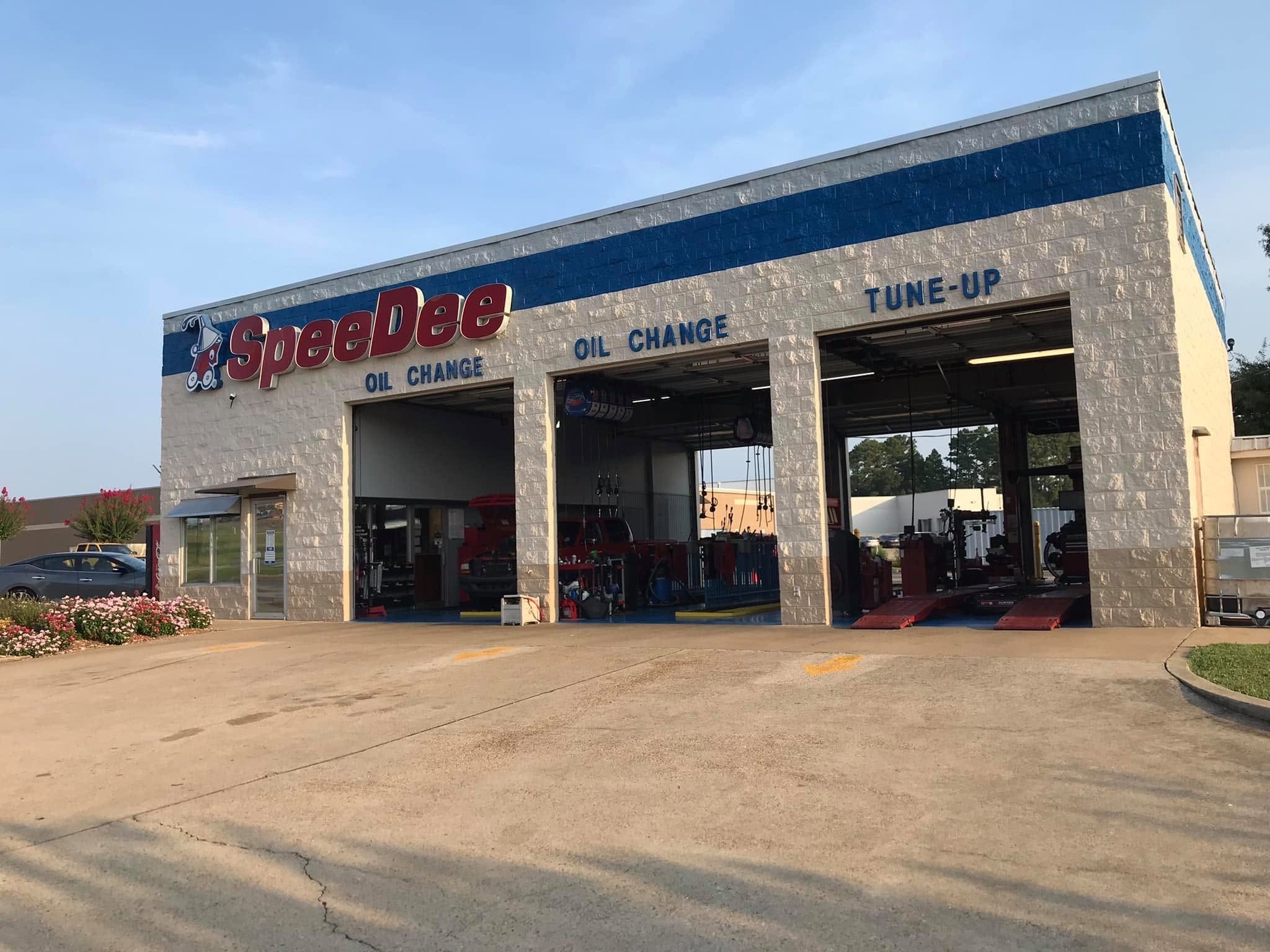
In the back of the magazine there was an advertisement for a little oil change company out of Metairie, Louisiana called SpeeDee Oil Change.

Most people had never heard of it.

They were beginning to franchise locations, and every time I saw that advertisement I found myself imagining what it would be like to own one.

Not just anywhere. In Ruston. And not just somewhere in Ruston. On the North Service Road.

I can still see myself sitting on that stool, flipping through those pages, imagining a future that seemed completely out of reach. Life, however, had other plans.

I never opened a SpeeDee franchise. Instead, I became a deputy sheriff. Then God called me into ministry. The years passed. I pastored churches. Raised children. Attended committee meetings. Preached sermons. Buried saints. Married young couples. Watched grandchildren arrive.

Like most people, I eventually assumed some dreams belonged to younger versions of ourselves.

Every now and then I would see a lube shop and remember those old thoughts from the hardware store, but life had moved on. Or so I thought.

Then in 2019, something unexpected happened. After nearly three decades in pastoral ministry, I sensed God might be leading me into a different season. An opportunity opened with a local bank, and I accepted a position as Business Development Officer.

In some ways, it felt like a return to those old entrepreneurial dreams. I wasn’t leaving ministry because I was angry or burned out. I simply believed God might be redirecting my path. For the first time in years, I found myself working in the business world again, helping build relationships and explore opportunities for growth.

Then 2020 arrived.

Like everyone else, we watched as COVID changed everything. The bank adapted to new realities, reevaluated priorities, and eventually chose a different direction. The role for which I had been hired was disappearing. Leadership offered me another opportunity within the organization, but it involved becoming a consumer loan officer.

I tried to imagine myself sitting behind a desk every day approving loans and financing purchases. The more I thought about it, the more I realized it wasn’t who I was. Nothing against the people who do that work. It simply wasn’t where my heart was. I couldn’t shake the feeling that God wasn’t calling me to spend the rest of my working years helping people borrow money to buy things they probably didn’t need and often couldn’t afford.

Once again, I found myself standing at a crossroads.

The door that had seemed so promising in 2019 was quietly closing. I didn’t know what came next. I only knew it was time for another change.

Looking back now, I don’t see the banking years as a detour at all. I see them as a placeholder.

When I left vocational ministry in 2019, I needed somewhere to land. SpeeDee wasn’t for sale. The opportunity didn’t exist. But the bank did. For two years, God provided exactly what I needed for that season. Not forever. Just for then.

At the time, I couldn’t understand why that door was opening only to close again so quickly. It felt confusing. Disappointing, even. But hindsight has a way of revealing what faith often cannot see in the moment.

The bank was never the destination. It was the bridge.

Had SpeeDee been available in 2019, I likely would have stepped directly into it. But it wasn’t. The timing wasn’t right. God wasn’t withholding anything from me. He was simply preparing the next chapter while providing a place for me to stand in the meantime.

Then, when the season at the bank had run its course and the role I had been hired to fill was disappearing, the opportunity I had imagined as a young man sitting in my grandfather’s hardware store suddenly appeared.

Nearly forty years after I first sat on that stool in Chatham dreaming about SpeeDee Oil Change, the business in Ruston was for sale. The very business. On the very road. In the very town.

The location was right. The timing was right. And for the first time, I could see that what felt like uncertainty had actually been providence all along.

There was one more detail I couldn’t appreciate at the time. The same bank that had provided a place for me to land after leaving ministry became the bank that financed the purchase of SpeeDee Oil Change.

Sometimes God’s provision is only visible in the rearview mirror.

I didn’t start it. I didn’t build it from scratch. Another entrepreneur did all of that. But I bought it. And in doing so, I realized something I had never fully understood. Sometimes God says yes to our dreams. Just not according to our timetable.

Looking back, I spent years paying attention to doors that didn’t open. There were positions I sought and didn’t receive. Leadership opportunities that passed me by. Places where I thought God might be leading, only to find the answer was no. Those disappointments felt significant at the time. Some of them still sting if I’m honest. But while I was keeping score of the doors that closed, I failed to notice the dream God quietly fulfilled.

The young man sitting on that stool in Chatham could never have imagined the route God would take to get there. He certainly couldn’t have imagined owning an oil change business while also serving as a pastor. He couldn’t have imagined the detours, disappointments, failures, successes, and surprises that would fill the next four decades. He only knew he had a dream.

What he didn’t know was that God had not forgotten it. The older I get, the more I suspect that faith is often learning to trust God’s timing when it bears little resemblance to our own.

Sometimes God closes doors we desperately want opened. Sometimes He opens doors we never expected. And sometimes He takes a dream that has been sitting quietly in the back of our hearts for forty years and says, “Not yet.”

Then one day, when we’ve almost forgotten about it, He says, “Now.”

Funny thing is, no one knew that story. Not even Vanessa.

No one knew that a young man sitting on a stool in a hardware store, flipping through Entrepreneur magazine, had quietly dreamed about owning a SpeeDee Oil Change in Ruston one day.

I almost forgot about that dream myself. But God didn’t. 

Until next time, keep looking up…

God Outside the Box

We live in a world where almost everything feels explainable.

Need directions? Pull out your phone.
Need medical advice? Pull out your phone.
Need to fix a washing machine or learn how to smoke a brisket? Pull out your phone.

We have more information available to us than any generation in history. And because so much of life now feels manageable, we’ve slowly begun assuming God should be manageable too.

We want answers. Certainty. Explanations. Systems we can organize and control.

Then we come to Trinity Sunday.

And Trinity Sunday reminds us that God is bigger than our understanding.

The doctrine of the Trinity has always stretched the human mind. One God. Father, Son, and Holy Spirit. Distinct, yet One. Christians have tried for centuries to explain it through illustrations and analogies, but eventually every illustration breaks down.

Why?

Because God is bigger than every comparison we create.

And maybe that’s the point.

Maybe the Trinity is not given so we can fully explain God. Maybe it’s given to remind us that God exists outside the boxes we keep trying to build for Him.

Jesus hinted at this in John 16 when He told His disciples:

“There is so much more I want to tell you, but you cannot bear it now.”

Think about that statement for a moment.

Jesus essentially says, “You’re not ready for the full picture yet.”

Honestly, neither are we.

One of humanity’s oldest temptations is the desire to control what we cannot fully understand. That struggle goes all the way back to Genesis. The serpent tempted Adam and Eve with the desire to “be like God.” Ever since then, humanity has been trying to reduce God into something manageable.

We want a God we can explain.
A God we can predict.
A God we can fit neatly into our political tribe, our preferences, and our comfort zones.

But God refuses to stay inside the boxes we create.

We’ve become incredibly tribal in our culture. It becomes easy to claim God for our side while assuming He fully opposes the other side. But anytime God fully agrees with everything my tribe already believes, I may not be worshipping God anymore.

I may be worshipping a mirror.

The Trinity reminds us that God is always bigger:

  • Bigger than our politics.
  • Bigger than our ideologies.
  • Bigger than our theological pride.
  • Bigger than our understanding.

Now don’t misunderstand me. The pursuit of knowledge is not bad. God gave us minds to think, learn, discover, and explore. Science itself grows out of humanity studying the order of God’s creation.

The mistake comes when we assume that because we can study creation, we can fully comprehend the Creator.

God is not a math equation to solve.

God is mystery.

And mystery makes us uncomfortable because mystery requires trust. We would often rather have explanations than dependence.

That’s why Christianity has never primarily been about mastering information. It has always been about learning trust.

Jesus said the Spirit would guide us into truth. Notice He didn’t say the Spirit would instantly explain everything. The Spirit guides. Slowly. Patiently. Over time.

That process is called sanctification.

Discipleship is formation, not just information.

That may be one of the greatest struggles facing the modern church today. We’ve convinced ourselves that if people know more, they will automatically become more spiritually mature. But information alone does not transform people.

You can know Bible verses and still not trust God.
You can understand doctrine and still live in fear.
You can win theological arguments and still refuse to surrender your heart.

The Spirit forms us gradually:

  • One act of obedience at a time.
  • One surrender at a time.
  • One step of trust at a time.

That’s why the question we’ve been asking at our church matters so much:

“What is one thing Jesus is asking you to obey right now that you’ve been avoiding?”

Because spiritual maturity is not about having God fully figured out.

It’s about trusting Him enough to obey what He has already revealed.

There are some things we may never fully understand this side of heaven:

  • Why suffering comes.
  • Why some prayers seem unanswered.
  • Why some doors close.
  • Why healing sometimes comes and sometimes doesn’t.

The apostle Paul once wrote:

“Now we see things imperfectly, like puzzling reflections in a mirror, but then we will see everything with perfect clarity.” (1 Corinthians 13:12)

Right now, we only see partially.

And honestly, that frustrates us. We want certainty. We want clarity. We want all the answers.

But perhaps part of God’s mercy is that He has not revealed everything yet.

Corrie Ten Boom once shared that as a little girl she feared she would not have enough faith to endure future suffering. Her father asked her, “When I buy your train ticket, when do I give it to you?”

She answered, “Right before we board the train.”

“That’s right,” he said. “And so it is with God. He gives you what you need when you need it.”

That’s how grace works.

Not usually early.
Not usually all at once.
But enough for the moment you’re standing in.

The good news of Christianity is not that we have God all figured out.

The good news is that God has us figured out — and loves us anyway.

He knows every contradiction in us. Every fear. Every failure. Every hidden struggle. Every doubt.

And still:

  • The Father creates us.
  • The Son redeems us.
  • The Spirit pursues and transforms us.

The Trinity reminds us that God is beyond us, but never absent from us.

Maybe faith is not about solving every mystery.

Maybe faith is learning to trust the One who already holds every mystery in His hands.

Because honestly, a god small enough to be fully explained would never be big enough to save us.

So perhaps the real question is not whether we fully understand God.

Perhaps the real question is this:

What area of your life are you still trying to control instead of surrendering to Him?

I’d love it if you’d share your answer to that question with me. Leave a comment below, or message me privately.

Until next time, keep looking up…

Trying Harder Never Works

Acts 1:1–11

Most of us Christians already know what we’re supposed to do.

Forgive people.
Pray more consistently.
Trust God more deeply.
Stop returning to the same sin.
Let go of bitterness.
Obey what Jesus is asking of us.

The problem usually isn’t information.

It’s power.

That’s why Ascension Sunday matters far more than most people realize.

Most people think the Ascension is about Jesus leaving. It’s actually about Jesus reigning.

In Acts 1, the disciples stood watching as Jesus ascended into heaven. If we had been there, we probably would have thought the same thing they were thinking:

“He’s gone.”

But that’s not what the Ascension means at all.

Right before Jesus ascended, He told His disciples:

You will receive power when the Holy Spirit has come upon you…” (Acts 1:8)

Then He went up.

He went up…so the Spirit could come down.

The Ascension is not Jesus stepping away from His people. It is Jesus taking His throne.

The New Testament repeatedly tells us that Christ is seated at the right hand of the Father. That’s not a place of inactivity. It’s a place of authority.

The cross is finished.
The resurrection is accomplished.
And now Jesus reigns as King.

And Kings don’t make suggestions.

That changes how we understand the Christian life.

Because Christianity was never meant to be lived through sheer willpower.

Most of us have tried that already.

We make promises.
We recommit ourselves.
We vow to do better.
Then somewhere down the road we find ourselves struggling with the same attitudes, the same habits, the same failures, and the same exhaustion.

The problem is not that we lack effort.

The problem is that we are trying to live a spiritual life without spiritual power.

That’s why Jesus sent the Holy Spirit.

And let’s be clear about something: The Holy Spirit is not a force. He is not an energy. He is not a religious feeling.

He is a Person.

He speaks.
He convicts.
He guides.
He comforts.
He corrects.
He can even be grieved.

You can’t grieve a force.
You can only grieve a person.

The Holy Spirit is God within us.

We often say:
The Father is God over us.
The Son is God beside us.
The Spirit is God within us.

And that changes everything.

The Holy Spirit is not simply here to make us more religious. He is here to make us more alive.

Paul says in Romans 15 that the Spirit fills us with joy and peace and causes us to overflow with hope.

That’s not the absence of struggle.
That’s victory in the middle of struggle.

And that kind of life cannot be manufactured through discipline alone.

It comes through surrender.

Years ago, a missionary named Herbert Jackson was assigned a car that would not start without a push. Every day he found people to help push the car off. He parked on hills whenever possible. He kept the engine running whenever he could.

He lived that way for two years.

Finally, another missionary looked under the hood and discovered a loose battery cable. He tightened the connection, turned the key, and the engine roared to life.

For two years, the power had been there.

The problem was connection.

That may describe some of us spiritually.

We love Jesus.
We mean well.
We want to change.

But we keep finding ourselves exhausted because we’re trying to produce spiritual transformation through human effort alone.

And eventually we begin to wonder:
“Why do I keep struggling with the same things?”
“Why do I keep falling into the same patterns?”
“Why does the Christian life feel so heavy sometimes?”

Because the Christian life was never meant to be powered by human strength.

Jesus never said:
“Try harder.”

He said:
“Remain in Me.”

That’s a very different thing.

The problem is not that Jesus is absent.
The problem is not that the Spirit is unwilling.
The problem may simply be surrender.

Because the Holy Spirit does not force Himself upon us.

He waits.

For surrender.
For obedience.
For yieldedness.

And maybe that brings us back to the question we’ve been wrestling with together these past few weeks:

What is one thing Jesus is asking you to obey right now that you’ve been avoiding?

That may be your loose cable.

That may be the place where pride is keeping you disconnected.
Or fear.
Or bitterness.
Or addiction.
Or control.
Or simply delayed obedience.

And here’s the good news:
The power is not missing.

The Spirit of God is still present.
Jesus is still reigning.
Grace is still available.
Transformation is still possible.

You do not have to stay trapped in the same cycle forever.

Jesus went up…
so He could come down.

Not just to forgive you.
But to fill you.
To strengthen you.
To guide you.
To transform you.

Trying harder never works.

But surrender does.

And when the Spirit of God begins to take control of a surrendered life—
everything changes.

Until next time, keep looking up…

My Graduation Speech: The Real Path to the American Dream

It’s graduation season. I’ve received the invitations in the mail and seen the posts on social media.

I’ve been invited in the past to give commencement and baccalaureate addresses. I always tried to encourage graduates with three simple pieces of advice:

  1. Adversity is a fact of life—prepare to deal with it.
  2. Look for purpose in the adversity.
  3. Attitude determines altitude.

I thought that was solid advice for young people stepping into the world. But as I watch the world they’re entering today, I’d offer something different.

There’s a growing conversation in America about the death of the American Dream. People are frustrated—and honestly, some of that frustration is understandable. Housing is expensive. Groceries cost more. Young adults feel overwhelmed. Many are working harder yet falling farther behind.

But somewhere in the middle of all the arguments about economics, politics, and systems, I wonder if we’ve overlooked something simpler.

What if the American Dream isn’t dead? What if we’ve simply drifted away from the ordinary habits that once helped build it?

For years, researchers have pointed to what they call the “Success Sequence.” It’s not complicated:

  1. Finish high school.
  2. Get a job and keep it.
  3. Get married before having children.

That’s not a sermon—though it could be. That’s research. Study after study shows that people who follow these basic steps dramatically increase their chances of avoiding poverty and reaching the middle class.

Before anyone gets angry, let me say the obvious: Life is not a formula. Some people do everything “right” and still struggle. Some make terrible decisions and still prosper. Real injustices and disadvantages exist. But acknowledging exceptions doesn’t erase patterns. And the patterns are hard to ignore.

Education matters. Work matters. Stable families matter.

And I believe there’s a fourth piece we don’t talk about nearly enough: Church.

Not because going to church magically makes you wealthy. But because healthy churches help form healthy people. They teach the very things our culture increasingly struggles to instill: faithfulness, self-control, commitment, forgiveness, responsibility, delayed gratification, service, and community.

Church puts you around older couples who stayed married, men who show up for work, women of integrity, grandparents who sacrificed, and people who know how to suffer without quitting. It creates relationships, mentorship, accountability, and hope. In many ways, it reinforces the values the research already says matter most.

We’ve spent years telling people to “follow your heart,” “live your truth,” and “do what makes you happy.” But real flourishing has always required something deeper than self-expression. It requires discipline. Sacrifice. Commitment.

The truth is, most meaningful things in life are built slowly—a marriage, a career, character, faith, and yes, the American Dream. One ordinary decision at a time.

Graduate. Work hard. Commit. Show up. Worship. Serve. Stay faithful.

None of those things are flashy. None go viral. But they still work more often than not.

Maybe the American Dream feels out of reach not because opportunity has disappeared, but because we’ve stopped valuing the habits that once sustained it. The Church has a vital role to play in rebuilding not just successful people, but stable, formed, and faithful people.

So, graduates… build your life slowly. Do ordinary things faithfully. Show up. Keep your word. Work hard. Love people well. Stay connected to a healthy church. And don’t underestimate the power of a steady life built over time.

You’ll be better for it—and so will the world around you.

Until next time, keep looking up…

A Faith Worth Passing On…

This past week, I had the privilege of preaching my mother’s funeral.

There are some moments in life that are too important to keep to yourself.

For those who couldn’t be there… and for those who simply want to remember… I wanted to share what was said.

This isn’t just a message about my mom. It’s a message about the kind of faith that lasts.

Mom’s Funeral Message

I’ve told my congregations before that I was raised at the foot of a Methodist piano. When I said that, the story was usually about me… or my brothers. But today I realize—it was never about us. It was always about Mom. And more than that… it was really about Jesus. In a world that chases platforms and spotlights, Mom chose a piano bench.

Mom’s faith sat on that piano bench—Sunday after Sunday—for over 73 years. She once told me how it all started. Papaw had her taking piano lessons when she was nine years old. Then, one Sunday at Zoar Methodist Church—she had just turned ten—Papaw, who was leading the singing, looked at her and said, “Play.” She’s been playing ever since.

I started trying to name all the churches she played for. In those early days—Zoar and Mt. Pleasant. Later—Frantom Chapel, Concord… and of course, Chatham. And those were just the regular ones. There’s no telling how many times she filled in at other churches along the way.

Seventy-three years… Sunday after Sunday. That’s a lot of showing up.

Now here’s something you may not know. Mom was never very confident in her piano playing. I suppose that’s part of her humility. But she never let a lack of confidence keep her from obedience.

Because she didn’t see it as just playing for a church. She saw it as answering a call.

To my knowledge, she never received a salary from any church. She would occasionally accept a love offering, but she turned most of that back around to the church. For her, that piano bench became an altar. And every note she played was an act of worship.

If you want to understand what that looked like, let me show you.

There was a man in the community—I’ll leave his name out—who had pretty much become a hermit as he got older. For health reasons, he wouldn’t—or maybe couldn’t—leave the house for groceries or medicine. His home had become a mess—cluttered with trash, old rotting food, dogs. It had gotten so bad that eventually, even EMS stopped responding to his calls. Most people had pulled back.

You know who didn’t? Mom didn’t. She kept showing up. She would go to his house. She would take him food. She would help however she could.

And if we’re being honest… some of us didn’t understand it. Some of us probably wondered if he was taking advantage of her. But that didn’t seem to matter to her. She didn’t see him the way others saw him. She saw someone who needed help. And she showed up.

That’s the kind of faith she had. It didn’t wait until it was convenient. It didn’t wait until it was appreciated. It just showed up. The truth is… that kind of life doesn’t come from nowhere. It comes from walking with Jesus. Because if you’ve read the Gospels… you’ve seen that kind of life before.

Jesus said in Matthew 25, “Whatever you did for one of the least of these… you did for me.” I don’t know that Mom ever stood up and quoted that verse. Truth is, I don’t remember her quoting much Scripture at all. She didn’t have to. She lived it. When she showed up at that house… she wasn’t just helping a man in need. She was serving her Savior. That’s how she served.

Her faith also showed up for her family. After Tommy died, Mom started a Saturday morning breakfast tradition. I’m a little jealous that Ben and Shawn got the early years, but I was thrilled when we moved closer and I could join in. I’d rise early and head to Chatham—not for toast and jelly, but for homemade buttermilk biscuits, pancakes, stove-cooked grits with a stick of butter melting on top, scrambled eggs, sausage, and bacon. Real, stick-to-your-ribs food.

We’d gather around the table. Sometimes one of us alone. Sometimes two of us. Sometimes all three. Sometimes with our spouses. Other times with our children. But every time with Mom. Many times Uncle Benny would come down for coffee and a visit. Other times friends and extended family were offered the invitation. Rarely was it ever declined.

Over the years, Mom’s Saturday morning breakfast became legendary. It was the envy of all who knew about it. We’d gather around the table… and there was a sacredness to it. It was rhythm. It was formation. Biscuits and sausage and grits wasn’t just food to Mom. It was glue. Glue that held us together.

Yes, it was glue, but more than that, it was the way she loved us.

She was not an extrovert—and that is an understatement. You would think someone who spent over 25 years serving the public every day as Postmaster would be a strong personality. No. Not Mom. She was perhaps one of the most unassuming people I’ve ever known. But what she did was love deeply and serve greatly, quietly, faithfully.

I’ve known that love my whole life. Vanessa was going through Mom’s things the other day when she came across the bottom third of a loose-leaf sheet of paper folded neatly in a small wooden box. When she unfolded it she saw the words “From Bubba to Mother.” On the right-hand side were these words:

The sea lies peaceful and calm; Your fortune lies upon your palm. There are doctors with all kinds of cures, But no love sweeter than yours.

A simple little poem written by her son. Honestly, I have no memory of ever writing it. But it meant something to her, and now it means something to me. It means the love I knew all my life was real, deep, and abiding. Who keeps a child’s poem on loose-leaf paper for fifty years or more? Mom, that’s who.

Here’s what I’ve come to understand. That kind of love—the kind that makes an altar out of a piano bench, the kind that serves the least of these, the kind that makes glue with biscuits and sausage—that doesn’t just happen. That kind of life is formed over time. It’s formed in quiet moments… in unseen choices… in a steady walk. Because the truth is—Mom didn’t just believe in Jesus. She walked with Him.

That’s the Jesus who shaped her life. And that’s the Jesus who has now received her. Mom’s life wasn’t built on being a good person trying hard. It was built on a Savior who loved her first. A Savior who gave His life for her. A Savior who rose again—so that death would not have the last word. Because of Jesus… this is not goodbye. It’s goodbye for now.

The question that sits quietly in front of all of us today is this: What are we going to do with the life we’ve been given? Because the same Jesus Mom walked with is still calling people to follow Him—to live that same kind of life: A life that shows up… A life that serves… A life that loves.That was her life. Not loud. Not flashy. Simply faithful. In the end, that’s a life that matters.

I’m grateful for the faith she lived…and the Savior who made it possible.

Until next time, keep looking up…

When All You’ve Got is “Oh, God…”

Romans 8:18–28

There are seasons in life when the words just don’t come.

You’ve prayed.
You’ve asked.
You’ve tried to hold it together.

And nothing has changed.

If you’re honest, you’re not even sure what to pray anymore. All you’ve got left is, “Oh, God…”

According to the Apostle Paul—that’s enough. 


When Life Feels Heavy

Romans 8 is one of the most comforting and practical passages in all of Scripture because it speaks directly to real life—real pressure, real pain, real uncertainty.

Paul doesn’t pretend suffering isn’t real. He just refuses to let suffering have the final word.

Instead, he points us to the work of the Holy Spirit—God’s presence with us in the middle of it all.

And here’s the promise:
The Holy Spirit helps us in our weakness—especially when we don’t know how to pray.


The Spirit Comes Alongside You

One of the names Jesus gave the Holy Spirit is Comforter. The Greek word is parakletos—it means “to come alongside.”

God didn’t leave us alone.

Even now, the Holy Spirit is present with you—walking with you, strengthening you, comforting you.

If you’ve ever felt peace in the middle of chaos…
If you’ve ever looked back and seen God working when you couldn’t see it at the time…

That was Him.


The Spirit Prays With You

Let’s be honest—sometimes prayer feels impossible.

We live in a world of shortcuts and abbreviations. But when life hits hard, even those fall apart. Sometimes all we can say is, “Oh my God…”

There are two kinds of those prayers:

  • The praise-filled kind
  • The desperate kind

And sometimes, all you have is the desperate kind.

“God… do something.”

That’s not a weak prayer. That’s a real one.

Paul says that in those moments, “the Spirit intercedes for us with groanings too deep for words.”

In other words:
God hears what you meant to pray—not just what you managed to say.

The Holy Spirit takes the ache in your heart and brings it before the Father perfectly.


The Spirit Prays For You

It gets even better.

Not only does the Spirit pray with you—He also prays for you.

Romans 8:27 says the Spirit “pleads for us… in harmony with God’s will.”

Think about that.

You may not always know what to pray.
But the Holy Spirit does.

And He is praying for you—right now—perfectly aligned with the will of God.

And He’s not alone.

Jesus Himself is interceding for you.

The entire Trinity is actively involved in your life and your prayers.

That means this:
Your prayers are never unsupported, unheard, or off track when you belong to Christ.


When You Don’t Know What to Pray

So what do you do when you’re stuck?

When you don’t have clarity…
When you don’t have strength…
When all you’ve got is “Oh, God…”

Start here:

“Your will be done.”
“Your good be done.”

Those two prayers will never miss.

Jesus gave us the first one in the Lord’s Prayer.
Paul anchors the second one in Romans 8:28.

And don’t misunderstand that verse.

It doesn’t say everything is good.
It says God is working in everything for good.

He is not wasting your pain.
He is not ignoring your struggle.
He is weaving it all together for His glory and your ultimate good.


A Simple Way to Respond

Let me make this practical.

Here’s the question we’re wrestling with right now:

What is one thing Jesus is asking you to obey that you’ve been avoiding?

You probably already know the answer.

The reason you’ve been avoiding it?
You don’t feel ready. Strong enough. Clear enough.

That’s exactly where the Holy Spirit meets you.

So here’s a simple prayer rhythm to walk this out:

A.L.A.S.

  • Ask
  • Listen (sit quietly before God)
  • Act (take one step of obedience)
  • Share (tell 1–3 people)

That’s it.

No complicated system. No new program.

Just a simple, daily dependence on the Holy Spirit.


When All You’ve Got is “Oh, God…”

That’s still enough.

Because you’re not praying alone.

The Spirit is with you.
The Spirit is praying with you.
The Spirit is praying for you.

And God hears you—fully, clearly, and perfectly.


A Prayer

Come, Holy Spirit…
For those who are weak—be strength.
For those who are weary—be comfort.
For those who have no words left—pray for them.

Amen.

If you found these words encouraging or helpful, would you mind giving it a like, or consider sharing it with someone who needs to hear it today?

Until next time, keep looking up…