Let’s see…
The Israel/Hamas War, the Russia/Ukraine War, the Taiwan threat from China, North Korean nuclear proliferation, Houthis attacking Red Sea shipping channels, inflation, racial tensions, a border crisis, a fentanyl crisis, drug cartels, human trafficking, increasing crime rates, gender confusion, a very divisive Presidential campaign, declining church attendance, decaying cultural values.
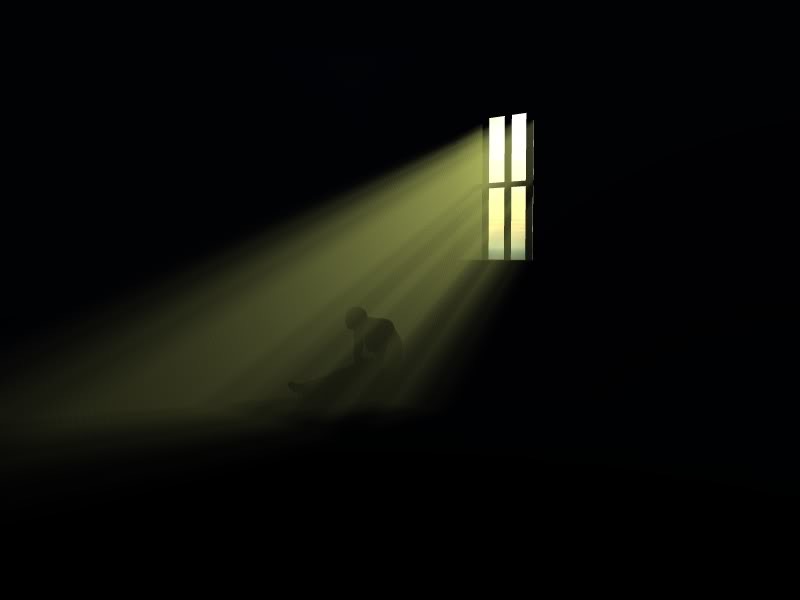
Have I forgotten anything? Probably so, but you get my point. Read the headlines (or more appropriately, listen to the news) and we get the sense that we are living in dark times.
There are plenty of reasons for concern about the world in general, and western culture in particular, but I’m want to remind us that our’s is not the first generation to face dark times, and if the Lord tarries, it likely won’t be the last.
What I do want to remind us is that though we live in dark times, God does His greatest work in the dark! Easter reminds us of that fact.
Stumbling in the Dark
So many of us stumble around in the dark, and we’re often afraid because we can’t see. When we’re in the dark, we grasp for something, anything to hold on to that will give us some stability, some comfort, some assurance that we can make it until we can turn on a light.
We’re unsteady, unsure, and we lack a certain amount of confidence, and all that makes us just a little leery. Not necessarily because we’re afraid of the dark, but because we’re afraid of what we can’t see in the dark. Sometimes, though, we have to move forward. We have to get to the place that we can turn the light on. We have to get up. We have to keep moving. In those times, we have to see with the eyes of faith. Easter is that which gives us our eyes of faith.
For the disciple of Jesus Christ, the resurrection is THE central event of history. We may say that time is measured from the birth of Jesus Christ, but hope is measured from the resurrection. We come this morning to celebrate the resurrection of Jesus Christ, and with it the victory of life over death, of good over evil, of grace over the grave.
This is our holiest of holy days, and it still reminds us that there is light even in the darkest of worlds, and that no matter what else may be happening in our lives, there is always hope. That is the power of the resurrection.
20 Early on Sunday morning, while it was still dark, Mary Magdalene came to the tomb and found that the stone had been rolled away from the entrance.
John 20: 1 (NLT)
John’s Resurrection Account
The resurrection account is recorded in all four of Gospels, but not all four report it the same way. The Gospel of John shares it differently. John alone tells us that Mary Magdalene went to the tomb, “while it was still dark.” Just because John has Mary Magdalene going alone does not necessarily contradict the other three Gospels. Maybe John’s just telling that Mary went down before all the others got there.
John has been called a philosopher of sorts. John’s Gospel is full of symbolic language, and the words on the page don’t always mean what they say. With the phrase “while it was still dark,” we note that John is carrying on a theme that he started very early in his gospel—the contrast of light and darkness.
John introduces the theme in the opening paragraph of the gospel:
“Life itself was in him, and this life gives light to everyone. The light shines in the darkness, and the darkness can never extinguish it”
John 1: 4-5 (NLT
In John 3, a Pharisee named Nicodemus comes to see Jesus “after dark one evening,” and in John 6, he tells us of the time after “darkness fell,” that Jesus came walking on the water to his disciples.
Then, in John 8, the Pharisees bring a woman caught in the act of adultery to Jesus in an attempt to trap him. He refuses to condemn the woman (some have even indicated that the woman was Mary Magdalene), and then he says to the people:
“I am the light of the world. If you follow me, you won’t be stumbling through the darkness, because you will have the light that leads to life.”
John 8: 12 (NLT)
It is little wonder that John would return to that theme and tell us Mary came “while it was still dark.” Whether he meant it literally or figuratively, we’ll never know for sure, and for his purpose (and for ours), I’m not sure it matters.
For Mary, it was dark, both literally and figuratively. Mary Magdalene was standing at the foot of the cross as Jesus died. She was there at the cross with Jesus’ mother, Jesus’ aunt, and John. When the rest of the disciples had abandoned Jesus, she was there, and she was there when they took his body down from the cross. It was a dark day. The sun may have been shining, but to Mary it was a dark day.
Mary loved Jesus. Luke 8 tells us that Jesus had cast seven demons out of her, and since that time she had been his follower. There is even some evidence that Mary Magdalene was the prostitute who washed Jesus’ feet with her tears and anointed them with perfume. Is it any wonder Jesus would say, “The one forgiven little loves little, but the one who has been forgiven greatly loves greatly.” Mary is not on the fringe of Jesus’ followers, which means that for Mary, as much as for any of Jesus’ other disciples, she was living in the dark days of grief.
Mary is probably wondering how things can get worse, and just about the time she does, guess what? Things get worse. Isn’t that the way life always is? Just about the time we think things can’t get any darker, they do! Mary gets to the tomb and she finds the body of Jesus gone. John has painted us a picture of the dark getting darker, but he also paints a picture of one who lives out faithfulness and hope, even in the midst of the darkness, and we discover what happens as a result.
Catch this! Mary went to the tomb. Despite her fear and despite her grief, Mary did something. She went to the last place she knew Jesus was. Even though she thought Jesus was dead, she went. She went because in the darkness she longed for light…some light…any light. She went looking for light. She had hope, even in the darkness.
You know what’s interesting? Think about when the actual resurrection took place. It took place in the dark! There was no one there to see it. There were no earthquakes or flashing lights. Someone shows up early in the morning and there’s just an empty tomb. The central event of human history, and nobody sees it.
Joseph and Mary were firsthand witnesses to Jesus’ birth, and even angels announced his arrival to shepherds. There were stars in the night sky that foreign astrologers could read, and an earthly king was mad enough to order a massacre of children, but with the resurrection, all we get is second-hand witnesses. It happened “while it was still dark,” but it happened.
Finding Light in the Darkness
Spiritually, the resurrection is our hope. We’ve all had dark times in our lives. When it’s dark and we can’t see what’s going on around us because of the grief and pain and doubt, it’s then we’re tempted to turn our backs on God, believing that God doesn’t care, or worse, believing it’s all God’s fault. We’re tempted to pull the covers over our heads and give up.
I remind you—Mary went to the tomb “while it was still dark.” In the midst of the darkness, she went to the tomb because she loved Jesus, and in the darkness he spoke her name, “Mary.”
So, he does with all of us. When in the darkness of sin, of addiction, of pain and loss, of grief, if we come to Jesus, he’ll speak our name—John, Sally, George, Margaret, Lynn. Mary shows us what faithfulness in the dark looks like. We find Jesus, or rather, we’re found by him, in the dark because we’re looking for him there. The tears vanish when we realize God did His greatest work in the dark. It wasn’t in the papers (I’m really dating myself with that reference), nor did it make CNN or Fox News. We can’t tell when it happened, we just know it happened.
Life is funny. One day, we’re on a mountain and we can look and see for a million miles. But, as quickly as the sun comes, the darkness settles in, and we go from saying how blessed we are to “I can’t take this anymore!” Darkness comes. Mary was not afraid of the dark. Mary was unwilling to take Jesus’ absence as an answer to anything, and by staying in the dark, Easter dawned!
I wonder who today is searching in the dark? Some of us remember a time when Jesus was alive. We felt his presence and knew his love. We ate with him and drank with him, and we shared life with him. But, something has happened. We lost a spouse or a child to death. Our marriage went south, or we lost our job. Perhaps we just fell out of love with Jesus.
For those of us in any of those situations we need to do what Mary did—go to the last place we saw Jesus. Was it in the Bible? Then read the Bible, even when the words make no sense.
Was it in prayer? Then keep praying even when it feels like our words are hitting the ceiling and falling back down on us.
Was it in church? Then keep going, even when we feel like we’re surrounded by hypocrites, and we’re just going through the motions.
Some today are in the darkness of broken relationships. Others are in the darkness of addictive behavior. Still others are in the darkness of grief and pain. So many of us are looking for a little light, any light in these dark, dark times. We’re here because we believe that there is still light.
Listen. Listen for the voice of Jesus calling our names. His light is shining because Easter has dawned. When Easter dawns the light shines in the darkness and the darkness does not overcome it. It cannot overcome it. It never has and never will. Life and light makes our world new.
Easter comes out of the darkness.
Dark times come to everyone, even to Jesus. Darkness is not a sign that we have no faith. Darkness is the opportunity to show our faith. Darkness is the time to get up and face the fears of life head on. Darkness is the time for us to get up and go to the tomb. It is the time to recognize that Easter happened in the dark. When everybody was depressed and thought the work of God was a sham, God was doing His greatest work of all.
Easter is here, my friend. Easter is here.
Until next time, keep looking up…
 Not the Perfect Pastor