A Call to Prayer…

It’s time to pray. Of course, as disciples of Jesus Christ, it’s always time to pray, but that sentiment is never more true than now for those of us called United Methodist. The Judicial Council of the United Methodist Church begins its semi-annual meeting in Newark, New Jersey April 25th, and one of the main issues on its docket is the legality of the election and consecration of a homosexual clergy person to the office of Bishop in the United Methodist Church.

Members of the 2016-2020 Judicial Council. (From left) Front: Ruben T. Reyes, N. Oswald Tweh Sr., the Rev. Luan-Vu Tran. Back row: Deanell Reece Tacha, Lídia Romão Gulele, the Rev.Øyvind Helliesen, the Rev. Dennis Blackwell, and the Rev. J. Kabamba Kiboko. (Not pictured, Beth Capen)

In July 2016, the Western Jurisdiction of the United Methodist Church elected Rev. Dr. Karen Oliveto as the first openly gay bishop. As Bishop Oliveto was being elected, the South Central Jurisdiction was still in session, and upon the announcement of Dr. Oliveto’s election, delegates of the South Central Jurisdiction passed a resolution asking the Judicial Council to rule on a specific set of questions regarding the legality of the election.

Oral arguments in the matter are expected to be heard on April 25th, and the expectation is the Judicial Council will issue its ruling soon afterward. There are several possible outcomes in the case. For a review of those possibilities and more docket information, you can click on these links:

https://juicyecumenism.com/2017/04/20/preview-umc-judicial-councils-april-2017-cases/

http://um-insight.net/in-the-church/finance-and-administration/lgbtq-united-methodist-allies-prepare-for-judicial-council-s_1/

For me, this week is a watershed moment for United Methodism. In the interest of full disclosure, I was at the South Central Jurisdiction in July 2016 as a delegate, and I voted in support (as did 56% of the delegates) of the request to the Judicial Council. How the Council rules (or fails to rule) may well determine the future of our denomination. I have had persons tell me they were preparing to leave our church if the ruling went one way, and I’ve had people tell me they were prepared to leave our church if the ruling went another way. That’s a no-win either way you look at it. The ruling will likely impact mission, membership and money, and in a cultural environment that is increasingly hostile to the Gospel, it is an unfortunate witness to the grace and love of Jesus Christ.

Additionally, no one really knows how a ruling may impact the work of the Commission on a Way Forward.  The Commission has been working for several months now to discern a unified way to move forward in the face of the diversity that exists, both within the Church and within culture. It will also be unfortunate that the General Conference has invested such resources to render the work moot.

Please don’t read any of this blog as anything more than a simple call to prayer for our United Methodist Church. Mine is simply another in a litany of such calls. You can read one here. I have a number of sentiments I could share here, but a colleague, Rev. Shane Bishop, has done a masterful job here, so I share his thoughts, not as my own, but as a summation of where I am personally and professionally.

So, please join me in prayer this week. Pray for:

  • Wisdom and discernment from the Holy Spirit for the Judicial Council
  • Grace for those who will present oral arguments
  • Peace among the “opposing” sides in the continuing debate
  • Strength for our bishops as they lead us amidst the chaos
  • Unity in our denomination as we face the uncertainty of the decisions and their consequences, both intended and unintended
  • Bishop Oliveto
  • Our pastors who lead congregations that hold a diversity of opinions
  • Our laity who desire to serve Christ through their local congregations

It’s time to pray folks! If you’ve never prayed for your United Methodist Church before (well, shame on you if you haven’t!), please do so now. While you’re praying, keep in mind that whatever happens, we are an Easter people. Things may not be the same after this week, but each day provides an opportunity for new life. The Lord is not done with the United Methodist Church yet. It just remains to be seen what the Lord might do with us next.

Until next time, keep looking up…(and, pray while you’re doing it!)


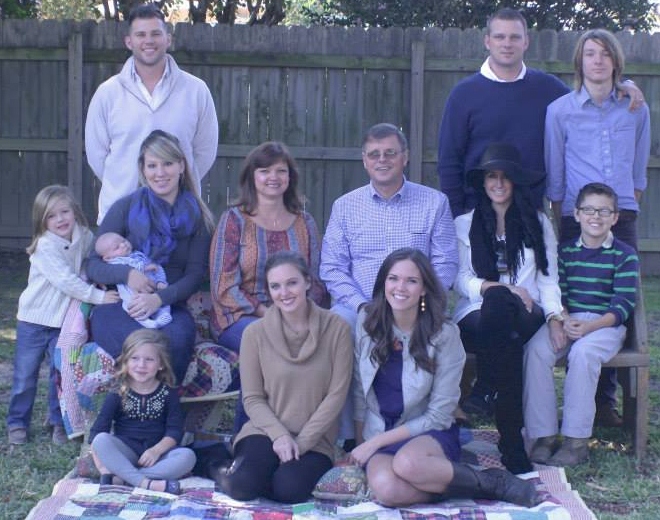
The Malone Family Annual 2016

So…I haven’t been blogging, but I’m committed to changing that habit. Look for a post once a week with mostly random thoughts, but to get back in the “spirit” of things, here’s a Christmas season catch-up for anyone who is interested.

The Malone Family Annual 2016

I must confess that I took 2015 off from writing the Malone Family Annual. I don’t know why I did. There are no good excuses, but as someone once said, “When you’re looking for an excuse, any excuse will do.” I won’t make an excuse. I took the year off. Don’t think, however, that you’ll get two years’ worth of news. I’ll bring you up to date on the past year and if you want news from other years, well, get on Facebook!

The year started off with Vanessa and me doing one of the silliest things we’ve ever done. We bought a house in Alabama! I don’t know why we did. I’d like to say it was my great business acumen that convinced Vanessa it would be a great investment, but really it was our banker convincing her we could make money on it if we decided to sell it. Anyway…we bought it, and yes, it is for rent! If you’re looking for a beach vacation, give us a call. We’ll hook you up! (Click here to make a reservation!)

pushmataha2016 also afforded Vanessa and me the opportunity to be reality TV stars. That’s right! We appeared on an episode of Island Life on HGTV. Oddly enough, the episode aired on Easter Sunday, March 27th. Here’s what I learned about reality TV during that adventure:

  • There’s nothing real about reality TV (it’s all scripted).
  • Making a TV show is hard work (three 14-hour days to shoot 19 minutes of video).
  • When someone asks you “Would you like to be on a reality TV show?” your first question should be “How much are you going to pay me?” (Our 15 minutes of fame actually cost us money!).

gc2016-logo-color-hi-res-690x370I was blessed (if blessed is the right word) to spend two weeks in May in Portland, OR at the General Conference for the United Methodist Church. It was my first trip to the Pacific Northwest, and it is a breathtaking part of the country. I took a day trip to Seaside, WA and dipped my toes in the Pacific Ocean. It was on a Sunday. May I confess I DID NOT go to worship that day? May I ask your forgiveness? General Conference was a neat and interesting experience.

Vanessa and I spent four days in Wichita, KS in July for Jurisdictional Conference for the South Central Jurisdiction of the UMC. It was the culmination of what I call my “pseudo” candidacy for Bishop in the UMC. I thought I heard God’s call to offer myself for the Episcopal office. Well, after Jurisdictional Conference, I’m not certain what I heard, but it obviously wasn’t that! I continue (gladly) to serve as Pastor at FUMC, Monroe. But, enough about me…

Vanessa continues to spend her time taking care of me and taking care of our grandchildren (she much prefers taking care of the grandchildren). Of course, each of those tasks over the past year fell between the demands of the BIG news in the Malone family this year (more on that in a minute), but suffice it to say, she’s stayed as busy as she wanted to stay. She has stayed busy settling us into a new house. Yes, that’s right, we sold our house here in Monroe, and no, that’s not the BIG news. Why did we sell our house? Well, when someone knocks on your door and asks you how much it would take to buy your house, you throw out a number and they accept it, you tend to sell it. It only means one thing, though: we left money on the table. We’re in a rental and looking for a new one to buy. Check next year’s Annual for updates.

family-wedding-pic-2So, on to the BIG news. On December 3, 2016, Kelsey Malone became Kelsey Malone Ingram as she married Matthew Ingram. The couple are at home now in West Monroe, LA where she is a customer service representative with State Farm Insurance (and she continues to serve on staff at FUMC as contemporary worship leader) and Matthew is in computers with CenturyLink.

Brittney is at home in West Monroe and is a sales representative with Republic Beverage. Adam and his two boys (Kade and Kobyn) call West Monroe home but he works half the year in Malaysia. Josh, Piper and their brood (Peyton, Ryder and Skyler) still call Minden home. Not much news about the children this year. They don’t live at home anymore, so we don’t have nearly as much news as we once did.

Well, that’s certainly the Reader’s Digest version of the Malone family news for 2016. I’ll stop because I’m tired of writing, and I KNOW you’re tired of reading. I’ll simply say “Merry Christmas and Happy and Blessed New Year!”

Unexpected!

unexpectedEvery one of us has certain expectations at Christmas. We expect to buy gifts and we expect to receive gifts. We expect the lights and the colors and the sights and the sounds of the season. We expect to eat a lot! We expect long lines in the department stores, and apparently this year more than ever, we expect to avoid those lines by ordering on-line and having it delivered to our home or office. We expect to be rushed from event to event, from party to party, from school play to church social. We expect to see family and friends. There is much about Christmas that is expected.

We expect, too, when we go to church at Christmas that we’re going to hear something about the Christmas story. It is quite unexpected to be reading and hearing about John the Baptist at Christmas! God did some pretty unexpected things that first Christmas—like coming into the world as an infant! But, God has always done the unexpected, and John the Baptist is an example. Besides, this is Advent, and remember that Advent is a time to prepare for the coming of Christ, and John the Baptist was sent by God to prepare for the coming of Christ. God used an unexpected time, and an unexpected person, and an unexpected message to speak His revelation.

It was an unexpected time. Luke sets the time in the context of the political and religious climate of the first century ancient near east. Israel was under the hand of oppressive leadership, both politically and religiously. Luke, ever the historian, notes Tiberius, Pontius Pilate, and Herod and his brother Philip as the political leaders, and Annas and Caiaphas as the high priests—who would be considered the religious leaders. Additionally, the prophets (who were God’s spokespersons) hadn’t spoken in over 400 years. Everyone expected that God didn’t care. Yet, when it was least expected, Luke tells us “it was at this time a message came from God…”

There was also an unexpected person. This message, Luke tells us, came to John, the son of Zechariah. We call him John the Baptist. It was quite unexpected that God would use this strange man who lived out in the desert and had a crazy wardrobe of camel hair, and had a steady diet of locusts and wild honey. No, we would expect that God would use the religious leaders, or even the political leaders of the day. Don’t they speak for God? Ha! We can’t always assume that God will use the religious leaders to do His bidding. This passage…this event…challenges me. After all, I’m considered a religious leader. It forces me to ask, “What am I doing with what God has entrusted to me?” And, we say we live in a Christian nation (debatable, I know), but seriously, we can’t ever expect our political leaders to speak for God. We can pray for them. We can hope they’ll be in tune to God’s will, that they’ll embody some kind of spirituality, but this passage reminds me that God chose a crazy man from the backside of the desert to deliver his message to a hurting, longing world.

There was an unexpected message, and that was “The King is coming!” It was a call to get ready, and there was some pretty specific instruction as to how that was to look: repentance and baptism. Well, what was unexpected about that? After all, these were not foreign concepts to first century folks. The Old Testament has many examples of people turning from sin and God forgiving them. One of the most prominent examples the Jewish people knew was of David’s repentance when Samuel confronted him concerning his sin with Bathsheba. David said, “I have sinned against the Lord!” But, Samuel said, “Yes, but the Lord has forgiven you.” Zacchaeus, in Luke 19, is an example of a Jewish person who repented. After his encounter with Jesus, he gave away half his wealth and paid back up to four times that which he had cheated from others. I’m not sure whether you realize it or not, but that’s a lot of money!

Likewise, these Jewish people would be well familiar with the idea of baptism, for Gentile converts who came to the Jewish faith had to be baptized to be considered Jewish. They were baptized into the faith. But, baptism was for Gentiles. The unexpected twist was John was preaching baptism to Jewish folk. They needed to be baptized? Now, that was unexpected! It was an unexpected person in an unexpected time preaching an unexpected message. There are a few implications we can draw from this passage.

First, God is never not near. God is always present, even in those times we can’t see or feel him…even in those times when God seems silent. Sometimes (so I’ve been reminded), God is simply too near to see. God hasn’t forgotten us! God hasn’t forgotten the United States of America. God hasn’t forgotten the Syrian refugees. God hasn’t forgotten the hungry child in Africa. God hasn’t forgotten the lonely widow. God hasn’t forgotten the unemployed oil field worker, and God has forgotten you. When we least expect it, God will be right here…meeting our need, but more importantly, doing His will.

Second, life always happens in God’s time.  Our problem is our understanding of time. How is it we say that we never have enough time, but we’ll make time for that project or meeting or social event we desire to attend? We mark time by dates on a calendar, by days and weeks and years, by hours and minutes and seconds. The ancient Greeks had two words for time—chronos and Kairos. Chronos time is that time we mark with the calendar and watch. We measure it. Kairos is different. We can’t translate it precisely, it refers to time that is opportune. Chronos is quantitative. Kairos is qualitative. God operates by Kairos time.

Third, God uses nobodies from nowhere. I’m the perfect example of that fact. I’m just a Bubba from Jackson Parish, LA. Jackson Parish may not be the backside of the desert, but it’s as close to the backside of nowhere as you’ll ever come. Never in a million years would I have ever dreamed of pastoring First United Methodist Church of Monroe. Actually, being a pastor at all was not one of the things on my check-list of things to do. But God uses nobodies from nowhere to speak to a hurting and broken world.

Even after I came to ministry, I could never believe I’d pack my family up and move them 800 miles away to go to seminary, but God calls, and when God calls we go. Because God uses people from the backside of nowhere to make a difference in the Kingdom. Never would I believe that I would pastor some of the best churches in Louisiana. Seriously, I’ve had colleagues share horror stories of churches served, but I can honestly say that I’ve never had a bad appointment. Not one.

Never in a million years would I believe I would have the opportunity to serve the church as a District Superintendent, but when God calls we answer, and I served the best district in the Annual Conference for two years. And, I must confess, never in a million years would I believe God would ever call me to offer myself in service to the larger Church as a candidate for the office of bishop in the United Methodist Church. But, Vanessa and I believe that is what God is calling us to do in this coming year. Now that is totally unexpected!

What does this mean for First United Methodist Church? Nothing, for now. Nothing will change in the near future. Bishops are elected by the Church, and election for bishop will be held in July 2016 at Jurisdictional Conference. Because it is an elected position, there is the very real possibility that nothing will change. I will stand for election, and if not elected, I will continue serving as your pastor. If elected, however, I will begin service as a bishop immediately and FUMC will be appointed a new pastor. In the meantime, I will continue to preach and lead as I’ve done over the past two and a half years. The vision God has entrusted to us will continue to move forward in the same manner as if I were not surrendering to this call.

I love serving you as your pastor, and nothing would please me more than to continue serving you as such for a very long time. God may, indeed, make a way for that to happen. Surrendering to this call is simply my desire to live in obedience to God. Vanessa and I have wrestled with this call since January, and after having said “No” on two occasions, we were compelled to not say “No” a third time (I’ll have to tell you the whole story sometime).

I know there are a multitude of questions. I confess I don’t have all the answers. This is a new experience for me, too, so we’ll walk this journey together. But, I’ll answer as many questions as I possibly can in the coming months. I covet your prayers for Vanessa, my family and myself as we offer ourselves to the broader Kingdom of God in this way. And, continue prayer for our congregation as we seek God’s will for all our lives.


We still have to live in the meantime. How appropriate, especially since Advent reminds us that we “live in the meantime”—between Jesus’ coming and his coming again. In the meantime, Jesus still meets us in quite unexpected ways. Where is He meeting you?

Until next time, keep looking up…

Not Enough Hours in the Day (And Other Rambling Thoughts)…

clergy burnoutI belong to a private Facebook group for clergy, and one of my colleagues posted a question about work hours to the group. The person pastors a growing church and was concerned about the number of hours worked in a typical week. The person was asking the members of the group to respond with their own typical hours. It made for some interesting responses, and prompted me to consider (or reconsider) “work” hours for myself and others.

First, a disclaimer: I write as one who went through a period of clergy burnout, so my responses may be colored by that fact. Don’t hold it against me, please. Here’s a helpful list of resources dealing with clergy burnout.

The person made the statement that he/she was working 48 – 60 hours per week, and wanted to know from others in the group is this was normal. My response? Uh…YEAH! Especially if the church you pastor is experiencing any growth. Of course, this raises the question of overwork for pastors (keep the lazy preacher jokes to yourself–and also the jokes about only working one day per week).

Here are my thoughts on pastoral work hours, and only a little rationale underlying why I think what I think. Please be gracious with any responses. Pastors have feelings, too!

I begin each week with the expectation that I’m going to “work” 50 hours per week. I also begin each week knowing the week is unpredictable, and there is no legitimate way to know how many hours I may work. I do anticipate that 50 will be the minimum. If there is a funeral or a wedding (or two, or three funerals…), then that number will stretch to nearer 60. This is my own expectation, not one anyone has placed upon me. Actually, if you look in the United Methodist Book of Discipline at the “job description” of a clergy, it would take closer to 90 hours a week, but that’s another discussion. Dr. Thom Rainer found that if you add up all the hours  for the congregational expectations for the various tasks clergy perform in a week, it would total 110 hours per week.

Here’s my rationale for my 50-hour work week. My average congregational member will work a 40-hour week. Then, I (as a pastor) expect the most committed member to offer ministry and participation to the local congregation, and if that most committed member offers 8 hours per week (including worship attendance, Sunday school, bible study, servant leadership, etc.), then that person has “worked” 48 hours per week. Why in the world would I ask any member to do more than I am willing to do myself? Aren’t we to lead by example? A subsequent question I ask is: Where does my “vocation” as a pastor end, and my calling as a “disciple” begin? There is a fine (very fine), gray line between the two.

Here’s a typical week for me:

  • Office hours 20 hours/week
  • Sermon preparation 12 – 20 hours/week (depending upon whether I’ve preached a particular passage before)
  • Hospital visitation 2 hours/week
  • Committee and Administrative meetings 4 hours/week
  • Denominational meetings and expectations 2 hours/week
  • Worship 4 hours/week (yes, leading worship is work! Try it sometime and see!)
  • Bible Study preparation (seasonal) 4 – 12 hours/week (depending on the resources utilized in prepartion)

Yes, I know the list totals more than 50 hours, but not every week includes everything on the list. There are some weeks when there are no denominational meetings or expectations, but then there are weeks when those expectations demand far more than two hours per week. The same with administrative meetings at the church, and also with hospital visitations. Throw in a single funeral, and we can add 6 – 8 hours of additional preparation time.

Please don’t misunderstand me. None of this is complaining! In one regard, I’m trying to figure out how my colleagues in ministry can possibly work less than 40 hours a week, or even limit ministry to 40 hours a week. They must be better at time management than I am! Of course, I’m the first to admit that I’m no good at time management.clergy chill

The real question for me (and this is a matter of boundaries, I suppose) is this: How much of what I do, do I do because I’m a pastor, and how much do I do because I’m a disciple? Therein lies the struggle for me. How much of what I do as a pastor would I do because I’m a disciple first? Yes, I know. There would be no sermon prep nor office hours, but I would be doing office hours somewhere, and I would be putting together projects or making sales calls, or doing whatever my chosen profession expected of me to be successful, so it would all balance out. I just figure if I haven’t invested 50 hours a week I probably haven’t done as much as my most committed member. I should do as much as my most committed member.

One of the great benefits of being a pastor is flexibility in scheduling work. With the exception of Sunday morning and Wednesday evening, we can flex our schedules relatively easily. That is definitely a benefit. This week might demand 60 hours, but next week might demand only 45, and I can greatly influence how I order those 45. There may even be the odd week that offers me the freedom to work less than 40 (those are rare, but they do happen) hours. God usually sends those at just the right time.

None of this is to say that overwork can’t be a problem. We should always observe a Sabbath. Sabbath rest is a biblical principle, and as congregational leaders (and disciples) we should lead by example. Since my burnout in 2008 I have pretty much honored my Sabbath. Yes, sometimes, funerals, special events, and unforeseen circumstances prevent it, but that’s where flexibility of scheduling becomes the benefit. We must take our Sabbath rest…must! The greatest problem many of us clergy have is getting past our own need to be needed. Take the Sabbath rest. The work will still be there when we get back. Perhaps we need the Sabbath rest to wrestle with the question, “Why do I need to be needed?” The greatest lesson I’ve learned as a pastor (a little hyperbole, folks) is that if something happens to me, there’ll be another pastor right behind me to take my place (especially in our United Methodist system of appointment). That’s also a humbling lesson. I’m not indispensable.

There’s much more I could write on this subject, but the simple fact is that I’ve already invested too much time this morning writing this blog, and I didn’t include writing this blog in figuring my hourly work load, so I’ve totally messed up my week. But, is this blog work, or is it discipleship, or is it for fun? I wonder? See how gray the line gets?

Until next time, keep looking up…

The Value in Growing Smaller…

A phrase kept going through my mind: Reduction is a strategic endeavor. Like a song gets stuck in your head, I simply could not put those words out of my mind. I finally got up at 3:30 a.m., and wrote them down.

tape measureAt first, the phrase didn’t make sense to me, especially in light of the fact that I’m supposed to be “growing” a church. That was my first connection to the phrase, but for some reason, that left too much undefined. So, what did I do? I went to Facebook (isn’t that what we always do these days?). I posted the phrase with two companion sentences: Reduction is a strategic endeavor. Some things must grow smaller before growing larger. Some things get better by being smaller. I asked for comments. Yes, I got quite a few (and no, there were no snide comments about reducing my waistline), but they all helped bring some clarity to the idea that “reduction is a strategic endeavor.”

Here’s what I’m thinking:

It’s a personal statement about de-cluttering one’s life. We must be strategic in eliminating the right things from our life to make margin for those endeavors that are fruitful and beneficial to helping us live healthy lives. There are a lot of things with which we can occupy our time. Most of them are good things, but not all of them are the best ways for us to grow as healthy persons and disciples. We must be strategic in eliminating the distractions, and focus on the things that matter most.

Okay, so it’s also personal, and can refer to my waistline. If we want to lose weight (and I can’t think of many people who don’t want to lose weight), we must develop a healthy strategy of exercise and diet. Without a strategy (and subsequent implementation) we’ll never take the first step in doing the necessary things to accomplish the goal. I might add, this is purely self-referential. I’m not casting a dispersion on anyone else and their waistline. Developing a strategy for healthy weight loss allows us to plan our work and then work our plan.

As I reflect, I understand that “reduction is a strategic endeavor” is also an intensely spiritual statement. I am reminded of John the Baptist’s words in John 3:30, “He must become greater and greater, and I must become less and less.” It is a statement about humility. We must be strategic in living lives of humility so that our mind becomes the mind of Christ. What are those things that keep me from humbling myself before Him? Is it my pride? How do I deal with that issue? Is it my arrogance? How do I deal with that? Is it my self-centeredness? How must I deal this that? Is it my laziness? Is it the fact that I rather enjoy having my own way? There are so many questions I ask myself that I’ve only begun to scratch the surface of what it means to become less and less that He might become greater and greater. More than identifying them, how do I develop a strategy for dealing with them. Come Holy Spirit!

I discover the statement is also a professional statement. As I ponder this aspect of “reduction is a strategic endeavor,” I consider the “busy-ness” of many churches. We are busy with activity, but is the activity fruitful. Activities become the “end” for many churches rather than the “means.” We end up doing activity for activities sake, and that only serves to make the church more insular and stifles involvement in the community (where the people who need Jesus hang out). Thom Rainer did a great podcast on the subject recently, and made some very salient points:

  1. Activity is not biblical purpose.
  2. Busyness can take us away from connecting with other believers and non-believers.
  3. An activity-driven church often is not strategic in its ministries.
  4. A congregation that is too busy can hurt families.
  5. An activity-driven church often has no presence in the community.
  6. Activity-driven churches tend to have “siloed” ministries.
  7. Churches that focus on activities tend to practice poor stewardship.

As the body of Christ, we must be strategic in eliminating every activity that does not specifically address the mission of reaching others with the Gospel of Jesus Christ. We will probably get into some touchy areas, but without a strategy, we will continue to be busy, but not rather effective. What a shame!

I also reflected on “reduction is a strategic endeavor” for the church as a whole. It sounds counter-intuitive to us as we see “mega-churches” (and now, “giga-churches”) growing by leaps and bounds, and we know that growth is good, especially when others accept Christ as Lord and Savior. But, I was given pause as I considered the words of John 6:66, “At this point, many of his disciples turned away and deserted him.” Sometimes, discipleship is simply too hard. It’s easier to turn away from the challenges of being a disciple, and one reason the western church may be (and I’m only speculating here) in the state of decline is because we’ve had a lot of “cultural Christians”–those who were part of the body of Christ for the benefits that came from a religious affiliation. Perhaps (and again, I’m speculating) persecution is the Lord’s strategy for winnowing out His church.

Finally, there is another consideration on the phrase “reduction is a strategic endeavor” that I’ve pondered. It stems from my time as a District Superintendent in the United Methodist Church. It’s painful, but it’s true, and I hesitate to even mention it here, but I feel compelled. There are many congregations in the UM Church that lack effectiveness (for a number of reasons). Those small congregations draw resources, energy and attention away from the mission of “making disciples of Jesus Christ for the transformation of the world.” Is it a matter of stewardship to develop a strategy for dealing with those congregations, for developing a strategy for reducing the number of congregations that are not achieving the mission? That’s a challenging thought, and one for which I will receive much push back, but shouldn’t someone be asking the question?

There are probably many other considerations I should make, but that’s about where I am this morning. And, now, you know what I’m thinking (as though you even cared!).

Until next time, keep looking up…

Who Said Church is Dying?

This past Sunday was Pentecost Sunday. For those from non-liturgical traditions, Pentecost Sunday is the day we acknowledge the coming of the Holy Spirit on the first disciples 50 days after Jesus resurrection. Luke records events in Acts 2 that occurred that day. Let’s call it the birthday of the Church, and it was one of the most awesome displays of God’s power recorded in the Bible.

pentecostUnfortunately, in many circles today the Holy Spirit is either neglected, forgotten, or misunderstood. The Holy Spirit was given to unite the body of Christ, but the Spirit has become the center of controversy. Sometimes I wonder if we lack unity because we’ve quenched the power of the Holy Spirit in our churches, and in our personal lives. I wonder if we could actually have worship without a bulletin on Sunday morning. Dr. A. W. Tozer, author and pastor, said, “If the Holy Spirit was withdrawn from the church today, 95 percent of what we do would go on and no one would know the difference. If the Holy Spirit had been withdrawn from the New Testament church, 95 percent of what they did would stop, and everybody would know the difference.” He said that prior to 1963. I wonder what he would say in 2015?

The first Pentecost was a demonstration of God’s power that changed the world forever. God’s power brought transformation. That’s what God’s power does. Not only was this past Sunday Pentecost, but it was historically significant for those of us who call ourselves Methodists. We Methodists call May 24th, Aldersgate Sunday. It was May 24th, 1738 that Wesley recorded these events in his journal:

“In the evening I went very unwillingly to a society in Aldersgate Street, where one was reading Luther’s preface to the Epistle to the Romans. About a quarter before nine, while he was describing the change which God works in the heart through faith in Christ, I felt my heart strangely warmed. I felt I did trust in Christ, Christ alone, for salvation; and an assurance was given me that He had taken away my sins, even mine, and saved me from the law of sin and death…     After my return home, I was much buffeted with temptations, but I cried out, and they fled away. They returned again and again. I as often lifted up my eyes, and He “sent me help from his holy place.” And herein I found the difference between this and my former state chiefly consisted. I was striving, yea, fighting with all my might under the law, as well as under grace. But then I was sometimes, if not often, conquered; now, I was always conqueror.”

John Wesley had an experience with God’s power, and it too, changed the world. It was Wesley’s Methodist movement that is credited with reforming England in the 18th and 19th centuries. Historians have suggested that England didn’t go the way of France in the 18th century because of John Wesley. It was Wesley’s Methodist movement that swept across North America when, by the beginning of the 20th century, it was the largest Protestant denomination in America. One in five Americans called themselves Methodist. Today, 80 million people worldwide find their religious roots in Wesley’s Methodism. That’s what happens when the power of God explodes on His people. The same power that was present on that first Pentecost is the same power that was present with John Wesley on Aldersgate Street in London, and it’s the same power that’s available to you and me today, and it’s the same power that fuels the church.

The recent Pew Research Center study on religion in America reveals some interesting findings about the faith of American Christians. As one who has served as a denominational official, and has studied the decline of our own denomination, the research only confirms what we already knew. I am blessed to serve a mainline church that is bucking the trend, but the truth is that mainline Protestantism has been in decline since the high-water mark of 1955. Someone said, “If 1955 ever comes again, the mainline church will be poised for explosive growth.”

While we may lament the decline of the Church in North America (and other places in western culture), the church is a long way from dying. The power of God revealed in the Holy Spirit on that first Pentecost is still active today, and it is just as transformative as it ever was. The Washington Post ran a recent article sharing some of the amazing and encouraging facts about the growth of Christianity around the world. Here are a few facts worth noting:

  • Africa’s Christian population stands at 500 million today. Roughly one in four Africans are Christian.
  • Christianity in Asia grew at twice the rate of the population on the continent. In the next ten years, it’s projected that 110 million more people will convert to Christianity on the Asian continent.
  • Demographers estimate that more Christian believers are found worshipping in China on any given Sunday than in the United States.

As United Methodist, I’m particularly encouraged by what’s taking place in Africa. Today, there are nearly 5 million African Methodists, with an average of 220,000 more being added each year. Within ten years there will be more African United Methodists than in the United States. The Philippines is also seeing an explosion of Methodism. There, nearly one million people are  being reached through the 24 Annual Conferences of the United Methodist Church.

There are other statistics I could point to that affirm the fact that Pentecost is still happening. People are being touched by the power of the Holy Spirit, and their lives are being changed. Though we lament the direction of the church in America (which says a whole lot more about us than it does the power of the Holy Spirit), it is a bit like Mark Twain said, “The report of my death was an exaggeration.” No, the church is not dead. It’s not even dying. It’s more alive today than ever before. If we would be the Church, and see the power of God revealed then we must, once again, open ourselves to the mind-blowing, life-changing, and as John Wesley wrote, the heart-warming Holy Spirit.

Let the fire fall, O God! Let the fire fall!

Until next time, keep looking up…

The Malone Family Annual 2014…

I started a “tradition” in 2003 of writing an annual letter to send to friends and family to catch them up on the happenings of the Malone family. Not that anyone cared about the happenings of the Malone family, but a letter seemed an easier (and less expensive) method of staying in touch with friends from churches we served, and with family that we rarely ever saw, than purchasing tons of cards, writing a personal note in each one, and getting them in the mail.

So, 2014 will mark the 12th letter in the series, and the web and Facebook have made connecting with friends and family old and new easier than ever before. I’m posting the annual letter on my blog, I’ll link it to Facebook, and there’ll be a link on Twitter. All that kind of makes mailing the letter seem a little archaic, but we’ll mail as many as we ever do (actually, a few more–we add a few more each year), only those we mail will be later (you’ll probably get them after Christmas–it has something to do with four funerals in a week, preparations for three Christmas Eve worship services, and the lack of color ink for the printer). So, read it now…or, wait for the print edition…or, don’t read it. The choice, as always, is yours!

The Malone Family Annual

Christmas 2014

Malone Family 2014 (2)One more year behind. It doesn’t seem quite possible that an entire year has passed since I last wrote. I must confess this has been the fastest year of my life. I’ve blinked and it’s gone. I’ve blinked and the children are bigger (grandchildren, I mean—I suppose “older” might be a better word). I’ve blinked and my hair is a little grayer (at least it turned gray and not loose).

I’m not sure how much news there is to report this year, and I’m so late writing that this is more apt to be a New Year’s update rather than a Christmas update. I’ve just been too busy to sit down and write, and when I’ve not been busy, I’ve simply been too tired. Yes, I know. “You’re a pastor. You only work one day a week!” Yes, but that one day is a killer. Takes a whole week to recover!

Where should I begin? Vanessa and I have completed another year at First UMC, Monroe. It’s been a great year, too. We still enjoy spending as much time as we can on our back porch, especially by the fire pit, and Vanessa is enjoying spending as much time as possible being grandma. She travels every Thursday to Minden to keep Josh’s three—that’s right, three—but I’ll share more about that in a moment. One thing I’ve even considered is that with Facebook, this annual letter is becoming a little obsolete. Want to know what’s happening with the Malone Family? Just log on to Facebook. We post way too much stuff on there.

So, here’s the skinny on the Malone Family for 2014. Adam is at home in West Monroe with Felicia and their two boys, Kade (15) and Kobyn (11). Both the boys are quite musical, and we hope they continue to hone those talents in the future. They are all very active at FUMC, Monroe, and that’s a blessing, too. Also, Adam is now a professional writer. He writes a regular article at www.whodatdish.com. It’s all about the New Orleans Saints, a passion he and I both enjoy, so I’ve had fun reading his musings. He continues working for Noble Drilling Corporation, and is headed for Australia (probably by the time you receive this letter).

skyler (2)Josh and Piper’s big news, of course, is the birth of their third child at the end of September. Skyler Augustus Malone was born on September 29th. Mom and Dad call him Skyler (well, everyone else, too), but Poppy prefers to call him Gus-Gus. We’ll see how long he (or they) let me get away with that. Of course, the twins (Peyton and Ryder) have already taken Skyler under their wing and are teaching him all their mischievous ways. We’ll see where that leads.

Brittney and Kelsey are living at home now. Kelsey graduated from LA Tech University (Go Dawgs—we’re now a three Dawg family) in May, is exploring permanent, long-term (at least, that’s what Dad hopes) employment options, and continues to play the keyboard for our contemporary worship service as well as for J-Force, our children’s choir. Brittney will be moving to Bossier City in January. She’s taken a new position as manager at Hooter’s in Bossier City. She’s commuting from Monroe right now (send money, please), but will have her apartment beginning January 1. We’re happy for her. It’s the job she’s wanted for a long time. We’re glad it finally came to fruition.

That about catches everyone up on the happenings of the Malone Family for 2014. Seriously, just check Facebook. You’ll learn more than you ever wanted to know. We love you all. Merry Christmas and Happy New Year!

Until next time, keep looking up…

Better, or New?

This past weekend has been incredible. Incredible in the sense that I’ve had three days with John Ed Mathison. I invited John Ed in January to come to FUMC, Monroe, to work with our leadership in discerning a vision for God’s future in our community. John Ed led our Church Council and staff in a retreat on Saturday, preached in worship on Sunday, and led the staff in a retreat on Monday (albeit shortened due to the storms). For me, the best part was having three days to pick his brain concerning life, ministry and the United Methodist Church. Anyone who spends even a day with John Ed quickly understands why he has been so effective and fruitful over 50+ years of ministry.

john ed mathisonJohn Ed never offers platitudes or complex strategies. He offers simple advice and direction. When he says something so strikingly simple, you’re like, “Duh! How could I not have known that?” The weekend was filled with those moments for me.

One such moment came Saturday morning during the Council retreat. One simple statement has resounded over and over in these three days following: “Jesus didn’t come to make us better, he came to make us new.” That, my friends, summarizes the idea of transformation. We’re not meant to be better people as followers of Jesus Christ, we’re meant to be different people. I suppose that single phrase struck me so deeply because I heard it in light of my preparation for Bible study this week. I’m reflecting over Paul’s letter to the Romans, and we deal specifically this week with the powerful transitional passage in Romans 12: 1 – 2:

12 And so, dear brothers and sisters, I plead with you to give your bodies to God because of all he has done for you. Let them be a living and holy sacrifice—the kind he will find acceptable. This is truly the way to worship him. Don’t copy the behavior and customs of this world, but let God transform you into a new person by changing the way you think. Then you will learn to know God’s will for you, which is good and pleasing and perfect. 

I love Paul’s great transition from the theological to the practical in his letter to the Romans. I like it precisely because it moves from the abstract realm to the practical, and after all, the Christian life is meant to be lived practically in community. It would be great to know the mind of Paul as he wrote to the Romans, but I get the sense as I read his letter that perhaps he felt at the end of the day if the theology didn’t become practical it wasn’t much good at all. Paul’s message in Romans 12: 1-2 is as simple as John Ed’s reminder that we are meant to be different people, not simply better people.

Paul, never lacking in boldness (after all, he did tell the Corinthians “imitate me”), shares specifics concerning what this transformation ought to look like (Paul also liked lists!). It is in reflecting on Paul’s specifics that I find myself most convicted. I might even call his counsel in the verses following his call for transformation another set of “be” attitudes. Here’s what I see:

  • “Be” honest with myself (12:3)
  • “Be” in ministry to others (12:4-8)
  • “Be” loving (12:9, 13:8-10)
  • “Be” ethical (12:9, 12:21, 13:11-13)
  • “Be” grateful (12:12)
  • “Be” patient (12:12) (Seriously, he had to add this one?)
  • “Be” prayerful (12:12)
  • “Be” hospitable (12:13)
  • “Be” ‘other’-focused (12:14-15)
  • “Be” peaceable (12:17-18)
  • “Be” a good citizen (13:1-7) (Uh, huh! How many of you find this a hard one?)

As I reflect on Paul’s instruction, I’m compelled (again!) to surrender to the power of the Holy Spirit. I hear Paul saying (again!) that life is a daily surrender of all of who I am to all of who Christ is. Isn’t that what Paul meant when he said, “Give your body to God?” The old KJV renders the passage this way: “I beseech you therefore, brethren, by the mercies of God, that ye present your bodies a living sacrifice, holy, acceptable unto God, which is your reasonable service.”

The term Paul uses for “service” carried the understanding of a worker offering him/herself to an employer. Paul is saying, “Make this transformation thing your life’s work. Make a living out of living for Christ.” In the same sense that I get up and go to work as a pastor, I should get up giving myself to Christ. In the same sense that a person gets up and goes to work as an attorney, or a doctor, or a teacher, or bus driver, or a (well, fill in your own blank), each of us should get up giving ourselves to the one who gave himself for us. As we do, the Holy Spirit will do God’s transforming work in our lives. Transformation is not a one-time proposition. It’s a lifetime affair. Yes, we’ll likely be better people, too, but more importantly, we’ll be new people.

Until next time, keep looking up…