
“Value-Added” Faith…

It is always good to be with friends! I met a friend for coffee this week and the course of the conversation soon turned to our common journey of vocational ministry.

My friend mentioned a sermon he recently heard that challenged him. After our conversation, I was challenged, too.

A Moment of Conviction

Well, challenged is not really the correct word. Conviction is more appropriate in this case. The message of the sermon my friend heard, and the subsequent course of our conversation, centered around the nature of the gospel we have preached in our years of ministry.

It basically comes down to asking, “Have we preached a ‘value-added’ faith?” What do I mean?

“Value-added” faith is, in essence, coming to Jesus for what we can get out of it. Need a better marriage? Come to Jesus. He’ll fix your marriage. Want to be a better parent? Come to Jesus. He’ll make you a better parent. Financial problems? No worries! Follow these six biblical principles and soon your financial problems will straighten out. You get the picture.

Get Jesus…and this is the value He will add to your life!

And there was where the conviction came in! I am guilty of preaching a “value-added” faith. I also must confess that I didn’t do it occasionally, I did it often.

Enough with the Excuses

Don’t get me wrong, I have several excellent excuses. First, of course, is my desire to be relevant because if the preacher isn’t relevant, what good is he? How many sermons and sermon series have I designed based on topics rather than scripture? Too many, I’m afraid.

I looked back through my preaching calendars over the years. Here are the titles to a few sermon series I preached:

  • Breaking Bad (Circumstances, Decisions, Attitudes, Relationships)
  • Connected (Facebook, Instagram, SnapChat, Twitter [X], Texting)
  • Faith and Politics (Culture, Leadership, Role of Government)
  • Inside Out (Series on mental health)

I also looked back through the files for sermon titles. Again, here is what I found:

  • Learning How to Love
  • Living in Shades of Gray
  • Practical Advice for Surviving the Season
  • Priorities of Life
  • Racing is Life

There are too many others to list here, but you get the gist. They are all designed to speak to the value of having Jesus in one’s life. The routine was choose the topic, find a passage or two of scripture and craft a sermon that would be “relevant” to the congregation.

Another excuse is that I thought (or was taught) that in order to reach people with the gospel, sermons had to address a “felt need” in the listener (congregation). Actually, “felt need” and relevance are close cousins as you can see from the sermon and series titles above.

A “felt need” can be:

  • Financial security
  • Stability
  • Love
  • Peace
  • Stress (worry)
  • Loneliness

Again, the routine was to discover a “felt need”, find a passage or two from scripture and craft a message that would address that “felt need.” Sometimes it worked. Often times, it didn’t.

No matter how many times I sought relevance or addressed a felt need, the congregation always left pretty much like they came–at least time and reflection has proven it to be so. The Church in culture has been on the decline for generations. I’m not so sure that it isn’t because we preachers of the gospel have too often chosen relevance over honesty, felt needs over accountability. Perhaps it is only part of the reason.

I don’t mean to insinuate that my friend does that, or indict any other pastors. I speak purely from my own experience, and the conviction is mine and mine alone. Although, as I’ve conducted a few Google searches I can say there are a lot of sermons on the internet that, based on the title, are seeking the same end.

Having acknowledged my fault and repented of my failures, may I share a commitment for the future?

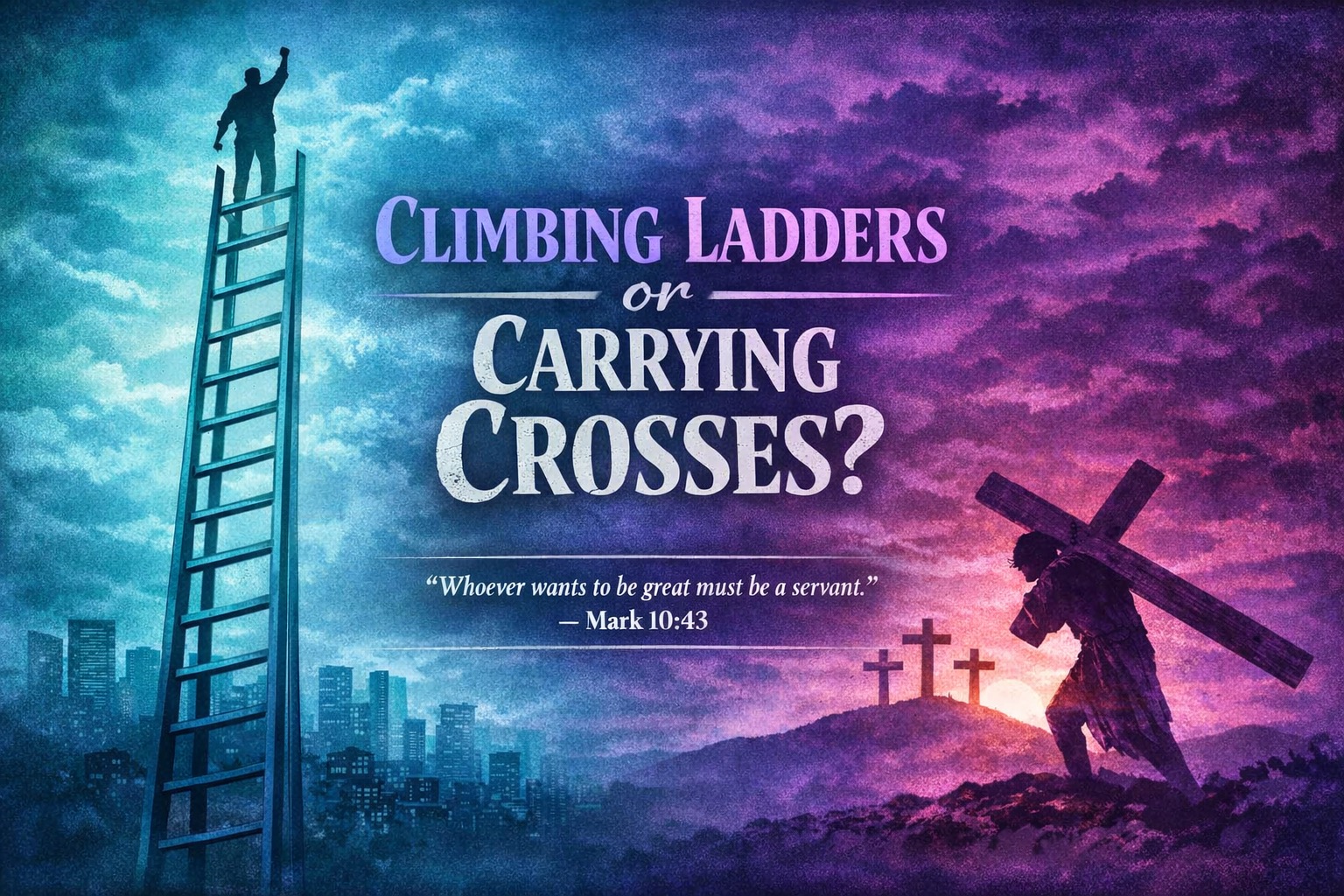
A Call to Surrender & Sacrifice

I believe what the Church (and the world) needs now more than ever is an honest, simple presentation of the Gospel. The world and the Church need to hear the Truth in a simple, straightforward way. I am reminded of the words of Dietrich Bonhoeffer:

“The cross is laid on every Christian. The first Christ-suffering which every man must experience is the call to abandon the attachments of this world. It is that dying of the old man which is the result of his encounter with Christ. As we embark upon discipleship we surrender ourselves to Christ in union with his death—we give over our  lives to death. Thus it begins; the cross is not the terrible end to an otherwise god-fearing and happy life, but it meets us at the beginning of our communion with Christ. When Christ calls a man, he bids him come and die. It may be a death like that of the first disciples who had to leave home and work to follow him, or it may be a death like Luther’s, who had to leave the monastery and go out into the world. But it is the same death every time—death in Jesus Christ, the death of the old man at his call.” (The Cost of Discipleship, 99)

Bonhoeffer only echoes the words of Jesus to the ruler in Luke’s Gospel:

22 When Jesus heard this, he said to him, “You still lack one thing. Sell everything you have and give to the poor, and you will have treasure in heaven. Then come, follow me.” (Luke 18:22).

Or, of what Jesus told His disciples (also in Luke’s Gospel):

23 Then he said to them all: “Whoever wants to be my disciple must deny themselves and take up their cross daily and follow me. 24 For whoever wants to save their life will lose it, but whoever loses their life for me will save it. 25 What good is it for someone to gain the whole world, and yet lose or forfeit their very self? (Luke 9:23-25).

The call of the Gospel, the call of Jesus Christ, the call to discipleship is a call to die to self, a call to surrender, a call to sacrifice. I fear I have not preached that enough. I fear that I have not lived that enough. I fear that is part of the reason the Church is where it is in culture today. I am heartily sorry for my part in bringing the Church to that place.

The message of the Gospel is self-surrender, not self-help. I’ve yet to see a “self-surrender” section in any local bookstore. Surrender and sacrifice are not popular topics in today’s culture. Perhaps those topics will be a little more relatable if I untuck my shirt and wear skinny jeans while preaching them. Yeah…perhaps not (this body wasn’t made for skinny jeans!).

This blog has gotten way too long, so let me close with my commitment to do better in my preaching. I’ll do my best to “give ’em Jesus.” He’s relevant enough. I’ll trust the Holy Spirit to do His work if I do mine.

Until next time, keep looking up…

Honoring Mothers: Faithful Women Who Shape Our Lives

Happy Mother’s Day! Let me take a few lines on this special day to say “Thank you!” to the mothers in my life, and to all mothers everywhere. None of us (and I mean literally none of us) would be who we are without our mothers (for better or worse).

I say “for better or worse,” because I know not everyone has been blessed with incredible examples of motherhood in their lives, and that is truly unfortunate. I, on the other hand, have been blessed beyond measure with those mothers who are shining examples of what it means to be a mother.

Great is Thy Faithfulness

I tell folks that I was raised at the foot of a Methodist piano. My mother, Sonda Womack, played piano for three Methodist churches in our home area. She rode the circuit just like the circuit rider preacher every Sunday so that those congregations had the benefit of music in worship. Most Sundays, my brothers and I had to make that circuit with her, and there we would sit, often listening to the same sermon three times (talk about insufferable!) just for the opportunity to make it to the “big” church so we could be with all our friends.

I didn’t necessarily enjoy all that time at the foot of a Methodist piano, but her faithfulness in serving the Lord by serving those congregations gave me an early example of what discipleship and servanthood looks like. Being an accompanist for all those years was ministry for her. I know that because she was never paid a salary by any of those churches. Yes, there were frequent love offerings the congregations shared, but she never “charged” for her services. It was a gift of love to the Lord.

Her faithfulness shaped me and my brothers. Of that, I have no doubt. She was, for much of our early years, a single mom. She worked long, hard hours to insure that we had what we needed…not always what we wanted…but always what we needed. I can remember her working three jobs when we were little. She worked at the local bank. She would leave that job and head to the local post office where she was a part-time flexible worker. And, if you think playing piano at three churches on Sunday morning isn’t work (whether you’re paid or not), well you’ve got another think coming.

Even now, into her 80’s, she continues to serve two congregations through her gift of music. Still riding the circuit after all these years!

She was, and is, an example of faith and faithfulness and love for which I am forever grateful. Happy Mother’s Day, Mom!

The Heart of Our Family

Let me tell you something else. When I married, I married up. I mean I married way up! My wife, Vanessa, is the most amazing mother I know (my own mother notwithstanding). Vanessa has throughout our lives together demonstrated the sacrificial love of Jesus in the most profound of ways. I honestly believe that she was born to be a mother…and grandmother.

I have spent the last forty years watching her nurture our children and grandchildren. I can tell you that she raised our children while I was off going to school and pastoring churches and chasing dreams. Anything good our children have attained or become can be credited to her love and diligence in caring for them.

Raising our children was never a sacrifice for her. It was her gift. She was, for many years, the nurturer, the care-giver, the chauffeur, the cook, the cleaner, the confidant, the disciplinarian, the encourager, the helper and the friend to all four of our children, and she has quickly become that to our grandchildren, too. I might also add, she is all those things to me as a spouse. She is my best friend, and I’m not so sure our children wouldn’t also call her their best friend, either.

She is amazing and beautiful and funny and sacrificial and loving. Try as I might, there really aren’t words to describe what she is to me and to our family. She is the heart and soul of who we are as a family. Happy Mother’s Day, Vanessa!

An Enduring Legacy of Love

The examples of love and sacrifice goes back beyond our present generation. My grandmothers…well…what can I say about them?

My maternal grandmother, Aline Johnson Roberts, demonstrated for me how to serve your spouse. My Papaw lived with rheumatoid arthritis for as long as I have any memory of him. He was bedridden for most of later years of life. Mamaw never left his side.

Everyday, she busied herself waiting on him hand and foot. I never once heard her complain (and mind you, my brothers and I lived with them for several years) about his illness, or the necessity of her caring for him. She did it out of love. She did it out of compassion. And, that was after raising ten children and dealing with 18 (I think) grandchildren (nine of which either lived with them or next door to them).

She remains an example of self-giving love that demonstrates the heart of motherhood. Happy heavenly Mother’s Day, Mamaw!

My paternal grandmother, Kittie Oxford Malone, is a saint if there ever was one. We called her “Mama Kit.” Mama Kit earned her sainthood by putting up with my grandfather, my dad and my uncle. Don’t misunderstand me. I love all three of those men dearly, but they could be…oh, let’s just say…challenging to live with (that’s all I’ll say about that!).

When Vanessa and I married, we moved into her backyard. There we started raising our family. She was there when all our children were born. She was the go-to babysitter for our children. Every afternoon when the kids would arrive home from school, their first stop was usually her house. She generally had cheese toast or cinnamon toast prepared for them when they arrived.

She would spend countless hours reading to our oldest daughter and as she would read she would gently rub our daughter’s back. Our oldest daughter is her namesake, and I honestly think she still misses those back rubs today.

We discovered when ministry called us to Kentucky for seminary, that the worst part was not having Mama Kit to care for us from our backyard. Yes, we missed all our family, but not in the same way we missed Mama Kit. I only wish my grandchildren would have had the opportunity to know Mama Kit.

Mama Kit gave me an example of perseverance in the face of adversity, of commitment to life-long marriage and of selfless love. I am blessed to have her as part of the legacy of faithful motherhood in my live. Happy heavenly Mother’s Day, Mama Kit.

Thank You Mothers!

There are so many more memories and reflections I could share, but this is a long post already. Thank you for indulging me in this overly personal blog. And, thank you to all the mothers that we celebrate on this Mother’s Day.

If your mother is still with you, give thanks to God for her and make sure she knows how much you appreciate her. If your mother is no longer alive, then simply give thanks to God for the memories of love and faithfulness you have.

If you have no good memories of your own mother, can you at least be grateful to God that she gave you life? That is a gift unto itself and you should be grateful.

So, Happy Mother’s Day to all our mothers and grandmothers. May God bless you all on this special day.

Until next time, keep looking up…

Trying to Make Sense…

I’ve been reading the Apostle Paul’s first letter to the Corinthian church devotionally that past week or so, and honestly, I’m just trying to make sense of it all, just like I’m trying to make some sense out of everything that has been happening in our nation since March 16, 2020.

Between reading 1 Corinthians, watching the evening news and reading Facebook and Twitter, there are some days (warning: confession ahead) I just don’t feel very much like a Christian. I really want to try and make sense of that, too.

Staying off social media might help, but for better or worse, more and more people are getting their news from social media than traditional means, so I suppose that just makes me normal. If I’m normal, then I suspect there may be a few of you trying to make sense of everything that is happening in our world, too.

CULTURAL DEBATES

I remember when the cultural debates among Christians centered around what movies it was appropriate to attend, or whether Christians should drink alcohol. Debates used to be about whether Christians should acknowledge Santa Claus and the Easter Bunny, or whether it is appropriate to observe Halloween.

The morals and mores of our nation are in a tectonic shift. I almost hesitate to address the issues being debated today because it’s impossible to do the subjects justice in a single blog post, and besides the fact I’m likely to say something to offend someone and that will get me banned from WordPress. Then, others have said, “Silence is violence,” so what’s a person supposed to do?

Less than twenty years ago, same-sex marriage was only a blip on the cultural radar. Now, it’s the law of the land, and it’s front and center in the church, as well-meaning and socially concerned Christians attempt to formulate a response to that cultural shift. The issue has already split several denominations, and is on the verge of splitting the United Methodist Church. I’ve been trying to figure that one out for 20 years.

Likewise, the debate over the legalization of illicit drugs, namely marijuana, was relegated to the fringe of culture. There were a few proponents, but they were greatly in the minority, and no one, a mere 10 years ago could foresee the dramatic shift in that debate. Oh, that we should long for debates about the Easter Bunny!

SHADES OF GRAY

Wouldn’t it be nice to live in a world that was black and white? I’m not speaking racially, of course (I almost can’t even use the analogy today–someone will call me out for it), but I’m talking about a world where all the questions have yes or no answers—a world where something is either right or wrong. Sure would make life simpler.

We tend to think the Bible is really good at black and white answers, but that all depends on how one reads the Bible. We see God’s Ten Commandments, and they’re reasonably black and white: murder, covetousness, stealing, adultery, etc. All wrong.

The Bible is pretty clear on things that are right, too–like honoring God, honoring our parents, honoring the Sabbath. The shift in the cultural landscape has left us with situations and circumstances that are not quite so black and white. We’re left to try and make sense out of them, and live faithfully to the Gospel of Jesus Christ, and that’s no easy task.

Most of the debates for Christians rise or fall on how one reads the Bible. Some will argue that Jesus never said anything about homosexuality, or same-sex relationships. I would argue that he said a lot about it, all the way back in Genesis 2 (remember Jesus was present at creation), and in Matthew 5 and 19. And, it’s impossible to separate Jesus from his apostles, and what was Paul?

Others will argue differently. Whose Ph.D trumps (<– no political reference) whose? The point is there are a lot of issues not specifically addressed in Scripture for various reasons, yet we still have a responsibility to love God and love our neighbor, and we are often left with our own conscience to guide us. That’s another reason it’s so important to know what I (and by I, I mean you) believe.

THE CORINTHIAN EXPERIENCE

In reading 1 Corinthians, I learn the Apostle Paul dealt with similar problems in the first century. In a church in the city of Corinth, new believers were learning to live faithfully in a culture as diverse as our own. Paul was confronted with several questions which grew out of the pagan influence upon these early Christians. One such question focused on the question of eating meat that had been sacrificed to idols (Chapter 8). We’re not too worried in the 21st century about eating meat sacrificed to idols, but seeing how Paul addresses the issue helps me as I’m trying to make sense of living the disciple’s life today.

Here’s the issue: Most of the meat that was sold in the town market in Corinth came from sacrificial animals which were slaughtered at ceremonies in the local temples of pagan deities. Part of the meat of each animal was burned on the temple altar, part was eaten in temple ceremonies, and part was sold in the Corinthian marketplace for consumption at home. The question at hand was this: “Did these rituals somehow automatically taint the food with some weird spiritual voodoo? Could Christians eat meat that had been offered to idols?”

Some Corinthian Christians embraced the idea of liberty they obtained through faith in Jesus Christ. Paul founded this church, and he undoubtedly shared with them the same philosophy he taught the church he established at Galatia: “For freedom Christ has set us free;” (Galatians 5:1).

What wonderful knowledge to possess! But that was just the problem. Certain Corinthian Christians possessed this knowledge and they flaunted it, and they appealed to Paul to prove that it really didn’t matter if they ate meat offered to idols. They had a point to prove to those who said they shouldn’t eat the meat, and they felt they were superior because they had this special knowledge.

Paul said to the Corinthians who embraced their liberty, “You’re right! It doesn’t matter if you eat the meat because you and I know that there is really only one God, and those other gods are no gods at all, so in reality, the meat has not been offered to anyone or anything” (the Lynn Translation). Then, he said, “Before you get all puffed up, not everyone understands this reality. Some people still believe those idols are real, and to them, to eat that meat is the same as worshiping idols, and they are convicted in their own hearts because they are weak, and by your liberty, you could cause one of them to stumble.”

Paul would clarify. He said, “Look, here’s what happens. You get an invitation to a wedding down at the temple of Aphrodite. You know Aphrodite is not real so you see no problem with going to the ceremony and sharing in the reception. But someone who is weak in their faith sees you at the temple doing what they think is wrong, and they say, ‘Oh, well, he is doing it so it must be okay,’ and they eat, but later they are convicted in their own hearts because they ate. They get confused, and their confusion can destroy their faith. And, don’t forget Christ died for them just like he died for you. So don’t use your knowledge concerning your freedom to allow anything like that to happen. Instead, give up ever eating meat if eating meat might cause one for whom Christ died to be destroyed.”

LEGAL VS. ETHICAL

So, Paul really says this is not a legal question, but it’s an ethical one. That’s where it comes down for each of us concerning all the questions in the swelling cultural shift. They’re not so much legal issues as they are ethical issues.

Therein lies the problem. If it’s a legal issue, there’s got to be a law, and the law can settle the issue. Simple enough. But, ethics goes beyond the law. The Jim Crow laws reflect this reality. It’s the ethics that trip me up and keep me from making sense of all of it. It’s the ethics that make me think on some days, I’m just not very Christian.

The Ethic of Love

I note two principles Paul uses in counseling the Corinthians concerning this gray area. They are instructive to me as I seek to live faithfully to the Gospel. First, Paul says let love be your guide. In verse 8:1, Paul offers, “while knowledge may make us feel important, it is love that really builds up the church.” Pride gets in the way of our love. We think we have all the answers, that we know all there is to know. I like to call it “holier than thou.” Paul said it was that type of attitude that would destroy the church. Love is what really builds up the church.

Love is the principle that sets boundaries around my liberty. The moral decay we see in our culture hasn’t happened because we allowed gambling, or because we went to the movies, or because we played cards, or smoked cigarettes, or because some Christian somewhere made a questionable value judgment in a gray area of life. Moral decay has come because we embraced the right to liberty without simultaneously embracing the responsibility to love. Rights without responsibility quickly devolve into selfishness.

Paul reminds us in chapter 13 of this same letter that “love is patient and kind,” that love is not “boastful or proud, or rude.” Paul says, “Love does not demand its own way.” That means I don’t use my freedom quite as freely because I have a responsibility to someone else to help care for his or her soul. Love takes the mind that was in Jesus Christ, who chose to humble himself through the obedience that carried him all the way to the cross.

We build up the body of Christ, and those who are weaker in their faith when we show the love of Christ to them, and put their interests ahead of our own. I am reminded that sometimes love asks more than I’m prepared to give, and love often requires more than I’m willing to do. Those are the times I don’t feel very Christian.

But, the love Paul speaks of is sacrificial love. We want to say love is unconditional, but it is not. The condition is sacrifice, and it is the second principle that should guide me in living in these confusing times.

The Ethic of Sacrifice

Paul said, “If what I eat is going to make another Christian sin, I will never eat meat again as long as I live…” (v. 13). Paul was willing to give up his freedom if it meant building up someone who was weaker. He did not demand or cling to his right, but embraced his responsibility to his brother/sister.

We ask ourselves a simple question when confronted with those sticky issues that hang out in the gray areas of life: “Am I willing to stop what I’m doing if I find out it is causing another person to question it?” If I can answer that question in the affirmative, then I am observing the principle of sacrifice, which, by the way, is what Christ did for you and me. Remember, he did not cling to his own rights as God. He made himself nothing for humanity. It is Christ’s example. May it be ours, too? Why? Because what we do matters.

Our lives are contagious. Leslie Flynn points out in her book, Your Influence is Showing, that the Italian word for influence is influenza. The word influenza was introduced into English in the mid-1700’s, apparently coming from the Italian phrase that attributed the origin of this malady to an influenza de fredo (influence of the cold). Our example spreads to others as easily as the flu. Does our influence destroy or does it build up?

I’ve come to discover in my own life that while God does care about how good I am, He cares as much about how good I am to others. And, while God cares about my liberty, he cares more about my life. With love and sacrifice as my guiding principles, maybe I can begin to make a little sense out of this confusing culture.

Here’s the truth behind the truth: Love and sacrifice are nothing without the power of the Holy Spirit, for I cannot love fully as Christ loved in my own strength, and I cannot offer myself as a sacrifice for the sake of others by the force of my own will. Only when I surrender to the Spirit’s power does my love become sacrificial. Only when I give myself to the Holy Spirit does He take this confusion and transform it into something rational, wise and, dare I say, holy.

That’s the truth our culture needs as much as I need it.

Until next time, keep looking up…
Hurry Up and Wait…

Patience is a fruit of the Spirit. So says the Apostle Paul in Galatians 5: 22. That being the case, I must confess that I’m not nearly as spiritual as I give myself credit for because I don’t wait well. Of course, living through this COVID-19 pandemic has revealed there are a whole lot of us followers of Jesus who are a little less holy these days.

My heart and my prayers go out to all my clergy colleague friends who are waiting to re-open the congregations they serve. They are hearing a thousand voices, each giving advice (both solicited and unsolicited) about when is the right time to re-open, or even if they should re-open. Every voice is an opinion with most differing in the advice given. For most pastors, it is a no-win situation, and yet all they can do is wait.

Though I am not waiting to know when to re-open a congregation, I am waiting to discern God’s direction for my life. After 28 years in vocational ministry, it was clear to us (my wife and me) that a season away was needed. The waiting is no fun. It is anxious. It is confusing. It is challenging. Yet, waiting is all we can do.

Waiting: A Four-letter Word

The word “wait” has become a four letter word, and I mean that in the worst sense. I’d rather do anything than wait? In fact, sometimes I would rather do the wrong thing than wait. That old prayer, “Lord, give me patience—and I want it right now!” has never been more true. In this digital age, with information at our fingertips, I don’t like to wait on anything.

The famous New England preacher of a previous century, Phillips Brooks, was known for not handling waiting too well. One day a friend saw him pacing the floor like a caged lion and asked him, “Dr. Brooks, what is the trouble?” Brooks responded, “The trouble is that I am in a hurry, but God is not!”

“I am in a hurry, but God is not” characterizes my lives, even my prayer life. I pray and I expect the answer today, this moment, the way I desire. God doesn’t work that way! And, what I seem to forget is that waiting is no passive endeavor. I need to re-learn a couple of lessons from Jesus as I’m waiting for an answer to prayer.

The Lord’s Prayer?

Jesus was a praying man. The four Gospels record seventeen specific times Jesus prayed. He prayed in different places at different times and for different reasons, but there is no prayer more meaningful than the words John records for us in chapter 17. This is the “real” Lord’s prayer.

You may recall when teaching his disciples how to pray, Jesus told them, “Pray like this: ‘Our Father in heaven, hallowed be your name…” We call that section of scripture in Matthew 6 “The Lord’s Prayer.” In a sense, it is Jesus’ prayer – the model he gave his followers. A more accurate title, however, might be: “The Prayer of Jesus’ Disciples,” since he said to them, “You pray in this manner.”

John 17 is “The Lord’s Prayer,” par excellence. We do not rank Bible passages, because all Scripture is breathed by God as the Holy Spirit spoke through his apostles, and yet, many believers throughout the history of the church have sensed they were entering a holy place and time as they listen to Jesus pray what has been called “The High Priestly Prayer.”

This is the longest of Jesus’ recorded prayers, and in it Jesus prayed for the Father’s glory, and he prayed for his disciples…not only those first disciples, but also “all” who would come after them…that means you and me. That’s right, Jesus prayed for you and me.

The Father’s Glory

Jesus prayed for the Father to be glorified in him and through him, and in praying for the Father’s glory, Jesus teaches us how to pray in our waiting on God. Jesus said, “The hour has come…” What hour? The hour of his crucifixion! The glory of God in the cross. Glory in the suffering. Think about that a moment. We remember the mount of transfiguration, where Moses and Elijah appeared and Jesus’ face shone like the sun and his clothes became white as light and God spoke from heaven with a voice all could hear. I understand that glory.

And, the glory of the adoring crowd, throwing their cloaks and palm branches before him and shouting, “Hosanna to the Son of David! Blessed is he who comes in the name of the Lord! Hosanna in the highest!” I get that glory. But Jesus’ first words are “Father, the hour has come; glorify your Son that the Son may glorify you.” This can mean only one thing: the death for which God was born is now at hand.

How does the cross glorify God the Father and his Messiah? It glorifies God because it shows the cosmic significance of God’s holiness. Jesus is crucified, dead and buried to preach the surpassing beauty of holiness. This is not a peripheral thing – take it or leave it. God’s holiness holds the universe together – if it is undone, all is lost.

The cross also glorifies the misery of sin. If sin were one grain less awful than the Bible says, then Christ need not die to bring it to an end. But at the cross sin is painted in all its wretched colors, so that the hearts of God’s people will forever rejoice at their freedom from this enemy.

The cross glorifies God’s love: “God so loved the world that he gave his only Son….” Someone said: “I asked Jesus how much He loved me. He answered “this much” – then he stretched out his arms and died.”

It was in his suffering that God would be glorified. What suffering are you going through? Our (my)  prayers, too often, are for deliverance. Jesus’s prayer teaches us that our prayer ought always to be, no matter what the circumstance, “Father, be glorified.” We may not like the circumstances, we may not desire the circumstances, we may not understand the circumstances, but our prayer is still, “Father, I’m in this place and my prayer is for you to take this life, take these circumstances and use them for your glory.” It’s a hard prayer to pray, but when we’re waiting for God to answer, we keep praying.

Jesus’ prayer was answered (in one sense), but it was answered only after he went through hell—literally.

Prayers Unanswered

In another sense, though, the prayer of Jesus remains to be answered. As I reflect on that fact, I confess and repent of my own impatience in prayer and in life. Jesus prayed for you and me. Notice that Jesus did not pray for health or wealth or care-free living for his disciples. He prayed for unity. That’s such a nice sounding word, and as we look around the Christian landscape, we know this prayer is yet to be answered.

So, how can we be unified with so much division? We need to realize that unity is received, not achieved. The gift of unity can never be fabricated by humans, it must be made real by the Spirit of God. It’s not a unity of organization or administration for which Jesus prayed, but a unity in personal relationships, and the unifer is Jesus Christ.

Union does not equal unity. In marriage, there can be a union of two people, but they can lack unity. Each person operates with different goals and dreams. Self-interest drives their union and therefore prevents unity in their purpose.

The pattern for unity of believers is unlike anything else on earth. It is nothing less than the unity of the Father and Son. It is not merely a unity of organization, feeling or affection, but rather a unity of purpose, and Christians are drawn to one another because we are drawn to a common center, Jesus Christ. He is the source of our unity.

Within the Church, there have been and will continue to be wide divergences of opinion and ritual. Unity prevails whenever there is a deep and genuine experience of Jesus Christ. Unity in the body of Christ prevails when Jesus is the focus, and if Jesus Christ is ever made to be less than the fullness of God born in human flesh, unity begins to fade…and the prayer of Jesus goes unanswered.

Waiting and Working

Jesus’ prayer is being answered…if not fully yet. That’s because there is still work to be done. We might say, “Jesus, too, is waiting for an answer.” He’s waiting for us to take up the work…the work of redemption and reconciliation. A truly unified community of people is a supernatural fact that has a supernatural cause. A unified Church compels the world to confess that God is at work among us. The world will never know the power of God’s salvation until the world can see a Church that is united by its confession of Jesus Christ as Lord. That’s the work Jesus left to us.

It’s also the prayer he continues to pray. Yes, Jesus is still praying for us. The Apostle Paul reminds us in Romans 8:34—“Who then will condemn us? No one—for Christ Jesus died for us and was raised to life for us, and he is sitting in the place of honor at God’s right hand, pleading for us.

So, while I’m waiting for God…waiting for an answer…I pray and I work. I do it because I have faith. I believe the Father. I believe the Father’s love. Jesus prayed and prays because he believes the Father is faithful.

Sweeping across Germany at the end of World War II, Allied Forces searched farms and houses looking for snipers. At one abandoned house, among a heap of rubble, searchers with flashlights, found their way to the basement. There, on the crumbling wall, a victim of the holocaust had scratched a Star of David. And beneath it, in rough lettering, they found the following message:

I believe in the sun—even when it does not shine;

I believe in love—even when it is not shown;

I believe in God—even when he does not speak.

Well, God does speak, and God hears and God moves. But, I’m learning again that He does not always speak, or hear, or move immediately. Sometimes He waits to answer. God wants us to wait on Him for His answers.  Will you, with me, learn to wait, and in the waiting continue to pray, and continue to work?

Until next time, keep looking up…

True Love: You Think This Happens Every Day?

valentines-dayWhoever thought love could be such a lucrative business? Retailers, that’s who! According to the National Retail Federation, the average amount spent on Valentine’s Day is $136/person this year, with a total spent for the holiday of $18.2 billion dollars. That number is actually down from 2016, but it is still a big number for the nation’s second largest Hallmark holiday.

Unfortunately, Valentine’s Day has become the world’s definition of love—emotional, romantic, (dare I say?) erotic, and sometimes, downright corny. You can’t think corny without thinking about The Princess Bride and Westley’s pursuit of true love. You can watch it here:

The Bible talks a lot about love, too, but it’s not the type of love the world talks about or that we celebrate on Valentine’s Day. Actually, the Bible says that love is the greatest characteristic we can exhibit as those who seek to be disciples of Jesus Christ.

We find the Bible’s most compelling explanation of love in what is called the “Love” chapter of 1 Corinthians 13. We hear this passage recited at weddings, when man and woman stand before God to pledge their love to one another, as though this passage is speaking of some emotional, romantic feeling that we have at weddings. Listen to the passage as the Apostle Paul writes it to the Corinthian Christians:

Love is patient and kind. Love is not jealous or boastful or proud or rude. It does not demand its own way. It is not irritable, and it keeps no record of being wronged. It does not rejoice about injustice but rejoices whenever the truth wins out. Love never gives up, never loses faith, is always hopeful, and endures through every circumstance.

Prophecy and speaking in unknown languages and special knowledge will become useless. But love will last forever!

13 Three things will last forever—faith, hope, and love—and the greatest of these is love.

Love can be so confusing. That’s because love is such an interchangeable word. We love our car. We love our job. We love our family. We love our church. We love going to the beach. We love our new hairstyle. We say things like, “Oh, I love how that new dress looks on you!” Or, “I just love how the light brings out the color of that painting.” The long and short of it is that we love everything, and in reality, we end up not loving very much at all.

Apparently, the Corinthian Christians were confused, too. That’s why Paul was writing—to correct their misunderstanding of what it means to love. Of course, much of Paul’s letter is spent correcting their understanding of a lot of issues. Throughout this letter, Paul addresses sex and marriage, lawsuits, incest, food sacrificed to idols, and worship in the church. Then, he turns his attention to love.

The Corinthians knew what love was. They had a couple of different words they used regularly to communicate the idea of love. First, there was the word they used to communicate romantic love. There’s a little town where I served my first full-time appointment as a pastor. The name of the town is Eros, and every year, thousands of people send their Valentine’s Day cards to Eros, LA to be postmarked to their sweetheart. That’s because Eros is the Greek word that indicates erotic or romantic love.

Another word they would be familiar with communicated the idea of “brotherly” love—rather like a fond affection. That’s why Philadelphia is called the city of brotherly love.

Paul uses a different word when he writes of love. He uses a new word for a new idea, and it’s a word not used outside the New Testament. The Corinthians didn’t quite get it. Sometimes, I think we don’t either. The word Paul uses is αγαραώ, and the shades of meaning that lie behind the word are sacrificial, self-denial, and unconditional.

For Paul, the word “love” was seated in the will, not in the emotions. This love was not a “feel good” kind of love, but rather a sacrificial, self-denying love. It’s not the kind of love the world is very familiar with.

The world says love is up to us, that love is strictly about a relationship between human beings. We sing about it in our songs. The Beatles classic

tells us it doesn’t matter who you are, where you are, or what you’ve done, all you need is love. Love makes everything right. And, Dionne Warwick sang What the World Needs Now is love, sweet love. It’s the only thing there’s just too little of. Both seem to indicate if we just love each other enough, if we just “feel good” about everybody, then everything will be alright.

The Bible teaches that love is other-worldly. 1 John 4:8 says, “God is love.” Love as Jesus and Paul proclaimed in the New Testament is rooted in the nature and character of God. It’s more than a touchy feely, emotional affection. It is deeply sacrificial and fully self-denying. That’s the love that transforms the world, and it’s the love that will transform us. The world will never be a better place without the love of God. When we experience God’s love then we learn how to love others, for this love is a fruit of the Spirit.

The world also says, “We fall into and out of love.” Again, our music reflects this philosophy. Taylor Swift is good at writing these kinds of songs with You Belong with Me, or Begin Again. Elvis sang I Can’t Help Falling in Love, and the Righteous Brothers sang You’ve Lost that Loving Feeling.

Man! I’m showing my age, aren’t I? There are a lot of songs today we call “love” songs. They’re really not. They’re “lust” songs. They’re all about the romantic, or the erotic—all about the physical. In contrast, the Bible says, “Love perseveres, is patient, and it grows.”

The world tells us love is getting what we need in a relationship. The Bible says love is self-denying. John 15:13 says, “There is no greater love than to lay down one’s life for one’s friends.” That’s the love Jesus Christ showed to us on the cross. It was the ultimate love—the ultimate sacrifice—the ultimate self-denial.

St. Valentine knew this kind of love. May I remind you of his story? As legend tells the story, Valentinus was a Roman in the 3rd Century who protected Christians from persecution during the reign of the Roman emperor Claudius II. Valentinus was arrested for breaking Christians out of prison.

He converted to Christianity while in prison and was condemned to death. He was beaten with clubs, stoned and finally beheaded outside the Flaminian Gate on February 14, 269. After his death, this gate was known as Porta Valentini. While he was in prison he sent messages to his friends saying, “Remember your Valentine!” and “I love you.”

On the night before he was executed, he sent a note to the jailer’s daughter, whom he had especially befriended, and he signed that note, “From your Valentine!” Valentine gave himself in sacrifice for others. He demonstrated the greatest characteristic—love in the biblical sense. What a shame that Hallmark and Hollywood have co-opted the concept of love, and we’ve come to accept it as something totally other than it was ever meant to be.

So, here’s the challenge. Find ways to show biblical love this Valentine’s Day. Word of warning: Guys, go ahead and buy the roses and the candy. You’ll be sorry if you don’t, but what way can you live more sacrificially toward your spouse? What time can you give up to serve in your community or in your church?

Remember, it isn’t love until it costs us something. When love is costly, when love is about giving something up, when love is about surrendering our will to that of another, then we can sing with John, Paul, Ringo and George, All You Need is Love, and there’ll be meaning and transformation. What will you do? It’s up to you!

Until next time, keep looking up…

Delivery Not Included…

I’m not sure why I’m writing this blog, but with the Christmas season beginning in earnest and the Black Friday sales already being touted, I thought it a good time to offer my opinion on a subject that is getting a lot of press recently. This won’t be a long blog, but it will be a pointed one.buy-local

Retail brick-and-mortar has taken a big hit recently. Iconic retailer Macy’s reported disappointing sales for the quarter, setting off a trend of similar reports from other retailers like Nordstrom’s. That likely means as other giant retailers report their sales, the trend will continue. Experts say it’s mostly because of all the on-line purchases taking place these days. Yes, the smart phone and computer have changed the way we make purchases…even at Christmas, and it’s showing up in cash registers in brick-and-mortar stores. And I, for one, think that’s sad.

I grew up in retail. My grandparents owned a general mercantile (that’s Wal-Mart before there was a Wal-Mart) in the small town where I grew up. It was a community gathering place that was filled with people, especially on weekends. More importantly, it provided jobs and a healthy tax base for the community. That’s why I have a huge place in my heart for local retailing, and why I believe the move to more on-line shopping will ultimately impact our communities in a negative way.

Local shopping supports the local economy. The best way to support the local economy is to shop with local store owners. Even when we shop in the big stores (think Wal-Mart, Target, JC Penny, et. al.) we’re still supporting the local economy. That’s important. Supporting local retail keeps sales tax dollars local. Keeping sales tax dollars locally helps fund education, police and fire protection and infrastructure. We all demand our government provide those things, but every time we click on Amazon.com, or eBay.com, or some other on-line site, we are making a practical statement that we want those things, but to save a dollar (or two) we’re unwilling to pay for them. Every time we click, we’re also diminishing the ability of local and national retailers to retain local jobs, which keeps more money in the local economy.

Yes, I know, there are places on our tax returns now where the law says we’re supposed to report on-line purchases and pay the taxes on those purchases. Seriously? How many of us track our on-line purchases throughout the year and actually fill in the blank appropriately? Not that many, I’m betting. Besides, that’s only for the 4% state sales tax, and that does nothing for the local municipalities and parishes (counties) that depend on sales taxes collections to fund local government.

Yes, I know, even shopping the big box retailers sends capital to corporate headquarters away from the local community. Still, there are local people employed in those big box retailers who depend desperately on those jobs, and their jobs pump money back into the local economy (unless, of course, they go home and order those new shoes from Amazon.com).

There are only two reasons I can think of that people order on-line: cost and convenience. It’s easy to click a few icons, and in a matter of a few minutes have all my Christmas shopping done. What’s more, it’ll be delivered right to my door, or I can even have it delivered (already gift wrapped) to the person for whom it was purchased. And, I’ll save money (most of the time) in the process. Cost and convenience are great incentives for me to shop on-line.

But, I think there’s a greater reason to not, and that’s really what this blog is about. That greater reason is sacrifice. For me, shopping locally is a discipleship issue. A core principle in being a disciple of Jesus Christ is self-sacrifice. Yes, it’s a sacrifice to shop locally. Yes, it generally (though not always) costs us a little more money. Yes, it generally costs us a little more time, but we’re called (as disciples of Jesus Christ) to live in community, and that’s not only the community of faith, but the community in which we make our residence. We’re to be salt and light in those communities, and being salt and light also includes supporting local businesses and business owners with whom we go to school and church, with whom we play softball and soccer, with whom we share life. If we simply must shop on-line, let’s at least seek out local retail web-sites that sell the items for which we’re shopping.

Maybe I’m making more of the issue than I should, and yes, there have been times I’ve caught myself clicking the mouse for that on-line purchase (I’m not-the-perfect-pastor, remember?), but I really believe we can be an example of faithful disciples by supporting our local communities in every way possible–including with our retail shopping. Sure, there will be times when we can’t find that perfect gift locally, and for those times, I say “click away.” But, for all those other times, please…let’s go spend our dollars locally. Make the sacrifice.

Until next time, keep looking up…