The Coming Storm…

I heard some bad news this week that makes me think it really is only the first winds of the storm that is blowing on the horizon for the institutional church, especially as it presents itself in the local congregation.

What was the news? I heard that this past Sunday was a pastor’s last Sunday at one local congregation because the congregation could no longer pay the pastor’s salary. I hated to hear the news, especially for the pastor who was faithful to lead the congregation through the disaffiliation process of the United Methodist Church.

I don’t know all the details of the transition. I know it was, by all United Methodist standards, a successful church plant a decade ago. The departing pastor was not the founding pastor (that might have a little to do with it), but the fact that the local congregation could no longer pay the salary points to a financial reality that many congregations will be facing in the future.

The news got me to thinking about some of the challenges that the institutional church will face in the future…there really is a storm on the horizon.

Challenges on the Horizon

Inflation

Thanks to Covid and bad national economic policy, everything costs more these days. That means people have less money to give to the church, but it also means that utilities, sound equipment, cleaning supplies, office supplies…literally everything costs more.

When people are unable to give to the church because their personal expenses have gone up, the local congregation can’t keep up with its own expenses. Programs have to be cut, personnel costs have to be cut. The model for the local congregation is unsustainable.

Real Estate

What inflation has done to everything else, it’s also done to real estate. I suppose this challenge could have been included in inflation above, but I think it stands on its own. Real estate prices have risen disproportionately to almost everything else, which is good for homeowners, but not really good for anyone else.

Real estate becomes a problem for the institutional church when it comes to the prospect of church planting. How can a “traditional church model” of church plant afford real estate in today’s market? Or, how can a “growing” congregation afford to either build or relocate in today’s real estate environment?

Not to mention building restrictions that many municipalities are placing on property use. Municipalities lose millions of dollars of revenue when property is used for a church. Those municipalities aren’t liking that much anymore and planning and zoning commissions are limiting the number of churches in some areas…because the municipalities need more revenue, too.

Salaries

Salaries will definitely be a challenge for local congregations in the future. Well, the future is now! Thus, the example given above. The local congregation could no longer afford the pastor’s salary. So it will continue to be as inflation takes its toll on the economy.

Even large congregations will find themselves scaling back on personnel in order to sustain the cost of keeping the doors open. Let’s face it, there are a lot of pastors and church staff who weren’t making a living wage anyway. It’s only going to get worse.

Congregations will begin (have begun) the transition to bi-vocational ministers, and pastors will have to transition to bi-vocational because, I know for a fact, that pastors like to eat and live indoors. I’m not saying there is anything wrong with that transition. It might even be for the best—it puts the pastor out into the community with an opportunity to meet un-churched, de-churched and un-saved people instead of spending all of their time “tending the sheep” inside the church walls, or sitting eight hours a day in the office because the Church Council demands their “availability” to the congregation.

Honestly, though, when you start cutting church staff, programs suffer and today’s institutional church model is built around attractional programming.

Clergy Shortage

Okay, so even if a congregation can afford to pay a full-time pastor, where are they going to find said pastor? (For more on the clergy shortage, click here and here).

There is no longer a functional ministry pipeline from which to choose trained professional clergy.  Number one, people aren’t going to seminary in the numbers they were in the past. Seriously, they finally figured out that spending all that money for a seminary education wasn’t paying off.

Many people who feel called to ministry have figured out they can fulfill their calling in the non-profit world and get paid more for it. I know it’s not all about the money in ministry, but pastor’s still have to provide for their families.

Additionally, traditional denominations have provided a pipeline and pastors would “rise up through the ranks” to fill pastoral roles. Well, there are no ranks anymore in many denominations. Many denominations find themselves in “warm body syndrome” where they just need someone/anyone to fill a pastoral position. Yeah, the Holy Spirit is really in that process.

Another issue affecting the clergy shortage is the fact that the majority of clergy are near or past retirement age. I know! Retirement is not a biblical concept, but most retired clergy don’t have the energy and don’t really want to invest the time it takes to “grow” a church. Yeah, I’m probably just speaking for myself, but I’ve also heard it from other retired clergy who have been asked about serving full-time or even planting a church.

The clergy shortage makes the traditional institutional church model unsustainable.

Shrinking Attendance

Rev. Max Edwards, General Superintendent of the Evangelical Methodist Church, posted a link to an article in his weekly newsletter that is really eye-opening. Church attendance has been falling for generations and according to the article, shrinking attendance has costs far beyond the ability of a congregation to stay open.

Also, the article states that since the 1990’s, 40 million people have stopped going to church—that’s one in eight Americans, and in 2021, membership in houses of worship fell below the majority for the first time.

Yeah, I know! Covid, right? Covid only accelerated the decline. Most churches haven’t recovered their pre-Covid attendance. Most churches never will. Shrinking attendance makes the traditional model of the institutional unsustainable.

Disciple-Making Process

Okay, as one who served as a full-time pastor, I assume my share of responsibility for this one, but the local congregation has not been very good at making disciples. Most congregations don’t have an intentional disciple-making process.

For generations, it has been about programming for the local church and for the passing on of information as if we can just get enough information we can experience transformation.

Yeah, well it doesn’t work that way. Information does not equal transformation. Only the Holy Spirit can transform a person and I suspect we were so busy planning programming and designing ways to keep people’s attention that we forgot to leave room for the Holy Spirit.

Heck, we didn’t even disciple our children and that’s the very place we should excel most. Young people have left the traditional church in droves and they’re not coming back!

Unless and until a local congregation implements an intentional disciple-making process—a process whereby a person grows up in faith and holiness to engage their own gifts for ministry in service to the Kingdom—the local church/traditional brick-and-mortar model is going to be unsustainable.

The House Church

I think there is a legitimate answer for the challenges facing the local church and the institutional church. I don’t want to talk about a bunch of problems without offering some solutions.

I am evermore convinced that the answer to the “church” problem is to go back to the future—The House Church.

I don’t intend to lay out the Biblical justification for house churches in this blog (for that you can click here, here, here, here and here). But, let me offer some reasons that I believe the house church is the harbor in the storm facing the institutional church.

Here are some reasons I believe this:

No Professionals Needed

You don’t need a “professional” pastor in a house church. All that is required is for a person to exercise his/her gifts for ministry.

There is no need for a salary because it is not a “job” or means of support for anyone who is part of a house church. The ministry pipeline already exists in every house church. The members of the house church are the ministers—each one engaging in the use of their own giftedness supporting the body of Christ.

No need for M.Div’s or theological schools and no student loans to have to pay back. The primary expense of any local congregation is cut in half when no “professional” pastor is needed.

Real Estate

In a house church, real estate is not an issue. You already own it (unless you rent, of course). What’s more, the government can’t shut you down in the next pandemic. The cost of maintaining a place of worship no longer exists because you’re going to live in your house anyway.

It’s More Evangelistic

Trust me, it’s easier to invite someone to your house for a Bible study than it is to invite them to a church building for worship.

With a house church, you can meet in the local coffee shop (a house church doesn’t necessarily limit one to a literal house) for prayer. Someone will see you praying and it will open the door for a conversation with someone present who desires/needs prayer.

Honestly, many existing local congregations, including many who disaffiliated from the UMC, are really Sunday school classes that own property. What if all those “Sunday school classes” transitioned to house churches and sold their property and gave all the money to missions—of course, that would have to mean the local congregation had a focus and passion for missions, but that’s for another blog.

The church becomes infinitely more accessible under a house church model in today’s culture—more accessible than a traditional church ever will be again.

Financially Sustainable

A house church doesn’t need gazillions of dollars to sustain itself. There are no salaries, no church staff, no buildings to maintain, no church vans or buses to pay for. The only need for money comes in the resourcing, and there are abundant resources for house churches whose costs can easily be shared by those attending.

Quickly Scalable

Because house churches are not dependent on large investments of money, and because they are only limited by the real estate that its members already own, it becomes simple to multiply and replicate.

So, your house can only accommodate 20 people? Cool! Start another house church!

Intergenerational

The church was/is meant to be intergenerational. The house church is specifically meant to be so. Yes, everyone stays together. Everyone prays together. Everyone sings together. Everyone studies together.

This is the absolute best example of disciple making for your children. We pray with our children and for our children…and they pray for and with us. That’s the way it is supposed to be.

We were never supposed to send our children to children’s church or our youth to youth services. Worship is meant to be intergenerational.

Tell me, really? Why does the “traditional” church model have “youth ministry” at 5 p.m. on Sunday, yet they don’t have any ministries at the same time for adults…or children…or anyone else?

And, really? We want the church to do for our children and youth what the Bible says parents are supposed to do? The home is now, and has always been, the greatest incubator of faith.

Like Hurricane Beryl in the Gulf of Mexico this past week, all the signs pointed to the storm that was coming. The signs are on the horizon for the local church. How will local congregations (and the institutional church) prepare for the storm ahead?

An Invitation

May I invite you to pray with me? Pray for the many local congregations that are struggling with their future. They have looked toward the horizon and see the storm brewing but are unsure how to prepare. Pray for the Holy Spirit to lead them into His future for them…and pray that the congregation will be open to the Holy Spirit.

Also, pray with me about The House Church Movement. The House Church Movement was a vision the Lord gave me back in 2020, but it has been on the back burner (I rather called it “paused”) for a couple of years. I am praying to discern if now is the time to re-launch the Movement.

I would love to hear your thoughts. Please comment below, and if you live in the northwest Louisiana area and would be interested in being a part of a re-launch, I’d love to hear that, too. All it takes is two:

20 “For where two or three gather in my name, there am I with them.” (Matthew 18: 20 NIV)

Until next time, keep looking up…
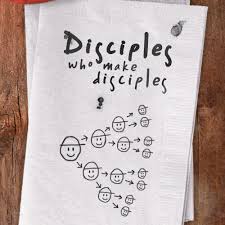
Disciples Discipling Disciples (Or, Starting with “Why?”, Part 5)…

By now, you’re saying, “Enough already! Is why you’re starting The House Church Movement all you have to write about?” This will be the last blog I write that deals with the “why” of house church (or, at least MY why). 

Photo courtesy of the PCAJesus gave a very simple mission to His church immediately before His ascension–go make disciples (Matthew 28: 18-20). I wonder how such a simple mission has gained so much complexity over the centuries. Jesus’ first disciples were told to disciple others, and the only example they had was Jesus. In Luke 9 and Matthew 10, we find Jesus going house-to-house throughout Galilee and Judea, and then Jesus telling his disciples to do the same. The Book of Acts certainly confirms this model of ministry.

The Apostle Paul, in writing his letters to the early church, wrote to churches that were meeting in homes, and the instructions he gave them were given with this model in mind. The concept of spiritual gifting was given to the Church with the understanding that the gifts of believers would be lived out in the community of faith–the house church.

A word of clarity, though. The Apostle Paul would use the word for church when referring to both the individual house churches and the gathered body, so using the one does not detract from the other. Again, I’m not anti-institutional (the fact that I keep mentioning that does make me wonder a little though). Wherever the body of Christ gathers, there is the Church.

Unfortunately, the “gifts” for ministry became formalized as the Church grew and transitioned from a house-based movement to the more “traditional” model we know today throughout most of the west. Pastors, teachers, evangelist, et. al., became church professionals. In the early church, there was a team of leaders–bishops, pastors, elders–who led the church in making disciples. Now, we depend on professional staff teams to lead us, and the individual giftedness of disciples is underutilized in the Kingdom economy.

The Apostle Paul was very specific in writing to the early church at Ephesus about the role of leaders in the church. He wrote:

11 So Christ himself gave the apostles, the prophets, the evangelists, the pastors and teachers, 12 to equip his people for works of service, so that the body of Christ may be built up (Ephesians 4: 11 – 12, NIV).

Each of these giftings were given by Christ Himself for the building up of His church, and the most fruitful discipleship model utilizes these gifts in their fullness to increase the Kingdom. This is the model wherein disciples disciple disciples, thus fulfilling the Great Commission Christ gave to His Church.

Paul wrote to the Corinthian church that “to each one the manifestation of the Spirit is given for the common good” (1 Cor 12:7).  He lists many different gifts that the Spirit gives to believers for the sake of the body. Then he explains how every part of the body is needed, and that we must be careful to not start to develop a mindset that some gifts are more necessary than others.  Does every single believer in a church realize that they are just as needed and important as anyone else in the church? Or do they tend to think that the preacher and worship leader are more important?

The House Church Movement is designed to create space for everyone in the body to contribute in the meetings and in everyday life.  The “pastor’s” is not the only voice that needs to be heard.  Long monologue sermons are not meant to be the norm in house church meetings because no one person should dominate things.

Everyone is called to make disciples.  We are all called to share the gospel with non-believers in hopes that they would follow Jesus. We are all called to take responsibility for the spiritual care of other believers.  But discipleship is hard and messy.  It involves intentionally getting to know someone, having hard conversations when sin is evident, working through conflict, and spending extra time with them when life gets hard.

The temptation in the church has been to replace discipleship with programs.  If there is a married couple struggling, we suggest they read a book, enroll in a marriage class, or go on a retreat.  Discipleship means having an older couple who loves Jesus to come alongside of them and do life with them through life’s challenges.  Though marriage retreats, classes and seminars can be helpful, we hide behind them and ignore our responsibility to make disciples. It’s not that these programs are bad, but they run the risk of undermining what is best and most important. We end up trading the best for the good.

In The House Church Movement, the pastors are not responsible for discipling everyone, but rather they will each disciple a few and then ensure that those disciples are also discipling a few.  And for those who are new to the faith, though they might not be fully responsible for the spiritual care of another person, they will be actively engaged in evangelistic efforts and be trained to take responsibility for others.

The House Church Movement, with its small, intimate, intentional group of believers provides no room to hide.  Each person’s life is consistently before someone else.  It means that each person is expected to be transparent with a few other believers about the things they would hide, while those believers walk with them through healing, repentance, and believing the promises of God.  There shouldn’t be any room for people just “attend church” when everyone is being discipled for life and ministry.

Discipleship is taking responsibility for the spiritual care of somebody else. It doesn’t mean you’re the only one invested in that person, but it does mean you should be aware of what’s going on in that person’s life. Discipleship is life on life. Discipleship doesn’t happen with coffee dates once a week. You need to be around each other and observe each other’s lives almost daily.

Disciples discipling disciples. It can be messy work, indeed! But, it can also be the most fulfilling and transformative work a disciple can ever do. It’s another reason I feel called to lead The House Church Movement.

So, there you have it. The five reasons I feel called to do this new thing. Now, maybe we can move on to something else.

Until next time, keep looking up…

It’s Harvest Time (or, Starting with “Why?”, Part 4)…

Let’s be frank. House church (organic church, simple church) is countercultural for us folks in the United States (most of the west, really). I’m okay with that, though, because if there was ever a time the Church needed to be countercultural, it is now.

Since I’m being frank, let me also say that if you should attend a house church, you’re not likely to find the music to be excellent (although if you come to the House Church Movement, you’ll find my daughter leading us with excellence), the preaching and/or teaching may not be as polished as one is accustomed to, and the youth/children’s program will be unspectacular.

These reasons (and probably a few more) are why there isn’t more house church focused church planting movements in the west. We like our high-energy music, our polished preaching and those youth/children’s ministries that are going to do for children what parents are so unwilling (or unable) to do for themselves. House church for too many people will lack the glitz and glamour that will reach a consumer culture.

That fact notwithstanding, I believe the house church model of church planting is perfectly poised to reach new fields that are ripe for harvest. The house church planting model is designed to be “close to the ground,” as in, rooted in relationships with neighbors and co-workers, high on interpersonal relationships, ingrained in the rhythm of the community, not restricted by money or funding and is simple in its administration.

Additionally, Covid-19 has changed the landscape of traditional church. By all accounts, most traditional churches are averaging 30 – 50% of pre-Covid attendance. Those churches that see a higher percentage are outliers. Based on what I’ve read, and conversations I’ve had with pastors, those percentages are not likely to change drastically for the foreseeable future. That’s because half the people believe the church shouldn’t be meeting yet, and the other half of the people believe the church should have never stopped.

The opportunity that exists for the house church in this environment is that the church can be where the people are. The new context is simply more conducive to the house church. The house church can meet in closed communities. The house church can meet in large apartment complexes. The house church can meet in dense urban areas where the cost of living (and the cost of property) is expensive. The house church can meet in college dorms. The house church can meet in places where the government has restricted public worship gatherings (it sure feels strange to write that sentence as I sit in the United States!). The house church can meet wherever there is a home and a facilitator.

For all these reasons, the house church model can revive an evangelistic zeal in the Kingdom of God for the west. Consider for a moment the rapid growth of the early church. Between Pentecost and 70 AD the church experienced the most phenomenal growth in its history, spreading from a mere handful of believers in Judea throughout the Mediterranean world. Most scholars agree that this growth was accomplished using private homes as the primary meeting place.

Consider, also, the following mathematical potential for a ministry such as The House Church Movement. Beginning with a single home congregation with an average membership of twelve people, allow for that one group to reproduce itself in the form of a second group after two years. Then, allow for each of those groups to reproduce during the next two years—and so on. Allowing for growth and loss within each group, yet maintaining the group average of only twelve members (a conservative estimate of group size), after 6 years, The House Church Movement would have 96 members. After 12 years, The Movement would have 768 members. After 15 years, it would consist of 2,304 members. After 18 years, 6,912 members. After 20 years, the overall membership of The House Church Movement would be 13,824!

Please understand, I hold no illusion that The House Church Movement will ever boast a membership of nearly 14,000 people. I simply offer these projections as a way of showing that this philosophy of ministry and evangelism has potential equal to, if not greater than more traditional models.

Please don’t think I’m trying to sell everyone on the house church model or The House Church Movement. I’ll admit that it’s even hard for me to move away from the traditional church model of ministry, but I feel called to this model and to this Movement because I believe that house churches take place where harvest happens–in the neighborhoods, in the work places and in the homes of both those who believe and those who do not.

Until next time, keep looking up…

The Bible Tells Me So (or, I’m Starting with “Why?” Part 2)…

I remember as a teenager hearing about this mysterious entity called a “house church.” I learned there were actually these small groups of Christ-followers who met weekly in homes and called themselves a church. I thought it rather strange, and I was not discouraged in that thinking from those in the more “traditional” church in which I grew up.

Courtesy of The Toledo Blade

People can be very passionate when it comes to the discussion of house churches (or simple churches or organic churches–the terms are interchangeable). Some will argue, “It’s the only way to ‘really’ do church. After all, it is how the New Testament church functioned.” Still others will, with equal passion, argue that house churches are generally made up of disgruntled members from more traditional congregations, or of theologically quirky folks who are considered, well…just, odd. Add in the fact that house churches are not very prevalent in Western culture, and one has a recipe for misunderstanding.

So, here I am to try to help with any misunderstanding my current path and calling may cause. In part 1 of this series (click here to read), I shared about God’s call as the underlying “why” of this journey, but the why goes beyond God’s call (though that would be enough in itself). The second “why” that motivates me to move in this direction is because I believe the house church is biblical.

What? You don’t think so? If one thinks the house church movement is not biblical, that one must be compelled to discount the first one hundred years of church history. Here’s a brief survey of relevant Scripture:

44 Now all who believed were together, and had all things in common, 45 and sold their possessions and goods, and divided them among all, as anyone had need. 46 So continuing daily with one accord in the temple, and breaking bread from house to house, they ate their food with gladness and simplicity of heart, 47 praising God and having favor with all the people. And the Lord added to the church daily those who were being saved. (Acts 2: 44 – 47)

42 Day after day, in the temple courts and from house to house, they never stopped teaching and proclaiming the good news that Jesus is the Messiah. (Acts 5:42)

Then Paul left the synagogue and went next door to the house of Titius Justus, a worshiper of God. Crispus, the synagogue leader, and his entire household believed in the Lord; and many of the Corinthians who heard Paul believed and were baptized. (Act 18:7)

20 You know that I have not hesitated to preach anything that would be helpful to you but have taught you publicly and from house to house. (Acts 20:20)

Greet Priscilla and Aquila, my co-workers in Christ Jesus. They risked their lives for me. Not only I but all the churches of the Gentiles are grateful to them. Greet also the church that meets at their house. (Romans 16: 3-5)

19 The churches in the province of Asia send you greetings. Aquila and Priscilla greet you warmly in the Lord, and so does the church that meets at their house. (1 Corinthians 16:19)

Paul, a prisoner of Christ Jesus, and Timothy our brother, To Philemon our dear friend and fellow worker— also to Apphia our sister and Archippus our fellow soldier—and to the church that meets in your home: (Philemon 1: 1-2)

I think you get the picture. The early church was a church that met primarily in the homes of believers. They didn’t have church buildings to meet in, so homes became the default location. Yes, believers met in the Temple and in synagogues, but not as an organization–those early believers were part of another institution. Following the biblical model in this transitional period in Western culture opens the door to a fresh move of the Holy Spirit. My favorite way to say it is “House Church–Church in the new, old-fashioned way!”

Please let me clarify something, though. The house church is not the only legitimate model for church. I would never argue that point. The Holy Spirit has used various expressions throughout history to advance the Kingdom of God around the world. The “institutional” church is in a time of seismic shifting, and it will continue to meet and worship and serve. Campuses have and will continue to re-open. Congregations have and will continue to pivot. Hooray!

I am not anti-institutional church. The institutional church has been incredibly good to me and my family. I am deeply grateful for the love, care and nurture I’ve received in the institutional church, and I cherish the friendships those years have developed. And, I’m still a part of the institutional church–the Evangelical Methodist Church is a denomination, after all! But, I am grateful that the EMC is committed to church planting, and to do so in new, fresh, creative ways.

It would have been very easy to simply drop all denominational affiliations…to say that denominations are an abomination (some theologically odd people might agree!), but I don’t believe that to be the case. It is important for me to be a part of the “institution” because it affords me a covering or authority and accountability. I need both. I reflect my submission to Christ through my submission to the District Superintendent and the General Superintendent of the EMC, and I am held accountable for the work of ministry by them, and others who serve the general church.

The House Church Movement is a ministry of the Evangelical Methodist Church, and though I begin as its pastor, we will serve under the Book of Discipline of the Evangelical Methodist Church. We will be accountable to them. We will report to them (but, they do not now, nor will they ever, own my house, or any other property the church might meet).

So, you see, this is not an anti-institutional backlash. This is a genuine attempt to reclaim a biblical model for doing ministry as the church. I pray you’ll join us on the journey.

There are three more “why’s” to follow:

  • House churches meet people’s needs.
  • House churches take place where harvest happens.
  • House churches reflect the priesthood of all believers.

I’ll unpack these in coming blog posts, but in the meantime, don’t forget to pray for The House Church Movement as we launch Thursday, September 17th at 6:30 p.m. Plan to join us if you’re in the north Louisiana area. Check out our Facebook page for more information.

Until next time, keep looking up…

I’m Starting with “Why?”

Sorry, I know the title of this blog is a rip-off of Simon Sinek‘s TEDTalk, and subsequent book entitled Start with Why, but if you’ll bear with me, maybe you will understand why I borrowed the phrase. The premise of Sinek’s book is people who change the world work from the inside-out rather than the outside-in. Using what he called the “golden circle,”most people always start by asking “What?”, move to “How?” before making it to “Why?” The difference makers always start with “Why?” So, let me.

I’m going to start with the “Why” of The House Church Movement and attempt to work from the inside out to explain why I feel compelled to launch this “new” movement. It’s not actually new. House churches have been around as long as there has been a church. The first churches were house churches. Perhaps a better way to state it is The House Church Movement is church in the new, old-fashioned way.

I don’t want to spend too much energy defining the term “house church” for you. I’m going to make a major assumption that you’ll surmise a house church is a church that meets in a person’s house. That’s the stripped down definition, but it suffices for our purposes here. House churches have also been referred to as “simple” churches and “organic” churches. Those terms are often used interchangeably when referring to the idea. No matter the term used, The House Church Movement is a movement whose purpose is to establish churches in the homes of followers of Jesus Christ. I hear you asking the question, “Why?” I’m glad you asked!

There are actually five reasons why my wife, Vanessa, and I are launching The House Church Movement. I’ll take the next five blog posts to unpack each of the five reasons, and as I unpack each one, will delve a little more deeply in the philosophy and theology that underlies the movement (and I believe it is a true movement of the Holy Spirit).

The first “Why?” is because we feel called to launch this movement.

I have made no secret of the anxiety I encountered in vocational ministry over the last two years I served professionally. There was a part of me that was totally unsettled with my inability to develop fruitful followers of Jesus Christ. I don’t blame the people (Lord! No!). I blame myself, but I also blame the institution of the Church. The Church as institution was concerned less with making disciples than it was with survival. The processes and procedures in place far more promoted institutional survival than they did spiritual formation and growth in Christlikeness.

I watched (over 28 years in ministry) as the “Church as Business Model” grew, and pastors were trained as C.E.O’s instead of shepherds. The Church Growth Movement had much (though not all) to do with this transition. It wasn’t long until pastors were pursuing MBA’s in order to lead multi-million dollar mega churches, and developing large staffs to handle ministry, and building more and bigger facilities to handle the ever-increasing crowds. It looked great on the bottom line in terms of nickels and noses, but it did little to enhance the spiritual well-being of the disciples as more and more people became consumers of religion. Witness the continuing decline of faith participation as a percentage of the population even as mega churches continue to grow at the expense of smaller congregations.

For as many as four years, I wrestled with my place in that system. I also know that the dissension within my former denomination added to my anxiety, rendering my capacity and desire to lead the church greatly diminished. I was heart-broken. I was confused. I was tired. I didn’t know much else, but I did know that what I was doing as a pastor was not what God called me to in 1990. After a season of prayer, Vanessa and I discerned it was time to step away from vocational ministry (read that here).

We stepped away from vocational ministry not believing God would call us back to the pastorate. We knew we needed a season of rest. We knew we needed a season to simply worship together. We knew we needed a season to pray. We knew we needed a season to discern further God’s calling on our lives. We are grateful for that season!

During that season, we wrestled with the question, “Does the God who calls us into ministry call us out?” I first thought the answer was yes, but we discerned the answer is no. God doesn’t call us out of ministry. He calls us to different seasons of ministry and different places of ministry. I believe Vanessa and I have arrived at a new season and a new place of ministry. We are entering a church planting season.

The changing landscape of western culture, and primarily the culture of the United States, necessitates new methods and new models for doing ministry and mission in the 21st century. Church planting will be ever more critical to the future of church. Covid-19 has altered the landscape for the traditional church (and I don’t mean traditional in the theological) going forward. No one knows who or how many may return to congregations when society returns to “normal.” The culture will be filled with both un-churched and de-churched people who will be longing for a spiritual connection, spiritual grounding and a spiritual home. Church planting will be the primary means of meeting this need.

So, again, why the house church? Because we feel called to it, just like I felt called to the pastorate in 1990. The calling never left, it simply transitioned in God’s timing. I am like the Apostle Paul as translated by Peterson in The Message:

Still, I want it made clear that I’ve never gotten anything out of this for myself, and that I’m not writing now to get something. I’d rather die than give anyone ammunition to discredit me or impugn my motives. If I proclaim the Message, it’s not to get something out of it for myself. I’m compelled to do it, and doomed if I don’t! If this was my own idea of just another way to make a living, I’d expect some pay. But since it’s not my idea but something solemnly entrusted to me, why would I expect to get paid? So am I getting anything out of it? Yes, as a matter of fact: the pleasure of proclaiming the Message at no cost to you. You don’t even have to pay my expenses! (1 Corinthians 9: 19 MSG)

Who knows? It may all come to naught, or it may reap a harvest ten-fold of anything we’ve ever known. We only know that it’s in the Lord’s hands, and we’re deeply appreciative of the Evangelical Methodist Church for giving us a place to call home as we answer this call.

If you’re interested in knowing more about The House Church Movement, reach out and we’ll chat, or if you’re in the north Louisiana area and desire to join us for our initial gathering, please put September 17th at 6:30 p.m. on your calendar. You’ll find particulars concerning the place of the gathering on our Facebook page.

Until next time, keep looking up…