I Think I Need a Drink…

I wrote last week about the draining nature of 2020 for me, and the reality is that 2020 has been draining for many people, so much so that they have been driven to drink! Nielson reported a 54% increase in alcohol sales the first week of the “stay-at-home” orders in the U. S., and three weeks later the World Health Organization warned that alcohol use would exacerbate the health-related concerns of the pandemic. Go figure (see here and here for more concerns)!

I ended, though, with the expression of my desire to be filled…to be filled with the power of the Holy Spirit. The Apostle Paul had something to say about that idea, too! Those who follow Christ, Paul says, have “put on” a new way of being. This new way of being comes as a result of being filled…filled with the power of the Holy Spirit.

A CASE FOR WINE?

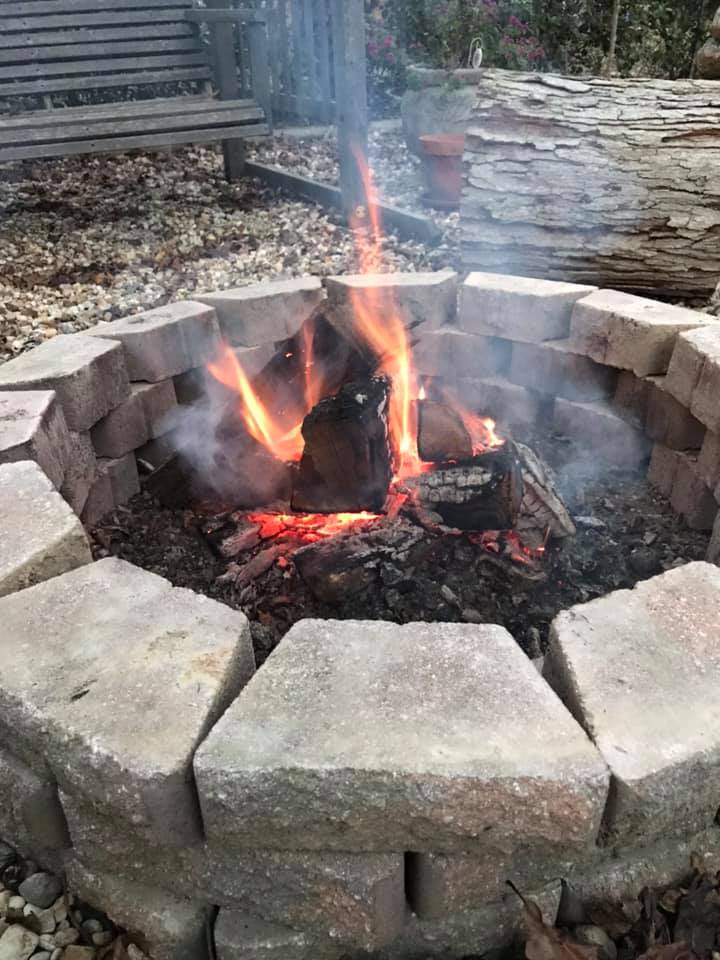
We don’t simply come to Jesus Christ for salvation and that’s the end of it. The Christian life is like my fire pit. DE7E8223-A03C-479B-B090-F8D65F778712Vanessa and I love sitting around our fire pit, but to continue to enjoy its warmth and glow, we have to keep stoking the fire. It’s a process that keeps the fire burning. So is the Christian life.

The Apostle Paul liked to use analogies, too. As he wrote describing the life of followers of Jesus Christ, he variously used a wrestler, a runner and a soldier. Those are all active people. We must do something as we participate in this walk of faith where we are becoming people of Christ.

Paul having previously cautioned the Ephesians about their behavior, says in 5:15– “Be careful how you live.” He says, “Don’t be foolish, but rather be wise. Take advantage of every opportunity.” Then, in verse 18 he cautions them to not “be drunk with wine, because that will ruin your life.

Some folks read verse 18 and think Paul is making a case against Christians drinking. Is Paul telling Christians not to drink? Not really. Paul wasn’t a tea-totaler, and he would instruct his protégé Timothy to take a little wine for his stomach (1 Timothy 5:23). We know wine was a common beverage in the first century, and that Jesus himself drank wine. Don’t forget that Jesus even turned water into wine at a wedding (John 2: 1-12). This passage is not a case against drinking wine. It is a case against getting drunk. More particularly, it’s a case against getting drunk as a religious activity.

There was in the city of Ephesus a great following of the god Dionysus. Dionysus was the Greek god of wine. The worship of Dionysus included drinking, drinking and more drinking with lots of frenetic dancing thrown in. Think “frat party” here and you’ll have a good idea of their religious service. Followers would drink and dance until they were drunk. The belief was that if they could get totally wasted they could open themselves to the fullness of the god, Dionysus. That’s the culture these new followers of Christ were coming out of, and Paul says, “You don’t have to do that!”

BE FILLED

Paul knew (and we know) that life is challenging. Between the time we come to trust Christ and the time we enter heaven, life happens. Life doesn’t go swimmingly just because we came to Christ. The problems we had before are likely the same problems we have after. The same temptations we had before are probably the same temptations we have after. The problem is that when we face the challenges that life presents us, we’re want to reach back into the old life and deal with those challenges in the old way. Paul tells the Ephesians they don’t have to reach back into their old life because in this new life there is a new way to be filled with the power of God. This new way is to be filled with the Holy Spirit.

Paul says that rather than be filled with wine, be filled with the Holy Spirit. There are some who believe this filling by the Holy Spirit is one in which we get carried away in a frenzy. Paul isn’t talking about running up and down aisles, jumping pews or speaking in tongues. He uses a word that means to be “under the influence.” To be filled with the Spirit is to be under the influence of the Holy Spirit. Of course, we’re prompted to ask “How do we come under the influence of the Holy Spirit?” Paul’s use of the word helps us understand that, too.

The word is given as an imperative. That means it’s a command. It’s not an option. Being filled with the Holy Spirit is not something reserved for pastor’s and worship leaders. It’s something that’s intended for every believer. Every believer is given the Holy Spirit as a seal when we come to faith in Christ, and so it is God’s desire that each believer live under the Spirit’s influence. Rather than being under the influence of some alcoholic beverage, or the influence of some other outside source, we are to live under the Spirit’s influence.

The word is also in the present tense, which speaks of a continuous action. It’s not a one and done thing (sort of like my fire pit I mentioned earlier). This filling is meant to be an on-going process—an on-going experience.

A lot of people have had mountain-top moments on their journey of faith. A mountaintop moment is like Peter, James and John had when they went with Jesus up Mount Tabor and saw him transfigured (Matthew 17: 1 – 11). They wanted to stay there. In that moment, they were just so close to God. But, mountaintop moments fade because life is lived in the valley. This filling Paul talks about is meant to be an everyday kind of filling that sustains us through life in the valley. It’s meant to influence us every day. We can’t fill our cars up with gas once. We have to fill them up continually.

There’s one more interesting point about the word used: the word is in the passive voice. It means this filling is something that is done to us. We can’t fill ourselves. We can only put ourselves in a place where God can fill us. How do we do that?

GETTING FULL

First, we ask. Have we ever asked God to fill us with His Spirit? Every day we can ask God to fill us. Fill me as I go to work today, Lord. That’s what I do! Every morning, I’m continually asking God to fill me with His Spirit, to speak his word through me. You can pray these prayers, too:

  • “Fill me with your Spirit, Lord, as my spouse and I deal with this issue.”
  • “Fill me as I face my boss today.”
  • “Fill me as I deal with this health issue.”
  • “Fill me for _______________.”

If we’re not under the influence of the Holy Spirit, we’re going to want to revert to old, and even self-destructive ways, to face the challenges of life. Simply ask. Jesus said in Luke 11:13: So if you sinful people know how to give good gifts to your children, how much more will your heavenly Father give the Holy Spirit to those who ask him.”

Second, we worship. Worship puts us in the place where we can experience the Holy Spirit. Paul says “singing psalms and hymns and spiritual songs among yourselves, and making music to the Lord in your hearts” (Ephesians 5: 19). Regular worship is part and parcel to being continuously filled with the Spirit. We experience God and are drawn closer to Him.

Third is fellowship—connecting with other believers. Paul stresses that fact throughout his letter to the Ephesians, and does so once again as he says, “Submit one to another out of reverence for Christ” (Ephesians 5:21). The Christian life is not a “one-person show.” We need each other. We cannot, and we will not, be filled with the Spirit unless we connect with the body of Christ and other believers.

Finally, we connect with God’s word—the Bible. When we open the pages of the Bible, the Holy Spirit feeds our souls. Just reading the words opens us to experience God in new and life-changing ways.

I hear some of you saying, “Well, I just don’t get much out of it when I read the Bible. I can’t feel anything we I read it.” Trust me. Just the act of reading the words opens us—even if we don’t feel it. Look, we’re not always going to “feel” God doing God’s work. Just because we don’t feel it, doesn’t mean He’s not doing it.

God is faithful and He will fill us. We just have to put ourselves in the place where we can be filled.

0A615C60-C567-4824-B5DD-4044B35A7F4D_4_5005_cSo, let’s all have a drink! Drink in the fulness of Jesus Christ through His Holy Spirit!

Until next time, keep looking up…

Draining…

Draining. That’s the only word I can think of to describe the year 2020. Between the election, the Coronavirus, the racial discord and hurricanes (oh, and let’s not forget forest fires, floods and rioting and looting), I find myself drained and wanting desperately for this year to be over.

We might say that today (November 3, 2020) is the day many have been waiting for (not me, I’m waiting for January 1, 2021). Many feel that as soon as the election is over things will be different. I’m not one of those persons. Oh, I think there will be different reactions to the outcome today brings. I’m probably going to get myself in trouble here, but I feel compelled to share what’s on my mind.

No matter what the outcome of today’s election, half the people in the nation will be overjoyed and the other half will believe the world is coming to an end (it is, by the way, probably just not tomorrow). Preparations are being made for any eventuality (see here).

My prediction? If Donald Trump loses the election, I suspect everyone will get up Wednesday morning and go to work and carry on with their lives anticipating a new administration (for better or worse). If Joe Biden loses the election, I suspect there will be many cities in our nation that will burn and many businesses will be looted and destroyed.

I’m not saying Biden supporters will be the ones doing the rioting. I am saying “antifa” or other nefarious anarchist groups may seize the opportunity to sow further division in the nation. I also know that half reading this will disagree, and half will agree. That fact is another evidence of the divided nature of our nation.

I’ve also been drained as I’ve watched the same divisions play themselves out in the church of Jesus Christ. As I wrote in a previous blog, we seem to forget that Jesus has torn down the “dividing wall” that separates us. We are no longer divided, but united through the blood of Jesus Christ. We sure haven’t been treating one another that way. No doubt, 2020 has been a stain on the witness of the Church in the world, and it’s just been draining.

I was challenged by John Piper’s assessment of the situation in our nation as he anticipates the election. The question on the lips of many believers is “How could a Christian vote for Trump?” The question on the lips of equally as many Christians is “How could a Christian vote for Biden?” To vote for the one is to vote for arrogance and boastfulness and pride and hatred. To vote for the other is to vote against life and truth.

Don’t ask an evangelical Christian from Louisiana how he/she could vote for Donald Trump. There was a time when Louisianians had to vote for a man who famously (or infamously) said, “The only way I could lose this election is if I get caught in bed with a dead woman or a live boy.” Of course, that was back in the day when you could actually say such a thing and not get canceled. 

That man was Edwin Edwards, a popular womanizer, gambler and extortionist who served a sentence in federal prison for his often unhidden corruption. But, evangelical Christians were basically left with no choice because his competitor in the race for governor was David Duke, a former grand wizard of the KKK, who cleaned up nicely and said things many folks wanted to hear. He garnered just enough support to slip into a runoff with the former governor, leaving Christians with a terrible dilemma. 

Most in Louisiana did with Edwin Edwards what they will do with Donald Trump—hold their nose and cast their ballot, not because Donald Trump is a man of pristine character, but because the Democrat Party has chosen a candidate and established a platform that opposes so much of what evangelical Christians value most. 

They will hold their nose and cast their ballots in Louisiana because they’ve been down this road before. They will vote, not on personality, but on what they believe to be the best policy to lead this nation forward. I would caution against questioning their virtue as evangelical Christians (though many will). When the choice is between two evils, one needs be picked. It is the nature of the two-party beast.

I suppose one could choose not to vote, or vote for a third-party candidate. I think we’re all struggling to do our best, and the reality is we don’t always do our best when we’re drained. I also know that God has enough grace to go around for all of us.

I also know that whatever happens today (and in the days ahead as results unfold), Jesus is still on the throne and He calls me to a higher obedience than does this or any nation. If freedom continues to ring throughout the land, I will celebrate and worship Jesus Christ. If tyranny for the believer comes, I will celebrate and worship Jesus Christ, and I will pray that my faith will sustain me (and that the Church’s faith will sustain her) through any fiery trials that come, and that she (and I) will be a better witness of the grace of God than perhaps we have been in the past. Either way, we (the Church) are safe in the shadow of the Cross.

So, as drained as I am, I will seek desperately to be filled–to be filled with the power of the Holy Spirit. It is only as we are filled that we will find strength to live through every time and age and circumstance that life brings. I am reminded of the Apostle Paul’s prayer to the Ephesian church:

15 Ever since I first heard of your strong faith in the Lord Jesus and your love for God’s people everywhere, 16 I have not stopped thanking God for you. I pray for you constantly, 17 asking God, the glorious Father of our Lord Jesus Christ, to give you spiritual wisdom and insight so that you might grow in your knowledge of God. 18 I pray that your hearts will be flooded with light so that you can understand the confident hope he has given to those he called—his holy people who are his rich and glorious inheritance.

19 I also pray that you will understand the incredible greatness of God’s power for us who believe him. This is the same mighty power 20 that raised Christ from the dead and seated him in the place of honor at God’s right hand in the heavenly realms. 21 Now he is far above any ruler or authority or power or leader or anything else—not only in this world but also in the world to come. 22 God has put all things under the authority of Christ and has made him head over all things for the benefit of the church.23 And the church is his body; it is made full and complete by Christ, who fills all things everywhere with himself. (Ephesians 1: 15 – 23 NLT)

I’ll desire to be filled by Him. May you be, as well.

Until next time, keep looking up…
No Needy Among Them (Or, Starting with “Why?”, Part 3)…

I love what Luke writes in Acts 4: 32-35–

32 All the believers were one in heart and mind. No one claimed that any of their possessions was their own, but they shared everything they had. 33 With great power the apostles continued to testify to the resurrection of the Lord Jesus. And God’s grace was so powerfully at work in them all 34 that there were no needy persons among them. For from time to time those who owned land or houses sold them, brought the money from the sales 35 and put it at the apostles’ feet, and it was distributed to anyone who had need.

Can you imagine what that must have looked like?

As I began praying about a new church plant, I sensed the Holy Spirit calling me toward planting a “house” church. Initially, I interpreted the vision to be open to growing into a more traditional expression of the church—building, pews, administration, etc. As I’ve lived with and prayed over the vision the past two months, I’ve gained greater clarity as to where the Lord may be leading us as a new church plant. I am grateful to a group of 21 people who have consistently prayed for clarity in this unfolding work of the Holy Spirit.

It is not unusual for a new church to begin by meeting in a home. A small group of only ten or twenty people does not need a larger meeting place, and the costs involved in procuring any sort of space is often prohibitive. In this regard, a “house church” is understandable to many. But if they learn that it was the intention to continue meeting in homes no matter how large it grows, eyebrows will begin to rise.

The idea of the house church does not easily fit into the tradition of American discipleship. For generations, the idea of the church has been almost universally associated with a central meeting place—a church building. Even though the biblically informed disciple knows that the church is people, it remains almost impossible for some to escape the association between a particular local church and the building in which that church gathers.

When a society has grown up with an idea—a tradition that has been passed down from generation to generation—a departure from that tradition can seem strange or even wrong. I will not fault anyone who questions the practice shared in this vision, or any who are not convinced of its benefits, nor is this unfolding vision a condemnation of the longstanding tradition of churches meeting in large central buildings. Too many examples of excellence within that tradition, both historically and currently, can be mentioned in its defense. My intent is simply to offer another reason why The House Church Movement will continue meeting in homes, and to demonstrate that not only is the practice biblically sound, but it is a great model for meeting peoples needs.

A NATURAL SETTING FOR FELLOWSHIP

During a House Church Movement meeting, we will enjoy facing one another in a warm, familiar environment, rather than sitting in rows looking at the back of someone’s head while most of the activity takes place on a stage. We may also enjoy eating a meal together every week, sampling friends’ cooking, or sometimes bringing in pizza. We might enjoy drinking coffee or tea after a Movement Meeting while sitting comfortably around the living room, sharing in each other’s lives. We could stay late, discussing personal or church matters and doctrinal issues. Sometimes, advice or counsel may sought by one, and given in return by another, or even several. Sometimes, two or three may find a quiet place to pray together. It could be like a family reunion every week.

While this type of fellowship can take place in a sanctuary setting, in the home it is natural. And, even as The House Church Movement grows large in numbers, it never has to lose the familiarity and intimacy that can be experienced in a home’s setting. Instead, new congregations can be formed—teaching others how to experience this same rich Christian fellowship. There is little doubt in a hurting world that people are longing for fellowship and intimacy that a house church setting could provide.

A DESIGN FOR BIBLICAL INSTRUCTION

When the New Testament authors gave written instructions to the church, they were writing in light of what they knew the church to be—small assemblies meeting in homes. Consider: If the church were later transformed into something that had never been seen or anticipated by the authors of the New Testament, the instructions they gave to the early church might not be as readily applicable to the new form. As an example, consider this principle in light of all of the “one anothers” in the New Testament—the commands to know, love, guard, and care for our brothers and sisters in Christ (i. e. John 13:34-35; Romans 12:10; Galatians 6:1,10; Colossians 3:12-16; 1 John 3:16-17).

Certainly these are kept faithfully in many larger congregations, but one can hardly overlook the fact that increased size means increased difficulty in keeping them consistently. There exists the increased potential that some will fall through the cracks. It is evident that in order to keep the commands to love and care for one another, larger bodies need added structures and programs which, in turn, necessitate additional burdens of administration. I could multiply examples, but suffice it to say that in at least this one case, the instructions are much easier to follow consistently in a smaller gathering. I might even suggest that these instructions were designed for small gatherings.

Because no one falls through the cracks, needs are more readily known and easily met. I’m not sure there is a greater “why” for the house church, but there are still two more we’ll explore in coming weeks:

  • House churches take place where harvest happens, and
  • House churches raise up disciples to embrace the ministry to which they’ve been called.

Until next time, keep looking up…

G.O.R.P….

I am not a hiker, but I have been hiking. So, I know very little about hiking except what I’ve read. I mention hiking, though, because hiking comes to mind when I think about God’s sanctifying grace (yeah, I know, you can’t figure out how my mind works–sometimes I can’t either).

SANCTIFICATION

I am thinking about God’s sanctifying grace because I’ve been studying again the core beliefs of the Evangelical Methodist Church. Here’s what the Church says about sanctification and living a holy life: “We believe in entire sanctification following regeneration, whereby the believer is cleansed from the pollution of sin, saved from its power, and enabled through grace, to love God with all his/her heart,” and “We believe that every Christian is expected to live a holy life, one that is truly Christian.”

Regeneration. Sanctification. Those are three dollar theological words that mean “a new life” and “a holy life” respectively. New life (regeneration) comes when we accept Jesus Christ, and a holy life (sanctification) is what grows out of following Christ. Now, you’re probably wondering, “What does any of that have to do with hiking?” I’m glad you asked.

Do you know what G.O.R.P is? G.O.R.P. is an acronym that stands for granola, oats, raisins and peanuts, or as others have said, “Good old raisins and peanuts.” For a hiker on a journey, gorp is a snack designed to keep the hiker from crashing on an extended trip. It’s hard to pack a lot of food on an extended hike, and g.o.r.p. is sufficient in calories to keep the hiker from experiencing what is known in the hiking world as the “bonk.” A bonk is when a hiker doesn’t take in enough calories and energy and capacity deteriorates, thus preventing one completing the journey. Good old raisins and peanuts is meant to sustain the traveler through the journey, to help the person stay fueled to finish the hike.

That, in a nutshell (no pun intended), is the essence of God’s sanctifying grace. Life is a journey, and all along the way God’s grace is available to us, in different ways at different stages of the journey. It is God’s sanctifying grace that sustains us over the long haul of life. It is His grace made real in the challenging times, when energy and capacity wane…when life happens.

Sanctifying grace is God at work in us through the Holy Spirit to transform us. Our journey, our spiritual journey, is a journey toward transformation. When we come to Jesus Christ and he forgives our sin and gives us a new start, that’s not the end of the journey. In that moment, Jesus does something for us. If justifying grace is God doing something for us, sanctifying grace is God doing something in us. The something He desires to do is make us holy. We hear that word “holy” and we think, “Who me? Holy? No way.” Yet, that is the life Christ call us to.

HOLINESS

Understand, living a holy life is not living a holier-than-thou life. None of us will likely ever live a perfect life, at least that’s been my experience—but that could just be me. But, John Wesley taught that not only does Christ deliver us from the consequence and penalty of sin, he also delivers us from the power of sin. The Apostle Paul does a masterful job in Romans 6 explaining this idea.

(c) John Wesleys House & The Museum of Methodism; Supplied by The Public Catalogue Foundation

John’s brother, Charles Wesley, also does a masterful job capturing John’s teaching with this verse from Charles’ great hymn, O For a Thousand Tongues to Sing:

He breaks the power of canceled sin,
  He sets the prisoner free;
His blood can make the foulest clean;
  His blood availed for me.

As we journey through this life, there will always be temptations to sin. There will be challenges to our faith. There will be crises that cause us to doubt. We will deal with death. We will deal with disease. We will deal with difficult people. We will deal with anger. We will deal with frustration. That is the life. In those times, we need grace, and God gives us grace so that we need not surrender to the baser insticnts of our fallen nature. Christ has given us new life. Christ gives us hope. It is Christ who sustains us through life.

The holiness Christ call us to is different than sinlessness. As Wesley taught it, and we understand it, holiness is nothing more…but also nothing less…than love for God and love for neighbor. It is to love as God loves. Jesus gave us two great commandments. We find them in Mark 12: 29 – 31: “The most important one,’ answered Jesus, ‘is this: ‘Hear, O Israel, the Lord our God, the Lord is one. Love the Lord your God with all your heart and with all your soul and with all your mind and with all your strength.’ The second is this: ‘Love your neighbor as yourself.’ There is no commandment greater than these.

The spiritual journey of life is about growing up in love. It is growth, and growth is a process. We don’t miraculously love as God loves. Oh, that it would be so simple. Growth is a process, and holiness is a process. Yes, there is, in one sense, where we are made holy by the work of Christ on the cross, but holiness that is lived out occurs over time. Don’t be surprised if you didn’t wake up the day after you accepted Christ living a holy life. But also, don’t be surprised if he begins a work in you, too.

C. S. Lewis, perhaps the greatest theologian of the 20th century, explains it this way. When he was a child, he often had a toothache, and he knew that if he went to his mother, she would give me something which would deaden the pain for that night and let him get to sleep. But, Lewis said, he did not go to his mother–at least not till the pain became very bad. And the reason he did not go was this: He did not doubt she would give him the aspirin; but he knew she would also do something else. He knew she would take him to the dentist the next morning. He could not get what he wanted out of her without getting something more, which he didn’t want. He wanted relief from his pain; but he couldn’t get it without having his teeth set permanently right. And he knew those dentists; he knew they would start fiddling about with all sorts of other teeth which had not yet begun to ache. Our Lord, says Lewis, is like the dentists. Lots of people go to him to be cured of some particular sin. Well, he will cure it all right, but he will not stop there. That may be all you asked; but if you once call him in, he will give you the full treatment.

Sure, most of us don’t wrestle with big sins…even the day after accepting Christ. You know, like murder and stealing and lying. No, what we deal with are much more subtle sins…like selfishness, jealousy, greed and envy. Those sins need transforming, too, and when we struggle with those along our journey, when they sap us of our energy and capacity to love, it’s then we need grace, and the promise of the Gospel is that God gives us His grace—His sanctifying grace—to give us strength, to give us energy, to give us hope in the face of the struggle so that we move closer to the place…closer to the destination…closer to the trailhead…closer to holiness.

What is our G. O. R. P.? What sustains us so that we make it to the end? What makes us holy? I remind us again of the disciplines of the spiritual life—prayer, solitude, fasting, accountability. We know about bible study, too. Another is submission. All of these are the disciple’s G. O. R. P. They strengthen us and grow us in holiness.

There is another one, too. It is the sacrament of Holy Communion. There is strength here. There is grace here. At the Lord’s table, we are reminded of love, and we’re reminded to love. And, we’re reminded that love is sacrifice. It is sacrifice that the Apostle Paul calls us to in Romans 12: 1 – 2—the surrender of ourselves to Christ:

Therefore, I urge you, brothers and sisters, in view of God’s mercy, to offer your bodies as a living sacrifice, holy and pleasing to God—this is your true and proper worship. Do not conform to the pattern of this world, but be transformed by the renewing of your mind. Then you will be able to test and approve what God’s will is—his good, pleasing and perfect will.

We recall Christ’s sacrifice for us, and we see in it his sacrifice, and we acknowledge he calls us to the same sacrificial life. At the Lord’s table, we find strength for the journey. Here we are enabled to keep moving forward.

The Australian coat of arms pictures two animals—the emu, a flightless bird, and the kangaroo. The animals were chosen because they share a characteristic that appealed to the Australian citizens. Both the emu and kangaroo can move only forward, not back. The emu’s three-toed foot causes it to fall if it tries to go backwards, and the kangaroo is prevented from moving in reverse by its large tail. In the following of Jesus, G. O. R. P. helps us be like the emu and kangaroo, moving only forward, never back…becoming more like Jesus everyday–that is holiness…that is sanctification.

Until next time, keep looking up…

Finding My Way Home…

Ralph Waldo Emerson is credited with the phrase “Life is a journey, not a destination.” It’s a great quote, but it can’t actually be found in any of Emerson’s works. The first place it is found is from a prominent Methodist pastor named Lynn H. Hough. Perhaps Dr. Hough understood the essence of what the Apostle Paul wrote to the Philippian Christians so long before—life is a journey…life…this life…is not the destination, but as those who follow Jesus Christ, we believe this life is leading us somewhere. Paul reminded them (and he reminds us): “But we are citizens of heaven, where the Lord Jesus Christ lives. And we are eagerly waiting for him to return as our Savior” (Philippians 3: 20 NLT).

Paul only echoes what other early disciples wrote, too. Peter writes:

Now we live with great expectation, and we have a priceless inheritance—an inheritance that is kept in heaven for you, pure and undefiled, beyond the reach of change and decay. And through your faith, God is protecting you by his power until you receive this salvation, which is ready to be revealed on the last day for all to see” (1 Peter 1: 3b – 5 NLT).

Also, the writer to the Hebrews wrote: “For this world is not our permanent home; we are looking forward to a home yet to come” (Hebrews 13:14 NLT).

A Detour

I feel like I’ve been on a detour for the past two years. Well, not so much a detour, but rather lost, and you know how men can be, right? When we’re on a journey and take a wrong turn, we prefer to wander around just knowing we can find our way back on course. That’s what I feel like I’ve been doing the past two years–wandering around looking to get back on course. I felt as though I lost my spiritual home. I was a wanderer. But, that’s okay. Wandering is often part of the journey.

After two years, I finally feel like I’m back on course. Why so? On June 2nd, I met with and was interviewed by the Board of Ministerial Relations of the Evangelical Methodist Church. As a result of that interview I was elected into membership in full connection as an Elder in the Evangelical Methodist Church.

What does that mean? It means that I am ordained clergy once again in a denomination that has it’s roots in John Wesley’s theology, and it’s a place I can feel at home as I continue the journey.

A Journey of Grace

Yes, life is a journey, and the journey we are on through this life is a journey toward salvation—God’s full salvation. I say “full salvation” because we tend to think in terms of salvation as that moment we came to trust Christ, but I remind us that’s just part of the journey as we understand it as those who follow the Wesleyan way.

We don’t like to use the word salvation much anymore. We don’t like to talk about people getting “saved.” It reminds us too much of preachers hitting us over the head with their Bibles and trying to guilt us into the kingdom of God. Salvation is not about any one particular place and time as much as it is about a journey that is made up of many places and many times along the way.

Our journey is a journey of grace. The Wesleyan journey speaks of prevenient grace, justifying grace, sanctifying grace and glorifying grace. These are not four different kinds of grace, but rather the singular grace of God as it intersects our lives at different points along the journey. God’s grace comes to us as we are and where we are, and that’s why we are able to speak of it in different terms. But grace is neither imposed nor irresistible; we must respond to it and interact with it—and that’s the journey!

Prevenient grace means that God is working in us even when we are unaware of it and are unable or unwilling to acknowledge his presence. Prevenient grace is one way we encounter God’s salvation. It is God pursuing a continuing love relationship with us.

Then there is that when we experience God’s grace, and we begin to understand who and what it is He is calling us to. In that moment, one person may walk the aisle and make a public profession of faith, or another person may come to be baptized as an adult. It may be that moment when a young person goes through confirmation and embraces the faith of their parents as they are introduced to Jesus Christ through confirmation. It may be that time when the drunken, homeless drug addict realizes that Christ is the only answer, and that person calls out to Jesus to save them from the brokenness and pain of a wasted life, all the while kneeling and trembling in the cold of winter on a deserted street corner. That moment is the “justifying” grace of God, and it, too is an encounter of God’s salvation. It is a very important encounter, but it is not the singular defining experience of salvation.

The journey continues beyond that moment because God still seeks a continuing relationship with Himself for us. We grow in grace as we learn and live in Christ-like ways. This growing to become ever more like Christ we know as God’s “sanctifying” grace at work in our lives.

A Destination

As with every journey, though, this journey is carrying us toward something, a destination. No, the Evangelical Methodist Church is not the destination for me, It’s another part of the journey. All our lives are moving toward something, and for those of us who trust in Jesus Christ, we are moving toward that time when all things will be reconciled to God through Jesus Christ.

We look forward to that day when these perishable bodies, so broken by sin and disease, will put on bodies that shall never dim or die. It is that time when the fullness of God’s salvation, not only in our lives, but in all His creation will become real. We are moving toward heaven! There’s our destination. As we survey the landscape of our culture today, it sometimes seems like we’re going in the wrong direction, but, like Paul, we go on toward perfection.

We Wesleyans have a term for that, you know? The moment we are fully redeemed in heaven with Christ is a moment of “glorifying” grace. The Apostle John gives us a glimpse of this time in The Revelation:

“I heard a loud shout from the throne, saying, “Look, the home of God is now among his people! He will live with them, and they will be his people. God himself will be with them. [4] He will remove all of their sorrows, and there will be no more death or sorrow or crying or pain. For the old world and its evils are gone forever.”

[5] And the one sitting on the throne said, “Look, I am making all things new!” And then he said to me, “Write this down, for what I tell you is trustworthy and true.” [6] And he also said, “It is finished! I am the Alpha and the Omega—the Beginning and the End. To all who are thirsty I will give the springs of the water of life without charge! [7] All who are victorious will inherit all these blessings, and I will be their God, and they will be my children” (Rev. 21:3-7 NLT).

We don’t talk about heaven too often. When someone dies we turn our thoughts in that direction. I’ve often said when we get to heaven we’ll likely be surprised by two things: One, who we’ll not see there, and two, who we will see there. If I’m honest, I really don’t think those will be the surprises for us, though. I don’t think I’ll be surprised or shocked by the glory of God, or even the splendor of the place. I don’t even think I’ll be shocked or surprised by the fact that I see Jesus. I think the biggest surprise will be the fact that I’m there!

It’s All Grace

I think we’ll be eternally overwhelmed with wonder at the reality of the grace that allows us to be there. We certainly rejoice in the grace of God that calls us, and we rejoice in that grace of God that justifies us. We rejoice, too, in that grace that sanctifies us and gifts us and enables us to serve and grow. But I don’t think our rejoicing in those things even comes close to the rejoicing that we will experience when we see what glorifying grace gives us…and it will be grace. I think the stunning reality of heaven will definitely be that I’m there.

I don’t know how we’ll think in our glorified condition, but if there is any vestige of Lynn Malone from this journey, the first thing is going to be shock and awe with the immediate thought, “How in the world did someone like me ever end up here?” The answer is grace—God’s grace.

Fix our hope completely on God’s grace through Jesus Christ, made real by the power of the Holy Spirit. It is that grace which chose us, that grace which called us, that grace which justified us, that grace which sanctified us, and it is that grace which will glorify us. It is all grace, grace, nothing but grace from eternity past to eternity future in the glorious presence of God. It is grace.

That’s the prize Paul is pressing toward. It’s the prize we’re pressing toward. We look forward to that grace in the future. Our hope looks to that next great explosion, that final culminating grace that will never be improved upon because it is, as Paul says, perfection.

When we know what awaits us at the end of the journey we can live with joy and expectation. It makes life exciting. It makes the journey enjoyable, and it helps us anticipate the end. We can take the journey knowing it’s not a journey to the grave with the intention of arriving safely in a well-preserved body, but we’ll slide in sideways, thoroughly used up, totally worn out and loudly proclaiming, “Wow! What a ride!”

Finding my way home is about finding God’s full salvation. I am grateful for every part of my journey so far, and also grateful there is a new segment. I’m anxious to see how God will continue to work out His salvation through this part of the journey. As with every part of the journey, I will rely upon the Holy Spirit to guide.

Until next time, keep looking up…

Somewhere Between Holiness and Hell…

We are in the season of Lent. Lent is that 40 day period (okay 46–but Sundays don’t count) between Ash Wednesday and Easter Sunday that began historically as a time of spiritual preparation as early converts were prepared for membership in the body of Christ. It was also a time when those who had separated themselves from the body of Christ were reconciled through confession and repentance.

I’m struggling with what it means to “observe a holy Lent,” which we Methodists are invited to do on Ash Wednesday.

I can’t say that I like Lent. I don’t like Lent because I am convicted by how un-holy I can be.  I am convicted because Lent calls me to reflect on the temptations of Jesus in the wilderness, and as I consider his response to temptation, I realize my own failure in places that I’d rather not reveal here.

Confession

This time of reflection necessarily leads me to this whole idea of confessing my sins in the face of all those failures. Oh, I’ve got lots to confess, too.  I am reminded of a story I heard of four pastors who often met for a friendly gathering. During the conversation one preacher said, “Our people come to us and pour out their hearts, confess their sins and needs. Let’s do the same. Confession is good for the soul.”

In due time all agreed. One confessed he liked to go to movies and would sneak off when away from his church. The second confessed to enjoying cigars and the third confessed to enjoying card playing. When it came to the fourth one, he wouldn’t confess. The others pressed him saying, “Come on now, we confessed ours. What’s your confession?” Finally he answered, “It’s gossiping and I can hardly wait to get out of here.”  I really don’t like Lent because it causes me to reflect and confess, and that’s just awfully painful.

And then, there’s just the whole idea of self-denial.  I actually have to give something up?  Come on, now!  You can’t be serious?  I enjoy my coffee, or my diet coke, or my red meat, or my…well, you have to fill in the blank, because I have too many of my own blanks to fill in (whoops! There’s another confession!), but you get the idea.  I just don’t see the need for self-denial, after all.  God has blessed me greatly, and doesn’t God want me to enjoy these blessings?  But because I’m a company man, and I want to at least appear holy, I acquiesce and I practice the Lenten observance by reflecting and praying and confessing and giving up.

A Land Between Holiness and Hell

What I come to discover through the observance of Lent is that I live life in a land somewhere between holiness and hell. I long desperately for holiness, but hell is so much easier.  I discover that one who is truly holy cannot help but enjoy the blessings of God—blessings like love, joy, peace and contentment.  I discover God’s grace poured out in a thousand ways in the most unnoticeable places, and I learn to say, “Praise the Lord!”

The observance of Lent reveals to me that what I counted as blessings (material possessions, health, good success) are more fruits of my own labors than they are God’s blessings, and the reality that any and all of those “blessings” are transient in nature—here today and gone tomorrow.  It causes me to wonder if there were no material possessions, no good health, no great success, would it affect my trust of Him?

I realize just how hollow I can be, and somehow, by some mysterious means in this realization, I am drawn closer to Christ (isn’t grace amazing?), and I don’t seem quite as hollow as before, somehow perhaps even a little more holy.  Forget that I was drug kicking and screaming to the observance. The Spirit has done His work—somewhat akin to the terrible tasting medicine we received when we were children.  We hated it, but it worked.

So, I invite you to observe a holy Lent.  Pray more deeply, reflect more seriously, confess more faithfully, and deny the comforts that shape us. Do so kicking and screaming, if you must, but be prepared to see the Spirit work and draw you closer to Christ. That is what Lent is about, you know.

Until next time, keep looking up…

#GC2019–Praying from the Cheap Seats, Part 2

The Dome at America’s Center set up for #gc2019.

Saturday was a day of prayer, but so was Sunday. When I tell you we’re in the cheap seats, I mean we’re a long way from the delegates on the floor, and an even longer way from the stage upon which the Council of Bishops sit and lead the General Conference. The Dome at America’s Center was designed and built for the St. Louis Rams (don’t get me started about the Rams!), so it’s designed to hold over 66,000 people. Believe me when I say it feels a bit cavernous with only a few thousand Methodists present.

I going out on a limb here to say the distance between the cheap seats and the stage where the Bishops preside might just be a metaphor. It might be a metaphor for how far removed our Council of Bishops seems to be from the “mainstream” of United Methodism. How so, you ask?

Much of yesterday was spent assigning priority to the legislation that would come before the GC. Delegates voted on each “batch” of petitions, assigning either a “high” priority or a “low” priority. The process was designed to help the delegates do the work that needs doing in such a short period of time. The vote was basically a way to rank the order in which petitions would be handled.

The results of the “ranking” were interesting (and I think telling). The Council of Bishops “overwhelmingly” support the One Church Plan, but in the General Conference, the OCP only garnered 48% of delegates who voted it “high priority.” Conversely, the Traditional Plan (which only received a passing nod from the Commission on a Way Forward) received over 55% of the delegates voting it “high priority.” Additionally, two plans for “disaffiliation” received more “high” priority votes than the OCP. At first glance…and this is only a first glance…it appears that the OCP will have a difficult time passing this General Conference.

Thanks to Rev. Chris Ritter for the photo of the ranking results.

You can read more about the process here.

There is still much to anticipate. Again, this vote was only a first glance. Legislative work continues today on the plans, and there will be opportunities to amend, substitute and table petitions. I suspect the supporters of the OCP have spent most of last night devising a strategy to advance their favored position, and I expect the parliamentary gymnastics will begin in earnest. It will be interesting, informative and educational to watch.

Here’s a video recap of the day produced by the LA Annual Conference:

Until next time, keep looking up…

#GC2019–Today is a Day of New Beginnings…

Though Saturday was a “Day of Prayer and Preparation” for #GC2019, the Conference doesn’t officially start until this morning at 7:30 a.m., which is a change that was made after arrival in St. Louis as the Conference was originally scheduled to open with worship at 8:00 a.m. I haven’t heard why the change, but things…they are a changin’ already.

You can read a recap of the Day of Prayer and Preparation here.

Another development yesterday was a request for a declaratory decision by the Council of Bishops in reference to two petitions regarding the Modified Traditional Plan. I would provide a link to the request, but for some reason that page has been taken down. You can see for yourself here. I wonder…oh, never mind.

Anyway, the Judicial Council did rule both petitions were unconstitutional. You can read more on the decision here. I’ll reserve judgment on the ruling, though I do think it was designed to encourage delegates to assign a “low priority” to the MTP legislation as that work begins later today. Speaking of which, the GC will assign either a “high priority” or a “low priority” to all legislation today. The ranking will determine the order in which legislation is dealt with in legislative committee (I think that’s how it works).

Please continue to pray for the Conference and the delegations as the work officially begins.

You can follow the events live here.

You can get updates from United Methodist News Service here.

You can find regular updates here.

I’ll post as time allows and offer (in most cases) my running commentary, so check back periodically.

Until next time, keep looking up…

Packing a Heart of Love…

It’s time to pack our bags for St. Louis. The special called session of General Conference of the United Methodist Church is set to begin this Saturday, February 23rd with a day of prayer, and will continue through Tuesday, February 27th. One thing is certain–everything will be different in the United Methodist Church on February 28th. No one knows what that “different” will look like, but no matter what happens, I predict everything will be different. I dare not speculate on what the difference will be. Heaven knows! There’s been enough speculation already to last a lifetime.

There’s one thing I hope all the 864 delegates, alternates and observers pack as they prepare for departure. That one thing is a heart of love.

We have just celebrated the day of love—Valentine’s Day. According to the National Retail Federation, people spent $20.7 billion on Valentine’s Day in celebration of love. Valentine’s Day is the second largest Hallmark holiday, and it has, unfortunately, become the world’s definition of love—emotional, romantic and sometimes (judging from the Facebook memes), downright corny.

The Bible talks a lot about love, too, but it’s not the type of love the world talks about or that we celebrate on Valentine’s Day. It’s a different kind of love, a love that requires more from us than romantic love or even brotherly love. It’s the different kind of love Jesus talked about as he taught his disciples about living the ethic of Kingdom of God. It’s an upside-down kind of love. It’s a willful, self-sacrificial love that is best reflected in the cross of Jesus Christ.

Listen to how Jesus describes how this love acts in Luke 6:

27 “But to you who are willing to listen, I say, love your enemies! Do good to those who hate you. 28 Bless those who curse you. Pray for those who hurt you. 29 If someone slaps you on one cheek, offer the other cheek also. If someone demands your coat, offer your shirt also.30 Give to anyone who asks; and when things are taken away from you, don’t try to get them back. 31 Do to others as you would like them to do to you.

As Jesus flips the world upside-down for those first disciples, I wonder if they had as much difficulty understanding what he meant as we do. I wonder if they had as much difficulty living them as we do. It’s one thing to understand. It’s another thing to translate that understanding into action.

Loving our enemies goes against our natural inclinations. Love our friends? Naturally. Love those who love us? Easy-peasy! Love our enemies? Why would I even want to do that?

It’s a clear call from Jesus for his disciples to swim upstream, to go against the flow, to be (in a word) different. We think Jesus wants to make us better. You know how it is, right? Come to Jesus and be a better person, be a better parent, a better spouse, a better employer/employee, a better citizen. Jesus’ words remind me that being a disciple is not about being better, it’s about being different–different from the world. Yes, being different will make us better, but better comes as a by-product of living a different ethic.

Jesus’ words are hard words to hear. It’s not really the message we want to hear in a sermon. We’d rather hear “How to Have Your Best Life Now,” or “Three Steps to a Better Parenting.” Yeah! Those are sermons that will really help us be better disciples! The sermon Jesus preached this day reminds me there is a vast difference between what I want to hear and what I need to hear. And, I need to hear these words as I pack my bags for St. Louis.

I need to hear these words as I pack because there have been a few times in the past two and a half years that I haven’t had a heart of love. We in the church can be really mean. Oh, not to those outside the body of Christ, but to one another. I’ve spent a lot of time since 2016 reading many articles and blogs and Facebook posts concerning the issues before GC 2019, and I have read a lot of very mean and hurtful things–I’ve probably written, or said, or thought a lot of mean and hurtful things myself somewhere along the way. For those times that I did (knowingly or unknowingly), I repent and ask forgiveness.

Here’s a side-bar: Just don’t read the comments! Comments get argumentative, and the internet and social media give us just enough cover to allow us to write hurtful and demeaning words that we would likely never say to a person face-to-face. Just don’t read the comments!

Frustration or anger (or grief) are no justifications to act unlovingly. No, that’s the way of the world. Jesus said, “If someone slaps you on one cheek, offer the other cheek also. If someone demands your coat, offer your shirt also.” That’s a very different reaction, indeed. It’s a different kind of love, too. It’s not what I want to hear, but it is what I need to hear.

I need to be reminded that the “great reward” that Jesus promises to those who live this different kind of love doesn’t have to do with big houses or full pockets, but it has to do with who we become–disciples.  There is much grace and transformation needed for us to live out the radical faith Jesus demands, and there is no greater reward than to live and act the way Jesus does. Jesus knows that we will never love our enemies without the amazing grace that transforms us and makes us different than we are. What changes us and allows us to love is God’s grace; a grace that is greater than all our sin.

I’m not speaking for anyone else, nor am I accusing anyone else who may be headed to St. Louis. I’m simply making my own confession that I have not always lived this ethic, or loved in the way Jesus demands. I’m not saying everyone going to St. Louis needs to pack a heart of love. I’m saying I do. If someone else happens to overhear the conversation Jesus and I have been having over the past week and are convicted by it, well, that’s lagniappe.

So, along with my toothbrush and changes of underwear, I’ll pack a heart of love. I pray that all the 864 delegates, the alternates and observers do, as well.

Until next time, keep looking up…

For All the “Saints”…

For as long as I can remember, I’ve been a New Orleans Saints fan. Seriously, my earliest memories of football…any football…are of the New Orleans Saints on Sunday afternoon, usually at my Grandmother’s house. I love me some Saints football.

That’s one reason I’m heartbroken this week. The Saints played in the NFC Conference Championship game on Sunday afternoon and were robbed (yes, robbed) of the chance to play in the Super Bowl on February 3rd. There was a horrible no-call pass interference penalty late in the fourth quarter that most likely would have ended the game with a New Orleans walk-off field goal. Anyone but the most avid Los Angeles Rams fan would agree the non-call was egregious (check here and here), but that fact doesn’t change the result of the game: LA Rams 26, NO Saints 23!

Here’s my confession: I take the New Orleans Saints too seriously. After all, it’s just a game, and in the grand scheme of eternity, no one will care 100 years from now about a non-call in a football game in 2019. I should probably repent of the overzealous, in-the-moment Facebook posts that are usually scathing rebukes of Sean Payton‘s (the Saints head coach) play-calling, Drew Brees’ (the Saints quarterback) decision-making, or the officials questionable officiating. So, there is my mea culpa. I don’t suspect there will be one coming from the NFL Corporate Office in New York City, though.

Now that I’ve had a little time to reflect on the events of this past Sunday, there are a few lessons I’ve learned that I feel like I should share. First, it’s just a game. When did 22 men running around on a field tossing a ball earning millions of dollars for doing so become so important to me? When did it become so important to our culture?

I know it says something about my priorities when I bend over backwards to insure that I’m home sitting in front of the television whenever the Saints are playing. I can’t imagine why I let professional football have such control over my life, my temperament and my emotions. Some of those guys do a lot of good with the money they earn for playing a game (and I appreciate those who do), but they don’t know me (and never will), and yet I choose to surrender control of my life to their escapades for three hours every week. That’s a reflection on me, not on them. It’s just a game, with no eternal significance.

Second, I learned that there are some things in life we just can’t control. Drew Brees said it best in his post-game conversation: “I prefer to look at the things that are in my control.” There is a little “control freak” in all of us (I like to think I’m not the only one) that tries to control every situation and person in life. Life doesn’t always turn out the way we hope or imagine. Instead of spending time worrying about the things we can’t control, it’s best to utilize our time controlling those things we can control. What could I do to make this situation better or different? What decisions could I have made differently? What did I do wrong that led to this outcome? What opportunities did I miss because I was otherwise distracted? It’s wasted energy to spend time contemplating the “what-if’s” of life.

Third, I am reminded that life is simply not fair. Yes, the Saints were robbed. No, it’s not fair. Now, get over it. Life is not fair. Deal with it. The Apostle Paul had first hand experience with the injustice of life. While in the city of Philippi on his second missionary journey, Paul and his traveling companion, Silas, were beaten and arrested for casting an evil spirit out of a young slave girl. There was nothing just about their treatment at the hands of the Philippians. What did Paul and Silas choose to do? They dealt with it. They went to prison. They sang praises at midnight. They refused to let their circumstances dictate their attitude.

Certainly don’t read that to mean that we shouldn’t fight injustice as long as we’re able. Even in our fighting, though, we’ll discover that life will not always deal fairly with us. Life being unfair with us does not mean that we do not seek justice on behalf of others.

Finally, I learn that everyone makes mistakes. The two officials who could have (should have) made that call failed to do so. Some think it was a conspiracy (part of me wants to believe it), but it was probably just one of those moments when a choice was made and it turned out to be the wrong choice. That’s NEVER happened to me!

Actually, it happens to me more times than I care to admit. Because it happens to me more times than I care to admit, I am reminded of my desperate need for grace and forgiveness. I am grateful for a Savior who loves me and offers himself for my forgiveness in those times I fall short. None of us are above making mistakes, and none of us are out of the reach of God’s grace. I’ll extend that same grace to those officials who made a mistake (a doozy, for sure). I’m certain those officials feared for their safety as they left the Superdome Sunday evening. No one deserves to live in fear because of their mistakes. Not you. Not me. Not them. I’m very grateful for the gift of grace.

I’m sure there are more lessons I could learn if I contemplated the situation some more, but then I’d just get upset by thinking about it. I think it’s time to move on, and so I shall. Hope you do, too. Move on from whatever mistake is dominating your life…move on from whatever circumstance is controlling your attitude, temperament and emotions…just, move on. Don’t be bound by chains of unforgiveness. Live in God’s gracious embrace.

Oh, and I almost forgot, Geaux Saints!

Until next time, keep looking up…