Reflection and Realignment, Part 2: The Advantages of Bi-vocational Ministry

I shared in last week’s blog the challenges I’ve faced after a year in this new season of bi-vocational ministry. Lest you think the past year has been nothing but challenges, I will share some positive aspects I’ve experienced as a bi-vocational pastor.

There are some personal advantages I’ve noted, but also some advantages for the congregation (or at least I see them as advantages). As I started writing my list, I thought I might divide them into personal and congregational, but I discovered they really work in tandem, so I’ll just make one list.

Many years ago, while I was serving as a District Superintendent with the United Methodist Church, I wrote a blog praising the efforts of bi-vocational pastors (read it here). Having now served a year in that same capacity, little did I know just what a sacrifice those guys and girls were making. That’s not to pat myself on the back, but to acknowledge my own failure to give proper respect and gratitude to those who paved the way before me.

Freedom

The first advantage I’ve noted personally is freedom. What do I mean? I mean when I’m dealing with a difficult passage that challenges the congregation, I feel a particular freedom to be more direct in my preaching–to say the hard thing, the challenging thing, to question their assumptions–because my livelihood is not dependent on the paycheck I receive from the congregation.

I’m not saying that I’ve pulled my punches in the past, but I am confessing that I might not have always been as challenging in every aspect of preaching (or leadership) because of who I might offend. Knowing that my livelihood was dependent on the congregation was always in the back of my mind. Call me a coward, but I know I’m not the only pastor who may or may not have done likewise.

I can tell you, personally, I’ve experienced a greater freedom in my preaching as a bi-vocational pastor. I believe that to be an advantage for the congregation as well.

Perspective

I certainly view my role with a new perspective. I get to see more of what the laity see week-in and week-out. The laity get up and go to work every day and we (and by “we” I mean clergy) expect them to have a devotional life and volunteer at the church. I never knew how challenging that was, and I see that challenge as a positive outcome of bi-vocational ministry. As a pastor, laity and clergy are now on the same playing field.

You mean you want me to work 40 – 50 (or sometimes 60) hours a week, raise a family, keep a home, volunteer in the community AND lead a bible study, teach a Sunday school and serve on the church board in addition to attending worship every Sunday and reading the Bible for 30 minutes a day? Well, yes, as a matter of fact, I do. But, I’m doing it, too, so…

Mission Engagement

This one is a no-brainer. Going to a “real” job every day puts me smack dab in the middle of the mission field. It affords me a very unique opportunity to engage the mission field and evangelize every day. I see people in my secular job that I might likely never see if I were in full-time ministry.

Now, do I always take advantage of the opportunity? Well, that’s a conversation for another blog post, but the opportunity exists, nonetheless.

Avoids Isolation

Let me make another confession: When I was in full-time ministry, I tended to isolate myself from the secular world. It was actually fairly easy to do. Always in the office. Making hospital calls. Going to church meetings. Attending denominational functions. Traveling to Christian conferences. Hanging out with other clergy. There was no (or very little) contact with the “real” world. We clergy could easily develop our own “ivory tower” syndrome, just from a religious perspective instead of an academic one.

Secular employment gets me out of the religious bubble that clergy can sometimes live in, and that’s an advantage for both clergy and the congregation.

Financial Freedom

Okay, so I don’t know if “freedom” is the correct word for what I’m trying to communicate. I didn’t take the pastoral position because I needed the money. The Lord has blessed us in our business, so I’m not talking about that aspect of it, but I will say that a part-time salary for many bi-vocational clergy serves as a means to financial security.

I know many retired pastors who supplement their retirement income by serving a congregation. I also know some bi-vocational pastors who use their church income to increase their generosity.

For the congregation as well, a bi-vocational pastor allows them to have a pastor when they otherwise might not be able to afford it. Technically, one might argue that if a congregation can’t afford a pastor, are they legitimately a congregation, but I would argue that the early church couldn’t afford clergy either. There are many, many small congregations that are making a significant Kingdom impact. I pray Haughton Methodist is one of them. Having a bi-vocational pastor frees congregational resources to be directed toward evangelism and outreach.

Leadership

Being a bi-vocational pastor has forced me to rely on laity for getting things done in the congregation. This is an advantage for me and for the congregation. I have had to “let go” of some aspects of congregational leadership, and as a former full-time clergy, this has forced me to deal with my own control issues. Of course, I now have control issues as a small-business owner, so am I really dealing with it on a spiritual level? That notwithstanding, it has definitely been an advantage in ministry.

Likewise, the laity has, of necessity, had to embrace leadership responsibility in the life of the congregation that having a full-time pastor may not have allowed. A healthier and more biblical leadership structure is developing in the life of our congregation as a result. That can only be a positive thing.

Strategic Conversations

By my count, that’s twice as many advantages to the challenges I noted last week. I guess that means I’m doubly blessed by serving in a bi-vocational role. Seriously though, I honestly believe the advantages far outweigh the challenges of bi-vocational ministry. I also believe more clergy and more congregations should explore God’s call to see where He might be leading them. Might bi-vocational ministry become an intentional strategy to enhance ministry and build the Kingdom?

I’d love to hear your answer to that question. Hit me in the comments with your thoughts.

Until next time, keep looking up…

A Good, Short Sermon (?)…

The adage is “There is no such thing as a bad, short sermon.” I choose to disagree. As a one-time District Superintendent, I will say that I’ve actually heard some bad short sermons. Actually, I’ve heard some bad sermons, and I found myself giving thanks to the good Lord that they were short. If one has to endure bad sermons, it is good when they’re short!

Why am I talking about short sermons? Well, as one who has been known to preach long sermons, I’m trying my hand at a short sermon this morning. Why a short sermon? Numerous reasons, but primarily because we’re having a potluck after worship this morning, and we have to flip our worship space into fellowship space. That, and the food will get cold. Oh, and I have to be in Dallas before 5:00 p.m., and I need to hit the road.

Yes, I know. Selfish reasons for preaching a short sermon, but it is what it is. The problem lies in the fact that my chosen passage (Luke 8: 26 – 39) is a long and difficult passage. How does one distill demon-possession, cemeteries and suicidal pigs into a 1,000 word manuscript? I’ll give it a try. My fear is the congregation will like it and they’re response will be, “Why can’t all your sermons be that short?”

So, here goes…

A Brief Introduction

I really should have entitled the sermon “Comfortable with Our Crazy,” because that’s what we find in the unfolding events of Luke 8: 26 – 39. I went, instead, with “A Disturbing Presence,” because as we read the passage, we are a bit disturbed by the entire scene.

I mean, really, demon possessed people, graveyards and suicidal pigs is enough to disturb anyone. Yet, as disturbing as those images tend to be, the most disturbing presence is Jesus, Himself. When Jesus comes to town, He tends to disturb everything.

Our natural tendency is to focus on the demon possessed man whom the community has sent to the cemetery. You know? That’s what we do with broken people. We send them to the margins. “That man is crazy! Let’s push him away. We can’t deal with his kind of crazy.”

If we were doing an in-depth bible study, we’d take time to look at this whole idea of demon possession because we are a bit disturbed by the whole idea. This is, however, a Sunday morning sermon and we’ve got food getting cold, so we’re not going to dive into that subject.

The Power of Jesus

This is, ultimately, not a story about demon possessed people. It’s a story about the power of Jesus to transform a broken life. It’s a story about the authority of Jesus, even over the darkest of powers. It’s a story about Jesus’ call to tell others about the goodness of God, so, let’s focus on Jesus this morning.

Let’s focus on the disturbance Jesus brings to the demons. This man lived among the tombs, isolated from society, stripped of dignity, and enslaved by spiritual oppression. Yet, Jesus does not avoid him; instead, He steps into his brokenness with authority and compassion.

This reminds us that Jesus is not intimidated by the darkness in our lives. He has the power to confront and overcome anything that binds us, whether it be sin, addiction, or fear (Luke 8:29-33). His authority over the supernatural demonstrates that He is Lord over all creation.

I am reminded of what the Apostle Paul told the Church at Philippi: “that at the name of Jesus every knee should bow, of those in heaven, and of those on earth, and of those under the earth, and that every tongue should confess that Jesus Christ is Lord, to the glory of God the Father” (Philippians 2: 10 –  11 NKJV).

The Inclusivity of the Gospel

Jesus not only disturbed the demons, but He also disturbed the pig-herders. I mean, seriously, he destroyed their livelihood. If we were doing that Bible study on this passage, we’d look at the significance of the pigs in the encounter, but since it’s a Sunday morning sermon and it is supposed to be short, we’re only going to mention that the fact there were pigs nearby indicates Jesus was in Gentile territory. 

So, what do we learn about Jesus? The Gospel is for everyone! Jesus intentionally went to Gentile territory to spread the Good News. The Gospel is the most inclusive message in the world, but the very nature of the Gospel is it’s power to transform people. Jesus doesn’t intend to leave us the way he found us, either individually or corporately. His Gospel transforms people and entire communities.

The Real Disturbance

When we talk about communities, we can’t overlook how disturbing Jesus was to the townspeople. They had become comfortable with crazy, and when Jesus showed up to deal with the crazy, they preferred crazy to Christ. 

What was their response when they saw the crazy, naked, homeless man clothed and sitting in his right mind? It wasn’t “Oh, how wonderful. Now we can invite him back into the community and to his family.” No. It was, “Hey, Jesus? Could you just leave and leave us alone?” 

Jesus’ presence there on the seashore became a threat to the townsfolk’ own complacency. He upset their apple cart. And worse still, he cost them money. After all, 2,000 pigs cost a lot of money in the first century. Jesus took their known, comfortable circumstances (they had gotten used to the crazy man in the cemetery and knew how to handle that situation), and forced them to confront the unknown. They could cope with the known, even if the known was bad, but they were afraid of the unknown.

The most disturbing thing of all is the fact that the power of God was at work among the people and they failed to see it. Jesus’ presence forced the people to confront the evil that was around them, and that was a very uncomfortable position. We’d rather turn a blind eye to evil around us. Doing so allows us to turn a blind eye to the evil within us.

That is what is most disturbing. If Jesus can drive out someone else’s demons, He might be able to drive out mine. I’m rather comfortable with my own sins. “No, Jesus, could you just leave me alone? I don’t want to be disturbed?”

A Brief Conclusion

Jesus comes in power to transform us and our communities. As the old hymn says,

He breaks the power of cancelled sin,
he sets the prisoner free;
his blood can make the foulest clean;
his blood availed for me.

There are only two responses to the power of Jesus among us. One, is to follow Jesus’ command to the healed man—“Go tell others about the goodness of God,” or two, ask Jesus to leave us alone.

My friends, we are called to tell others about the goodness of God! That is the mission of the Church. Unfortunately, too many of us in the Church would rather be left alone. Which will you choose today?

So, you tell me–a good, short sermon? Eh! Maybe I should stick to longer ones.

Until next time, keep looking up…

Preaching in the Storefront, Part 2: Five Drawbacks to Storefront Church…

I wrote last week concerning the advantages of preaching in a storefront church (read it here). I figured I should also share some of the limitations that come with having a storefront church. These limitations affect both our congregation and the community.

Space Limitations

Our storefront church faces significant constraints due to limited physical space. Unlike traditional church buildings, which are purpose-built to accommodate a large congregation, classrooms, offices, and multipurpose spaces, our space (though originally a church) was fitted for commercial use.

Our space lacks the architectural features needed for worship, such as high ceilings, sanctuaries, and designated areas for fellowship. We’re going to struggle to figure out how to hold events in our space, or to expand to Sunday school or small group ministry. And, potluck…well, we’ll just have to see about that.

Additionally, our storefront has a relatively small seating capacity. Yes, there is a wall we can take out, but even then, limited space can lead to overcrowding, discomfort, and an inability to host special events, such as weddings, funerals, or community outreach programs.

One other thing to note, the lack of auxiliary spaces like nurseries, kitchens, and meeting rooms may hinder the church’s ability to offer vital services, such as childcare, Bible studies, and community meals.

Perception and Identity

The perception of a church operating in a storefront can also pose challenges. Traditional church buildings convey a sense of permanence, sanctity, and history, which can attract members and foster community respect.

In contrast, a storefront church can struggle to establish the same sense of legitimacy and stability. Passersby may view it as a temporary or informal operation rather than a dedicated place of worship.

This perception issue can extend to potential members, who might associate the storefront location with financial instability or a lack of resources. For some, the absence of traditional symbols such as steeples, stained glass windows, and pews may detract from the spiritual atmosphere they expect in a church setting. Over time, these perceptions can impact the church’s ability to grow and sustain itself.

Acoustics and Ambiance

Storefronts are not designed with worship services in mind, and this often leads to challenges with acoustics and ambiance. Traditional church buildings are constructed to enhance sound quality, ensuring that sermons, music, and prayers resonate effectively within the space. Storefronts, on the other hand, often have flat ceilings, hard floors, and minimal soundproofing, which can result in poor acoustics and echoing.

Luckily, the acoustics are not very bad in our storefront. I preach without a microphone every Sunday (not a hard thing to do when our average attendance is 30, but if we grow, I’ll probably have to rethink it). More people absorb more sound. Without a microphone, I might become muffled. Heck, they might think I’m muffled now, but they haven’t said so if that’s the case.

The lack of ambiance in a storefront can also hinder the spiritual experience. Traditional church buildings often feature architectural elements like vaulted ceilings, intricate woodwork, and natural lighting, all of which contribute to a sense of reverence and awe. I’ll confess that our team has done a fantastic job of creating a worshipful ambiance in our space, but many storefronts can feel sterile or utilitarian, which can make it difficult for congregants to feel spiritually connected or inspired.

Zoning Issues

Operating a church in a storefront can also lead to zoning and legal challenges. Many municipalities have specific zoning regulations that restrict or limit the use of commercial spaces for religious purposes. I haven’t found that to be the case with Bossier Parish, but if you’re thinking about a storefront church in another community, it’s best to check zoning early in the planning process.

Churches may be required to apply for special permits or variances, which can be time-consuming and costly. Additionally, these regulations often limit the types of activities that can take place within the space, further constraining the church’s ability to serve its congregation and community.

Parking is another common issue associated with storefront churches, and it certainly it with ours. We’ve got four spaces in front of the church and have to utilize a parking lot for a strip center next door. Spots fill up fast when we have a large (40 people) crowd for church. Any growth we experience will ultimately be impacted by limited parking.

Financial Limitations

Storefront churches are a cost-effective alternative to traditional buildings, as I mentioned in my previous blog. That notwithstanding, they can also present significant financial challenges in the long term.

Leasing or purchasing a storefront space is initially more affordable, but the costs associated with retrofitting the space for worship can be substantial. Churches may need to invest in sound systems, seating, lighting, and signage to make the space functional and welcoming.

Additionally, rent will go up at some point, which can strain the church’s budget. Unless your landlord is a member of the congregation and has mercy on it, rent will increase. If rents become unaffordable or the property owner decides not to renew the lease, the congregation may be forced to relocate, disrupting their operations and sense of community.

Deep Roots

Traditional church buildings often serve as landmarks and gathering places, hosting events, providing shelter, and offering a range of social services. Storefronts, by contrast, may not have the space or facilities needed to support such activities. This can restrict the church’s ability to act as a hub for community life and outreach.

Moreover, the transient nature of storefront operations can make it difficult for a church to establish deep roots in the community. If the congregation frequently moves or struggles to maintain a visible presence, it may struggle to build trust and foster long-term relationships with local residents and organizations.

Conclusion

This much I know: For every advantage a storefront may offer a congregation, there is an equal disadvantage. The task of the pastor and the congregation is to weigh the advantages and disadvantages appropriately, pray and then follow the leading of the Holy Spirit.

I’m uncertain how the storefront will impact our congregation yet. We haven’t been in the space long enough to know. I know God has put us here for now, so we’ll seek to be faithful to the call we hear going forward.

But still, if you’re in the Bossier Parish, Caddo Parish or Webster Parish area, please come join us. Perhaps you’ll help us figure it out.

Until next time, keep looking up…
Preaching in the Storefront…

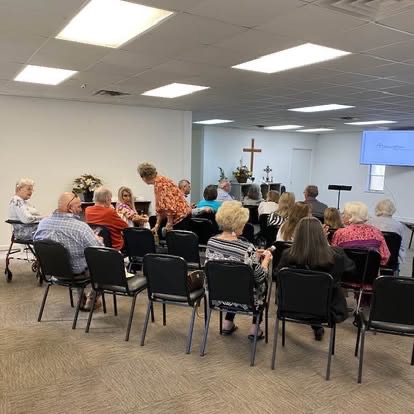
Yup! I preach in a storefront every week. Who would have thought after over 30 years in ministry that I’d end up in a storefront church? Well, apparently the Lord thought it because here I am.

Haughton Methodist Church (the church I began pastoring late last year) meets in a rented storefront. Well, actually the building was originally a church that outgrew the facility. It was converted to an office building and was used as such for the last couple of decades.

I must say the rented storefront is much better than the rented hotel room the congregation used for the better part of nine months. I gotta give props to the faithful in the congregation who were committed enough to set up and tear down that hotel room week in and week out. That’s a lot of work and a lot of commitment.

Of course, Haughton Methodist Church was meeting in the hotel room (and now the rented storefront) due to its disaffiliation from the United Methodist Church. Well, not really disaffiliation. They missed that boat for reasons I won’t go into, but suffice it to say, they walked away from their property…just threw the Louisiana Annual Conference the keys…and began the journey as nomads. I applaud the congregation’s faith and faithfulness. It’s one reason I’m blessed to serve them as pastor.

Preaching in a storefront has really had me thinking and praying about a strategy for the congregation moving forward. That part of being a pastor hasn’t left me. In my contemplation, research and prayer, I’ve discovered there are a few advantages to meeting in a rented storefront. I thought I’d share a few of those with you today.

Financial Flexibility

The first (and perhaps major) benefit of renting a storefront for church meetings is the financial flexibility it provides. Establishing a permanent church building requires significant upfront capital for purchase or construction, not to mention ongoing maintenance, utilities, and other operational costs.

I did a little investigating and discovered the congregation’s old facility is listed for sale by the Annual Conference for $445,000.00 (you can check it out here). That’s a lot of money to a small congregation like ours! If someone wanted to purchase it and gift it back to the congregation, now that’s a conversation we’d be open to!

For a small or growing church, this financial burden can be overwhelming and will divert resources from ministry programs, outreach, or other crucial areas. Renting a storefront, on the other hand, often provides a more affordable alternative. The monthly rental cost is predictable and easier to manage, allowing us to allocate our resources to other vital areas such as outreach efforts or mission work.

Additionally, renting avoids the long-term financial commitment and debt associated with owning property, offering us the flexibility to adjust as our needs evolve. Hey? We’ve got a one-year lease. That gives us time to discern God’s next steps for the congregation.

Visibility and Accessibility

Another benefit that a storefront location can offer is significantly more visibility and accessibility than a traditional church building, particularly if the church is situated in a busy commercial area like ours. There’s not a lot of foot traffic where we’re located, but we get great exposure to passing drivers, and our proximity to local businesses makes our storefront church a visible part of the community.

We’re located right next door to an oil change shop, which I find incredibly ironic, but that’s for another blog.

I’m praying this increased visibility can attract new visitors who might not have otherwise considered attending church, whether due to curiosity or the convenience of being located near their place of work, shopping, or living.

Community Engagement

A third advantage (should we choose to capitalize on it) to renting a storefront can be an intentional decision to engage with the surrounding community. Unlike churches housed in large, traditional buildings that may be tucked away in suburban areas, a storefront church is situated in the heart of the local community.

This proximity offers numerous opportunities for interaction with people who may not otherwise step foot inside a traditional church building. Church members can become familiar faces in the neighborhood, and the church itself can become known for its commitment to the well-being of the community.

I’ve already made several visits to the neighboring oil change facility to carry left over treats from our fellowship time. I hope to build an on-going relationship with those guys.

Additionally, I can see our storefront offering opportunities to host events, activities, and programs that reach a wide array of people. Whether it’s offering after-school programs, hosting community events, or providing social services like food banks or job training, a storefront church can effectively serve as a community hub.

Because of its location in a commercial area, a storefront church is more likely to attract people who are not actively seeking a church but may be drawn to the church’s services or outreach activities. This creates a sense of accessibility and relevance, positioning the church as an integral part of the community rather than as a separate entity.

Adaptability

Renting a storefront gives our congregations the ability to remain adaptable and flexible in our growth and development. As we grow, our needs will change, and our storefront offers us the flexibility to move to a larger or different location when necessary.

Unlike a permanent building, a storefront will allow us to scale up or down based on attendance, financial health, and ministry priorities. This adaptability is especially beneficial for us in what I’m calling “our formative years.” It will allow us to respond quickly to changing circumstances without being tied to a long-term commitment.

Furthermore, our storefront landlord has given us some flexibility in changing our layout as growth and needs dictate. Our storefront can be customized to suit the needs of the congregation and community. Unlike traditional church buildings, which often have fixed architectural features such as pews, stained glass windows, or large sanctuaries, storefront spaces are usually more neutral and open.

This gives us the freedom to design our space according to our unique vision and style. Whether it’s creating an inviting, contemporary worship space or setting up an area for fellowship and community gatherings, a storefront can be easily adapted to accommodate various church activities.

A Final Thought

As I’ve had time to pray and reflect on our situation at Haughton Methodist Church, I’ve discerned that being in a storefront is both practical and strategic. It’s a choice that can support our long-term growth and success (even more than getting our old property back).

Ultimately, the success of our congregation will not be defined by the building we meet in, but by the relationships we foster, the ministries we engage in, and the impact we have on our community.

So, if you’re in Bossier Parish, Caddo Parish or Webster Parish, and you’ve never considered the possibility of worshipping in a storefront, why don’t you join us at Haughton Methodist Church. We’d love to have you on this incredible journey!

Until next time, keep looking up…

New Places, New Spaces…

The Church of Jesus Christ is always on the move, and today the Haughton Global Methodist Church begins worship in its new home. It is a new place and a new space and I know the congregation is excited about worshipping for the first time in this new place.

The space is located at 966 Highway 80 in Haughton, LA. It was a church in one of its former lives, but it has been a physical therapy office in its most recent life. We will re-consecrate the space this morning at 10:30 a.m. for use as a place of worship, and I’d love to invite you to join us if you’re in the Haughton/Bossier City area.

I need to commend the congregation on its hard work over the past month in getting the space ready to occupy. Countless hours of service have gone into the process of converting the space back to its original purpose. Let me say, “Thank you” to all those servants who have been so diligent (and so generous) in doing what was necessary to accomplish the task. Great work!

Today will be my first opportunity to see the space after all the work is completed (will it ever really be completed?). I’m excited to see it and to lead worship for the first time in this new place. I’m excited to see all that the Lord has planned for the space and for the congregation.

I’m looking forward to getting to know the Haughton community in a deeper way. It’s going to be a challenge for me as a bi-vocational pastor, but I pray the Lord opens doors and provides opportunities for the congregation to grow and flourish in the community. I covet your prayers for the congregation, too.

Perhaps this new space in this new place will be an encouragement for new people to explore the Kingdom of God. Maybe there are those in the Haughton/East Bossier area who have been waiting for a new place and I pray the Holy Spirit will open their hearts to take a step of faith in hearing His call to salvation in their lives. Would you pray that prayer with me, too?

This new space and new place is located right next door to an oil change place. I find that only a little humorous and ironic. I spend six days a week at an oil change place and now I’ll be leading worship next door to an oil change place. Providential? Who know? I’m just trying to figure out ways we can be a good neighbor. I must confess that I’m also trying to figure out ways to use it evangelistically. We’ll pray the Lord opens doors for both to occur. Will you pray that prayer with us?

Anyway, my blogs may become less frequent now. Most of my Sunday morning time will be spent preparing for worship. They may even be spent finishing the message for that day. Of course, that’s happened before. Either way, the Lord’s got this. The Lord guided us into this, and I know that where the Lord guides, the Lord provides. I’m anxious to see how He does so in this case.

So, that’s all for this week’s blog. I don’t know when the next one might be written, but I’m anxious to see the story He is writing in the life of the Haughton Methodist Church.

Until next time, keep looking up…

Finding the Perfect Church…

It’s been FIVE years since I stepped away from full-time vocational ministry. For parts of those five years my wife and I were church “homeless.” That’s right! We didn’t have a church home. We became church shoppers…looking for the perfect church.

The sad thing? We haven’t found one. The sadder thing? I uttered a lot of the same excuses I heard other people utter in my 28+ years in vocational ministry.

Making Excuses

Perhaps you’ve heard some of these excuses. Perhaps you’ve made some of these excuses if you’ve ever been church “homeless.” Perhaps you’re saying some of these things right now if you’re currently church “homeless.” What are those excuses?

  • “This church is too small…”
  • “This church is too large…”
  • “There aren’t any children here…”
  • “There are too many children here…”
  • “The youth group is too small…”
  • “The youth group is too large…”
  • “The youth pastor is too (well, there are a lot of things we can say about youth pastors!)…”
  • “There’s no youth group…”
  • “I don’t like contemporary music…”
  • “I don’t like traditional music…”
  • “The music is too loud…”
  • “There are too many old people…”
  • “The pastor’s sermons aren’t good…”
  • “The pastor doesn’t know me…”
  • “I don’t like the pastor…”
  • “I’m not being fed…”

That is certainly not an exhaustive list of excuses I’ve heard through the years. You could add your own. The problem with church shopping is that it betrays an appropriate understanding of what the church is, and it feeds into our consumer mentality–the fact that we have become “consumers” of religion.

Going to church should not be like going shopping. I’m going to church to find what I need and I’ll keep shopping until I find it. Looking for a church that “I” like is one of the most selfish endeavors on the planet. Oh, and it is also one of the most un-biblical, too!

Reasons to “Church Shop”

Actually, there are very few reasons we should be church “homeless.”

One reason is because we’ve moved to a new community. A job or career change takes us to a new community and we’re forced to move away from our current church home.

Another reason is a change in our relationship status, i.e., we got married or divorced or remarried. The change in relationship affords a new opportunity to go to church with the other, or to begin again with the other.

Yet another reason to leave a church is because the church has abandoned orthodoxy. This is the primary reason that Vanessa and I were church homeless. I don’t intend to get into a discussion here about orthodoxy or my former church home. That can be for another time, but suffice it to say we believed (and still believe) that our former church home abandoned the “faith once delivered to all the saints.” We could be wrong (I often am!), but apparently a lot of other people agree with me.

I’ve gone a long way out of the way to say, “Stop looking for the perfect church. You’re not going to find it!” What’s the old saying? If you find the perfect church, don’t go! You’ll mess it up! Actually, that’s not true. You can’t mess up what’s already messed up. There is NO perfect church. Looking for one missed the point entirely.

The Uncomfortable Church

When we look for the perfect church, we usually mean the perfect church for us. We mean we want a church that meets my needs. We want to be with people who generally look like us, who generally act like us, who generally make the same amount of money as we do, who are in the current life stage we are in, etc. What we really mean is we want a church where we can feel comfortable.

Guess what? Church is not about our comfort. Guess what? We’re supposed to be uncomfortable in church! We’re supposed to be uncomfortable with our sin because we are in the presence of a holy God.

We’re supposed to be uncomfortable because there are people in church who aren’t like me. We’re supposed to be uncomfortable in church because the teaching challenges me to be transformed.

We’re supposed to be uncomfortable in church because I’m being asked to surrender myself…my wants…my likes…my dislikes…my desires…all of me…to Jesus and to one another.

Dang! All of that makes me uncomfortable. Welcome to the perfect church!

I kind of think that’s what the Apostle Paul had in mind when he wrote the Ephesian church in its infancy:

12 …remember that at that time you were separate from Christ, excluded from citizenship in Israel and foreigners to the covenants of the promise, without hope and without God in the world. 13 But now in Christ Jesus you who once were far away have been brought near by the blood of Christ. 14 For he himself is our peace, who has made the two groups one and has destroyed the barrier, the dividing wall of hostility, 15 by setting aside in his flesh the law with its commands and regulations. His purpose was to create in himself one new humanity out of the two, thus making peace, 16 and in one body to reconcile both of them to God through the cross, by which he put to death their hostility.  (Ephesians 2: 12 – 16 NIV)

Making Us One in Christ

One humanity out of the two. What two? Jews and Gentiles. Let’s face it. In the first century, Jews and Gentiles did not like each other very much (understatement!). Yet, they were called by Christ to be together…to worship together…to serve together…to love God together…and…wait for it…to love one another together. Talk about out of their comfort zone! That’s exactly where Christ is calling us to be and it is exactly what Christ is calling us to do.

Imagine how evangelistic it is for the world to see people who are normally at each other’s throat worshipping and serving together. The world sees it and they wonder, “How can that be?” It is through this imperfect church that the world (and we) see how powerful and amazing His grace is to save a bunch of people who really don’t like each other.

Don’t go looking for a church online. Yeah, I know. We look for the Google reviews when we’re looking for a church home. Why go to a four-star church when you can find a five-star one? Let me remind you that church health can’t be measured by Google reviews.

Yes, I know that when you’re shopping for a new church home that you’ve already watched the sermons online and you’ve perused the church website or Facebook page. It’s what we do.

Do you really want to grow in Christ? Then, how about go to the church that doesn’t have an online presence? Yeah, preacher, you’re really stretching it now!

Do you really want to grow in Christ? Then how about look for the church home that you’ll probably like the least…that is least like you. Perhaps that is where real growth will occur, and maybe…just maybe…that’s because it is as Jesus intended it.

Yeah, I don’t know, either. I’m really just processing my own church homelessness over the past five years. Perhaps my processing it will help others get off the couch and find their new church home and will give them pause while they do. Then again, maybe not.

Finding a new church home is not about “me.” It is about finding Jesus, loving Him and loving one another. THAT is the perfect church.

Until next time, keep looking up…
To Eat and Live Indoors…

I didn’t get paid. And, really…I’m okay with that fact. There have been a couple of instances recently when I was invited to minister in settings and I was offered no remuneration. Can you believe that? Yeah! Me either! Geesh! What are people thinking?

No Complaints

Please, if any of you are reading this and I’ve been in ministry with you recently, don’t wrack your brain wondering if you “paid” me for the ministry. It’s 100% okay. I’m not complaining. I’m not in ministry for the money…though I do like to eat and live indoors.

Why am I 100% okay with not getting paid for ministry? Because I’ve learned the freedom that comes from not being dependent on the “church” for a living. Oh! There is freedom in that independence.

It’s been five years since I stepped away from vocational ministry. We stepped away from ministry totally trusting the Lord to provide for our needs (and He has). Yes, I had a job lined up, but even that job meant we had to adjust our lifestyle if we were going to make it, and I figured I would pick up some extra dough on the side by “filling the pulpit” to cover some gaps in the budget.

For twenty-eight years the “church” provided a good living (a very good living the last few years, I might add). I’ll be honest. It was hard to walk away from that security. Great salary. Great benefits. Great retirement plan (both in this world and the next!). What’s not to like? And, hey? Didn’t Jesus say that a “worker is worthy of his wage” (Matthew 10:10)?

I’m not indicting the model of vocational ministry that developed through the centuries. It serves its purpose to the Church (the institution) and to the church (the local congregation). Nor, am I indicting those who continue to serve full-time in vocational ministry. That’s your calling. You have to walk in that calling to be obedient. Good for you!

Paul’s Ministry

I am, however, going to espouse the freedom and the virtue of bi-vocational ministry. When someone hears the word bi-vocational, it is generally taken to mean a person who serves a congregation but also maintains secular employment–generally because the congregation can’t afford a full-time pastor.

What I mean when I say bi-vocational is a person who maintains secular employment as a means to support his/her ministry. I believe that’s what the Apostle Paul meant when he wrote:

On the contrary, we speak as those approved by God to be entrusted with the gospel. We are not trying to please people but God, who tests our hearts. You know we never used flattery, nor did we put on a mask to cover up greed—God is our witness. We were not looking for praise from people, not from you or anyone else, even though as apostles of Christ we could have asserted our authority. Instead, we were like young children among you. Just as a nursing mother cares for her children, so we cared for you. Because we loved you so much, we were delighted to share with you not only the gospel of God but our lives as well. Surely you remember, brothers and sisters, our toil and hardship; we worked night and day in order not to be a burden to anyone while we preached the gospel of God to you (1 Thessalonians 2:4-9 NIV).

The Apostle Paul was a tent-maker and he plied his trade wherever he went in order to support the ministry to which he was called. Yes, he could have asserted his right to be compensated by those to whom he ministered, but he chose otherwise. He was a traveling evangelist, but he wasn’t expecting a love offering wherever he went.

Advantages of Bi-Vocational Ministry

As I reflect on Paul’s life and my own experience over the past five years, I want to point out three advantages of bi-vocational ministry.

Don’t Compromise the Gospel

First, there is the freedom of not compromising the message of the Gospel. Paul says that he is “not trying to please people, but God, who tests our hearts.” I’m not saying that pastors in full-time ministry compromise the Gospel. Please don’t hear that. I’m saying in bi-vocational ministry, the temptation to compromise the Gospel is not present because one is not dependent on the congregation to eat and live indoors.

Let me offer an example, if I may. When I served as a District Superintendent, it was a common task to meet with congregational leadership to discuss pastoral leadership. More than once (a lot more than once) I heard church leadership say, “the pastor works for us.”

Too many congregations see the pastor as an employee. As an employee, he/she is supposed to do what the leadership says. As an employee, the pastor is dependent on the congregation for a livelihood. As an employee, the pastor can be fired. With that in mind, there is the temptation to “give the people what they want” so that I can maintain the security of my position.

I’m sorry, but no! The pastor is not an employee. Congregations need to hear that. Pastor, you are called to proclaim the Gospel of Jesus Christ and the Truth of God’s Word. That means we have to tell people what they don’t want to hear sometimes. We need the freedom to do so to be faithful to the call. Bi-vocational ministry provides the means to that end.

Role-Model

Second, bi-vocational ministry provides the opportunity for the minister to be a role-model for others on a daily basis. I love how Paul says that he did not “put on a mask to cover up…” It becomes really easy for a pastor to put on the pastor mask every day to go out into the secular world. It’s like putting on a clergy collar for the world to see (nothing wrong with a clergy collar), but It can too easily become a role we play instead a definition of who we are. Believe me, this one hits very close to home!

Being in the marketplace in secular employment every day challenges the believer (and especially the pastor) to model the faith in ever more faithful ways. You can’t hide behind the clergy collar when you’re around 8 co-workers who know your short-comings and see them five or six days a week. As Paul told the Thessalonians, “we were delighted with you not only the gospel of God but our lives as well.”

Evangelism in Truest Sense

Third, bi-vocational ministry puts the minister in the secular world where secular people live. If we want to reach the world with the Gospel of Jesus Christ, we have to be where the people are. That is evangelism in its truest sense.

As a full-time vocational pastor, I spent more time with church people than I did with secular people. Between worship services, staff meetings, board meetings and bible studies, it left little time for engaging with un-churched and de-churched people. There was no time to share the Gospel with the lost (unless one considers folks in the church lost) because most of one’s time is already spoken for (you’re an employee, remember?).

Additionally, because a bi-vocational minister is in the secular world on a daily basis, living where secular people live, it becomes easier to interpret secular thinking and to stay abreast of shifting cultural values and mores. One gets the opportunity to understand why people think like they do and believe what they believe. It helps the minister make the Gospel relevant when the minister understands the mindset of the society and secular people.

A Final Thought

There are probably more advantages to being bi-vocational as a minister of the Gospel. These are just three I’ve thought about this morning reflecting on Paul and my own experience.

I never really saw myself as a bi-vocational minister in this regard. I’ve considered being bi-vocational in the traditional sense. Lord knows there is ample opportunity. I’ve said in recent years that I don’t have time for that. It’s not fair to the congregation because I couldn’t devote enough time to “grow” a church. After all, there’s no such thing as part-time ministry, only part-time pay.

But, I am bi-vocational in that I can work to support the work of the ministry to which I’m called. Right now, I’m called to be in the oil change business and preach in local congregations when asked. That’s what I’ll do for now. You can pay me, or not. I don’t care. If you do, I’ll be grateful and accept your blessing. If you don’t, I’ll thank God for His provision and that I had the chance to share the Gospel so as not “to be a burden to anyone.” That, and I like to eat and live indoors…

Perhaps the Lord is prompting you, Pastor, to reflect on His calling in your life. Is it time for you to become bi-vocational, too?

Until next time, keep looking up…

The Coming Storm…

I heard some bad news this week that makes me think it really is only the first winds of the storm that is blowing on the horizon for the institutional church, especially as it presents itself in the local congregation.

What was the news? I heard that this past Sunday was a pastor’s last Sunday at one local congregation because the congregation could no longer pay the pastor’s salary. I hated to hear the news, especially for the pastor who was faithful to lead the congregation through the disaffiliation process of the United Methodist Church.

I don’t know all the details of the transition. I know it was, by all United Methodist standards, a successful church plant a decade ago. The departing pastor was not the founding pastor (that might have a little to do with it), but the fact that the local congregation could no longer pay the salary points to a financial reality that many congregations will be facing in the future.

The news got me to thinking about some of the challenges that the institutional church will face in the future…there really is a storm on the horizon.

Challenges on the Horizon

Inflation

Thanks to Covid and bad national economic policy, everything costs more these days. That means people have less money to give to the church, but it also means that utilities, sound equipment, cleaning supplies, office supplies…literally everything costs more.

When people are unable to give to the church because their personal expenses have gone up, the local congregation can’t keep up with its own expenses. Programs have to be cut, personnel costs have to be cut. The model for the local congregation is unsustainable.

Real Estate

What inflation has done to everything else, it’s also done to real estate. I suppose this challenge could have been included in inflation above, but I think it stands on its own. Real estate prices have risen disproportionately to almost everything else, which is good for homeowners, but not really good for anyone else.

Real estate becomes a problem for the institutional church when it comes to the prospect of church planting. How can a “traditional church model” of church plant afford real estate in today’s market? Or, how can a “growing” congregation afford to either build or relocate in today’s real estate environment?

Not to mention building restrictions that many municipalities are placing on property use. Municipalities lose millions of dollars of revenue when property is used for a church. Those municipalities aren’t liking that much anymore and planning and zoning commissions are limiting the number of churches in some areas…because the municipalities need more revenue, too.

Salaries

Salaries will definitely be a challenge for local congregations in the future. Well, the future is now! Thus, the example given above. The local congregation could no longer afford the pastor’s salary. So it will continue to be as inflation takes its toll on the economy.

Even large congregations will find themselves scaling back on personnel in order to sustain the cost of keeping the doors open. Let’s face it, there are a lot of pastors and church staff who weren’t making a living wage anyway. It’s only going to get worse.

Congregations will begin (have begun) the transition to bi-vocational ministers, and pastors will have to transition to bi-vocational because, I know for a fact, that pastors like to eat and live indoors. I’m not saying there is anything wrong with that transition. It might even be for the best—it puts the pastor out into the community with an opportunity to meet un-churched, de-churched and un-saved people instead of spending all of their time “tending the sheep” inside the church walls, or sitting eight hours a day in the office because the Church Council demands their “availability” to the congregation.

Honestly, though, when you start cutting church staff, programs suffer and today’s institutional church model is built around attractional programming.

Clergy Shortage

Okay, so even if a congregation can afford to pay a full-time pastor, where are they going to find said pastor? (For more on the clergy shortage, click here and here).

There is no longer a functional ministry pipeline from which to choose trained professional clergy.  Number one, people aren’t going to seminary in the numbers they were in the past. Seriously, they finally figured out that spending all that money for a seminary education wasn’t paying off.

Many people who feel called to ministry have figured out they can fulfill their calling in the non-profit world and get paid more for it. I know it’s not all about the money in ministry, but pastor’s still have to provide for their families.

Additionally, traditional denominations have provided a pipeline and pastors would “rise up through the ranks” to fill pastoral roles. Well, there are no ranks anymore in many denominations. Many denominations find themselves in “warm body syndrome” where they just need someone/anyone to fill a pastoral position. Yeah, the Holy Spirit is really in that process.

Another issue affecting the clergy shortage is the fact that the majority of clergy are near or past retirement age. I know! Retirement is not a biblical concept, but most retired clergy don’t have the energy and don’t really want to invest the time it takes to “grow” a church. Yeah, I’m probably just speaking for myself, but I’ve also heard it from other retired clergy who have been asked about serving full-time or even planting a church.

The clergy shortage makes the traditional institutional church model unsustainable.

Shrinking Attendance

Rev. Max Edwards, General Superintendent of the Evangelical Methodist Church, posted a link to an article in his weekly newsletter that is really eye-opening. Church attendance has been falling for generations and according to the article, shrinking attendance has costs far beyond the ability of a congregation to stay open.

Also, the article states that since the 1990’s, 40 million people have stopped going to church—that’s one in eight Americans, and in 2021, membership in houses of worship fell below the majority for the first time.

Yeah, I know! Covid, right? Covid only accelerated the decline. Most churches haven’t recovered their pre-Covid attendance. Most churches never will. Shrinking attendance makes the traditional model of the institutional unsustainable.

Disciple-Making Process

Okay, as one who served as a full-time pastor, I assume my share of responsibility for this one, but the local congregation has not been very good at making disciples. Most congregations don’t have an intentional disciple-making process.

For generations, it has been about programming for the local church and for the passing on of information as if we can just get enough information we can experience transformation.

Yeah, well it doesn’t work that way. Information does not equal transformation. Only the Holy Spirit can transform a person and I suspect we were so busy planning programming and designing ways to keep people’s attention that we forgot to leave room for the Holy Spirit.

Heck, we didn’t even disciple our children and that’s the very place we should excel most. Young people have left the traditional church in droves and they’re not coming back!

Unless and until a local congregation implements an intentional disciple-making process—a process whereby a person grows up in faith and holiness to engage their own gifts for ministry in service to the Kingdom—the local church/traditional brick-and-mortar model is going to be unsustainable.

The House Church

I think there is a legitimate answer for the challenges facing the local church and the institutional church. I don’t want to talk about a bunch of problems without offering some solutions.

I am evermore convinced that the answer to the “church” problem is to go back to the future—The House Church.

I don’t intend to lay out the Biblical justification for house churches in this blog (for that you can click here, here, here, here and here). But, let me offer some reasons that I believe the house church is the harbor in the storm facing the institutional church.

Here are some reasons I believe this:

No Professionals Needed

You don’t need a “professional” pastor in a house church. All that is required is for a person to exercise his/her gifts for ministry.

There is no need for a salary because it is not a “job” or means of support for anyone who is part of a house church. The ministry pipeline already exists in every house church. The members of the house church are the ministers—each one engaging in the use of their own giftedness supporting the body of Christ.

No need for M.Div’s or theological schools and no student loans to have to pay back. The primary expense of any local congregation is cut in half when no “professional” pastor is needed.

Real Estate

In a house church, real estate is not an issue. You already own it (unless you rent, of course). What’s more, the government can’t shut you down in the next pandemic. The cost of maintaining a place of worship no longer exists because you’re going to live in your house anyway.

It’s More Evangelistic

Trust me, it’s easier to invite someone to your house for a Bible study than it is to invite them to a church building for worship.

With a house church, you can meet in the local coffee shop (a house church doesn’t necessarily limit one to a literal house) for prayer. Someone will see you praying and it will open the door for a conversation with someone present who desires/needs prayer.

Honestly, many existing local congregations, including many who disaffiliated from the UMC, are really Sunday school classes that own property. What if all those “Sunday school classes” transitioned to house churches and sold their property and gave all the money to missions—of course, that would have to mean the local congregation had a focus and passion for missions, but that’s for another blog.

The church becomes infinitely more accessible under a house church model in today’s culture—more accessible than a traditional church ever will be again.

Financially Sustainable

A house church doesn’t need gazillions of dollars to sustain itself. There are no salaries, no church staff, no buildings to maintain, no church vans or buses to pay for. The only need for money comes in the resourcing, and there are abundant resources for house churches whose costs can easily be shared by those attending.

Quickly Scalable

Because house churches are not dependent on large investments of money, and because they are only limited by the real estate that its members already own, it becomes simple to multiply and replicate.

So, your house can only accommodate 20 people? Cool! Start another house church!

Intergenerational

The church was/is meant to be intergenerational. The house church is specifically meant to be so. Yes, everyone stays together. Everyone prays together. Everyone sings together. Everyone studies together.

This is the absolute best example of disciple making for your children. We pray with our children and for our children…and they pray for and with us. That’s the way it is supposed to be.

We were never supposed to send our children to children’s church or our youth to youth services. Worship is meant to be intergenerational.

Tell me, really? Why does the “traditional” church model have “youth ministry” at 5 p.m. on Sunday, yet they don’t have any ministries at the same time for adults…or children…or anyone else?

And, really? We want the church to do for our children and youth what the Bible says parents are supposed to do? The home is now, and has always been, the greatest incubator of faith.

Like Hurricane Beryl in the Gulf of Mexico this past week, all the signs pointed to the storm that was coming. The signs are on the horizon for the local church. How will local congregations (and the institutional church) prepare for the storm ahead?

An Invitation

May I invite you to pray with me? Pray for the many local congregations that are struggling with their future. They have looked toward the horizon and see the storm brewing but are unsure how to prepare. Pray for the Holy Spirit to lead them into His future for them…and pray that the congregation will be open to the Holy Spirit.

Also, pray with me about The House Church Movement. The House Church Movement was a vision the Lord gave me back in 2020, but it has been on the back burner (I rather called it “paused”) for a couple of years. I am praying to discern if now is the time to re-launch the Movement.

I would love to hear your thoughts. Please comment below, and if you live in the northwest Louisiana area and would be interested in being a part of a re-launch, I’d love to hear that, too. All it takes is two:

20 “For where two or three gather in my name, there am I with them.” (Matthew 18: 20 NIV)

Until next time, keep looking up…

Don’t Be Insane…

You know the definition of insanity, right? Insanity is doing the same things over and over and expecting a different result. The definition has been attributed to Albert Einstein. No one really knows if Einstein said it, but regardless, it is still true.

I bring up insanity only as a follow-up to my previous blog (here) dealing with the pastoral supply shortage in the church world (particularly among Methodists). Many congregations are searching for pastors and they are doing so with a mentality that is either dying or already dead.

Many congregations want a pastor like the pastors from the “good old days”–one who visits the sick, comforts the grieving, preaches good sermons, leads great bible studies, attends all the church functions, opens and closes the church on Sunday, etc. Many congregations are looking for a pastor “Who can meet our needs.” They are looking for Pastor Fetch.

If you’re a congregation that is searching for a leader, and you’re looking for a Pastor Fetch, you’re being insane. The reason for your insanity is because you’re trying to do ministry in a world that no longer exists. The world (the culture) has changed and your congregation is not changing with it. My counsel to you is “Don’t be insane!”

The 21st century and the dawn of the Information Age (call it the rise of the internet), along with the introduction of social media, has changed the landscape for EVERYTHING in our world. The church, as per usual, is one of the last institutions to adapt to that changing landscape (although the Covid pandemic did speed up the process for some). The tectonic shifts in culture have rendered the “old” models of ministry (and ministers) dead, or at the very least, on life support.

The “Old” Models

What are the “old” models of ministry I’m referencing? First, there is what I will call the “priest” model. This model has the leader who has been “trained” in all the rites of the faith tradition, and has the credentials to prove it. This person “stands apart” from the lay persons in the congregation and is the go-between for God and the people.

Another model of “old” ministry is that of “chaplain.” Yes, this model has the congregational leader as a “shepherd” of souls. You need a “pastor” with counseling skills and psychological insight who can visit the sick and care for the needy.

Another “old” model of ministry is that of “preacher-teacher.” The leader has to be trained in Greek and Hebrew in order to interpret the ancient texts. This leader is the resident scholar and theologian, and the sermon is the centerpiece of this model of ministry. An entire industry of theological education grew up to support this model of ministry, and the reality is that industry depends on the survival of this model for its continuation.

A more recent “old” model of ministry is that of “CEO-Manager.” This model has a leader who manages budgets, recruits and manages people for tasks, develops programs for ministry, gains new “customers” (converts) and casts vision for the congregation. This model is pretty much a singular reason we have so many “megachurches” these days.

None of these models has been ineffective. None of these models are necessarily un-biblical (with the exception of the CEO-Manager model). Unfortunately, each of these models have been rolled into the job description for one person, thus the leader who became “Pastor Fetch.”

A “Pre-Christian” World

The parallels between the first and twenty-first centuries is striking. I guess we might say is “there is nothing new under the sun” (Ecclesiastes 1:9). The parallels include globalism, religious pluralism along with a new focus on “spirituality” (people are “spiritual but not religious), and the collapse of institutions (including religious institution) are but a few of the most obvious ones.

The re-emergence of a pre-Christian world (culture) necessitates a new model of leadership in the church. It is called the “Apostolic” leadership model, and it harkens back to the days of the first apostles. I believe God is calling congregations and Christian leaders to re-learn and re-engage in this model of ministry to be effective in this new “old” world.

The “Apostolic” Model of Leadership

So, what does it mean to engage in this new “Apostolic” leadership model? First, this model is “missional.” The congregation (and its leaders) must be on mission–the Great Commission.

19 Therefore go and make disciples of all nations, baptizing them in the name of the Father and of the Son and of the Holy Spirit, 20 and teaching them to obey everything I have commanded you. And surely I am with you always, to the very end of the age” (Matthew 28: 19-20 NIV).

Evangelism and sharing the Gospel must be at the heart of every congregation. We must be prepared to tell the story of Jesus to a world that increasingly has not heard the Word, and we must do it with creativity–taking the church to the street, or the amusement park, or the ball park, or the concert venue–well, you get the point. One congregation actually leases an amusement park once a year and invites the community free of charge to come as a means of promoting the Gospel.

Next, the new “old” model is “kingdom focused.” To be kingdom focused means that we believe Jesus’ kingdom does not fit the model of this world, and that it actually extends past the walls of church building programming. This does not mean we are pursuing political power, but are looking for collegial relationships that are community based and community focused. It is not about “how do we get people to come to our church,” but more about, “how do we take church to the people.”

Thirdly, the new “old” model is “team-oriented.” Pastor Fetch cannot and will not do it all in the apostolic model. Jesus had a team of twelve (probably more) that he taught and commissioned to begin the work of ministry. The Apostle Paul had Barnabas, Silas, Timothy and Luke as helpers for the work of ministry. A team orientation to ministry assists in bringing ALL the necessary skills to the work, and it promotes accountability among leadership in a much more spiritual way.

As part of this team orientation, ministry leaders will be focused on developing disciples who exhibit and practice the “five-fold ministry gifts” found in Ephesians 4.

11 So Christ himself gave the apostles, the prophets, the evangelists, the pastors and teachers, 12 to equip his people for works of service, so that the body of Christ may be built up13 until we all reach unity in the faith and in the knowledge of the Son of God and become mature,attaining to the whole measure of the fullness of Christ (Ephesians 4: 11-13 NIV).

Ministry leadership is about developing others to fulfill the calling of the mission. Congregations seeking pastoral leadership need to be looking for persons who can lead them in learning to the do the ministry instead of leaders who do the ministry for them.

The Leader a Congregation is Looking For

In this cultural age, every congregation should be looking for a pastor who is evangelistic, meaning their primary desire should be to see others come to Jesus. The primary desire of your new pastor should not be to meet your spiritual needs, but rather should be concerned with inviting others into a saving relationship with Jesus Christ.

Another characteristic that should be high on a congregation’s list of qualifications is a person who is interested in community engagement, a person who has demonstrated the ability to engage in building relationships across congregations, businesses and other non-profits in the communities they’ve served.

A final characteristic I would be looking for if I were looking for a pastor is a team-building mentality. Is the person capable and has he/she demonstrated the capacity to surround him/herself with other leaders and allow them to share the work of ministry. Has this person delegated responsibility to others, and has this person taught and trained others how to use their giftedness for ministry?

Those are not necessarily qualities that have been high on your list for previous pastors, but if a congregation goes looking for a pastor like their previous pastors, then they’ll likely get exactly what they’ve gotten in past, and that will only lead to a continuing decline in the congregation. But, I say, “Hey, if you want what you’ve always had, then by all means, go for it. You’ll get what you’ve always gotten, and that’s just insane.”

But, then again, what do I know? I’ve been out of vocational ministry for five years. I don’t know much of anything. I’ve just been observing from the sidelines. One can learn a lot, though, when observing from the sidelines.

Until next time, keep looking up…

It’s “Harvest Time”…

My house is orange! Orange blankets. Orange pictures. Orange pumpkins. Orange candy. Orange candles. Orange pillows. If it comes in orange and it’s made for the home, then Vanessa has one and it is currently decorating our home. That’s not a complaint, mind you. It is simply a statement of reality…a statement of reality that reminds me that it is “harvest time,” and I can’t help but recall the passage of scripture from Matthew 9:

37 He said to his disciples, “The harvest is great, but the workers are few. 38 So pray to the Lord who is in charge of the harvest; ask him to send more workers into his fields.”

Matthew 9: 37 – 38 (NLT)

I think the harvest is a great as it has ever been…especially in the United States of America. I was reading a Pew Research document that says if current trends continue, Christians will be a minority by 2070, with “nones” or “non-affiliated” persons becoming the majority. I think it is a damning testimony on the church, but I also believe it is a great challenge for the Church to reclaim one of its primary functions–evangelism.

Evangelism! Big scary word. Real simple meaning. Evangelism is the spreading of the Christian gospel by preaching and personal witness. Whew! I just let you off the hook because you’re not a “preacher,” right? Wrong! We’re all called to proclaim the gospel of Jesus Christ.

It is interesting to note that immediately after Jesus said what he said in Matthew 9, he commissioned his disciples in Matthew 10 to get busy in the harvest and gave them a long list of instructions (read the passage here)–announce the Kingdom of Heaven, heal the sick, raise the dead, among many others.

Jesus commissioned the disciples with a message to preach. The message Jesus gave the disciples was a simple one: preach the Kingdom of Heaven. We, too, are commissioned to preach the Kingdom of Heaven.

Instruction about ministry is especially important today because of the misconceptions that exist about ministry. The greatest misconception is that the ministry is something that the preacher does, that ministry is for the ordained personnel of the church. When we use the word “minister” we usually mean the professional. While it is true that God has called some to the ministry as a profession, He has called all of us to be ministers. So, yes, as a disciple, we’re all called to preach! Didn’t know that, did you?

What exactly do we preach? What is the Kingdom of Heaven?

If you had an “elevator speech” could you tell someone what the Kingdom of Heaven is? You know what an elevator speech is? You’re in an elevator for two minutes with another person. What can you say in two minutes that might change a person’s life? Do you even have one? Defining the Kingdom of Heaven in a two-minute elevator speech would be nearly impossible. Yet, Jesus had one. It comes from the prophet Isaiah, and he used it when he began his earthly ministry. We find it recorded in Luke’s Gospel: 

16 He went to Nazareth, where he had been brought up, and on the Sabbath day he went into the synagogue, as was his custom. He stood up to read, 17 and the scroll of the prophet Isaiah was handed to him. Unrolling it, he found the place where it is written:

18 “The Spirit of the Lord is on me,
    because he has anointed me
    to proclaim good news to the poor.
He has sent me to proclaim freedom for the prisoners
    and recovery of sight for the blind,
to set the oppressed free,
19     to proclaim the year of the Lord’s favor.”[
f]

20 Then he rolled up the scroll, gave it back to the attendant and sat down. The eyes of everyone in the synagogue were fastened on him.21 He began by saying to them, “Today this scripture is fulfilled in your hearing.”     

Luke 4: 16 – 20 (NIV)

Talk about good, short sermons, Jesus proclaimed to his hearers (good Jewish folks, remember) that this idea of God’s reign was now among them. The simple message is that God’s salvation has come. Here’s the good news we proclaim: God has come in Jesus Christ to redeem that which sin has destroyed. That’s the message Christ committed to his disciples. It’s the message he’s committed to us. And so, WE proclaim.

I hear you saying, “But, I’m no preacher, Preacher!” Ah! But, you are! As Jesus commissioned the disciples he says that proclamation was two-fold—words and deeds. We’re all to proclaim the Kingdom, and it is as imperative to use words as it is to take action. When we act in love and charity without proclamation of the Gospel we leave the gospel half told. When we proclaim the Gospel without acts of mercy, we leave the gospel half told. That’s the reason we all need an “elevator speech,” but that speech need be nothing more than to share what Christ has done for each of us.

That raises another question: How has your encounter with Christ changed your life? That is the beginning of your elevator speech. Proclamation means sharing in word what Christ has done to save us. It also means sharing in deed. There’s no transformation in one without the other. Words are imperative. Action is imperative. What we do, we do in Jesus’ name. What we do, we do with a desire to see something different in our lives and in the lives of those we are in relationship with.

We can say, “I love you,” but what do we do to show a person that love? Words are great. Words are necessary, but the acts that back up the love solidify the proposition. A person needs to hear they are loved. Dr. Les Parrot says a relationship cannot survive without verbal expressions of love. A relationship also cannot survive without visible signs of that love.

Dr. Gary Chapman wrote a book in 1995 entitled The Five Love Languages. His premise is that every one of us has a primary and a secondary love language…ways we feel the emotion of love. They are: 1) physical touch, 2) words of affirmation, 3) gift giving, 4) acts of service and 5) quality time.

I have perceived, after nearly 42 years of marriage, that my wife has three love languages: quality time, acts of service and gift giving. Which one is primary depends on what time of the year it is! I can say “I love you,” all day long, but she doesn’t feel loved until I show her in one of those three ways. It’s the same for me. My love languages are physical touch and words of affirmation. She can say “I love you,” but to feel loved takes physical touch and words of affirmation. My point is we need both words and action. 

So, it is in the world when we show and share the love of Christ. We can say, “God loves you and I love you,” and it’s true, but until we put feet to that faith, lives lack transformation. We can say to a hungry person, “God loves you,” but unless we give the hungry man a piece of bread, the words are hollow.

That’s exactly what the Apostle John, who was sitting at the feet of Jesus on the day he sent the apostles out, said in 1 John 3: 17 – 18: “17 If anyone has material possessions and sees a brother or sister in need but has no pity on them, how can the love of God be in that person? 18 Dear children, let us not love with words or speech but with actions and in truth.

John Wesley believed that, too. Wesley went into the coal mines and industrial towns of England and “preached” the good news…was often pelted with fruit…was jeered and derided, by those both inside and outside the church. But, Wesley also took actions that sought to change the lives of the poor and destitute of England. Wesley saw three stages of giving: charity which relieves immediate pain (give the man a fish); philanthropy which seeks to cure the diseases of society (teach the man to fish); and social justice, which recognizes that all people have rights to the good things of God’s earth without being made objects of either charity or philanthropy (give the man access to a pond).

That only leaves the “how,” doesn’t it? That has a simple answer, too—through his power and authority. Suffice it to say that as Jesus told his disciples to “take nothing for the journey,” that it was a call to trust fully in his ability to provide for their needs. Jesus was saying, “All you need is me! I’ll be with you.” All we need to fulfill the mission is faith in Jesus. If we depend on our own strength, we’ll fail. Heck, most of us won’t even try. When we “go” into the world with trust in Christ, we’ll discover doors open we never saw before. We’ll see the Kingdom come on earth as it is in heaven…and that’s the mission, right? Don’t we believe that it’s possible?

It is “harvest time!” I am grateful to my wife for the reminder.

Until next time, keep looking up…