Reflections, Course-Corrections and Deep Gratitude…

It is early Sunday morning. I love the early morning hours. They are the best time for me to pray, reflect, read and give thanks. Sometimes I write. Sometimes I don’t. Trust me. Coffee is better at 4:00 a.m., than at 8:00 a.m.

This morning is different than most mornings. It is different, first, because I’m breathing different air than usual. Vanessa and I were able to slip away to Hot Springs, AR for a little R & R over the holiday weekend.

I’m drinking coffee in a rented house. I tell you, this Vrbo thing is nice. You can actually rent someone’s home when you’re on vacation! As nice as it is, I’m not sure I could rent my home to perfect strangers. Seriously, someone you don’t know poking around in your personal space? A bit frightening to me, but here I am doing it in someone else’s home. Go figure?

As I reflect this Sunday morning, I am reflecting again on how fleeting life is. Even these moments of reflection seem to be fleeting, too.

It is different, secondly, because I am holding a tension between sorrow and joy this morning. Not that there isn’t always some sorrow and some joy resident in our lives, but this morning the contrast is particularly striking.

The Paradox of Life and Death

The news is filled with reports from the hill country of Texas and the flash flooding from the Guadalupe River. The sudden loss of life. The tragedy of families searching for loved ones. The tales of heroism. The heart-break to hear of little girls missing in the midst of it all. My heart is broken for those little girls and their families, and also for the Camp Mystic staff who was responsible for their safety. These past two mornings have beef filled with prayer for all of them. Those prayers continue this morning.

In the midst of the deep sorrow, I am also experiencing deep joy at having a few hours to connect (re-connect) with our daughters. Kelsey and her husband, Matt, spent a couple of nights with us here in Hot Springs, and Brittney and our grandson, Lincoln spent yesterday and last night with us. They are our little girls, and I am grateful (eternally so) that we’ve not experienced the horror of losing one of them. While my heart sinks at what I sense those families in Texas are experiencing, I give thanks to the good Lord for our children and the blessings He has poured out on our family.

The devil wants to make me feel guilty for being so grateful, but I refuse to succumb to his tactics. We hold life and death in tension constantly, and this morning is no different. As the Book of Common Prayer (and the Methodist funeral liturgy) reminds us:

In the midst of life, we are in death; From whom can we seek our help?

The answer, of course, is that we find our help in the name of the Lord. As challenging as it sometimes is to do, I hold the tension between life and death by grace and with gratitude, trusting that the Lord will give us strength to face whatever life brings our way.

Missing Annual Conference

I’m also reflecting this morning on Annual Conference. Yeah, I know right? But I must be missing Annual Conference. I’ve had two dreams this week that I was Annual Conference. It’s probably because my Facebook newsfeed has been filled with former colleagues who were attending Annual Conference, and who have been sharing their “new appointments” on their Facebook pages. That reality has brought both good and bad memories. Again, with the paradox (irony?) that is life.

I must say that I haven’t missed Annual Conference very much since I surrendered my credentials in the United Methodist Church. I’ll admit that first June in 2020 was different, but it would have been different anyway because of a little thing called Covid. Beginning in 2021, though, I connected with the Evangelical Methodist Church, and have attended their iteration of Annual Conference since then…until this year.

Due to circumstances beyond my control (that whole life and death thing again), I was unable to attend this year’s “Journey” session. I missed Annual Conference, literally. I suppose, through my subconscious, I’m missing it figuratively, too.

What do I miss? I miss the collegiality. I miss the friendships. I miss the fellowship. I miss the laughter over meals shared. I miss the worship. I miss the singing. I miss the work of Annual Conference. I miss the slipping away to the book store (or to the mall, or the coffee shop, or the golf course, or wherever) when there was a boring report session. Yes, there is much I miss about Annual Conference. The quiet mornings of this weekend have been moments of reflection on that loss.

The quiet mornings of this weekend have also brought me joy as I’ve reflected on the goodness of God since I left the United Methodist Church in 2019. It was a pain-staking decision to surrender my credentials that year, but let’s just say there are many actions the denomination has taken since that time that have affirmed our decision.

There were other options open to me in 2019, one of which was the path of “retirement.” Honestly, if I’m asked by someone now about my situation, and I don’t want to get involved in a whole conversation, I will simply say, “I retired.” It’s easier than having to go through a long explanation about “surrendering orders,” and all that.

Choosing to Quit

Yup! I quit! Call me a quitter if you want, but the reality is I didn’t quit ministry. I simply quit the United Methodist Church. (If we’re being honest, the UMC left me long before I left it.) I had no idea if it was the right decision then, but time has proven that it was a course-correction in my faith journey, and for that course-correction, I give thanks.

Had I chosen to “retire” in the UMC, I would now be limited by the same Annual Conference (that I loved so dearly) as to where I could preach the Gospel, or even attend as a worshipper. If a family member passed away, and that person’s funeral was in a congregation that disaffiliated from the UMC, I couldn’t (with integrity) participate in their funeral without fear of punishment (financially held hostage would be a better characterization). I’m not always sure what Jesus would do, but in that case, I’m pretty sure.

Yeah, I know…sour grapes and all that. I shouldn’t be chewing gum that I’ve chewed before, but the reflections of this weekend have been a reminder of the tensions in life. I’ve been both filled with sorrow and filled with joy…filled with grief and filled with anticipation…filled with heartache and filled with gratitude. In the midst of it all, there is grace–God’s grace. It is only by His grace that the tension is bearable.

So, I’m just going to hold on to Him. Won’t you join me?

Until next time, keep looking up…

Preaching in the Storefront, Part 2: Five Drawbacks to Storefront Church…

I wrote last week concerning the advantages of preaching in a storefront church (read it here). I figured I should also share some of the limitations that come with having a storefront church. These limitations affect both our congregation and the community.

Space Limitations

Our storefront church faces significant constraints due to limited physical space. Unlike traditional church buildings, which are purpose-built to accommodate a large congregation, classrooms, offices, and multipurpose spaces, our space (though originally a church) was fitted for commercial use.

Our space lacks the architectural features needed for worship, such as high ceilings, sanctuaries, and designated areas for fellowship. We’re going to struggle to figure out how to hold events in our space, or to expand to Sunday school or small group ministry. And, potluck…well, we’ll just have to see about that.

Additionally, our storefront has a relatively small seating capacity. Yes, there is a wall we can take out, but even then, limited space can lead to overcrowding, discomfort, and an inability to host special events, such as weddings, funerals, or community outreach programs.

One other thing to note, the lack of auxiliary spaces like nurseries, kitchens, and meeting rooms may hinder the church’s ability to offer vital services, such as childcare, Bible studies, and community meals.

Perception and Identity

The perception of a church operating in a storefront can also pose challenges. Traditional church buildings convey a sense of permanence, sanctity, and history, which can attract members and foster community respect.

In contrast, a storefront church can struggle to establish the same sense of legitimacy and stability. Passersby may view it as a temporary or informal operation rather than a dedicated place of worship.

This perception issue can extend to potential members, who might associate the storefront location with financial instability or a lack of resources. For some, the absence of traditional symbols such as steeples, stained glass windows, and pews may detract from the spiritual atmosphere they expect in a church setting. Over time, these perceptions can impact the church’s ability to grow and sustain itself.

Acoustics and Ambiance

Storefronts are not designed with worship services in mind, and this often leads to challenges with acoustics and ambiance. Traditional church buildings are constructed to enhance sound quality, ensuring that sermons, music, and prayers resonate effectively within the space. Storefronts, on the other hand, often have flat ceilings, hard floors, and minimal soundproofing, which can result in poor acoustics and echoing.

Luckily, the acoustics are not very bad in our storefront. I preach without a microphone every Sunday (not a hard thing to do when our average attendance is 30, but if we grow, I’ll probably have to rethink it). More people absorb more sound. Without a microphone, I might become muffled. Heck, they might think I’m muffled now, but they haven’t said so if that’s the case.

The lack of ambiance in a storefront can also hinder the spiritual experience. Traditional church buildings often feature architectural elements like vaulted ceilings, intricate woodwork, and natural lighting, all of which contribute to a sense of reverence and awe. I’ll confess that our team has done a fantastic job of creating a worshipful ambiance in our space, but many storefronts can feel sterile or utilitarian, which can make it difficult for congregants to feel spiritually connected or inspired.

Zoning Issues

Operating a church in a storefront can also lead to zoning and legal challenges. Many municipalities have specific zoning regulations that restrict or limit the use of commercial spaces for religious purposes. I haven’t found that to be the case with Bossier Parish, but if you’re thinking about a storefront church in another community, it’s best to check zoning early in the planning process.

Churches may be required to apply for special permits or variances, which can be time-consuming and costly. Additionally, these regulations often limit the types of activities that can take place within the space, further constraining the church’s ability to serve its congregation and community.

Parking is another common issue associated with storefront churches, and it certainly it with ours. We’ve got four spaces in front of the church and have to utilize a parking lot for a strip center next door. Spots fill up fast when we have a large (40 people) crowd for church. Any growth we experience will ultimately be impacted by limited parking.

Financial Limitations

Storefront churches are a cost-effective alternative to traditional buildings, as I mentioned in my previous blog. That notwithstanding, they can also present significant financial challenges in the long term.

Leasing or purchasing a storefront space is initially more affordable, but the costs associated with retrofitting the space for worship can be substantial. Churches may need to invest in sound systems, seating, lighting, and signage to make the space functional and welcoming.

Additionally, rent will go up at some point, which can strain the church’s budget. Unless your landlord is a member of the congregation and has mercy on it, rent will increase. If rents become unaffordable or the property owner decides not to renew the lease, the congregation may be forced to relocate, disrupting their operations and sense of community.

Deep Roots

Traditional church buildings often serve as landmarks and gathering places, hosting events, providing shelter, and offering a range of social services. Storefronts, by contrast, may not have the space or facilities needed to support such activities. This can restrict the church’s ability to act as a hub for community life and outreach.

Moreover, the transient nature of storefront operations can make it difficult for a church to establish deep roots in the community. If the congregation frequently moves or struggles to maintain a visible presence, it may struggle to build trust and foster long-term relationships with local residents and organizations.

Conclusion

This much I know: For every advantage a storefront may offer a congregation, there is an equal disadvantage. The task of the pastor and the congregation is to weigh the advantages and disadvantages appropriately, pray and then follow the leading of the Holy Spirit.

I’m uncertain how the storefront will impact our congregation yet. We haven’t been in the space long enough to know. I know God has put us here for now, so we’ll seek to be faithful to the call we hear going forward.

But still, if you’re in the Bossier Parish, Caddo Parish or Webster Parish area, please come join us. Perhaps you’ll help us figure it out.

Until next time, keep looking up…

Preaching in the Storefront…

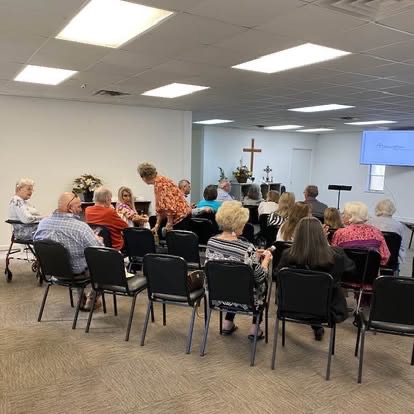
Yup! I preach in a storefront every week. Who would have thought after over 30 years in ministry that I’d end up in a storefront church? Well, apparently the Lord thought it because here I am.

Haughton Methodist Church (the church I began pastoring late last year) meets in a rented storefront. Well, actually the building was originally a church that outgrew the facility. It was converted to an office building and was used as such for the last couple of decades.

I must say the rented storefront is much better than the rented hotel room the congregation used for the better part of nine months. I gotta give props to the faithful in the congregation who were committed enough to set up and tear down that hotel room week in and week out. That’s a lot of work and a lot of commitment.

Of course, Haughton Methodist Church was meeting in the hotel room (and now the rented storefront) due to its disaffiliation from the United Methodist Church. Well, not really disaffiliation. They missed that boat for reasons I won’t go into, but suffice it to say, they walked away from their property…just threw the Louisiana Annual Conference the keys…and began the journey as nomads. I applaud the congregation’s faith and faithfulness. It’s one reason I’m blessed to serve them as pastor.

Preaching in a storefront has really had me thinking and praying about a strategy for the congregation moving forward. That part of being a pastor hasn’t left me. In my contemplation, research and prayer, I’ve discovered there are a few advantages to meeting in a rented storefront. I thought I’d share a few of those with you today.

Financial Flexibility

The first (and perhaps major) benefit of renting a storefront for church meetings is the financial flexibility it provides. Establishing a permanent church building requires significant upfront capital for purchase or construction, not to mention ongoing maintenance, utilities, and other operational costs.

I did a little investigating and discovered the congregation’s old facility is listed for sale by the Annual Conference for $445,000.00 (you can check it out here). That’s a lot of money to a small congregation like ours! If someone wanted to purchase it and gift it back to the congregation, now that’s a conversation we’d be open to!

For a small or growing church, this financial burden can be overwhelming and will divert resources from ministry programs, outreach, or other crucial areas. Renting a storefront, on the other hand, often provides a more affordable alternative. The monthly rental cost is predictable and easier to manage, allowing us to allocate our resources to other vital areas such as outreach efforts or mission work.

Additionally, renting avoids the long-term financial commitment and debt associated with owning property, offering us the flexibility to adjust as our needs evolve. Hey? We’ve got a one-year lease. That gives us time to discern God’s next steps for the congregation.

Visibility and Accessibility

Another benefit that a storefront location can offer is significantly more visibility and accessibility than a traditional church building, particularly if the church is situated in a busy commercial area like ours. There’s not a lot of foot traffic where we’re located, but we get great exposure to passing drivers, and our proximity to local businesses makes our storefront church a visible part of the community.

We’re located right next door to an oil change shop, which I find incredibly ironic, but that’s for another blog.

I’m praying this increased visibility can attract new visitors who might not have otherwise considered attending church, whether due to curiosity or the convenience of being located near their place of work, shopping, or living.

Community Engagement

A third advantage (should we choose to capitalize on it) to renting a storefront can be an intentional decision to engage with the surrounding community. Unlike churches housed in large, traditional buildings that may be tucked away in suburban areas, a storefront church is situated in the heart of the local community.

This proximity offers numerous opportunities for interaction with people who may not otherwise step foot inside a traditional church building. Church members can become familiar faces in the neighborhood, and the church itself can become known for its commitment to the well-being of the community.

I’ve already made several visits to the neighboring oil change facility to carry left over treats from our fellowship time. I hope to build an on-going relationship with those guys.

Additionally, I can see our storefront offering opportunities to host events, activities, and programs that reach a wide array of people. Whether it’s offering after-school programs, hosting community events, or providing social services like food banks or job training, a storefront church can effectively serve as a community hub.

Because of its location in a commercial area, a storefront church is more likely to attract people who are not actively seeking a church but may be drawn to the church’s services or outreach activities. This creates a sense of accessibility and relevance, positioning the church as an integral part of the community rather than as a separate entity.

Adaptability

Renting a storefront gives our congregations the ability to remain adaptable and flexible in our growth and development. As we grow, our needs will change, and our storefront offers us the flexibility to move to a larger or different location when necessary.

Unlike a permanent building, a storefront will allow us to scale up or down based on attendance, financial health, and ministry priorities. This adaptability is especially beneficial for us in what I’m calling “our formative years.” It will allow us to respond quickly to changing circumstances without being tied to a long-term commitment.

Furthermore, our storefront landlord has given us some flexibility in changing our layout as growth and needs dictate. Our storefront can be customized to suit the needs of the congregation and community. Unlike traditional church buildings, which often have fixed architectural features such as pews, stained glass windows, or large sanctuaries, storefront spaces are usually more neutral and open.

This gives us the freedom to design our space according to our unique vision and style. Whether it’s creating an inviting, contemporary worship space or setting up an area for fellowship and community gatherings, a storefront can be easily adapted to accommodate various church activities.

A Final Thought

As I’ve had time to pray and reflect on our situation at Haughton Methodist Church, I’ve discerned that being in a storefront is both practical and strategic. It’s a choice that can support our long-term growth and success (even more than getting our old property back).

Ultimately, the success of our congregation will not be defined by the building we meet in, but by the relationships we foster, the ministries we engage in, and the impact we have on our community.

So, if you’re in Bossier Parish, Caddo Parish or Webster Parish, and you’ve never considered the possibility of worshipping in a storefront, why don’t you join us at Haughton Methodist Church. We’d love to have you on this incredible journey!

Until next time, keep looking up…

Must Be Something in the Water…

Well, dang! It’s happened again…and in the Dallas, Texas area, too. What has happened again? Another prominent pastor has fallen from grace.

Pastor Steve Lawson, pastor (well, former pastor now) of Trinity Bible Church in Dallas, Texas was removed from his ministry by the elders of the church last week because of an “inappropriate relationship” with a woman who was not his wife. (Read more about the story here).

I’m not here to dump on Pastor Lawson. He’s got enough people doing that. I do want to say, though, there must be something in the water in the Dallas area that is affecting pastors. Only this past June, two very high profile pastors resigned or were removed from ministry in the Dallas area for the same issue facing Pastor Lawson. (I wrote about those two persons here).

I’ll say that Pastor Lawson (who is 73 years old!) is/was a passionate preacher. I’ve listened to a number of his sermons through the years, and have read a couple of his books (he’s written over 30). When he preached, he always preached with certainty and authority (that’s my kind of preaching). He may not have always been right, but he was never in doubt. He was, by all accounts, a holy man used mightily by God for His glory.

A Christian Reaction to Non-Christian Behavior

As one might expect, the ordeal has the Christian community scratching its collective head wondering what is going on with all these “holy” people. Are they living sham lives, false lives, hypocritical lives?

The non-Christian community is not asking the questions, they’re simply saying that all Christianity is a sham and that all Christians are hypocrites (they might be correct on the hypocrite part). Lawson just happens to be the latest example to their point.

As I have reflected over the past week on Lawson’s situation, I’ve found myself asking the same questions. The easier path would be to dismiss these fallen pastors as charlatans and move on, but in so doing we might overlook some truth and miss what God is doing in the midst of it all. So, where is the truth?

First, we need to clarify that we are ALL sinners saved by the amazing grace of God in Jesus Christ. Both preacher and parishioner are subject to sin because as the Apostle Peter reminds us “Your enemy the devil prowls around like a roaring lion looking for someone to devour” (1 Peter 5:8 NIV). The devil can devour the preacher as easily as the parishioner.

Second, these pastors were removed or stepped away from vocational ministry. Appropriately so, I might add. The sins to which they’ve either admitted or accused are of the disqualifying sort–at least until repentance is made and restoration practiced (that’s a whole other discussion).

Clergy should be held to a higher standard, but even acknowledging that fact, I am reminded of the words of Oswald Chambers: “The call of God has nothing to do with salvation and sanctification; it isn’t because you are saved and sanctified that you’ve been called to preach.” We are called to preach because God chose us to do so, and in so doing, placed a “divine compulsion” (the Apostle Paul’s words) within us.

Third, God uses both the holy and the unholy to minister to His people. This is where it gets sticky, but this is the point I want to make as I reflect on these events.

The Holy and The Unholy

I am reminded of Paul’s words to Timothy:

20 In a large house there are articles not only of gold and silver, but also of wood and clay; some are for special purposes and some for common use. 21 Those who cleanse themselves from the latter will be instruments for special purposes, made holy, useful to the Master and prepared to do any good work. (2 Timothy 2: 20 – 21 NIV)

Paul writes to Timothy to encourage him to rightly handle the Word of God. He even goes so far as to name two who have departed from the truth and brought confusion to the body of Christ. Yet, in his encouragement he admits that God’s house contains both holy and unholy vessels. Here’s the truth: God uses both!

Are the holy vessels more useful? Yes, obviously, but just because the holy vessels are MORE useful, doesn’t mean the Master does not utilize the unholy ones.

Please don’t hear me making excuses for these pastors and their failures. Their failures are their own and they must own them and deal with the consequences. What I am saying is don’t discount the good God has done through the ministry He entrusted to them–in spite of their failures. Stated another way: Don’t let the good God has done be negated by their unholy actions.

Nothing justifies their actions, but their actions don’t mean God wasn’t using them. So, why would God use unholy vessels? I can think of three reasons.

God and Unholy Vessels

The first reason is that God loves His people. He’s not using the person for the sake of the person. If He were, the person might begin to think that God owes him/her something because they’re “holy.” Or, the person might begin to think that God is okay with what he/she is doing…if it were all about the person. No, God is using the unholy for the sake of His people, and if another person’s life is touched in the course of that ministry, God has demonstrated His love for His people using an unholy vessel.

The second reason might be that God is storing up judgement/discipline for that “holy/unholy” person. Maybe God is giving that person the rope he/she is asking for, and surely, if you give a person enough rope he/she will hang themselves. Perhaps it is all about judgment/discipline towards His house. Is that not God using the unholy for His purpose?

The third reason is so that He can demonstrate the riches of His grace. God’s is an amazing and extravagant grace, and He gives it in ways we don’t always understand, nor do we always like (ask the older brother in the Story of the Prodigal Son).

If God used only holy people, it wouldn’t be long before all the holy people would be pointing to themselves thinking everything was happening because they are so holy. No, everything is happening because God is so gracious. It is always and forever about what God is doing, never ever about what we are doing.

So, I suppose we should let this be a warning to all of us (especially those of us in ministry). So, I heed the warning by seeking to live a holy life, by confronting the sin that is within me, and by crucifying the passions and lusts of the flesh on a daily basis…well, because holiness is such a daily endeavor. And I do it not for ministry success, but because I’m a disciple of Jesus Christ.

Yes, God uses holy vessels in a greater way than unholy ones, but God can, and sometimes does, use people who are undeserving. And, He does it whether I like it or not.

Until next time, keep looking up…

A Little R & R…

Broken Bow Getaway

I write this morning from beautiful Broken Bow, Oklahoma. Vanessa and I took a few days (very few) for some rest and recreation. It is our first journey to Broken Bow. It has been a very nice and relaxing time away, and it was much needed.

We really wanted to go to the beach…the beach (any beach) is our go-to spot for reconnecting with each other and to get away from it all, but unfortunately, there aren’t any beaches close enough to make it feasible for a three-day trip (three days is all we have). Broken Bow is only three hours or so from the house, so that left more time for doing nothing than spending a day driving to the beach…so, here we are.

It’s been enjoyable. It’s been relaxing. Both what we needed. We’ve eaten too much trying local restaurants (Grateful Head Pizza, Mountain Fork Brewery, Beaver’s Bend Restaurant, Buffalo Grill). We’ve napped both days. We’ve seen new sights. We’ve taken a boat ride on pristine Broken Bow Lake. We’ve soaked in a hot tub. We took a ride through Beavers Bend State Park. Dipped our toes in the river. Watched fishermen fishing for trout in the stream. I even slept in one morning of our trip.

We’ve scoped out a lot of territory for a return trip with the grandchildren. They’d probably enjoy it more than we have. There’s ATV riding and hiking and swimming and paddle boarding and fishing…all great outdoor activities. I could see us renting a pontoon boat for a day on Broken Bow Lake tubing and fishing and cooking. I’d love to get a guide and take the grandsons fly fishing. Vanessa says she and the granddaughter want to learn to fly fish, too. Maybe my son could bring a couple of his Cushman carts and we could do some ATV riding along the trails in the Ouachita National Forest. So much to do. So little time.

We needed some time away. The only “time away” Vanessa and I have had in 2024 was to the EMC Journey session in Copperas Cove, TX in May. That was a refreshing time away, for sure, but it was a “working” conference, so does it really count as vacation? No, I don’t think so.

That’s the way it is when you own your own business. What’s the old saying? “The eye of the master fattens the calf.” No one watches your business like you do. I now know why Bill Malone spent so much time at Malone’s Grocery and Hardware in Chatham, LA.

A New Journey

We also needed some time away because next Sunday, September 29th, Vanessa and I begin a new journey as pastor at Haughton Methodist Church. Their’s has been a challenging journey out of The United Methodist Church. They have been without a pastor for some time now and after much prayer and consideration, we feel called to serve them in this capacity.

The congregation has been meeting for a little over a year in the Holiday Inn in Bossier City (part of their challenging journey), but will soon be moving into their new home at 966 Highway 80 in Haughton, LA on October 6th. I look forward to being a part of this transition, and I’m excited about all the possibilities that exist to grow the Kingdom of God in the Haughton area.

Hey? If you’re in the area, we meet for coffee and fellowship at 10 a.m., with worship following at 10:30 a.m. Plan on joining us September 29th at the Holiday Inn on Highway 80 in Bossier City and on October 6th at our new home. We’d love to see you!

I’ll be serving as a bi-vocational pastor for as long as they’ll have me. I’ll be selling oil during the week and pastoring on the weekend. We’ll see how that works out. We gave it a try at Lakeview Methodist Church for a few months, but the day job made it difficult to commit to the congregation the time it needed to grow the congregation. My prayer is the same thing won’t happen this time with the Haughton congregation.

Right now, we’re at a staffing level with the business that I absolutely don’t have to be there ALL the time. Join me in prayer that it stays that way and that I can eventually be more than just a Sunday preacher in Haughton.

Anyhow…it’s time to get up, start packing up and make the drive back home and to the real world. Monday is coming and there is oil to sell, cars to service and the Gospel to preach. Next week, by God’s grace, I’ll be doing all three–rested and ready to do so!

Until next time, keep looking up…

Not Nearly Enough…

A friend asked me a question this week. It was a simple question asked in sincerity, but it challenged me in a way I haven’t been challenged since I left full-time ministry.

What was the question? “How common in your career did you see pastors and leaders teaching entire sanctification?”

I had to think real hard the last time I heard a sermon on entire sanctification. Honestly, I couldn’t remember one. Honestly, I had to check my sermon file to see if I had ever preached one. Luckily, I found ONE sermon in my file. Entire sanctification is obviously something that was never high on my list of priorities to preach and teach.

Well, if it was impossible for me to remember if I had preached a sermon on entire sanctification, it was impossible to remember hearing one. I could only answer my friend with, “In The United Methodist Church, rarely!”

Perhaps that is what is wrong with The United Methodist Church (or any other Wesleyan denomination). The doctrine of entire sanctification lies at the heart of Wesleyan theology, and yet we (meaning me) rarely heard it preached (or preached it) from a Wesleyan pulpit.

Sure, we mentioned it (or heard it mentioned) in passing, but we never dug deeply into it or spent too much time on it. Let’s face it. When we pastors and laity went to Annual Conference, we didn’t get deep dives into Wesleyan theology. We got motivational speeches and rah-rah talks about best practices in ministry that we could take back to our congregations.

Same thing when we attended leadership conferences. Seriously, how many preachers (and laity) would ever sign up for a conference entitled “Sanctification Summit?” Nah! Not many. Instead, we’d rather flock to conferences with names like “Refuel,” or “The Global Leadership Summit,” or “Disciple Making Summit,” or the “Orange Conference” (what do oranges have to do with ministry?). After all, we want to grow our churches. I mean, isn’t that the point?

Entire Sanctification

Unless you’re a pastor in the Wesleyan tradition, you’re probably asking yourself, “What does he mean by entire sanctification?” I’m glad you asked.

Rev. John Wesley

Sanctification is a $3 theological word that means “holiness.” Well, if we don’t like the word sanctification, we probably like the word holiness even less. Me? Holy? Never! Yet, holiness is at the heart of John Wesley‘s theology, and we Wesleyans ought to be teaching it! Maybe that’s the key to our church growth? Maybe holiness is what will make the church stand out from the culture?

For most folks, holiness is reserved for monks, missionaries, mystics and martyrs, not everyday Mark and Mary. Nothing could be further from the truth. It was Chuck Colson who said, “Holiness is the everyday business of every Christian. It evidences itself in the decisions we make and things we do, hour by hour, day by day.”

Colson is correct, and his statement echoes the words of the Apostle Paul written to the Church at Thessolinica two thousand years ago. God’s will for our lives is holiness. Paul says so right there in chapter 4, verse 3: God wants you to be holy, so you should keep clear of all sexual sin. The NIV translates it this way: It is God’s will that you should be sanctified: that you should avoid sexual immorality. The KJV says it this way: For this is the will of God, even your sanctification.

Avoiding Holiness

One reason we shy away from holiness as a way of life is because of the “holier-than-thou” crowd. Actually, “holier-than-thou” is not really holiness at all. In Jesus’ day, the “holier-than-thou” crowd turned out to be the Pharisees—arrogant, prideful and self-righteous. Certainly not the traits Jesus would applaud and want his disciples to emulate. Rather, it was the Pharisees for whom Jesus reserved his most scathing condemnations.     

Another reason we might shy away from the word holiness is the word’s close association with the “holiness” movements of the late-19th century, and the Pentecostal and charismatic movements of the mid-to-late 20th century (which actually had their genesis in the Wesleyan tradition).

The extremes of those movements gave too many people in the church permission to separate themselves from holiness. Use whatever excuse we may to lay claim to our own unholiness, it doesn’t change the fact that God’s will for our lives is for us to be holy.

Perhaps a third reason we shy away from the teaching of holiness (entire sanctification) is because we confuse it with “perfection.” We think we have to be perfect, and after all, no one is perfect (boy! don’t I know that to be true?). How can I teach what I am not? How can I be what is impossible to be? Well, let’s go back to Wesley…

The Heart of John Wesley’s Theology

John Wesley helps us understand better in his A Plain Account of Christian Perfection. Holiness is not sinless perfection. Unconscious sin will always remain. No matter what level of holiness we attain, there will always be more room to grow. This fact helps us live in humility. It’s like Jesus would tell the Pharisees, “Take the log out of your own eye before you complain about the speck in your neighbor’s.” Knowing we have further room to grow keeps us from the holier-than-thou attitude.

Wesley would further say that holiness (or perfection) does not mean freedom from errors or mistakes. We’ll always have inaccurate perceptions, deal with deceptive apperances, have clouded memories and distorted opinions based on faulty information. It does not mean the sin nature has been eradicated. The seed of the sin nature still exists, and abiding outside of God’s grace leads to the sin nature conquering us.

And, Lord help us, holiness is not about freedom from temptations. As a matter of fact, Satan’s attacks will likely increase because he thinks he’s losing control.     

Well, if holiness is not that, what is it? For Wesley, as for the Apostle Paul, it is a heart full of love—love for God and love for neighbor. According to Paul, if we love God and love our neighbor, it changes our conduct. As our love for others increases, God establishes our hearts blameless in holiness. Our holiness is reflected in the way we treat others.

Waiting for Sanctification

Wesley, in his sermon The Scripture Way of Salvation would say it thusly:

“It is thus that we wait for entire sanctification; for a full salvation from all our sins, –from pride, self-will, anger, unbelief; or, as the Apostle expresses it, ‘”‘go unto perfection.'”‘ But what is perfection The word has various senses: here it means perfect love. It is love excluding sin; love filling the heart, taking up the whole capacity of the soul. It is love ‘”‘rejoicing evermore, praying without ceasing, in everything giving thanks’.”

“…we wait for entire sanctification…”

We wait. Sanctification is not an overnight thing. Sanctification is growing in grace. Sanctification is a moment-by-moment, day-by-day decision on our part. Yes, it is done through the power of the Holy Spirit, by the surrender of our will to His, but surrender is done daily by our choice–that’s called “free will.”

Attaining and Maintaining

Don’t think you can attain holiness (entire sanctification)? Oh, I think you underestimate the power of grace. Also, how uncouth would it be for the Lord to ask something of us that He knew we couldn’t achieve?

John Wesley said it this way: “Christ died to deliver sinners from not only the guilt but also the power of sin.” Our salvation (which is God’s will for our lives) would be an incomplete salvation unless it delivered us from sin’s power as well as sin’s penalty. God never intended the cross to address only the “judicial” matters of our sin. God equally intended the cross to reshape those who believe toward the holiness to which He calls us.

Salvation is the simplest thing to attain, but it is the hardest thing to maintain. It is in the maintaining that we reach what Wesley termed “entire sanctification, for a full salvation from our sins…” Salvation is attained through the simple act of believing. Salvation is maintained through the difficult act of obedience. Believing and obeying both demand surrender.

Full salvation is a long time coming, but salvation is attained and maintained as a child. As a child trusts to attain and as a child obeys to maintain, but maintaining is so much harder than attaining.

So, how often have we taught entire sanctification? Not nearly often enough. How often should we teach entire sanctification? Well, if we’re truly Wesleyan, a whole lot more often than we have.

Well, that just what I think, but I’m not the perfect pastor, which is probably why I haven’t preached and taught full salvation more often. Maybe by His grace, I’ll do better.

Until next time, keep looking up…

The Coming Storm…

I heard some bad news this week that makes me think it really is only the first winds of the storm that is blowing on the horizon for the institutional church, especially as it presents itself in the local congregation.

What was the news? I heard that this past Sunday was a pastor’s last Sunday at one local congregation because the congregation could no longer pay the pastor’s salary. I hated to hear the news, especially for the pastor who was faithful to lead the congregation through the disaffiliation process of the United Methodist Church.

I don’t know all the details of the transition. I know it was, by all United Methodist standards, a successful church plant a decade ago. The departing pastor was not the founding pastor (that might have a little to do with it), but the fact that the local congregation could no longer pay the salary points to a financial reality that many congregations will be facing in the future.

The news got me to thinking about some of the challenges that the institutional church will face in the future…there really is a storm on the horizon.

Challenges on the Horizon

Inflation

Thanks to Covid and bad national economic policy, everything costs more these days. That means people have less money to give to the church, but it also means that utilities, sound equipment, cleaning supplies, office supplies…literally everything costs more.

When people are unable to give to the church because their personal expenses have gone up, the local congregation can’t keep up with its own expenses. Programs have to be cut, personnel costs have to be cut. The model for the local congregation is unsustainable.

Real Estate

What inflation has done to everything else, it’s also done to real estate. I suppose this challenge could have been included in inflation above, but I think it stands on its own. Real estate prices have risen disproportionately to almost everything else, which is good for homeowners, but not really good for anyone else.

Real estate becomes a problem for the institutional church when it comes to the prospect of church planting. How can a “traditional church model” of church plant afford real estate in today’s market? Or, how can a “growing” congregation afford to either build or relocate in today’s real estate environment?

Not to mention building restrictions that many municipalities are placing on property use. Municipalities lose millions of dollars of revenue when property is used for a church. Those municipalities aren’t liking that much anymore and planning and zoning commissions are limiting the number of churches in some areas…because the municipalities need more revenue, too.

Salaries

Salaries will definitely be a challenge for local congregations in the future. Well, the future is now! Thus, the example given above. The local congregation could no longer afford the pastor’s salary. So it will continue to be as inflation takes its toll on the economy.

Even large congregations will find themselves scaling back on personnel in order to sustain the cost of keeping the doors open. Let’s face it, there are a lot of pastors and church staff who weren’t making a living wage anyway. It’s only going to get worse.

Congregations will begin (have begun) the transition to bi-vocational ministers, and pastors will have to transition to bi-vocational because, I know for a fact, that pastors like to eat and live indoors. I’m not saying there is anything wrong with that transition. It might even be for the best—it puts the pastor out into the community with an opportunity to meet un-churched, de-churched and un-saved people instead of spending all of their time “tending the sheep” inside the church walls, or sitting eight hours a day in the office because the Church Council demands their “availability” to the congregation.

Honestly, though, when you start cutting church staff, programs suffer and today’s institutional church model is built around attractional programming.

Clergy Shortage

Okay, so even if a congregation can afford to pay a full-time pastor, where are they going to find said pastor? (For more on the clergy shortage, click here and here).

There is no longer a functional ministry pipeline from which to choose trained professional clergy.  Number one, people aren’t going to seminary in the numbers they were in the past. Seriously, they finally figured out that spending all that money for a seminary education wasn’t paying off.

Many people who feel called to ministry have figured out they can fulfill their calling in the non-profit world and get paid more for it. I know it’s not all about the money in ministry, but pastor’s still have to provide for their families.

Additionally, traditional denominations have provided a pipeline and pastors would “rise up through the ranks” to fill pastoral roles. Well, there are no ranks anymore in many denominations. Many denominations find themselves in “warm body syndrome” where they just need someone/anyone to fill a pastoral position. Yeah, the Holy Spirit is really in that process.

Another issue affecting the clergy shortage is the fact that the majority of clergy are near or past retirement age. I know! Retirement is not a biblical concept, but most retired clergy don’t have the energy and don’t really want to invest the time it takes to “grow” a church. Yeah, I’m probably just speaking for myself, but I’ve also heard it from other retired clergy who have been asked about serving full-time or even planting a church.

The clergy shortage makes the traditional institutional church model unsustainable.

Shrinking Attendance

Rev. Max Edwards, General Superintendent of the Evangelical Methodist Church, posted a link to an article in his weekly newsletter that is really eye-opening. Church attendance has been falling for generations and according to the article, shrinking attendance has costs far beyond the ability of a congregation to stay open.

Also, the article states that since the 1990’s, 40 million people have stopped going to church—that’s one in eight Americans, and in 2021, membership in houses of worship fell below the majority for the first time.

Yeah, I know! Covid, right? Covid only accelerated the decline. Most churches haven’t recovered their pre-Covid attendance. Most churches never will. Shrinking attendance makes the traditional model of the institutional unsustainable.

Disciple-Making Process

Okay, as one who served as a full-time pastor, I assume my share of responsibility for this one, but the local congregation has not been very good at making disciples. Most congregations don’t have an intentional disciple-making process.

For generations, it has been about programming for the local church and for the passing on of information as if we can just get enough information we can experience transformation.

Yeah, well it doesn’t work that way. Information does not equal transformation. Only the Holy Spirit can transform a person and I suspect we were so busy planning programming and designing ways to keep people’s attention that we forgot to leave room for the Holy Spirit.

Heck, we didn’t even disciple our children and that’s the very place we should excel most. Young people have left the traditional church in droves and they’re not coming back!

Unless and until a local congregation implements an intentional disciple-making process—a process whereby a person grows up in faith and holiness to engage their own gifts for ministry in service to the Kingdom—the local church/traditional brick-and-mortar model is going to be unsustainable.

The House Church

I think there is a legitimate answer for the challenges facing the local church and the institutional church. I don’t want to talk about a bunch of problems without offering some solutions.

I am evermore convinced that the answer to the “church” problem is to go back to the future—The House Church.

I don’t intend to lay out the Biblical justification for house churches in this blog (for that you can click here, here, here, here and here). But, let me offer some reasons that I believe the house church is the harbor in the storm facing the institutional church.

Here are some reasons I believe this:

No Professionals Needed

You don’t need a “professional” pastor in a house church. All that is required is for a person to exercise his/her gifts for ministry.

There is no need for a salary because it is not a “job” or means of support for anyone who is part of a house church. The ministry pipeline already exists in every house church. The members of the house church are the ministers—each one engaging in the use of their own giftedness supporting the body of Christ.

No need for M.Div’s or theological schools and no student loans to have to pay back. The primary expense of any local congregation is cut in half when no “professional” pastor is needed.

Real Estate

In a house church, real estate is not an issue. You already own it (unless you rent, of course). What’s more, the government can’t shut you down in the next pandemic. The cost of maintaining a place of worship no longer exists because you’re going to live in your house anyway.

It’s More Evangelistic

Trust me, it’s easier to invite someone to your house for a Bible study than it is to invite them to a church building for worship.

With a house church, you can meet in the local coffee shop (a house church doesn’t necessarily limit one to a literal house) for prayer. Someone will see you praying and it will open the door for a conversation with someone present who desires/needs prayer.

Honestly, many existing local congregations, including many who disaffiliated from the UMC, are really Sunday school classes that own property. What if all those “Sunday school classes” transitioned to house churches and sold their property and gave all the money to missions—of course, that would have to mean the local congregation had a focus and passion for missions, but that’s for another blog.

The church becomes infinitely more accessible under a house church model in today’s culture—more accessible than a traditional church ever will be again.

Financially Sustainable

A house church doesn’t need gazillions of dollars to sustain itself. There are no salaries, no church staff, no buildings to maintain, no church vans or buses to pay for. The only need for money comes in the resourcing, and there are abundant resources for house churches whose costs can easily be shared by those attending.

Quickly Scalable

Because house churches are not dependent on large investments of money, and because they are only limited by the real estate that its members already own, it becomes simple to multiply and replicate.

So, your house can only accommodate 20 people? Cool! Start another house church!

Intergenerational

The church was/is meant to be intergenerational. The house church is specifically meant to be so. Yes, everyone stays together. Everyone prays together. Everyone sings together. Everyone studies together.

This is the absolute best example of disciple making for your children. We pray with our children and for our children…and they pray for and with us. That’s the way it is supposed to be.

We were never supposed to send our children to children’s church or our youth to youth services. Worship is meant to be intergenerational.

Tell me, really? Why does the “traditional” church model have “youth ministry” at 5 p.m. on Sunday, yet they don’t have any ministries at the same time for adults…or children…or anyone else?

And, really? We want the church to do for our children and youth what the Bible says parents are supposed to do? The home is now, and has always been, the greatest incubator of faith.

Like Hurricane Beryl in the Gulf of Mexico this past week, all the signs pointed to the storm that was coming. The signs are on the horizon for the local church. How will local congregations (and the institutional church) prepare for the storm ahead?

An Invitation

May I invite you to pray with me? Pray for the many local congregations that are struggling with their future. They have looked toward the horizon and see the storm brewing but are unsure how to prepare. Pray for the Holy Spirit to lead them into His future for them…and pray that the congregation will be open to the Holy Spirit.

Also, pray with me about The House Church Movement. The House Church Movement was a vision the Lord gave me back in 2020, but it has been on the back burner (I rather called it “paused”) for a couple of years. I am praying to discern if now is the time to re-launch the Movement.

I would love to hear your thoughts. Please comment below, and if you live in the northwest Louisiana area and would be interested in being a part of a re-launch, I’d love to hear that, too. All it takes is two:

20 “For where two or three gather in my name, there am I with them.” (Matthew 18: 20 NIV)

Until next time, keep looking up…

A Glimpse Inside a Preacher’s Mind…

I went to church last Sunday. I heard a good sermon from a good preacher. These former United Methodists, though, they are in uncharted waters. The preacher who was preaching was doing so “in view of a call” to be the church’s pastor. The congregation was handing out ballots so the people could vote. It just seemed all so Baptist to me, but we are living in a new world as former United Methodists, aren’t we?

A Critical Mind

I did what I usually do when I attend worship where I’m not preaching. I critiqued the sermon. Don’t judge me! I suspect it is what most preachers do when they attend worship. They’ll probably tell you otherwise, but only a few (those really holy few) really mean it.

What is there to critique? Well, there is first the choice of text. Unless the preacher is preaching from the Revised Common Lectionary, I wonder why the preacher chose the text he/she chose. Did the preacher spend time in deep prayer and devotion and was moved by the Spirit to preach this text? Or, did the preacher just pull out an old sermon, dust it off, freshen it up and preach it?

Next, I can usually find a reason to critique the points of the sermon. “Well, I don’t know if I would have included that in the message.” “Interesting direction he/she took with that point.” “That application doesn’t really work with that point.” “I think I could have found a better illustration for that point.” And on it could go…

Then, I can usually find a critique of the preacher’s exegesis. Exegesis is one of those three dollar theological words that simply means “read out of.” It is taking the biblical text and bringing out the meaning, rather than reading meaning into the text.

Let me see if I can say it another way: Reading into the text (called eisogesis) would be like saying, “This is what the text means to me.” Reading out of the text would be saying, “This is what the author meant when he wrote the text.” There is a world of difference between the two.

Finally, I can usually find a critique or two on the preacher’s delivery. The preacher’s dress code, the preacher’s cadence, the preacher’s inflection, the preacher’s diction. And, on it could go…

Not to worry, though. I know that when I preach to a congregation that has other preachers in it, I’m probably getting the same treatment. Nonetheless, we preach on in spite of the critique. And, seriously, the guy is a good preacher and he preached a good sermon. That’s what you do when you’re preaching in view of a call (it still sounds strange saying that as a Methodist).

A Thoughtful Mind

How do I know the sermon was a good sermon? Because it was thought-provoking. The notes I made from the message cover the worship folder from the service.

The scripture for the message was Matthew 14: 22 – 33–

22 Immediately Jesus made the disciples get into the boat and go on ahead of him to the other side, while he dismissed the crowd. 23 After he had dismissed them, he went up on a mountainside by himself to pray. Later that night, he was there alone, 24 and the boat was already a considerable distance from land, buffeted by the waves because the wind was against it.

25 Shortly before dawn Jesus went out to them, walking on the lake. 26 When the disciples saw him walking on the lake, they were terrified. “It’s a ghost,” they said, and cried out in fear.

27 But Jesus immediately said to them: “Take courage! It is I. Don’t be afraid.”

28 “Lord, if it’s you,” Peter replied, “tell me to come to you on the water.”

29 “Come,” he said.

Then Peter got down out of the boat, walked on the water and came toward Jesus. 30 But when he saw the wind, he was afraid and, beginning to sink, cried out, “Lord, save me!”

31 Immediately Jesus reached out his hand and caught him. “You of little faith,” he said, “why did you doubt?”

32 And when they climbed into the boat, the wind died down. 33 Then those who were in the boat worshiped him, saying, “Truly you are the Son of God.”

So, here’s your opportunity to get a glimpse into how my mind works when I’m listening to someone else preach.

Thinking About Peter

The preacher’s message prompted me to look at the event from Peter’s perspective. My first thought was, “I wonder how many steps Peter took on the water?” Did he take one and then began to sink? Did he take ten before he began sinking? Even if he took one step, what a miracle that is because people don’t walk on water!

Also, Peter was actually willing to get out of the boat. What a risk of faith! Those who are willing to take the risk of faith generally reap the greatest rewards. Seems like there is a sermon in there to me. I’ll come back to this note another day. Yeah, I know, John Ortberg wrote an entire book about it. Nonetheless, I can put my own spin on it.

Peter, even in the midst of great faith, exhibited doubt and fear. No one is perfect…not even Peter…even as great as his faith was. Even the greatest among us can be overcome by doubt and fear…even in the midst of a miracle. Maybe it’s in the midst of a miracle that the devil shows up to do his most deceptive work?

Thinking About the other Disciples

I also think about the disciples who remained in the boat. I first got the impression that the disciples who remained in the boat are like most followers of Jesus. We are unwilling to take the risk of faith. The safest place is in the boat in the middle of the storm.

Interestingly, though, even disciples who aren’t willing to take the risk of faith still reap the benefit from those who do. They witnessed the miracle of Peter walking on water and of Jesus calming the storm. See how much difference one person’s faith can make? Yeah, probably a sermon in there, too. I’ll hold on to this note.

Thinking About Jesus

Of course, this is one of the Gospels, so what is most important is what do we learn about Jesus? First, Jesus is in the storm. That doesn’t mean Jesus causes the storm. It just means He’s there. Probably a sermon in there somewhere, too.

Not only is Jesus in the storm, sometimes He calls us into the storm. Yeah, I could do an entire sermon on our uniquely American name-it-and-claim-it prosperity gospel with this as an example of how we don’t need to avoid the “storms of life.” Jesus is there in the storm and He calls us to join Him there. It is where faith is built and miracles happen.

Jesus also gives us a powerful example of the spiritual disciplines of prayer and solitude. He went away alone (as was often His want) to pray. Jesus’s power was rooted in His relationship with His Father. I’m not so sure that this is not the most important point of the encounter. Jesus was sustained by this relationship, and all He accomplished He accomplished because of His connection to His Father. Exegesis (see above) proves this point well. Yeah, there’s a sermon in there.

One final thought I noted was the simple fact that Jesus is our salvation. Whether we are in the storm or in the boat, it is Jesus who saves us. Jesus saved Peter from the doubt and fear he experienced in the storm (while he was walking on water, I might add), and Jesus saved the other disciples when He calmed the storm once He got into the boat. Perhaps this is the most important point of the encounter–Jesus saves!

A Hopeful Mind

See? I told you it was a good sermon. No, the preacher didn’t make all these points in his sermon (it would be insufferably long if he did!). The sermon was good enough to get me to think all those things. So what if I might have gone a different direction? So what if the preacher’s diction wasn’t the greatest? So what if…? So what?

I left challenged to think more deeply about this event and its implications in my life and the life of the Church. I left asking more questions about Jesus and wanting to find the answers. That’s what good sermons do. I can only pray that my sermons are that good, too.

So now, you’ve had a brief glimpse into how the mind of a preacher works…or, at least how this preacher’s mind works. Please don’t judge me. I am, after all, not the perfect pastor.

Until next time, keep looking up…

Embracing Opportunities: A Bright Side to the United Methodist Church Situation

What? Another blog post on the situation in the United Methodist Church? From someone who left the United Methodist Church? Can’t you please just move on?

Yes, I probably should move on, but honestly, it’s hard to simply walk away from an institution that was an integral part of my life for over 50 years…an institution that shaped me spiritually and theologically…an institution in which I still have many friends and acquaintances…an institution that I loved for so, so long. That, and when I write a blog about the United Methodist Church, my readership generally explodes, so there’s that!

Everyone (well, almost everyone) who reads my blog is reasonably familiar with the recent decisions of the General Conference of the United Methodist Church that has many UM traditionalists reassessing their prospects of remaining United Methodist, so I’m not going to rehash those General Conference decisions here. You can find all the information you want here and here if you need to revisit those decisions.

What I am going to suggest to my traditionalist friends who adopted the “wait and see” approach (and now find themselves considering what’s next) is that you may be in a season of wonderful opportunity, and to encourage you to embrace the opportunity that lies before you. I’m suggesting there really is a bright side to the situation in which you find yourself.

Opportunity #1

If you are a traditionalist in the United Methodist Church, the recent decision of General Conference has forced you to the margins of both the institution and the culture. Being on the margins is a good thing. The Church has always flourished best on the margins.

You are now in conflict with “the system.” Well, that’s exactly where Jesus was when he established His ministry on earth. The “power” dynamic has flipped. That’s a scary (and terribly uncomfortable) place to be. Traditionalists have been accustomed to palace living. What do I mean?

Ever since the Edict of Milan in 313 A. D. (when Emperor Constantine “legalized” Christianity), the institution of the Church has enjoyed relatively “favored” status in the culture. The palace (the power structure) looked favorably on the Church. Likewise, traditionalists were part of the structures that maintained the institution. It is relatively safe to say with GC’s recent decisions, that is no longer the case. You are on the margins.

Should you and your congregation choose to remain in the United Methodist Church, you and your congregation can be like “a voice crying in the wilderness” (John 1:23, et. al), or as a remnant left behind in Jerusalem (Jeremiah 52) to tend the vineyards and till the soil.

Opportunity #2

If you are a traditionalist congregation in the UMC, you may now be forced to deal with your “edifice complex.” You now have to assess just how much your property is worth to you. That is a good thing.

The Church has never been about a building or property. The Church has always been about people.

Yes, I know it is sad that you, your forefathers and foremothers poured your life and soul into a building and property. You made the investments. You raised the money. You made the commitment to pay the debts.

Your parents and grandparents were buried there. Your children were baptized there. You were married there. There are too many memories to count. That property carries a ton of emotional weight and the prospect of walking away from it generates an equal amount of grief.

Considering the emotional worth of your property forces a reflection on the purpose and mission of the Church, and that is a very good thing.

It can take the focus off the parking lot and put the focus on people. It can take the focus off the color of the carpet and place it on the process of discipleship. It can provide the opportunity to create new spaces that will be attractive to new people.

Can you imagine what a church budget would look like if 50% of it was dedicated to evangelism rather than light bills and maintenance?

Yes, leaving your property will require sacrifice (and it will seem totally unjust), but what is the Christian life apart from sacrificial living? The greater the sacrifice, the greater the blessing. What is the price of faithfulness?

And, who knows? Walk away from your property for a season and you might be able to purchase it back in the future for pennies on the dollar. I recall a time in the not too distant past when a particular Annual Conference was begging cemetery associations to form legal entities so it could unload abandoned properties and get them off the AC’s books.

Tons of abandoned properties will soon be an albatross around the necks of many Annual Conferences. Some have even explored the possibility of hiring additional Conference staff just to manage the properties. That will get old (and expensive) really quickly.

Seriously, beyond a few properties (mostly in downtown areas valued by real estate developers), there is little value in church property, especially if there is a cemetery attached to it.

You are being given that opportunity to revisit the purpose and mission of your congregation. Embrace the opportunity.

Opportunity #3

I believe that traditionalist congregations in the UMC are now being given the opportunity to rely on God in a new way. In the past, congregations had a power structure (the Annual Conference) that it depended upon for direction and connection. A departure from the power structure brings a new freedom to listen to the Lord for direction.

In the past, top down decisions dictated the direction and the leadership of a congregation. I am intimately familiar with one former UMC congregation who is living this reality even now. In the “good old days,” if they needed a pastoral change they conferred with the District Superintendent and the issue was resolved.

Now, in their search for a new pastor, the prayer life of the congregation has increased dramatically. Everyone is praying for the congregation’s leadership as they navigate the new waters of pastoral selection. They are living in an era of reliance on God in ways they never had to before. That is an amazingly good thing!

The congregation is out of its comfort zone, and that is the place where great things can happen.

One Consideration

One thing that I’ve been reflecting on has me concerned. It may surprise you. It is the name “Methodist.” Yes, what an amazing heritage and history! I have always been honored to be called Methodist, even if (or especially because) it was originally a derogatory reference.

I am concerned for all in the Wesleyan family who carry the name Methodist because the observing world doesn’t distinguish between those in the Methodist family. The world doesn’t know the difference in a United Methodist, an Evangelical Methodist, a Free Methodist, a Wesleyan Methodist or a Global Methodist. The world only sees “Methodist.”

The challenge is for all of us to be intentional in communicating who we are to a watching world. Of course, that should have been the challenge all along.

A Final Word

There are probably more opportunities for congregations. These are just the ones I’ve thought about as I’ve reflected on the situation. If you know more, please include them in the comments for others who might read the blog.

Traditionalists, you wanted to “wait and see.” Well, you waited and now you’ve seen. It is time to make a decision about where God is calling you in the future. Embrace the season. Embrace the challenge. Embrace the opportunity. But always, keep looking on the bright side!

Until next time, keep looking up…

My Lesson from a Battleship Sermon…

So, I’ve often told folks that I never preach a sermon that I haven’t first preached to myself. In large part that’s true…but not always. It wasn’t necessarily true this week when, in the middle of a sermon I was preaching, the Holy Spirit convicted me on a deep, deep level on a matter I had not previously considered.

Going on a “Journey”

I had the blessed opportunity to preach on Thursday evening to the gathered body at the last “Journey” session for the Evangelical Methodist Church in Copperas Cove, Texas.

What is a “Journey” session? For all my former United Methodist (and present UM) friends, think Annual Conference. “Journey” is the time of year when EMC pastors and laity gather for meetings, business, worship and encouragement.

The theme of the evening was “Be Watchful,” and the passage of scripture around which the Journey session was framed was Paul’s departing speech to the elders from the church at Ephesus in Acts 20:

28 “So guard yourselves and God’s people. Feed and shepherd God’s flock—his church, purchased with his own blood—over which the Holy Spirit has appointed you as leaders. 29 I know that false teachers, like vicious wolves, will come in among you after I leave, not sparing the flock.30 Even some men from your own group will rise up and distort the truth in order to draw a following. 31 Watch out! Remember the three years I was with you—my constant watch and care over you night and day, and my many tears for you.

I chose as the text for my message Ephesians 6: 10 – 20:

10 A final word: Be strong in the Lord and in his mighty power. 11 Put on all of God’s armor so that you will be able to stand firm against all strategies of the devil. 12 For we are not fighting against flesh-and-blood enemies, but against evil rulers and authorities of the unseen world, against mighty powers in this dark world, and against evil spirits in the heavenly places. 13 Therefore, put on every piece of God’s armor so you will be able to resist the enemy in the time of evil. Then after the battle you will still be standing firm.

Bermuda Shorts and Battleships

I’ll do my best to make a long story short. The title of my message was “Wearing Bermuda Shorts on a Battleship,” with the point being that many people come to Jesus expecting life to be a cruise ship when, in fact, we are boarding a battleship. We have to have the correct attire for the occasion. We must put on the full armor of God to be prepared for life as a disciple, otherwise it’s like wearing Bermuda shorts on a battleship.

The full armor of God is, of course, Jesus Himself. He is our salvation. He is our righteousness. He is our peace. He gives us the gift of faith. He is Truth. He is the Word made flesh. We must clothe ourselves in Christ and we do so through prayer. And, that’s where the Holy Spirit convicted me in the middle of the message.

I was bringing the message to a crescendo (don’t you like that word?) with these words:

“Friends, we don’t strap on a Colt 45 and look for some evil to confront. Evil will find us on its own. Our battle is won or lost on the field of prayer. We cannot advance, let alone win the spiritual battle, if we are not empowered with prayer. We need to pray for each other. We need to pray for protection from the evil one. We need to pray that God would guard our moral lives and protect our people from moral failure. We need to pray for the strengthening of families in our church. We need to pray for love and unity within the church. We need to pray for wisdom to discern false teaching. We need to pray and not give up. But, we must never pray to be taken out of the battle.”

And, there it was…”we must never pray to be taken out of the battle.” I even repeated it twice for emphasis. In that moment, the Holy Spirit impressed upon me that praying to be taken out of the battle is exactly what I had done in 2019 when I left the United Methodist Church.

Jumping Ship

Between 2019 and 2024, the United Methodist Church was in a battle for its future. I like to believe that in 2019 after General Conference, I saw the handwriting on the wall…that the battle was already lost…so, what was the point of sticking around?

I prayed for a door to open so I could make my exit. Time to move on…time to fight other battles. Well, doors did open, and I thought those doors were answers to prayer. Perhaps they were answers to prayer because, well, God is just good that way, but as a result of the message I preached on Thursday evening I feel convicted that I left friends on the battlefield. To use the analogy of the message: I jumped ship. I abandoned a church I loved and friends I loved because I thought the battle wasn’t worth fighting.

I don’t mean to suggest that either side in the battle for the UMC was “good” or “evil.” What I am suggesting is that the devil got all up in the business of the UMC, and the division is a direct result of the devil having his way with us. We spent years fighting each other when who we should have been fighting was the devil. At least, that’s my perspective (with all due respect for those friends of mine who remain UM).

Now that I’ve had a couple of days to reflect on the Holy Spirit’s conviction, I think I need to apologize to my shipmates–I’m sorry I jumped ship. I got caught wearing Bermuda shorts on a battleship.

The Goodness of God & Coming Home

Yet, God is good! After almost a year of being spiritually homeless, the Lord (in July 2020) led me to the Evangelical Methodist Church. In His goodness and grace, He has shown me over the past three+ years that I have always been an evangelical Methodist, now it’s just official. I’m glad to be home. Yet another answer to prayer, for sure. He answers our prayers in positive ways even when we’re not praying for the right things.

So, I’ll do my best to fight the good fight in my new home. I’ll do my best to serve Him wherever He might lead me as a result of this new relationship. I’ll do my best every day to put on Jesus Christ (the armor of God) and board the battleship in the fight against the spiritual forces of wickedness. I’ll do my best to pray and never give up. I’ll do my best to never abandon my shipmates again. I’ll do my best to honor Him at every turn. I’ll do my best to be prepared for the journey that is faithful discipleship in Christ. I’ll try not to bring Bermuda shorts to a battleship.

I’m certain I may fail at some point. For those times, as in this one, I’ll ask for forgiveness, for mercy and for grace. I’m sure the Lord will extend all three, well, because He’s just good that way. I can only pray that others will, too.

Until next time, keep looking up…