True Love: You Think This Happens Every Day?

valentines-dayWhoever thought love could be such a lucrative business? Retailers, that’s who! According to the National Retail Federation, the average amount spent on Valentine’s Day is $136/person this year, with a total spent for the holiday of $18.2 billion dollars. That number is actually down from 2016, but it is still a big number for the nation’s second largest Hallmark holiday.

Unfortunately, Valentine’s Day has become the world’s definition of love—emotional, romantic, (dare I say?) erotic, and sometimes, downright corny. You can’t think corny without thinking about The Princess Bride and Westley’s pursuit of true love. You can watch it here:

The Bible talks a lot about love, too, but it’s not the type of love the world talks about or that we celebrate on Valentine’s Day. Actually, the Bible says that love is the greatest characteristic we can exhibit as those who seek to be disciples of Jesus Christ.

We find the Bible’s most compelling explanation of love in what is called the “Love” chapter of 1 Corinthians 13. We hear this passage recited at weddings, when man and woman stand before God to pledge their love to one another, as though this passage is speaking of some emotional, romantic feeling that we have at weddings. Listen to the passage as the Apostle Paul writes it to the Corinthian Christians:

Love is patient and kind. Love is not jealous or boastful or proud or rude. It does not demand its own way. It is not irritable, and it keeps no record of being wronged. It does not rejoice about injustice but rejoices whenever the truth wins out. Love never gives up, never loses faith, is always hopeful, and endures through every circumstance.

Prophecy and speaking in unknown languages and special knowledge will become useless. But love will last forever!

13 Three things will last forever—faith, hope, and love—and the greatest of these is love.

Love can be so confusing. That’s because love is such an interchangeable word. We love our car. We love our job. We love our family. We love our church. We love going to the beach. We love our new hairstyle. We say things like, “Oh, I love how that new dress looks on you!” Or, “I just love how the light brings out the color of that painting.” The long and short of it is that we love everything, and in reality, we end up not loving very much at all.

Apparently, the Corinthian Christians were confused, too. That’s why Paul was writing—to correct their misunderstanding of what it means to love. Of course, much of Paul’s letter is spent correcting their understanding of a lot of issues. Throughout this letter, Paul addresses sex and marriage, lawsuits, incest, food sacrificed to idols, and worship in the church. Then, he turns his attention to love.

The Corinthians knew what love was. They had a couple of different words they used regularly to communicate the idea of love. First, there was the word they used to communicate romantic love. There’s a little town where I served my first full-time appointment as a pastor. The name of the town is Eros, and every year, thousands of people send their Valentine’s Day cards to Eros, LA to be postmarked to their sweetheart. That’s because Eros is the Greek word that indicates erotic or romantic love.

Another word they would be familiar with communicated the idea of “brotherly” love—rather like a fond affection. That’s why Philadelphia is called the city of brotherly love.

Paul uses a different word when he writes of love. He uses a new word for a new idea, and it’s a word not used outside the New Testament. The Corinthians didn’t quite get it. Sometimes, I think we don’t either. The word Paul uses is αγαραώ, and the shades of meaning that lie behind the word are sacrificial, self-denial, and unconditional.

For Paul, the word “love” was seated in the will, not in the emotions. This love was not a “feel good” kind of love, but rather a sacrificial, self-denying love. It’s not the kind of love the world is very familiar with.

The world says love is up to us, that love is strictly about a relationship between human beings. We sing about it in our songs. The Beatles classic

tells us it doesn’t matter who you are, where you are, or what you’ve done, all you need is love. Love makes everything right. And, Dionne Warwick sang What the World Needs Now is love, sweet love. It’s the only thing there’s just too little of. Both seem to indicate if we just love each other enough, if we just “feel good” about everybody, then everything will be alright.

The Bible teaches that love is other-worldly. 1 John 4:8 says, “God is love.” Love as Jesus and Paul proclaimed in the New Testament is rooted in the nature and character of God. It’s more than a touchy feely, emotional affection. It is deeply sacrificial and fully self-denying. That’s the love that transforms the world, and it’s the love that will transform us. The world will never be a better place without the love of God. When we experience God’s love then we learn how to love others, for this love is a fruit of the Spirit.

The world also says, “We fall into and out of love.” Again, our music reflects this philosophy. Taylor Swift is good at writing these kinds of songs with You Belong with Me, or Begin Again. Elvis sang I Can’t Help Falling in Love, and the Righteous Brothers sang You’ve Lost that Loving Feeling.

Man! I’m showing my age, aren’t I? There are a lot of songs today we call “love” songs. They’re really not. They’re “lust” songs. They’re all about the romantic, or the erotic—all about the physical. In contrast, the Bible says, “Love perseveres, is patient, and it grows.”

The world tells us love is getting what we need in a relationship. The Bible says love is self-denying. John 15:13 says, “There is no greater love than to lay down one’s life for one’s friends.” That’s the love Jesus Christ showed to us on the cross. It was the ultimate love—the ultimate sacrifice—the ultimate self-denial.

St. Valentine knew this kind of love. May I remind you of his story? As legend tells the story, Valentinus was a Roman in the 3rd Century who protected Christians from persecution during the reign of the Roman emperor Claudius II. Valentinus was arrested for breaking Christians out of prison.

He converted to Christianity while in prison and was condemned to death. He was beaten with clubs, stoned and finally beheaded outside the Flaminian Gate on February 14, 269. After his death, this gate was known as Porta Valentini. While he was in prison he sent messages to his friends saying, “Remember your Valentine!” and “I love you.”

On the night before he was executed, he sent a note to the jailer’s daughter, whom he had especially befriended, and he signed that note, “From your Valentine!” Valentine gave himself in sacrifice for others. He demonstrated the greatest characteristic—love in the biblical sense. What a shame that Hallmark and Hollywood have co-opted the concept of love, and we’ve come to accept it as something totally other than it was ever meant to be.

So, here’s the challenge. Find ways to show biblical love this Valentine’s Day. Word of warning: Guys, go ahead and buy the roses and the candy. You’ll be sorry if you don’t, but what way can you live more sacrificially toward your spouse? What time can you give up to serve in your community or in your church?

Remember, it isn’t love until it costs us something. When love is costly, when love is about giving something up, when love is about surrendering our will to that of another, then we can sing with John, Paul, Ringo and George, All You Need is Love, and there’ll be meaning and transformation. What will you do? It’s up to you!

Until next time, keep looking up…
Make Yourself at Home!

We consider ourselves hospitable people, especially in the south. We like opening our homes to guests…so much so that we invite them in and say, “Please, make yourself at home!” It is the hospitable thing to do, right?

make-yourself-at-homeWhat if, though, our house guest arrived and we said our hospitable phrase and our guest took it to heart? What if our guest arrived, situated themselves in their room and started pilfering through out medicine cabinet? What if they really made themselves at home?

After our guest finished in the bathroom with the medicine cabinet, he/she moved to the linen closet and started to rearrange the sheets and towels, even throwing some out? We were totally caught off guard when we saw them start going through the medicine cabinet, but now we’re beginning to think they’re just a little crazy.

Our guest doesn’t stop with the linen closet. She/he soon moves to the kitchen, walks over to the refrigerator, throws open the door and starts throwing away some of our favorite treats! Our guest just looks at some things and says, “That’s just not healthy for you,” and throws it in the trash.

We’re flabbergasted! How could this guest, this person we’ve invited into our home be so brazen? Who does he think he is, anyway? But, having finished in the kitchen our guest moves to the living room and begins taking out our furniture. We soon discover the furniture was removed only to facilitate the wholesale renovation of the living room…new flooring, new paint, and even new furniture.

Room by room, eventually our guest makes his way through our entire home, moving, changing, renovating those areas we rather liked and were comfortable with. Before we know it, the entire house is remade. And, it all started because we wanted to be hospitable!

No, we really didn’t mean, “Make yourself at home.” We were just being nice. After all, we’re nice people. What we really meant was, “Welcome to MY home. Please make yourself as comfortable as you can, but please don’t touch my stuff. Clean up after yourself and allow me to offer you what I choose to offer.”

You’ve probably figured out by now that this is somewhat of an allegory, right? Of course you have. No, I didn’t make it up. I had a seminary professor who used it in class one day, but I’ve remembered it for over twenty years. The allegory reflects how we often treat Jesus when we come to the saving knowledge of His grace.

We “invite” Jesus into our hearts…invite him to make it his home, but we rather want to treat him as a guest. Yet, Jesus wants to come into our homes (our hearts) and not simply move things around, but make wholesale changes. He wants to clean out the closets. E. Stanley Jones has a wonderful thought about Christian closets in his book Growing Spiritually. Jones says, “There are no skeletons in the Christian’s closet, for they have all come out and are clothed in flesh and blood and walk as witnesses to the saving power of Christ.”

Jesus wants to change us from the inside out. When, through the work of the Holy Spirit, he begins that process we balk. It’s painful! We even feel it’s a bit inconceivable that he’d come in and start changing things. After all, this is my life! I only wanted to enjoy his visit. Share a few words of encouragement. He’d stay a few days and then move on. That was the plan. I didn’t intend for him to stay, and I certainly didn’t intend for him to start changing everything. That’s just “inconceivable!”

We invite Jesus to become Lord of our lives. When we open our hearts to the life-changing power of God in Jesus Christ, we surrender our property rights. We are no longer our own. We are his, and the home that once belonged to us, becomes his home. When Jesus is Lord, we’re no longer the property owner. We become the tenants. We don’t invite Jesus to make himself at home. We give him the home!

What difference will it make to our lives if we begin to see Jesus, not as a resident of our hearts, but as the owner of them? What items would he throw out of our refrigerators? What renovations would he choose to make? Ponder these questions a while. See what difference it makes.

Until next time, keep looking up…

On Moons, Passion and Worship…

We are a month into 2017 today and most of our new year’s resolutions have already gone by the wayside. We began the year with the best intentions, but intentions are rarely enough to sustain us when life happens…and I’ve learned that life always happens. Heck! Some days I can’t even remember what my resolutions were. January 1st seems like such a long time ago.

blue-moon-treeRather than making more resolutions, I think I’ll discover a new passion. Some people are passionate about running. I used to be. I thought I wanted to run a marathon. I thought that would be my new passion, but when I reached the nine-mile mark, I decided that I didn’t really want to run a marathon, I just didn’t want to gain weight. I thought a marathon was the goal, but the real goal was simply to not be fat. I can’t really be passionate about that.

Then, I thought I would play more golf. That’s something I could be passionate about. I started to play more. I like golf. I’m not any good at it, and the only way to get good at it is to play more. But, I don’t LOVE golf. As much as I want to be, I’m not passionate about it, and I would have to be passionate about it to play more. Golf wasn’t going to become my new passion.

I could add any number of activities to the list: hunting, fishing, scuba diving, reading, traveling…eating, etc. You could make your own list, too. I also discovered as I sought out those new passions that it’s a fine line between passion and worship. The thing we’re passionate about can soon become the thing we worship. Then, I thought, “Well, why not make Jesus my passion?”

I’m sure some of you are thinking, “You’re a preacher! Isn’t Jesus supposed to be your passion?” Well, yes, but like I’ve said before: “There’s a reason my blog is entitled ‘Not the Perfect Pastor’.” Actually, for all us (preachers and non-preachers alike) who call ourselves disciples, Jesus is supposed to be our passion.

As a preacher, I’ve even been passionate about preaching. But, being passionate about preaching is not the same as being passionate about the One we preach about. We can be passionate about preaching for the accolades. We can be passionate about preaching for the adrenaline rush it brings while doing it. There are any number of reasons we can be passionate about preaching, and most of them have little to do with the subject of our preaching. My prayer is I’ll be passionate about Jesus. It may not do much for my preaching, but it ought to do much for my life.

I figure if I make Jesus my passion, I won’t have to worry about that fine line that exists between passion and worship. Oh, I can still participate in those activities I find enjoyable. I just won’t pour my life into them. I’ll pour my life into Christ. He’ll become the priority of my life. He’ll become the One I worship.

Worship. Passion. Not far between the two. We cross the line because we’re created to worship. We will worship something. Worship is as natural as eating or breathing, and the Enemy of our soul (yes, the Devil…or Satan… or,) knows this, and he will take advantage of that fact to defeat us. He’ll turn our attention away from Christ and focus it on all the wonderfully enjoyable activities of life. It’s then he’s won the victory.

The devil is sly enough to know that not many of us will sell our soul to him. We’re not that bold, nor brave. He doesn’t actually want us to sell our soul to him. He doesn’t even necessarily want us to worship him. He simply wants us to worship anything but Jesus. So, he takes our passion and twists it to side-track us from that for which we were created. Yes, the devil is a sly one.

He tried the same thing with Jesus, too. Read the story in Matthew 4. The devil tempted Jesus with the same things you and I are tempted with, but the last temptation was the temptation to distract Jesus from that for which he was created. “Hey,” the Devil said, “just do things my way. Worship me!” He knew Jesus had the capacity to win the hearts of the people, so he tried to put it in Jesus’ heart to discover another passion. He does the same thing to us. We fall for that temptation too many times.

Jesus was passionate about His Father. He would not be distracted from that one thing throughout his earthly life. He enjoyed a good night out on the town (with sinners and tax collectors even!). He enjoyed telling stories. He obviously enjoyed traveling (he was always on the move). He was content to enjoy much that life had to offer, but he would not be distracted from his single, solitary passion–his Father. He was in love with his Father, and everyone could see it.

When we fall in love, people see it. We want to spend time with the one we love. We want to hang out with them. We want to get to know them. We want to discover what makes them happy. That’s the nature of worship, too. When we fall in love with Jesus, people see it. That’s because love is reflected.

Take the moon for example. I’m not sure where I first heard the illustration, but it provides a beautiful image of how love is reflected. The moon is a dark place filled only with craters, dust and rocks. Based on the explorations of Neil Armstrong and others, we know there is no life and no light on the moon. But, when we look up into a clear night sky, we can see the moon and we’ll even sometimes exclaim, “That’s a beautiful moon tonight!”

We see light from that dark, dusty, rocky place, but the light isn’t coming from the moon. It’s simply being reflected from the sun. When we fall in love with Jesus, when he becomes the source of our worship, when he becomes our passion, then we reflect the light and glory that comes from him. Jesus is the sun and we are the moon. When he becomes our passion the world looks at our lives and sees, not the dark, dusty emptiness of our lives, but the light of the One who loves us supremely. Now, there’s something to be passionate about.

I’ll confess. I’m still learning how to make Jesus my passion. This much I know. It starts with worship.

Until next time, keep looking up…

(Still) Learning to Pray…

There is a verse of Scripture that continually bounces around my feeble brain. There are few moments throughout the day that it isn’t there. Sometimes it is front and center, reminding me of my shallowness. Other times, it is tucked away in the deep, dark recesses of my mind tugging at my conscience, inviting me to look deeper still, but it is almost always there. What is that verse? Actually, it is not even an entire verse. It is just a single phrase. It is this: “Lord, teach us to pray…” (Luke 11: 1).lord-teach-us-to-pray-1024x512

I think about the disciple who made the request of Jesus. I wonder which one it was. It could have been any of the twelve. It is pure speculation to try to guess which one. What strikes me, though, is the fact that it would come from any of the twelve. After all, these were praying men. They were Jewish. They had been raised and “taught” to pray the Shema twice daily. By this time in their life, they no doubt had spent countless hours reciting any number of other Jewish prayers. They were praying people, yet they had to ask Jesus, “Lord, teach us to pray.”

I feel that way most of the time! I grew up in a Christian home with a praying mom, and a praying grandfather and grandmother. I participated in worship, heard the corporate prayers of the body of Christ, was called upon to pray even as a youth. I have spent over 26 years in vocational ministry, have led the church in corporate prayers, prayed for the needs of the congregation and community, prayed at the bedside of the sick and dying, and I’ve attended classes and retreats (even led a few). Still, that little phrase lingers…more in my heart than in my mind…but, it is there. I find myself saying it almost every time I pause and even consider the idea of prayer…”Lord, teach me to pray…”

I suspect those first disciples saw both the discipline and the power of Jesus own prayer life, and as they did, they noticed something was missing of their own. For all the times they had prayed, for all the times they had recited learned prayers, for all the times they had gathered corporately as the people of God, there was something missing when they saw Jesus pray. So, they came and they asked, “Lord, teach us to pray.”

Jesus obliged. And, he still obliges to those who ask him…even those of us who have prayed long and often. Even to those who feel their prayers bounce off the ceiling and go unanswered for long periods of time. He obliges because he knows the power of prayer, and the power that was evident in his own prayers he desires to make real in the lives of his disciples.

So, what is it he teaches his disciples? More than simply a model prayer, he desires to take his disciples deeper into the practice of prayer, and I sense in reading his response a pattern to his power. Here is the pattern I see:

Powerful Prayer is Personal

Jesus prayed, “Our Father, which are in heaven…”

Prayer is rooted in relationship. I find myself caught in the mechanics of prayer. I stumble on the “How-to” rather than the reason for prayer. While concentrating on the “how,” I forget the purpose behind my prayer is to bring me into a more intimate relationship with the Father who loves me.

I’m reminded what Richard Foster says about prayer: “Simple prayer is ordinary people bringing ordinary concerns to a loving and compassionate Father.” God is not an abstract thought–up there, out there somewhere, but rather a personal, intimate loving Father who desires only the best for His children.

Powerful Prayer is Provisional

Jesus also teaches me that it’s okay to pray for my needs. It’s not selfish nearly as much as it becomes a confession of my dependence upon him for all my needs. Prayer becomes an acknowledgement that we have legitimate needs–for food, shelter and clothing, and unless those needs are met we are less likely to be attentive to the Spirit’s guidance in our lives. I can’t remember who said it, but “an empty belly has not attention span.”

He also teaches that prayer for daily needs is not simply offering our shopping list to Jesus. He is not our divine ATM, and a selfish prayer is to pray “God let me win the lottery and then all my needs will be met.” Rather, a sufficient prayer is to acknowledge our needs to him, lay them at his feet and trust that he will provide. We then come to realize our deepest need–the need for forgiveness.

Powerful Prayer is Persistent

Like a shameless friend who knocks on our door at midnight, who knocks and keeps knocking until we respond, God desires us to keep praying, keep asking, keep seeking, and in so doing, we’ll discover the riches of learning to pray. It’s a reminder that as long as I live, as long as I’m a disciple, he will keep teaching. Learning is a life-long process, one that develops over a period of time. Powerful prayer is not given to a one and done instance.

I suspect that if those first disciples were alive, they’d likely still be asking Jesus to teach them to pray. I find myself discovering the more I pray, the more I need to learn to pray, and the more he teaches me to pray, the more he is able to bend my will to his…and that’s when I make the real discovery of grace…that his purpose all along has been to bend my will to his.

The fact that the little phrase “Lord, teach us to pray” is still bouncing around my mind and heart reveals that my will still has some bending to do.

I’m also reminded what another prayer warrior said: “If I’m praying and not getting what I ask for, it’s not because God is withholding something from me, it’s because he’s got something better for me.”

As the Lord teaches me to pray, I notice that prayer becomes less about changing my circumstances, and more about changing me.

I still have a lot to learn. “Lord, teach me to pray…”

Until next time, keep looking up…
Renewing Resolutions…

resolutions-150x150I find myself every year not making new resolutions for the New Year, but simply renewing ones I’ve made in the past. I’m not sure what that says (it says I’m no good at keeping resolutions!), but I know I still want to be a better person, and somehow I think even renewing past resolutions will help me accomplish the goal. What I’ve discovered is to be a better person, something about me has to change. What I’ve also discovered is I’m a person who is in love with the idea of change if not necessarily the process of change.

What I’ve discovered through the years of renewing old resolutions is that I can’t change. I don’t have enough will-power. I’m sorry. I don’t. There! Confession over! Though I can’t change, I can be changed. When I open myself to the power of the Holy Spirit, the Spirit can do His work in me and I can experience the life-changing power of God. I really believe that’s part of the whole “born-again” thing that Jesus talks about in John 3. Through the power and presence of the Holy Spirit, Jesus changes me from the inside out, not just once, but constantly as I open myself to His guidance. Though I can’t change myself (as much as I’d like to), I can put myself in a place where the Spirit can do His work.

One of the ways I can open myself to the Spirit is through prayer. I suppose that’s the first resolution I need to renew for 2017–I renew my commitment to pray. I probably need to learn how to do it better. I’m one who always feels like my prayer life should be better, and I lament how weak my prayer life may actually be. Unfortunately, I’m like most folks–I lament the issue, but actually do little to change it. Life always seems to get in the way.

Here’s how it happens for me: I see an announcement for a prayer retreat. It piques my interest and I think, “I really need to go to that.” It’s a free event, it’s only three hours long and they even provide food. I’ll have to drive 30 minutes, but I really need to open myself to learning how to pray better. I put the event on my calendar and think, “You’re doing well, friend, on keeping that resolution. You’ll learn and you’ll grow closer to Christ.” Nothing quite like patting yourself on the back. Then, life happens.

The prayer retreat draws closer. It’s a few days before the event and I get a call from a friend. “Hey, Lynn. I’ve got tickets to the LSU game on Saturday and I can’t go. You can have them if you want them.” In the back of my mind, I know I’ve scheduled this prayer retreat, but the idea of free tickets to Tiger Stadium overwhelms (well, momentarily anyway) the desire to improve my prayer life. I say, “Sure I’ll take them. You sure you don’t mind?” “No problem,” he says, “and I’ve even got a parking pass, too!” I get off the phone and immediately I remember the prayer retreat. “Oh, well! There’ll be other retreats on other days. After all, this is LSU and Tiger Stadium.”

I really shouldn’t be too hard on myself, I suppose. In the 21st century, if we were to put 100 disciples in a room and challenge them all with the question, “Who would like to deepen their prayer life?” I bet 100 hands would go up. Offer that some 100 disciples the opportunity to attend a three-hour prayer retreat, and ten would show up. On the other hand, walk into a room of 100 disciples and offer them free tickets and a parking pass to their favorite team, and probably 80 of them will accept the tickets, change their plans and go to the game. Not only will we change our plans and go to the game, we’ll gladly spend more money to drive four hours, perhaps even get a hotel room and eat out in a fancy restaurant (after all, the tickets were free, right?). In the meantime, I’ll continue to lament that I wish my prayer life were better. I really wish I could change. And, so it goes…

So, I’m not going to renew my resolution to change. I’m going to make a new resolution. I’m going to resolve to be changed. Holy Spirit come! I’m yours! Please, change me! The rub for me will come when life happens and I have choices to make. Stay tuned! We’ll see what happens.

Until next time, keep looking up…
Come to the Water…

five-dollar-billTake out a five-dollar bill and hold it up to the light. What do you see? You should see, very faintly on the right hand side, a watermark of the number five. That watermark is a special label that tells us whether or not we have a genuine five-dollar bill. To put it another way, the United States Treasury has put its mark of approval on this bill. We can take this bill and exchange it for goods and services because the U. S. Government puts its full faith and credit behind it. Did you know that you and I have been watermarked? Through the waters of baptism God marked us.  Do we bear that mark well?

JESUS’ BAPTISM

Jesus was baptized by John the Baptist in the Jordan River, and according to Matthew’s Gospel, his baptism wasn’t an afterthought. He didn’t wander by the Jordan River one day, see a crowd of folks getting baptized by John and say, “Hey? I think I’ll follow the crowd.” According to Matthew’s Gospel, it was an intentional act on Jesus’ part to participate in John’s baptism. That must mean that baptism was important to Jesus. As disciples, if it were important to Jesus, it should be equally important to us.

That truth is supported by John’s reaction when he saw Jesus standing in the line of sinners waiting to be baptized. “I need to be baptized by you, and do you come to me?” John stammered (Matthew 3:14). Think about it this way: Jesus coming to John for baptism is sort of like me cooking at home and Bobby Flay knocks on my door and wants me to cook dinner for him. “Hey, wait a minute,” I say, “You’re the expert. You’re the one who should be cooking for me!”

John’s baptism of Jesus reflects the truth that even John himself understood: Baptism is a gift from God–God-designed and God-ordained. Baptism is not something John the Baptist made up, not something Jesus made up, nor something the Church made up. Baptism was God’s idea and God’s gift of grace.

THE GIFT

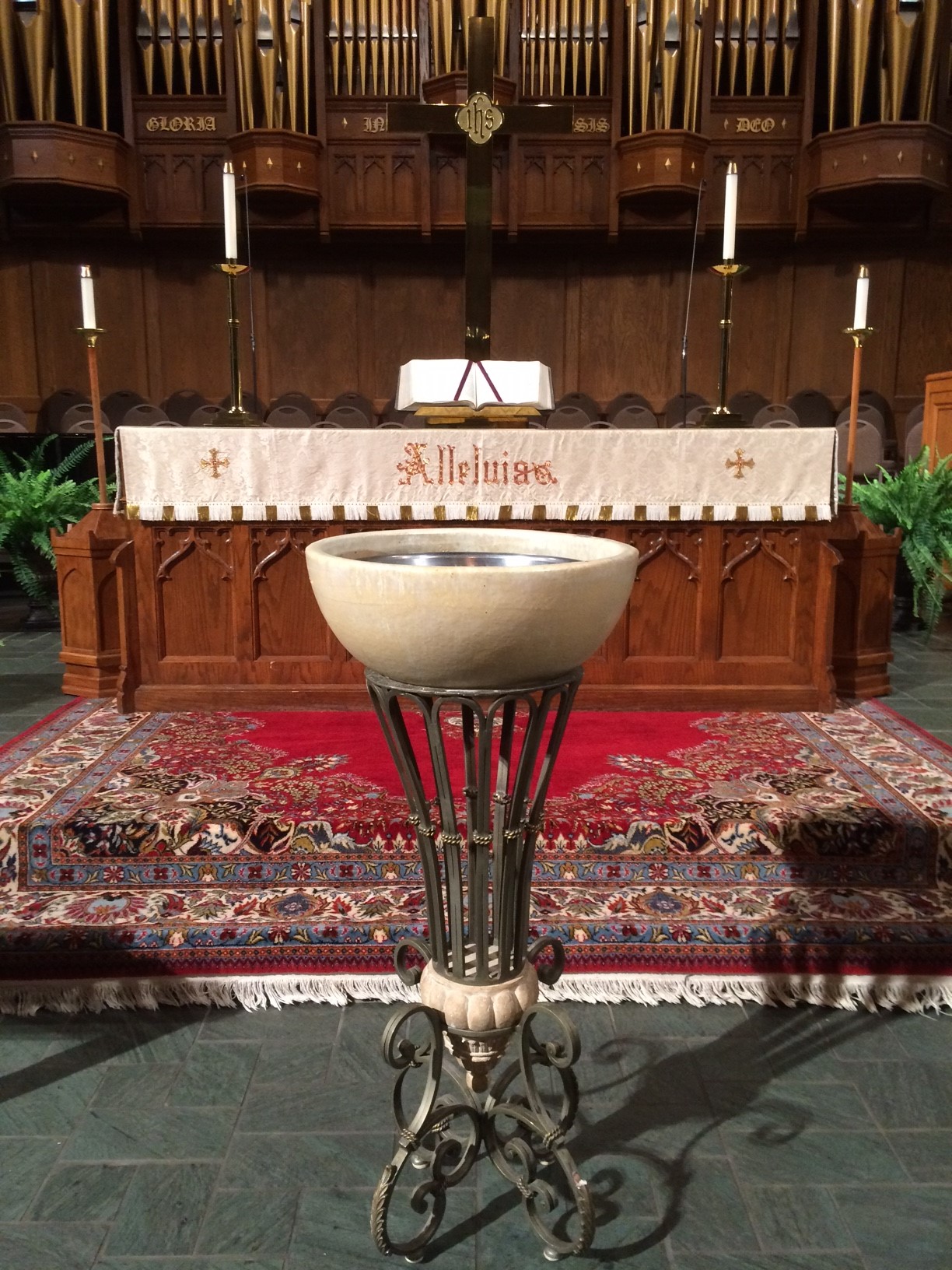
img_0461We United Methodists believe baptism is a gift from God. The word we use to describe it is “sacrament”, from the Latin sacramentum, meaning “sacred.” We believe that God’s grace is given to us when we participate in baptism. The Bible teaches we are changed by God’s grace through the act of baptism. Thus, baptism demonstrates God’s actions, not ours. According to our Church’s official document on baptism:

“Grace brings us to an awareness of our sinful predicament and of our inability to save ourselves; grace motivates us to repentance and gives us the capacity to respond to divine love. In the words of the baptismal ritual: ‘All this is God’s gift, offered to us without price’.” By Water and the Spirit—A United Methodist Document on Baptism

Our baptism is special because it is a God-designed, God-ordained channel of grace into our lives, and thus, through baptism we are blessed beyond measure.

THE BLESSING

Baptism is a channel through which we receive God’s blessings. What do I mean? Think of it this way. Did you receive a gift card for Christmas? A gift card doesn’t look like much – a piece of plastic with some fancy writing on it, but it entitles you to a tangible blessing like a meal or merchandise. In the same way, baptism may not look like much more than a nice photo-op, especially when one considers we Methodists take a few handfuls of water and splash them over a person’s head while some fancy theological words are spoken, but baptism connects us to tangible blessings from God. John understood well that one blessing was the forgiveness of sins. That’s another reason he was so confused when Jesus requested baptism. Jesus didn’t need forgiveness, so why was he asking to be baptized?

Although Jesus didn’t need the forgiveness that baptism offers, he was baptized anyway. The events that immediately followed his baptism illustrate what happened at our baptism. Matthew tells us that after Jesus was baptized, heaven was opened, the Holy Spirit descended on Jesus in the form of a dove, and the voice of God the Father boomed: “This is my beloved Son, and I am fully pleased with Him” (verse 17).

It really is an amazing scene. When Matthew says that heaven was opened he wasn’t just saying that the sun managed to poke through the clouds; he was describing how God’s blazing glory burned through the skies. Accompanying this heavenly display was the Father’s voice marking who Jesus was. “This is MY Son, not Joseph, the carpenter’s son. He is the Son of God.” Not only did the Father identify Jesus as his Son, he went on to put his mark of approval on what Jesus had come to do when he said that he was “well-pleased” with Jesus. The same thing happens at our baptism. God put’s His name on us. He calls us his son, his daughter and says that he is well pleased with us. And, he sends the Holy Spirit to give us or strengthen our faith in this announcement. Through baptism, heaven stands open to us.

How do we know that we really receive these blessings from God? The dove is all we need to know! Remember the account of the flood in Genesis? It was a dove that Noah sent out from the Ark when the rain (another water image, I might add) stopped, and it was the dove that brought back an olive branch to show Noah that the floodwaters and, therefore, God’s wrath had receded. By alighting on Jesus in the form of a dove, the Holy Spirit was marking Jesus as the olive branch the Father was extending to us. In Jesus we find peace from God’s wrath because he came to switch places with us. Peace with God is what Jesus was signaling with his baptism. He got in line with those sinners at the Jordan River, not because he needed baptism but to say to the world, “I will become what you are so that you can become what I am. I will become what you are when I let God the Father sweep all your sins into his heavenly dustpan and dump them all on me at the cross. Yet, you will go free and will be declared to be what I am – a faithful child with whom the Father is well pleased.” Now, that’s a blessing if there ever was one!

Baptism is God’s watermark of approval. Just as the watermark on the five-dollar bill assures us that a $5 bill is real money, the watermark of baptism assures us that we have forgiveness and that we really are God’s children. I didn’t make this stuff up about baptism, nor did John the Baptist invent this sacrament of cleansing. God did…to put his mark of approval on us.

There is so much more that baptism means for we United Methodists. I’ve only scratched the surface, but above and beyond all that baptism is, it is a gift of grace to us. We must never forget that fact. Never forget…

Until next time, keep looking up…
Good-bye Old Friend?

A new year beckons us, and as I’ve scanned Facebook posts over the past 24 hours, I’ve noted many posts filled with the hope and promise of the new year–2017. That is appropriately so. One of the joys of the celebrating any new year is the opportunity to “start over,” as if starting over isn’t something a disciple of Christ must do every day. Actually, I’ve found myself starting over multiple times many days, but that’s another story (and also another reason the name of this blog is “Nottheperfectpastor”) for another day.

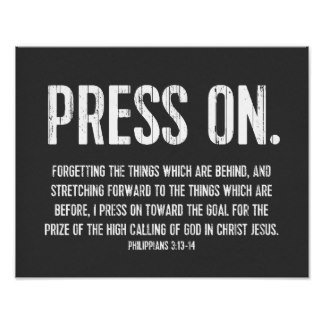
philippians-3-14I began this new year with Paul’s words to the Philippian disciples on my mind–you know those from Chapter 3:

12 I don’t mean to say that I have already achieved these things or that I have already reached perfection. But I press on to possess that perfection for which Christ Jesus first possessed me. 13 No, dear brothers and sisters, I have not achieved it, but I focus on this one thing: Forgetting the past and looking forward to what lies ahead, 14 I press on to reach the end of the race and receive the heavenly prize for which God, through Christ Jesus, is calling us (Philippians 3: 12-14 NLT).

As I reflect over these words on this first day of 2017, anticipating all that lies ahead, allow me to share three things I can do to make 2017 a fruitful year.

FORGET

I have said numerous times as 2016 drew to a close that I would never be so glad to see a year in the rear-view mirror. Taking a cue from Paul, I could make a list of all the things about 2016 that I’d like to forget. My problem is I’d likely want to forget the wrong things. Some things are best forgotten, and I’m grateful that God has the capacity and the desire to forget my sins, and to forgive them through the blood of Jesus Christ. I’d want to list all the bad circumstances, the losses, the failures and sadness, but I don’t think that’s what Paul had in mind.

Paul (in his notorious fashion) makes a list of those things he would forget as he offered his words to the believers in Philippi. What’s interesting to note is that he lists his achievements! That’s right! Paul listed those things that defined him for so much of his life–his zealousness, his righteousness, his connection to the Pharisees, his Hebrew upbringing, etc. He listed those achievements he had worn as a badge of honor for so much of his life. These were what he wanted to forget.

As I make my “forgetting” list for 2017, I want to forget my successes. I want to remember my failures, not because they depress me, but they remind me of God’s grace through them. They have lessons to teach me, and the lessons I’ve learned through my failures are vastly greater than the lessons I’ve learned through any success (perceived or otherwise). We should never forget the lessons we’ve learned as we’ve run the race of life, and we should never neglect to note the past faithfulness of our God.

Forget, yes, but make sure we forget the right things.

STRETCH

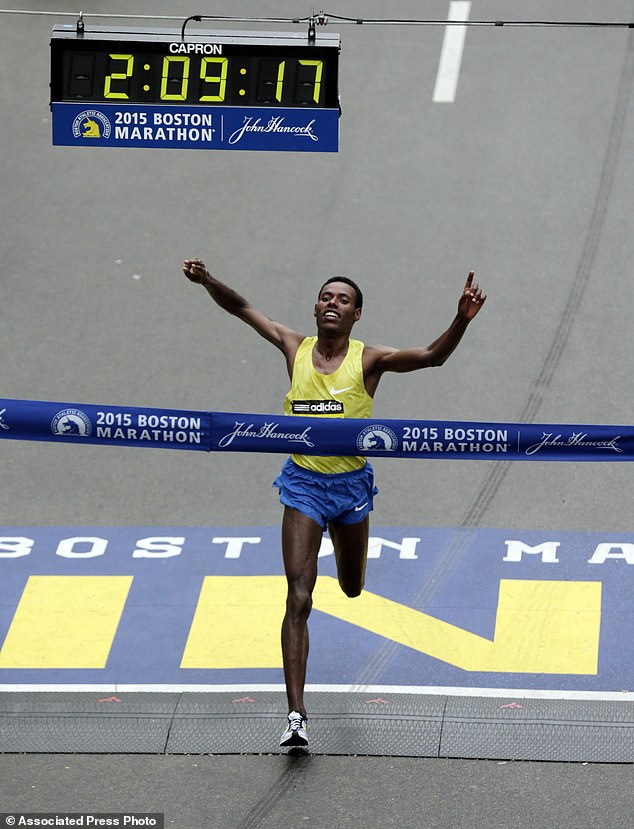
Lelisa Desisa, of Ethiopia, crosses the finish line to win the Boston Marathon, Monday, April 20, 2015, in Boston. (AP Photo/Charles Krupa)

Lelisa Desisa, of Ethiopia, crosses the finish line to win the Boston Marathon, Monday, April 20, 2015, in Boston. (AP Photo/Charles Krupa)

One of the images Paul uses in his words to the Philippians is that of a runner stretching toward the tape at the end of a race. Life is certainly a race, but it is a marathon and not a sprint. We’re in it for the long-haul, and we have to keep growing and keep going as we run the race. What ways can I stretch myself in 2017? Can I develop a new friendship? Can I develop a new spiritual discipline? Can I renew some friendships that have gone by the wayside? Can I begin a new friendship with someone who has a difference religious or political perspective than me? I’ll be challenging myself to stretch myself to become all that God has called me to be, and hopefully to do all Christ has called me to do.

One of the ways I’m going to stretch myself in 2017 is to invite more accountability into my life. It’s so easy for each of us (but especially for pastors) to isolate ourselves, and pretend that we can make it on our own. The reality is we can’t. We need each other, and part of what we need each other for is accountability–at least that’s what I need. That’ll be my stretch. What’ll be yours?

FOCUS

Paul had a goal. He would call it “this one thing.” A good word of advice for this new year is to define your “one thing.” If we know what the goal is, then we can develop strategies to help make THE goal become the reality. I think, too often, I’ve failed because I’ve tried to do too many things and to be too much to too many. Certainly, for those of us who call ourselves disciples of Jesus Christ, the goal is to always be a better disciple, but simply stating that fact leaves the achieving a bit nebulous. Focus is specific. State the goal in the beginning. Write it down. Review it daily.

I can’t define your focus for you. Only you can do that. I can tell you my focus for the year. It’s to be a better spouse. Sure, I need to be a better pastor. My children probably think I need to be a better parent. I know I need to be better engaged in the community, and I’m certain I could be a better follower of Jesus. I want to be all those things, but this year, I’m going to start by being a better spouse. Does it mean all those other things I want to be are not important? Of course not! But, I have to believe that being a better spouse will help me to be better in those places, too. That’s the focus I hear God calling me to in this new year. What about you?

Go for Gold

Here’s the reality–we can’t win the race looking in the rear-view. The race is before us. We only win when we look forward. Here’s to the best year ever. Forget the right things, stretch yourself and focus on the “one thing” that matters most.

Until next time, keep looking up…

The Evidence of Bethlehem

My wife, Vanessa, and I like to get away to L. A. as often as we can. No, I’m not talking about Lost Angeles. I’m talking about lower Alabama. Driving across southern Mississippi when we go we go through a lot of little towns on Highway 49. One in particular is Mt. Olive, Mississippi. Driving into town there is a prominent sign that says “Birthplace of Steve McNair.” Steve McNair was a professional football player who played quarterback, and spent most of his career with the Houston Oilers/Tennessee Titans. A little further down Highway 49, you enter Collins, Mississippi, and again, at the entrance of town there’s a sign that says “Birthplace of Gerald McRaney.” Gerald McRaney is an actor who played in series such as Simon & Simon, House of Cards and currently, This Is Us. I don’t know how many of you have driven through Mt. Olive or Collins, Mississippi, but there isn’t much happening in either of those places. They are simply little towns nestled between the bigger cities of Jackson and Hattiesburg. Their claim to fame is who was born there.

An Ancient Journey

star-of-bethlehemNow, picture in your mind, riding your camel across the Judean desert southward out of Jerusalem in the first century. About five miles out of Jerusalem, you start to enter a sleepy little town called Bethlehem, and as your camel glides into town you see a sign that says, “Birthplace of King David.”  Bethlehem’s claim to fame was that it was the birthplace of the nation’s most famous and popular king. One scholar says, “’At the beginning of the first century AD, Bethlehem was a village with not more than a thousand inhabitants: a small set of houses scattered along the side of a ridge and protected by a wall that was in a bad state of repair.” We sing the Christmas carol O Little Town of Bethlehem with the emphasis on “little.” It was not where anyone was expecting anything special to happen. It certainly wasn’t where anyone was expecting God to show up. Sure, there had been this prophecy from Micah that said,

“But you, O Bethlehem Ephrathah,
are only a small village among all the people of Judah.
Yet a ruler of Israel,
whose origins are in the distant past,
will come from you on my behalf.” (Micah 5:2 NLT),

but that prophecy was long since buried in the recesses of the nation’s mind. Even the nation’s king, Herod, had to call on the experts to be reminded of Micah’s prophecy when the wise men showed up looking for this “new” king that was born.

Nobody really expected God to show up, or for God to do anything special in Bethlehem. If God was going to show up, God was going to show up in Jerusalem. That was the happening place for the nation of Israel. Of course, God might show up in Rome, or even Athens, Greece. Those places were the center of first century culture, politics and power. If something is going to happen, it would surely happen in one of those places, not sleepy little Bethlehem.

That’s what we expect, too, and we have the benefit of bible stories and an annual celebration to remind us that God shows up in unexpected places. What do I mean? God is a big God, and if God is going to make a difference, it’s because He’s going to do it in a big way. Right? Sure, like in New York City or Washington, D. C., or maybe even Paris or London. Those are the seats of power. We certainly don’t expect God to show up in Monroe. But, He does, and isn’t that Good News? Sure, it is preacher…sort of…

God Gets Close

If God shows up in Monroe, that brings Him awfully close to home, and we’re just not sure we want God that close. We like having a little space between God and us. You know how we like our space. Don’t get too close. Don’t believe it? Notice what you do next time you’re waiting on the elevator and the doors open and it’s got more than four people on it. Most of us will wait on the next one. And, let’s face it, there’s more than a little discomfort here tonight. We’re a lot closer than many of us really like, but I suppose we can endure it for an hour once a year. Let me tell you, Bethlehem is evidence that God doesn’t really respect our space, and we don’t quite know what to do with a God like that.

What do we do with a God like that? What do we do with a God who shows up in the most unexpected places? I tell you what we do—we build places where we will COME and meet God. We’ll come, sit down, listen for an hour or so, get our God fix, talk a little bit about how it’s been going for the last week, be reminded of the things we need to work on, resolve to do better and ask God to help us out. Most of the time we’ll leave saying, “Hey, this has been a good session. We’ll do this again.” We leave and we expect that God stays, but…that’s not the evidence of Bethlehem. That’s not Emmanuel—God with us. That’s not the point of Christmas at all!

The point of Christmas is that God is with us in all the unexpected ways and all the unexpected places of our lives. That’s what we sing in the words to the third verse of the song Phillips Brooks wrote in O Little Town of Bethlehem:

How silently, how silently, the wondrous gift is given; so God imparts to human hearts the blessings of his heaven.

Born in Us

God imparts to human hearts. God is born in us. Christmas is God being born in us—you and me! And, that is an even more unexpected place than Bethlehem. Christmas means that God goes with us to work. When we’re standing on Monday morning at that blasted copy machine that never works the way it was designed to work. God is with us at home with our families, around the dinner table, and God is with us when we’re living at the homeless shelter. God is with us when we’re going through the divorce and when we’re battling the addiction. God is with us when we’re shopping at Wal-Mart and when we’re driving our cars. God goes with us on vacation. God is right there with us when we’re confronted with choices that challenge our values, and God is right there when our co-workers, or friends, or children make lifestyle choices that challenge our sensibilities, and who don’t understand who Christ is because we’re the only definition of him they see.

Yes, God is with us in the great, high and holy moments of our lives, but God is also with us when we’re struggling with the difficulties of life. Christmas is God giving Himself to us, to be with us, to invade our time and space for one purpose and one purpose only—to have a relationship with us, to save us from our sin, and to give us life through His Son, Jesus Christ. That’s the evidence of Bethlehem. That’s the point of Christmas!

That only leaves one question: Will we allow Him to be born in us tonight? The last verse of O Little Town of Bethlehem becomes our prayer this Christmas and every Christmas. Listen to Brooks’ prayer again:

O holy child of Bethlehem, descend to us, we pray;

cast out our sin, and enter in, be born in us today.

We hear the Christmas angels the great glad tidings tell;

O come to us, abide with us, our Lord Emmanuel!

O come to us, abide with us, our Lord Emmanuel! Amen.

Until next time, keep looking up…

The Malone Family Annual 2016

So…I haven’t been blogging, but I’m committed to changing that habit. Look for a post once a week with mostly random thoughts, but to get back in the “spirit” of things, here’s a Christmas season catch-up for anyone who is interested.

The Malone Family Annual 2016

I must confess that I took 2015 off from writing the Malone Family Annual. I don’t know why I did. There are no good excuses, but as someone once said, “When you’re looking for an excuse, any excuse will do.” I won’t make an excuse. I took the year off. Don’t think, however, that you’ll get two years’ worth of news. I’ll bring you up to date on the past year and if you want news from other years, well, get on Facebook!

The year started off with Vanessa and me doing one of the silliest things we’ve ever done. We bought a house in Alabama! I don’t know why we did. I’d like to say it was my great business acumen that convinced Vanessa it would be a great investment, but really it was our banker convincing her we could make money on it if we decided to sell it. Anyway…we bought it, and yes, it is for rent! If you’re looking for a beach vacation, give us a call. We’ll hook you up! (Click here to make a reservation!)

pushmataha2016 also afforded Vanessa and me the opportunity to be reality TV stars. That’s right! We appeared on an episode of Island Life on HGTV. Oddly enough, the episode aired on Easter Sunday, March 27th. Here’s what I learned about reality TV during that adventure:

  • There’s nothing real about reality TV (it’s all scripted).
  • Making a TV show is hard work (three 14-hour days to shoot 19 minutes of video).
  • When someone asks you “Would you like to be on a reality TV show?” your first question should be “How much are you going to pay me?” (Our 15 minutes of fame actually cost us money!).

gc2016-logo-color-hi-res-690x370I was blessed (if blessed is the right word) to spend two weeks in May in Portland, OR at the General Conference for the United Methodist Church. It was my first trip to the Pacific Northwest, and it is a breathtaking part of the country. I took a day trip to Seaside, WA and dipped my toes in the Pacific Ocean. It was on a Sunday. May I confess I DID NOT go to worship that day? May I ask your forgiveness? General Conference was a neat and interesting experience.

Vanessa and I spent four days in Wichita, KS in July for Jurisdictional Conference for the South Central Jurisdiction of the UMC. It was the culmination of what I call my “pseudo” candidacy for Bishop in the UMC. I thought I heard God’s call to offer myself for the Episcopal office. Well, after Jurisdictional Conference, I’m not certain what I heard, but it obviously wasn’t that! I continue (gladly) to serve as Pastor at FUMC, Monroe. But, enough about me…

Vanessa continues to spend her time taking care of me and taking care of our grandchildren (she much prefers taking care of the grandchildren). Of course, each of those tasks over the past year fell between the demands of the BIG news in the Malone family this year (more on that in a minute), but suffice it to say, she’s stayed as busy as she wanted to stay. She has stayed busy settling us into a new house. Yes, that’s right, we sold our house here in Monroe, and no, that’s not the BIG news. Why did we sell our house? Well, when someone knocks on your door and asks you how much it would take to buy your house, you throw out a number and they accept it, you tend to sell it. It only means one thing, though: we left money on the table. We’re in a rental and looking for a new one to buy. Check next year’s Annual for updates.

family-wedding-pic-2So, on to the BIG news. On December 3, 2016, Kelsey Malone became Kelsey Malone Ingram as she married Matthew Ingram. The couple are at home now in West Monroe, LA where she is a customer service representative with State Farm Insurance (and she continues to serve on staff at FUMC as contemporary worship leader) and Matthew is in computers with CenturyLink.

Brittney is at home in West Monroe and is a sales representative with Republic Beverage. Adam and his two boys (Kade and Kobyn) call West Monroe home but he works half the year in Malaysia. Josh, Piper and their brood (Peyton, Ryder and Skyler) still call Minden home. Not much news about the children this year. They don’t live at home anymore, so we don’t have nearly as much news as we once did.

Well, that’s certainly the Reader’s Digest version of the Malone family news for 2016. I’ll stop because I’m tired of writing, and I KNOW you’re tired of reading. I’ll simply say “Merry Christmas and Happy and Blessed New Year!”

Reflections on General Conference 2016 #GC2016…

General Conference 2016 is behind us now, and I return with a renewed hope that God is not done with these people called Methodist. There was much anxiety leading up to the once-every-four-year’s gathering of the church’s top legislative body because of the diverse nature in which members who call themselves United Methodist view culture, the Bible and the nature of “doing” church. Many felt this would be a “watershed” shed for the church, and in many ways it was. Knowing that hindsight is supposed to be 20/20, let me offer my personal reflections of our time together.

gc2016-logo-color-hi-res-690x370Primary among the sources of anxiety was the question, “How will the United Methodist Church respond on the issue of human sexuality in response to the Obergfell decision of the Supreme Court in June 2015?” Many wondered if this would be the time the church changed its understanding of homosexuality, and open itself to full inclusion by ordaining homosexuals as clergy, and permitting same-sex weddings to be presided over by its clergy and conducted in its facilities. Many others wondered if the church would maintain its teaching rooted in Scriptural and traditional understandings of marriage. Protesters were present throughout the ten days of meetings, and did disrupt the proceedings with organized protests on three different occasions. Additionally, delegates and alternates were greeted each day (but specifically on Wednesday) with supporters of a change in the church’s stance, particularly the wording that says homosexuality is “incompatible with Christian teaching.” In the end, though, the delegates did what United Methodists have too often done…they didn’t decide. And, that’s not a bad thing from my perspective.

Wednesday, May 18th was the pivotal day. Several petitions favorable to retaining the current stance of the church, as well as legislation designed to strengthen penalties for those who violated the Discipline had made it out of committee, and were ready to be presented on the floor of General Conference. I remind you, this is not something that has arisen in the last couple of years. This has been a forty-four year long conversation that has only escalated in the last decade because of the changing culture of the west. Please also understand, this is an issue that has no place for discussion among delegates and the church in Africa, Asia and other places where the church is growing. They can’t figure out why we’re fighting about it. They can’t figure out why they’re voting on it. They just think, “Those crazy Americans!” Yet, it is an incredibly contentious issue, and everyone thought this was the year it would be addressed. It was not. Let me explain.

The loudest group has generally been the most progressive segments of our church. Unfortunately for them, their numbers are shrinking.  Explosive growth is happening in the Global South, particularly Africa.  A coalition of American evangelicals and international delegates ran the tables in the legislative committees and swept elections to our highest court—the Judicial Council. Delay tactics by progressives was the only thing that kept more legislative items aimed at enforcement from being recommended.

But, there is a third player in the game—U.S. moderates. One colleague described them as “nice people, doing nice things, under high steeples, with above average educations.” These moderates are incrementally changing their minds on homosexuality. The pastor of our largest church, Adam Hamilton, is in the final stages of his transformation on the issue. He told a group of seminary students last week that he would like the first same sex weddings in his Kansas City-area megachurch to be conducted by associate pastors so he can be available to pastorally soothe those who will be unhappy about it.

The day prior, another moderate pastor took the floor following a night of rumors regarding a church split.  He asked that the Council of Bishops meet, show some leadership, and bring forth a plan for fixing things.  This was sweet music in the ears of delegates who have witnessed the council unable to police its own members, much less lead the church.  We delegates enjoyed the opportunity to tell our bishops what to do. Our bishops said they would meet and consider it.

The next day, our bishops came back with a plan representing the majority view of the council. They thanked the church for the invitation and expressed they would be willing to see the conversation on sexuality deferred, appoint a commission, and consider a specially-called General Conference in two or three years to entertain its recommendations. The conference found itself in the embarrassing place of having asked our bishops to lead. Be careful what you ask for! The Bishops returned with a plan that just happened to coincide neatly with the wishes of moderates trying to buy time. Progressives breathed a sigh of relief that the legislative train steaming their way had been derailed.

I need to make a long story short. The debate on the bishop’s recommendation turned ugly, with one delegate charging the presiding bishop with being corrupt. Fortunately, we didn’t see much of that delegate the rest of the time. After several emotional speeches, the episcopal plan was adopted as legislation by the narrowest of margins.

The political machinations we witnessed that day were impressive. Congress would be proud. But, the end of it means we spent a lot of money and time without really deciding anything. Well, we decided to take a little more time to decide. Many felt it unconscionable, but I’m not that put out by the whole ordeal.

Yes, I would like to have seen the General Conference decide once and for all on the issue of human sexuality, but as it stands, nothing has changed. The same language the United Methodist had before General Conference is the same language we have now, and I believe that’s a good thing. As for the future, we’ll look to the bishops to offer the leadership they say they’re willing to undertake. We’ll see if there will be a special commission, and a special called session of General Conference to deal with the issue.

That’s not the only thing we did at General Conference. Here’s a synopsis of our time together:

  • The Conference defeated motions to separate the American Church from the global Church by creating a new Central Conference.
  • Additionally, the African Central Conferences will receive five more bishops over the next four years, thus solidifying the global nature of the UMC.
  • Moreover, the General Conference voted to double the amount of theological education for Africa (from $5 million to $10 million) in the general church budget.
  • In a surprising fashion, the General Conference voted (by a margin of 3-to-1) to disaffiliate the UMC from the Religious Coalition for Reproductive Choice. This represents a significant shift in thinking for the global Church, and reflects how significant is the shift toward a more orthodox church.
  • The church continues to pursue important justice and mercy issues including human trafficking, stamping out killer diseases like malaria and AIDS, environmental stewardship, and the sanctity of human life.
  • A separation-with-property proposal passed a committee vote, signaling support for a conversation about this issue. The proposal did not make it to the floor of General Conference, but expect it to be a priority of the Bishops’ special commission exploring the issue of human sexuality.
  • The margins in the votes on key issues signal that the weight of opinion has shifted toward a more orthodox theology.
  • Both the University Senate and Judicial Council received a number of new members who are more theologically orthodox. For the first time, the chair of the Judicial Council is not an American.
  • A proposal was made and accepted requiring bishops to hold one another accountable for decisions in their individual Conferences.
  • The UMC grew by a total of 1.2 million members in the last four years, mostly outside the U.S. The African church, growing at significant rates, now holds the power in our denomination. The Africa Central Conference has grown by 329 percent, while in the United States the denomination has declined by 11 percent.

I am blessed to have had the opportunity to serve as a delegate to General Conference. The days were long and I returned home weary (for more reasons than one), but the experience was one I’ll never forget and will always consider an honor.

Until next time, keep looking up…