Preaching in the Storefront, Part 2: Five Drawbacks to Storefront Church…

I wrote last week concerning the advantages of preaching in a storefront church (read it here). I figured I should also share some of the limitations that come with having a storefront church. These limitations affect both our congregation and the community.

Space Limitations

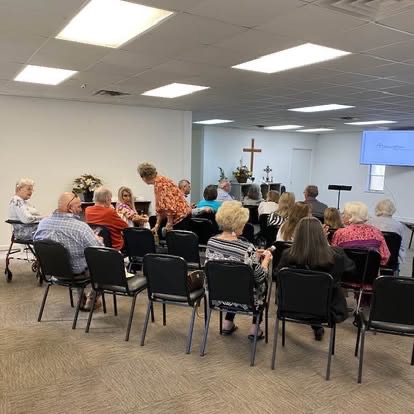
Our storefront church faces significant constraints due to limited physical space. Unlike traditional church buildings, which are purpose-built to accommodate a large congregation, classrooms, offices, and multipurpose spaces, our space (though originally a church) was fitted for commercial use.

Our space lacks the architectural features needed for worship, such as high ceilings, sanctuaries, and designated areas for fellowship. We’re going to struggle to figure out how to hold events in our space, or to expand to Sunday school or small group ministry. And, potluck…well, we’ll just have to see about that.

Additionally, our storefront has a relatively small seating capacity. Yes, there is a wall we can take out, but even then, limited space can lead to overcrowding, discomfort, and an inability to host special events, such as weddings, funerals, or community outreach programs.

One other thing to note, the lack of auxiliary spaces like nurseries, kitchens, and meeting rooms may hinder the church’s ability to offer vital services, such as childcare, Bible studies, and community meals.

Perception and Identity

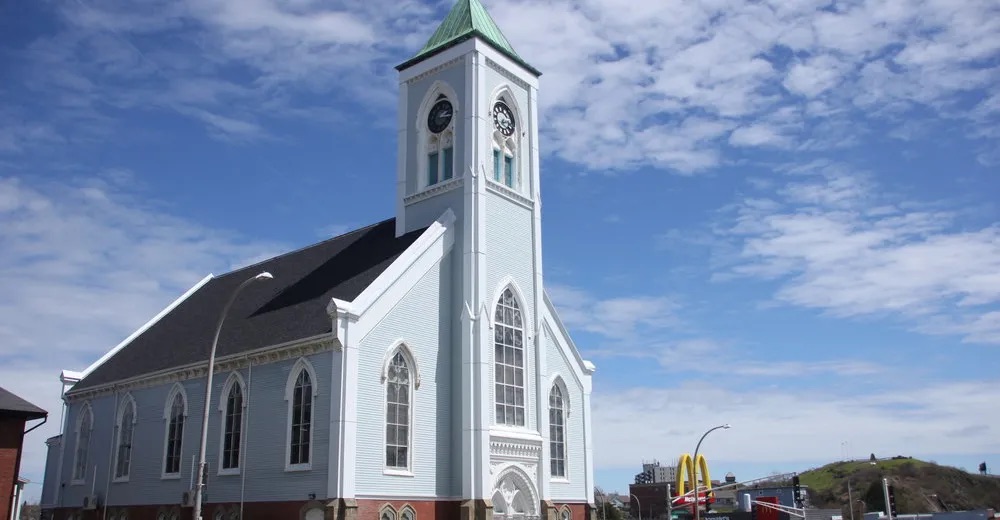
The perception of a church operating in a storefront can also pose challenges. Traditional church buildings convey a sense of permanence, sanctity, and history, which can attract members and foster community respect.

In contrast, a storefront church can struggle to establish the same sense of legitimacy and stability. Passersby may view it as a temporary or informal operation rather than a dedicated place of worship.

This perception issue can extend to potential members, who might associate the storefront location with financial instability or a lack of resources. For some, the absence of traditional symbols such as steeples, stained glass windows, and pews may detract from the spiritual atmosphere they expect in a church setting. Over time, these perceptions can impact the church’s ability to grow and sustain itself.

Acoustics and Ambiance

Storefronts are not designed with worship services in mind, and this often leads to challenges with acoustics and ambiance. Traditional church buildings are constructed to enhance sound quality, ensuring that sermons, music, and prayers resonate effectively within the space. Storefronts, on the other hand, often have flat ceilings, hard floors, and minimal soundproofing, which can result in poor acoustics and echoing.

Luckily, the acoustics are not very bad in our storefront. I preach without a microphone every Sunday (not a hard thing to do when our average attendance is 30, but if we grow, I’ll probably have to rethink it). More people absorb more sound. Without a microphone, I might become muffled. Heck, they might think I’m muffled now, but they haven’t said so if that’s the case.

The lack of ambiance in a storefront can also hinder the spiritual experience. Traditional church buildings often feature architectural elements like vaulted ceilings, intricate woodwork, and natural lighting, all of which contribute to a sense of reverence and awe. I’ll confess that our team has done a fantastic job of creating a worshipful ambiance in our space, but many storefronts can feel sterile or utilitarian, which can make it difficult for congregants to feel spiritually connected or inspired.

Zoning Issues

Operating a church in a storefront can also lead to zoning and legal challenges. Many municipalities have specific zoning regulations that restrict or limit the use of commercial spaces for religious purposes. I haven’t found that to be the case with Bossier Parish, but if you’re thinking about a storefront church in another community, it’s best to check zoning early in the planning process.

Churches may be required to apply for special permits or variances, which can be time-consuming and costly. Additionally, these regulations often limit the types of activities that can take place within the space, further constraining the church’s ability to serve its congregation and community.

Parking is another common issue associated with storefront churches, and it certainly it with ours. We’ve got four spaces in front of the church and have to utilize a parking lot for a strip center next door. Spots fill up fast when we have a large (40 people) crowd for church. Any growth we experience will ultimately be impacted by limited parking.

Financial Limitations

Storefront churches are a cost-effective alternative to traditional buildings, as I mentioned in my previous blog. That notwithstanding, they can also present significant financial challenges in the long term.

Leasing or purchasing a storefront space is initially more affordable, but the costs associated with retrofitting the space for worship can be substantial. Churches may need to invest in sound systems, seating, lighting, and signage to make the space functional and welcoming.

Additionally, rent will go up at some point, which can strain the church’s budget. Unless your landlord is a member of the congregation and has mercy on it, rent will increase. If rents become unaffordable or the property owner decides not to renew the lease, the congregation may be forced to relocate, disrupting their operations and sense of community.

Deep Roots

Traditional church buildings often serve as landmarks and gathering places, hosting events, providing shelter, and offering a range of social services. Storefronts, by contrast, may not have the space or facilities needed to support such activities. This can restrict the church’s ability to act as a hub for community life and outreach.

Moreover, the transient nature of storefront operations can make it difficult for a church to establish deep roots in the community. If the congregation frequently moves or struggles to maintain a visible presence, it may struggle to build trust and foster long-term relationships with local residents and organizations.

Conclusion

This much I know: For every advantage a storefront may offer a congregation, there is an equal disadvantage. The task of the pastor and the congregation is to weigh the advantages and disadvantages appropriately, pray and then follow the leading of the Holy Spirit.

I’m uncertain how the storefront will impact our congregation yet. We haven’t been in the space long enough to know. I know God has put us here for now, so we’ll seek to be faithful to the call we hear going forward.

But still, if you’re in the Bossier Parish, Caddo Parish or Webster Parish area, please come join us. Perhaps you’ll help us figure it out.

Until next time, keep looking up…

Made for Work…

I admit. I have a lazy streak. In my defense, I’m only lazy after I’ve been working. I’m like the lady that used to work for my grandmother who said, “When I work, I work hard. When I play, I play hard. When I sit, I go to sleep!”

Working is on my mind this morning because of the past few weeks I’ve had. Now that I’m pastoring a church again and running a business, my time off has been scarce. Vanessa and I took a few days away before beginning our new adventure in pastoring, but yesterday was my first day off in 20 days (but was it really a day off since I spent part of the day working on a sermon?).

The purpose of my writing is not to elicit your sympathy. It really is my way of trying to process my inability to find workers for my business. It makes me ask: “What has happened to the work ethic in our culture?”

Lessons in Futility

So, here’s a snapshot of my past month. I’ve been trying to fill a position in my shop for a couple of months now. I advertised for the position. Received a couple dozen applications (that’s a good thing). Spent some time processing those applications. Made a few decisions and began the process of interviewing people.

Called a guy in for a face-to-face interview. Went well. Checked his references. Again, went well. Called to make him an offer. Crickets!!! That’s right! Never returned my call. Emailed him. Crickets! No response. Time to move on…

Called another guy. Came for the interview. Went well. Checked references. Again, went well. Called and made an offer. Accepts offer. Start work on Monday. Monday comes. He’s a no-show! Make a call. Crickets. Email sent asking about the situation. Late on Monday I receive an email back that he’s sick and cant’ make it (he’ll start when he’s better–yeah, when will that be?). Okay, he can’t help it because he’s sick, but dude, you have a phone. Call somebody!

Schedule him to start the following Monday (surely he’ll be better by then). Monday comes and he shows up early. Hey! This is a good sign. Works Monday. Asks to take off early to finish a project he started before he took the job. Okay, sure. Tuesday comes. He’s a no-show! Calls that his truck is broke down. Okay, so he can’t help that, right?

Wednesday comes and he shows up–early again. Points earned. Works the morning. Goes to lunch. Never returns! Haven’t heard a word from him. No call. No email. Crickets. Odd thing is I owe him money for the day and a half he worked. Go figure.

Call another guy in for an interview. 10:00 a.m., Friday? Great! See you then. Friday comes. No guy.

Call another guy. 10:00 a.m., Friday (yes, another Friday)? Great! See you then. Friday comes. No guy.

I’m starting to develop a complex. Is it me? Am I not doing something right? It must be me, right?

Then, I think, “It’s really not me, it’s the world in which we live these days.”

I say that because I’ve got another job posting, as well. I’ve received a couple of dozen applications for that position, too.

I provide a link to every applicant who submits an application on-line to a personality assessment. For every person who actually takes the time to complete the assessment, I set up a phone screen interview. I did that for three applicants who completed the assessment. I call. No response. Three different people, three no answers. I leave messages. Still…I’ve never heard back from a single person.

Bummer! And, I’m still two people short on staff.

Lessons for My Life

I don’t know. Perhaps they’ve found other employment and don’t have the courtesy to call and withdraw their name from consideration. Perhaps they’re just checking boxes on a form so they can continue drawing their unemployment. Perhaps they just reconsidered and decided a job in the quick lube industry isn’t for them.

Okay! No problem. How about a little consideration. Have we lost that with our work ethic, too? Do I blame it on Covid? Or, have I just been walking around all my life with blinders on and didn’t realize that’s how it goes with the job market because I’ve never been in business for myself before now?

Whatever it is, it’s very frustrating…and I guess I’m taking my frustration via this blog. I am, however, reminded of Genesis 2:15–

The Lord God took the man and put him in the Garden of Eden to work it and take care of it.

The good Lord created us for work. Our work is meant to be an offering of worship to the Lord. I’m wondering if our world might be so upside down because no one wants to work anymore. And, don’t get me started on the government and give-aways. Lord, have mercy…

I’m also reminded of this little passage in the Apostle Paul’s second letter to the Thessalonians:

We certainly had the right to ask you to feed us, but we wanted to give you an example to follow. 10 Even while we were with you, we gave you this command: “Those unwilling to work will not get to eat.” 11 Yet we hear that some of you are living idle lives, refusing to work and meddling in other people’s business. 12 We command such people and urge them in the name of the Lord Jesus Christ to settle down and work to earn their own living. 13 As for the rest of you, dear brothers and sisters, never get tired of doing good.

So, I’m finding some solace in the fact that it’s not actually a new problem. I guess it’s as old as we humans are.

I could launch into an entire diatribe on the benefits of work, but the blog is long enough already and I’ve got to get ready for work. But, work today is worship (and to lead worship). Then again, work is meant to be worship everyday, but I’ve already been down that road this morning.

So, get up and go to work. It is what we’re made for.

Until next time, keep looking up…

New Places, New Spaces…

The Church of Jesus Christ is always on the move, and today the Haughton Global Methodist Church begins worship in its new home. It is a new place and a new space and I know the congregation is excited about worshipping for the first time in this new place.

The space is located at 966 Highway 80 in Haughton, LA. It was a church in one of its former lives, but it has been a physical therapy office in its most recent life. We will re-consecrate the space this morning at 10:30 a.m. for use as a place of worship, and I’d love to invite you to join us if you’re in the Haughton/Bossier City area.

I need to commend the congregation on its hard work over the past month in getting the space ready to occupy. Countless hours of service have gone into the process of converting the space back to its original purpose. Let me say, “Thank you” to all those servants who have been so diligent (and so generous) in doing what was necessary to accomplish the task. Great work!

Today will be my first opportunity to see the space after all the work is completed (will it ever really be completed?). I’m excited to see it and to lead worship for the first time in this new place. I’m excited to see all that the Lord has planned for the space and for the congregation.

I’m looking forward to getting to know the Haughton community in a deeper way. It’s going to be a challenge for me as a bi-vocational pastor, but I pray the Lord opens doors and provides opportunities for the congregation to grow and flourish in the community. I covet your prayers for the congregation, too.

Perhaps this new space in this new place will be an encouragement for new people to explore the Kingdom of God. Maybe there are those in the Haughton/East Bossier area who have been waiting for a new place and I pray the Holy Spirit will open their hearts to take a step of faith in hearing His call to salvation in their lives. Would you pray that prayer with me, too?

This new space and new place is located right next door to an oil change place. I find that only a little humorous and ironic. I spend six days a week at an oil change place and now I’ll be leading worship next door to an oil change place. Providential? Who know? I’m just trying to figure out ways we can be a good neighbor. I must confess that I’m also trying to figure out ways to use it evangelistically. We’ll pray the Lord opens doors for both to occur. Will you pray that prayer with us?

Anyway, my blogs may become less frequent now. Most of my Sunday morning time will be spent preparing for worship. They may even be spent finishing the message for that day. Of course, that’s happened before. Either way, the Lord’s got this. The Lord guided us into this, and I know that where the Lord guides, the Lord provides. I’m anxious to see how He does so in this case.

So, that’s all for this week’s blog. I don’t know when the next one might be written, but I’m anxious to see the story He is writing in the life of the Haughton Methodist Church.

Until next time, keep looking up…

The Road Between Work and Worship…

Part of my present devotional exercise is reading a sermon a day from Eugene Peterson, beloved translator of The Message paraphrase of the Bible. Though Peterson suffered some damage to his “evangelical” reputation near the end of his life, I refuse to throw the baby out with the bath water. Peterson was gifted with the ability to turn a phrase with elegance and simplicity, and with over 50 years in ministry, he turned many phrases that are both abounding in truth and utterly challenging.

If you’ve never read Peterson (outside the occasional look at The Message), I commend his work to you. If you are a pastor, you would benefit greatly from his memoir The Pastor: A Memoir, whether you’re just beginning the work of pastoral ministry, or whether you’re nearing the end of the journey. Another classic I would recommend any Christian read is A Long Obedience in the Same Direction: Discipleship in an Instant Society. This book will change the way you view Christian discipleship. Well worth the read.

So, one of the sermons I read this week offered me a particular challenge in how I view the church (little “c” intentionally used–meaning the local congregation). Here are the two paragraphs that challenged me:

“The ideal church, as far as I’m concerned (which is rooted in my understanding of Scripture), would be one where nobody came near the church for six days and everybody came on Sunday. The best kind of church would be one with no committees or organizations–nothing happening here between Sundays. Not because we have nothing to do but because we have everything to do. During the week we’re out carrying crosses, denying ourselves, following Jesus, making our witness, helping our neighbors, serving God, working responsibly and as hard as we can to be the people of God in serving and suffering the way he’s called us to do it. We work. We do.

“But, then, on the “seventh day” (the first day for Christians), we come here and leave all that behind. And we enjoy everything that God is doing. We become carefree. Free. We become children again. We let God do it all, and you sing and adore and become aware of his presence.”

Sermon “Transfigured”, Eugene Peterson

Ah! A congregation with “no committees or organizations.” A pastor’s dream! But, without the incumbent “work” of ministry that all Christ-followers are called to do in the interim, I’m sure it would soon become a nightmare. Perhaps it has…

I am reminded by Peterson’s words that there is to be no distinction between our work and our worship. We worship AND we work. Worship is meant to fuel our work. Too often, we compartmentalize our lives such that our worship is divorced from the everyday-ness of life. “This” is my religious life, and “that” is my work (everyday) life. I get so much out of the “worship” part that I want to return tomorrow or the next day to experience it again, but in doing so, I neglect the necessity of the “work” part of loving my neighbor or greeting the stranger. Worship becomes the excuse for my failure to work. Ouch!

It is easy to be Christian on Sunday. It is much more difficult to be Christian on Monday when we are met with the challenge of actually putting feet to our faith. And, if I can go to enough bible studies and serve on enough church committees, I can find solace in the fact that “I’ve done my Christian duty.” It becomes easier to forgo the loving my neighbor or caring for the orphan part of our Christian duty.

As a pastor serving full-time in vocational ministry, I thought it was my responsibility to lead Bible studies and develop programs that enhanced the life of the congregation and fostered discipleship in its members. To do otherwise would likely have gotten me fired! Besides, how would anything ever get accomplished in the life of the congregation without committees and organization? Right? Someone has to lead all that. The “work” of the church does need to get done, after all.

Now, serving as a bi-vocational pastor, I’ve come to appreciate the necessity of the work that must be done outside the walls of the church. Listen, folks! The lost aren’t coming to the church anymore. If we would encounter the lost, it will be in the ordinary, everyday encounters we have with the people where we live most of our lives–our work and our home. It is in that environment that we must live obediently and faithfully. It is in the Monday through Saturday of life where disciples are formed. It is in the Monday through Friday of life where the lost are introduced to Jesus, and are offered the opportunity to embrace him as Lord and Savior.

Worship is not an escape from the world…a welcome respite from the challenges of life. Worship is meant to propel us into the world where our work becomes our witness, and our service to others reflects our faithful obedience to Jesus Christ.

I certainly don’t mean to diminish the work I did as a full-time vocational minister, nor am I casting dispersion on the many friends and colleagues who continue to do that work faithfully. I am, however, calling into question the motivations for doing what I did as a pastor, and for doing what we do as congregations. Age and context have given me a different perspective, and that change in perspective has me questioning some of my deeply held beliefs concerning discipleship. That’s all…

I guess the long and short of it for me is that there is no distance between worship and work. The journey of discipleship follows the same road between worship and work. I suppose faithful discipleship is learning how to “keep it between the ditches” along that road.

Until next time, keep looking up…

Confessions of a Seeker-Sensitive Pastor…

I came to vocational ministry in 1991. The Church Growth Movement and “seeker-sensitive” churches were all the rage as I began my journey in obedience to God’s calling. I was young, inexperienced and on-fire for the Lord. All I wanted was to see people come to Jesus and see the Church grow. I didn’t know any better. I saw what the “big” churches were doing, so that’s what I tried to do. I read all the books, attended the seminars and watched all the videos (VHS in those days!). I embraced the “seeker-sensitive” model wholeheartedly. What did I know?

What is a “seeker sensitive” church? The “seeker-sensitive” church tries to reach out to the unsaved person by making the church experience as comfortable, inviting, and non-threatening as possible. The idea behind the concept is to get as many unsaved people through the door as possible, and to use nearly any means to accomplish that goal. We can’t have unsaved (or saved) people getting bored, so we need to use theatrics and popular music to keep their attention (yes, been there, done that). Gotta’ have that state-of-the-art technology, lighting and great sound equipment if you’re going to do the job correctly.

A lot of churches became very large (and some very quickly) using the “seeker sensitive” model. One of the first was Willow Creek Church in Illinois. Many “mega-churches” grew to become megachurches following the model. I won’t name more here simply because I don’t want my confessions to reflect negatively on any other pastor or any other congregation. That’s not what this post is about.

So? What is this post about? I suppose it’s more about my failure as a pastor as I pursued the “seeker sensitive” approach to ministry, and it’s about unpacking a maturing theology of the church. Maybe it’s just because I’m old and old-fashioned and I’m just tired of trying to make people comfortable in church. Just call me the curmudgeon pastor. That seems to be what I am these days. Maybe it’s because I’m reflecting on Psalm 95 today:

Come, let us sing to the Lord!
    Let us shout joyfully to the Rock of our salvation.
Let us come to him with thanksgiving.
    Let us sing psalms of praise to him.
For the Lord is a great God,
    a great King above all gods.
He holds in his hands the depths of the earth
    and the mightiest mountains.
The sea belongs to him, for he made it.
    His hands formed the dry land, too.

Come, let us worship and bow down.
    Let us kneel before the Lord our maker,
    for he is our God.
We are the people he watches over,
    the flock under his care.

If only you would listen to his voice today!
The Lord says, “Don’t harden your hearts as Israel did at Meribah,
    as they did at Massah in the wilderness.
For there your ancestors tested and tried my patience,
    even though they saw everything I did.
10 For forty years I was angry with them, and I said,
‘They are a people whose hearts turn away from me.
    They refuse to do what I tell them.’
11 So in my anger I took an oath:
    ‘They will never enter my place of rest.’”

Psalm 95 (NLT)

For a lot of my ministry, my mentality was, “Let’s just get them to church and they’ll meet Jesus along the way.” Some did. Most, unfortunately, did not. The problem (as I reflect back on over 30 years of ministry) is that the things I did to attract them, I thought I had to continue doing to keep them. And, it always had to be bigger and better the next time. Gotta’ keep up with the times, after all. Hey? If we wanted to be the big church down the street, we needed to act like the big church down the street.

Being a young and passionate (but totally immature) pastor, I thought it was all about getting people in the door so we could introduce them to Jesus Christ. I’ve used a statement many times before that encapsulates this philosophy: The Church is the only organization that exists for those who aren’t there yet. Wow! Can I see the immaturity now (but, hindsight is 20/20, right?). There is a foundational flaw that can really cause the whole building to crumble in that philosophy.

The Church doesn’t exist for those who aren’t there yet. The Church exists for God and God alone! Let’s get that straight. Disciples of Jesus Christ gather as the body of Christ to worship…worship Him by bringing a sacrifice of praise and to offer Him adoration for who He is and what He has done and is doing. He alone is worthy of our praise and the church’s worship should be a sweet-smelling aroma ascending to the throne of God each and every time we gather. That’s what the “seeker” needs to experience each and every time they enter the sanctuary.

Worship is what makes the church different from the world. It is what sets us apart from the world. Invite an unbeliever to “worship” with pop music and a sound and light show, they’re apt to think, well, there’s not much different here from what I get out there. Just a few mentions of God thrown in is about all. Oh, that and a self-help, motivational speech masquerading as a sermon.

A “seeker” can’t bring a level of sacrifice to church. A seeker can bring questions. A seeker can bring doubts. A seeker can bring skepticism. But, a seeker cannot bring worship to the gathered body. And, don’t get me wrong. That’s perfectly okay. They’re not supposed to!

They are, however, supposed to see the body of Christ offering their sacrifice. In so doing, they experience an awesomeness that is missing from the rest of their lives. They capture a glimpse of the holy…and the Holy One…that is too often missing from the broken world in which they spend most of their daily life. It is then that they begin to explore deeper avenues of faith, and hopefully come to know Christ in a saving and life-changing way. Worship itself becomes a converting experience.

Worship becomes witness. That’s a phrase I like better these days. Another phrase that has meaning for me these days is this–The Church gathers for worship and scatters for witness. The conjunction “and” in that last phrase carries a lot of weight. It is in the “and” that the church must build its discipleship model. I don’t want to unpack what a church’s discipleship model should look like (this post is already too long), but suffice it to say that every congregation must have in place a process of moving a new convert from new believer to mature disciple of Jesus Christ.

So, let me repent of my desire to grow large churches. Let me repent of my desire to attract great crowds. Let me repent of my failure to understand the nature of my task as a pastor/preacher. Let me repent of the times I’ve tried to tickle ears to hold the attention of the gathered body (whether believer or seeker). Let me repent of the gimmicks (I actually gave away a cruise once) and gadgets I’ve employed to attract non-believers.

Let me, instead, lead worship that brings glory to God alone. Let me worship in a way that witnesses to the awesome nature and power of the God of the universe who made Himself known in Jesus Christ. Let me lead worship that becomes witness to the wanderer and the seeker. Let me lead worship that becomes a converting experience for all of us. Let me proclaim with boldness the Word of God. Let me help a congregation build a model of discipleship that leads us all into a more intimate relationship with Jesus and with one another, and empowers us to boldly share the Gospel of Jesus with a lost a hurting world. Let me lead worship that compels us to scatter for witness.

Oh, that is my prayer, Lord. Let it be so!

Until next time, keep looking up…

Better Days Ahead…

Driving across north Louisiana a few days ago, I was reminded of how many little churches dot the countryside. Let’s just say…a lot! More than the number dotting the countryside are the number that also populate our small towns and cities. There are small congregations all across the landscape. Many of them are healthy, viable congregations. Others are struggling to pay the pastor (or find one) and keep the doors open. Still others have closed the doors, financially unable to sustain themselves due to the death of a certain congregation member, or through shifting demographics or through changing patterns of worship attendance.

Most of those churches (the ones still open, anyway), whether rural, small town or city are struggling to survive. I know of one congregation whose pastor made an impassioned plea to a gathered body for help in replacing the congregation’s HVAC system. To the pastor’s credit, the plea worked. The gathered body took up a collection and when all was said and done, they collected enough to fix the system. Good for them…I suppose.

I was participating in a meeting recently when the issue of struggling congregations came up. One of the other pastors noted that his congregation (a very healthy multi-site congregation) donated funds to a small, rural congregation to help them repair their HVAC system. I found it odd that two different congregations in two different denominations couldn’t afford to repair the A/C systems, but I took it as symbolic of the nature of the church these days. A large number of congregations are struggling to survive.

I don’t think that trend will reverse in the near future. The reality is that church attendance is on the decline. The Gallup Organization does a great job tracking church attendance, and their research shows a marked decline over the years in worship attendance. I’ll not rehash their research in this blog, nor will I speculate on the reasons for the decline. It’s real! All those struggling congregations are proof of the reality.

And, many more of those congregations will close. As sad as that reality might be, it is still a reality…a reality that few a willing to acknowledge.

“Well, if people would just…”

Fill in your own blank. Priorities. Congregations unwillingness to change. Lack of leadership. Failure to meet needs. The reasons are too numerous to mention. We could unpack them all and it still wouldn’t reverse the trend.

I also need to note that there are still multitudes of healthy, thriving congregations, but for every one of those, there are ten others that should close or will close over the next five years. Seriously, if a congregation can’t afford to fix its own HVAC system when it breaks, should it remain open?

It’s wonderful that others are willing to do what’s necessary to assist struggling congregations. It’s a reflection of our Christian witness. Bravo! But, isn’t it only delaying the inevitable? And, if so, is it something we should applaud? I really don’t think anyone wants to ask the hard questions to struggling congregations. Most likely, it’s because we have a bad theology of death (yeah, that should be unpacked more).

I didn’t intend for this to be a morbid and depressing blog about the death of congregations (or the church). I really intended it to be about a message of hope for the Church. I mean, really, our hope as the Church is not to be found in buildings. Our hope is to be found in the Lamb of God, Jesus Christ. The Church will always be, and against it the gates of hell shall not prevail. Isn’t that what Jesus said?

17 And Jesus answered him, “Blessed are you, Simon Bar-Jonah! For flesh and blood has not revealed this to you, but my Father who is in heaven. 18 And I tell you, you are Peter, and on this rock I will build my church, and the gates of hell shall not prevail against it. 19 I will give you the keys of the kingdom of heaven, and whatever you bind on earth shall be bound in heaven, and whatever you loose on earth shall be loosed in heaven.”

Matthew 16: 17 – 19 (ESV)

On this All Saints Sunday, I am reminded that the destiny of the Church (the Church Militant and the Church Triumphant) lies ahead of us. The best, truly, is yet to come! That is what motivates me to gather with the body of Christ each and every week. That is what motivates me to preach the Gospel to the gathered body week in and week out. That is what motivates me to lead a congregation faithfully, the challenges of our present situation notwithstanding.

I am reminded of John’s vision is The Revelation:

After this I looked, and behold, a great multitude that no one could number, from every nation, from all tribes and peoples and languages, standing before the throne and before the Lamb, clothed in white robes, with palm branches in their hands, 10 and crying out with a loud voice, “Salvation belongs to our God who sits on the throne, and to the Lamb!” 11 And all the angels were standing around the throne and around the elders and the four living creatures, and they fell on their faces before the throne and worshiped God, 12 saying, “Amen! Blessing and glory and wisdom and thanksgiving and honor and power and might be to our God forever and ever! Amen.”

13 Then one of the elders addressed me, saying, “Who are these, clothed in white robes, and from where have they come?” 14 I said to him, “Sir, you know.” And he said to me, “These are the ones coming out of the great tribulation. They have washed their robes and made them white in the blood of the Lamb.

15 “Therefore they are before the throne of God,
    and serve him day and night in his temple;
    and he who sits on the throne will shelter them with his presence.
16 They shall hunger no more, neither thirst anymore;
    the sun shall not strike them,
    nor any scorching heat.
17 For the Lamb in the midst of the throne will be their shepherd,
    and he will guide them to springs of living water,
and God will wipe away every tear from their eyes.”

Revelation 7: 9 – 17 (ESV)

Looking for diversity in the Church? Oh, it’s coming. It’s our destiny! Seeking true worship in the church? It will come. It’s our destiny!

Testing…tribulation, as John calls it, will be ours, as well. That, too, is the destiny of the Church. Yes, it will be experienced as the Church Militant, but it is through the testing that we shall know the great salvation of our God. It is through the testing that we will discover the Lamb who becomes the Shepherd who will lead us to springs of living water, and shall wipe every tear from our eyes.

This is where I find hope amid the closing of congregations and the diminishing worship attendance. Why? Because the Bible says it’s our destiny.

So, let us be faithful to work for diversity. Let us persevere in the face of trials and tribulation. Let us seek to worship in spirit and in truth until that Day comes and all the Church Militant shall be joined together with the Church Triumphant at the throne of God and the feet of the Lamb!

What a day that will be!

Until next time, keep looking up…

Oh, I Want to Go to Church…

Church. It is a changin’! So say the statistics published recently by the Gallup organization and reported on Churchtrac.com. According to Churchtrac, attendance at regular weekly religious services has fallen consistently in the 21st century, from 32% in 2000 to 20% in 2022 (view chart here). That’s a fairly precipitous decline in such a short period of time. Yes, I know, Covid-19 happened (and the pandemic may have accelerated the decline), but the decline started long before the pandemic, so let’s not blame it all on that.

And, we wonder why our culture is in decline! Yes, the culture is in decline. I invite you to change my mind. When I say the culture, I mean the American culture. Seriously, can any of us say we are better off than a generation ago? It has always been the desire of one generation to leave a better world for the next generation (you know, your children and grandchildren). I’m not so sure that we ( I mean my generation–I was born the last year of the “boomer” generation) will be leaving our progeny a better world. I think the decline in church attendance is one of the primary reasons why. What do I mean?

We haven’t passed on the faith to the next generation. We (I mean my generation) have lost our perspective when it comes to faith formation. According to Barna Research, Boomers had the highest drop off rate in returning to worship post-Covid at 22%. I don’t mean to bore you with numbers, but research shows our failure in passing on the faith. I can hear the words of Deuteronomy 6 in my ear:

Hear, O Israel: The Lord our God, the Lord is one. Love the Lord your God with all your heartand with all your soul and with all your strength. These commandments that I give you today are to be on your hearts. Impress them on your children. Talk about them when you sit at home and when you walk along the road, when you lie down and when you get up. Tie them as symbols on your hands and bind them on your foreheads. Write them on the doorframes of your houses and on your gates.

The primary place of faith formation is in the home, but we need the church (and we need to go to church) to be reminded of who we are and Whose we are. We need to go to church to remind us that we are connected to something greater than ourselves, to remind us that we are not the center of the universe (and neither are our children or grandchildren). We need to go to church to experience the transcendent nature of the Almighty, to remind us that morality matters and why it matters. We need a church family (yes, I said need!) for connection and community.

I know the argument that community is found in so many other places nowadays, but too many of the places people are finding community are in places where connection and community can happen without any moral compass. Yes, people have ethics and each of those communities have boundaries that define them, but too often those boundaries are rooted in activities rather than in any type of moral foundation. The morals and ethics brought to those communities come from outside those communities (generally), and my point is that the more we move away from the place that we find a moral compass, the further we drift from a firm foundation. The church, with all its faults and failures, is STILL the place we will find a moral compass and a firm foundation.

But, the Church is a mess, right? Of course it is! Guess what? It always has been. There have been (and there will always be) times when Christians individually, and the Church corporately, have failed to live up the standards set by Jesus and the Apostles (man! Am I living proof of that fact!). The Church has sometimes failed to embody its own values. Here’s the thing, though: the values survive the failures! That’s why there’s hope, and that’s why I want to go to church.

I am reminded of the words of Jesus in Matthew:

Now I say to you that you are Peter, and upon this rock I will build my church, and the gates of hell shall not prevail against it. Matthew 16: 18

I take this as Jesus’ promise that the Church will not go so far astray that it becomes something it was never meant to be. Though the Church may not be perfect does not mean that Jesus is not perfectly faithful in keeping His promises. Otherwise, hell would win, and well, that’s just not going to happen!

The Church is rooted not in the failures of individuals or institutions, but in its creeds, doctrines and sacraments. These give the Church anchor, and they give we who attend regularly anchor in our lives. When we miss church (and the more we miss church) we lose a little bit of our anchor…our foundation. The more un-moored we become from the church the more the culture will drift from any firm foundation holding it together.

I believe there is still time, though, to recover our foundations. How will it happen? Not by waiting on bishops or clergy to change the world. It will happen when we look in the mirror. You and I are the Church. You and I must to be connected to one another with a common thread of faith because whatever the Church is going to be or whatever the Church is going to do, it will be or do because you and I step up and participate. You and I, as imperfect as we are, are perfectly suited to be vessels the Holy Spirit can use to change the world. It won’t happen if we’re not connected to each other.

Maybe I had to write this today because I’ve been singing this song all week:

Let’s all go to church!

Until next time, keep looking up…

Three Life Hacks for a Successful New Year…

“Life Hack” made its way into the English language around the turn of the century, and the definition made it into Merriam-Webster in 2004. A “life hack” is “a usually simple and clever tip or technique for accomplishing some familiar task more easily and efficiently.” As we transition into 2021, may I recommend three “life hacks” that will make for a successful 2021? I find them in the Old Testament prophet, Jeremiah. Here is his prophecy from Jeremiah 29:

This is what the Lord Almighty, the God of Israel, says to all those I carried into exile from Jerusalem to Babylon: “Build houses and settle down; plant gardens and eat what they produce.Marry and have sons and daughters; find wives for your sons and give your daughters in marriage, so that they too may have sons and daughters. Increase in number there; do not decrease. Also, seek the peace and prosperity of the city to which I have carried you into exile. Pray to the Lord for it, because if it prospers, you too will prosper.” Yes, this is what the Lord Almighty, the God of Israel, says: “Do not let the prophets and diviners among you deceive you. Do not listen to the dreams you encourage them to have. They are prophesying lies to you in my name. I have not sent them,” declares the Lord.

10 This is what the Lord says: “When seventy years are completed for Babylon, I will come to you and fulfill my good promise to bring you back to this place. 11 For I know the plans I have for you,” declares the Lord, “plans to prosper you and not to harm you, plans to give you hope and a future. 12 Then you will call on me and come and pray to me, and I will listen to you. 13 You will seek me and find me when you seek me with all your heart. 14 I will be found by you,” declares the Lord, “and will bring you back from captivity.[a] I will gather you from all the nations and places where I have banished you,” declares the Lord, “and will bring you back to the place from which I carried you into exile.”

I’m done with making new year’s resolutions only to break them seven days (or seven minutes 😉) into the new year. So, I’ll swap resolutions for solutions, and these life hacks (simple as they are) offer a solution to all that might trip me up in the new year. I want to get to the end of 2021 and look back at a life well lived, rather than look back at a year full of regrets because I didn’t achieve all I’d hope, or resolved to accomplish when the year began. I don’t think anyone can look back at 2020 and say it’s been a good year, or that they accomplished everything they hoped when the year began. If you can, well you are incredibly blessed. Count those blessings!

The Commodity of Time

Everyone of us begins 2021 equal in at least one way–time. Everyone of us has 12 months, 52 weeks, 365 days, 8,760 hours, 525,600 minutes, 31,536,000 seconds. It’s what we do with the time that makes the difference. What do we do with all our time?

If the average person sleeps seven hours a night, we’ll spend 3 ½ months sleeping. We all have to eat, and if we eat three meals a day, we’ll spend 16 days eating. If we are active in church, we’ll spend 9 days in church. For work, an average 8-hour day, allowing for normal holidays, we’ll work 75 days. Five to ten days will be spent traveling (to work, to the bathroom, to the kitchen, to the store, etc.), and here’s an interesting one—we’ll spend 9-15 days in the bathroom [unless we’re sick, then it could be longer, or shorter depending on the sickness]. With all that moving, working, eating, sleeping, etc., the average person still has about 100 days that are unaccounted for. What we do with that 100 days can make all the difference in the world.

Life Hack #1–Seek God

The first hack that will make 2021 a successful year is to seek God. Seems simple enough, right? Wrong! There are two types of people in the world—planners and non-planners. Each of those types can be subdivided along a spectrum of good to bad planners, and good to bad non-planners, but basically you’re either a planner or a non-planner. What we too often do, whether we’re a planner or a non-planner is to make our plans and either ask God to bless them, or look back and ask God why He didn’t bless them, or if we’re a non-planner (me), fly by the seat of our pants and when something happens wonder where God is in all of it. We pretty much make our own excuses, justify the things we do, believe those who agree with us, and never once consider God. Every endeavor, every new year, every project should start with the question, “How will God be glorified in this?”

If we would be successful at anything, we must first seek God. If we’re a planner we will go into the new year with everything all planned out. We’ll have our job plans, our family plans, our vacation plans, or our educational plans, but, we’ll leave out the most important part of planning—God. Of course, for all you planners, if 2020 has shown us nothing else, it has show us that plans are made to be changed. Or, as the old joke goes: “Do you want to make God laugh, tell Him your plans!”

I’m reminded that Proverbs 3:5-6 says, “Trust in the LORD with all your heart and lean not on your own understanding; in all your ways acknowledge him, and he will make your paths straight.”

It’s not much different if we’re a non-planner. We’ll wander (and wonder) through the entire year, without seeking God and the plans that He has for us. We’ll come to the end of another year trying to figure out what happened to the time.

Seeking God is simple, but never always easy. It begins with worship. Covid changed the way the Church worships, but worship is at the center of our life as disciples. Worship is an opportunity to experience the presence of the Holy, and without worship it is impossible (yes, I said “impossible”) to seek God.

We also must study if we are to seek God. Study the Bible and study the great thinkers of the Christian faith. Study is an opportunity to understand God’s will more.

Prayer is also a key to seeking God. Prayer is where real intimacy is developed. Do we want to distinguish between the the clamor and demands of the world around us and the authentic heart of God? Pray!  Seeking God is not about resolving to do one more thing. It’s about seeing prayer and worship and study as solutions to the issues facing our lives. The first life hack that will make 2021a successful year is to seek God.

Life Hack #2–Bloom Where We are Planted

The second hack that will make 2021 a successful year is to bloom where we’re planted. This is all about contentment in our lives. That’s the problem for a lot of us, we’re simply discontented with circumstances as they are. Granted, there are some things we should never be content with—like if we’re living with a persistent sin, or struggling with an addiction. But, most of us are looking for the next job, or the next spouse, or for graduation. We say, “If I were only married,” or “If I only had a different job,” or, “If I only made more money,” or “It I could just get out of school,” then things would be better. As if a change in circumstances would make a change in me.

God told the exiles in Jeremiah 29 to build houses, plant gardens and have children as foreigners. That was God’s way of saying, “You’re right where you’re supposed to be.” Understand, there is such a thing as holy discontent, a time when God puts it on our hearts to move on to the next phase of life, but that rarely comes until we’re content where we are. We also need to realize that sometimes, bad circumstances may be God’s tool of refinement in our lives.

Part of blooming where we’re planted includes working for peace in our relationships and in our community. Jeremiah tells the exiles to pray for the peace of Babylon. I am reminded of what Jesus said in the Sermon on the Mount: “Blessed are the peacemakers, for they shall be called Children of God” (Matt. 5:9).

If we desire peace in our communities, we must work pursue it, primarily because WE are the community. The community won’t be better until we’re better.

If we don’t like the political climate, pray and work to change it. Enter the fray. Engage the community. If we don’t like the educational climate, pray and work to change it. If we don’t like the social climate, pray and work to change it. It we don’t like…well, you get the picture.

We must engage our community in ways that promote strong healthy relationships and pursues peace. That’s part of what it means to bloom where we’re planted.

Life Hack #3–Always Look Forward

The third hack that will make 2021 a successful year is to always look forward. We look forward because we know the best is yet to come. We are an expectant people, a resurrection people, and as God told the exiles in Jeremiah 29:11 that He had a plan for them with a future and a hope, so He has one for us.

The resurrection of Jesus Christ is the source of our hope, and it’s at the heart of God’s plan for our lives. The resurrection is the reason we gather weekly to worship. The resurrection is the foundation of our faith. As bad as 2020 may have been, 2021 can be better. As good as 2020 may have been (can anyone really say that?), 2021 can be so much better. We know that God’s best, God’s ultimate plan for us, for His Church, for His kingdom is yet to be realized.

There is a story about a woman who was diagnosed with a terminal illness and had been given three months to live. As she was getting her affairs in order, she contacted her pastor and asked him to come to her house to discuss some of her final wishes.

She told him which songs she wanted sung at her funeral service, what Scriptures she would like read, and what outfit she wanted to be buried in (talk about a planner!). She requested to be buried with her favorite Bible. As the pastor prepared to leave, the woman suddenly remembered something else. “There’s one more thing,” she said excitedly.

“What’s that?” said the pastor.

“This is important,” the woman said. “I want to be buried with a fork in my right hand.”

The pastor stood looking at the woman, not knowing quite what to say.

The woman explained. “In all my years of attending church socials and potluck dinners, when the dishes of the main course were being cleared, someone would inevitably lean over and say, ‘Keep your fork.’ It was my favorite part of the meal because I knew something better was coming, like velvety chocolate cake or deep-dish apple pie.

“So, when people see me in that casket with a fork in my hand and they ask, ‘What’s with the fork?’ I want you to tell them: ‘Keep your fork. The best is yet to come!'”

My friends, we ought to live life with a fork in our hand. It’s our reminder that the best is yet to come.

Seeking God. Blooming where we’re planted. Always looking forward. Are these really life hacks? Well, they’re simple, but there’s nothing very clever about them, so I’m not sure they fit the classic definition. I do know, however, that if we do them, I can virtually guarantee a great year in 2021 no matter what happens.

Until next time, keep looking up…

I Think I Need a Drink…

I wrote last week about the draining nature of 2020 for me, and the reality is that 2020 has been draining for many people, so much so that they have been driven to drink! Nielson reported a 54% increase in alcohol sales the first week of the “stay-at-home” orders in the U. S., and three weeks later the World Health Organization warned that alcohol use would exacerbate the health-related concerns of the pandemic. Go figure (see here and here for more concerns)!

I ended, though, with the expression of my desire to be filled…to be filled with the power of the Holy Spirit. The Apostle Paul had something to say about that idea, too! Those who follow Christ, Paul says, have “put on” a new way of being. This new way of being comes as a result of being filled…filled with the power of the Holy Spirit.

A CASE FOR WINE?

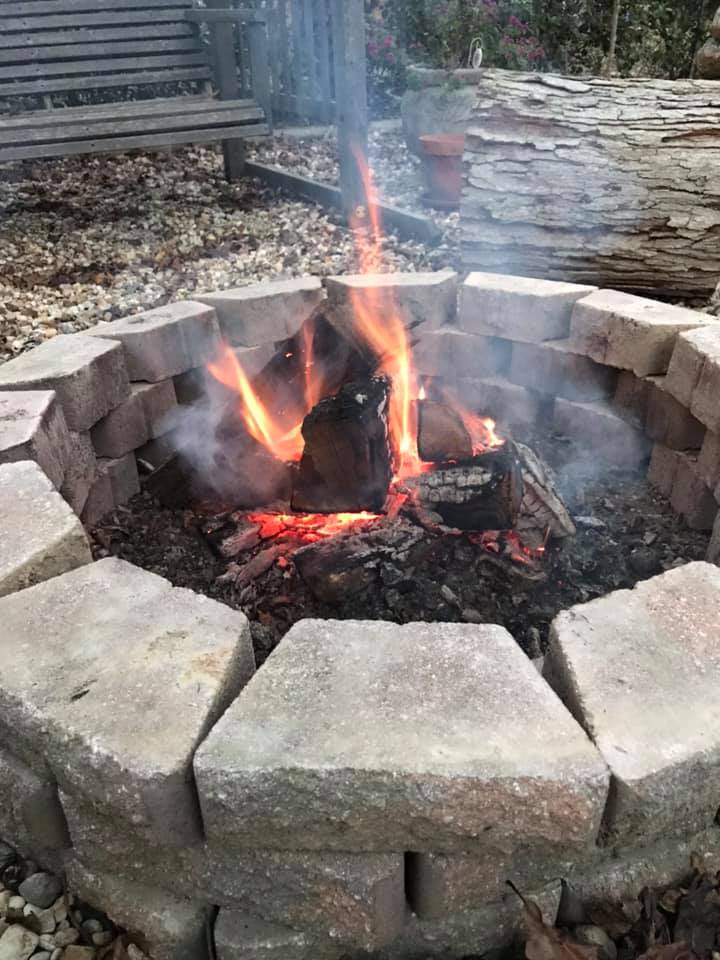
We don’t simply come to Jesus Christ for salvation and that’s the end of it. The Christian life is like my fire pit. DE7E8223-A03C-479B-B090-F8D65F778712Vanessa and I love sitting around our fire pit, but to continue to enjoy its warmth and glow, we have to keep stoking the fire. It’s a process that keeps the fire burning. So is the Christian life.

The Apostle Paul liked to use analogies, too. As he wrote describing the life of followers of Jesus Christ, he variously used a wrestler, a runner and a soldier. Those are all active people. We must do something as we participate in this walk of faith where we are becoming people of Christ.

Paul having previously cautioned the Ephesians about their behavior, says in 5:15– “Be careful how you live.” He says, “Don’t be foolish, but rather be wise. Take advantage of every opportunity.” Then, in verse 18 he cautions them to not “be drunk with wine, because that will ruin your life.

Some folks read verse 18 and think Paul is making a case against Christians drinking. Is Paul telling Christians not to drink? Not really. Paul wasn’t a tea-totaler, and he would instruct his protégé Timothy to take a little wine for his stomach (1 Timothy 5:23). We know wine was a common beverage in the first century, and that Jesus himself drank wine. Don’t forget that Jesus even turned water into wine at a wedding (John 2: 1-12). This passage is not a case against drinking wine. It is a case against getting drunk. More particularly, it’s a case against getting drunk as a religious activity.

There was in the city of Ephesus a great following of the god Dionysus. Dionysus was the Greek god of wine. The worship of Dionysus included drinking, drinking and more drinking with lots of frenetic dancing thrown in. Think “frat party” here and you’ll have a good idea of their religious service. Followers would drink and dance until they were drunk. The belief was that if they could get totally wasted they could open themselves to the fullness of the god, Dionysus. That’s the culture these new followers of Christ were coming out of, and Paul says, “You don’t have to do that!”

BE FILLED

Paul knew (and we know) that life is challenging. Between the time we come to trust Christ and the time we enter heaven, life happens. Life doesn’t go swimmingly just because we came to Christ. The problems we had before are likely the same problems we have after. The same temptations we had before are probably the same temptations we have after. The problem is that when we face the challenges that life presents us, we’re want to reach back into the old life and deal with those challenges in the old way. Paul tells the Ephesians they don’t have to reach back into their old life because in this new life there is a new way to be filled with the power of God. This new way is to be filled with the Holy Spirit.

Paul says that rather than be filled with wine, be filled with the Holy Spirit. There are some who believe this filling by the Holy Spirit is one in which we get carried away in a frenzy. Paul isn’t talking about running up and down aisles, jumping pews or speaking in tongues. He uses a word that means to be “under the influence.” To be filled with the Spirit is to be under the influence of the Holy Spirit. Of course, we’re prompted to ask “How do we come under the influence of the Holy Spirit?” Paul’s use of the word helps us understand that, too.

The word is given as an imperative. That means it’s a command. It’s not an option. Being filled with the Holy Spirit is not something reserved for pastor’s and worship leaders. It’s something that’s intended for every believer. Every believer is given the Holy Spirit as a seal when we come to faith in Christ, and so it is God’s desire that each believer live under the Spirit’s influence. Rather than being under the influence of some alcoholic beverage, or the influence of some other outside source, we are to live under the Spirit’s influence.

The word is also in the present tense, which speaks of a continuous action. It’s not a one and done thing (sort of like my fire pit I mentioned earlier). This filling is meant to be an on-going process—an on-going experience.

A lot of people have had mountain-top moments on their journey of faith. A mountaintop moment is like Peter, James and John had when they went with Jesus up Mount Tabor and saw him transfigured (Matthew 17: 1 – 11). They wanted to stay there. In that moment, they were just so close to God. But, mountaintop moments fade because life is lived in the valley. This filling Paul talks about is meant to be an everyday kind of filling that sustains us through life in the valley. It’s meant to influence us every day. We can’t fill our cars up with gas once. We have to fill them up continually.

There’s one more interesting point about the word used: the word is in the passive voice. It means this filling is something that is done to us. We can’t fill ourselves. We can only put ourselves in a place where God can fill us. How do we do that?

GETTING FULL

First, we ask. Have we ever asked God to fill us with His Spirit? Every day we can ask God to fill us. Fill me as I go to work today, Lord. That’s what I do! Every morning, I’m continually asking God to fill me with His Spirit, to speak his word through me. You can pray these prayers, too:

  • “Fill me with your Spirit, Lord, as my spouse and I deal with this issue.”
  • “Fill me as I face my boss today.”
  • “Fill me as I deal with this health issue.”
  • “Fill me for _______________.”

If we’re not under the influence of the Holy Spirit, we’re going to want to revert to old, and even self-destructive ways, to face the challenges of life. Simply ask. Jesus said in Luke 11:13: So if you sinful people know how to give good gifts to your children, how much more will your heavenly Father give the Holy Spirit to those who ask him.”

Second, we worship. Worship puts us in the place where we can experience the Holy Spirit. Paul says “singing psalms and hymns and spiritual songs among yourselves, and making music to the Lord in your hearts” (Ephesians 5: 19). Regular worship is part and parcel to being continuously filled with the Spirit. We experience God and are drawn closer to Him.

Third is fellowship—connecting with other believers. Paul stresses that fact throughout his letter to the Ephesians, and does so once again as he says, “Submit one to another out of reverence for Christ” (Ephesians 5:21). The Christian life is not a “one-person show.” We need each other. We cannot, and we will not, be filled with the Spirit unless we connect with the body of Christ and other believers.

Finally, we connect with God’s word—the Bible. When we open the pages of the Bible, the Holy Spirit feeds our souls. Just reading the words opens us to experience God in new and life-changing ways.

I hear some of you saying, “Well, I just don’t get much out of it when I read the Bible. I can’t feel anything we I read it.” Trust me. Just the act of reading the words opens us—even if we don’t feel it. Look, we’re not always going to “feel” God doing God’s work. Just because we don’t feel it, doesn’t mean He’s not doing it.

God is faithful and He will fill us. We just have to put ourselves in the place where we can be filled.

0A615C60-C567-4824-B5DD-4044B35A7F4D_4_5005_cSo, let’s all have a drink! Drink in the fulness of Jesus Christ through His Holy Spirit!

Until next time, keep looking up…

The Bible Tells Me So (or, I’m Starting with “Why?” Part 2)…

I remember as a teenager hearing about this mysterious entity called a “house church.” I learned there were actually these small groups of Christ-followers who met weekly in homes and called themselves a church. I thought it rather strange, and I was not discouraged in that thinking from those in the more “traditional” church in which I grew up.

Courtesy of The Toledo Blade

People can be very passionate when it comes to the discussion of house churches (or simple churches or organic churches–the terms are interchangeable). Some will argue, “It’s the only way to ‘really’ do church. After all, it is how the New Testament church functioned.” Still others will, with equal passion, argue that house churches are generally made up of disgruntled members from more traditional congregations, or of theologically quirky folks who are considered, well…just, odd. Add in the fact that house churches are not very prevalent in Western culture, and one has a recipe for misunderstanding.

So, here I am to try to help with any misunderstanding my current path and calling may cause. In part 1 of this series (click here to read), I shared about God’s call as the underlying “why” of this journey, but the why goes beyond God’s call (though that would be enough in itself). The second “why” that motivates me to move in this direction is because I believe the house church is biblical.

What? You don’t think so? If one thinks the house church movement is not biblical, that one must be compelled to discount the first one hundred years of church history. Here’s a brief survey of relevant Scripture:

44 Now all who believed were together, and had all things in common, 45 and sold their possessions and goods, and divided them among all, as anyone had need. 46 So continuing daily with one accord in the temple, and breaking bread from house to house, they ate their food with gladness and simplicity of heart, 47 praising God and having favor with all the people. And the Lord added to the church daily those who were being saved. (Acts 2: 44 – 47)

42 Day after day, in the temple courts and from house to house, they never stopped teaching and proclaiming the good news that Jesus is the Messiah. (Acts 5:42)

Then Paul left the synagogue and went next door to the house of Titius Justus, a worshiper of God. Crispus, the synagogue leader, and his entire household believed in the Lord; and many of the Corinthians who heard Paul believed and were baptized. (Act 18:7)

20 You know that I have not hesitated to preach anything that would be helpful to you but have taught you publicly and from house to house. (Acts 20:20)

Greet Priscilla and Aquila, my co-workers in Christ Jesus. They risked their lives for me. Not only I but all the churches of the Gentiles are grateful to them. Greet also the church that meets at their house. (Romans 16: 3-5)

19 The churches in the province of Asia send you greetings. Aquila and Priscilla greet you warmly in the Lord, and so does the church that meets at their house. (1 Corinthians 16:19)

Paul, a prisoner of Christ Jesus, and Timothy our brother, To Philemon our dear friend and fellow worker— also to Apphia our sister and Archippus our fellow soldier—and to the church that meets in your home: (Philemon 1: 1-2)

I think you get the picture. The early church was a church that met primarily in the homes of believers. They didn’t have church buildings to meet in, so homes became the default location. Yes, believers met in the Temple and in synagogues, but not as an organization–those early believers were part of another institution. Following the biblical model in this transitional period in Western culture opens the door to a fresh move of the Holy Spirit. My favorite way to say it is “House Church–Church in the new, old-fashioned way!”

Please let me clarify something, though. The house church is not the only legitimate model for church. I would never argue that point. The Holy Spirit has used various expressions throughout history to advance the Kingdom of God around the world. The “institutional” church is in a time of seismic shifting, and it will continue to meet and worship and serve. Campuses have and will continue to re-open. Congregations have and will continue to pivot. Hooray!

I am not anti-institutional church. The institutional church has been incredibly good to me and my family. I am deeply grateful for the love, care and nurture I’ve received in the institutional church, and I cherish the friendships those years have developed. And, I’m still a part of the institutional church–the Evangelical Methodist Church is a denomination, after all! But, I am grateful that the EMC is committed to church planting, and to do so in new, fresh, creative ways.

It would have been very easy to simply drop all denominational affiliations…to say that denominations are an abomination (some theologically odd people might agree!), but I don’t believe that to be the case. It is important for me to be a part of the “institution” because it affords me a covering or authority and accountability. I need both. I reflect my submission to Christ through my submission to the District Superintendent and the General Superintendent of the EMC, and I am held accountable for the work of ministry by them, and others who serve the general church.

The House Church Movement is a ministry of the Evangelical Methodist Church, and though I begin as its pastor, we will serve under the Book of Discipline of the Evangelical Methodist Church. We will be accountable to them. We will report to them (but, they do not now, nor will they ever, own my house, or any other property the church might meet).

So, you see, this is not an anti-institutional backlash. This is a genuine attempt to reclaim a biblical model for doing ministry as the church. I pray you’ll join us on the journey.

There are three more “why’s” to follow:

  • House churches meet people’s needs.
  • House churches take place where harvest happens.
  • House churches reflect the priesthood of all believers.

I’ll unpack these in coming blog posts, but in the meantime, don’t forget to pray for The House Church Movement as we launch Thursday, September 17th at 6:30 p.m. Plan to join us if you’re in the north Louisiana area. Check out our Facebook page for more information.

Until next time, keep looking up…