Preaching in the Storefront, Part 2: Five Drawbacks to Storefront Church…

I wrote last week concerning the advantages of preaching in a storefront church (read it here). I figured I should also share some of the limitations that come with having a storefront church. These limitations affect both our congregation and the community.

Space Limitations

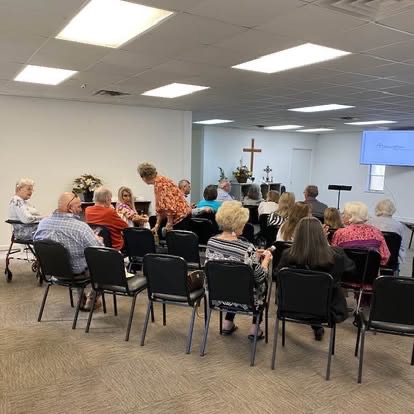
Our storefront church faces significant constraints due to limited physical space. Unlike traditional church buildings, which are purpose-built to accommodate a large congregation, classrooms, offices, and multipurpose spaces, our space (though originally a church) was fitted for commercial use.

Our space lacks the architectural features needed for worship, such as high ceilings, sanctuaries, and designated areas for fellowship. We’re going to struggle to figure out how to hold events in our space, or to expand to Sunday school or small group ministry. And, potluck…well, we’ll just have to see about that.

Additionally, our storefront has a relatively small seating capacity. Yes, there is a wall we can take out, but even then, limited space can lead to overcrowding, discomfort, and an inability to host special events, such as weddings, funerals, or community outreach programs.

One other thing to note, the lack of auxiliary spaces like nurseries, kitchens, and meeting rooms may hinder the church’s ability to offer vital services, such as childcare, Bible studies, and community meals.

Perception and Identity

The perception of a church operating in a storefront can also pose challenges. Traditional church buildings convey a sense of permanence, sanctity, and history, which can attract members and foster community respect.

In contrast, a storefront church can struggle to establish the same sense of legitimacy and stability. Passersby may view it as a temporary or informal operation rather than a dedicated place of worship.

This perception issue can extend to potential members, who might associate the storefront location with financial instability or a lack of resources. For some, the absence of traditional symbols such as steeples, stained glass windows, and pews may detract from the spiritual atmosphere they expect in a church setting. Over time, these perceptions can impact the church’s ability to grow and sustain itself.

Acoustics and Ambiance

Storefronts are not designed with worship services in mind, and this often leads to challenges with acoustics and ambiance. Traditional church buildings are constructed to enhance sound quality, ensuring that sermons, music, and prayers resonate effectively within the space. Storefronts, on the other hand, often have flat ceilings, hard floors, and minimal soundproofing, which can result in poor acoustics and echoing.

Luckily, the acoustics are not very bad in our storefront. I preach without a microphone every Sunday (not a hard thing to do when our average attendance is 30, but if we grow, I’ll probably have to rethink it). More people absorb more sound. Without a microphone, I might become muffled. Heck, they might think I’m muffled now, but they haven’t said so if that’s the case.

The lack of ambiance in a storefront can also hinder the spiritual experience. Traditional church buildings often feature architectural elements like vaulted ceilings, intricate woodwork, and natural lighting, all of which contribute to a sense of reverence and awe. I’ll confess that our team has done a fantastic job of creating a worshipful ambiance in our space, but many storefronts can feel sterile or utilitarian, which can make it difficult for congregants to feel spiritually connected or inspired.

Zoning Issues
Operating a church in a storefront can also lead to zoning and legal challenges. Many municipalities have specific zoning regulations that restrict or limit the use of commercial spaces for religious purposes. I haven’t found that to be the case with Bossier Parish, but if you’re thinking about a storefront church in another community, it’s best to check zoning early in the planning process.

Churches may be required to apply for special permits or variances, which can be time-consuming and costly. Additionally, these regulations often limit the types of activities that can take place within the space, further constraining the church’s ability to serve its congregation and community.

Parking is another common issue associated with storefront churches, and it certainly it with ours. We’ve got four spaces in front of the church and have to utilize a parking lot for a strip center next door. Spots fill up fast when we have a large (40 people) crowd for church. Any growth we experience will ultimately be impacted by limited parking.

Financial Limitations

Storefront churches are a cost-effective alternative to traditional buildings, as I mentioned in my previous blog. That notwithstanding, they can also present significant financial challenges in the long term.

Leasing or purchasing a storefront space is initially more affordable, but the costs associated with retrofitting the space for worship can be substantial. Churches may need to invest in sound systems, seating, lighting, and signage to make the space functional and welcoming.

Additionally, rent will go up at some point, which can strain the church’s budget. Unless your landlord is a member of the congregation and has mercy on it, rent will increase. If rents become unaffordable or the property owner decides not to renew the lease, the congregation may be forced to relocate, disrupting their operations and sense of community.

Deep Roots

Traditional church buildings often serve as landmarks and gathering places, hosting events, providing shelter, and offering a range of social services. Storefronts, by contrast, may not have the space or facilities needed to support such activities. This can restrict the church’s ability to act as a hub for community life and outreach.

Moreover, the transient nature of storefront operations can make it difficult for a church to establish deep roots in the community. If the congregation frequently moves or struggles to maintain a visible presence, it may struggle to build trust and foster long-term relationships with local residents and organizations.

Conclusion

This much I know: For every advantage a storefront may offer a congregation, there is an equal disadvantage. The task of the pastor and the congregation is to weigh the advantages and disadvantages appropriately, pray and then follow the leading of the Holy Spirit.

I’m uncertain how the storefront will impact our congregation yet. We haven’t been in the space long enough to know. I know God has put us here for now, so we’ll seek to be faithful to the call we hear going forward.

But still, if you’re in the Bossier Parish, Caddo Parish or Webster Parish area, please come join us. Perhaps you’ll help us figure it out.

Until next time, keep looking up…

Preaching in the Storefront…

Yup! I preach in a storefront every week. Who would have thought after over 30 years in ministry that I’d end up in a storefront church? Well, apparently the Lord thought it because here I am.

Haughton Methodist Church (the church I began pastoring late last year) meets in a rented storefront. Well, actually the building was originally a church that outgrew the facility. It was converted to an office building and was used as such for the last couple of decades.

I must say the rented storefront is much better than the rented hotel room the congregation used for the better part of nine months. I gotta give props to the faithful in the congregation who were committed enough to set up and tear down that hotel room week in and week out. That’s a lot of work and a lot of commitment.

Of course, Haughton Methodist Church was meeting in the hotel room (and now the rented storefront) due to its disaffiliation from the United Methodist Church. Well, not really disaffiliation. They missed that boat for reasons I won’t go into, but suffice it to say, they walked away from their property…just threw the Louisiana Annual Conference the keys…and began the journey as nomads. I applaud the congregation’s faith and faithfulness. It’s one reason I’m blessed to serve them as pastor.

Preaching in a storefront has really had me thinking and praying about a strategy for the congregation moving forward. That part of being a pastor hasn’t left me. In my contemplation, research and prayer, I’ve discovered there are a few advantages to meeting in a rented storefront. I thought I’d share a few of those with you today.

Financial Flexibility

The first (and perhaps major) benefit of renting a storefront for church meetings is the financial flexibility it provides. Establishing a permanent church building requires significant upfront capital for purchase or construction, not to mention ongoing maintenance, utilities, and other operational costs.

I did a little investigating and discovered the congregation’s old facility is listed for sale by the Annual Conference for $445,000.00 (you can check it out here). That’s a lot of money to a small congregation like ours! If someone wanted to purchase it and gift it back to the congregation, now that’s a conversation we’d be open to!

For a small or growing church, this financial burden can be overwhelming and will divert resources from ministry programs, outreach, or other crucial areas. Renting a storefront, on the other hand, often provides a more affordable alternative. The monthly rental cost is predictable and easier to manage, allowing us to allocate our resources to other vital areas such as outreach efforts or mission work.

Additionally, renting avoids the long-term financial commitment and debt associated with owning property, offering us the flexibility to adjust as our needs evolve. Hey? We’ve got a one-year lease. That gives us time to discern God’s next steps for the congregation.

Visibility and Accessibility

Another benefit that a storefront location can offer is significantly more visibility and accessibility than a traditional church building, particularly if the church is situated in a busy commercial area like ours. There’s not a lot of foot traffic where we’re located, but we get great exposure to passing drivers, and our proximity to local businesses makes our storefront church a visible part of the community.

We’re located right next door to an oil change shop, which I find incredibly ironic, but that’s for another blog.

I’m praying this increased visibility can attract new visitors who might not have otherwise considered attending church, whether due to curiosity or the convenience of being located near their place of work, shopping, or living.

Community Engagement

A third advantage (should we choose to capitalize on it) to renting a storefront can be an intentional decision to engage with the surrounding community. Unlike churches housed in large, traditional buildings that may be tucked away in suburban areas, a storefront church is situated in the heart of the local community.

This proximity offers numerous opportunities for interaction with people who may not otherwise step foot inside a traditional church building. Church members can become familiar faces in the neighborhood, and the church itself can become known for its commitment to the well-being of the community.

I’ve already made several visits to the neighboring oil change facility to carry left over treats from our fellowship time. I hope to build an on-going relationship with those guys.

Additionally, I can see our storefront offering opportunities to host events, activities, and programs that reach a wide array of people. Whether it’s offering after-school programs, hosting community events, or providing social services like food banks or job training, a storefront church can effectively serve as a community hub.

Because of its location in a commercial area, a storefront church is more likely to attract people who are not actively seeking a church but may be drawn to the church’s services or outreach activities. This creates a sense of accessibility and relevance, positioning the church as an integral part of the community rather than as a separate entity.

Adaptability

Renting a storefront gives our congregations the ability to remain adaptable and flexible in our growth and development. As we grow, our needs will change, and our storefront offers us the flexibility to move to a larger or different location when necessary.

Unlike a permanent building, a storefront will allow us to scale up or down based on attendance, financial health, and ministry priorities. This adaptability is especially beneficial for us in what I’m calling “our formative years.” It will allow us to respond quickly to changing circumstances without being tied to a long-term commitment.

Furthermore, our storefront landlord has given us some flexibility in changing our layout as growth and needs dictate. Our storefront can be customized to suit the needs of the congregation and community. Unlike traditional church buildings, which often have fixed architectural features such as pews, stained glass windows, or large sanctuaries, storefront spaces are usually more neutral and open.

This gives us the freedom to design our space according to our unique vision and style. Whether it’s creating an inviting, contemporary worship space or setting up an area for fellowship and community gatherings, a storefront can be easily adapted to accommodate various church activities.

A Final Thought

As I’ve had time to pray and reflect on our situation at Haughton Methodist Church, I’ve discerned that being in a storefront is both practical and strategic. It’s a choice that can support our long-term growth and success (even more than getting our old property back).

Ultimately, the success of our congregation will not be defined by the building we meet in, but by the relationships we foster, the ministries we engage in, and the impact we have on our community.

So, if you’re in Bossier Parish, Caddo Parish or Webster Parish, and you’ve never considered the possibility of worshipping in a storefront, why don’t you join us at Haughton Methodist Church. We’d love to have you on this incredible journey!

Until next time, keep looking up…