God Does His Greatest Work in the Dark…

Let’s see…

The Israel/Hamas War, the Russia/Ukraine War, the Taiwan threat from China, North Korean nuclear proliferation, Houthis attacking Red Sea shipping channels, inflation, racial tensions, a border crisis, a fentanyl crisis, drug cartels, human trafficking, increasing crime rates, gender confusion, a very divisive Presidential campaign, declining church attendance, decaying cultural values.
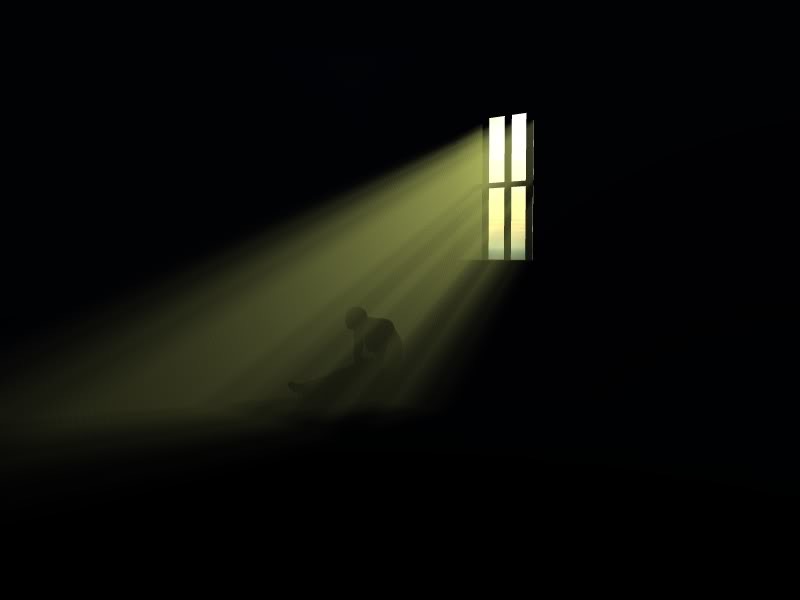
Have I forgotten anything? Probably so, but you get my point. Read the headlines (or more appropriately, listen to the news) and we get the sense that we are living in dark times.

There are plenty of reasons for concern about the world in general, and western culture in particular, but I’m want to remind us that our’s is not the first generation to face dark times, and if the Lord tarries, it likely won’t be the last.

What I do want to remind us is that though we live in dark times, God does His greatest work in the dark! Easter reminds us of that fact.

Stumbling in the Dark

So many of us stumble around in the dark, and we’re often afraid because we can’t see. When we’re in the dark, we grasp for something, anything to hold on to that will give us some stability, some comfort, some assurance that we can make it until we can turn on a light.

We’re unsteady, unsure, and we lack a certain amount of confidence, and all that makes us just a little leery. Not necessarily because we’re afraid of the dark, but because we’re afraid of what we can’t see in the dark. Sometimes, though, we have to move forward. We have to get to the place that we can turn the light on. We have to get up. We have to keep moving. In those times, we have to see with the eyes of faith. Easter is that which gives us our eyes of faith. 

For the disciple of Jesus Christ, the resurrection is THE central event of history. We may say that time is measured from the birth of Jesus Christ, but hope is measured from the resurrection. We come this morning to celebrate the resurrection of Jesus Christ, and with it the victory of life over death, of good over evil, of grace over the grave.

This is our holiest of holy days, and it still reminds us that there is light even in the darkest of worlds, and that no matter what else may be happening in our lives, there is always hope. That is the power of the resurrection.

20 Early on Sunday morning, while it was still dark, Mary Magdalene came to the tomb and found that the stone had been rolled away from the entrance.

John 20: 1 (NLT)

John’s Resurrection Account

The resurrection account is recorded in all four of Gospels, but not all four report it the same way. The Gospel of John shares it differently. John alone tells us that Mary Magdalene went to the tomb, “while it was still dark.” Just because John has Mary Magdalene going alone does not necessarily contradict the other three Gospels. Maybe John’s just telling that Mary went down before all the others got there.

John has been called a philosopher of sorts. John’s Gospel is full of symbolic language, and the words on the page don’t always mean what they say. With the phrase “while it was still dark,” we note that John is carrying on a theme that he started very early in his gospel—the contrast of light and darkness.

John introduces the theme in the opening paragraph of the gospel: 

“Life itself was in him, and this life gives light to everyone. The light shines in the darkness, and the darkness can never extinguish it”

John 1: 4-5 (NLT

In John 3, a Pharisee named Nicodemus comes to see Jesus “after dark one evening,” and in John 6, he tells us of the time after “darkness fell,” that Jesus came walking on the water to his disciples.

Then, in John 8, the Pharisees bring a woman caught in the act of adultery to Jesus in an attempt to trap him. He refuses to condemn the woman (some have even indicated that the woman was Mary Magdalene), and then he says to the people:

I am the light of the world. If you follow me, you won’t be stumbling through the darkness, because you will have the light that leads to life.”

John 8: 12 (NLT)

It is little wonder that John would return to that theme and tell us Mary came “while it was still dark.” Whether he meant it literally or figuratively, we’ll never know for sure, and for his purpose (and for ours), I’m not sure it matters.

For Mary, it was dark, both literally and figuratively. Mary Magdalene was standing at the foot of the cross as Jesus died. She was there at the cross with Jesus’ mother, Jesus’ aunt, and John. When the rest of the disciples had abandoned Jesus, she was there, and she was there when they took his body down from the cross. It was a dark day. The sun may have been shining, but to Mary it was a dark day.

Mary loved Jesus. Luke 8 tells us that Jesus had cast seven demons out of her, and since that time she had been his follower. There is even some evidence that Mary Magdalene was the prostitute who washed Jesus’ feet with her tears and anointed them with perfume. Is it any wonder Jesus would say, “The one forgiven little loves little, but the one who has been forgiven greatly loves greatly.” Mary is not on the fringe of Jesus’ followers, which means that for Mary, as much as for any of Jesus’ other disciples, she was living in the dark days of grief.

Mary is probably wondering how things can get worse, and just about the time she does, guess what? Things get worse. Isn’t that the way life always is? Just about the time we think things can’t get any darker, they do! Mary gets to the tomb and she finds the body of Jesus gone. John has painted us a picture of the dark getting darker, but he also paints a picture of one who lives out faithfulness and hope, even in the midst of the darkness, and we discover what happens as a result.

Catch this! Mary went to the tomb. Despite her fear and despite her grief, Mary did something. She went to the last place she knew Jesus was. Even though she thought Jesus was dead, she went. She went because in the darkness she longed for light…some light…any light. She went looking for light. She had hope, even in the darkness.

You know what’s interesting? Think about when the actual resurrection took place. It took place in the dark! There was no one there to see it. There were no earthquakes or flashing lights. Someone shows up early in the morning and there’s just an empty tomb. The central event of human history, and nobody sees it.

Joseph and Mary were firsthand witnesses to Jesus’ birth, and even angels announced his arrival to shepherds. There were stars in the night sky that foreign astrologers could read, and an earthly king was mad enough to order a massacre of children, but with the resurrection, all we get is second-hand witnesses. It happened “while it was still dark,” but it happened.

Finding Light in the Darkness

Spiritually, the resurrection is our hope. We’ve all had dark times in our lives. When it’s dark and we can’t see what’s going on around us because of the grief and pain and doubt, it’s then we’re tempted to turn our backs on God, believing that God doesn’t care, or worse, believing it’s all God’s fault. We’re tempted to pull the covers over our heads and give up.

I remind you—Mary went to the tomb “while it was still dark.” In the midst of the darkness, she went to the tomb because she loved Jesus, and in the darkness he spoke her name, “Mary.”

So, he does with all of us. When in the darkness of sin, of addiction, of pain and loss, of grief, if we come to Jesus, he’ll speak our name—John, Sally, George, Margaret, Lynn. Mary shows us what faithfulness in the dark looks like. We find Jesus, or rather, we’re found by him, in the dark because we’re looking for him there. The tears vanish when we realize God did His greatest work in the dark. It wasn’t in the papers (I’m really dating myself with that reference), nor did it make CNN or Fox News. We can’t tell when it happened, we just know it happened. 

Life is funny. One day, we’re on a mountain and we can look and see for a million miles. But, as quickly as the sun comes, the darkness settles in, and we go from saying how blessed we are to “I can’t take this anymore!” Darkness comes. Mary was not afraid of the dark. Mary was unwilling to take Jesus’ absence as an answer to anything, and by staying in the dark, Easter dawned!  

I wonder who today is searching in the dark? Some of us remember a time when Jesus was alive. We felt his presence and knew his love. We ate with him and drank with him, and we shared life with him. But, something has happened. We lost a spouse or a child to death. Our marriage went south, or we lost our job. Perhaps we just fell out of love with Jesus.

For those of us in any of those situations we need to do what Mary did—go to the last place we saw Jesus. Was it in the Bible? Then read the Bible, even when the words make no sense.

Was it in prayer? Then keep praying even when it feels like our words are hitting the ceiling and falling back down on us.

Was it in church? Then keep going, even when we feel like we’re surrounded by hypocrites, and we’re just going through the motions.

Some today are in the darkness of broken relationships. Others are in the darkness of addictive behavior. Still others are in the darkness of grief and pain. So many of us are looking for a little light, any light in these dark, dark times. We’re here because we believe that there is still light.

Listen. Listen for the voice of Jesus calling our names. His light is shining because Easter has dawned.    When Easter dawns the light shines in the darkness and the darkness does not overcome it. It cannot overcome it. It never has and never will. Life and light makes our world new.

Easter comes out of the darkness.

Dark times come to everyone, even to Jesus. Darkness is not a sign that we have no faith. Darkness is the opportunity to show our faith. Darkness is the time to get up and face the fears of life head on. Darkness is the time for us to get up and go to the tomb. It is the time to recognize that Easter happened in the dark. When everybody was depressed and thought the work of God was a sham, God was doing His greatest work of all.

Easter is here, my friend. Easter is here.

Until next time, keep looking up…

Palm Sunday Ponderings…

It is Palm Sunday. You know what that means? Yes, it is marked as the day Jesus made His triumphal entry into Jerusalem before His arrest, crucifixion and resurrection. It is such a pivotal moment in Jesus’s life that all four Gospel accounts mark the event (Matthew 21: 1-11; Mark 11: 1-11; Luke 19: 28-40; John 12: 12-19).

You know what else it means? It means that Lent is almost over! As I’ve mentioned before, this has been a challenging Lenten season for me and I can’t wait for Easter Sunday. The season began without much fanfare for me. I was quite willing to let it pass without much notice. The Lord had other plans. It’s been a good Lent, albeit a very challenging one.

The challenges of the Lenten season have been numerous, and this past week has been no different. The Lord has particularly challenged me in the area of prayer this week. I think I’ve discerned that in this season of the Church’s life, the greatest need is for prayer warriors.

The Church doesn’t need CEO’s and entrepreneurs. It needs prayer warriors. The Church has tried the CEO/Entrepreneur model (really since the 1970’s and the emergence of the Church Growth Movement). As was its purpose, the CGM got the Church a lot of megachurches. The CGM is proof that strategies work. It also go the Church a lot of Christian celebrities and celebrity pastors. I’m not knocking the CGM. I was on that train for a long time. I rode that train until it ran ME out of steam. Now, I think the steam is finally running out of that train for the Church.

Though the CGM got the Church a lot of megachurches and celebrity pastors, it also got the Church declining attendance and fewer disciples who are willing to take up their cross and follow Jesus in the way of surrender and sacrifice. There are some who will blame the free fall in church attendance on the Covid pandemic, but I suggest the pandemic only hastened what was clearly already taking place in the life of the Church. CEO’s and Entrepreneurs cannot sustain the Church. They were never intended to. Though megachurches do show up in many places around the world, they are a uniquely western invention.

The Church (and the world) are in desperate need of revival. Revival always starts with prayer, thus the greatest need of the Church in this culture is for prayer warriors. The Church needs leaders who pray–both lay and clergy. Leaders who pray will bring change to the Church, and the Lord will use the Church to change the world. That’s been His plan from the beginning.

Makes me ask the question “How many churches have a prayer ministry?” When I say prayer ministry, I’m not talking about a prayer group that meets and prays over the prayer requests that come into the congregation. I am NOT discounting the need for that type of ministry, nor am I denying there is power in that type of prayer. Unfortunately, most of those type of groups (and most of that type of prayer) are really just gossip sessions disguised as prayer groups. There is some value in praying for Aunt Sally’s ingrown toenail or Uncle Joe’s gout, but that is not the prayer that will change the world.

When I say prayer, I mean gathering for an intentional time of seeking God’s face…of the people of God asking God what His will is, asking the Lord for His vision, gathering to actually hear from the Lord. I mean the people of God coming together to confess their sin (individually and collectively) and to repent before Him publicly so that grace and forgiveness is sought and found so that the way is cleared for a fresh invasion of the Holy Spirit can bring clarity and direction to His people concerning His vision.

How about a prayer meeting where we pray for boldness to proclaim the Gospel? How about a prayer meeting where we pray for the Lord to put people in our path who need healing and salvation? How about a prayer meeting where we read one verse of Scripture and then sit silently for an hour pondering that singular passage to hear what the Lord wants us to hear?

Yeah! That would probably be too uncomfortable for too many people. But, hey! We’ll never grow until we get out of our comfort zone. Just as our physical muscles won’t grow until we push past what we think are our limits, so our spiritual muscles won’t grow until we push past what is comfortable and easy.

I’ve lived with a great amount of conviction over this Lenten season as I’ve reflected on my own participation in and leadership of prayer group gossip sessions. I need to repent for that. I hope I have repented for that. Prayer in my congregation won’t change until prayer changes in me. Revival won’t come to the Church until revival comes in me.

So, my prayer is for revival to come…to the Church and to the culture…but first, let revival come to me. Let me pray to hear the voice of God. Let me pray for boldness to proclaim the Gospel. Let me pray for people in my path who need Jesus. Let me pray for a revival in me. Let me pray for a transformation in my attitudes and desires and priorities. Then, perhaps I can begin to pray for each of those for the Church and the culture.

The Church and our culture…our world…are in desperate need of revival. So am I! The Church and our world are in desperate need of prayer warriors who will pray for the same. I pray I can become one of those warriors. Do you have the guts to pray the same prayer?

And you thought this was going to be a blog about Palm Sunday. Silly you!

Until next time, keep looking up…

Just Trying to Make a Point…

Last Sunday was Easter Sunday. I thought I had a pretty good sermon. I had three points (which some folks argue is two too many!), and I thought I was well prepared to make all three points. I was wrong. I did a terrible job making my third point (judge for yourself by clicking here), so I figured I’d use this space to make the point I wanted to make Sunday.

I should have known it was not going to be a good day for preaching when I mysteriously turned a six foot white rabbit into a six foot white monkey in my opening illustration. It was pretty much down hill from there. Oh, the rabbit that mysteriously became a monkey was the pooka from the movie Harvey, starring Jimmy Stewart as Elwood P. Dowd. The premise of the sermon was a play off one line in the film–“the evening wore on” (See the clip here). Mark in his gospel uses a turn of phrase that is (to me) equally compelling–“just at sunrise” (Mark 16: 1-8).

The point? The sunrise (the resurrection) overcomes the darkness…of sin with the promise of forgiveness, of death with the promise of our resurrection, and of fear with the promise of eternal life. It was the last point where I failed to make my point (not counting the whole rabbit/monkey affair).

Here is what I said:

As the evening wore on, the darkness of death would also shadow the promise of eternal life, but just at sunrise the joy comes. The 24-hour news cycle is killing us. We hear the news, see the Facebook feeds and watch in amazement as the culture continues its steep decline. The evening appears to go on endlessly. We long for the sunrise. We wonder when will the night be over.

Are you looking for a sunrise? Turn off CNN and Fox News. Take a break from scrolling your Facebook feed, and pick up a bible. Open its pages and pray. There you’ll meet the risen Jesus, and you’ll experience the sunrise, and you’ll know a hope that never disappoints.

James Moore tells the story when The Saturday Evening Post ran a cartoon showing a man about to be rescued after he had spent a long time ship-wrecked on a tiny deserted island. The sailor in charge of the rescue team stepped onto the beach and handed the man a stack of newspapers.

“Compliments of the Captain,” the sailor said. “He would like you to glance at the headlines to see if you’d still like to be rescued!”     

Sometimes the headlines do scare us. There are times we feel evil is winning, but then along comes Easter, to remind us that there is no grave deep enough, no seal imposing enough, no stone heavy enough, no evil strong enough to keep Christ in the grave. God keeps his promises. We can’t always see it until the sunrise.

Maybe it wasn’t a bad point, but the point I really wanted to make is that the darkness of fear has overshadowed our deep theology surrounding death itself. If nothing else, the past year has shown that the church’s theology of death doesn’t extend much past the point of dying. I do have to be careful how I say this. It could too easily be politicized, and that is not my intention, at all.

It’s just that I’ve watched with some amazement over the past year as many “followers of Christ” acted as though death was absolutely the worst thing that could happen. Death, for a believer, is not the end. This life…this earthly life…isn’t all there is. The resurrection (Easter) is our reminder of the promise of eternal life.

We say in the Apostle’s Creed that we believe “…in the forgiveness of sins, the resurrection of the body, and life everlasting.” The doctrine of eternal life is historic, orthodox Christian theology. Because of Easter we do not face death with fear, but with peace and with an assurance that Christ waits for us just beyond the veil that separates this life from the next one. Or, so the Apostle Paul taught the Corinthian church that to be absent from the body is to be present with the Lord (2 Corinthians 5:8).

It was also the Apostle Paul who shared his own inner conflict with the church at Philippi:

20 For I fully expect and hope that I will never be ashamed, but that I will continue to be bold for Christ, as I have been in the past. And I trust that my life will bring honor to Christ, whether I live or die. 21 For to me, living means living for Christ, and dying is even better. 22 But if I live, I can do more fruitful work for Christ. So I really don’t know which is better. 23 I’m torn between two desires: I long to go and be with Christ, which would be far better for me. 24 But for your sakes, it is better that I continue to live.

25 Knowing this, I am convinced that I will remain alive so I can continue to help all of you grow and experience the joy of your faith. 

Philippians 1: 20 – 25

Yes, I know that “eternal life” is more quality of life than quantity of life. I know eternal life is living a Christ-centered life now, but even acknowledging that fact should never diminish our understanding of the glory we shall one day share with Jesus Christ, Himself.

Embracing a broader theology of death doesn’t compel us to seek to become martyrs, nor does it cause us to take foolish chances with the gift that is this life, but it should free us from cowering in fear of death’s approach. The reality is that the death rate is 100%. If we live long enough everyone of us will die. And, we all know there are times when death does, in fact, come as a friend. The question becomes will we face death with confidence, hope and faith, or will we do so in the darkness of fear?

If we live long enough everyone of us will die.

Me? I’m going to chose to live in the confident expectation of eternal life because “just at sunrise,” hope dawned. Yes, I’m going to live today for Jesus. I’m going to love Him, and I’m going to love my neighbor, and by God’s grace, I’m going to love my enemy. I’m not going to hasten death (at least not intentionally), but I’m not going to live in fear of it, either.

It was April Fool’s Day 2007 and Vanessa and I had just dropped our daughters off for youth group at the church. We decided we needed our favorite indulgence, so we headed to the local Dairy Queen for a Reese’s Peanut Butter Cup Blizzard. We had made our turn onto the Main Street of our town and as we slowed to turn into the parking lot of the Dairy Queen, I looked in my rearview mirror and saw a car quickly approaching. I shouted to Vanessa, “Hold on, they’re going to hit us!”

Hit us, they did. I’m told by folks who witnessed the event that my truck flipped four times into the parking lot of the Dairy Queen. Thankfully, Vanessa and I escaped relatively unscathed with the exception of a few scrapes and bruises, but I told Vanessa later that as we were making those flips the only thought I had was, “Death ain’t no big deal.” I’ve since thought, “That’s the most expensive ice cream I never had!”

I share that story not arrogantly, but confidently…confident in the power of the resurrection of Jesus Christ in whom I believe. That’s the point I was trying to make. I’ll not say it’s the whole point of Easter, but it is certainly one of the main points of it. And, it’s not to say that death is not a big deal. It is a big deal, but for the believer, it’s not the only deal, nor is it necessarily the worst deal.

I’m still not sure why I didn’t make the point better on Sunday. Maybe it was the rabbit that threw me off my game…or the monkey. Hopefully, I’ve made the point better here, but if not, there’s always next Easter.

Until next time, keep looking up…

What to Do When Your Job Stinks!

new-orleans-saints-wallpapersI’m a Saints fan, and sometimes I like to turn down the sound on the TV and turn up the sound on the radio, and listen to the radio broadcast from the Saints broadcasting network. It makes for a much more fan friendly broadcast to listen to the “home” team announcers on game day. I mention that, not because it has anything to do with this blog, but because I love one of the advertisers on game day. It’s River Parish Disposal Company. There’s nothing special about the company, I just love their motto. The motto of River Parish Disposal Company is “Business stinks. But, it’s picking up!”

That motto sums up the ministry of Jesus as we read it in John 11, at least on this day in question. Setting up the scene, Jesus’ friend Lazarus has died. He’s been challenged by his co-workers and the two sisters of his friend, Lazarus. Let’s face it. It’s never a fun day to go to a funeral, and this was after the Jewish leaders had tried to stone him and arrest him. This was a day when Jesus’ job really did stink, and as we read in the text, it didn’t just stink figuratively, it stunk literally. So, what did Jesus do when his job stank? He cried! Sounds like what we do when our job stinks, too. Sounds like what we do when life stinks!

We think tears are something to be avoided. Johnson’s Baby Shampoo even has a “no more tears” formula. Our culture tells us “real men don’t cry,” and our music tells us that “Big Girls Don’t Cry.” But all of us do cry at some point in our lives. We cry at the graveside of a loved one, or at the loss of a job. We cry with a broken heart when a relationship goes bad, or we cry over a sin that overwhelms us. We cry (or we should) when we hurt someone we love, or when someone we loves hurts. As long as we live in this broken world we will experience tears.

Tears are good for us, though. Tears are a way for the body to release harmful bio-chemicals. Biochemist William Frey found in one study that emotional tears–those formed in distress or grief–contained more toxic byproducts than tears of irritation (think onion peeling). Tears remove toxins from our body that build up courtesy of stress. Tears are like a natural therapy or massage session, but they cost a lot less! Additionally, tears release a natural soporific that acts as a tranquilizer to the body. That’s why we’re often tired after a good cry. Any way you look at it, tears are healthy. And, on this day, we get a good look at the fullness of Jesus’ humanity.

We know why we cry, but why did Jesus cry, especially since we know what he was about to do? One reason is simply the deep compassion that Jesus felt for those who were suffering. It is true that Jesus let Lazarus die. He delayed coming. His reasons were good and merciful and glorious, but this didn’t mean Jesus took the suffering it caused lightly. Even though Jesus always chooses what will ultimately bring his Father the most glory—and sometimes, as in Lazarus’ case, it requires affliction and grief—he does not take delight in the affliction and grief itself. Jesus is sympathetic, and as “the image of the invisible God,” in Jesus at the tomb of Lazarus we catch a glimpse of how the Father feels over the affliction and grief we experience.

Another reason Jesus wept was over the power of sin. As God the Son who had come into the world to destroy evil, Jesus was about to deliver death its deathblow. But sin grieves God deeply and so do the wages of sin: death (Romans 6:23). And ever since the fall of Adam and Eve he had endured sin’s horrific destruction. Death had consumed almost every human being he had created. It had taken Lazarus, and it would take him again before it was all over. Tears of anger and longing were mixed with Jesus’ tears of grief.

Another reason was the cost that he was about to pay to purchase not only Lazarus’ short-term resurrection, but his everlasting life. The cross was just days away and no one really knew the inner distress Jesus was experiencing. Lazarus’ resurrection would look and be experienced by Lazarus and everyone else as a gift of grace. But, it was not free. For as much as we see Jesus humanity in this passage, we also see the fullness of his divinity. As a matter of fact, chapter 11 is the turning point in John’s Gospel in the life of Jesus. From this point, Jesus is headed to Jerusalem to die a horrific death. Jesus, who had never known sin, was about to become Lazarus’ sin, and the sin of all who would believe in him, so that in him they would become the righteousness of God. As the writer of Hebrews says, Jesus was looking to the joy that was set before him, but the reality of what lay between was weighing heavily, and it brought tears.

This might also indicate yet another reason Jesus wept—raising Lazarus from the dead would actually set in motion the events that would lead to his own death. Calling Lazarus out of the tomb would have taken a different kind of resolve for Jesus than we might have imagined. Giving Lazarus life was sealing Jesus’ own death.

As I reflect on this encounter in Jesus’ life, there are a few lessons I learn. First, Jesus is angry at the power of sin in our lives. He’s not angry with us—that would be counter to the gospel of grace. He is, however angry with the power that sin holds over us, and that anger is reflected in the words of our text today.

A second lesson I learn is that Jesus is moved by our tears. He cries when we cry. He hurts when we hurt. He suffers when we suffer, and he does so because it wasn’t supposed to be that way. Sin brings suffering. That’s the result of the fall of humanity. Yes, Jesus still gets charged with not doing something about all the suffering. He got charged with it that day, too. He doesn’t set aside our tragedies or sorrows, but he is with us in the midst of the tragedies and sorrows. He walks with us, and brings us comfort.

A third lesson I learn is that tears don’t last forever. Again, our music reminds us that “It Only Hurts for a Little While.” How many oceans could be filled with the tears shed by humanity through all the centuries? And, we stand at the graveside of a loved one and we ask, “Will it always be this way?” We ask, “Is this all there is?” The writer of Ecclesiastes basically says life is suffering, death and then we’re forgotten. But that’s not what the Bible teaches. The Psalmist reminds us “Weeping may last for the night, but joy comes in the morning” (Psalm 30:5), and when that morning comes, “death shall be no more, neither shall there be mourning, nor crying, nor pain anymore” (Revelation 21:4). After all, it was Jesus, on this same day he wept that he said, “I am the resurrection and the life. Those who believe in me, even though they die, yet shall they live” (John 11:25).

Jesus asked Martha if she believed that. He asks us, too. Do we believe that?

Until next time, keep looking up…