Not Nearly Enough…

A friend asked me a question this week. It was a simple question asked in sincerity, but it challenged me in a way I haven’t been challenged since I left full-time ministry.

What was the question? “How common in your career did you see pastors and leaders teaching entire sanctification?”

I had to think real hard the last time I heard a sermon on entire sanctification. Honestly, I couldn’t remember one. Honestly, I had to check my sermon file to see if I had ever preached one. Luckily, I found ONE sermon in my file. Entire sanctification is obviously something that was never high on my list of priorities to preach and teach.

Well, if it was impossible for me to remember if I had preached a sermon on entire sanctification, it was impossible to remember hearing one. I could only answer my friend with, “In The United Methodist Church, rarely!”

Perhaps that is what is wrong with The United Methodist Church (or any other Wesleyan denomination). The doctrine of entire sanctification lies at the heart of Wesleyan theology, and yet we (meaning me) rarely heard it preached (or preached it) from a Wesleyan pulpit.

Sure, we mentioned it (or heard it mentioned) in passing, but we never dug deeply into it or spent too much time on it. Let’s face it. When we pastors and laity went to Annual Conference, we didn’t get deep dives into Wesleyan theology. We got motivational speeches and rah-rah talks about best practices in ministry that we could take back to our congregations.

Same thing when we attended leadership conferences. Seriously, how many preachers (and laity) would ever sign up for a conference entitled “Sanctification Summit?” Nah! Not many. Instead, we’d rather flock to conferences with names like “Refuel,” or “The Global Leadership Summit,” or “Disciple Making Summit,” or the “Orange Conference” (what do oranges have to do with ministry?). After all, we want to grow our churches. I mean, isn’t that the point?

Entire Sanctification

Unless you’re a pastor in the Wesleyan tradition, you’re probably asking yourself, “What does he mean by entire sanctification?” I’m glad you asked.

Rev. John Wesley

Sanctification is a $3 theological word that means “holiness.” Well, if we don’t like the word sanctification, we probably like the word holiness even less. Me? Holy? Never! Yet, holiness is at the heart of John Wesley‘s theology, and we Wesleyans ought to be teaching it! Maybe that’s the key to our church growth? Maybe holiness is what will make the church stand out from the culture?

For most folks, holiness is reserved for monks, missionaries, mystics and martyrs, not everyday Mark and Mary. Nothing could be further from the truth. It was Chuck Colson who said, “Holiness is the everyday business of every Christian. It evidences itself in the decisions we make and things we do, hour by hour, day by day.”

Colson is correct, and his statement echoes the words of the Apostle Paul written to the Church at Thessolinica two thousand years ago. God’s will for our lives is holiness. Paul says so right there in chapter 4, verse 3: God wants you to be holy, so you should keep clear of all sexual sin. The NIV translates it this way: It is God’s will that you should be sanctified: that you should avoid sexual immorality. The KJV says it this way: For this is the will of God, even your sanctification.

Avoiding Holiness

One reason we shy away from holiness as a way of life is because of the “holier-than-thou” crowd. Actually, “holier-than-thou” is not really holiness at all. In Jesus’ day, the “holier-than-thou” crowd turned out to be the Pharisees—arrogant, prideful and self-righteous. Certainly not the traits Jesus would applaud and want his disciples to emulate. Rather, it was the Pharisees for whom Jesus reserved his most scathing condemnations.     

Another reason we might shy away from the word holiness is the word’s close association with the “holiness” movements of the late-19th century, and the Pentecostal and charismatic movements of the mid-to-late 20th century (which actually had their genesis in the Wesleyan tradition).

The extremes of those movements gave too many people in the church permission to separate themselves from holiness. Use whatever excuse we may to lay claim to our own unholiness, it doesn’t change the fact that God’s will for our lives is for us to be holy.

Perhaps a third reason we shy away from the teaching of holiness (entire sanctification) is because we confuse it with “perfection.” We think we have to be perfect, and after all, no one is perfect (boy! don’t I know that to be true?). How can I teach what I am not? How can I be what is impossible to be? Well, let’s go back to Wesley…

The Heart of John Wesley’s Theology

John Wesley helps us understand better in his A Plain Account of Christian Perfection. Holiness is not sinless perfection. Unconscious sin will always remain. No matter what level of holiness we attain, there will always be more room to grow. This fact helps us live in humility. It’s like Jesus would tell the Pharisees, “Take the log out of your own eye before you complain about the speck in your neighbor’s.” Knowing we have further room to grow keeps us from the holier-than-thou attitude.

Wesley would further say that holiness (or perfection) does not mean freedom from errors or mistakes. We’ll always have inaccurate perceptions, deal with deceptive apperances, have clouded memories and distorted opinions based on faulty information. It does not mean the sin nature has been eradicated. The seed of the sin nature still exists, and abiding outside of God’s grace leads to the sin nature conquering us.

And, Lord help us, holiness is not about freedom from temptations. As a matter of fact, Satan’s attacks will likely increase because he thinks he’s losing control.     

Well, if holiness is not that, what is it? For Wesley, as for the Apostle Paul, it is a heart full of love—love for God and love for neighbor. According to Paul, if we love God and love our neighbor, it changes our conduct. As our love for others increases, God establishes our hearts blameless in holiness. Our holiness is reflected in the way we treat others.

Waiting for Sanctification

Wesley, in his sermon The Scripture Way of Salvation would say it thusly:

“It is thus that we wait for entire sanctification; for a full salvation from all our sins, –from pride, self-will, anger, unbelief; or, as the Apostle expresses it, ‘”‘go unto perfection.'”‘ But what is perfection The word has various senses: here it means perfect love. It is love excluding sin; love filling the heart, taking up the whole capacity of the soul. It is love ‘”‘rejoicing evermore, praying without ceasing, in everything giving thanks’.”

“…we wait for entire sanctification…”

We wait. Sanctification is not an overnight thing. Sanctification is growing in grace. Sanctification is a moment-by-moment, day-by-day decision on our part. Yes, it is done through the power of the Holy Spirit, by the surrender of our will to His, but surrender is done daily by our choice–that’s called “free will.”

Attaining and Maintaining

Don’t think you can attain holiness (entire sanctification)? Oh, I think you underestimate the power of grace. Also, how uncouth would it be for the Lord to ask something of us that He knew we couldn’t achieve?

John Wesley said it this way: “Christ died to deliver sinners from not only the guilt but also the power of sin.” Our salvation (which is God’s will for our lives) would be an incomplete salvation unless it delivered us from sin’s power as well as sin’s penalty. God never intended the cross to address only the “judicial” matters of our sin. God equally intended the cross to reshape those who believe toward the holiness to which He calls us.

Salvation is the simplest thing to attain, but it is the hardest thing to maintain. It is in the maintaining that we reach what Wesley termed “entire sanctification, for a full salvation from our sins…” Salvation is attained through the simple act of believing. Salvation is maintained through the difficult act of obedience. Believing and obeying both demand surrender.

Full salvation is a long time coming, but salvation is attained and maintained as a child. As a child trusts to attain and as a child obeys to maintain, but maintaining is so much harder than attaining.

So, how often have we taught entire sanctification? Not nearly often enough. How often should we teach entire sanctification? Well, if we’re truly Wesleyan, a whole lot more often than we have.

Well, that just what I think, but I’m not the perfect pastor, which is probably why I haven’t preached and taught full salvation more often. Maybe by His grace, I’ll do better.

Until next time, keep looking up…

A Look into Life…

I’m always on the look out for a good book to read, and Rev. Max Edwards, the General Superintendent of the Evangelical Methodist Church recently made the recommendation of A Look into Life, the autobiography of Dr. J. H. Hamblen. For those of you who don’t know, Dr. Hamblen was the driving force behind the founding of the Evangelical Methodist Church. (Order your copy by clicking here).

Dr. Hamblen was a Methodist preacher. He was part of the Methodist Episcopal Church, South and subsequently (after 1939) part of The Methodist Church (which would later become the United Methodist Church). Dr. Hamblen would say he was a Methodist preacher because he grew up with a shoutin’ Methodist mama.

I’m not going to give you an in-depth analysis or review of Dr. Hamblen’s autobiography in this blog. I’m simply going to recommend that you put it on your reading list for 2024, especially if you’re a Methodist or a history buff. You’ll be glad you did.

The book is an easy read (I read it in three sittings), yet it is filled with stories and reminisces of past appointments and experiences in each one. I could almost see him riding that old horse and buggy for the forty miles between appointments as he rode the “circuit.” Reading it is like listening to a wily veteran share stories from the war. If one is interested at all in hearing how the appointive process in The Methodist Church worked in the “old” days, this is a great chronicle.

What I found most interesting was the unfolding of events that eventually led Dr. Hamblen to form the Evangelical Methodist Church. “Modernism” had made its way into The Methodist Church in the early part of the 20th Century and it was his position against the “program” of the Methodists that led him in 1946 to call a prayer meeting in Memphis, Tennessee to address this issue. Out of that prayer meeting the seeds of the Evangelical Methodist Church were sown. Dr. Hamblen eventually paid the price by forfeiting both his pulpit and his pension in The Methodist Church. He never regretted the sacrifice.

I admit that I felt some kinship with Dr. Hamblen as I read. The issues he dealt with and the challenges he faced in the “modernist” controversy were not unlike the challenges and issues that led to many of the disafilliations in the current United Methodist Church. I felt like I was reading a contemporary biography, rather than one whose primary events happened in the 1940’s. I guess the old saying, “The more things change, the more they stay the same,” is true. King Solomon said it best:

What has been will be again,
    what has been done will be done again;
    there is nothing new under the sun.

Eccelesiastes 1:8 (NIV)

Dr. Hamblen included in the book two essays written by a friend, Dr. Robert Shuler (also known as “Fightin’ Bob”) who pastored Trinity Methodist Church in Los Angeles, California. Dr. Shuler is definitely a character you should research. Dr. Hamblen included the essays in the book because they encapsulated for him the essence of the philosophy underlying the EMC. I mention them here because (with the changing of a very few terms) reflect the current divide in the UMC. Here are a few quotes from Dr. Shuler’s essays:

“I am a Methodist. I am a Wesleyan. I am committed heart and soul to the Arminian position, up to the point where that positions veers off toward humanism. Moreover, I deplore the fact that thousand of Methodists, who feel that they can no longer conscientiously remain with the Methodist Church under present Unitarian and Socialistic leadership, find themselves adrift and are joining the Pentecostal movements and other religious groups that are not distinctly Methodist.

“It seems to me that the Evangelical Methodist Church is a God-sent organization, if for no other reason, in that it offers tens of thousands of loyal Methodists, who can not go with present Methodist leadership, a church home, in which the may continue to be loyal, active Methodists. But that is not the only reason for its existence. So far as I can discover, The Evangelical Methodist Church is in every particular what original Methodism purported to be. It is a Bible centered Methodist Church and a soul-saving centered Methodist Church. The distinctive doctrines of primitive Methodism are the doctrines that are accentuated by The Evangelical Methodist Church.”

Dr. Shuler would further write, “Christianity is today in a state of flux in her organic processes. There are two schools of thought that cannot and will not live at peace with each other. Methodism is split wide open at this very point. We have thousands of Methodists…who believe what the Wesleys believed and taught and we have thousands of other Methodists who have accepted Unitarianism, Universalism, Socialism and even Humanism and made them a part of the Methodism which they promote and direct. There is no blending these two varieties of Methodism.”

As I mentioned earlier, exchange a few terms and it is an accurate reflection of the current United Methodist Church.

I’m not writing to get anyone to consider the Evangelical Methodist Church as a landing place, although I do invite you to explore it as a possibility. I have found a home here. You might, too, especially if you are committed to a traditional interpretation of Wesleyan/Arminian theology. We remain a small denomination, but we are strongly committed to Jesus and to being a “soul-saving centered” church.

I am writing more as a means of processing some of my own anxiety over having left the United Methodist Church. Unlike Dr. Hamblen, I didn’t pay the price with my pension, though I did lose the “big” church pulpit. Like Dr. Hamblen, I did lose valued friendships and long-term, meaningful relationships. Also like Dr. Hamblen, I haven’t looked back. The Lord has blessed us through it all. For that, I give Him thanks.

Let me commend A Look into Life to you for reading. Maybe you’ll enjoy it as much as I did.

Until next time, keep looking up…

Praying in the New Year…

As I sit in reflection of another passing year, I am overwhelmed by the blessings I count. It was a quiet Christmas evening that really began what has been almost an entire week of reflection. Gratitude and humility have been “top of mind” for me all week long. Seems an appropriate way to end the year.

Now, we await the dawning of a new year. A new year will bring a new devotional routine for me (just because I need a change), but I can’t think of a better way to begin the new year than with the Wesleyan tradition of the Wesley Covenant Prayer. I invite you (the three of you who read this regularly) to join me in renewing our covenant for the new year.

“I am no longer my own, but thine.
Put me to what thou wilt, rank me with whom thou wilt.
Put me to doing, put me to suffering.
Let me be employed by thee or laid aside for thee,
exalted for thee or brought low for thee.
Let me be full, let me be empty.
Let me have all things, let me have nothing.
I freely and heartily yield all things
to thy pleasure and disposal.
And now, O glorious and blessed God,
Father, Son, and Holy Spirit,
thou art mine, and I am thine. So be it.
And the covenant which I have made on earth,
let it be ratified in heaven. Amen.”

That, my friends, is a bold prayer! The prayer was adapted by John Wesley for the renewal of the believer’s covenant with the Lord. Wesley first used this prayer in a covenant renewal service held on Monday, August 11, 1755, in London, with 1800 people present. Since then, the Wesleyan Covenant Prayer has been used in Methodist services around the world on the first Sunday of the year.

Well, this is the last Sunday of the year, but I’m praying this prayer anyway. Nothing like getting an early start, right? Perhaps starting early will prepare me for the changes the new year ushers in. What changes you ask?

First, I have announced to the leadership at Lakeview Methodist Church that January 28th will be my last Sunday to serve as their interim pastor. Earlier in December, the congregation voted to align themselves with the Congregational Methodist Church. My original commitment to the congregation was to shepherd them through the process of re-alignment, and that process is now complete. I can commend them to the care of the Congregational Methodist Church as they begin the process of calling a new pastor.

I do leave them to the care of the Congregational Methodists a bit reluctantly, but only because I hate to leave them high and dry until they find a pastor. My doing so has more to do with a big change in my business that simply doesn’t leave me time to be fair to the congregation in my devotion as an interim pastor.

December 22nd of this year was the last day on staff for the manager of the business. It was a big change for him, for the business and staff and for me. Everything is well. He left to pursue an opportunity he believed he couldn’t pass up. I wish him only the best. He has been a tremendous asset to the business and to me personally. He is perhaps the best mechanic I’ve ever seen, and I would gladly trust him to fix any problem with my vehicles. No doubt, it is a loss for SpeeDee Oil Change & Auto Service in Ruston, but we will persevere.

With my manager’s departure, that leaves me to serve as the manager of the shop for now. No, I won’t be the mechanic, too! You don’t want me turning too many wrenches on your vehicle. I have become in the automotive industry like I was in the hardware business with my grandfather. In the hardware store, I learned to identify what you needed to fix your problem, you just didn’t want me to fix it!

Don’t worry! I do have another mechanic on staff, so we’ll get those mechanical issues taken care of, for sure. But, until I can identify a new manager, the manager will be me, and that means generally opening and closing the shop six days a week. Not much time for anything else for now.

I regret it for the congregation. I had hoped to be with them until they called a new pastor, but I suppose the Lord had other plans. It seems as though the Lord always has other plans. What’s the old joke? Want to make God laugh? Tell him your plans!

So, we’ll see what plans the Lord has for 2024. I think that really is the essence of the Wesley Covenant Prayer. Lord, show me Your plans. Whatever those plans are, I’m down with them. I really can’t think of a more appropriate way to begin the new year. Will you join me in that prayer?

Happy New Year everyone!

Until next time, keep looking up…

Thinking Out Loud…

In the midst of Holy Week, with Lent winding down, I’m contemplating the season in which I consciously chose not to “give up” anything for Lent. No, the season didn’t begin with me receiving ashes. I didn’t chose to fast, or refrain from eating meat on Friday. I gotta’ confess…I don’t feel like I’ve missed that much in opting out of any particular Lenten observance. You may argue, therein lies the problem.

The observance of Lent hasn’t historically been a Protestant thing. I never knew of Lent in the church where I grew up. It wasn’t until I entered seminary that I was challenged to “observe a holy Lent,” as the United Methodist Book of Worship extended the invitation. I sought desperately to learn what this “holy Lent” was all about. It was more pronounced by the fact that in Junction City, KY, where I served as pastor during seminary that the Roman Catholic Church was literally next door. Yet, it was all still new to me.

I suppose it’s a good thing that seminary opened to door to all things Lenten because my first post-seminary appointment was in Morgan City, LA. Does anyone know where Morgan City, LA is located? That’s right. Deep in the heart of cajun, heavily Roman Catholic south Louisiana. There, almost everyone observed Lent. Sit down restaurants in Morgan City? During Lent you wouldn’t find meat on the menu on Friday. Catholic churches would have fish-fry fund-raisers every Friday. Lent was a real thing. I’ve sought to observe a “holy Lent” ever since.

Honestly, as I anticipate the coming of Easter Sunday, I think more about Christ’s call to new life, and not just to new life, but to a holy life. Too often, in my observances of the Lenten season, my anticipation for Easter was that I could have coffee once again, or re-engage with social media, or have a big, old juicy steak on Friday evening. It was about getting through Lent to celebrate what I could do once again. It was about going back to the old life, not living into the fullness of the new life.

I suppose it is for me that the Lord hasn’t called me to observe a “holy Lent,” but rather to observe a “holy life.” I rather believe the Lord has been calling me to instill the practices that constitute a holy Lent into my life throughout the year, not just for a season. It might just be that practicing fasting regularly (which John Wesley did, by the way) will take me deeper into the life of a disciple.

Perhaps I’m just over-thinking things here. Perhaps I’m convicted that I didn’t observe Lent this year. Maybe that’s what really has me thinking out loud. Perhaps it’s just that it’s Tuesday and I should be writing a blog and I couldn’t think of anything else to write about. I’m not sure what it is, but I am sure that if a “holy Lent” doesn’t lead to a “holy life,” then it’s been a wasted Lent, and I hope none of us have a wasted Lent.

Maybe I shouldn’t think out loud so much. Maybe I should just focus more on Easter. Yeah, that’s probably what I should do.

Until next time, keep looking up…

Spiritual Seeking…

There is a phenomenon happening in the West that has been given the name “spiritual seeking.” The focus of spiritual seeking is on personal experience, the sacred and the soul. There is little doubt in my mind as I reflect on the religious landscape of our nation that spiritual seeking, with its emphasis on individualism, choice, and quest for meaning is exerting profound changes on traditional religion. The Gallup Organization says that 80% of all Americans believe that an individual should arrive at his or her own beliefs independent of any church. That’s spiritual seeking with an emphasis on individualism. 

I mention spiritual seeking because we think it’s something we came up with. Long before we were spiritually seeking, God was seeking us. We who follow the tradition of John Wesley know that (or, at least we should). When we, as Wesleyans, talk about God’s grace, we see His grace made real in our lives in different ways at different stages. But, all grace is rooted in a relationship–the relationship that God desires to have with us through Jesus Christ. As Methodists in the Wesleyan tradition, we believe that God in His grace came seeking for us, and we know it as God’s prevenient grace.

Just as a reminder, grace is God’s saving acts toward us–His precious, unmerited favor. We don’t deserve it and we can’t earn it, yet God, in love, extends His mercy toward us to reconcile us to Himself–to have a relationship with Him.

That’s as it should be, right? Right! Because relationships are important to us. Vanessa and I are coming up on 40 years of marriage this year (it seems like only yesterday!). You may find this hard to believe, but Vanessa and I didn’t hit it off when we first met. We met in high school. I was the home-grown boy, and she was the new girl. Came from somewhere up north is all we knew, and she talked funny, too. She thought I was a jerk, and I probably was. After all, I was fifteen years old, and most—no, all—fifteen-year-old boys are prone to being jerks. It’s called testosterone, and it’s part of the male condition.

Ours was a relationship that started off from a distance, hard to understand with little effort put into it. But it was a relationship, nonetheless. Everyone from Oprah to Dr. Phil spend time dishing out advice on how to handle our relationships because we spend so much time trying to figure out relationships. First with our parents, then with that special someone we grow to love, then our children (especially if they are teen-agers!). Then there are neighbors, co-workers, friends and extended family.

We have so many relationships to keep straight that we almost overlook one relationship that is the most important one of all, our relationship with God. Our relationship with God often goes unnoticed until the day we come to faith in Jesus Christ, and then we go to work reading our Bible, attending church, praying and serving God. We think our relationship with God began the day we came to faith. And you might be right. Our relationship with God did begin the day we came to faith, but God’s relationship with us, now that is another matter altogether. Listen to what the prophet Isaiah said long ago as he communicates his understanding of the depth of God’s knowledge of who Isaiah was:


“Listen to me, all of you in far-off lands! The Lord called me before my birth; from within the womb he called me by name.” (Isaiah 49:1)

And the prophet Jeremiah, announcing his ministry to the nation of Israel could proclaim:


“The Lord gave me a message. He said, [5] "I knew you before I formed you in your mother’s womb. Before you were born I set you apart and appointed you as my spokesman to the world.” (Jeremiah 1:4-5)

Both of these Old Testament prophets understood that God had a relationship with them long before they were aware of it, and that fact, in its bare essence, communicates the idea of prevenient grace. Let me illustrate.

The Bible is God’s story. The earliest chapters of the Bible reveal a God who is seeking a relationship with humanity. In chapter three of Genesis, after Adam and Eve had sinned by eating of the forbidden fruit, God appeared toward evening and called out to Adam and Eve, “Where are you?” Yes, the story begins with a seeking God. God seeking humanity to reconcile us to Himself.

God’s story finds Him offering this relationship with Noah (Gen. 9: 8-13), with a nomadic livestock trader named Abram (Gen. 12: 1-3). God renewed his covenant search for the redemption of humanity with Moses after God delivered the Israelites from their Egyptian slavery (Exodus 19:3-6). God sought a man after His own heart in King David, and it was David who said, “It is my family God has chosen! Yes He has made an everlasting covenant with me. His agreement is eternal, final, sealed” (2 Sam. 23:5).

Humanity broke God’s covenant, but He continued to search. The prophet Jeremiah prophesied:


“The day will come,” says the Lord, “when I will make a new covenant with the people of Israel and Judah. This covenant will not be like the old one I made with their ancestors...They broke that covenant, though I loved them as a husband loves his wife,” says the Lord. “But this is the covenant I will make with them...I will put my laws in their minds, and I will write them on their hearts. I will be their God and they will be my people...And I will forgive their wickedness and will never again remember their sins.” (Jeremiah 31:31-34)

God’s new covenant was made real for us in Jesus Christ. On the night Jesus was arrested he was gathered with his disciples. There he took the bread, blessed it, and told his disciples to eat it for it was his body. Then he took the cup of wine, and blessed it, and with the cup said to his disciples, “Drink this cup, for this is my blood, which seals the covenant between God and His people. It is poured out to forgive the sins of many” (Matt. 26:28).

That’s right, God took the initiative in the relationship with His creation, and He, through His Son, Jesus Christ, takes the initiative in His relationship with us. When we were powerless, God moved in His Son Jesus Christ so we could experience what the Apostle Paul calls “friendship with God.” It is through a wonderful thing called grace that we experience God’s friendship. And we thought it all started when we “got saved.”

The idea of prevenient grace can be summed up by saying, “God has been busy searching for us in order to have a relationship with us.” One of my seminary professors defined “prevenient grace” as “grace that goes before.” In other words, prevenient grace is God reaching out to us even before we know it. It is a grace that prevents us from moving so far from God that we cannot respond to God’s offer of love.

Prevenient grace is seen in the most quoted verse of the Bible–John 3:16—“For God so loved the world that He gave His only begotten Son, that whosever would believe in Him should not perish but have eternal life.” Jesus himself said, “I come to seek and save that which is lost” (Luke 19:10). Our response to God’s seeking is our response of faith. Prevenient grace is God working in our lives from the moment we are conceived until that special moment when we, by faith, receive God’s free gift of salvation.

The experience of God’s prevenient grace may be different for all of us. The experience of prevenient grace can come through friends, family members, parents or grandparents, even events may serve as vessels of God’s grace. Prevenient grace is also made real through the church as the church faithfully administers the Word and the Sacraments. Every sermon preached, every song sung, every time the elements of communion are received, every time a person is baptized, it is a testimony to the fact that God is seeking a relationship with us. The Holy Spirit is active in and through all these elements to make God real in our lives. 

There is a profound reason we Methodists baptize infants. The sacrament of baptism is our acknowledgement, our assent of faith that we believe in prevenient grace. We proclaim that God is at work in this child’s life even before he/she is aware. It is not an acknowledgement of salvation. No, we must respond in faith to God’s call, but we affirm the presence of God’s grace.

The Holy Spirit also speaks directly to our own hearts and minds as we face life every day. Even our conscience becomes a tool of the Holy Spirit in making us aware of God’s presence and calling. The Holy Spirit courts us, woos us, encourages us, calls us, but never forces us, to repent, turn to God and receive eternal life.

Max Lucado, in No Wonder They Call Him the Savior, tells the story of Maria and her daughter Christina. Longing to leave her poor Brazilian neighborhood, Christina wanted to see the world. Discontent living at home having only a pallet on the floor, a washbasin, and a wood-burning stove, she dreamed of a better life in the city. 

One morning she ran away, breaking her mother’s heart. Her mother knew what life on the streets would be like for her young, attractive daughter, so Maria quickly packed to go find her daughter. On her way to the bus stop, she went to a drugstore to get one last thing—pictures. She sat in the photograph booth, closed the curtain, and spent all the money she could on pictures of herself. With her purse full of small black-and-white photos, she got on the next bus to Rio de Janeiro. 

Maria knew Christina had no way of earning money. She also knew that her daughter was too stubborn to give up. Maria began her search. Bars, hotels, nightclubs, any place with the reputation for street walkers or prostitutes. At each place she left her picture–taped on a bathroom mirror, tacked to a hotel bulletin board, or fastened to a corner phone booth. On the back of each photo she wrote a note. It wasn’t too long before Maria’s money and pictures ran out, and Maria had to go home. The tired mother cried as the bus began its long journey back to her small village. 

A few weeks later, Christina was coming down the stairs in a seedy hotel. Her young face was tired. Her brown eyes no longer danced with youth but spoke of pain and fear. Her laughter was broken. Her dream had become a nightmare. A thousand times she had longed to trade all those countless beds for her secure pallet. And yet the little village seemed too far away. As she reached the bottom of the stairs, her eyes noticed a familiar face. She looked again, and there on the lobby mirror was a small picture of her mother. Christina’s eyes burned and her throat tightened as she walked across the room and removed the small photo. Written on the back Maria had written this: “Whatever you have done, whatever you have become, it doesn’t matter. Please come home.” 

And Christina went home.

God is the same way. He wants us to come home. It doesn’t matter what we’ve done. It doesn’t matter what we’ve become. We can always come home to Him. It is like Maria, reaching out for her daughter even when her daughter didn’t realize it. 

It is like God reaching out to us while we are living a life of sin and we are lost and yet, Christ is there, reaching, longing, desiring to bring us home.

It is prevenient grace. Like Vanessa and I began a courtship over 40 years ago, so God began a courtship with us long before we were aware. Like Isaiah and Jeremiah, even from our mother’s womb, He called us. Are you “spiritually seeking”? Good, there is a God who loves you who is spiritually seeking you, too!

Until next time, keep looking up…

Jesus IS the Answer…

I was just a kid in the early 1970’s, but I remember vividly the music of Andre Crouch and The Disciples. I remember his music because I was part of a youth choir that often sang songs he wrote. One song in particular that I’ve been singing over and over lately is one entitled Jesus is the Answer. I’ve been singing it because I believe the Jesus IS the answer for the world today.

I also vividly remember many people who mocked Andre Crouch and the title to that song. Mockers asked, “If Jesus is the answer, what is the question?” I don’t know if there was a specific question Crouch was asking back in the 1970’s, but I know there is a specific question folks are asking today (and I’m asking it myself, too). With the racial and political brokenness facing us in this monster year 2020, the question is “How do we heal the division among us?”

Is it necessary for me to point out those areas of division? Probably not, but just in case you haven’t noticed, here are a few:

  • Ideologically–Capitalist vs. Socialists/Communists
  • Racially–White vs. Black, et. al.
  • Politically–Democrat vs. Republican, Trump vs. Never-Trump
  • Religiously–Traditionalist vs. Progressive

The list could go on. The divisions are tearing at the very fabric of our humanity. I am concerned about where the divisions will lead us unless we do the hard work of reconciling our differences, and learning again how to live with our diversity as a people and as a nation.

Of course, we aren’t the first generation to deal with divisions. The Apostle Paul’s generation had one, too. He writes about it to the church in Ephesus as an illustration—and a vivid one it is! In Ephesians 2, he calls it “dividing wall.” The wall to which Paul referred was a 3 1/2 foot high stone wall in the Temple that separated the Court of the Gentiles from the Court of the Jews, and on that stone wall were signs that basically read, “Any foreigner who enters beyond this point is responsible for their ensuing death.” Paul uses the image to tell the church that in Christ that wall has been torn down. The division that existed between Jew and Gentile prior to Christ no longer existed. Through Jesus Christ, the two people are made one. They are united in Christ. That was their new identity.

Try to imagine what it must have been like for the first disciples, steeped as they were in 2000 years of history as God’s chosen people, to be told that they were to treat Gentiles the same as they would other Jews. It’s hard for us to imagine because we don’t have any real equivalent today. Here they were, a tiny, insignificant nation, and yet God had chosen them and revealed himself to them. They had Moses and the Prophets. God said they were a holy  nation, set apart for his service.

They actually had a somewhat arrogant view of their calling. William Barclay wrote that, “The Gentiles, said the Jews, were created by God to be fuel for the fires of hell.” He would also write, “It was not even lawful to render help to a Gentile mother [at childbirth], for that would simply bring another Gentile into the world.” It was such that if a Jewish boy married a Gentile girl, or a Jewish girl married a Gentile boy, the family had the funeral for the boy or the girl right then. No, Jews and Gentiles were not friends, and the Temple had a vivid image to remind them of that fact.

The chosen people had erected a wall, and Paul tells the Ephesians that the wall was the law, but Jesus abolished the wall through his death on the cross, and reconciled everything by the power of his blood to God, the Father. Now, everyone—Jew and Gentile—comes to God on the basis of faith in His Son. There is a key word there–reconciled.

So, what does Paul say is the result of this reconciliation in Christ? First, the Gentiles are no longer aliens and strangers, visitors without any legal rights, but rather citizens of God’s kingdom. They now enjoy all the privileges of being part of God’s people.

We are embroiled in a debate over the immigration laws in our nation, and I’m not going to give commentary one way or the other about that, but think for a moment the risks so many of those immigrants are willing to take to come to America. The benefits of being an American citizen are worth going to any lengths to obtain.

If being a citizen of America is so good, what about being a citizen of the Kingdom of God? But, it’s even better than that. Paul extends the analogy. He says, “You’ve now become members of God’s household.” You’re part of the family. Being part of a Kingdom is one thing, but being part of family of the King, is another. It means, in the context of this passage, that we’re now brothers and sisters of one another. No matter what our background, we’ve been brought into a new relationship of care, affection and support that may not characterize our earthly family, but does characterize the ideal family, the family of God.

Paul doesn’t leave the analogy there, though. He says Christ destroyed one thing to build another. He tore down a wall so he could build a house. He’s building a house on the foundation of the apostles and prophets with himself as the cornerstone. 

I’m reminded of the story of the Tower of Babel, where people tried to build a great tower to reach heaven, and God came down and confused their speech so they couldn’t communicate with each other. They all went off to their own parts of the earth. That was the beginning of the alienation of the races. But in Jesus, we see the process reversed. In Jesus, we see a new humanity, a new community being formed in unity with Christ as its foundation. As this new community is formed, it becomes the place where God dwells and where his people come together to worship him.

Don’t miss how important the corporate nature of the church is here. If we are ever tempted to have an individualistic view of Christianity, to think that God simply comes to dwell in each one of us as individuals and the church is just an add-on, think about what Paul says here. As we’re built together we become a dwelling in which God lives by his spirit. As we’re united in Christ we become the new Temple of God, God’s dwelling place.

It’s important to note that Paul says we’re becoming a holy temple. That’s means we haven’t made it yet. God is still working to on us…individually and corporately. That’s part of Wesleyan theology…this whole idea that we are moving on toward perfection. It is part of the struggle we disciples have as we grapple with one another in this shifting culture. Where does God speak into the situations that divide us, and how does God speak into them?

Honestly, we start with what the Bible says. That’s what it means to be built upon the foundation of the apostles and prophets.  They’re the human authors of most of the Bible. In other words, the church is built on God’s Word. That’s why we take it so seriously, and it’s why we don’t tamper with it. We know how dangerous it is to tamper with a building’s foundation. That’s why we should prick up our ears whenever we hear someone undermining the authority of God’s word, or questioning its authenticity. I’m certain the conversation won’t end there, but it at least must start there.

So, how are we to be united? I think there are implications for us personally and corporately. There is one word that I believe is key for our unity is Christ, and that word is forgiveness. Personally, we must begin to tear down the divisions we’ve built between ourselves and others by seeking and extending forgiveness as freely as God has extended it to us through Jesus Christ.

One of the ways we can do that is to acknowledge the person I’m listening to may know something I don’t know. Jordan Peterson has written a fantastic book entitled Twelve Rules for Life. Rule number nine says, “Assume the person you are listening to knows something you don’t.” When we listen to others, we can begin to find places where reconciliation may come, and then we’ll discover our unity in Christ.

Corporately, there’s nothing that happens in the Church that should cause a breakdown in relationships…nothing! The mission of the Church is to make disciples of Jesus Christ for the transformation of the world. How can we invite others into a reconciled relationship with Jesus Christ if we’re not reconciled to one another?

Internal harmony is one of the things architects look for when they’re sizing up the aesthetics of a building. But the harmony we’re talking about here is more than just aesthetic. We’re talking about a harmony where all the parts work together to bring the building to completion. We overcome this division, too, by seeking and extending forgiveness.

We are united in Christ. That which divides us fades into insignificance when we acknowledge ourselves as God’s sons and daughters. The worth of people different from ourselves can only be judged from God’s point of view. The color of our skin, the sound of our accent, the language we speak with most comfort have nothing to do with it. What matters is that Jesus Christ died to reconcile us to the father and to each other.

So, yes, I believe Jesus is the answer to the divisions in our culture. Unfortunately, the culture is turning further and further away from Jesus, but that’s an entirely different blog.

Until next time, keep looking up…

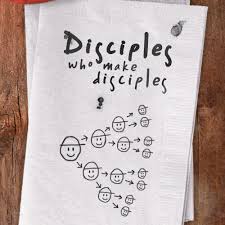
Disciples Discipling Disciples (Or, Starting with “Why?”, Part 5)…

By now, you’re saying, “Enough already! Is why you’re starting The House Church Movement all you have to write about?” This will be the last blog I write that deals with the “why” of house church (or, at least MY why). 

Photo courtesy of the PCAJesus gave a very simple mission to His church immediately before His ascension–go make disciples (Matthew 28: 18-20). I wonder how such a simple mission has gained so much complexity over the centuries. Jesus’ first disciples were told to disciple others, and the only example they had was Jesus. In Luke 9 and Matthew 10, we find Jesus going house-to-house throughout Galilee and Judea, and then Jesus telling his disciples to do the same. The Book of Acts certainly confirms this model of ministry.

The Apostle Paul, in writing his letters to the early church, wrote to churches that were meeting in homes, and the instructions he gave them were given with this model in mind. The concept of spiritual gifting was given to the Church with the understanding that the gifts of believers would be lived out in the community of faith–the house church.

A word of clarity, though. The Apostle Paul would use the word for church when referring to both the individual house churches and the gathered body, so using the one does not detract from the other. Again, I’m not anti-institutional (the fact that I keep mentioning that does make me wonder a little though). Wherever the body of Christ gathers, there is the Church.

Unfortunately, the “gifts” for ministry became formalized as the Church grew and transitioned from a house-based movement to the more “traditional” model we know today throughout most of the west. Pastors, teachers, evangelist, et. al., became church professionals. In the early church, there was a team of leaders–bishops, pastors, elders–who led the church in making disciples. Now, we depend on professional staff teams to lead us, and the individual giftedness of disciples is underutilized in the Kingdom economy.

The Apostle Paul was very specific in writing to the early church at Ephesus about the role of leaders in the church. He wrote:

11 So Christ himself gave the apostles, the prophets, the evangelists, the pastors and teachers, 12 to equip his people for works of service, so that the body of Christ may be built up (Ephesians 4: 11 – 12, NIV).

Each of these giftings were given by Christ Himself for the building up of His church, and the most fruitful discipleship model utilizes these gifts in their fullness to increase the Kingdom. This is the model wherein disciples disciple disciples, thus fulfilling the Great Commission Christ gave to His Church.

Paul wrote to the Corinthian church that “to each one the manifestation of the Spirit is given for the common good” (1 Cor 12:7).  He lists many different gifts that the Spirit gives to believers for the sake of the body. Then he explains how every part of the body is needed, and that we must be careful to not start to develop a mindset that some gifts are more necessary than others.  Does every single believer in a church realize that they are just as needed and important as anyone else in the church? Or do they tend to think that the preacher and worship leader are more important?

The House Church Movement is designed to create space for everyone in the body to contribute in the meetings and in everyday life.  The “pastor’s” is not the only voice that needs to be heard.  Long monologue sermons are not meant to be the norm in house church meetings because no one person should dominate things.

Everyone is called to make disciples.  We are all called to share the gospel with non-believers in hopes that they would follow Jesus. We are all called to take responsibility for the spiritual care of other believers.  But discipleship is hard and messy.  It involves intentionally getting to know someone, having hard conversations when sin is evident, working through conflict, and spending extra time with them when life gets hard.

The temptation in the church has been to replace discipleship with programs.  If there is a married couple struggling, we suggest they read a book, enroll in a marriage class, or go on a retreat.  Discipleship means having an older couple who loves Jesus to come alongside of them and do life with them through life’s challenges.  Though marriage retreats, classes and seminars can be helpful, we hide behind them and ignore our responsibility to make disciples. It’s not that these programs are bad, but they run the risk of undermining what is best and most important. We end up trading the best for the good.

In The House Church Movement, the pastors are not responsible for discipling everyone, but rather they will each disciple a few and then ensure that those disciples are also discipling a few.  And for those who are new to the faith, though they might not be fully responsible for the spiritual care of another person, they will be actively engaged in evangelistic efforts and be trained to take responsibility for others.

The House Church Movement, with its small, intimate, intentional group of believers provides no room to hide.  Each person’s life is consistently before someone else.  It means that each person is expected to be transparent with a few other believers about the things they would hide, while those believers walk with them through healing, repentance, and believing the promises of God.  There shouldn’t be any room for people just “attend church” when everyone is being discipled for life and ministry.

Discipleship is taking responsibility for the spiritual care of somebody else. It doesn’t mean you’re the only one invested in that person, but it does mean you should be aware of what’s going on in that person’s life. Discipleship is life on life. Discipleship doesn’t happen with coffee dates once a week. You need to be around each other and observe each other’s lives almost daily.

Disciples discipling disciples. It can be messy work, indeed! But, it can also be the most fulfilling and transformative work a disciple can ever do. It’s another reason I feel called to lead The House Church Movement.

So, there you have it. The five reasons I feel called to do this new thing. Now, maybe we can move on to something else.

Until next time, keep looking up…

Simply Jesus…

It really is all about Jesus! It being, of course, the Christian faith. I remember a parishoner named Mr. Joe who, as he departed every Sunday, would simply say, “Just give ’em Jesus.” I think that phrase sums up what the Evangelical Methodist Church means when it states “We believe each person must acknowledge the Lordship of Jesus Christ and be born again before he/she is a true Christian.”

A Matter of Grace

We can search the depths of theology and philosophy and discover one verse which, in its essence, sums up all God offers His creation, and we find it in a late night conversation Jesus had with a Pharisee named Nicodemus. Of course, it’s John 3: 16—“For God so loved the world that He gave His only begotten Son, that whosoever should believe in him would not perish but have everlasting life.” Let us be careful not to let the familiarity of the words lessen their power.

We are nothing apart from faith in Jesus Christ, and it is faith in Jesus Christ that gives us new life, that transforms us from what we were (a sinner), to what He intends for us to be (a sinner saved by grace). I am reminded that a relationship with Jesus Christ is all about grace–God’s grace.

We Wesleyans walk the Wesleyan way of salvation. Along that Wesleyan way are several “movements” of God’s grace. One of those movements is of justifying grace. It is this justifying grace of God at work in that moment that one comes to faith in Jesus Christ. The theological term for that moment is regeneration.

John Newton, in his famous hymn Amazing Grace, wrote of this moment of regeneration:

‘Twas grace that taught my heart to fear,
and grace my fears relieved;
how precious did that grace appear
the hour I first believed.

Newton wrote his classic hymn on a slave ship bound for England on March 10, 1748, as he endured a raging storm on the high seas. That evening, Newton cried out to God, and his life was forever changed. He wrote of that evening, “I cried to the Lord with a cry like that of the ravens which yet the Lord does not disdain to hear. And I remembered Jesus whom I had so often derided.”

Regeneration

Justifying grace (regeneration) is that moment in time when we realize that God accepts us just as we are, and we say “yes” to his offer of salvation, and our eyes are opened to the love and companionship of God. Justifying grace (regeneration) is about saying “yes” to God.

The problem is that we need help when it comes to a restored and right relationship with God. The Good News is that God wants to help. God didn’t come to offer us things (like money or power or success or possessions) that we think will make life full, or us happy. God sent His Son Jesus Christ to offer us a relationship that is a relationship of love that flows out of His self-giving nature.

Regeneration happens in that moment when we accept the relationship God offers in his Son, Jesus Christ. We are justified in that very moment. This moment of acceptance is commonly referred to as conversion. It is what happens inwardly at that moment when most people would say, “I’ve been saved!” But the phrase “I’ve been saved” does not mean that conversion is ended. Rather it means we have begun a more adventurous portion of the journey that is God’s salvation.

We can just as easily say, “I am saved,” or “I am being saved,” for conversion continues when we find new ways of accepting Jesus Christ as Lord and Savior. Like when we come to a better understanding of ourselves, and when we come to a better understanding of the claim God is placing on our lives, but more about that in a later blog.

A Gift

Here is where it gets sticky and we have difficulty accepting God’s offer of salvation. Let me explain why. We have been taught all our lives that America is the place where hard work and determination meet opportunity to produce wealth and success. While there are exceptions we all could point to, we realize the American dream is fueled by hard work and determination. Gary Player, the legendary golfer and a South African, understood this attitude. He said, “The harder you work the luckier you get.”

The American attitude is an up-by-the-boot-strap mentality, and that attitude is what has made America great. Isn’t it ironic, then, the American attitude, that up-from-the-boot-strap mentality, is a major stumbling block in our acceptance of God’s offer of salvation. We know that hard work and determination are what make the measure of success, so we find it totally unreasonable that God would offer us salvation at no cost. Surely we have to do something to earn this salvation. We can’t do anything. But God does not give us something for nothing, and our salvation has come at great cost. It cost Jesus Christ his life.

All we can do is accept God’s offer or reject it. It is totally a free gift to us, and our acceptance of that offer is an act of faith. It is not our work, nor is there any work we can do to deserve or earn it.  This work is what Jesus Christ has done for us in the grand plan of God’s salvation. Listen to how the Apostle Paul describes it:

But now God has shown us a different way of being made right in his sight–not by obeying the law but by the way promised in the Scriptures long ago. We are made right in God’s sight when we trust in Jesus Christ to take away our sins. And we all can be saved in this same way, no matter who we are or what we have done. For all have sinned: all fall short of God’s glorious standard. Yet now God in his gracious kindness declares us not guilty. He has done this through Christ Jesus, who has freed us by taking away our sins. For God sent Jesus to take the punishment for our sins and to satisfy God’s anger against us. We are made right with God when we believe that Jesus shed his blood, sacrificing his life for us. God was being entirely fair and just when he did not punish those who sinned in former times. And he is entirely fair and just in this present time when he declares sinners to be right in his sight because they believe in Jesus. (Romans 3:21-26).

The faith that responds to this offer is an act of trust and self-abandonment by which we no longer rely on our own strength but commit ourselves to the power and guiding word of him in whom we believe.  Gratitude becomes the motivation for the life that follows the acceptance of this great gift.

God has given us the freedom to accept or reject his offer. He doesn’t interfere with that decision (that’s what makes a Methodist), but he does appeal to our intellect. Faith is not an unreasonable endeavor. When we engage our minds in the pursuit of God it is God engaging us, for how can we even begin to comprehend what does not exist. When we recall the testimony of countless saints who have gone before, it is God engaging our minds. God has given us the capacity for reasonable reflection. He engages our intellect as we make our decision.

God also touches our emotions. Gratitude and appreciation, love and compassion, joy and relief are all ways we respond with great enthusiasm, but we do not depend on those feelings for the foundation of our faith, for feelings wane. With each passing event of life we ride a roller coaster of emotions, but our faith in Christ is sure in the midst of life, and God touches our emotions to aid in accepting God’s great offer of salvation.

God makes this offer because He loves us. He loves us unconditionally. He doesn’t love us because we’re perfect. He loves us in spite of the fact we’re not perfect. If I might quote another old hymn of the church:

Just as I am, without one plea,
But that Thy blood was shed for me.
And that Thou biddst me come to Thee,
O Lamb of God, I come, I come.

“But I can’t change,” you say. That’s what John Newton thought, too, until he experienced the grace that caused him to write:

‘Twas grace that taught my heart to fear,
and grace my fears relieved;
how precious did that grace appear
the hour I first believed.

Accept God’s offer of grace, justifying grace, and His grace will continue to work through you and in you, taking you to the next step on the journey to full salvation.

Regeneration–it is simply Jesus!

Until next time, keep looking up…

Fill ‘er Up…

I hope I’m not being presumptuous in writing about the beliefs of a denomination I’ve only been a part of for two months. Who am I to presume I know what the Evangelical Methodist Church believes? I can only know what I read, and I read that “We believe in the Holy Spirit who illuminates the Word of God, reveals Christ to the world and empowers believers to serve God.” While illumination and revelation are integral parts of the work of the Holy Spirit, I want to focus on the task of empowering believers to serve God.

As believers in the Wesleyan lineage, we believe that God empowers us for living a holy life, and the Holy Spirit is the agent in our lives that leads us into holiness. The Holy Spirit is almost the forgotten person of the Trinity (Father, Son & Spirit). We don’t often hear much about the Holy Spirit because we (if we’re honest) just don’t know what to do with the Spirit.

The Holy Spirit

The Holy Spirit gave birth to the Church when the promised Spirit descended on a small group of believers gathered in a upper room in Jerusalem (Acts 2). There was an explosion of power that day which propelled that small group of believers in Jesus Christ to go out into the streets and preach the good news that Jesus was alive. It was the fulfillment of the promise Jesus made to the same disciples when he gathered them together in the days preceding his crucifixion. He said, “It’s good that I go away, so I can send the Holy Spirit. And, the Spirit will guide you into all truth.” That’s the Lynn translation. Find his entire discourse here.

The church has been guided by the Holy Spirit ever since. The Spirit was promised, not only to those early disciples, but to us, too. All who believe in Jesus Christ are called to live the Spirit-filled life. Don’t let the phrase “Spirit-filled” scare you. We’re not talking about dancing around in a frenzy and speaking in unknown tongues…although that’s exactly what happened on the day the Holy Spirit fell upon the believers in Jerusalem. They went out into the streets and testified of the things of God so that everyone who heard, heard in their own languages. That’s one of the things we need to understand about the gift of tongues, and I believe it’s a true gift of the Spirit. Speaking in tongues is like every other gift of the Spirit…it is given to one for the benefit of others. But, I digress. I don’t mean to talk about the gifts of the Spirit, but rather the gift that is the Spirit.

The Holy Spirit is a gift—to the church and to individual believers. Jesus said the Spirit will serve several purposes in our lives. The Spirit will convict the world of sin, and of God’s righteousness and of judgment (John 16: 13), and in Romans 8, Paul says the Spirit will help us in our weakness and pray for us when we don’t know what to pray. There we see the work of illumination and revelation, but there is more work to be done.

Ephesians–Be Filled

The Apostle Paul encourages the believers in Ephesus to “be filled with the Holy Spirit,” yet he does it in an interesting context. In Ephesians 5, Paul cautions believers regarding their behavior, reminding them that a relationship with Christ changed them. So, he says in verse 15: “Be careful how you live.” He says, “Don’t be foolish, but rather be wise. Take advantage of every opportunity.” Then, in verse 18 he cautions them to not “be drunk with wine, because that will ruin your life.

We read verse 18 and our first reaction is that Paul is making a case against believers drinking. Is Paul telling Christians not to drink? Not really. Paul wasn’t a tea-totaler, and he would instruct his protégé, Timothy, to take a little wine for his stomach. Wine was a common beverage in the first century, and Jesus himself drank wine. Don’t forget that Jesus even turned water into wine at a wedding (the best wine). This passage is not a case against drinking wine (nor is this blog an endorsement). It is a case against getting drunk. More particularly, it’s a case against getting drunk as a religious activity.

There was in Ephesus a great following of the god Dionysus, the Greek god of wine. The worship of Dionysus included drinking, drinking and more drinking with lots of frenetic dancing thrown in. Think “frat party” here and you’ll have a good idea of their religious service. Followers would drink and dance until they were drunk. The belief was that if they could get totally wasted they could then open themselves to the fullness of the god, Dionysus. That’s the culture these new followers of Christ were coming out of, and Paul says, “You don’t have to do that!”

Paul knew (and we know) that life is challenging. Here’s the reality: between the time we come to trust Christ and the time we enter heaven, life happens. Life doesn’t go swimmingly just because we come to Christ. The problems we had before are likely the same problems we have after. The same temptations we had before are probably the same temptations we have after. The temptation is that when we face the challenges that life presents us, we’re want to reach back into the old life and deal with those challenges in the old way. Paul is saying, “Don’t do that!” He’s telling the Ephesians they don’t have to reach back into their old life because in this new life there is a new way to be filled with the power of God. This new way is to be filled with the Holy Spirit.

Paul says that rather than be filled with wine, be filled with the Holy Spirit. There are some who believe this filling by the Holy Spirit is one in which we get carried away in a frenzy. Paul isn’t talking about running up and down aisles, jumping pews or speaking in tongues. The verb he uses helps us understand what he means. He uses a word that means to be “under the influence.” To be filled with the Spirit is to be under the influence of the Holy Spirit. Of course, we’re prompted to ask “How do we come under the influence of the Holy Spirit?” Paul’s use of the verb helps us understand that, too.

First, the verb is an imperative. That means it’s a command. It’s not an option. Being filled with the Holy Spirit is not something reserved for pastors and worship leaders. It’s something that’s intended for every believer. Every believer is given the Holy Spirit as a seal when we come to faith in Christ, and so it is God’s desire that each believer live under the Spirit’s influence. Rather than being under the influence of some alcoholic beverage, or the influence of some other outside source, live under the Spirit’s influence.

Secondly, though, the verb is in the present tense, which speaks of a continuous action. It’s not a one and done thing. Filling is meant to be an on-going process—an on-going experience. A lot of people have had mountain-top moments on their journey of faith. A mountaintop moment is like Peter, James and John had when they went with Jesus up Mount Tabor and saw him transfigured. They wanted to stay there. In that moment, they were just so close to God. But, mountaintop moments fade because life is lived in the valley. This filling Paul talks about is meant to be an everyday kind of filling that sustains us through life in the valley. It’s meant to influence us every day. We can’t fill our cars up with gas once. We have to fill them up continually.

Thirdly, the verb is in the passive voice. It means this filling is something that is done to us. We can’t fill ourselves. We can only put ourselves in a place where God can fill us. How do we do that?

The Filling Stations

First, we ask. Have we ever asked God to fill us with His Spirit? Every day we can ask God to fill us.

“Fill me as I go to work today, Lord.”

“Fill me with your Spirit, Lord, as my spouse and I deal with this issue.”

“Fill me as I face my boss today.”

“Fill me as I deal with this health issue.”

If we’re not under the influence of the Holy Spirit, we’re going to want to revert to old, and even self-destructive ways, to face the challenges of life. Simply ask. Jesus said in Luke 11:13: 13 “So if you sinful people know how to give good gifts to your children, how much more will your heavenly Father give the Holy Spirit to those who ask him.”

Second, we worship. Worship puts us in the place where we can experience the Holy Spirit. Paul says “singing psalms and hymns and spiritual songs among yourselves, and making music to the Lord in your hearts.” Regular worship is part and parcel to being continuously filled with the Spirit. We experience God and are drawn closer to Him.

Third is fellowship—connecting with other believers. Paul stresses that fact throughout his letter to the Ephesians. He says, “Submit one to another out of reverence for Christ” (5:21). The Christian life is not a “one-person show.” We need each other. We cannot, and we will not, be filled with the Spirit unless we connect with the body of Christ and other believers.

Finally, we connect with God’s word—the Bible (for illumination and revelation). When we open the pages of the Bible, the Holy Spirit feeds our souls. Simply reading the words opens us to experience God in new and life-changing ways.

I hear some of you saying, “Well, I just don’t get much out of it when I read the Bible. I can’t feel anything we I read it.” Trust me. Just the act of reading the Word opens us—even if we don’t feel it. Look, we’re not always going to “feel” God doing His work. Just because we don’t feel it, doesn’t mean He’s not doing it. God is faithful and He will fill us. We just have to put ourselves in the place where we can be filled.

To be filled is to be empowered by the Holy Spirit–empowered to live the holy life.

Until next time, keep looking up…

Figuring God…

Let’s continue to reflect on the core doctrine of the Evangelical Methodist Church. The EMC says, “We believe in the Godhead, the Holy Trinity, in which there are three Persons of one substance, power, and eternity – the Father, the Son, and the Holy Spirit.”

A PUZZLE

That’s the Reader’s Digest version of Article 1 of the Articles of Religion going all the way back to Wesley’s Sunday Services. The doctrine of the Trinity is one of the most complex, difficult-to-grasp doctrines of our faith, yet it is the most central to all of orthodox Christianity. The doctrine of the Trinity causes us problems because we like to figure things out. Especially us guys. Our wives present us with a problem, and our first inclination is to figure out a solution. Problem, solution. That is way life is supposed to work. Right?

Our natural proclivity is to do the same with God. We think we have to figure God out before we can trust him. This doctrine of the Holy Trinity—God the Father, God the Son, and God the Holy Spirit—is a mystery that theologians have pondered for centuries. We can’t quite figure out how there can be one God eternally existent in three persons. It just doesn’t quite make sense, but we think about it, we look at it from different angles, we try different illustrations to explain it, but we just can’t quite understand it.

Nowhere in the Bible is the doctrine of the Holy Trinity explicit. We will not find a chapter and verse that references the doctrine, but when we hear the words of Jesus, we know that the idea of God in Three Persons is implicit in his life and teaching. We know that God relates to His creation in the manner of Father, Son, and Holy Spirit, yet He is not three gods but one God.

JESUS SAID…

One passage of Scripture demonstrates somewhat of the mystery that exists, but also relates Jesus’ understanding of the inter-relatedness of God the Father, Son and Holy Spirit. John 16: 12 – 15 says:

[12]”Oh, there is so much more I want to tell you, but you can’t bear it now. [13] When the Spirit of truth comes, he will guide you into all truth. He will not be presenting his own ideas; he will be telling you what he has heard. He will tell you about the future. [14] He will bring me glory by revealing to you whatever he receives from me. [15] All that the Father has is mine; this is what I mean when I say that the Spirit will reveal to you whatever he receives from me.

So where did this doctrine of the Holy Trinity come from? The doctrine developed as a means to describe how the One God in whom we believe relates to us as Father, Son, and Holy Spirit, and it was formed (wouldn’t you know it?) out of argument.

THE EARLY CHURCH

A fellow named Marcion in the second century taught that the God of the Old Testament and the God of the New Testament were two different gods. God, in the Old Testament, was harsh, cruel, and full of wrath and judgment. Jesus, on the other hand, was kind, gentle and loving. Therefore, we should reject the God of the Old Testament and believe in Jesus Christ.

Another guy named Arius taught that Jesus was not really god, but rather a demigod created by God the Father to be a mediator between heaven and earth. Then there was a group called Enthusiasts who believed the coming of the Holy Spirit replaced God the Father and God the Son. The doctrine of the Holy Trinity was formulated by the early church to describe the basic belief in God in three persons, each co-equal, co-eternal, one in essence and substance.

The debate rages still in the church among Christians and among denominations even. There are some denominations who baptize in the name of Father, Son and Holy Spirit. Isn’t that what Jesus commanded? Look at Matthew 28:19:

Therefore, go and make disciples of all the nations, baptizing them in the name of the Father and the Son and the Holy Spirit.

Another denomination baptize in the name of Jesus only. There are still other denominations who have started baptizing in the name of “Creator, Redeemer, and Sustainer.” That is the politically correct way of saying Father, Son and Holy Spirit, lest we offend anyone anyone by the male gender usage of the original formulation. These are all contemporary debates, and they grow out of our incessant desire to figure God out.

The first temptation the serpent offered to Adam and Eve in the Garden of Eden was the temptation to “be like God, knowing everything.” Guess what? That temptation is still with us today. We like to nail everything down, put everything into neat little boxes. That way we can control every situation.

The quest for knowledge is a good thing. In Genesis, it was God who gave humanity the directive to till the soil, and to name the animals. God was laying the foundation for the scientific enterprise, and the exploration of God’s creation helps us to fulfill the task appointed to us by God Himself.

The great mistake we make is to make God a part of His creation. God is not a part of the creation. God is wholly other, and therefore, God can never be the subject of scientific investigation. God is not some riddle or mind puzzle that can be solved with enough thought and reflection. God is a mystery, and mystery that is solved ceases to be a mystery. God is a mystery to be adored rather than a riddle to be explained. All we can ever know about God is what God chooses to reveal to us. Beyond that, God will always remain a mystery.

The mysteriousness of God is the whole point behind the doctrine of the Trinity. The doctrine does not define God, but it does describe what God has allowed us to know of Himself. It will always remain a mystery because God will always be a mystery—at least in this life anyway. I am reminded of the words of Paul writing to the Christians at Corinth:

Now we see things imperfectly as in a poor mirror, but then we will see everything with perfect clarity. All that I know now is partial and incomplete, but then I will know everything completely, just as God knows me now. ( Corinthians 13:12)

There is coming a day when we will understand all things completely, but until that time we live in the mystery of this life. Jesus told his disciples “there is so much more I want to tell you, but you can’t bear it now.” I think what Jesus means is pretty clear. If we knew all things and had full knowledge, it would be completely unbearable for us. We think it would give us freedom, but it would really serve to enslave us. The spontaneity of life would be eliminated, and grace would be a formula of cause and effect. Life would be reduced to a mathematical equation.

We simply cannot bear all truth just yet, but Jesus promised his disciples, and he promises us, that the Spirit of truth will guide us into all truth. Not suddenly and instantaneously, but slowly and gradually, in a measure appropriate to our ability to receive it.

I am reminded of the story Corrie Ten Boom told of her father’s illustration of faith. Corrie was lamenting the persecution endured by the Jews at the hands of the Gestapo in Nazi Germany. Fearing the time might come for her to endure such persecution, she was adamant to her father that she could never endure such suffering, that her faith would surely falter. Her father sought to reassure her that trusting God was the key. Still she persisted in her concern. Finally, her father said, “Corrie, do you remember when we used to take the train?”

“Yes,” Corrie replied.

“Do you remember when I would give you the ticket to board the train?” Dad asked.

“Yes,” Corrie responded.

“Yes, I gave it to you when you were ready to board the train,” Dad said. “So it is with faith, Corrie. God gives it to us when we need it. Not before, not after, but as we need it. To give it early may cause us to lose it. To give it too late does us no good.”

So what are we to do with this doctrine of the Holy Trinity? Perhaps we do well to remember the Good News is not that we have God all figured out, but that God has us figured out, and He loves us anyway, and he forgives our sins in spite of everything he knows about us.

We might also need to be reminded that our journey of life is not one in which all the mysteries will be solved, but one in which we know that God is behind us, ahead of us, and beside us leading us to that day in heaven when all the mysteries will be revealed, and all the doctrines of the church will be meaningless in the presence of God Himself. But, that’s another doctrine for another day.

Let’s suffice it to say that as an Evangelical Methodist I “believe in the Godhead, the Holy Trinity, in which there are three Persons of one substance, power, and eternity – the Father, the Son, and the Holy Spirit.”

Until next time, keep looking up…