Preaching in the Storefront, Part 2: Five Drawbacks to Storefront Church…

I wrote last week concerning the advantages of preaching in a storefront church (read it here). I figured I should also share some of the limitations that come with having a storefront church. These limitations affect both our congregation and the community.

Space Limitations

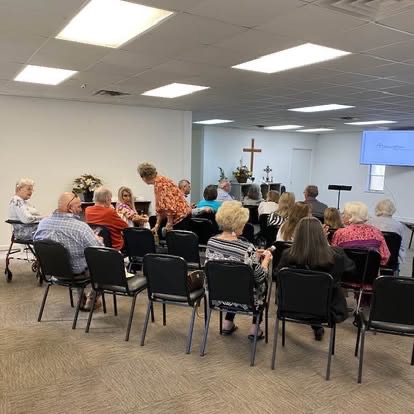
Our storefront church faces significant constraints due to limited physical space. Unlike traditional church buildings, which are purpose-built to accommodate a large congregation, classrooms, offices, and multipurpose spaces, our space (though originally a church) was fitted for commercial use.

Our space lacks the architectural features needed for worship, such as high ceilings, sanctuaries, and designated areas for fellowship. We’re going to struggle to figure out how to hold events in our space, or to expand to Sunday school or small group ministry. And, potluck…well, we’ll just have to see about that.

Additionally, our storefront has a relatively small seating capacity. Yes, there is a wall we can take out, but even then, limited space can lead to overcrowding, discomfort, and an inability to host special events, such as weddings, funerals, or community outreach programs.

One other thing to note, the lack of auxiliary spaces like nurseries, kitchens, and meeting rooms may hinder the church’s ability to offer vital services, such as childcare, Bible studies, and community meals.

Perception and Identity

The perception of a church operating in a storefront can also pose challenges. Traditional church buildings convey a sense of permanence, sanctity, and history, which can attract members and foster community respect.

In contrast, a storefront church can struggle to establish the same sense of legitimacy and stability. Passersby may view it as a temporary or informal operation rather than a dedicated place of worship.

This perception issue can extend to potential members, who might associate the storefront location with financial instability or a lack of resources. For some, the absence of traditional symbols such as steeples, stained glass windows, and pews may detract from the spiritual atmosphere they expect in a church setting. Over time, these perceptions can impact the church’s ability to grow and sustain itself.

Acoustics and Ambiance

Storefronts are not designed with worship services in mind, and this often leads to challenges with acoustics and ambiance. Traditional church buildings are constructed to enhance sound quality, ensuring that sermons, music, and prayers resonate effectively within the space. Storefronts, on the other hand, often have flat ceilings, hard floors, and minimal soundproofing, which can result in poor acoustics and echoing.

Luckily, the acoustics are not very bad in our storefront. I preach without a microphone every Sunday (not a hard thing to do when our average attendance is 30, but if we grow, I’ll probably have to rethink it). More people absorb more sound. Without a microphone, I might become muffled. Heck, they might think I’m muffled now, but they haven’t said so if that’s the case.

The lack of ambiance in a storefront can also hinder the spiritual experience. Traditional church buildings often feature architectural elements like vaulted ceilings, intricate woodwork, and natural lighting, all of which contribute to a sense of reverence and awe. I’ll confess that our team has done a fantastic job of creating a worshipful ambiance in our space, but many storefronts can feel sterile or utilitarian, which can make it difficult for congregants to feel spiritually connected or inspired.

Zoning Issues
Operating a church in a storefront can also lead to zoning and legal challenges. Many municipalities have specific zoning regulations that restrict or limit the use of commercial spaces for religious purposes. I haven’t found that to be the case with Bossier Parish, but if you’re thinking about a storefront church in another community, it’s best to check zoning early in the planning process.

Churches may be required to apply for special permits or variances, which can be time-consuming and costly. Additionally, these regulations often limit the types of activities that can take place within the space, further constraining the church’s ability to serve its congregation and community.

Parking is another common issue associated with storefront churches, and it certainly it with ours. We’ve got four spaces in front of the church and have to utilize a parking lot for a strip center next door. Spots fill up fast when we have a large (40 people) crowd for church. Any growth we experience will ultimately be impacted by limited parking.

Financial Limitations

Storefront churches are a cost-effective alternative to traditional buildings, as I mentioned in my previous blog. That notwithstanding, they can also present significant financial challenges in the long term.

Leasing or purchasing a storefront space is initially more affordable, but the costs associated with retrofitting the space for worship can be substantial. Churches may need to invest in sound systems, seating, lighting, and signage to make the space functional and welcoming.

Additionally, rent will go up at some point, which can strain the church’s budget. Unless your landlord is a member of the congregation and has mercy on it, rent will increase. If rents become unaffordable or the property owner decides not to renew the lease, the congregation may be forced to relocate, disrupting their operations and sense of community.

Deep Roots

Traditional church buildings often serve as landmarks and gathering places, hosting events, providing shelter, and offering a range of social services. Storefronts, by contrast, may not have the space or facilities needed to support such activities. This can restrict the church’s ability to act as a hub for community life and outreach.

Moreover, the transient nature of storefront operations can make it difficult for a church to establish deep roots in the community. If the congregation frequently moves or struggles to maintain a visible presence, it may struggle to build trust and foster long-term relationships with local residents and organizations.

Conclusion

This much I know: For every advantage a storefront may offer a congregation, there is an equal disadvantage. The task of the pastor and the congregation is to weigh the advantages and disadvantages appropriately, pray and then follow the leading of the Holy Spirit.

I’m uncertain how the storefront will impact our congregation yet. We haven’t been in the space long enough to know. I know God has put us here for now, so we’ll seek to be faithful to the call we hear going forward.

But still, if you’re in the Bossier Parish, Caddo Parish or Webster Parish area, please come join us. Perhaps you’ll help us figure it out.

Until next time, keep looking up…
New Places, New Spaces…

The Church of Jesus Christ is always on the move, and today the Haughton Global Methodist Church begins worship in its new home. It is a new place and a new space and I know the congregation is excited about worshipping for the first time in this new place.

The space is located at 966 Highway 80 in Haughton, LA. It was a church in one of its former lives, but it has been a physical therapy office in its most recent life. We will re-consecrate the space this morning at 10:30 a.m. for use as a place of worship, and I’d love to invite you to join us if you’re in the Haughton/Bossier City area.

I need to commend the congregation on its hard work over the past month in getting the space ready to occupy. Countless hours of service have gone into the process of converting the space back to its original purpose. Let me say, “Thank you” to all those servants who have been so diligent (and so generous) in doing what was necessary to accomplish the task. Great work!

Today will be my first opportunity to see the space after all the work is completed (will it ever really be completed?). I’m excited to see it and to lead worship for the first time in this new place. I’m excited to see all that the Lord has planned for the space and for the congregation.

I’m looking forward to getting to know the Haughton community in a deeper way. It’s going to be a challenge for me as a bi-vocational pastor, but I pray the Lord opens doors and provides opportunities for the congregation to grow and flourish in the community. I covet your prayers for the congregation, too.

Perhaps this new space in this new place will be an encouragement for new people to explore the Kingdom of God. Maybe there are those in the Haughton/East Bossier area who have been waiting for a new place and I pray the Holy Spirit will open their hearts to take a step of faith in hearing His call to salvation in their lives. Would you pray that prayer with me, too?

This new space and new place is located right next door to an oil change place. I find that only a little humorous and ironic. I spend six days a week at an oil change place and now I’ll be leading worship next door to an oil change place. Providential? Who know? I’m just trying to figure out ways we can be a good neighbor. I must confess that I’m also trying to figure out ways to use it evangelistically. We’ll pray the Lord opens doors for both to occur. Will you pray that prayer with us?

Anyway, my blogs may become less frequent now. Most of my Sunday morning time will be spent preparing for worship. They may even be spent finishing the message for that day. Of course, that’s happened before. Either way, the Lord’s got this. The Lord guided us into this, and I know that where the Lord guides, the Lord provides. I’m anxious to see how He does so in this case.

So, that’s all for this week’s blog. I don’t know when the next one might be written, but I’m anxious to see the story He is writing in the life of the Haughton Methodist Church.

Until next time, keep looking up…

Embracing Opportunities: A Bright Side to the United Methodist Church Situation

What? Another blog post on the situation in the United Methodist Church? From someone who left the United Methodist Church? Can’t you please just move on?

Yes, I probably should move on, but honestly, it’s hard to simply walk away from an institution that was an integral part of my life for over 50 years…an institution that shaped me spiritually and theologically…an institution in which I still have many friends and acquaintances…an institution that I loved for so, so long. That, and when I write a blog about the United Methodist Church, my readership generally explodes, so there’s that!

Everyone (well, almost everyone) who reads my blog is reasonably familiar with the recent decisions of the General Conference of the United Methodist Church that has many UM traditionalists reassessing their prospects of remaining United Methodist, so I’m not going to rehash those General Conference decisions here. You can find all the information you want here and here if you need to revisit those decisions.

What I am going to suggest to my traditionalist friends who adopted the “wait and see” approach (and now find themselves considering what’s next) is that you may be in a season of wonderful opportunity, and to encourage you to embrace the opportunity that lies before you. I’m suggesting there really is a bright side to the situation in which you find yourself.

Opportunity #1

If you are a traditionalist in the United Methodist Church, the recent decision of General Conference has forced you to the margins of both the institution and the culture. Being on the margins is a good thing. The Church has always flourished best on the margins.

You are now in conflict with “the system.” Well, that’s exactly where Jesus was when he established His ministry on earth. The “power” dynamic has flipped. That’s a scary (and terribly uncomfortable) place to be. Traditionalists have been accustomed to palace living. What do I mean?

Ever since the Edict of Milan in 313 A. D. (when Emperor Constantine “legalized” Christianity), the institution of the Church has enjoyed relatively “favored” status in the culture. The palace (the power structure) looked favorably on the Church. Likewise, traditionalists were part of the structures that maintained the institution. It is relatively safe to say with GC’s recent decisions, that is no longer the case. You are on the margins.

Should you and your congregation choose to remain in the United Methodist Church, you and your congregation can be like “a voice crying in the wilderness” (John 1:23, et. al), or as a remnant left behind in Jerusalem (Jeremiah 52) to tend the vineyards and till the soil.

Opportunity #2

If you are a traditionalist congregation in the UMC, you may now be forced to deal with your “edifice complex.” You now have to assess just how much your property is worth to you. That is a good thing.

The Church has never been about a building or property. The Church has always been about people.

Yes, I know it is sad that you, your forefathers and foremothers poured your life and soul into a building and property. You made the investments. You raised the money. You made the commitment to pay the debts.

Your parents and grandparents were buried there. Your children were baptized there. You were married there. There are too many memories to count. That property carries a ton of emotional weight and the prospect of walking away from it generates an equal amount of grief.

Considering the emotional worth of your property forces a reflection on the purpose and mission of the Church, and that is a very good thing.

It can take the focus off the parking lot and put the focus on people. It can take the focus off the color of the carpet and place it on the process of discipleship. It can provide the opportunity to create new spaces that will be attractive to new people.

Can you imagine what a church budget would look like if 50% of it was dedicated to evangelism rather than light bills and maintenance?

Yes, leaving your property will require sacrifice (and it will seem totally unjust), but what is the Christian life apart from sacrificial living? The greater the sacrifice, the greater the blessing. What is the price of faithfulness?

And, who knows? Walk away from your property for a season and you might be able to purchase it back in the future for pennies on the dollar. I recall a time in the not too distant past when a particular Annual Conference was begging cemetery associations to form legal entities so it could unload abandoned properties and get them off the AC’s books.

Tons of abandoned properties will soon be an albatross around the necks of many Annual Conferences. Some have even explored the possibility of hiring additional Conference staff just to manage the properties. That will get old (and expensive) really quickly.

Seriously, beyond a few properties (mostly in downtown areas valued by real estate developers), there is little value in church property, especially if there is a cemetery attached to it.

You are being given that opportunity to revisit the purpose and mission of your congregation. Embrace the opportunity.

Opportunity #3

I believe that traditionalist congregations in the UMC are now being given the opportunity to rely on God in a new way. In the past, congregations had a power structure (the Annual Conference) that it depended upon for direction and connection. A departure from the power structure brings a new freedom to listen to the Lord for direction.

In the past, top down decisions dictated the direction and the leadership of a congregation. I am intimately familiar with one former UMC congregation who is living this reality even now. In the “good old days,” if they needed a pastoral change they conferred with the District Superintendent and the issue was resolved.

Now, in their search for a new pastor, the prayer life of the congregation has increased dramatically. Everyone is praying for the congregation’s leadership as they navigate the new waters of pastoral selection. They are living in an era of reliance on God in ways they never had to before. That is an amazingly good thing!

The congregation is out of its comfort zone, and that is the place where great things can happen.

One Consideration

One thing that I’ve been reflecting on has me concerned. It may surprise you. It is the name “Methodist.” Yes, what an amazing heritage and history! I have always been honored to be called Methodist, even if (or especially because) it was originally a derogatory reference.

I am concerned for all in the Wesleyan family who carry the name Methodist because the observing world doesn’t distinguish between those in the Methodist family. The world doesn’t know the difference in a United Methodist, an Evangelical Methodist, a Free Methodist, a Wesleyan Methodist or a Global Methodist. The world only sees “Methodist.”

The challenge is for all of us to be intentional in communicating who we are to a watching world. Of course, that should have been the challenge all along.

A Final Word

There are probably more opportunities for congregations. These are just the ones I’ve thought about as I’ve reflected on the situation. If you know more, please include them in the comments for others who might read the blog.

Traditionalists, you wanted to “wait and see.” Well, you waited and now you’ve seen. It is time to make a decision about where God is calling you in the future. Embrace the season. Embrace the challenge. Embrace the opportunity. But always, keep looking on the bright side!

Until next time, keep looking up…