Disclaimer #1: This is going to be a rant.
Disclaimer #2: This is not going to necessarily be devotional in nature.
Disclaimer #3: This post is likely, again, to demonstrate why I’m not the perfect pastor.
Two events over the past week have me reflecting on the practice of tipping in our culture these days.

Event #1: I occasionally order food for my crew at the shop my wife and I own. Most times it’s because we’re busy and short-handed, so no one has an opportunity to take a lunch break. Other times, I do it just because I’m a nice person (wink, wink). This past week we were busy and short-handed, so I decided to order pizza for delivery to the shop.
I went online to place the order, and there on the order form was a place for a “tip” for the delivery person. I wasn’t going to add a tip to the order form (I never have if I’ve ordered online), but then I remembered seeing a report that DoorDash was warning its customers that they might receive bad service if a tip wasn’t included before the service was rendered. I thought better of it and added a tip pre-delivery. Of course, the tip is in addition to the “delivery fee” the restaurant charges for the delivery itself. So, before I get my order, I’ve paid a delivery fee and a tip. Big mistake!
It took an hour and a half to get my pizza! An hour and a half! And, the pizza restaurant is a mile and a half away! I called the restaurant twice to check on my order. I’ve ordered from this restaurant before and it generally takes between 30 and 45 minutes to get the order. The first time I called, the person on the phone apologized and said the delivery driver got side-tracked, but my order should be out the door soon. The second time I called, the person told me the driver was leaving the restaurant “now.” Suffice it to say, if I had not tipped when I paid for the pizza, I would not have tipped the driver. Lesson learned, though from now on, I’ll probably get cold pizza. Oh, wait! I did get cold pizza!
Event #2: The wifey and I went to one of our local Mexican restaurants. We frequent it often (once a week or so), and some of the staff know our faces. The service was as good as usual. The food was as good as usual. Everything was as expected. The check arrived. I looked and was satisfied that the check was correct, and as is my habit, I doubled the tax for the tip (usually equals 20-22%, depending on location). Now, here’s the problem: the tip total was $11.76, but when I added the tip amount to the food amount, I didn’t add correctly (yes, math was my poorest subject in school).
My wife brought it to my attention the next day after she checked her banking app and saw the amount for the tip was only $1.76 instead of my intended $11.76. Oh, horror! Talk about being bad at math! Actually, it was just haste. The receipt from the restaurant clearly reflected I intended an $11 tip, but I just wrote the wrong number on the “total” line. At least the server was honest enough to not assume that I left an $11 tip, but entered the amount I wrote on the “total” line. Give her credit for her integrity!

So? What do I do? I return to the restaurant the next day with $10 cash in hand to tip the server for her service. See, I don’t mind going out of my way to tip for good service. Well, I probably was more concerned with her thinking I was a cheapskate and having to face her again when we returned for another meal, but that fact notwithstanding, I don’t mind tipping…and tipping generously.
My tipping generosity might be as a result of having three of my children who worked in the food service industry when they were younger and depended on tips to survive. I know how important tipping is to those who depend on them.
Go to the local convenience store and there’s a tip jar by the register. For what? For taking my money when I buy a soft drink? A tip? For that?
A tip jar at Subway? Really?
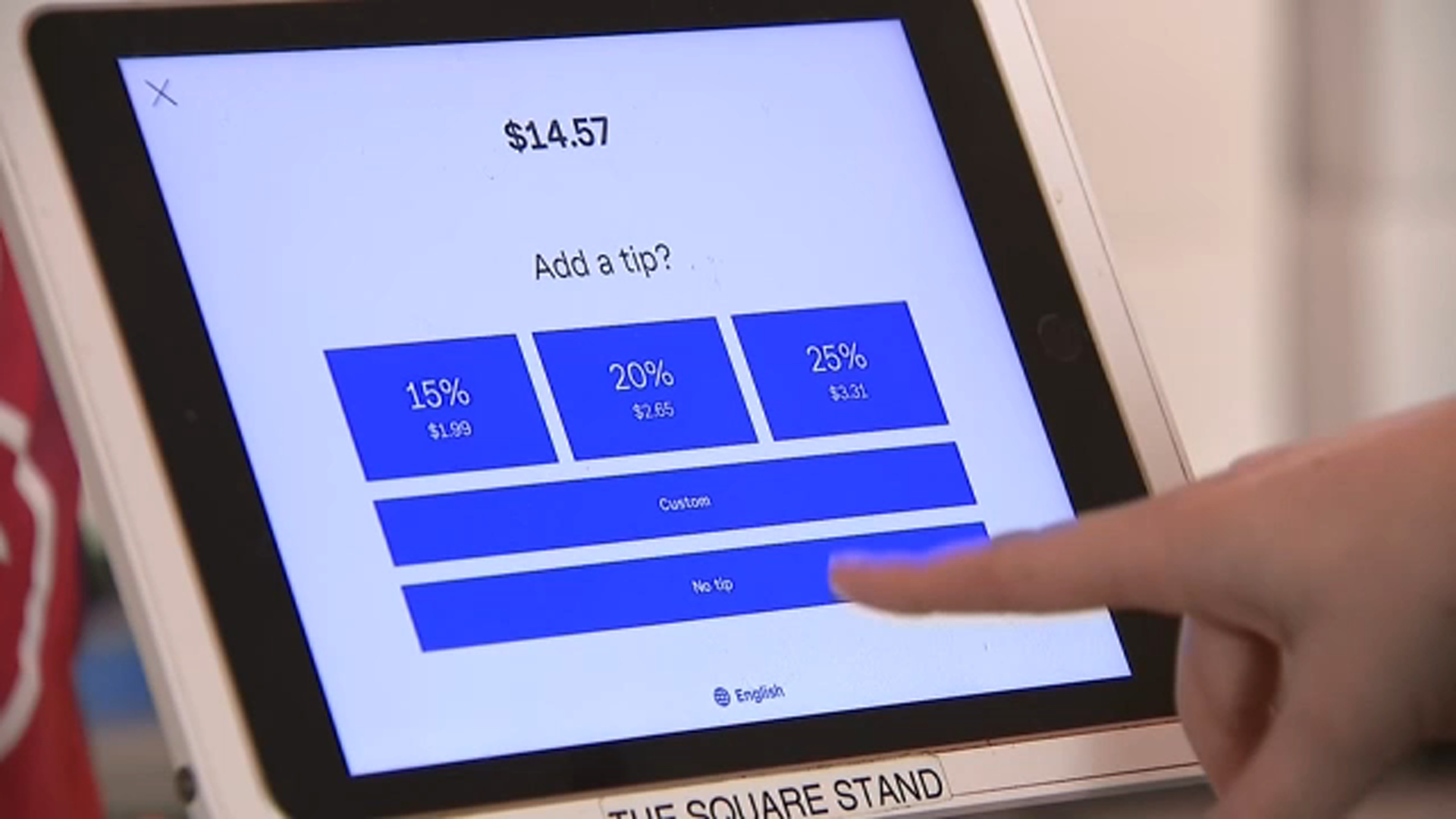
Go to the coffee shop and the barista flips around her iPad and puts you on the spot with a request for a tip. Wait? What? You haven’t gotten me my coffee yet and you’re asking me for a tip? Okay, if you’re going to ask me for a tip, how about you take my money after you bring me my coffee? Then, we’ll know if the tip is warranted.
Okay, so another disclaimer: I am quite aware that most servers at restaurants with wait staff make far less than minimum wage (it’s legal to pay folks $3/hour as wait staff), and depend on tips to make up the difference. Tipping is appropriate in those circumstances (unless, of course, the service is terrible–but I usually tip anyway). Seriously, though, workers at Sonic, and the pizza restaurant, and the coffee shop and Subway, are all on very reasonable hourly wages (some as high as $15/hour). Believe me, I know. I pay, on average, $13/hour for workers in my shop and yes, customers occasionally tip my workers, but they don’t “expect” tips.
And yes, I am aware we’ve moved ever closer to a cashless society and no one has cash to tip for service anymore, so that plays into the equation, too.
I remember a time when the practice of tipping was voluntary, and came as a result of being pleased with the service one received. It ain’t that way no more! We are living in an age where tipping is not encouraged. It’s expected! Or, like DoorDash, demanded.
It just seems to me that with all this coercion in the service industries regarding tips, that people seem entitled to them. Entitled. Yes, that’s a good word for it. I’m probably stretching here, but have we lived in such an entitled culture for so long, that service workers feel entitled to tips regardless of the service they offer?
And, companies feel entitled to ask for tips BEFORE any service is rendered? Seriously, I’m paying the company for the service, and if it’s a delivery, I’m paying you the delivery charge, and I’m paying taxes on the purchase and I’m paying a tip…upfront! It’s like you want me to pay your employee so you don’t have to. I remember the days when I could call Dominoes Pizza, place my order and pay for it on delivery. If I chose to be generous to the delivery driver, that was my choice.
Maybe it’s not an entitlement mentality. I’m probably overthinking it, or I’m just an old curmudgeon these days, but if it’s not entitlement, it is certainly coerced generosity and coerced generosity only breeds animosity (you’ve heard all the jokes about paying taxes, right?) between parties. Coerced generosity only makes me angry and the person on the receiving end more entitled. Or, so it seems to me.
On the other hand, willful, voluntary generosity breeds (in most circumstances) gratitude and goodwill between parties. Voluntary generosity yields benefits that go beyond the financial and builds both parties up in the process, and can even create a bond between people that didn’t exist before. Or, so it seems to me.
Folks, as followers of Jesus Christ, we are called to be generous. Our God is a giving God. You know that!
16 For God so loved the world that he GAVE his one and only Son, that whoever believes in him shall not perish but have eternal life.
John 3:16 (NIV)
Generosity is (or should be) a core value of followers of Jesus Christ. I’m reminded of the early Church here:
42 They devoted themselves to the apostles’ teaching and to fellowship, to the breaking of bread and to prayer. 43 Everyone was filled with awe at the many wonders and signs performed by the apostles. 44 All the believers were together and had everything in common. 45 They sold property and possessions to give to anyone who had need.
Acts 2: 42-45 (NIV)
Those early believers were motivated by grace and gratitude to be generous because they knew what Jesus had done for them. That’s the way we’re supposed to be. Grace and gratitude never comes through coercion, but only through willful generosity. I’m reminded of how Paul characterized the generosity of our Lord:
…have the same mindset as Christ Jesus:
6 Who, being in very nature God,
Philippians 2: 5b-8 (NIV)
did not consider equality with God something to be used to his own advantage;
7 rather, he made himself nothing
by taking the very nature of a servant,
being made in human likeness.
8 And being found in appearance as a man,
he humbled himself
by becoming obedient to death—
even death on a cross!
Oh, well! That’s enough ranting for one day. Let’s all try to live a generous life. It’s what Jesus would do. We’ll feel better because we did, and we’ll be blessing to others because we were generous.
I’ll head to church now and repent and pray for forgiveness. I fully expect the Lord will forgive me. He’s just generous that way. I pray you’ll forgive me, too, for using this venue to vent…and demonstrate once again that I’m not the perfect pastor.
Until next time, keep looking up…

 Not the Perfect Pastor