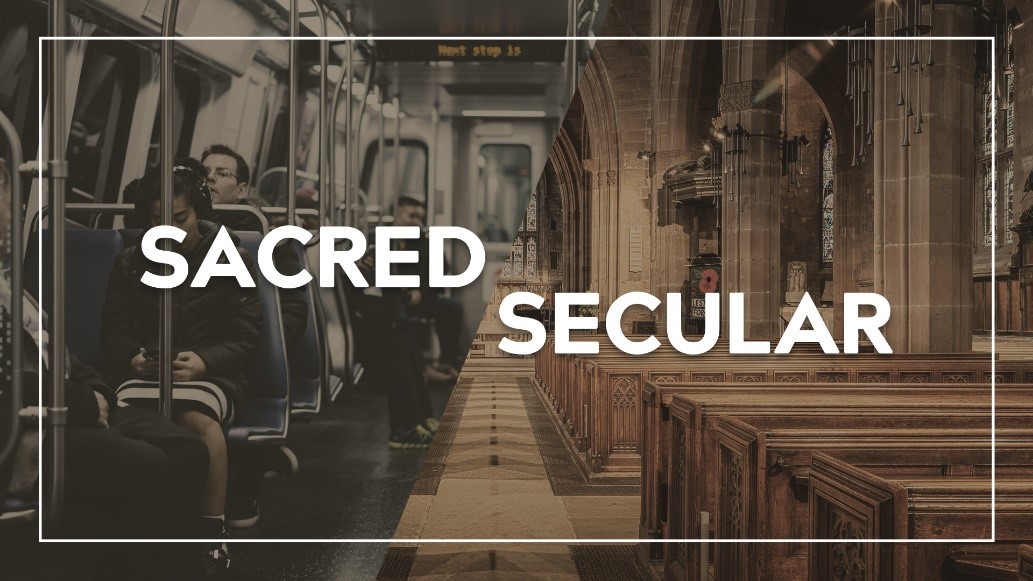
Is Nothing Sacred Anymore?

Is nothing sacred anymore? That’s the question I’ve been asking myself a lot lately as a result of a few items I’ve seen in the news recently. When I say “sacred,” I’m not speaking from the purely religious perspective, but in broader terms of the values and mores that define us (or once did) as a nation and culture.

I must confess that I am writing with a bit of trepidation simply because the news accounts touch on hot-button issues in our culture, and I run the risk of furthering the “partisan” divide that dominates our discourse and prevents us from having civil conversations and debates surrounding such issues. But, writing helps me process, so write I shall. You don’t have to agree with it. Heck, you don’t even have to read it. Just keep right on scrolling. You won’t hurt my feelings at all.

Defining the Sacred

When I speak of sacred, I speak specifically to mean that which is regarded with awe and reverence, and yes, there are things in our culture which should be (or used to be) regarded with reverence. I know that for something to be sacred means that it is set apart, holy or consecrated. Those terms certainly carry religious connotations, but the idea goes beyond the purely religious.

In the News

So, what has been in the news that prompted my thinking? The first news item was the reporting of the “Pride” month gathering at the White House back in June and the subsequent kerfuffles surrounding the prominent display of the “pride” flag at the White House (read about it here) and the trans-activist who exposed him(her?)self on the White House lawn (cautiously read about it here) during said event.

A second news item (click here for the story) that captured my attention was the Center for Disease Control and Prevention’s release of guidance for “chestfeeding” of infants (read the guidance here). Okay, so it’s not really guidance on chestfeeding, but more an acknowledgment that men can produce milk and feed babies from their breasts–to which I say, “What?”

I thought surely I can dig deep to find the nuance of these events so as to arrive at a point that included everyone’s perspective, but the more I reflected, the more I prayed, the more I studied, the reality settled on me that no matter where I landed in my thoughts, someone was going to be excluded. The fact that anyone might be excluded is the very reason that nothing can be sacred anymore.

A Christian American

Let me preface this section with this statement: I am a Christian American, with the emphasis on Christian. I can acknowledge the danger in making that claim of slipping into a christian nationalism mindset. That fact notwithstanding, I believe it is possible to be both a faithful disciple and a strong patriot and I try desperately to be both.

As an American, I’ve always seen the White House as a sacred (set apart, consecrated) place to be held in awe and reverence. It is one of the places in our nation that symbolizes the values that define our nation. It is the people’s house, and as the people’s house, I no more want to see a “pride” flag waving there than I would want to see a Christian flag waving there (although a Christian flag would be more appropriate given the Judeo-Christian principles upon which the nation was built). The White House isn’t a place for any flag except the flag of the United States of America. To display ANY flag other than the American flag is to diminish the sacredness of the space.

And, the man boobs? Well, I never! So, I really don’t care if the President and the White House wanted to host an event for LGBTQI++++++ folks. He’s the President. Go for it, big boy. Do your thing. This is America. I don’t have to attend. I don’t have to like it. I can even speak out against it (this is America, right?), but for an invited guest to expose himself on the White House lawn is a bridge too far for me. It was an expression of utter contempt (udder contempt?) and disrespect for the sacredness of the space. No, there is nothing sacred anymore.

Then, there’s the whole chestfeeding thing. I’m sorry. Men are not women and women are not men. A man can look like a women, can dress like a women, can act like a woman, can live as a woman, but he is still a man. Follow THAT science. A woman can look like a man, can dress like a man, can act like a man, can live as a man, but she is still a woman. It is basic biology. Women cannot be men and men cannot be women, surgery and drugs notwithstanding.

I can remember a time when motherhood was sacred. Heck, even womanhood was somewhat sacred, given the woman’s ability to give birth, to be the source of life. That certainly doesn’t seem to be the case anymore. The sacred nature of motherhood (and womanhood) is lost to the selfish whims and unnatural desires of an individual whose mental wellness can certainly be questioned. But, heavens, let by no means exclude them!

The Problem Before Us

And, therein lies the problem. The sacred is always a bit exclusionary. The sacred evokes a sense of awe, a sense of mystery, that points to something above and beyond itself, or above the person seeking to understand the sacred. In this post-modern, post-Christian world, we just can’t have that.

By rejecting the sacred, we can remove all restraints that hinder us. If nothing is sacred, then any behavior can be justified. If nothing is sacred, legitimacy to any lifestyle can be granted. I’m telling you, folks, losing the sanctity of motherhood (womanhood) puts us on a short path to ultimate evil. Write it down that on this day Lynn Malone wrote that men “chestfeeding” infants is the gateway to legalizing pedophilia. Hyperbole? I hope so, but I think not.

When a sense of the sacred is lost no one stands out, everyone wins a trophy and every passion is ripe for the fulfilling. Everyone must be equal whatever the cost. Every whim, every passion, every desire must be not only legitimized, but also affirmed. To do otherwise is to make someone less than, and we just can’t have that under any condition.

As a sense of the sacred is lost, we begin to replace the truly sacred with the ordinary. We see the elevation of the ordinary to places of sacredness–things like sports, entertainment and materialism. It’s not a huge step until “sin” becomes sacred and to call it out is to commit blasphemy.

I think it points to a larger issue that gets lost in our secular culture. We lose a sense of the sacred in society because we have lost a sense of the sacredness of that which is holiest. We fail to recognize that there should be things set apart for the worship and service of God. When we lose sight of the holiness of Jesus Christ it leads directly to the suppression of the sacred in daily life. We shouldn’t be too surprised to see it happen in culture. It has happened in the church, too. Perhaps it happened in the church before it happened in culture (see an example here).

Jesus is the Answer

Until Jesus Christ is exalted, until Jesus Christ is loved completely and adored genuinely, there can be no surprise that anything else will be viewed as sacred. Until Jesus Christ be high and lifted up, nothing is stable. Until Jesus Christ be worshipped and adored, nothing is safe. Until Jesus Christ be praised forevermore, nothing will be sacred anymore.

Even so, come Lord Jesus.

Until next time, keep looking up…

Deja Vu?

In the words of the great Yogi Berra, “It’s like deja vu all over again!”

That’s the feeling I’ve experienced over the past couple of days as I scrolled my Facebook feed and saw posts from friends and former colleagues who are making transitions once again in ministry.

Yes, it’s that time of year when United Methodists, and now former United Methodists, are making changes in ministry appointments. This year has been decidedly different in that respect, however.

Many friends and former colleagues are making the transition away from the United Methodist Church as the disaffiliation process continues to play itself out. Some have chosen to transfer to other denominations and others have chosen to retire. Still others have chosen to remain United Methodist and are also on the move. I wish them all blessings and continued fruitfulness in ministry wherever the Lord leads them.

It’s deja vu for me, though, not only because I remember those days, but because I’m on the move, too. I really thought my moving days were over when I voluntarily disaffiliated from the UMC almost four years ago. I thought I’d enter secular employment, plant a house church, fill a few pulpits now and again, and life would be grand. That’s what I get for thinking! (Life is still grand, though).

As for the literal moving part, Vanessa and I have made two moves–from West Monroe to Ruston and from Ruston to Minden–in the nearly four years since leaving full-time vocational ministry. That really is more than the average Methodist minister! I’ve informed Vanessa and my children that I only plan to make one more move–either to the nursing home or the funeral home. I’m too old for this moving foolishness!

I’m on the move in ministry, as well. I began an interim ministry assignment with First Methodist Church in Minden on June 1st. Boy, that didn’t last long! That ministry assignment lasted an entire 30 days. That congregation chose to join the Global Methodist Church, and the congregation was quick to identify a pastor who was also joining that denomination who was available immediately, so my services were no longer needed. If I had a poor self-image, I would be tempted to think the congregation listened to me for a couple of weeks and said, “We gotta’ find a pastor, and quick!”

I know that’s not the reality, though. Plans were already in the works when I accepted the assignment and the timing worked out perfectly for the congregation and the new pastor. Besides, the congregation needed a full-time pastor and that is a role I’m unable to fill right now. The congregation also needs the stability of a full-time pastor.

The circumstances over the past four years for the congregation were such (partly precipitated by my own departure from full-time ministry) that I became the sixth pastor of the congregation in four years. That’s not healthy by any metric. I am praying earnestly for them and their new pastor that they will move forward in faith and confidence and will find the stability necessary to be effective in ministry to the Minden community.

Though that assignment has ended, I suppose the Lord isn’t done with me in ministry yet. I met with the leadership of Lakeview Methodist in Minden last Wednesday evening to explore the possibility of serving as their interim pastor. They, too, went through the disaffiliation process and their pastor chose to take a leave of absence so they have been without a pastor since May 31st of this year.

We met, and after an engaging conversation, agreed to a period of six months as interim pastor. It is a “going back” in ministry for us. We served this congregation from 2001 – 2003, so there are relationships already established in the congregation. That learning curve will not be quite as steep. There does remain the issue of whether one can “go back” in ministry after seasons away. Time will tell, but for me, there is a sense of going home. The reason for that is probably because my son and his family call this congregation home, but it may be deeper than that.

Lakeview Church-Minden, LA

Honestly, Vanessa and I have felt a little like a rudderless ship over the past several years. Don’t misunderstand, we’ve found a great home with the Evangelical Methodist Church as a denomination, but more locally, we’ve just sort of blown with the winds of the Spirit.

We thought the House Church Movement was going to be “our” place of ministry, but when you change houses in different communities, people don’t always follow…so, there’s that! I’m still rather convinced that house churches are the future of faithful discipleship, but the Lord hasn’t opened that door again. So, we wait…and blow.

Then, the Spirit blew us over to Beulah Church in Calhoun. What was supposed to be a three-week commitment turned into two and half years of ministry leading the congregation out of the UMC that was both laborious and stressful, not to mention oh, so revealing. We accomplished much in those two and a half years and served with faithful and committed disciples whom we learned to deeply love, but distance simply made continuing ministry untenable for us and for them.

We continued to receive calls from numerous congregations soliciting our services as pastor. They are all faithful and fruitful congregations but we never felt the nudge to say, “Yes” to any of them. That is not meant to be an offense to any of those congregations. I pray I was able to offer each of them a little guidance as they contemplate their future direction, but I personally never sensed the Spirit calling us in those directions.

Then, First Minden came calling. Vanessa and I had somewhat connected in worship with the congregation simply due to the fact that their interim pastor was Rev. David Dietzel. I have long told people that if I could choose my pastor, I’d choose David. When First Minden entered the discernment process toward disaffiliation, Vanessa and I felt comfortable sitting under David’s leadership as much as possible.

The congregation subsequently voted to disaffiliate, but Rev. Dietzel chose to retain his credentials in the UMC (a decision I both honor and respect), so the congregation was without a pastor once again. The leadership called and asked if I could help. After receiving the assurance that they could live with my availability to serve on a limited schedule, I felt the Spirit saying, “Go.” Little did I know the “go” would be so short-lived.

So, here we blow again! Over to Lakeview Church. I’ve agreed to be their Sunday preacher, handle emergencies and help lead the discussion on where their future affiliation will be. Those will be my primary tasks in the next six months. We’ll see where it leads, but it feels right. We pray the Spirit is in it. Will you pray with us?

So, it really does feel like deja vu all over again…in a lot of different ways.

Until next time, keep looking up…

Staying Grounded…

Some of you may be wondering about the title of today’s blog—Staying Grounded. I’ve written about change the three previous blogs (click here, here and here to read those), and now I’m telling you to stay grounded? It’s hard to stay and change at the same time.

We’d prefer things “stay” the same but we know they don’t stay the same. Change is inevitable, and it’s imperative that we negotiate change in the most life-giving, constructive way possible. One of the ways we do that is by staying grounded. I did not say by staying still. I’m talking about staying grounded in those unchanging truths in which we find our being.

Joshua had one final task as the leader of the nation of Israel: to prepare them for the change from nomads and warriors to settlers and inheritors.

24 Then Joshua summoned all the tribes of Israel to Shechem, including their elders, leaders, judges, and officers. So they came and presented themselves to God.

Joshua said to the people, “This is what the Lord, the God of Israel, says: Long ago your ancestors, including Terah, the father of Abraham and Nahor, lived beyond the Euphrates River,[a]and they worshiped other gods. But I took your ancestor Abraham from the land beyond the Euphrates and led him into the land of Canaan. I gave him many descendants through his son Isaac.

Joshua 24: 1 – 3 (NLT)

14 “So fear the Lord and serve him wholeheartedly. Put away forever the idols your ancestors worshiped when they lived beyond the Euphrates River and in Egypt. Serve the Lord alone. 15 But if you refuse to serve the Lord, then choose today whom you will serve. Would you prefer the gods your ancestors served beyond the Euphrates? Or will it be the gods of the Amorites in whose land you now live? But as for me and my family, we will serve the Lord.”

16 The people replied, “We would never abandon the Lord and serve other gods. 17 For the Lordour God is the one who rescued us and our ancestors from slavery in the land of Egypt. He performed mighty miracles before our very eyes. As we traveled through the wilderness among our enemies, he preserved us. 18 It was the Lord who drove out the Amorites and the other nations living here in the land. So we, too, will serve the Lord, for he alone is our God.”

19 Then Joshua warned the people, “You are not able to serve the Lord, for he is a holy and jealous God. He will not forgive your rebellion and your sins. 20 If you abandon the Lord and serve other gods, he will turn against you and destroy you, even though he has been so good to you.”

21 But the people answered Joshua, “No, we will serve the Lord!”

22 “You are a witness to your own decision,” Joshua said. “You have chosen to serve the Lord.”

“Yes,” they replied, “we are witnesses to what we have said.”

23 “All right then,” Joshua said, “destroy the idols among you, and turn your hearts to the Lord, the God of Israel.”

24 The people said to Joshua, “We will serve the Lord our God. We will obey him alone.”

25 So Joshua made a covenant with the people that day at Shechem, committing them to follow the decrees and regulations of the Lord.

Joshua 24: 14 – 25 (NLT)

It’s been seven years since the walls of Jericho came tumbling down after the people of Israel marched around it blowing trumpets and shouting. The rest of the book of Joshua tells us the nation of Israel spent those next seven years overcoming no less than 31 kings as they took possession of the land promised to Abraham all the way back in Genesis 12.

Joshua, who has been the spiritual and political leader of the nation, calls the nation together one last time to worship and express gratitude to God before dismissing them to settle into their inheritance. Joshua is old now and he sees the need to call them to a special place for a special reason to give them a special message.

Grounded in a Special Place

Joshua calls the people together at Shechem. Shechem was a holy place in Israel’s history. Shechem was the first place given a name in the Promised Land. Shechem was also the place where Abram (before he was Abraham) built an altar to God who called him out of Ur, and it was also at Shechem that Jacob built an altar and buried idols under the oaks of Moreh. Calling the nation together at Shechem was sort of like a homecoming.

You remember homecomings, right? I remember growing up that both sets of grandparents anticipated their annual homecomings. Packing up the care with chicken pie and chocolate cake, fried chicken and banana pudding we traveled to New Prospect Church in north Jackson Parish, or to Zoar Methodist Church in the far reaches of south Jackson Parish. We arrived to greet old friends and family we likely hadn’t seen since last year’s homecoming, and those old folks would share stories and remember. 

Homecomings are places to remember our foundations and our beginnings. Through the sharing of our stories, we recall where we’ve come from, and we are put in touch with those people and places that have made us who we are. Homecomings are also a time to share plans and dreams for the future. Homecomings are a way for us to stay grounded as we face changing times.

The homecoming at New Prospect Church has long since ceased, but every year, I receive a reminder from the organizers of the Zoar homecoming announcing a clean-up day for the old church. Every May, we gather there to worship, and eat, and catch up, and eat, and remember, and eat. There are no regular worship services there. Those have gone the way of so many little country churches. I used to make excuses for not going to that homecoming. It used to be on Sunday, so I had a ready-made excuse. They moved it to Saturday but still few people come. It seems we younger generations don’t see the need to be part of those homecomings anymore. Perhaps that’s one reason we’re losing our foundations. We’re not staying grounded. If we are to know where we’re going, we must have a clear understanding of where we’ve been. Joshua called the nation to Shechem to help them stay grounded, to remind them of their past.

Grounded in a Special Reason

Joshua had a special reason for calling them back to this special place. It was in this special place that Joshua reminded them of the covenant God made with the people of Israel. Joshua took this opportunity to renew the covenant for the fourth time in the nation’s history. God made the covenant with Abraham back in Genesis. God renewed the covenant with Moses after the exodus from Egypt while there were at Mt. Sinai. God renewed the covenant a second time at Moab after the nation ended its wilderness wanderings. God renewed it a third time here in the book of Joshua after the nation won battles at Jericho and Ai.

Verses 4-13 of Joshua 24 recounts the history of God’s deliverance of Israel. From Abram’s call, through the lineage of Isaac, Jacob and Esau to the deliverance from Egypt, Joshua tells the story of the nation. From the wilderness wanderings to Balaam’s blessing, to the most recent victories over these 31 kings, over six hundred years of the nation’s history is shared in a few short sentences. 

The story is Israel’s story. Even though it’s Israel’s story, Joshua reminds the people that God alone is the actor. Over twenty times in these few short verses, God is the subject in the sentences. God is quoted as saying, “I took, I gave, I sent, I brought, I struck, I delivered, I made.” Three other times the word “he” refers to God. Six times God “gave,” five times God “brought out of,” or “into.” “You” is used only five times, and each time, it’s the direct object. Here’s your English grammar lesson for the day—the direct object is the receiver of the action of the subject. The point is clear: Israel’s story finds its significance only because of the gracious acts of God, not by means of her own strength. Israel’s story is significant because it is connected to God’s story.

Each of us has a story. Each of our stories are marked, each in their own way, by dramatic, though sometimes tragic events fixed in time. Our stories are important aspects of our spiritual lives, and they are important to God because He is the author and the director of our stories. But our stories never have full meaning and significance until we realize and remember that it is not what we have done, but what God has done for us. Our story becomes powerful only when we connect it to the larger story of God’s redemption, when we build bridges from our story to the Christ story, and the subject of our story becomes God instead of ourselves. 

The Apostle Paul reminds us of the crux of our story. Here’s where we find our grounding:

Once you were dead because of your disobedience and your many sins. You used to live in sin, just like the rest of the world, obeying the devil—the commander of the powers in the unseen world. He is the spirit at work in the hearts of those who refuse to obey God. All of us used to live that way, following the passionate desires and inclinations of our sinful nature. By our very nature we were subject to God’s anger, just like everyone else.

But God is so rich in mercy, and he loved us so much, that even though we were dead because of our sins, he gave us life when he raised Christ from the dead. (It is only by God’s grace that you have been saved!) For he raised us from the dead along with Christ and seated us with him in the heavenly realms because we are united with Christ Jesus.

Ephesians 2: 1 – 6 (NLT)

If we are to negotiate the tumultuous winds of change, it will be as we stay grounded in God’s story. Joshua called the nation of Israel to this special place to remind them of the necessity of staying grounded in God, who is the center of every story.

How do we do that? Let me offer one suggestion—the old hymns. They have much to teach us. We love the new songs. Many of them are great, but if we only listen to new songs it becomes too easy to divorce our present and future from our past. We lose our grounding. Singing in the early church was a method of learning…the story…and the theology.

Grounded in a Special Message

While they were gathered at this special place for this special reason, Joshua seized the opportunity to give them a very special message. “Choose today whom you will serve…” is the message Joshua delivered that day. There had been a problem with idolatry in the nation, and Joshua needed to remind them that to claim the promise of God meant they needed to remove the idols from their lives. Joshua asks plainly, “Will you serve the gods of your ancestors, will you serve the gods of the Amorites whom you are among now, or will you serve the Lord?” Then, he goes on to say, “As for me and my house, we will serve the Lord.”

The key word in the text is “serve.” To serve means to work, worship, or perform. Work and worship are closely connected. Whatever we give ourselves to most diligently is the thing we generally worship. We are by nature spiritual creatures, and we will worship something because we were created by God to worship. If we don’t worship God, we’ll end up worshipping something of our own creation.

If we spend our lives worshipping money, or fame, or position, or celebrity, or work, or sports, or even family we will come to the end of our journey with nothing left to do but bow before those gods and worship, for we have spent all our time, and all our lives pursuing them. Those are not the places to stay grounded. Stay grounded in God through our work and our worship to God.

Serving God doesn’t mean we become involved in every Christian activity the church or the world offers. Serving God is something much more basic than that. First, our service is to be exclusive. We cannot honor God and serve other gods at the same time. Jesus made that abundantly clear in Matthew 6:24. 

Serving God means we remove everything that competes for our loyalty to God—money, success, perfection, education, family, and even Christian activities. All these are means to an end; they are not the end. Staying grounded means removing the idols from our lives because God requires our exclusive service.

How do we keep these things from becoming idols? Money? By tithing. Success? By focusing on the Kingdom of God first (Matt. 6: 33) and then the success of others. Family? Go to church together!

Secondly, serving God must occupy our every attitude. We must die daily to self, and that is sometimes a long, slow, painful death. We realize everything we say or do becomes an expression of our allegiance to Him. The way we say hello, the ways we acknowledge other persons, the way we respond to the least, the last and the lost reflect our relationship to Him. We serve God by caring, by praying, and by practicing hospitality. God, in Jesus Christ, died to redeem us. Let us live to serve Him. That is how we stay grounded in changing times.

We’re not always so good at living to serve God, though. Think back with me to the Garden of Eden. God gave Adam and Eve the command to guard and serve the Garden. It was the same verb Joshua used on this day. Adam and Eve found no idol in the Garden to serve, they bought the lie of the Serpent, and ended up worshipping themselves. What a failure!

Unfortunately, we know Israel’s failure through the years because we have the record of the Bible. More unfortunate still, we know our own failure. We get selfish, proud and competitive. We have our own goals and agendas and we don’t quite make ourselves available to serve God. We try to serve Him while holding on to the things we want. We live constantly between the tensions of two worlds, and the between the gods of those two worlds.

As it was for the nation of Israel, it is for us today—the choice is before us. Which will we choose? Thank God, we have grace and the Holy Spirit to guide influence our decision.     

Let’s return to the old saying, “The times, they are a changin’!” Our lives are constantly changing. Our culture is constantly changing. This church, too, is changing. Successfully negotiating these changing times means we must stay grounded by remembering our history, by remembering our place in God’s story, and by serving God with all our hearts!

Until next time, keep looking up…

Are You Sure About That?

Mark Twain said, “The only person who likes change is a wet baby.” There are a lot of reasons we resist change, but one of the primary reasons is the uncertainty that accompanies change. We like clarity. We like certainty. The familiar is comfortable, like an old pair of shoes broken in just right. It’s easier to stay put than to move. But, there’s a reason the windshield is bigger than the rearview mirror. Life is meant to be lived going forward not backing up. For the nation of Israel, there was more promise ahead than there was behind. So it is for us, too.

Crossing the Jordan River

In Joshua 3, the nation of Israel stood on the banks of the Jordan River ready to cross over and inhabit the Promised Land. God has raised up a new leader in Joshua, and with this new leader there is more than enough uncertainty to go around. Here is a little of the uncertainty I suspect the people were dealing with:

  • “Joshua is a great leader. He’s won some battles for us, but he’s no Moses!” How many of you remember the 1988 vice-presidential campaign? Sen. Lloyd Bentsen of Texas was pitted against Sen. Dan Quayle from Indiana. When asked about his experience, Quayle said he had as much experience as Jack Kennedy had when he ran for President, to which Bentsen quickly responded, “Senator, I served with Jack Kennedy. I was a friend of Jack Kennedy, and Senator, you’re no Jack Kennedy.” I wonder if Joshua didn’t get some of that same kind of feedback as he prepared to lead them across the Jordon River.
  • Perhaps there was this uncertainty: “Is there going to be manna in the Promised Land?” Don’t forget. Six days out of every week, every month, every year for forty years the Israelites pretty much had one job—go out and gather manna. They had to wonder if there was going to be manna across the Jordon. (This is a good place to be reminded, there’s often a lot of good about where we are. It’s good to have manna, and sometimes all we need in that moment is manna, but the problem is we don’t really know what we’re missing.)
  • Maybe there was this uncertainty, too: “We’ve been nomads for forty years. We know how to move around. We know how to live in tents. Now, you’re asking us to become settlers. We’re not sure if we know how to be settlers.” (Personally, I resonate with this uncertainty. For 28+ years, Vanessa and I were nomads, moving every 3.66 years. Now, we’re settlers in our new home. It’s challenging! There’s a little uncertainty.)

Wouldn’t it be great if we knew the outcome for every decision we faced in life? What a gift to have a crystal ball that helped us look into the future to see what lay ahead of us as we stand at defining moments. But, we don’t have a crystal ball. We can’t know whether change will be for the better or for the worse, but because we don’t know doesn’t mean we don’t have to deal with the change brought by defining moments. Every change creates its own uncertainty. As disciples of Jesus Christ, our task is to respond faithfully to changing circumstances and changing times in ways that give life and testify to the Lord’s goodness, not only to changing circumstances in our own lives, but to changing circumstances in our world.

Uncertainty can keep us frozen. It can keep us from making decisions we need to make to move forward in life, and it can keep us from living into the fullness of God’s call and claim upon our lives. For forty years the Israelites had been frozen. The “Back to Egypt” Committee had quickly become the “Let’s Stay Here” committee, and without Joshua to lead them, they would have missed the blessings of the Promised Land. Joshua gave three specific instruction, and in his instruction, I think we learn a few lessons for our own lives in dealing with the uncertainty of life.

Joshua’s Instructions

Focus on God

First, Joshua instructed the people to focus on God. In the face of radical change, he focused the people’s attention on the certainty of God’s presence. We get stuck when we focus all our energy on the uncertainty of circumstances rather than banking on the certainties we already know.      

The people were given these instructions:

“When you see the Levitical priests carrying the Ark of the Covenant of the Lord your God, move out from your positions and follow them. Since you have never traveled this way before, they will guide you. Stay about half a mile behind them, keeping a clear distance between you and the Ark. Make sure you don’t come any closer” (3:3b – 4).    

The Ark of the Covenant captured the imagination of my generation through Harrison Ford as Indiana Jones in “Raiders of the Lost Ark.” Did you know there is a new Indiana Jones movie?

The ark represented the presence of God with the nation of Israel. Joshua’s instruction was a reminder that God was calling the nation forward. Stay connected to God. Keep your eyes on the ark. When it moves, you move. Go where God leads, for you want to be where God is. The Ark was a visible, tangible reminder of God’s presence. Joshua’s instruction was, “When you see the Ark move, you move.” That was his way of saying, “Stay connected to God. Go where God goes.”

The Lord Jesus Christ is the certainty we can bank on. He is faithful. Always has been, always will be. In changing times, in challenging times, in uncertain times we need to focus on Jesus. After all, life is God’s story. We need to be reminded that Jesus is the Changeless One amid all the changing circumstances. I love what the writer to the Hebrews says about Jesus Christ. He is, “the same yesterday, today and forever” (Hebrews 13:8). 

 When we are anxious in coping with the change and uncertainty of life, there’s one reality we look for: Jesus. Where is Jesus in your story? Are you looking for that? Are you watching for Jesus? Do you ask how He might work in the midst of your life changes, especially when those changes are traumatic? Have you remembered the Lord at all? When we ask that question, we enlarge the frame of our life to include the only One who can help us.

In the midst of change, I think it’s key for us to “re-frame” the picture in order to include God in it. God doesn’t cause everything to happen, God doesn’t cause the tragedies that hit us, but God can redeem the worst circumstances if we have eyes and minds to see. None of our circumstances catch God by surprise. We wonder if God will be with us there. God is already in our future. God is already there. God goes before us making the way. We Wesleyans call that “prevenient grace.”

Prepare Ourselves

Secondly, Joshua instructs the people to prepare themselves—to get themselves ready. Verse 5 says: “Then Joshua told the people, ‘Purify yourselves, for tomorrow the Lord will do great wonders among you’.”

The Hebrew word translated “Purify” is “qadash” which means “to be set apart/ consecrated.” The command was the same Moses gave the people back on the other side of the desert some 40 years before as God prepared to give the 10 Commandments. It was a way of saying, “Get ready for what God’s about to do among you.”

It was also Joshua’s way of connecting the people to their heritage. Joshua was able to call upon the past to affirm the leadership that preceded him, and us it move the nation forward. But, it was also necessary for the people to be ready to experience God’s great miracle. To the Hebrews, purification meant washing their clothes and abstaining from sexual activity for a season. It was also a time of fasting. It was a time of waiting on God, of listening to His voice.

Like the Hebrew people, we have to prepare ourselves for what the Lord wants to do in our lives and among His creation. We have to be ready even to face some uncertainty.

No matter how we try to stop change, we can’t. We look at our children, and on certain days, we want to put the brakes on their growth, but we can’t. We look around at our culture and we think, “Whoa! This can’t be happening,” but, it is, and no matter what we do, we can’t put the brakes on.

It’s always been that way, though. When the railroads were first introduced to the U.S., some folks feared that they’d be the downfall of the nation! Here’s an excerpt from a letter to then President Andrew Jackson dated January 31, 1829:

As you may know, Mr. President, ‘railroad’ carriages are pulled at the enormous speed of 15 miles per hour by ‘engines’ which, in addition to endangering life and limb of passengers, roar and snort their way through the countryside, setting fire to crops, scaring the livestock and frightening women and children. The Almighty certainly never intended that people should travel at such breakneck speed.” Martin Van Buren Governor of New York

Our preparation, our consecration requires confession and repentance, both for individual sins and corporate sins. We’ve not always trusted God. We’ve, too often, looked too much like the world instead of offering the world an alternative. Honestly, we’ve spent too much time trying to create a Christian nation, and not enough time creating a nation of Christians—people who are faithful disciples of Jesus Christ. We prepare ourselves for God to do great things among us when we live as faithful disciples of Jesus Christ by earnestly practicing the spiritual discipline: prayer, Bible study, fasting, worship, service, generosity, et. al. Every time of spiritual renewal has been preceded by a time of prayer and preparation.

Take a Step of Faith

Finally, Joshua tells the people to take a step of faith. Verse 8 says: “Give this command to the priests who carry the Ark of the Covenant: ‘When you reach the banks of the Jordan River, take a few steps into the river and stop there.’”

The remaining verses tell us the Jordan River was at flood stage. Generally, the Jordan is a small, meandering river that can easily be crossed, and in places can be waded across. This time, however, it was the harvest season, and the river was flooding.

Why would God call them to cross over at such an inopportune time? Perhaps He wanted the people to know this was a miracle, this crossing was His doing, not their own. I can only imagine what the priests bearing the Ark of the Covenant must have thought as they came to the water’s edge: “We’re supposed to step into that?”

Honestly, it doesn’t take much faith to stay put. If we want to see miracles, sometimes we have to take a risk, but that’s okay because faith is risky business. As I’ve said before, I’m not afraid to fail. I’m afraid not to try. Some things work, some things don’t. Celebrate the ones that do. Learn from the ones that don’t. Along the way, we might just see a few miracles.

How do we take those risks? Author and church consultant Gil Rendle shares the story of a little boy whose chore it was to go to the barn in the dark to secure the farm animals before the family bedtime. He dreaded what lurked in the shadows on the way to the distant barn. His father gave him unforgettable advice. The lantern from the farmhouse would cast its light to the yard gate and no further. When he came to the yard gate, the lantern cast its light to the corral fence and no further. When he came to the corral fence, the lantern cast its light to the windmill and no further. When he came to the windmill, the lantern cast its light to the barn door. The wise father reminded the little boy that he had only to go as far as the light took him, with the assurance that the light would take him further at the next point of need. In the life of faith, we never know the second step until after we’ve taken the first one. We have to take a step of faith and trust God.

My friends, the Holy Spirit blows like a wind upon us, glows like a fire within us, and flows like a river through us. Mighty acts for God take place because of the certainty of that unseen but nevertheless real leadership of the Holy Spirit.

We can’t know with certainty HOW God will fulfill his promises in our lives, but we can know with certainty he WILL fulfill them. Amid the changing nature of this world, Jesus Christ is the changeless One, and the One who kept us yesterday and keeps us today, will continue to keep us for all eternity. Of that we can be sure!

Change: The Only Constant…

Greek philosopher Heraclitus receives credit for the statement, “The only thing that is constant is change.” His companion statement, “No one steps in the same river twice,” confirms his underlying philosophy of life that everything changes. It’s interesting that Heraclitus lived circa 500 BC, a time when change and innovation was measured in centuries. We, conversely, live in a time when change and innovation is measured in years, and sometimes even months.

I’m old enough to remember when the iPhone was introduced in 2007. In sixteen short years, the iPhone is on its 15th or 16th iteration (I loose count…or, just really don’t care). AI (artificial intelligence) is developing so rapidly that even some of its developers are encouraging a pause on further development in fear that AI will actually be the final ruin of humanity.

Not only are things changing digitally, but they’re changing culturally, too. There is a correlation between the changes in information technology and the cultural changes, but the cultural changes were happening even before the onset of the digital age. I won’t make a laundry list here of the cultural changes taking place (it would be too long, it would invite too much controversy, you already know them anyway), but I will point out one event that has been a defining moment in the cultural shift: the Obergfell v Hodges decision from the U. S. Supreme Court issued on June 26, 2015.

This is not a post about same-sex marriage, but rather about the rapidity with which the culture has moved in its acceptance of other non-traditional expressions of human sexuality and relationships. I mean, seriously, it has been less than ten years since the Obergfell decision and the cultural conversation has moved toward transgenderism and gender fluidity so quickly that we more traditional types (including the church) seem to have been left steamrolled by the conversation. So, just what are we to do about it?

To attempt to answer that question, I go back to the crossing of the Jordon River by the nation of Israel after their 40 years of wandering in the desert post-Egyptian slavery (find the story in Joshua 1). The children of Israel were a peculiar bunch. They stood at the banks of the Jordan, looking across to the promised land—that land promised to their father Abraham generations before. This particular generation only knew the promised land from stories they learned around the campfire from their fathers and grandfathers, or from bedtime stories during the years of wandering in the wilderness.

This was not the generation who left Egypt 40 years before. That generation would not possess the land because they were a bunch of grumblers and complainers. They comprised the “Back to Egypt” Committee. Only 38 years before, that generation stood on the banks of the Jordon ready to cross. Moses sent 12 spies across the Jordon. They returned with glowing reports of a land flowing with milk and honey. But, some of the spies also saw giants, and a land filled with enemies too big to overcome. Only Caleb and Joshua had the faith necessary to believe the people could overcome the obstacles that lay before them. Unfortunately, that generation believed the ten spies over Caleb and Joshua. Their lack of faith prevented them from inheriting the promise of God. It also makes me question Moses’ faith and leadership, but that’s for another day.

My point is that we more traditional folks, rather than becoming our own “Back to Egypt” committee, must continue to live faithfully because we believe God’s best days are ahead, God’s future for the Church is ahead, the Promised Land is across the Jordon not back in Egypt.

Yes, this is a new day for the Church of Jesus Christ. I believe we can learn a few lessons from the Lord’s instruction to Joshua and the people as they prepared to cross. What are those lessons?

First, as we move forward, we must stay rooted in the Word of God:

Be strong and very courageous. Be careful to obey all the instructions Moses gave you. Do not deviate from them, turning either to the right or to the left. Then you will be successful in everything you do. Study this Book of Instruction continually. Meditate on it day and night so you will be sure to obey everything written in it. Only then will you prosper and succeed in all you do.

Joshua 1: 7-8 NLT

The key to living faithfully amidst the changes of life is staying grounded firmly in the Word of God. the Bible is our source of truth and understanding and we must keep our anchor in truth. Jesus said, “I am the Way, the Truth and the Life…” (John 14: 6). Yes, He is our Truth. He is THE Truth, but we will not know Him or the Truth He proclaimed apart from the Holy Spirit leading us to discover Him in the Bible. Yup! That makes me old fashioned, but Jesus revealed in Scripture through the power of the Holy Spirit is my anchor when all the world is changing around me.

Staying rooted in the Word guides me to humility as I seek to follow the example of Jesus. This was the power of Jesus’ leadership! After Jesus finished the Sermon on the Mount the people were astonished because he taught as one who had authority. Yet about himself Jesus said, “…the son can do nothing by himself; he can do only what he sees his Father doing, because whatever the Father does the Son also does” (John 5:19). Later in John’s Gospel, we find Jesus demonstrating His humility when He washes the disciple’s feet (read it here), and the Apostle Paul captures the essence of Jesus’s character in that great hymn of the early church:

You must have the same attitude that Christ Jesus had.

Though he was God,
    he did not think of equality with God
    as something to cling to.
Instead, he gave up his divine privileges;
    he took the humble position of a slave
    and was born as a human being.
When he appeared in human form,
    he humbled himself in obedience to God
    and died a criminal’s death on a cross.

Secondly, facing the challenge of change demands that we be both strong and courageous. It wasn’t enough that God instructed Joshua once, but He repeated it three times. Change demands strength and courage.

One great example of these characteristics is Mother Teresa. Ninety tiny pounds, quiet, and meek, yet when this powerless nun came to the National Prayer Breakfast in Washington, D. C., on February 3, 1994, in a room filled with senators, congressmen, and world leaders at all levels, she spoke with incredible strength on the subject of abortion. Her strength did not come from worldly power; it came from her submission to God, her holy life—a life spent sacrificially, serving the dying.  

Portrait of Mother Teresa, Dublin – Ireland (Photo by Mathieu Polak/Sygma/Sygma via Getty Images)

Mother Teresa had the courage to speak to world leaders so authoritatively because of her inner strength rooted firmly in her humility. See, these characteristics are intertwined. One enhances the other. That’s why God would tell Joshua to be strong and courageous, and would remind him to stay connected to God’s word, to meditate on it day and night. They’re all related. We can’t find courage without strength, and we won’t know strength without humility. I remind us that we must never confuse arrogance with strength. Too often, arrogance is an attempt to cover up the inner weakness of a leader.

It takes courage to be obedient to God’s call in our lives. The nation of Israel was about to cross the Jordan River to inhabit a land full of foreign people and ideas. They would inherit a land that would challenge their belief system, and without the courage to be obedient to God, they would be swept away into idolatry and death. They would need a leader who had the courage to remain faithful to the word of God.

The church faces a similar situation today. We look across our culture, and we see something that’s strangely foreign to our values and belief system. It’s easy to want to turn inward, to stay where we are, where it’s comfortable and we know our stories. But, God is calling us to confront the culture, to share the Gospel, to live our faith in that strange foreign land. That takes courage!

Len Sweet reminds us that we live in a culture whose language is story, image and soundtrack. The problem is we’re still trying to communicate with 19th Century methods. Oh! We can’t forget the past. All who have gone before us were inheritors of the promises of God. It takes courage to study the past, hold onto the stories that are meaningful and true, and preserve the heritage those previous generations sacrificed to see come to fruition. The courage comes in preserving the past without living there, for God’s Kingdom is ahead of us, in a foreign culture and a strange land. We need leaders to move forward…leaders with humility, strength and courage who are rooted in God’s Word.

I pray I can be that type of leader as we live in the face of constant change. I pray that you can be, too!

Until next time, keep looking up…

Making a New Connection…

It’s official now. 95 congregations disaffiliated from the Louisiana Annual Conference on May 27, 2023. That number is in addition to 67 congregations that disaffiliated at previous sessions of the Annual Conference. If my math is correct, that’s 162 congregations now separated from the UMC in Louisiana. According to the denominational website UMData.org, the Louisiana Annual Conference had 438 congregations is 2020. Again, if my math is correct, that means 36.98% of the congregations chose to disaffiliate. Honestly, that’s a whole lot more congregations than I ever anticipated would depart, but then again, what do I know? I left before the divorce, so…

Why am I writing about it if I left before it all started? I’m writing because there are now 162 congregations that have to chart a new future and I have something I want to say to them–JOIN ANOTHER DENOMINATION! That advice can’t be emphasized enough. I’ve already offered that advice in a previous blog, but I want to expand on the thought more broadly here.

Reasons for Joining a Denomination

It’s Biblical

I am thoroughly convinced the early leaders of the Christian Church foresaw the congregations connected to one another. Yes, the “house” churches and other groups that met were independent of one another with their own deacons and elders, but they were clearly overseen by bishops. Deacons, elders and bishops are the three offices mentioned in scripture as necessary for the functioning of the local church. The Apostle Paul, writing to his young protege Timothy, stipulates the requirements of two of the offices in 1 Timothy 3: 1 – 13, and the Apostle Peter writes concerning elders in the church in 1 Peter 5: 1 – 4. Overseers (or bishops) oversaw more than one local congregation as the church grew.

The Apostle Peter demonstrated this type of leadership very early in the church’s life. In Acts 15, we find the account of the Jerusalem Council where Peter addresses the church on the issue of Gentiles being allowed to join the church and what they must do before being allowed to join. The precedent is clear that the early church fathers and mothers demonstrated the connectional nature of the church. It is incumbent upon us, as we seek to be faithful, to join our local congregations to the larger body of Christ through a denomination.

It Promotes Accountability

Joining ourselves to a denomination promotes accountability in two primary ways. First, there is accountability to doctrine that is outside ourselves. Independent congregations are free to formulate their own doctrine and can sometimes go off the rail in its teachings unless there is considered doctrine developed over time and with the debate and input of centuries of theological reflection. Imagine for a moment, an independent local congregation whose theological foundations could change on the whims of a new pastor who was not sufficiently vetted (more on this later).

Secondly, joining a congregation lends accountability to clergy through credentialing, training, relationships and more. Almost all denomination have a vetting process for its ministerial candidates, and required continuing education for ordained and licensed clergy. Have those processes always worked out as desired? Of course not! People lie. People change. Systems break down. Loopholes develop. Leaders don’t do their work. There are many reasons bad clergy “slip through the crack,” but that doesn’t mean that a system in place is better than not having a means to hold clergy accountable and help them grow in the knowledge and wisdom of Jesus.

Sure, an independent congregation can hold their pastor accountable by firing them, but it can too easily happen a second time or a third time without the broader process of clergy training and credentialing that most denominations offer. That system is firmly rooted in the doctrines and beliefs expressed in the denomination’s published catechism. It is the most beneficial way to insure that a local congregation is led by competent, trained clergy.

It’s Wesleyan

Every one of the disaffiliating congregations has a rich history in the Wesleyan tradition. John Wesley could never have imagined a time when his churches were not connected in some way. Don’t think for one moment that the United Methodist Church has the market cornered on Wesleyan connectionalism, though. There are a large number of denominations that find their roots in the Wesleyan movement. The Wesleyan Church, The Free Methodist Church, The Church of the Nazarene, The Salvation Army, the newly formed Global Methodist Church and my chosen home, The Evangelical Methodist Church, are among them. Each of these denominations are firmly rooted in Wesleyan-Arminian theology and operate with a “connectional” polity, much as the United Methodist Church does.

Additionally, there is the Congregational Methodist Church and the Association of Independent Methodists, although I find it a bit of an oxymoron to say “independent” Methodist or “congregational” Methodist. That just seems to be outside the vision John Wesley had for the movement from its infancy. That fact notwithstanding, it is important for a congregation to consider its rich history as it charts its path forward. How will that history be preserved in the best possible manner? By joining itself to another Wesleyan denomination.

For broader research on denominations rooted in the Wesleyan tradition, please take the time to check out the Global Wesleyan Alliance and also the World Methodist Council. Their lists of member denominations and associations will give any congregation a starting point in choosing a new place to connect like a true Wesleyan.

Pastoral Succession

As I’ve previously written, it’s not a matter of if a congregation will need a new pastor, but when will a congregation need a new pastor. Every congregation will go through a pastoral transition (some former UM congregations will do so sooner rather than later). When that transition occurs, being part of a denomination will provide a process and a network for new pastoral selection. A process and a network are what is important. Having a formal process in place will not guarantee a congregation a new pastor, but it certainly gives a congregation a tremendous advantage in identifying and calling competent and trained clergy.

Don’t Be a Loner

So, there are my four reasons for former UM congregations to join themselves to another denomination. There are others, for sure, but these are sufficient for consideration as a congregation moves forward into its new reality, and here’s the reality: Who you are is not who you were. The question is: Who will you be?

As each of the 162 disaffiliated congregations from the Louisiana Annual Conference went through an established discernment process to reach that point, a subsequent discernment process is necessary to determine how they will live in the future. I know some have already chosen their new home. Wonderful! For others, they are choosing to remain independent for now. Let me encourage those congregations to only let it be so for a season. It is not unwise to do so, but to do so for more than a year is to run the risk of losing the rich Wesleyan heritage of the local congregation. That would be a tragic result, indeed!

Questions or concerns? Don’t hesitate to reach out to me. I’ll be happy to share about my experience with the Evangelical Methodist Church, and to help you discern if this might be where God is calling your congregation to connect. In a future post, I’ll be sharing the reasons I chose the Evangelical Methodist Church as my new home. Hope you’ll come back and read again.

Until next time, keep looking up…

Let the Contract Negotiations Begin…

Judging by the volume of phone calls I’m receiving, I’d say more than a few former United Methodist churches are in for a rude awakening.

For readers who may not know (and if you’re reading this blog, you probably know), the United Methodist Church has been in a season of “disaffiliation.” What is disaffiliation, you ask? The special session of General Conference in 2019 created a path (para. 2553) for a congregation to exit the denomination if the congregation was not in agreement with the Church’s position on the issues of gay marriage and the ordination of homosexuals, and that path is called disaffiliation.

By the time the disaffiliation process is complete (December 31, 2023), as many as 15% of the congregations could be disaffiliated across the denomination. That’s a lot of congregations by any stretch. In 2020, there were over 30,000 congregations in the United States alone. You can do the math.

It is not for me to say much about the process of disaffiliation. After all, I left the United Methodist Church in 2019, so I don’t have a dog in the hunt. But, as a person who was a life-long United Methodist, I have followed the process with curiosity and interest. What I will say is that I’ve seen some questionable integrity (there–I said it!) along the way.

First, the process has not been evenly applied from Annual Conference to Annual Conference. Some bishops and Conference Boards of Trustees have been fair in applying the provisions of para. 2553, and other bishops and Conference Boards of Trustees have been punitive in its application, but this isn’t a post about that.

Second, an overwhelming majority of the congregations who have or will be disaffiliating, are actually in agreement with the Church’s official position on the issue para. 2553 addresses, which means they had to fib (wink, wink) in order to utilize para. 2553 to depart the denomination, but this is not a post about that, either.

Suffice it to say, the process (as much as I agree with congregations wanting out) is giving the United Methodist Church, and by extension, the larger Body of Christ a black eye. Church can just be messy, can’t it? And please, don’t take my forgoing reflections as if I’m a “holier-than-thou” commentator. Let me say again, there’s a reason that I’m not the perfect pastor.

What this is a post about is the number of former UM congregations that will soon discover there was a great advantage to being UM, namely pastoral leadership. As a UM congregation, there were few congregations that ever had to worry about pastoral leadership (other than if they were going to get a “good” one). One Sunday the congregation had this pastor and the next Sunday they had that pastor. The congregation may have loved this pastor and simply tolerated that pastor, but they didn’t have to worry about whether they would spend a season searching for a pastor. The appointive process of the UMC generally took care of that problem for them. It worked well for a long time. As a former District Superintendent in the UMC, I can honestly say in more recent years, maybe not quite so well. There are a number of reasons for that, but this isn’t a post about that.

So, for all you former United Methodists out there, get ready. You’re about to embark on your first pastoral search, especially if your current pastor is remaining UMC. Some of you have chosen to affiliate with another denomination in the Wesleyan tradition. Good for you! After all, we Wesleyans are a connectional lot. Not only that, but other denominations at least have a process in place to aid in the pastoral search process. It won’t guarantee that you find a pastor, but at least you’re ahead of the game with a defined process.

If you’ve chosen to remain independent, well now, that’s another issue all together. I hope you find someone on Monster.com or Indeed.com. Of course, you can check out ChurchJobs.com, or one of the other Christian job websites. Based on my experience as a Senior pastor whose primary responsibility was looking for the “next” staff person, you’ll post on one of the sites for a pastor, you’ll receive 80 resumes or applications, weed it down to two or three that are actually legitimate, and pray (really pray) that at least one of those applicants becomes your next pastor. Probably not, but hey, prayer works, so you never know.

The most likely scenario is that a congregation will go for a period with no pastoral leadership when it comes time for that pastor change. Some smaller congregations, even in the UMC, have experienced that before, so it won’t be new to them. The vast majority, however, have never been without pastoral leadership (okay…define “leadership”). One great concern I have is that too many former UM congregations will settle for the first warm body they find (even if that warm body is me!), or will go outside the Wesleyan tradition to find their next pastor. Do that and you will lose your history, tradition and (dare I say?) your identity. Okay, I confess that leaving the UMC changes your identity, but again, you know what I mean.

Let an old man offer a little advice to all these disaffiliating congregations. First, don’t settle because you’re anxious about finding a new pastor. Anxiety causes us to make bad decisions. It’s not fair to your congregation and it’s not fair to a pastor to invite him/her to come to the congregation only to ask her/him to depart a year later. Develop a process for advertising and interviewing potential candidates. Develop a network with other congregations and share information and applicants. One person might not be right for one congregation, but he/she might be perfect for yours. Use the “search season” to develop leaders within the congregation for preaching and teaching. Perhaps you’ll discover your next pastor sitting in one of your pews (or chairs, as the case may be).

And pastors, if you’re leaving the UMC with your congregation, part of your primary responsibility in the process should be to help your congregation put a plan in place for identifying your replacement. It’s not a matter of if you’ll leave, but a matter of when you’ll leave. The average pastoral tenure across denominations is less than four years. You will leave, and when you do, if you haven’t prepared the congregation for it, you have failed as a leader. Get to it! Today! Yes, there is much to tackle as a disaffiliating congregation, but you chose it, so do the work. You owe it to the congregation.

Oh, and pastors…I’d go for the three-year guaranteed contract. If a congregation is going to ask you to move potentially across the country, they should be financially committed to making the appointment work. You are, more or less (depending on the region of the country) in the driver’s seat. I know, it’s not about money, but you do have to eat and live indoors.

One last bit of advice for congregations: There may be some wisdom in remaining independent for a season, but use that season to identify where the Lord is leading you to connect. There are more advantages than disadvantages to being affiliated with a denomination. Use the season of independence to discover those advantages.

One of the places I would invite you to consider is the Evangelical Methodist Church. This is where I’ve found my new home as a disciple in the Wesleyan tradition. I would be honored to share with your congregation about the Evangelical Methodist Church. If you’re within driving distance, I’d be happy to come to you. If there is distance involved, then Zoom offers a great way to connect to share information. I’m at your disposal! Comment below for more information, or find me on Facebook and send me a message.

There are other places you can consider, as well. Here are a few: The Global Methodist Church, The Free Methodist Church, The Wesleyan Church, The Association of Independent Methodists, The Congregational Methodist Church and the Church of the Nazarene. There are others, too. Do your homework, but connect somewhere.

So, let the negotiations begin. I’ll be praying for all of you…both pastors and congregations. You’re in a new season of life.

Until next time, keep looking up…

Where Have You Been So Long?

It’s been nearly two years since I’ve written a blog post. There are several excuses I can make for that being the case. First, Vanessa and I bought a business and, believe it or not, it is time consuming. Second, the title of my webpage is “Not the Perfect Pastor,” and I’m not a pastor anymore, so there’s that. Third, leaving the United Methodist Church was painful. It would have been too easy to process my pain and grief by expressing anger and bitterness about the state of the United Methodist Church. I didn’t want that to happen, so I refrained from posting anything here.

So, you might be wondering (you might not) why are you posting now? Honestly? Because I got an email last week from WordPress that included an invoice for the webpage. I figured if I was going to pay for a website I might as well use it. That, and I need to reestablish writing as a discipline. I’ve developed other disciplines over the past couple of years, but writing is one that I actually enjoy, so I need to do more of it. I’m also not preaching as much so even writing sermon manuscripts has been lacking as a discipline. So, I’m paying for it. Might as well use it. I enjoy writing. Why not write more? Maybe when I do preach again, my sermons will be better because I wrote as a discipline. Anyway…

A New Beginning

Today is a new beginning in writing for me. I don’t know what this post (or this page, for that matter) is likely to become. I mean, really, Not the Perfect Pastor doesn’t really fit anymore. Though I’m still FAR from perfect, wearing the pastor title is no longer appropriate, but this is the webpage I’ve paid for, so I’ll use it anyway. Even though I’m no longer a pastor, I believe I still have a pastor’s heart. I see it everyday in the work I do with the general public and with my staff. And, though I’m no longer a pastor, I’m still called to ministry. The ministry I’m called to now is not vocational in nature. Actually, it’s quite freeing to not be dependent on the church for a living. It frees a person (or at least it’s freed me) to be less subtle in speaking to the body of Christ. The love for the body of Christ still runs as deep, but with God’s provision coming from outside the Church allows one to speak more prophetically, perhaps.

Speaking prophetically. I’m certain that is one of the great needs of the body of Christ in this day and age. I don’t fancy myself a prophet, but if I sense a word from the Lord to the Church, I’m bound to speak it. It might be the only gift I have to offer the Church at this point in life. Perhaps that is how the Lord is still “calling” me to ministry. My prayer is that if the Lord is calling me to a prophetic ministry, that He will give me grace to speak in helpful ways that grow the Kingdom. I know how some (all) of the Old Testament prophets were received. If it still works the same way, I’m not relishing the call.

Oh, I’m open to being a pastor if that’s where the Lord is still calling. I’ve been in conversations with a number of churches that have disaffiliated from the United Methodist Church about serving as their pastor. Vanessa and I haven’t yet sensed the need in answering that call, but we’re open and those kinds of conversations will continue, so I’ve learned to never say never where God is concerned.

I’ve also been blessed to serve my new tribe (the Evangelical Methodist Church) by preparing informational literature for the denomination to share with UM churches that have reached out to the denomination asking questions about their future. It’s a small thing, no doubt, but it has helped to affirm the Lord’s continuing call in my life. I pray it has been helpful to others, as well. I also have the privilege of serving the EMC as a member of the Mission Status Board for a small church in West Virginia. What is that, you ask? It is a board established by the denominational leadership to give guidance to a local congregation in determining its future. Yes, those kinds of things can be done via Zoom. We do live in a changing world.

So, ministry opportunities abound, but writing needs to be part and parcel of all of them. So, I start writing again. Forgive me when I vent. Be patient when I share what I believe to be a prophetic word from the Lord. Be kind in your rebukes and rebuttals. More than anything, be strong in the Lord. He is our Rock and our Salvation. Join me in this new journey, won’t you?

Until next time, keep looking up…

Just Trying to Make a Point…

Last Sunday was Easter Sunday. I thought I had a pretty good sermon. I had three points (which some folks argue is two too many!), and I thought I was well prepared to make all three points. I was wrong. I did a terrible job making my third point (judge for yourself by clicking here), so I figured I’d use this space to make the point I wanted to make Sunday.

I should have known it was not going to be a good day for preaching when I mysteriously turned a six foot white rabbit into a six foot white monkey in my opening illustration. It was pretty much down hill from there. Oh, the rabbit that mysteriously became a monkey was the pooka from the movie Harvey, starring Jimmy Stewart as Elwood P. Dowd. The premise of the sermon was a play off one line in the film–“the evening wore on” (See the clip here). Mark in his gospel uses a turn of phrase that is (to me) equally compelling–“just at sunrise” (Mark 16: 1-8).

The point? The sunrise (the resurrection) overcomes the darkness…of sin with the promise of forgiveness, of death with the promise of our resurrection, and of fear with the promise of eternal life. It was the last point where I failed to make my point (not counting the whole rabbit/monkey affair).

Here is what I said:

As the evening wore on, the darkness of death would also shadow the promise of eternal life, but just at sunrise the joy comes. The 24-hour news cycle is killing us. We hear the news, see the Facebook feeds and watch in amazement as the culture continues its steep decline. The evening appears to go on endlessly. We long for the sunrise. We wonder when will the night be over.

Are you looking for a sunrise? Turn off CNN and Fox News. Take a break from scrolling your Facebook feed, and pick up a bible. Open its pages and pray. There you’ll meet the risen Jesus, and you’ll experience the sunrise, and you’ll know a hope that never disappoints.

James Moore tells the story when The Saturday Evening Post ran a cartoon showing a man about to be rescued after he had spent a long time ship-wrecked on a tiny deserted island. The sailor in charge of the rescue team stepped onto the beach and handed the man a stack of newspapers.

“Compliments of the Captain,” the sailor said. “He would like you to glance at the headlines to see if you’d still like to be rescued!”     

Sometimes the headlines do scare us. There are times we feel evil is winning, but then along comes Easter, to remind us that there is no grave deep enough, no seal imposing enough, no stone heavy enough, no evil strong enough to keep Christ in the grave. God keeps his promises. We can’t always see it until the sunrise.

Maybe it wasn’t a bad point, but the point I really wanted to make is that the darkness of fear has overshadowed our deep theology surrounding death itself. If nothing else, the past year has shown that the church’s theology of death doesn’t extend much past the point of dying. I do have to be careful how I say this. It could too easily be politicized, and that is not my intention, at all.

It’s just that I’ve watched with some amazement over the past year as many “followers of Christ” acted as though death was absolutely the worst thing that could happen. Death, for a believer, is not the end. This life…this earthly life…isn’t all there is. The resurrection (Easter) is our reminder of the promise of eternal life.

We say in the Apostle’s Creed that we believe “…in the forgiveness of sins, the resurrection of the body, and life everlasting.” The doctrine of eternal life is historic, orthodox Christian theology. Because of Easter we do not face death with fear, but with peace and with an assurance that Christ waits for us just beyond the veil that separates this life from the next one. Or, so the Apostle Paul taught the Corinthian church that to be absent from the body is to be present with the Lord (2 Corinthians 5:8).

It was also the Apostle Paul who shared his own inner conflict with the church at Philippi:

20 For I fully expect and hope that I will never be ashamed, but that I will continue to be bold for Christ, as I have been in the past. And I trust that my life will bring honor to Christ, whether I live or die. 21 For to me, living means living for Christ, and dying is even better. 22 But if I live, I can do more fruitful work for Christ. So I really don’t know which is better. 23 I’m torn between two desires: I long to go and be with Christ, which would be far better for me. 24 But for your sakes, it is better that I continue to live.

25 Knowing this, I am convinced that I will remain alive so I can continue to help all of you grow and experience the joy of your faith. 

Philippians 1: 20 – 25

Yes, I know that “eternal life” is more quality of life than quantity of life. I know eternal life is living a Christ-centered life now, but even acknowledging that fact should never diminish our understanding of the glory we shall one day share with Jesus Christ, Himself.

Embracing a broader theology of death doesn’t compel us to seek to become martyrs, nor does it cause us to take foolish chances with the gift that is this life, but it should free us from cowering in fear of death’s approach. The reality is that the death rate is 100%. If we live long enough everyone of us will die. And, we all know there are times when death does, in fact, come as a friend. The question becomes will we face death with confidence, hope and faith, or will we do so in the darkness of fear?

If we live long enough everyone of us will die.

Me? I’m going to chose to live in the confident expectation of eternal life because “just at sunrise,” hope dawned. Yes, I’m going to live today for Jesus. I’m going to love Him, and I’m going to love my neighbor, and by God’s grace, I’m going to love my enemy. I’m not going to hasten death (at least not intentionally), but I’m not going to live in fear of it, either.

It was April Fool’s Day 2007 and Vanessa and I had just dropped our daughters off for youth group at the church. We decided we needed our favorite indulgence, so we headed to the local Dairy Queen for a Reese’s Peanut Butter Cup Blizzard. We had made our turn onto the Main Street of our town and as we slowed to turn into the parking lot of the Dairy Queen, I looked in my rearview mirror and saw a car quickly approaching. I shouted to Vanessa, “Hold on, they’re going to hit us!”

Hit us, they did. I’m told by folks who witnessed the event that my truck flipped four times into the parking lot of the Dairy Queen. Thankfully, Vanessa and I escaped relatively unscathed with the exception of a few scrapes and bruises, but I told Vanessa later that as we were making those flips the only thought I had was, “Death ain’t no big deal.” I’ve since thought, “That’s the most expensive ice cream I never had!”

I share that story not arrogantly, but confidently…confident in the power of the resurrection of Jesus Christ in whom I believe. That’s the point I was trying to make. I’ll not say it’s the whole point of Easter, but it is certainly one of the main points of it. And, it’s not to say that death is not a big deal. It is a big deal, but for the believer, it’s not the only deal, nor is it necessarily the worst deal.

I’m still not sure why I didn’t make the point better on Sunday. Maybe it was the rabbit that threw me off my game…or the monkey. Hopefully, I’ve made the point better here, but if not, there’s always next Easter.

Until next time, keep looking up…

Prayer is…

If 2020 showed me nothing else, it showed me of my desperate need to pray more. I like to think I know all there is to know about prayer, but try as I might, I can’t seem to nail prayer down to a singular definition? I am supposed to be a person of prayer, and I know when I see someone praying, and I know what I do when (or if) I pray. I know the preacher does it, if for no other reason than that is says so right in the bulletin—the Pastoral Prayer. So, prayer is something done at a particular time and usually in a particular way, or a particular place for a particular reason. Prayer is all that, but that seems like such an inadequate understanding as I desire to go deeper in prayer in 2021. 

I take some comfort in knowing the Bible doesn’t define prayer anywhere. I know the Bible commands it. People like Jesus, Paul, Moses, David and Hannah exemplified it. I am invited through the pages of scripture to pray, and God commends it to us as a way to communion and wholeness. The Bible even describes prayer, but never once do I find a verse that says, “Prayer is…” If the Bible doesn’t define prayer, I wonder if I can?

The Lord’s Prayer

Though the Bible doesn’t specifically define prayer, its examples of prayer give me a clue in (at least) understanding what prayer is. For more than defining prayer, I want to learn how to do it. As a matter of fact, that’s exactly what Jesus was doing one day with his disciples. I’m not sure if we can definitively answer the question by looking at that encounter between Jesus and his disciples, but I believe we can get far down the road. Jesus taught his disciples to pray:

11 Once Jesus was in a certain place praying. As he finished, one of his disciples came to him and said, “Lord, teach us to pray, just as John taught his disciples.”

Jesus said, “This is how you should pray: “Father, may your name be kept holy.
    May your Kingdom come soon.
Give us each day the food we need,
and forgive us our sins,
    as we forgive those who sin against us.
And don’t let us yield to temptation.”

Jesus would, in the verses following these, continue to teach his disciples more about prayer, but first, it was Jesus’ own example that made his disciples want to know more about prayer. I remind us they were Jewish men who were steeped in the traditions of their elders. They likely spent every morning and evening repeating the prayers of their fathers, yet when they saw Jesus pray, there was something that moved heaven and earth and made them want to pray that way. I’m not sure what that was, but I see three things that begin to help me understand a meaningful definition of prayer.

Upward Focus

Let’s start where Jesus started: First, prayer is upward focused. In verse 2, Jesus begins with the “Father.” As we learned the prayer from the King James Version, it begins, “Our Father, who art in heaven…” Richard Foster says, “Simple prayer is ordinary people bringing ordinary concerns to a loving and compassionate father.” The upward focus of prayer is our acknowledgment that God is our Father, that God is the source of truth outside ourselves. After all, we don’t pray to ourselves–“Oh, help me, Me!” We look to God for understanding in this confusing world. This upward focus is our confession of dependence on the One who is abundantly more than we can even think or imagine.

This understanding is insufficient in and of itself, for how can we have an upward focus unless we have first been called to turn our eyes toward heaven? When we turn our thoughts upward, we acknowledge it is God who acts first in prayer. Our prayers are a reaction to God’s first seeking us. In Psalm 27:7 – 8, David sings these words:

Hear me as I pray, O Lord.
    Be merciful and answer me!
My heart has heard you say, “Come and talk with me.”
    And my heart responds, “Lord, I am coming.”

The key is that God said, “Come and talk with me.” Without God first calling to us we cannot seek Him, and we can never experience the kind of prayer that ends in answers. We Wesleyans call that God’s prevenient grace—the grace of God reaching out to us before we even realize it. Prayer that is upward focused will move the hand of God because we have first been moved by the hand of God, and it will draw us deeper into a growing, on-going love relationship with the Lord.

Inward Focus

Yes, prayer is upward focused, but prayer is also inward focused. Verses 3 and 4 say, “Give us each day the food we need, and forgive us our sins…” In prayer, we do focus on our needs, but not in some selfish, prideful way. Actually, if we look up the words “pray” and “prayer” in Webster’s dictionary—although no one looks up words in a dictionary anymore—we find these definitions: “to implore, an entreaty, supplication.”

The words the Bible uses which are translated for us as pray and prayer in both the Old and New Testaments mean “to request,” and “to make a petition,” so prayer is asking God for something, and it is never selfish or sinful to concern God with the circumstances of our lives, and the needs we face. As a matter of fact, God desires that we should ask. Our asking is yet another way we confess our dependence on and our need for God.

The inward focus is not totally selfish when we understand that this prayer is consistent with the way Jesus lived. He was always occupied with the trivial things in people’s lives. He turned water into wine (and good wine, I might add) at a wedding. He fed hungry crowds, and he offered rest to weary souls. He ate with Pharisees and tax collectors. He stopped to talk to a woman drawing water from a well, and he healed a blind beggar named Bartimaeus. It is appropriate that he invites us to pray for our daily bread because all of our little daily concerns are important to him.

We must be careful, though, that this not become a shopping list we bring to God. It is a petition for survival. It is not, “Lord, let me win the lottery, then all my needs will be met.” Such a prayer would never strengthen our faith or draw us deeper into a relationship with him. Prayer is designed to strengthen the bond between us and the Father. Only as we call to God for daily provision, and only as God meets us at our point of need, will our trust grow. When trust grows, love grows. When love grows, the relationship grows, and that is what God desires.

There is more to this inward focus than daily provision to meet our needs. There is a spiritual aspect that must not escape our understanding. As we focus upward and God begins to reflect His love and holiness back into our lives, we begin to recognize our sinfulness, and our need for forgiveness. We pray for this deepest need of our lives. Deeper than the daily provision for our physical needs lies the need for God’s forgiveness.

Mark’s Gospel (Mark 2: 1 – 12) tells the story of a paralytic man who was lowered by his friends into a house where Jesus was teaching. The man obviously had a physical need, but Jesus saw a deeper spiritual need, the need for forgiveness. Jesus met both needs. As the crowd watched, Jesus looked at the man on the cot and said, “Your sins are forgiven.” The crowd, and especially the Pharisees, were stunned and asked, “Who can forgive sins but God?” Jesus, hearing their question, responded, “Well, just so you know I have power to do both, I say, ‘Take up your bed and walk’.” We, too, have both spiritual and physical needs, and prayer that is inward focused brings us an awareness of both. The greatest news in the world is that I am a sinner who can be saved from my sin.

Outward Focus

The Good News that we can be forgiven carries us deeper into the heart of prayer. Prayer that is first, upward focused that produces an inward change inevitably moves us to become outward focused. Jesus prays in verse 4, “just as we forgive those who sin against us.” Any prayer that is real prayer will touch our relationship with others. Jesus says we ask the Father to forgive us as we forgive others. It sounds almost conditional, doesn’t it? Well, it is! We cannot be in a right relationship with God and not have it affect our outward relations with others. How can we not forgive others if we have experienced God’s great forgiveness? God’s forgiveness renews and transforms us, and we then seek to be renewed in our relationship with others.

Richard Foster indicates that to forgive is the very nature of the created order. We must give in order to receive. We cannot receive love unless we give love. People may try to give us love, but if we are filled with resentment and vindictiveness, their offers will have no impact on us. We cannot receive anything as long as our fists are clenched. St. Augustine says, “God gives where he finds empty hands.”

God, The Pizza Man

Let me tell you about our love for pizza at our house. When the children were growing up it was our default food of choice (it’s become Mexican now). One of the greatest days of our lives as a family was moving to Junction City, Kentucky. It was great because Junction City had the luxury of pizza delivery. I know that doesn’t seem like much to most of you, but being raised in rural Jackson Parish, and serving my first pastorate in the same community, pizza delivery was something reserved for places like New York City and Chicago. It didn’t take us long to avail ourselves of pizza delivery in Junction City. Piping hot pizza a phone call away.

How many of you have ever ordered pizza delivery? Call the pizza place, the guy or girl answers and place your order, “Give me two large pizzas—one with pepperoni, one with double cheese. Malone is the name, and the address is 104 School St.” (that’s where we lived in Junction City). Hang up the phone and wait for pizza at your front door. Oh, we were in heaven!

Too often, that’s how we think of prayer. We treat God like the pizza guy. We call on God, place our order as though it was some shopping list, and we wait for an answer. When God doesn’t answer in a reasonable amount of time we get mad because he didn’t answer on our schedule. God didn’t meet our expectations. Forget the tip, buddy, I want a free pizza because it wasn’t here in thirty minutes or less.

God is not the pizza guy, and prayer is not akin to throwing out orders for someone to meet our expectations. What is prayer? Prayer is any intentional upward focus designed to bring an inward change that becomes reflected in outward relationships which produces an on-going, growing love relationship with God the Father, the Son and the Holy Spirit.

Not sure that any of that qualifies as an appropriate definition, but it’s the one I’m going to work with for 2021. I’ll check back in with you in 2022 and see how it went.

May I also invite you to pray more in 2021? Here is the “Daily Prayer” app that I’ve put on my phone and will be incorporating into my prayer time this year. It might be helpful to you, too. If you don’t like that one, try “The Daily Office” app. You can download it on your phone, or use it right from your desktop or laptop. If you don’t like either of those tools, simply do a Google search to find one that fits your need. As has been said, “Pray as you can, not as you can’t.”

Until next time, keep looking up…