Renewing Resolutions…

resolutions-150x150I find myself every year not making new resolutions for the New Year, but simply renewing ones I’ve made in the past. I’m not sure what that says (it says I’m no good at keeping resolutions!), but I know I still want to be a better person, and somehow I think even renewing past resolutions will help me accomplish the goal. What I’ve discovered is to be a better person, something about me has to change. What I’ve also discovered is I’m a person who is in love with the idea of change if not necessarily the process of change.
What I’ve discovered through the years of renewing old resolutions is that I can’t change. I don’t have enough will-power. I’m sorry. I don’t. There! Confession over! Though I can’t change, I can be changed. When I open myself to the power of the Holy Spirit, the Spirit can do His work in me and I can experience the life-changing power of God. I really believe that’s part of the whole “born-again” thing that Jesus talks about in John 3. Through the power and presence of the Holy Spirit, Jesus changes me from the inside out, not just once, but constantly as I open myself to His guidance. Though I can’t change myself (as much as I’d like to), I can put myself in a place where the Spirit can do His work.

One of the ways I can open myself to the Spirit is through prayer. I suppose that’s the first resolution I need to renew for 2017–I renew my commitment to pray. I probably need to learn how to do it better. I’m one who always feels like my prayer life should be better, and I lament how weak my prayer life may actually be. Unfortunately, I’m like most folks–I lament the issue, but actually do little to change it. Life always seems to get in the way.

Here’s how it happens for me: I see an announcement for a prayer retreat. It piques my interest and I think, “I really need to go to that.” It’s a free event, it’s only three hours long and they even provide food. I’ll have to drive 30 minutes, but I really need to open myself to learning how to pray better. I put the event on my calendar and think, “You’re doing well, friend, on keeping that resolution. You’ll learn and you’ll grow closer to Christ.” Nothing quite like patting yourself on the back. Then, life happens.

The prayer retreat draws closer. It’s a few days before the event and I get a call from a friend. “Hey, Lynn. I’ve got tickets to the LSU game on Saturday and I can’t go. You can have them if you want them.” In the back of my mind, I know I’ve scheduled this prayer retreat, but the idea of free tickets to Tiger Stadium overwhelms (well, momentarily anyway) the desire to improve my prayer life. I say, “Sure I’ll take them. You sure you don’t mind?” “No problem,” he says, “and I’ve even got a parking pass, too!” I get off the phone and immediately I remember the prayer retreat. “Oh, well! There’ll be other retreats on other days. After all, this is LSU and Tiger Stadium.”

I really shouldn’t be too hard on myself, I suppose. In the 21st century, if we were to put 100 disciples in a room and challenge them all with the question, “Who would like to deepen their prayer life?” I bet 100 hands would go up. Offer that some 100 disciples the opportunity to attend a three-hour prayer retreat, and ten would show up. On the other hand, walk into a room of 100 disciples and offer them free tickets and a parking pass to their favorite team, and probably 80 of them will accept the tickets, change their plans and go to the game. Not only will we change our plans and go to the game, we’ll gladly spend more money to drive four hours, perhaps even get a hotel room and eat out in a fancy restaurant (after all, the tickets were free, right?). In the meantime, I’ll continue to lament that I wish my prayer life were better. I really wish I could change. And, so it goes…

So, I’m not going to renew my resolution to change. I’m going to make a new resolution. I’m going to resolve to be changed. Holy Spirit come! I’m yours! Please, change me! The rub for me will come when life happens and I have choices to make. Stay tuned! We’ll see what happens.

Until next time, keep looking up…

Come to the Water…

five-dollar-billTake out a five-dollar bill and hold it up to the light. What do you see? You should see, very faintly on the right hand side, a watermark of the number five. That watermark is a special label that tells us whether or not we have a genuine five-dollar bill. To put it another way, the United States Treasury has put its mark of approval on this bill. We can take this bill and exchange it for goods and services because the U. S. Government puts its full faith and credit behind it. Did you know that you and I have been watermarked? Through the waters of baptism God marked us.  Do we bear that mark well?

JESUS’ BAPTISM

Jesus was baptized by John the Baptist in the Jordan River, and according to Matthew’s Gospel, his baptism wasn’t an afterthought. He didn’t wander by the Jordan River one day, see a crowd of folks getting baptized by John and say, “Hey? I think I’ll follow the crowd.” According to Matthew’s Gospel, it was an intentional act on Jesus’ part to participate in John’s baptism. That must mean that baptism was important to Jesus. As disciples, if it were important to Jesus, it should be equally important to us.

That truth is supported by John’s reaction when he saw Jesus standing in the line of sinners waiting to be baptized. “I need to be baptized by you, and do you come to me?” John stammered (Matthew 3:14). Think about it this way: Jesus coming to John for baptism is sort of like me cooking at home and Bobby Flay knocks on my door and wants me to cook dinner for him. “Hey, wait a minute,” I say, “You’re the expert. You’re the one who should be cooking for me!”

John’s baptism of Jesus reflects the truth that even John himself understood: Baptism is a gift from God–God-designed and God-ordained. Baptism is not something John the Baptist made up, not something Jesus made up, nor something the Church made up. Baptism was God’s idea and God’s gift of grace.

THE GIFT

img_0461We United Methodists believe baptism is a gift from God. The word we use to describe it is “sacrament”, from the Latin sacramentum, meaning “sacred.” We believe that God’s grace is given to us when we participate in baptism. The Bible teaches we are changed by God’s grace through the act of baptism. Thus, baptism demonstrates God’s actions, not ours. According to our Church’s official document on baptism:

“Grace brings us to an awareness of our sinful predicament and of our inability to save ourselves; grace motivates us to repentance and gives us the capacity to respond to divine love. In the words of the baptismal ritual: ‘All this is God’s gift, offered to us without price’.” By Water and the Spirit—A United Methodist Document on Baptism

Our baptism is special because it is a God-designed, God-ordained channel of grace into our lives, and thus, through baptism we are blessed beyond measure.

THE BLESSING

Baptism is a channel through which we receive God’s blessings. What do I mean? Think of it this way. Did you receive a gift card for Christmas? A gift card doesn’t look like much – a piece of plastic with some fancy writing on it, but it entitles you to a tangible blessing like a meal or merchandise. In the same way, baptism may not look like much more than a nice photo-op, especially when one considers we Methodists take a few handfuls of water and splash them over a person’s head while some fancy theological words are spoken, but baptism connects us to tangible blessings from God. John understood well that one blessing was the forgiveness of sins. That’s another reason he was so confused when Jesus requested baptism. Jesus didn’t need forgiveness, so why was he asking to be baptized?

Although Jesus didn’t need the forgiveness that baptism offers, he was baptized anyway. The events that immediately followed his baptism illustrate what happened at our baptism. Matthew tells us that after Jesus was baptized, heaven was opened, the Holy Spirit descended on Jesus in the form of a dove, and the voice of God the Father boomed: “This is my beloved Son, and I am fully pleased with Him” (verse 17).

It really is an amazing scene. When Matthew says that heaven was opened he wasn’t just saying that the sun managed to poke through the clouds; he was describing how God’s blazing glory burned through the skies. Accompanying this heavenly display was the Father’s voice marking who Jesus was. “This is MY Son, not Joseph, the carpenter’s son. He is the Son of God.” Not only did the Father identify Jesus as his Son, he went on to put his mark of approval on what Jesus had come to do when he said that he was “well-pleased” with Jesus. The same thing happens at our baptism. God put’s His name on us. He calls us his son, his daughter and says that he is well pleased with us. And, he sends the Holy Spirit to give us or strengthen our faith in this announcement. Through baptism, heaven stands open to us.

How do we know that we really receive these blessings from God? The dove is all we need to know! Remember the account of the flood in Genesis? It was a dove that Noah sent out from the Ark when the rain (another water image, I might add) stopped, and it was the dove that brought back an olive branch to show Noah that the floodwaters and, therefore, God’s wrath had receded. By alighting on Jesus in the form of a dove, the Holy Spirit was marking Jesus as the olive branch the Father was extending to us. In Jesus we find peace from God’s wrath because he came to switch places with us. Peace with God is what Jesus was signaling with his baptism. He got in line with those sinners at the Jordan River, not because he needed baptism but to say to the world, “I will become what you are so that you can become what I am. I will become what you are when I let God the Father sweep all your sins into his heavenly dustpan and dump them all on me at the cross. Yet, you will go free and will be declared to be what I am – a faithful child with whom the Father is well pleased.” Now, that’s a blessing if there ever was one!

Baptism is God’s watermark of approval. Just as the watermark on the five-dollar bill assures us that a $5 bill is real money, the watermark of baptism assures us that we have forgiveness and that we really are God’s children. I didn’t make this stuff up about baptism, nor did John the Baptist invent this sacrament of cleansing. God did…to put his mark of approval on us.

There is so much more that baptism means for we United Methodists. I’ve only scratched the surface, but above and beyond all that baptism is, it is a gift of grace to us. We must never forget that fact. Never forget…

Until next time, keep looking up…

Good-bye Old Friend?

A new year beckons us, and as I’ve scanned Facebook posts over the past 24 hours, I’ve noted many posts filled with the hope and promise of the new year–2017. That is appropriately so. One of the joys of the celebrating any new year is the opportunity to “start over,” as if starting over isn’t something a disciple of Christ must do every day. Actually, I’ve found myself starting over multiple times many days, but that’s another story (and also another reason the name of this blog is “Nottheperfectpastor”) for another day.

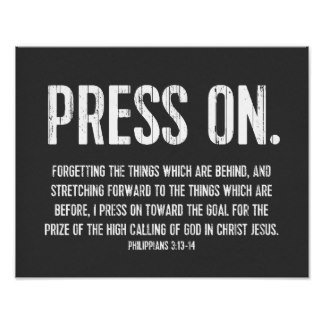
philippians-3-14I began this new year with Paul’s words to the Philippian disciples on my mind–you know those from Chapter 3:

12 I don’t mean to say that I have already achieved these things or that I have already reached perfection. But I press on to possess that perfection for which Christ Jesus first possessed me. 13 No, dear brothers and sisters, I have not achieved it, but I focus on this one thing: Forgetting the past and looking forward to what lies ahead, 14 I press on to reach the end of the race and receive the heavenly prize for which God, through Christ Jesus, is calling us (Philippians 3: 12-14 NLT).

As I reflect over these words on this first day of 2017, anticipating all that lies ahead, allow me to share three things I can do to make 2017 a fruitful year.

FORGET

I have said numerous times as 2016 drew to a close that I would never be so glad to see a year in the rear-view mirror. Taking a cue from Paul, I could make a list of all the things about 2016 that I’d like to forget. My problem is I’d likely want to forget the wrong things. Some things are best forgotten, and I’m grateful that God has the capacity and the desire to forget my sins, and to forgive them through the blood of Jesus Christ. I’d want to list all the bad circumstances, the losses, the failures and sadness, but I don’t think that’s what Paul had in mind.

Paul (in his notorious fashion) makes a list of those things he would forget as he offered his words to the believers in Philippi. What’s interesting to note is that he lists his achievements! That’s right! Paul listed those things that defined him for so much of his life–his zealousness, his righteousness, his connection to the Pharisees, his Hebrew upbringing, etc. He listed those achievements he had worn as a badge of honor for so much of his life. These were what he wanted to forget.

As I make my “forgetting” list for 2017, I want to forget my successes. I want to remember my failures, not because they depress me, but they remind me of God’s grace through them. They have lessons to teach me, and the lessons I’ve learned through my failures are vastly greater than the lessons I’ve learned through any success (perceived or otherwise). We should never forget the lessons we’ve learned as we’ve run the race of life, and we should never neglect to note the past faithfulness of our God.

Forget, yes, but make sure we forget the right things.

STRETCH

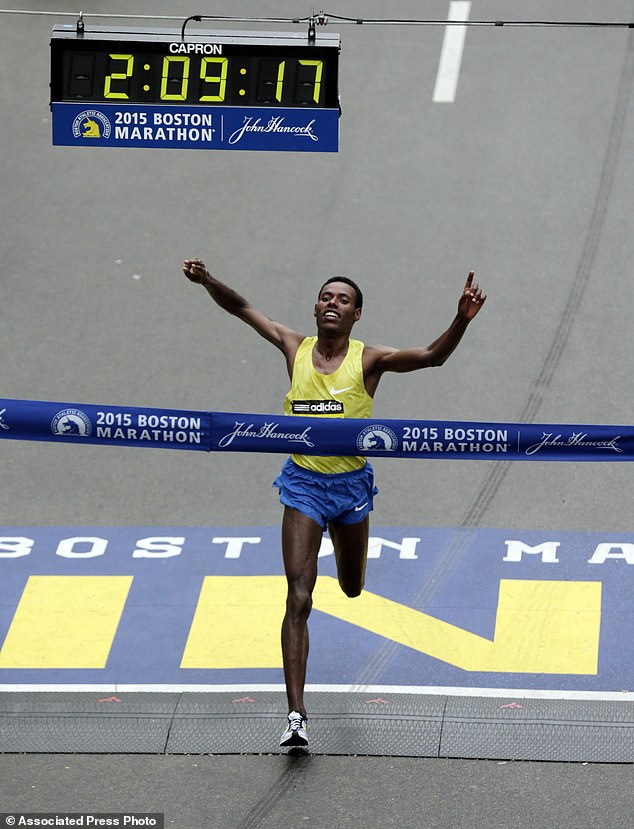
Lelisa Desisa, of Ethiopia, crosses the finish line to win the Boston Marathon, Monday, April 20, 2015, in Boston. (AP Photo/Charles Krupa)

Lelisa Desisa, of Ethiopia, crosses the finish line to win the Boston Marathon, Monday, April 20, 2015, in Boston. (AP Photo/Charles Krupa)

One of the images Paul uses in his words to the Philippians is that of a runner stretching toward the tape at the end of a race. Life is certainly a race, but it is a marathon and not a sprint. We’re in it for the long-haul, and we have to keep growing and keep going as we run the race. What ways can I stretch myself in 2017? Can I develop a new friendship? Can I develop a new spiritual discipline? Can I renew some friendships that have gone by the wayside? Can I begin a new friendship with someone who has a difference religious or political perspective than me? I’ll be challenging myself to stretch myself to become all that God has called me to be, and hopefully to do all Christ has called me to do.

One of the ways I’m going to stretch myself in 2017 is to invite more accountability into my life. It’s so easy for each of us (but especially for pastors) to isolate ourselves, and pretend that we can make it on our own. The reality is we can’t. We need each other, and part of what we need each other for is accountability–at least that’s what I need. That’ll be my stretch. What’ll be yours?

FOCUS

Paul had a goal. He would call it “this one thing.” A good word of advice for this new year is to define your “one thing.” If we know what the goal is, then we can develop strategies to help make THE goal become the reality. I think, too often, I’ve failed because I’ve tried to do too many things and to be too much to too many. Certainly, for those of us who call ourselves disciples of Jesus Christ, the goal is to always be a better disciple, but simply stating that fact leaves the achieving a bit nebulous. Focus is specific. State the goal in the beginning. Write it down. Review it daily.

I can’t define your focus for you. Only you can do that. I can tell you my focus for the year. It’s to be a better spouse. Sure, I need to be a better pastor. My children probably think I need to be a better parent. I know I need to be better engaged in the community, and I’m certain I could be a better follower of Jesus. I want to be all those things, but this year, I’m going to start by being a better spouse. Does it mean all those other things I want to be are not important? Of course not! But, I have to believe that being a better spouse will help me to be better in those places, too. That’s the focus I hear God calling me to in this new year. What about you?

Go for Gold

Here’s the reality–we can’t win the race looking in the rear-view. The race is before us. We only win when we look forward. Here’s to the best year ever. Forget the right things, stretch yourself and focus on the “one thing” that matters most.

Until next time, keep looking up…

The Evidence of Bethlehem

My wife, Vanessa, and I like to get away to L. A. as often as we can. No, I’m not talking about Lost Angeles. I’m talking about lower Alabama. Driving across southern Mississippi when we go we go through a lot of little towns on Highway 49. One in particular is Mt. Olive, Mississippi. Driving into town there is a prominent sign that says “Birthplace of Steve McNair.” Steve McNair was a professional football player who played quarterback, and spent most of his career with the Houston Oilers/Tennessee Titans. A little further down Highway 49, you enter Collins, Mississippi, and again, at the entrance of town there’s a sign that says “Birthplace of Gerald McRaney.” Gerald McRaney is an actor who played in series such as Simon & Simon, House of Cards and currently, This Is Us. I don’t know how many of you have driven through Mt. Olive or Collins, Mississippi, but there isn’t much happening in either of those places. They are simply little towns nestled between the bigger cities of Jackson and Hattiesburg. Their claim to fame is who was born there.

An Ancient Journey

star-of-bethlehemNow, picture in your mind, riding your camel across the Judean desert southward out of Jerusalem in the first century. About five miles out of Jerusalem, you start to enter a sleepy little town called Bethlehem, and as your camel glides into town you see a sign that says, “Birthplace of King David.”  Bethlehem’s claim to fame was that it was the birthplace of the nation’s most famous and popular king. One scholar says, “’At the beginning of the first century AD, Bethlehem was a village with not more than a thousand inhabitants: a small set of houses scattered along the side of a ridge and protected by a wall that was in a bad state of repair.” We sing the Christmas carol O Little Town of Bethlehem with the emphasis on “little.” It was not where anyone was expecting anything special to happen. It certainly wasn’t where anyone was expecting God to show up. Sure, there had been this prophecy from Micah that said,

“But you, O Bethlehem Ephrathah,
are only a small village among all the people of Judah.
Yet a ruler of Israel,
whose origins are in the distant past,
will come from you on my behalf.” (Micah 5:2 NLT),

but that prophecy was long since buried in the recesses of the nation’s mind. Even the nation’s king, Herod, had to call on the experts to be reminded of Micah’s prophecy when the wise men showed up looking for this “new” king that was born.

Nobody really expected God to show up, or for God to do anything special in Bethlehem. If God was going to show up, God was going to show up in Jerusalem. That was the happening place for the nation of Israel. Of course, God might show up in Rome, or even Athens, Greece. Those places were the center of first century culture, politics and power. If something is going to happen, it would surely happen in one of those places, not sleepy little Bethlehem.

That’s what we expect, too, and we have the benefit of bible stories and an annual celebration to remind us that God shows up in unexpected places. What do I mean? God is a big God, and if God is going to make a difference, it’s because He’s going to do it in a big way. Right? Sure, like in New York City or Washington, D. C., or maybe even Paris or London. Those are the seats of power. We certainly don’t expect God to show up in Monroe. But, He does, and isn’t that Good News? Sure, it is preacher…sort of…

God Gets Close

If God shows up in Monroe, that brings Him awfully close to home, and we’re just not sure we want God that close. We like having a little space between God and us. You know how we like our space. Don’t get too close. Don’t believe it? Notice what you do next time you’re waiting on the elevator and the doors open and it’s got more than four people on it. Most of us will wait on the next one. And, let’s face it, there’s more than a little discomfort here tonight. We’re a lot closer than many of us really like, but I suppose we can endure it for an hour once a year. Let me tell you, Bethlehem is evidence that God doesn’t really respect our space, and we don’t quite know what to do with a God like that.

What do we do with a God like that? What do we do with a God who shows up in the most unexpected places? I tell you what we do—we build places where we will COME and meet God. We’ll come, sit down, listen for an hour or so, get our God fix, talk a little bit about how it’s been going for the last week, be reminded of the things we need to work on, resolve to do better and ask God to help us out. Most of the time we’ll leave saying, “Hey, this has been a good session. We’ll do this again.” We leave and we expect that God stays, but…that’s not the evidence of Bethlehem. That’s not Emmanuel—God with us. That’s not the point of Christmas at all!

The point of Christmas is that God is with us in all the unexpected ways and all the unexpected places of our lives. That’s what we sing in the words to the third verse of the song Phillips Brooks wrote in O Little Town of Bethlehem:

How silently, how silently, the wondrous gift is given; so God imparts to human hearts the blessings of his heaven.

Born in Us

God imparts to human hearts. God is born in us. Christmas is God being born in us—you and me! And, that is an even more unexpected place than Bethlehem. Christmas means that God goes with us to work. When we’re standing on Monday morning at that blasted copy machine that never works the way it was designed to work. God is with us at home with our families, around the dinner table, and God is with us when we’re living at the homeless shelter. God is with us when we’re going through the divorce and when we’re battling the addiction. God is with us when we’re shopping at Wal-Mart and when we’re driving our cars. God goes with us on vacation. God is right there with us when we’re confronted with choices that challenge our values, and God is right there when our co-workers, or friends, or children make lifestyle choices that challenge our sensibilities, and who don’t understand who Christ is because we’re the only definition of him they see.

Yes, God is with us in the great, high and holy moments of our lives, but God is also with us when we’re struggling with the difficulties of life. Christmas is God giving Himself to us, to be with us, to invade our time and space for one purpose and one purpose only—to have a relationship with us, to save us from our sin, and to give us life through His Son, Jesus Christ. That’s the evidence of Bethlehem. That’s the point of Christmas!

That only leaves one question: Will we allow Him to be born in us tonight? The last verse of O Little Town of Bethlehem becomes our prayer this Christmas and every Christmas. Listen to Brooks’ prayer again:

O holy child of Bethlehem, descend to us, we pray;

cast out our sin, and enter in, be born in us today.

We hear the Christmas angels the great glad tidings tell;

O come to us, abide with us, our Lord Emmanuel!

O come to us, abide with us, our Lord Emmanuel! Amen.

Until next time, keep looking up…

The Malone Family Annual 2016

So…I haven’t been blogging, but I’m committed to changing that habit. Look for a post once a week with mostly random thoughts, but to get back in the “spirit” of things, here’s a Christmas season catch-up for anyone who is interested.

The Malone Family Annual 2016

I must confess that I took 2015 off from writing the Malone Family Annual. I don’t know why I did. There are no good excuses, but as someone once said, “When you’re looking for an excuse, any excuse will do.” I won’t make an excuse. I took the year off. Don’t think, however, that you’ll get two years’ worth of news. I’ll bring you up to date on the past year and if you want news from other years, well, get on Facebook!

The year started off with Vanessa and me doing one of the silliest things we’ve ever done. We bought a house in Alabama! I don’t know why we did. I’d like to say it was my great business acumen that convinced Vanessa it would be a great investment, but really it was our banker convincing her we could make money on it if we decided to sell it. Anyway…we bought it, and yes, it is for rent! If you’re looking for a beach vacation, give us a call. We’ll hook you up! (Click here to make a reservation!)

pushmataha2016 also afforded Vanessa and me the opportunity to be reality TV stars. That’s right! We appeared on an episode of Island Life on HGTV. Oddly enough, the episode aired on Easter Sunday, March 27th. Here’s what I learned about reality TV during that adventure:

  • There’s nothing real about reality TV (it’s all scripted).
  • Making a TV show is hard work (three 14-hour days to shoot 19 minutes of video).
  • When someone asks you “Would you like to be on a reality TV show?” your first question should be “How much are you going to pay me?” (Our 15 minutes of fame actually cost us money!).

gc2016-logo-color-hi-res-690x370I was blessed (if blessed is the right word) to spend two weeks in May in Portland, OR at the General Conference for the United Methodist Church. It was my first trip to the Pacific Northwest, and it is a breathtaking part of the country. I took a day trip to Seaside, WA and dipped my toes in the Pacific Ocean. It was on a Sunday. May I confess I DID NOT go to worship that day? May I ask your forgiveness? General Conference was a neat and interesting experience.

Vanessa and I spent four days in Wichita, KS in July for Jurisdictional Conference for the South Central Jurisdiction of the UMC. It was the culmination of what I call my “pseudo” candidacy for Bishop in the UMC. I thought I heard God’s call to offer myself for the Episcopal office. Well, after Jurisdictional Conference, I’m not certain what I heard, but it obviously wasn’t that! I continue (gladly) to serve as Pastor at FUMC, Monroe. But, enough about me…

Vanessa continues to spend her time taking care of me and taking care of our grandchildren (she much prefers taking care of the grandchildren). Of course, each of those tasks over the past year fell between the demands of the BIG news in the Malone family this year (more on that in a minute), but suffice it to say, she’s stayed as busy as she wanted to stay. She has stayed busy settling us into a new house. Yes, that’s right, we sold our house here in Monroe, and no, that’s not the BIG news. Why did we sell our house? Well, when someone knocks on your door and asks you how much it would take to buy your house, you throw out a number and they accept it, you tend to sell it. It only means one thing, though: we left money on the table. We’re in a rental and looking for a new one to buy. Check next year’s Annual for updates.

family-wedding-pic-2So, on to the BIG news. On December 3, 2016, Kelsey Malone became Kelsey Malone Ingram as she married Matthew Ingram. The couple are at home now in West Monroe, LA where she is a customer service representative with State Farm Insurance (and she continues to serve on staff at FUMC as contemporary worship leader) and Matthew is in computers with CenturyLink.

Brittney is at home in West Monroe and is a sales representative with Republic Beverage. Adam and his two boys (Kade and Kobyn) call West Monroe home but he works half the year in Malaysia. Josh, Piper and their brood (Peyton, Ryder and Skyler) still call Minden home. Not much news about the children this year. They don’t live at home anymore, so we don’t have nearly as much news as we once did.

Well, that’s certainly the Reader’s Digest version of the Malone family news for 2016. I’ll stop because I’m tired of writing, and I KNOW you’re tired of reading. I’ll simply say “Merry Christmas and Happy and Blessed New Year!”

Reflections on General Conference 2016 #GC2016…

General Conference 2016 is behind us now, and I return with a renewed hope that God is not done with these people called Methodist. There was much anxiety leading up to the once-every-four-year’s gathering of the church’s top legislative body because of the diverse nature in which members who call themselves United Methodist view culture, the Bible and the nature of “doing” church. Many felt this would be a “watershed” shed for the church, and in many ways it was. Knowing that hindsight is supposed to be 20/20, let me offer my personal reflections of our time together.

gc2016-logo-color-hi-res-690x370Primary among the sources of anxiety was the question, “How will the United Methodist Church respond on the issue of human sexuality in response to the Obergfell decision of the Supreme Court in June 2015?” Many wondered if this would be the time the church changed its understanding of homosexuality, and open itself to full inclusion by ordaining homosexuals as clergy, and permitting same-sex weddings to be presided over by its clergy and conducted in its facilities. Many others wondered if the church would maintain its teaching rooted in Scriptural and traditional understandings of marriage. Protesters were present throughout the ten days of meetings, and did disrupt the proceedings with organized protests on three different occasions. Additionally, delegates and alternates were greeted each day (but specifically on Wednesday) with supporters of a change in the church’s stance, particularly the wording that says homosexuality is “incompatible with Christian teaching.” In the end, though, the delegates did what United Methodists have too often done…they didn’t decide. And, that’s not a bad thing from my perspective.

Wednesday, May 18th was the pivotal day. Several petitions favorable to retaining the current stance of the church, as well as legislation designed to strengthen penalties for those who violated the Discipline had made it out of committee, and were ready to be presented on the floor of General Conference. I remind you, this is not something that has arisen in the last couple of years. This has been a forty-four year long conversation that has only escalated in the last decade because of the changing culture of the west. Please also understand, this is an issue that has no place for discussion among delegates and the church in Africa, Asia and other places where the church is growing. They can’t figure out why we’re fighting about it. They can’t figure out why they’re voting on it. They just think, “Those crazy Americans!” Yet, it is an incredibly contentious issue, and everyone thought this was the year it would be addressed. It was not. Let me explain.

The loudest group has generally been the most progressive segments of our church. Unfortunately for them, their numbers are shrinking.  Explosive growth is happening in the Global South, particularly Africa.  A coalition of American evangelicals and international delegates ran the tables in the legislative committees and swept elections to our highest court—the Judicial Council. Delay tactics by progressives was the only thing that kept more legislative items aimed at enforcement from being recommended.

But, there is a third player in the game—U.S. moderates. One colleague described them as “nice people, doing nice things, under high steeples, with above average educations.” These moderates are incrementally changing their minds on homosexuality. The pastor of our largest church, Adam Hamilton, is in the final stages of his transformation on the issue. He told a group of seminary students last week that he would like the first same sex weddings in his Kansas City-area megachurch to be conducted by associate pastors so he can be available to pastorally soothe those who will be unhappy about it.

The day prior, another moderate pastor took the floor following a night of rumors regarding a church split.  He asked that the Council of Bishops meet, show some leadership, and bring forth a plan for fixing things.  This was sweet music in the ears of delegates who have witnessed the council unable to police its own members, much less lead the church.  We delegates enjoyed the opportunity to tell our bishops what to do. Our bishops said they would meet and consider it.

The next day, our bishops came back with a plan representing the majority view of the council. They thanked the church for the invitation and expressed they would be willing to see the conversation on sexuality deferred, appoint a commission, and consider a specially-called General Conference in two or three years to entertain its recommendations. The conference found itself in the embarrassing place of having asked our bishops to lead. Be careful what you ask for! The Bishops returned with a plan that just happened to coincide neatly with the wishes of moderates trying to buy time. Progressives breathed a sigh of relief that the legislative train steaming their way had been derailed.

I need to make a long story short. The debate on the bishop’s recommendation turned ugly, with one delegate charging the presiding bishop with being corrupt. Fortunately, we didn’t see much of that delegate the rest of the time. After several emotional speeches, the episcopal plan was adopted as legislation by the narrowest of margins.

The political machinations we witnessed that day were impressive. Congress would be proud. But, the end of it means we spent a lot of money and time without really deciding anything. Well, we decided to take a little more time to decide. Many felt it unconscionable, but I’m not that put out by the whole ordeal.

Yes, I would like to have seen the General Conference decide once and for all on the issue of human sexuality, but as it stands, nothing has changed. The same language the United Methodist had before General Conference is the same language we have now, and I believe that’s a good thing. As for the future, we’ll look to the bishops to offer the leadership they say they’re willing to undertake. We’ll see if there will be a special commission, and a special called session of General Conference to deal with the issue.

That’s not the only thing we did at General Conference. Here’s a synopsis of our time together:

  • The Conference defeated motions to separate the American Church from the global Church by creating a new Central Conference.
  • Additionally, the African Central Conferences will receive five more bishops over the next four years, thus solidifying the global nature of the UMC.
  • Moreover, the General Conference voted to double the amount of theological education for Africa (from $5 million to $10 million) in the general church budget.
  • In a surprising fashion, the General Conference voted (by a margin of 3-to-1) to disaffiliate the UMC from the Religious Coalition for Reproductive Choice. This represents a significant shift in thinking for the global Church, and reflects how significant is the shift toward a more orthodox church.
  • The church continues to pursue important justice and mercy issues including human trafficking, stamping out killer diseases like malaria and AIDS, environmental stewardship, and the sanctity of human life.
  • A separation-with-property proposal passed a committee vote, signaling support for a conversation about this issue. The proposal did not make it to the floor of General Conference, but expect it to be a priority of the Bishops’ special commission exploring the issue of human sexuality.
  • The margins in the votes on key issues signal that the weight of opinion has shifted toward a more orthodox theology.
  • Both the University Senate and Judicial Council received a number of new members who are more theologically orthodox. For the first time, the chair of the Judicial Council is not an American.
  • A proposal was made and accepted requiring bishops to hold one another accountable for decisions in their individual Conferences.
  • The UMC grew by a total of 1.2 million members in the last four years, mostly outside the U.S. The African church, growing at significant rates, now holds the power in our denomination. The Africa Central Conference has grown by 329 percent, while in the United States the denomination has declined by 11 percent.

I am blessed to have had the opportunity to serve as a delegate to General Conference. The days were long and I returned home weary (for more reasons than one), but the experience was one I’ll never forget and will always consider an honor.

Until next time, keep looking up…

Christmas Stinks!

grinchChristmas stinks! Or, so would say the Grinch who stole Christmas. You remember the Grinch? The slinky, green ogre of a character created by Dr. Seuss whose heart was too small to love and appreciate Christmas? We know the story. All the Who’s down in Whoville make the Grinch cringe with all their joy and happiness, and so the Grinch does his best to literally steal the joy of the holiday.

Click here to watch the original version of Dr. Seuss’ The Grinch Who Stole Christmas

There was probably not much the Grinch was right about, but I will say that Christmas stinks. Before you call me the Grinch, I ask you to think about this with me for a moment. In your mind’s eye, see if you can go back a little over 2,000 years to a tiny village in the Judean wilderness. We have such a quaint picture in our minds of what that first Christmas was like. Most of our greeting cards and nativity scenes are populated with colorful flowing robes and pristine figures so it fools us into believing that it was a quaint, pristine time. Well, folks, it stunk! Remember that Christmas came in a barn.

There were basically two ways people kept their livestock in those days. First, there was the inner room of the home. On the interior of the home was a large room full of straw, mangers and other necessities for keeping the animals. Most people weren’t rich, and their homes were very modest, and they didn’t own much livestock anyway. You might be interested to know the Paschal Lamb (the lamb used for the Passover meal) was actually a family pet that had been raised IN the home. People didn’t own barns, so their homes were constructed so that their animals were kept on the very interior of the home, and the living quarters ringed the stable. I’m not sure if you know it or not, but sheep stink!

The other type of stable was generally a cave, and this is most likely where those who came to Bethlehem on that first Christmas would find Joseph and Mary. They had gone to the innkeeper to find a room, but all he had to offer was a stable, probably behind the inn or down the street, or even on the edge of town. A cave–dark, damp, and musty. Add to the damp, musty smell of the cave some really smelly sheep, a few lowing cattle, and who knows, a few chickens (there probably weren’t any pigs—they were Jews, you know?) and you have all the makings for a really stinky place to have a baby. Yeah, let’s not even talk about the smell of that! We must not forget, either, that there was a cast of characters who came to the cave that night who were quite smelly in their own right—the shepherds. Keeping smelly sheep out in the fields of Palestine was not conducive to bathing on a regular basis. It’s highly unlikely these shepherds would have stopped by the local bathhouse before making their way to the grotto that day. Put all these elements together and we have a recipe for one malodorous mixture. Let’s just say, this was not your mother’s Jean Nate.

What an image! What a breathtakingly beautiful image! Beautiful because we know it was God entering this world. It was God taking on human flesh. It was God coming to show us what He looks like, and when God showed up, He showed up in the smelliest, lowliest place on earth. It was the most beautifully rancid place on earth, and it changed the world. The presence of Jesus transformed the dank, dark, smelly confines of a cave into a place of light, and life and love. That’s what Christmas did. That’s what Christmas does.

Christmas means God is with us—Immanuel! God is still invading this smelly old world of ours. We know that God has come in Jesus to transform our dark hearts made rancid by the stink of sin in our lives. We need transformation—all of us—all the time. I am reminded of Scottish pastor Alexander Whyte. He faithfully served his congregation in the Scottish countryside for over 40 years, and was known by all in the community as a saintly man. One day a parishioner came to Rev. Whyte and exclaimed, “Oh, Rev. Whyte, we’re so blessed to have you as our pastor. You’re such a saint!”

Rev. Whyte looked at the parishioner and replied, “Madam, if you could see my heart you’d spit in my face.”

None of us is exempt from the stinkiness that is sin in our lives. Hatred, greed, pride, arrogance, apathy and jealousy are just a few of the sins that we battle almost daily, and let’s not even get into some of those “gray” areas that we like to debate these days. Yes, it stinks, I tell you, but Christmas reminds me that the Christ who was born in a stinky barn desires to be born in me, and the same Christ who transformed that stinky old cave can transform stinky old me.

I am reminded, too, that the stink of sin, while even being transformed in me still captures much of this world. It stinks that we live in a world where war continues to take innocent lives and force refugees to flee homes and families and livelihoods. It stinks that there are children this night who will go to bed hungry, and that in a world where there is such abundance that anyone should starve. Some starve because there aren’t resources to feed them, and others starve because people withhold resources as a show of power, or as punitive action against a rival. It stinks that we live in a political climate that is so deeply divided that the good that could be done so rarely gets done because of personal agendas and desire for control. It stinks that we live in a world where our children are no longer safe from predators who would rob them of their innocence. It stinks that we live in a world where young women are kidnapped and forced into the slavery of the sex trafficking business that will be flourishing over the next several weeks as playoffs and national championships and Super Bowls will be going full blast. It stinks that in the next twelve months there will be 40 million abortions worldwide. It stinks that over the next twelve months it is projected that substance abuse and other addictive behaviors will have over a 600 BILLION dollar impact on the economy, not to mention the destruction to families, the loss of jobs, the failures in school, the domestic violence and child abuse. It stinks, I tell you, but Christmas reminds me that God is still with us, and that He seeks to be born in us to transform the darkness and the dankness and the smelliness of this broken world. Yes, those are stinky places, but if we will take the time to get out of our comfortable little worlds, we just might discover that God is there because Christmas reminds us that God is born in the stinky places of this world, born to bring light and life and love. As Christ is born in us, we can bring the sweet aroma of his presence into those terribly smelly places.

It’s certainly not in the way the Grinch meant, but yes, Christmas stinks. But isn’t it beautiful? Isn’t it sweet? Isn’t it good?

Merry Christmas!

Until next time, keep looking up…

Mary! You Did Know…

Did you catch The Voice finals last week? Jordan Smith captured America’s attention (and their votes) with a stirring rendition of the now classic Christmas song Mary, Did You Know. Smith closed the competition with a song that his coach, Adam Levine, didn’t want him to sing, but in the end, even Levine said Smith made the right choice.

Mary, Did You Know has become a Christmas classic since Michael English first recorded the song in 1991. The words of the song were written by Christian comedian Mark Lowry with the music written by musician Buddy Green. Lowry said the song evolved as he contemplated sitting with the Virgin Mary over a cup of coffee, and the questions he would ask her.

You can watch Mark Lowry’s performance of Mary, Did You Know by clicking here.

Long before Lowry and Green put their song together, Mary sang her own song (found in Luke 1: 39-56) about her little boy, and the words she sang reveal the truth that yes, in fact, Mary did know.

Mary lived in an expectant time for the nation of Israel. The Scriptures had promised the coming of the Messiah, and rumors were rampant that he was coming at any time (sound familiar?). The Messiah was going to turn the world around and deliver Israel from all her enemies. He would usher in the kingdom of God. But if those people who were so high with expectation had gone to a stable in the town of Bethlehem they might have said, “That’s it? That’s the Messiah?” No one could have guessed how this child would change the world. No one could have imagined the impact he would have on world history and the change he would make in people’s lives. No one, perhaps, except Mary and her cousin Elizabeth. Yes, Mary you did know!

Mary, you knew that your baby boy would save our sons and daughters. Mary, you knew that this child you delivered would one day deliver you…and all the others who would believe in him. She knew this baby had walked where angels trod, and that when she kissed her little baby, she kissed the face of God. Her song reveals she did. Her song is called the Magnificat, and it speaks of the glory and the deliverance and the salvation of God. Mary knew because her song put the focus squarely on God. Mary shows a maturity that is wise beyond her years.

Let’s remember that Mary is probably around 13 years of age, but certainly not more than 16 years of age. Betrothals were often made when a young lady was 13, and the marriage was generally a year later. It would have been unlikely she would have been much older. It would not have been culturally correct. At such a innocent age, Mary turns her focus to God. She gives God the glory, and she sings a song of love, a song of hope and a song of faith.

As soon as Mary hears the words of Elizabeth, Mary knew in her spirit that what had happened to her was for real. Praise erupted from deep within like an overflowing fountain. The moment that she and her people had waited for so long had finally arrived. God had heard the cries and the longings of His children and the work of salvation had begun.

Faith grows out of worship, and Mary’s entire song is worship. Worship takes the attention off us and focuses it on God. Worship is the environment that is perfect for strengthening and deepening faith because faith keeps its vision focused on the word and promises of God and not on the surrounding circumstances. According to Hebrews 11:1, “Faith is the substance of things hoped for; the evidence of things not seen.” Faith is believing that because God has declared something, it is already an accomplished fact even if the tangible and visible evidence is not immediately apparent to our senses. Mary sang of God’s salvation, even though nothing around her changed. Mary was still a pregnant young girl from Nazareth. The Romans and the Jewish king, Herod, still ruled with an iron fist, the rich still had their goods and the poor continued to struggle. But, Mary sang because she saw a vision of the changed world God was bringing into being through her son…a world where all wrongs will be righted, where every injustice will be corrected, where the oppressed and downtrodden will be lifted up and those who have elevated and exalted themselves will be humbled.

Yes, Mary did know, and because she knew, she could say, “I am the Lord’s servant.” Here’s what we need to know: This same Jesus seeks to continue becoming flesh, to continue being expressed through willing men and women, and to dwell among us. You and I were each especially made to be a dwelling place for God. You and I are the sacred vessels through which He will make Himself known in our homes, our families, our schools and our communities. The “church” building is not the place. The Temple in Jerusalem is not the place. You and I are the place.

This Advent season, Jesus comes to us, the least likely individuals in the least likely of places and He says to you and me, as the angel did to Mary, “You who are highly favored! The Lord is with you!” He promises the outpouring of His Holy Spirit upon us so that Christ might be formed within us. God forces Himself on no one. He takes the initiative and He makes the invitation. Because Mary did know, you and I are here this morning and have a living hope, a steadfast faith, and the experience of God’s eternal and life-transforming love. This hurting and broken world doesn’t need to know if Mary knew. This hurting and broken world needs to know if we do.

Until next time, keep looking up…

Partnerships, Presents and Preparation (Or, Fruit for Christmas)…

Merry Christmas. Here’s your orange. No joke. An orange was a pretty common Christmas gift in years gone by, especially during the Great Depression. A child would awaken on Christmas morning to find a stocking stuffed with an orange, and apple, perhaps a banana, a few nuts, and if especially blessed, some hard candy. That was Christmas…that, and a trip to church on Christmas morning. Yet, that fresh fruit represented a sacrifice for the parents. Not much fresh fruit in the wintertime, unless you lived in southern California or Florida. If there were other gifts they were usually homemade or handmade. And, they were special. It was a time when it truly was the thought that counted. Getting fruit for Christmas was a big deal, and might I suggest this morning, giving fruit for Christmas is a big deal.

When I say fruit, I’m not talking about apples and oranges, although do a Google search for “fruit for Christmas” and you’ll get 117 million results, and at least the first three pages will be websites selling fruit baskets for Christmas, so there must still be lots of fruit given at Christmas time. No, I’m talking about the fruit of repentance of which John the Baptist preached in Luke 3: 7 – 18. John the Baptist was working to prepare the way for the coming of Christ, and part of the preparation was repentance.

John the Baptist preached repentance, and the words he used were some pretty harsh words, but when people heard the words, they were cut to their hearts. We read the words of this gruff character with his wild clothes and wild diet proclaiming what sounds like to us a “turn-or-burn” message. Seriously, nowhere in the Dale Carnegie book How to Win Friends and Influence People does it ever suggest you begin your message by calling your audience a bunch of snakes. But, it worked for John! People were responding to his message. Although, sometimes tough love can be the best love. We need tough love every now and again. Basically, though, John’s message  boils down to a very simple imperative—repent. Repentance prepares the way for the coming of Christ.

What do we mean by repentance? Well, John the Baptist was not “politically correct” in the way he talked about repentance, but that doesn’t change the necessity of repentance if one was going to be ready for Christ. God is a holy God, and God desires a relationship with us, but we let sin get in the way. Repentance is an acknowledgement that we’re on the wrong path. That’s what John was saying to his first century audience, and when they heard John, they knew something was missing. They all wanted to know, “What should we do?”

When we talk about repentance, we’re not simply talking about saying “I’m sorry.” It’s not enough to feel sorry in your heart for wrongs committed. It’s not enough to regret choices made that didn’t honor God. Something needs to be done. Outward actions must accompany inward decisions. Repentance is not simply a private, personal choice that one makes in the quietness of a solitary moment. Repentance means changing directions. Repentance is not simply coming to the realization that “I’ve made some bad decisions…I’m sorry for getting in this mess!” No, repentance means ‘turning around’, getting on a different road, getting things right with God.

What should we do? That was the question the people asked John that day, and John was more than willing to answer them. John says to prove that we’re changed by the way we live…produce fruit that shows our heart.

Now, wait a minute, preacher. What’s with this fruit thing you’re talking about? Producing fruit? Aren’t you getting mighty close to works righteousness? You’re not telling me I have to work my way to heaven, are you? No, no, no! Fruit doesn’t guarantee our salvation. What John is implying, and what the Bible teaches is that fruit comes as a result of our salvation. That’s exactly what John Wesley taught, too. He talked about producing “fruit meet for repentance.” It was for him about turning from doing evil and learning to do well. That’s what John the Baptist told the people gathered around him that day, “Stop what you’re doing and do something else instead.” “If you’ve got enough food and clothes, give some of it away.” “If you’ve been dishonest, don’t be dishonest anymore.” “If you’ve been discontented with anything, don’t be discontented any longer…at least not about those things.” An inward attitude should be reflected in an outer change. The inward attitude should be reflected in the fruit our lives bear. To say it another way, fruit is the tangible way to measure the work of God in the body of Christ.

If I may be practical for a moment, I see four specific fruit John mentions that reflect a changed life. First, there is generosity. Do you have two coats? Give one away to the poor. Generosity shows our preparation for the coming of Christ. Second is compassion. Do I have food? Share it with the hungry! Third, I see integrity. He spoke to the tax collectors and said, “Don’t collect more taxes than you’re supposed to. Be honest.” And, to the soldiers, he said, “Don’t extort money from people or lie about them.” Don’t do what you’ve become accustomed to doing. Do life differently. Finally, I see contentment. John says to the soldiers, “be content with your pay.” Generosity, compassion, integrity and contentment—those are certainly very practical ways to live a new and different kind of life. Each of these certainly indicates a change in the direction of a life.

The congregation of FUMC, Monroe celebrates Christmas for the Children.

The congregation of FUMC, Monroe celebrates Christmas for the Children.

Perhaps we need to practice a little repentance as we prepare for the coming again of Christ. Maybe we already are! On Sunday, December 13th, the altar of First United Methodist Church, Monroe was filled with generosity. That day, the congregation celebrated “Christmas for the Children” and was, for me, I think, evidence of repentance. It was an overflowing generosity from this congregation…generosity borne out of a deep compassion for the poor and less fortunate. I was amazed as I saw each gift and considered its value, but its value was not in the money each person had invested. Its value is in the joy and hope it brings to every child who receives each gift. And, how many years has this generosity overflowed in partnership with the Salvation Army? Fifteen years together. That’s awfully good fruit!

You can watch the entire worship service by clicking here.

What an appropriate partnership, too. William Booth, along with his wife, Catherine, founded the Salvation Army in July 1865 to serve the poor in East End London. Before Booth founded the Salvation Army, he was a Methodist circuit preacher. Booth, like John Wesley before him, abandoned the conventional concept of a church and a pulpit, instead taking his message to the people. His fervor led to disagreement with church leaders in London, who preferred traditional methods. As a result, he withdrew from the church and traveled throughout England, conducting evangelistic meetings.

Thieves, prostitutes, gamblers, and drunkards were among Booth’s first converts to Christianity. To congregations who were desperately poor, he preached hope and salvation. His aim was to lead people to Christ and link them to a church for further spiritual guidance. Booth continued giving his new converts spiritual direction, challenging them to save others like themselves. Soon, they too were preaching and singing in the streets as a living testimony to the power of God. Generosity and compassion were changing the world. Methodists and Salvationists share a common thread of history of caring for the poor, rooted in the theology of John Wesley who said “does not God command us to repent and…also ‘to bring forth fruit meet for repentance’.” The fruit of our heritage, the fruit of our repentance, the fruit of our faith is generosity, compassion, integrity and contentment, and we bear this fruit, not only at Christmas, but every day that we live as disciples of Jesus Christ…as those who are preparing for His coming again. That’s our fruit for Christmas! Bear it…and, share it!

Until next time, keep looking up…


Unexpected!

unexpectedEvery one of us has certain expectations at Christmas. We expect to buy gifts and we expect to receive gifts. We expect the lights and the colors and the sights and the sounds of the season. We expect to eat a lot! We expect long lines in the department stores, and apparently this year more than ever, we expect to avoid those lines by ordering on-line and having it delivered to our home or office. We expect to be rushed from event to event, from party to party, from school play to church social. We expect to see family and friends. There is much about Christmas that is expected.

We expect, too, when we go to church at Christmas that we’re going to hear something about the Christmas story. It is quite unexpected to be reading and hearing about John the Baptist at Christmas! God did some pretty unexpected things that first Christmas—like coming into the world as an infant! But, God has always done the unexpected, and John the Baptist is an example. Besides, this is Advent, and remember that Advent is a time to prepare for the coming of Christ, and John the Baptist was sent by God to prepare for the coming of Christ. God used an unexpected time, and an unexpected person, and an unexpected message to speak His revelation.

It was an unexpected time. Luke sets the time in the context of the political and religious climate of the first century ancient near east. Israel was under the hand of oppressive leadership, both politically and religiously. Luke, ever the historian, notes Tiberius, Pontius Pilate, and Herod and his brother Philip as the political leaders, and Annas and Caiaphas as the high priests—who would be considered the religious leaders. Additionally, the prophets (who were God’s spokespersons) hadn’t spoken in over 400 years. Everyone expected that God didn’t care. Yet, when it was least expected, Luke tells us “it was at this time a message came from God…”

There was also an unexpected person. This message, Luke tells us, came to John, the son of Zechariah. We call him John the Baptist. It was quite unexpected that God would use this strange man who lived out in the desert and had a crazy wardrobe of camel hair, and had a steady diet of locusts and wild honey. No, we would expect that God would use the religious leaders, or even the political leaders of the day. Don’t they speak for God? Ha! We can’t always assume that God will use the religious leaders to do His bidding. This passage…this event…challenges me. After all, I’m considered a religious leader. It forces me to ask, “What am I doing with what God has entrusted to me?” And, we say we live in a Christian nation (debatable, I know), but seriously, we can’t ever expect our political leaders to speak for God. We can pray for them. We can hope they’ll be in tune to God’s will, that they’ll embody some kind of spirituality, but this passage reminds me that God chose a crazy man from the backside of the desert to deliver his message to a hurting, longing world.

There was an unexpected message, and that was “The King is coming!” It was a call to get ready, and there was some pretty specific instruction as to how that was to look: repentance and baptism. Well, what was unexpected about that? After all, these were not foreign concepts to first century folks. The Old Testament has many examples of people turning from sin and God forgiving them. One of the most prominent examples the Jewish people knew was of David’s repentance when Samuel confronted him concerning his sin with Bathsheba. David said, “I have sinned against the Lord!” But, Samuel said, “Yes, but the Lord has forgiven you.” Zacchaeus, in Luke 19, is an example of a Jewish person who repented. After his encounter with Jesus, he gave away half his wealth and paid back up to four times that which he had cheated from others. I’m not sure whether you realize it or not, but that’s a lot of money!

Likewise, these Jewish people would be well familiar with the idea of baptism, for Gentile converts who came to the Jewish faith had to be baptized to be considered Jewish. They were baptized into the faith. But, baptism was for Gentiles. The unexpected twist was John was preaching baptism to Jewish folk. They needed to be baptized? Now, that was unexpected! It was an unexpected person in an unexpected time preaching an unexpected message. There are a few implications we can draw from this passage.

First, God is never not near. God is always present, even in those times we can’t see or feel him…even in those times when God seems silent. Sometimes (so I’ve been reminded), God is simply too near to see. God hasn’t forgotten us! God hasn’t forgotten the United States of America. God hasn’t forgotten the Syrian refugees. God hasn’t forgotten the hungry child in Africa. God hasn’t forgotten the lonely widow. God hasn’t forgotten the unemployed oil field worker, and God has forgotten you. When we least expect it, God will be right here…meeting our need, but more importantly, doing His will.

Second, life always happens in God’s time.  Our problem is our understanding of time. How is it we say that we never have enough time, but we’ll make time for that project or meeting or social event we desire to attend? We mark time by dates on a calendar, by days and weeks and years, by hours and minutes and seconds. The ancient Greeks had two words for time—chronos and Kairos. Chronos time is that time we mark with the calendar and watch. We measure it. Kairos is different. We can’t translate it precisely, it refers to time that is opportune. Chronos is quantitative. Kairos is qualitative. God operates by Kairos time.

Third, God uses nobodies from nowhere. I’m the perfect example of that fact. I’m just a Bubba from Jackson Parish, LA. Jackson Parish may not be the backside of the desert, but it’s as close to the backside of nowhere as you’ll ever come. Never in a million years would I have ever dreamed of pastoring First United Methodist Church of Monroe. Actually, being a pastor at all was not one of the things on my check-list of things to do. But God uses nobodies from nowhere to speak to a hurting and broken world.

Even after I came to ministry, I could never believe I’d pack my family up and move them 800 miles away to go to seminary, but God calls, and when God calls we go. Because God uses people from the backside of nowhere to make a difference in the Kingdom. Never would I believe that I would pastor some of the best churches in Louisiana. Seriously, I’ve had colleagues share horror stories of churches served, but I can honestly say that I’ve never had a bad appointment. Not one.

Never in a million years would I believe I would have the opportunity to serve the church as a District Superintendent, but when God calls we answer, and I served the best district in the Annual Conference for two years. And, I must confess, never in a million years would I believe God would ever call me to offer myself in service to the larger Church as a candidate for the office of bishop in the United Methodist Church. But, Vanessa and I believe that is what God is calling us to do in this coming year. Now that is totally unexpected!

What does this mean for First United Methodist Church? Nothing, for now. Nothing will change in the near future. Bishops are elected by the Church, and election for bishop will be held in July 2016 at Jurisdictional Conference. Because it is an elected position, there is the very real possibility that nothing will change. I will stand for election, and if not elected, I will continue serving as your pastor. If elected, however, I will begin service as a bishop immediately and FUMC will be appointed a new pastor. In the meantime, I will continue to preach and lead as I’ve done over the past two and a half years. The vision God has entrusted to us will continue to move forward in the same manner as if I were not surrendering to this call.

I love serving you as your pastor, and nothing would please me more than to continue serving you as such for a very long time. God may, indeed, make a way for that to happen. Surrendering to this call is simply my desire to live in obedience to God. Vanessa and I have wrestled with this call since January, and after having said “No” on two occasions, we were compelled to not say “No” a third time (I’ll have to tell you the whole story sometime).

I know there are a multitude of questions. I confess I don’t have all the answers. This is a new experience for me, too, so we’ll walk this journey together. But, I’ll answer as many questions as I possibly can in the coming months. I covet your prayers for Vanessa, my family and myself as we offer ourselves to the broader Kingdom of God in this way. And, continue prayer for our congregation as we seek God’s will for all our lives.


We still have to live in the meantime. How appropriate, especially since Advent reminds us that we “live in the meantime”—between Jesus’ coming and his coming again. In the meantime, Jesus still meets us in quite unexpected ways. Where is He meeting you?

Until next time, keep looking up…